Simon Deacon
CEO at LIGHT SCIENCE TECHNOLOGIES HOLDINGS PLC
Replay available
Interim results for the six months ended 31 May 2025 hosted by Light Science Technologies Holdings (LSE:LST) on Investor Meet Company, held 2025-08-13.
Automated transcript · Written by software from the replay's audio. It can mishear names and figures; the replay is the record.
0:01 Good afternoon, and welcome to the LIGHT SCIENCE TECHNOLOGIES HOLDINGS PLC Interim Results Investor Presentation. Throughout this recorded presentation, investors will be in listen only mode. Questions are encouraged and they can be submitted at any time using the Q and A tab situated on the right hand corner of your screen. Simply type in your questions and press send. The company may not be in a position to answer every question received during the meeting itself. However, the company can review your questions submitted today and publish responses, which is appropriate to do so. Before we begin, I would like to submit the following poll. And I would
0:32 now like to hand you over to CEO, Simon Deacon. Good afternoon. Good afternoon, everybody, and welcome. Thank you for attending LIGHT SCIENCE TECHNOLOGIES HOLDINGS interim results for 2025. A short disclaimer when you get sent the presentation, please have a have a read of the disclaimer. Presenting today on my left hand side is Jim Snooks, chief financial officer and company secretary. On my right is Andrew Humsell, who will be supporting us with the questions and is COO of the business, and myself, Simon Deacon, CEO of the business.
1:16 There's a short video we're going to play now just to show you, the different divisions and markets that we're in. At LIGHT SCIENCE TECHNOLOGIES HOLDINGS, our mission is clear. We offer solutions to some of the most significant current global issues.
1:39 We have four businesses across three sectors. In the AGTEC division, we have over thirty years experience in two businesses, LIGHT SCIENCE TECHNOLOGIES and TOMTEC. We provide turnkey technology solutions that use real time data to create the perfect recipe for any growing environment. From our award winning hardware solutions like SENSOR GROW, and NurtureGrow to our proprietary control systems and performance monitoring platform, we combine cutting edge software with our in house UK manufactured hardware to improve productivity, increase plant yield, cut costs, reduce wastage, and extend the growing season, whatever the plant, whatever the environment. Within contract electronics manufacturing, we own UK Circuits, a twenty five year old business and world leading player in the field. UK Circuits supports clients at every stage of the procurement life cycle right through to expert technical support. From printed circuit board manufacturing to finished products, we work with a broad range of partners both within The UK and globally and service blue chip customers across multiple sectors including robotics, lighting, fire safety, sensors, pest control, and audio systems.
2:59 Finally, within our passive fire protection division, we own Injecta Fire Barrier, The UK's first independent approved installer of the patented InjectaClad system. InjectorClad is an acrylic based graphite sealant that can be swiftly injected into building cavities blocking fire and smoke spreading throughout a building structure. It is suitable for installation across most types of building cavities. Using InjectorClad, we can work towards ensuring the existing structures are safe, protected, and meet the latest fire safety regulations, giving peace of mind to owners and occupiers. Following the Grenfell Tower fire, fire safety act of 2021, the building safety act of 2022, there are over 11,000 buildings in The UK which are labeled as high risk.
3:45 Passive fire protection is more critical than ever. At LIGHT SCIENCE TECHNOLOGIES HOLDINGS, we combine British manufacturing, innovation, cutting edge technology, software, and expert knowledge to solve some of the most important global issues that we face today.
4:14 That's great. So just going through the group highlights for the half year. Revenue was 5,100,000 against 5,200,000 in h in half year twenty twenty four. So about a £100,000 difference between the two half years. Margin, more importantly, increased. Gross profit margin was 36.3%, and that was a difference between twenty twenty four of twenty six point six percent. So a really good strong increase of over 36% overall for for gross margin. So really pleased with that. Group current quoted pipeline is circa £58,000,000.
5:00 So we've got a strong visibility of quoted orders, which is really important. And I would highlight here that we've seen CA sit around £34,000,000, but now we're seeing passive fire increase, and it's about 24,000,000 pounds of our quoted pipeline. We're starting to see a leveling up in our quoted pipeline as well as our revenue. Looking at EBITDA, we've gone from 28,000 EBITDA in twenty twenty four half year to 279,000 in this half year, and that's a 10% 10 tenfold increase. So I was really pleased to see that increase, and that's really reflecting on that gross profit margin increase.
5:48 The loss for the half year was 163,000, and that's down from 335,000 in 2024. So we're pleased with progress moving forward, and you can see the EBITDA strength and the margin coming through. Cash and undrawn facilities availability to us is circa 1,800,000 pounds. So we've got good visibility moving forward. So let's see what's actually driving the global trends for us for a group. And what we're seeing here is food security. Food security and ag tech and climate change and really population growth, but we're all seeing, certainly in The UK at the moment and fires in different places around the world, we're seeing drought. And so we're really seeing the effect of of climate change and extreme weather, and this is having an impact on our food security, where it's grown, how it's grown, if it'd be outdoors or in.
6:47 In manufacturing, we're really seeing an onshoring, especially in the defense sector, and we'll come on to defense because that's something we're focusing on our manufacturing facility at UK Circuits. Really technology throughout our our our product range as a technology company, we're really seeing advances in technology coming through, and that's really supporting manufacturing in many divisions and and many markets. And from a fire protection basis, passive fire protection, we're already seeing government legislation coming through, and that's really driving the market and our strong pipeline of 24,000,000.
7:30 So how big is the market? It's quite large. 83,700,000,000 globally, and we've broken that down to ag tech global market to 12,700,000,000. And we're seeing double digit growth here in the ag tech sector. And for us, we're focusing on LED grow lights, but also agricultural sensors and control systems. In passive fire protection market, it's a £50,000,000,000 market here only in The UK. And of that, there's around £16,000,000,000, which is for the domestic market. So as you can imagine, that's a huge market to go at, and there's around twenty years' worth of work. In contract electronics manufacturing market, where we sit, there's around £21,000,000,000.
8:19 It's a big market. Technology is advancing quickly, and the technology and components of electronic boards are going in all sorts of products now. So let's have a look what we're doing in the ag tech and a commercial update. Global partnership. This is something as a management team we've really focused on. We announced more more recently and signed a partnership with AgriLux in The Netherlands. And this was a really key part of our partnership because they're part of US listed Scotts Miracle Gro, a really important group and a worldwide group, and they're listed on the American Stock Exchange. So this is really an exclusive deal for us to be distributing their LED lighting, but also be able to put up our lighting stroke our sensors and control systems.
9:12 And we're seeing a really good return from this partnership. Our focus on partnerships is Americas, Middle East, South Africa, and Europe, and we've seen a lot of traction more recently in Europe. To give you an idea of the scale of this, we're also doing partnerships with the Shell Rochelle Group, which is a French glasshouse manufacturer, and they're a 108,000,000 revenue business. And they're really starting to supply us with some really good opportunities for us to fit lighting into glass houses. And so we'll see a lot more of this turnkey solution that we can provide in sensors and control systems.
9:57 Orders and prospects that we've secured, the partnership with AgriLux, as I mentioned, secured us a a supplying of 400 lights in for a glasshouse in Poland. We're really seeing that expand from Poland, Germany, France. We're really starting to get that traction through. So that's really important. Most of our revenue currently in AgTech comes from The UK. As you know, we do between 800 and a and £1,000,000 in revenue, and we've done many glasshouse refurbishments more recently. We've completed our first European nurture grow LED project with Rochelle, a £123,000 in revenue, supplying lights for aeroponics and glass houses. And that was a really good case study for us to do and really set the scene for that particular client for other projects.
10:51 Phase one of the commercial rollout for SensiGrow has also taken place. We've mentioned SensiGrow throughout our our presentations, and a lot of the times they're on trials. And those some of those trials have now ended, and I'll come on to those. And now we're seeing some traction with orders with a company called Hailgrove, who are the largest independent polytunnel provider. This has really come on because it's capturing air zone capacity, for the environment within a polytunnel. So we're really adapting from broad acres to enclosed environment across the markets. We've also, as I mentioned, completed eight UK glasshouse refurbishments, and that's putting in irrigation control systems, ventilation systems. So there's a lot that we do as providing a turnkey solution for our ag tech clients.
11:48 Moving on, an update on our grants and trials. As you know, we're heavily involved in in grants and r and d, and this helps support us develop our product, if it be lighting, if it be sensors or control systems. But we've completed UKR grant funded project to develop and launch our sensor growing root zone capabilities measuring soil moisture, soil electro conductivity, and the soil temperature. And this is really important for our client base. You know, when we survey our clients to what their needs are, we're providing those and those trials have taken place. We're in the final year of a three year trial with UKR grant funded trip project with Dyson Farming Research, and we've been working for Dyson with with them for some time as a partner.
12:35 But also other partners in that research are Emerald Research, Bangor University, to name a few. And it's important to bring these partners together to grow together to make sure that we're getting the project and the scope and the validity of reducing nitrate oxide in in the growing of potatoes. So using SENSIGO, especially measuring the soil borne n two o emissions in this. And this will then develop even further and help us with our sales of SensiGrow. Ongoing field trials are also in broadacre for SensiGrow underway with AGRI, a leading agronomist service provider, and this is one way we see of growing and selling our products through agronomist who are working for farmers across the country in Europe as well as The UK.
13:26 And Dyson Farming SENSIGO trials are exploring potential sensor solutions to small cultivation legumes, which is a bean pea or a bean type crop. And this is really important, and we've seen a small order come through of £5,000 for this. So you can see that our products for different types of food and growing, if it be sapling trees or if it be for food, is quite broad. Moving on to commercial strategy and potential product development. One of the key things with our our products that we do is a lot of it's project based, and it's really important that we move forward and and change this because we want to split our revenue so that we're not completely project driven. And to do this, we're going to brown box some of our product range.
14:23 And why we're doing this is because we to be able to grow across the globe and through Europe, we need to do this through partners. We're a small company expanding with global products. So by partnering with these people and brand boxing with our clients and our partners, we're making it easier for the sale to go through and for our clients to use our products. So we're bundling the SENSOR Grow all in one bundle So the SENSOR product, so it's ready to use off the shelf kit, seamlessly integrated, and rapid installation. So it can be installed by the client, doesn't have to be installed by ourselves. And we're providing that software so you're getting live captured data to your mobile phone device or computer to capture the data of a live working environment so you know what's going on in your environment and how to change things.
15:16 Ready to use off the shelf lighting products as well rather than bespoke. We will continue to do with this bespoke, but it's just also important to make sure we can standardize some of our products. And ready to use controller systems. We've been providing control systems in glass houses and polytunnels for over thirty years. And so modern technology is now we're adapting those control systems to be able to talk to more devices and also be easier to install. The consumer market, I think it's really important to see what other markets when you've developed a product we can go into and providing a mini version of SensiGrow and control system for the consumer market, people who have got greenhouses, for example, you know, and tapping into that market worldwide could be something of really importance to us. So we're looking at that market and adapting our product to it.
16:11 Other sense to grow potential developments is environmental. We see a lot of pollution in water, as an example, and measuring that water and that where that water and how polluted the E. Coli might be in that water. Having that live data is really important, so providing that. Measuring methane, c h four, ammonia, n h three is also really important from soil emissions and providing a holistic overview of greenhouse gas emissions. So we're doing all of these things. We continue to develop the sensor as it becomes an environment sensor as well as an ag tech sensor. And so it's really important. We expect to see real good strong growth medium term and long term. And we continue to further partner globally with clients like AgriLux who are one of the world's leading artificial lighting suppliers.
17:08 Moving on to looking at a case study for for our thirty year old business in Tomtek in the AgTech division. This really gives you an example of what we're doing every day, and sometimes investors don't get to see this. But this is a case study that we did in the South Of England. Two sites, faced out of date ventilation system required constant manual operation, which is uses a lot of labor up and isn't efficient in today's world. So we looked at the contract climate control. We looked at the ventilation system, the control system, and we installed our and refurbished two glass houses at a garden center to ride that ventilation system on both sides, replacing existing motors and modern energy units and installing our t 100 climate control computer
18:09 with its software as well and integrating temperature humidity sensor throughout the area. So this is areas where we're we're looking at commercial growers, but also greenhouses at garden centers as an example. We also installed a weather station, enabled wind, rain, and protection and automation. So that means ventilation coming on, heating coming on, all automated throughout throughout the the greenhouse. The outcome is improving efficiency and automation, and that was a really important case study for us. And at the bottom there, you'll see some of the names that you might recognize, like Dyson Farming who we work with, Berry Gardens, a 300,000,000 revenue business cooperatives in fruit, Ticktree, the jams, pots of jams you might see in hotels.
19:01 We work with them also. Haygrove, one of the largest independent polytunnel providers. Rochelle, I've mentioned earlier, with a glasshouse manufacturer globally based in France and Bridge Farms. So that gives you an idea and a flavor of of the case studies we do in ag tech. Moving on to our manufacturing facility in contract electronics manufacturing. We've seen lower revenue in this division, which was expected by the management in the contract electronics. We knew that pest control was slowly coming end of the life products with that. We still expect it to be one of our largest clients next year, but we've then looked at how we're gonna replace that revenue.
19:52 And and that's really important because there's a long term objective, but also a short term. And the new product development progress is we've won six new clients in this half year. Audio, we've won two clients, marine, electronic solutions and components, moisture systems, and and fiber network solutions. So as you can see, there's really a a whole different market there that we can tap into
20:18 and sell electronics into, which is really pushing and will increase our revenue moving forward. We're also progressing and repositioning the Centimeters division, which is really important. And why are we doing this? As you can see by our results, our margins are increasing throughout all divisions, which is great, but we want to continue that success. It takes time to do. So we're targeting
20:47 higher margin and growing market sector. And defense and health care, we can see that's where it's coming from. So we're restructuring, making sure we've got our processes in place, that we've got our facility organized and in place, and then also getting the right accreditations to move into defense and health care. So we continue to do that, which will obviously help us keep the efficiency of of the manufacturing facility, but also increase our margins.
21:21 So looking at what we're doing here sorry about that. Seems that the lights have gone off. That's better. Looking at the commercial strategy for progress of defense and health care and the right accreditations is really important. Nine 91,000 is really important. Nine one thousand one hundred is really important to get that key accreditation, and we're working towards that as I mentioned earlier. We've already got the Made in Britain membership signed up and done and also the Make UK Defense membership. The Joshua membership is also in place, and we're also looking to go to various live one to one procurement meetings so that we can get a good grip of who's in the marketplace, where we're best suited for defense applications, and what orders are available through different portals, which is the MOD portal, which is really important too. So we're working towards that, and and that's going extremely well. And so for the medium and long term, we expect the defense really to come through also in health care as well. Looking at a case study, what do we do in
22:39 contract electronics? There's all sorts of products we make, and you'll you'll notice through all of our divisions, we provide a try and provide a turnkey solution. In this case study, as an example, we're working to provide a flame detection and gas monitoring safety system. And this really has the the synergy with our passive fire protection business and where we're looking to do the early warning system that we've talked about before. And so we've manufactured single PCBs assemblies
23:12 for gas monitoring and service guard products, of which we made 1,200 gas monitors and 2,000 service guard specification until the right standard to the quality of the client was needed. And you can see the picture there and what it looked like. The outcome of this was providing 3,000 products, units across both production lines, and so we can scale up as we manufacture these products, but it's providing that turnkey solution which clients are looking for. And that was a really successful project. And these projects continue in gas, oil, and in passive fire. Moving on to our passive fire protection division.
24:01 We've currently got a sales quoted pipeline of 24,000,000, which we're really pleased to say. Half year ago, that was sitting a circa sort of £7,000,000, so that's really risen. We've also now got fifty years on the injector lifespan, so I'm really pleased to see that InjectorClad have managed to pass the rigid test and confirming the fifty year lifespan. And this goes into buildings and, you know,
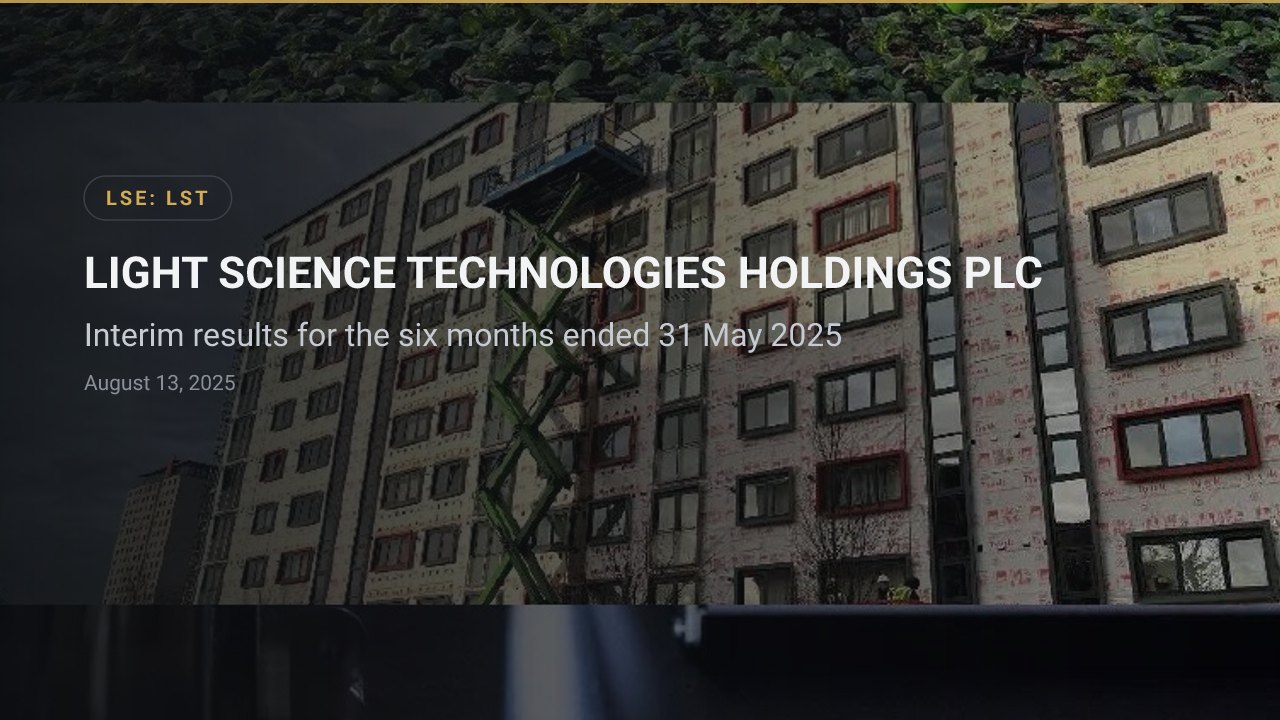
24:30 what we're seeing is against other products, traditional products, this is three or four times better lifespan than most other products out in the market. So that's a really good result for for us as a business, but an Injector Cloud and the industry. We've completed nine projects so far across the country. On the left hand side, that gives you a good example of a typical building that we put Injector Cloud and install into. We have seen delays. As you can imagine, we we've got a strong pipeline, which we're converting, but the building safety regulator and sign off of projects has been slower than expected.
25:13 This is because they've changed the government has changed how it's regulated and the system and how it comes about, which has taken longer. So what we're creating is a solid hockey stick type growth in this division as that £24,000,000 project gets approved, and we continue to build that pipeline. As I mentioned earlier, it's a it's a big area here in The UK. We're also making sure that we educate the market. This is really important to educate the market with architects, fire engineers, developers, asset owners. We bring them in the room and educate them on what our product does and how it can save them money, how it's more environmentally friendly, and how quick it is to install.
26:00 And being getting specified into the market is really important for us. The government pledged 6,000,000,000, and of that pledge, 1,100,000,000 has been spent. So it's really good to see that the government are backing it. They're driving the the pledge that they put forward on this remedial work. On the left hand side, there's another project that we we've done over the years, and you can see that more type of buildings, if it be domestic, if it be commercial. There's all sorts of types of buildings which need remedial work. There are over 11,000 tall buildings over 18 meters which need remedial work, and there's 33,000 buildings between eleven and seventeen meters.
26:49 So there's a lot of work there here in The UK requiring that fire safety remedial work. We estimate it's about twenty years worth of work. It's important for us to partner as we do in all of our divisions, partner with our clients. And this way, we can find a way of growing because a lot of our partners and customers don't have one building which needs remedial work, but they actually might have two, three, 10, in some cases, over a 100 buildings which need remedial work. And if we partner with them, then we'd see the
27:24 visibility moving forward, which is really key to our business. As I mentioned earlier, early warning system we're creating, we've obviously got a good manufacturing base in electronics. We've been supplying electronics for fire protection, and so we're creating that early warning system. It's part of our technology solution to put into these buildings.
27:48 We're also investing, you know, scaling up to do that 24,000,000 quoted pipeline is really achievable, and we're ready to do it. So we've been making sure that we're ready and working rapidly scale up to complete and bring that revenue in to convert that 24,000,000.
28:09 Quick case study to to to have a look at. Another building on the left hand side. I think that one was in in Salford project, high rise buildings that we did a number of buildings on this site. We installed a vertical cavity fire barrier to meet the new standards of fire safety 2021. The solution was to open was to make make in the building the cavity of each floor. So as you can imagine, each floor slab going up that building needed protection so the fire wouldn't spread from one floor to the next.
28:45 So we injected the the building. We open up every two meters, put a sock in, and fill it with the injector cloud material. And what we also do is we GPS track it. So we actually record all the data by GPS, photographic evidence, which is live data for the customer to see and measure that cavity so that they know that all the work's been carried out correctly and safely. What we see is when we've done a really good job is then the other work comes. So it's with each client is doing one job first, seeing how how well and impressed that they are with our standard of work, and that then rolls on for us to creating more work for them and creating that partnership, which is really important to us. And that really then, as I mentioned, you know, getting that specification in there and approved supplier into them.
29:43 I'm gonna hand you over to Jim to talk about the financials. Thank you, Simon. So looking at the, the p and l and specifically, revenue, we've seen a continuance of the rebalancing of the divisional contributions, that sales mix that's coming from the different divisions through the first six months of the year. Passive Fire has increased its contribution to 18.8 from the same time of the previous year to 5.7% and OutTech from 10.9% from the previous year position of 7.3 Now really the key with that is that these divisions are contributing significantly higher margins than the historic contract electronics manufacturing division that that's traditionally had the majority of the, the contribution of revenue to the group.
30:38 Simon touched upon, the pest control sector, dropping off during the year. We envisaged that at the start of the year and have been preparing for, as you mentioned, shorter term customer wins. And then in the longer term, higher margin contracts in defense and health care, and we're progressing towards that that market as we speak. So overall, the revenue has dropped off marginally by 2.7%, but what we've seen is a very significant increase in gross margin for the group. We've generated a 36.3% gross margin.
31:23 That's a year on year increase of 36.5%, up from 26.6% for the previous interim period. So, you know, that that's really that reshaping that's coming from the pacifier and the ag tech divisions, but also with, the CEM because the efficiencies we've put into that division, are starting to show through. And, also, to a degree, the pest control, the the the slightly lower margins in the pest control, the diluted margin historically, that that effect has has started to to fall away a little bit. So, encouraging all around across all three divisions, increased and strong margins with the group as a whole 36.5%.
32:17 Looking at EBITDA and the net loss position for the group, we continue, tight overhead control throughout. You know, we've really over the last couple of years looked very carefully at our costs throughout all divisions and the holdings company and, you know, contained those costs in line with your activities. And we continued to do that through the first six months. And what's that meant is with those increased margins that have been delivered at the group level, the EBITDA has increased nearly 10 times from £28,000 for the prior half year to just under £208,000 for the six months of '25.
33:03 In terms of the net loss, we've reduced that by half, with a 160,000 net loss position at the half year point compared to a £330,000 position for the prior year. So this really is very much in line with the group strategy to move to become sustainably profitable. And, you know, with increasing those margins, significantly, when that pacifier pipeline that's built from 7,000,000 to 24,000,000 starts to convert when the the regulator starts to unlock those projects, then we really see the scale start to come with the the margin, bringing it down to the bottom line.
33:56 Look at the balance sheet. The significant talents to balance sheet, we've seen a continued investment particularly in SENSAGROW in the, ag tech division. We've invested another £100,000 in development of SENSAGROW and Simon's covered off, what those developments are. We've stabilized inventories, you know, from those historic levels of several years ago, a couple of years ago, up to nearly 2,000,000. They've now stabilized down to the 750,000 mark, and we see that really going forward at similar sorts of levels. Looking at group cash, the position at the end of May was 1,100,000 in cash with a further 0.7 in undrawn debt facilities, and that was against the previous interim year's position of 1,000,000 in cash and point $7.09 point seven five sorry, point five in undrawn facilities.
34:56 So, you know, with our strategy of moving into sustained profitability, looking at opportunities both, organic within the three divisions and any acquisitive opportunities within just those three divisions, we do see very good prospects, moving forwards and particularly the passive fire as that pipeline starts to unlock and convert at those very, very strong margins that we've seen. So if I can hand back to Simon for a summary. Thank you, Jim. So really, the the the key here for us has been focusing on rebalancing the division and the sales mix.
35:42 As you know, that's really helped us create that higher gross profit margin and achieved increase year on year, you know, over 36% increase in that half year. And we continue to look at how we can make improvements and to grow that revenue. But the quickest way for us to grow that revenue is through the AgTech and the PFP divisions to grow that revenue, but also grow that gross margin. Year on year interim EBITDA has grown nearly tenfold, so we're really pleased with with that outcome. The the quoted group pipeline is now 58,000,000. And as I mentioned earlier, 24,000,000 of that is now in passive fire.
36:29 2,600,000 current group forward orders, so we've got visibility. And on top of that, we've got the cash to be able to provide the service that we need to do circa 1,800,000 of cash and undrawn facility. We've also received the SENSOR GROW Patent Award, which is really important to us to take our product globally. As a small company, it's important that we package it up in the right way and protect the designs that we've done, and we've been awarded that pattern. Three divisions, derisking the market investment. We see that really important, especially in today's climate globally. You know, a lot of things change very quickly, and derisking that is really important to be in three different markets and growing markets.
37:18 Low risk, low cost expansion model is really important too. We're making sure that, you know, to be able to expand, especially in PFP at this time, that it's a low cost expansion model. Creating those distribution partnerships to take us global as we've done with AgriLux is really making the difference, and you can see that coming through on revenue and margin. Becoming specified with architects and fire engineers in the PFP, really important to grow those partnerships and be able to see the portfolio of buildings that our clients may have to give us the visibility moving forward, and you can see how big that market is. We've also got a recurring revenue model in the ag tech, and we will see this grow in the medium and long term as we're getting more sensors out into the market with our software and hardware.
38:10 And we're progressing positioning with the CEM division, targeting high margin growth markets in defense and health care, getting those accreditations, and also towards the end of this year, sorting out the facility so we've got the right facility and the right equipment to do those markets. And as Jim mentioned earlier, we continue to explore and identify not only just organic growth as we've been doing, but acquisitions within the three divisions in pacifier, contract electronics, and the ag tech market. I open the floor to to questions. Thank you very much. That's great, Simon. Jim, thank you very much indeed for your presentation. Ladies and gentlemen, please do continue to submit your questions using the Q and A tab situated on the top right corner of your screen. While the company take a few moments to review those questions submitted today, I would like to remind you that a recording of this presentation along with a copy of the slides and the published Q and A can be accessed via your investor dashboard. And, Jim, Andrew, as you can see, we have received a number of questions throughout today's presentation.
39:12 And, Andrew, if I may, I'll hand back to you to chair the q and a, and I'll pick up from you at the end. Thank you. Thanks very much, Alex. I'll try and give Simon and Jim the rest as much as possible. So it will take a few years of fueling jet class to start with. Are you seeing signs of inject class specification by architects and fire engineers translating into tenders and contracts? Yes. In answer to that. Yes. We are. We've got our sales force divided into five sections. So you kind of initial inquiry where they're just scoping, you know, do they use Injecta Cloud, or is it not really a solution? It's just very much outlining budgets and things like that all the way through to kind of, you know, waiting BSR approval or we're engaging on timing plans and drawings and things like that right through to a contract in which, you know, can take two or three weeks in some cases with, you know, the sort of JCT contracts and things like that.
40:00 So, you know, if we get specified by an architect and that goes into a BSR approval document, that's very difficult to change the supplier. They've kind of got to go with you at that stage. So it's very important to get that to get that sort of specification. It's also worth saying that we're in very early stages with this, but the feedback we're kinda getting is that a lot of projects don't need to go through BSR at all because their classes repair works. So where they would need to go through, if it was a change of use of a building, which we've done a couple, or they would get a so they might be changing it from a ninety minute rating to a sixty minute. So you're making the building technically less safe than it was originally. So you would have to get approval for that. But if it's a replacement of ineffective cavity barriers, that's classes repair works, and that can commence on building notice.
40:48 So that would be quite a quick process, and we're just waiting for confirmation back on that. But, you know, that that could be a game changer, really, in terms of speed of sort of getting some of these projects moving. So, yeah, so that bounces along the build and safety regulators as well. So is it reasonable to expect PLC's annual sales to double in the next couple of years? Yes. The absolute value real sort of period of at least twelve or so months where lots and lots of projects are stuck in the government's gateway to approval process, which means once you achieve that, you can then start works. You know, it's been in the national press. They just moved the the building safety regulator from the health and safety executives command into a separate government department, and we kinda need to see how that translates as well. But it's not always about the BSR approval. It's the uncertainty around the BSR that creates the the delay rather than the physical application and approval process in our cases.
41:54 Let's see if we can find any more PIP themed ones while that's it. How quickly can PFP scale capacity if the back of the car is faster than expected? We've got a number of pumps in stock already, and we can we've effectively developed, like, a framework and an onboarding process to get people teams established in about a one week period. At the moment, there's plentiful supply. If we put our approach in for a position, we've probably got between seventy and eighty applicants within one evening. So we tend to close off the applications the following day and then filter through and and kind of select candidates. And we have looked, you know, we we go across strict in terms of what we'll accept. You know, we want qualifications in passive fire protection, for example, rather than just general buildings. So we are at the moment able to cherry pick, and that's been like that for at least a couple of years now. So so, yeah, that's all those.
42:57 One for Jim, I think, here. Are your inventory debt to collection patterns now normalized, and is there room for further improvements? Yeah. So I've touched upon inventory, levels stabilizing off in my finance piece, and and that is expected to continue. In terms of the the different divisions, sort of working capital, debtor, creditor, Centimeters is very well established. So, you know, that has been established, a a pattern there for quite some years. Passive fire, that has become established in our model of requiring deposits to, to to cover material cost and to get a kick start on the on the working capital, for the labor that we, that that we put on the onto the sites.
43:48 And, you know, those parameters with it can change within themselves, but overall, they achieve the same results. So, again, that is that is established and working very well within passive fire. And then within AgTech, similarly, we hedge off particular bigger contracts, bigger project contracts. We hedge off payments that that are required out to suppliers with payments in stages in from customers. So, yes, from a working capital cycle point of view across all three divisions, it it's a a model that's working and and that that is established now. Please explain in more detail your brown box and strategy for AgTech. Is this for non UK businesses, and what's the new gross margins?
44:35 Okay. So when you think about at at the moment, we're very project based. We take things like control systems and sensors and lighting, and we connect them all together and integrate them and do design solutions for whole glasshouse areas. We wanna take exactly those same products and brand box them and be able to sell them through the distribution through the distributors in in other countries and also other people. We don't have to install this stuff, so it should increase the volumes. And also the margins would be, you know, the the margins would be quite as well. We're actually looking at the moment on a on a new version of the next generation of the, Tomtek control systems with, you know, things like more wireless connectivity and things like that and integrating those with the kind of the app that we've got for the sensor and the sensor itself and things like that. So so, yeah, it's it's been able to sell those in bigger volumes, which will then give us better scale to be, even more competitive on the project side as well and almost give us all, like, a steady, nice level of revenue, really, month on month with, obviously, projects can be quite lumpy. So one for Simon here. Do you plan to monetize the pattern for SensiGROW IP, and what recurring revenue potential do you see from environmental sensing?
45:51 Environmental sensing, know, is a global opportunity. We're seeing an awful lot of climate change and extreme weather. So be able to brown box our sensors, create distributors and partners globally, and and sell those means that we can get a recurring revenue model selling the the hard asset as well as the software and technology. And we see this really ramping up, as I mentioned earlier, with an awful lot of trials going through. We continue those to to grow them, the the product, and scale it up in in environment as well. You know, we talk about Thames water and pollution as one of these things where, you know, there's a lot of polluted water around around the the country. How do we measure that and have live data and measure E. Coli as as an example?
46:40 All of these things can be done, and we've got products that we're either developing or have developed, which we can sell now. So I expect this to be, you know, a medium to long term part of our plan for ag tech as we build the the revenue, but also the the margins. One for junior is sort of or two, really. One, does does the group remain seasonal with stronger the second half or anything you expected versus the first half? And and, again, similar question on gross margins as well in the second half. Yeah. So that it's not seasonal per se, but the the second half is always been traditionally stronger than the first half. And that's mainly to do with, sort of Christmas, New Year shutdowns. You know, we lose sort of two to three weeks worth of, of output typically during that period. So when you look back through the history of the business, that has always been the case, but it but but but that isn't seasonal in any other term but for that.
47:42 In terms of, sort of gross revenues, you know, pacifier, we're really looking at sort of 50% plus, revenues. That's certainly the the target. We achieved a 64%, during the first half. That's probably higher than what we would expect as an ongoing, but still very strong at at the 50% target. Ag tech, typically 40 to 50%. That's the range that we we expect to operate in. Some of the lighting side can be slightly lower margin, whereas the sensors and some of the kind of high level more unique stuff is definitely the higher end of that scale.
48:29 And in terms of CEM, over the years, you know, that that's operated sort of between the 23, 24% on the whole. So, you know, what we're looking to do really is elevate those margins as we move into these higher margin sectors like events and health care. Thank you, Jim. For a twelve year revenue business, housing assets have three different business divisions. Do we need to focus more? So I guess a good point. I think, you know, the idea is to, as I was saying earlier, is to derisk the group, you know, if we'd have had one division, AgTech, for example, when the UK war started, that one's been a great end. A lot of technology companies fail because they don't have like, we have a CN business at at the back of us. So it's it kinda helps on that respect, but we do take on boards of what you're talking about there.
49:20 You know? So there's a real synergy threading through all three divisions where, for example, LST Limited do all the development for UK circuits and help you with new product introductions and things like that. UK circuits do all the manufacturing for LST and the Tontek side of things and also the distribution for the passive far side as well. So there is sort of and and they're all kind of thread of integrated technology. So we do try to make sure that anything else that we're doing is is that sort of thing going through it, kind of integrated technologies if you like. So, you know, we are quite a small team, but we are working across all three sometimes at the same time. So it's not maybe as dub as distinct as you would think. So I hope that answers that one.
50:09 What was on what do you mean by quota sales pipeline? And from past experience, what percentage of this pipeline should you actually win? So we've we've got a 58,000,000 group quoted pipeline. What does that mean? It means something different in in each division. In contract electronics, the turn from doing a quote, which means getting the detail through, making sure the parts are available to order is anywhere between six and eight weeks. So it's really fast. So fast turnaround, and the hit rate there is is well over 60% of of quote. So it's a very strong rate. In looking at passive fire protection, it's very different. We have some jobs that we get a phone call and want us to go and visit. So, generally, we either get the drawings through.
51:01 We mark and do measurements from the drawings. And then if they're serious, we'd look to go on-site, see the building, and if they've had an inspection, which means opening up the building to see the the depth of the cavity, we then do a quote from that. Generally, it works out who's paying for it, who's the contractor doing the work, are you dealing direct? And so they can they can be different. The one we did in in Nottingham as an example, we we got very quickly within sort of an eight week period. But some of the projects we're working on, we know will be over twelve months before they turn into into orders. So it does really differ in passive fire, especially if it's over a certain height, they obviously need to get them approved. So that also by the building regulator.
51:53 In ag tech, we sell product every day, including revenue, manufacturing product every day as we do in contract electronics. I would say the larger quotes take between six and seven months, but the the revenue that we're doing constantly in that division, probably the same as the CEM. It's around ten ten weeks, eight to ten weeks there, and it's also a very strong conversion rate. And I think that's due to big thirty year old business and a customer base that we know extremely well. Thank you, Simon. In the CN division, Jim, what impact will the end of month of pest control products line have on the revenues in the second half? Well, you can you can see from the numbers in the first half, primarily, the, the reduction in revenue is is down to the, the pest control side. So, you know, that's circa 1,000,000.
52:51 We see the the runoff at the end of the light product. We've got some we didn't have a great deal of visibility at the start of the year on that, but we indicated to the market that it was likely to happen. We've got more visibility on it, and it's looking like over the next sort of nine months, that end of life cycle will pass through. And then what is left of the pest control business, which still will be significant, will be business as usual. Yeah. There's another question about how the Centimeters sells bottom. So, no, it hasn't. But, you know, we've been working very hard to fill the void. You know, we've known about this for two, three years as the rental car product lines. So we've been working very much on that. And, yes, we have earned revenues in the defense sector already, not directly because you need the accreditations, but through a third party.
53:43 And, really, also doing those accreditations isn't necessarily just about doing defense and health care work. It's kind of how it enhances your credentials to do all the work in other areas. So custom some customers will think, well, if you can do work in those areas, you can certainly do work in my sector. So it's it enhances the whole packaging. A lot of the work we've been doing is also creating a platform for growth, and that is behind some of the margin improvements that we've seen as well in the first half. So, you know, that works kind of paying off. So it's it's a viable project. Jim, is the business now operationally cash flow positive? Will we see positive operational cash flow for the second half of twenty twenty five? The business was operationally cash flow positive, for the first half. Yes. Absolutely. Just under, 750,000.
54:34 And, you know, PLC is certainly a big part of, as we've made sort of very clear throughout the presentation, big part of the the the profit making cash generation for the business. So, you know, with a very big pipeline that that's on the cusp of converting as that regulator unblocks, we really see that delivering down to the bottom line. Thanks, Jim. I think sort of one final one. That's that's most of the questions coming out. What what the sign is? What are your long term ambitions over, say, five years, and how will you drive value for shareholders? I think it's really important to have a a strong vision and a way forward of achieving that. We would like to do 40 to 50,000,000 circa of revenue across the three divisions, And we see that in the short term in passive fire protection being around 15,000,000, ag tech being 20,000,000, and contract electronics being 15. Now that's not all going to be organic growth.
55:38 It's going to be through acquisition as well as we've done in the past and building the divisions up, which is also having a good impact on the margins. So we have a strong ambition. It's over five years, but, you know, we've got an approach, a sensible approach, you know, as a small company of how we're going to sell our products globally in the ag tech division. And there's a big requirement now, as we mentioned, with the markets with food security and how we're going to grow our food. And in the pacifier, the problem is now. It needs resolving now. The government have got massive ambitions to resolve this in in only a few years, but the reality is there's twenty years worth of work, and it's going to take some time. So I can see a big future there for us in the future in passive fire. And the contract electronics is where we're manufacturing for for many other clients and providing that turnkey solution and gives us that strong manufacturing capability to turn things around quickly and cost effectively.
56:43 Okay. Thank you. Any closing comments, Simon? So from the closing comments, we are well positioned moving forward. As we mentioned earlier, we've got 1,800,000 of undrawn facility and cash available to us. We've got a £58,000,000 quoted pipeline, which we're converting. We see passive fire protection increasing in growth in revenue very quickly as we see these backlog of jobs being released, which is really important. And through that, we're seeing the margin increase. The products that we've developed in ag tech have really starting to make a difference, and we'll create that recurring revenue model that we've been looking for. So lighting, sensors, and control systems as well as our other product range in that space are really taking a pace, and especially in Europe now as well as The UK. So we're really pleased with progress, and we expect this to continue.
57:41 Fantastic. Simon, Jim, Andrew, thank you very much indeed for updating investors today. Can I please ask investors not to close this session as you will now be automatically redirected to provide your feedback in order that the board can better understand your views and expectations? This will only take a few moments to complete, and I'm sure we're greatly valued by the company. On behalf of the management team of LIGHT SCIENCE TECHNOLOGIES HOLDINGS PLC, we'd like to thank you for attending today's presentation, and good afternoon to you all. Thank you very much. Good afternoon.
Follow Light Science Technologies Holdings PLC into a list and get an email when it puts out news.
CEO at LIGHT SCIENCE TECHNOLOGIES HOLDINGS PLC
CFO at LIGHT SCIENCE TECHNOLOGIES HOLDINGS PLC
COO at LIGHT SCIENCE TECHNOLOGIES HOLDINGS PLC