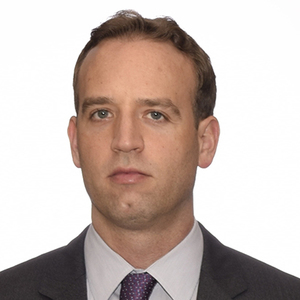
Scott Eldridge
CEO and Director at Canagold Resources
Replay available
Join us for a great event!

Automated transcript · Written by software from the replay's audio. It can mishear names and figures; the replay is the record.
0:12 Hello everyone, welcome to today's live panel discussion with a focus on historic mines hosted by 6. I'm joined today by Scott Eldridge, Cana Gold's CEO and director, Rick Van Ewenhuis, Contango Ores, CEO and president, Karem Ozenmez, Metallum Resources CEO, president and director, as well as Neil Briggs, Director at Playfair Mining. Today's panelists are going to be having a discussion about the unique and historic properties that they work with. And after we'll be moving on to a live Q&A session, we'll be accepting and answering some questions. You can submit your questions using the Q&A panel found
0:44 on the right hand of your screen at any time during the panel. As always, this is being recorded. You'll be available to watch in the coming days on six.com. Begin with, I'm going to offer the floor to each panelist to introduce themselves, introduce their companies before we really dive into things. Scott, I'm going to bring your slides up. If you can lead us, I'd greatly appreciate it. Very good. Well, thank you for the introduction, Cam, and thank you to Ron and Bianca and the team at 6IX, and welcome to the audience. Thank you for joining us today. It's a pleasure to be here to present Canada Gold along with the other companies here today. So my name is Scott Eldridge and I'm CEO and Director of the company. So before we dive into our flagship asset, which is located in our home province here in British Columbia. And yes, it is of course, a Brownfield project given the theme of the panel here today.
1:38 I'd like to walk you through our management team and just explain that we've done this several times before in terms of building successful projects. So my background, I've been in the industry for about 12 years. I originated out of the insurance industry, which I just found a little dry and a little unfulfilling, but it gave me a lot of tools for risk management that apply to the mining industry. So I started off as an equity buy side analyst with a German fund. From there I went on to run my own merchant banking firm and I've been on the issuer side of the business for the last 5 years. So I've worn several hats in the industry buy side sell side as well as issuers. The founder and president, or sorry, founder and chairman of our company is a name that many people recognize in the industry, Brad Cook.
2:25 He's also the founder and executive chairman of Endeavor Silver. They're a multi-silver mine operator in Mexico. Brad's a geologist, been doing this 40 years, and he actually had the vision to build our flagship asset into what it is today, based on the previous activity of that site that I'll tell you more about. I'm surrounded by a very strong technical team. Gary Biles is our president and COO over 40 years in the business. He's a metallurgical engineer. He's built and operated 4 mines. The most notable on that list is Eskay Creek, where he was part of the build and then mine manager with Homestake before they were taken out. Knox Henderson recently joined us as our VP Corp Dev. That's a name that a lot of people would recognize. He was formerly with Great Bear as well as Kodiak Copper, 2 interesting discovery stories in Canada.
3:13 Troy Geale is our VP exploration geologist. He spent 15 years with Rio Tinto with 2 discoveries behind his name and Philippine chartered accountant. He's our CFO. So let's dive right into the project. So New Polaris, it's located in northwestern BC. This is a past producing mine and it enjoys many benefits of a brownfield site. So the historical production here took place basically from 38 to 51. And they were mining, although very close to surface underground at a diluted grade of about 10 grams per ton. And during the history of production there, they recovered almost 250,000
3:52 ounces of gold mostly in the gold concentrate. So that's a brief history on the project. So fast forward to today, What do we have? We have an NI 43-101, 1 million ounces unmined, also at a diluted grade of 10 grams per ton. We have a mine plan wrapped around that in the form of a PEA that was done at $1,500 gold. The numbers are very robust. Needless to say, at higher gold prices, these numbers only look better. And what differs from the past is just a slight difference in the flow sheet where we have a solution here where we can produce Dory bars on site, fly them out and get paid in the same day versus producing a concentrate which was done in the past. So let's talk a little bit more about the location.
4:38 As you can see on the map here, we're south of Atlin. That's the town in BC that we mobilize in and out, and many people may have heard of the Atland Mining District. There was a gold rush here, just like the Klondike. A lot of placer mining activity over the years here. We're in proximity to Juneau, the capital of Alaska on the other side of the border. Juneau is actually named after a mining prospector and we're surrounded by operating mines. So it's a very mining friendly jurisdiction, this part of the province, and very strong opportunities for discoveries and in our case, building out a larger resource of what was previously defined. In terms of our resources, as I said, it's 1 million ounces at 10 grams. It's split about 50-50 between indicated and inferred.
5:25 We're running 2 rigs on the site today. And in fact, we put out a news release today on some results. The audience may have had an opportunity to look at that. We have 2 purposes of our current drill program. Number 1 is infill the inferred to tighten up our drill spacings to move it up to measured or indicated. And the second purpose of the drilling is to see if we can add to the million ounces and perhaps make this bigger. And that was the theme of the news release today where we have news releases on 2 parallel zones that currently do not have any resources on them. Let me move to a quick cross section. So the yellow vein there you can see is the CWES main vein that hosts the bulk of the million ounces. And sitting on echelon or parallel or just above that is the C10 vein where we've started to publish drill results. And on the C10 there are no current resources.
6:16 However, we are experiencing very high grade and substantial intercepts in that area where we see an opportunity to make the current 1 million ounces bigger. As we move along into the panel discussion, I would just encourage the audience to remember this picture. What you can see here is the old mine workings in the upper left brown area. And again, this was back in the 30s and 40s. They recovered 250,000 ounces at 10 grams. And then the much larger yellow area represents our 1 million ounces. And then the blue is our interpretation of the down plunge extension potential of the project. So the old
6:53 timers were only mining close to surface down to a depth of 150 meters. And when Brad picked up the asset, he had the idea here that yes, this vein system could extend or become bigger, given that it's a mesothermal system, and you see a lot of these in the Red Lake Camp of Ontario. So in our case, I think the brownfield production has a lot of benefits, but in particular, it's an exploration tool for us, which led to the opportunity to define the current 1 million ounces that we have. And I hope I haven't gone too far. I know that was some fast speaking there, But I'll wrap it up there with a quick thank you. Awesome. Well, thanks a lot, Scott. And with that, Rick, I'm going to hand the reins over to you.
7:39 Well, very good, Cam. Thanks very much. And we'll go ahead and dispense with the forward-looking statements.
7:50 Just a broader review of Contango, we're a U.S. Listed company, currently trading OTC, but we have a pending listing on the New York Stock Exchange. We only have 6.7 million shares outstanding, $25 million in cash. And a strategic investor is the Alaska Future Fund, which is a sub-fund of the Alaska Permanent Fund. All right, I'm going to talk about 2 projects. Only one is historic. The Manchow is our flagship, 1.3 million ounces, 4 grams per ton resource that we discovered. We partnered with Ken Ross. We sold them a 70% interest in the project. They spent $93 million acquiring that interest, and the whole idea behind this is to use their underutilized mill up in Fairbanks at Fort Knox to truck R4, which is going to average about 6 grams per ton, using elevated cutoff.
8:45 So in a sense, we're using an existing mine infrastructure rather than starting with a historic mine. But what it does is it reduces capital, reduces execution risk. We're not building a mill, we're not building a tailings facility. So you can see where we are going to be in production relatively quickly, back by 2024. This year, we spent $19 million, the joint venture spent $19 million, basically doing all the infiltering. You can see this is an open pit deposit it's a spectacularly rich open pit deposit with head grades that are going to average about 6 grams per ton Capital costs are anticipated to be about 130 million at the high range Again, we're not building a mill in a tailings facility, so we're keeping our capital costs low. Guidance from Ken Ross on operating costs, about $750 per gold equivalent ounce.
9:42 It's all in staining costs. So today's metal price, you got more than $1,000 margin. Our share of production is 66,000 ounces per year on average. I'm sure when we get the mine plan finalized We'll front front end load that and we'll probably be seeing You know more like 80 or 90 000 ounces in the first couple of years of production. You can see the cashflow generation potential. This is early stage in Greenfield. So there's lots and lots of exploration upside here. You can see the 2 pits from the north deposit and the main deposit with geochemistry going off for several kilometers along the trend of the Northwest. So while Ken Ross is advancing that project there, the operator, and putting it with a plan to put it in production by 2024, we'll be focused on our historic mine, 100% owned Lucky Shot project, located down in Southwest Alaska.
10:39 Just outside Anchorage, excellent infrastructure here. This property was mined The turn of the 1900s to 1942 produced about 250,000 ounces of gold averaging 40 grams per ton. Very similar to what Scott just described, a mesothermal type vein where pressure and temperature conditions are pretty stable and so you don't get a lot of variation. When you're in the gold, you're in the gold. Here they produced 250,000 ounces from just 169,000 tons of ore. So small, narrow vein mining, but very, very productive. It was shut down because of the War Act, which in 1942 shut down all non-essential mining in the United
11:26 States. It's on patented land, which I think is important because it's a lot easier to permit things on private land than it is if you're working on either state or federal lands. Our plan, there's an adit that goes in underneath in the footwall. It advances about 1400 feet. We have another 700 feet to go we're gonna refurbish that at it. We just selected our mine contractor Atkinson and We'll advance into just beneath the foot wall. We'll just about 1500 feet along the foot wall and Then just drill the hell out of it. Then we'll advance across the vein, bulk sample the vein, go into the hangwall, and do it all over again. And between the 2, we should be outlining about 500,000 ounces of resource.
12:13 So I will stop there, but I think you can see by the key takeaways we we've got the Manchur project that's going to produce a significant amount of cash flow that is a joint venture but again producing probably upwards of 60 million dollars of free cash flow and 100% ownership and a great historic mine that has a lot of exploration upside in the district. So I will end there. Thank you. Great. Thanks a lot, Rick. With that, Karam, the floor is now yours. Thank you. It's great to be amongst all these great presenters and the great companies. So I am the current CEO and president of Metallum Resources. We are relatively a new company. We started trading on the TSX in April starting beginning of April when we acquired this asset from an Australian company.
13:08 So it's an old, it has the old Winston mine. It has one of the highest grades zinc in the world with copper and some precious metals. On this first slide, you can see some of the infrastructure that are in place. The tailings dam, polishing pond and selling pond are here. And I want to show you here, This is the water treatment plant in place, which I'll be talking shortly, regular cautionary notes. And on here, I wanted to show you where this project is. It's just east of Thunder Bay and along the Trans-Canada Highway basically. So it's easy access. There's a road right from the highway to the mine gate. It's about 20 kilometers year-round well-maintained road and there's also a railway station in Shriver that they used historically.
14:06 So that gives good access to smelters along the route as well as ocean freight to overseas like China and Europe. So what did they produce? They produced about, it was in production in the 90s, great music era, but from 1990 to 1998-99, they produced about 3.3 million tons at 16% zinc, 1% copper with precious metals.
14:35 What they produced in today's prices, it correlates into 1.8, $1.7 billion worth of metals in US dollars, and most of that was coming from zinc. So what is left is another horizon that they didn't mine but they drove all the infrastructure into it. So there's 16 kilometers underground development right to the ore. The current resource including indicated and
15:05 inferred 2.3 million tons at 18 percent zinc and 1 percent copper and gold and silver. So when you convert that into gold resource Gold equivalent at 13 grams per ton, about 1 million ounces. So it's high grade in any way you look at it. The infrastructure is on this photo I wanted to show. There is a transformer on site. It's literally on grid. There is all the shafts backfill raises
15:36 ventilation shelves main Winston shaft is on here on the left hand side. It's not marked but all the other infrastructure on place in place. So that gives us very low KPAX number but also helps with the OPEX numbers in terms of development underground which is already in place. So initial KPAX we're looking at is 110 million US and that gives that includes all the pre-production and owner's cost. And the all-in sustaining cost is about $0.40 per pound. So today, it's around between 1.5 to 1.6. So we have good buffers on there. And yeah, the feasibility study that was published in October, just updated with updated numbers.
16:21 And here you can see the U.S. Correlation with today's numbers on it. So the cash cost is $0.35.
16:28 Mine life is just under 9 years, including the portal development. So we're looking at doing that in tandem with exploration. So that'll give us a little bit better timing on that. And yeah, the post-tax NPV at 8% is 250 million Canadian and IRR is at 35%. So it's very robust, very good numbers in terms of feasibility. Like I said before, it's pretty much on Trans-Canada Highway near Thunder Bay. It gives really good access to all these smelters, as you can see here. What's also interesting is the concentrate that was historically produced, and we are looking at producing very similar, is clean concentrate, free from deleterious materials, and good recoveries.
17:19 So that is very desirable for most of these smelters. So which we are, we have some interest from metal traders and smelters at this point. So The exploration potential is also there, highly underexplored.
17:34 The solid colors here are showing the resource and the dashed are our immediate exploration on the left-hand side, which we think we can increase the resource as we start the construction, we will do more. And on the right-hand side, the more in the not regional, but in the vicinity to kilometers square from the ore body, all these other highly prospective, more on the greenfield side, left brownfield targets that we are immediately going to tackle.
18:04 The management team, apart from me, Simon Ridgeway started the company and made the deal. He's done numerous discoveries, including mine development with Fortune and Silver that he built. We have Mark Cruz on advisory, David Lang, both have started and built companies. Mark recently, Trevally, he started and built a $1.5 billion Zinc company.
18:28 And also we have very strong, robust team of experts in our board. So if anyone wants to hear more I'm always available. Our website is metalliumzinc.com. Thank you. Great, thank you for that Kareem. And with that Neil I leave it to you to wrap up introductions for us. Yeah. OK, thanks, Cam.
18:52 Playfair is a little different than the other introductions you've heard. Firstly, we're working in Norway over in Europe, rather than in North America. And secondly, we're not extending known deposits, although we are doing brownfields exploration in a historic mining area in Norway. So Norway is a great long country, kind of a spoon shape from north to south, and we're kind of at the end of the handle where the bowl starts, about 400 kilometers north of Oslo,
19:37 100 kilometers south of Trondheim, and we're in an area that has a number of known deposits, some of them quite large. We took on an old area with 3 known deposits, but has not seen any significant exploration
20:06 for copper for probably 50 years, 40 or 50 years, and nickel a little more recently. As you can see, it's one of the older deposits in Norway. It's the oldest large copper mine in Norway at Kvikne. Started in 1632, was mined on and off till 1789.
20:37 Shut down several times during that period for various problems.
20:44 Mine collapses were problems on occasion, and once their entire production was on a ship going to Germany where it was seized by pirates and took all their money. And so they had to, didn't restart for a number of years but as you can see it's these are the old they didn't have tailing ponds they dry stacked everything here and you can see the general countryside here. One of the things I like about
21:25 old areas like this is that one, you know there's good geology because there are mines. 2, there's good access, because they had to get in and mine them somehow. And 3, there's usually a whole lot of data available to you at no cost. Now admittedly, the data from 1600s and 1700s is pretty sparse, I mean maps exist, but other stuff
21:58 is not that useful, but As you get to more modern times, people have examined all these deposits, they've written papers on them, the government has mapped and sampled them, they've mapped and sampled everything in the area, there are airborne data, there's all kinds of information, both government and industry, and it's usually available to you at essentially no cost.
22:28 But, you know, you're in an old area like this, which you know has been prospected for 400 years, so if you want to go at this you have to do something different to what's been done in the past. And there are a lot of modern techniques. We elected to not
22:52 try to extend any of the old mines at this point, but instead to look at a large area, and we acquired about 300 square kilometers. And we looked at all the data and we had a two-stage filtering process, 1 which was an AI kind of process which based on the data from the property, where you collected all the data, developed an algorithm as a signal for the known mineral deposits and showings,
23:31 and then tried to calculate probabilities of similar things occurring on the rest of the property. This is kind of the way that a geologist goes about it. It's just,
23:47 when you do it in a computer like this, and process almost 200 million pieces of data, it's kind of more than most geologists can hold in their head at any one time. So having done that, we then came up with areas that we thought were interesting, and out of 300 square kilometers we went back into less than 3 square kilometers, And we did soil geochemistry, a modern method called mobile metal ions, which detects
24:27 loosely bound ions coming from oxidizing sulfides, which then travel vertically to surface. So most of the property is covered with glacial tills. And usually, you have to try and figure out where the till comes from. But if you're generating mobile ions
24:52 from decaying sulfides, those will just rise vertically to surface. So it's a harder target to find. But when you find them, it allows you to focus. And we then followed that up with doing drone mag over a bunch of our targets. And Looking at the map here on the left, the total area you can see is about 340 square kilometers. The bright red areas are favorable areas and then within that we selected areas And we ended up with 7 drill targets.
25:40 And as you can see, we're now out drilling on 2 of them to date. And we're finding sulfides. We're waiting for assays.
25:54 And that's my story. Thanks. Wonderful. Thank you all so much for those great introductions. And I think for any attendee that's in the room currently and any future watcher of this recording, you'll have a better understanding of who's in the room here today. So back to the question, and I'll pose this to the group and feel free to hop in if you have an answer for me, are historic mines better than a greenfield project?
26:23 Well, I'll just jump in. I think every project has to be sort of weighed on its own merits, but there's certainly advantages. I think all of us have sort of pointed some of these things out. You know, you've got, there's an old adage in the business called the best place to look for a mine is next to the head frame. And so I think if you sort of start from that premise, you're certainly starting from an advantage in that there has been a mineral deposit there that was historically mined
26:54 at whatever the copper prices or the gold prices were 100 years ago, or in Norway if it was 400 years ago. So it's a place to start and that's the hardest place to get going in this business is to make a discovery and so essentially you already have a historic discovery and so I think those are the advantages. Right maybe I can follow Rick. So I mean, we're somewhat in the same position having a mesothermal, probably structurally controlled vein deposit. That had past production. So as I said, during my quick presentation there, the past production is a great exploration tool for an underground vein system. And if we look at the hallmark of a brownfield project, it is can this become a mine again?
27:42 And we're all in the business here of trying to generate returns for our shareholders. So a brownfield project, yes, they have to be judged on their own merits. But generally, they offer less risk to shareholders with the vision of how can this project advance, whether we rebuild the mine ourselves or is there an M&A event, it's generally less risk for the project and therefore less risk for shareholders. Yeah, maybe I can say that it seems to me that the amount of data that is available in an old mining district is something which is hugely valuable in various ways for whatever kind of further work you're doing in the area.
28:30 And the people are used to being in a mining area and the access is usually there Various facilities, you know, so there are there are all those kinds of advantages, too Yeah, also I might as well say a few words as well. I mean, apart from those, yes, the infrastructure, the history, the data, but the timeline to get it into production is enormous. Like when you're doing the greenfield or just purely exploration, you're looking at, I don't know, 10 years. Is that the average for base metals? Whereas all these projects are a lot closer to production with a lot of stuff already in place. Like in our case or all the other presenters, we have the infrastructure, it's close to production, it's just how can we do it safely and in a sustainable and longer term ways. I think Karim makes a great point on time. I think the average, once you've made a discovery and outlined a deposit, the average is 10 years to get it into production from a permitting standpoint, capital raising, et cetera.
29:41 Now we discovered Donlon 25 years ago and it's still not permitted. So that's one piece. Well, yeah, there's always permits in, right? Well, it's one of the reasons I like to work on private land. Our Manitoba project is located on land that's owned by an Alaska tribe. And they own a piece of land about the size of Rhode Island, we have the exploration rights to the whole thing. That makes exploration and development much easier when it's private land. You don't have to ask the state or the federal government's permission to use the land. And that's the same situation with our Lucky Shot project, which is, again, fits more into the historic mine. These mines were shut down in 1942.
30:27 They were in ore when they were shut down. They shut down because they were considered non-essential mining. They were patented claims. In the U.S., you can patent a mineral claim. So, again, we're working on private land. So if we don't disturb more than 5 acres of wetlands, We don't need a federal wetlands 404 permit. So we can, and underground mines, as we all know, have a very small, much smaller footprint than open pit mine. So again, I think those are all factors that, as I think we've all talked about, just, it makes it a lot easier when you have all that historic knowledge. Oh, absolutely. Now, I can appreciate that maybe the answers could range from the award measures act to pirates apparently.
31:20 But why do people stop mining on these sites? These are historic projects for a reason. But every mine and every property obviously has its own story. But maybe we could, as a panel, kind of delve into why these are abandoned or put on hold indefinitely and the story about coming back to them. Seems to me very often it's metal prices, it's overall demand of metal prices most of the time. I mean there are things like wars and pirates, yes, but mostly it's metal prices. At some points the thing is not economic anymore, and maybe it's undercapitalized and they just can't get over a bad spot.
32:10 But metal prices tend to be cyclical, so that later on, what was not looking very good at some particular date later on It looks much more interesting again, and I'm sure when you look some of you looking at reopening old old minds I'm sure some of you are seeing that. Zinc is probably a good example, Karim, you know? Exactly, I mean, it was actually shut down because of the low zinc price at the time. It was floating around $800, They sustained it for a while, but eventually, when they wanted to, you know, get into the bigger area, they shut it down. Where we're looking at more than $3,300 to $3,500 a ton right now, and our cost is low because, again, they're cyclical. You know, if you wanted to do exploration now you probably can raise funds using exploration but getting it into production maybe you'll miss the boat by that.
33:13 Like like all the other presenters we are very close to production great you know return on robust economics whether it's a feasibility study like our case or pre-feasibility, it all shows there. That's where the advantage is also. Yeah, just to follow up on that, traditionally or typically you would see mines shut down due to metals prices, but with Polaris, it's kind of a unique story. They were producing gold in the form of a concentrate and they would barge it out to a smelter down South in Washington State. And the reason that the project shut down was in 1951, they actually lost a barge of gold concentrate to the Pacific Ocean. It sank in a storm.
34:04 And even back in 1951, there was insurance around and luckily they collected from the insurance company but at the time that was the demise of the project it was that they lost their gold to to the ocean. All those pirates! Mother Nature was the pirate. Another fact is that in our Lucky Shot case when they shut it down in 1942, was the 1942 with the war act, the land was patented. And so it was private ownership. And of course, the owners eventually died when the mine wasn't put back in production. It goes to other family members, the other family members, goes to their kids, goes to their kids. So A lot of times these older historic districts, the land status is bifurcated.
34:51 It's in a dozen different people's hands. And so it's a lot of effort and work to put that back together. That in itself can take a lot of time and effort, but it can be well worth it. Now you've got a consolidated district, but it does make, it's one of the challenges, I think, in dealing with historic mining districts, is the fabrication of the land ownership. Absolutely. Well, I think I need to follow up with you later about some deep diving locations, Scott and Neil. But I'd like to go into a bit more of the conversation about not maybe how you selected the mine you ended up selecting but what's the process for selecting an abandoned mine or an abandoned project?
35:36 There are so many in the world. How do you evaluate which one represents a better opportunity? When you were picking or anything you're thinking about the future? It's got to be certainly an interesting process. Scott? Yeah I can start that off. I mean I've been CEO of the company for 3 years and Brad as I said he picked up this asset before I was around. So just speaking on his behalf, you know, some of the main ingredients that make a company successful is is the team, the project and the location. So I think for us, it was more location based. We wanted to be in Canada. We're very comfortable in British Columbia. It's been sort of a hotbed of exploration money, discoveries, as well as M&A activity, with Pretium being taken over by Newcrest.
36:33 But again, as Rick said, it comes down to the individual merits of the project. So again, Brad saw the opportunity here to make this project bigger and better, and that's exactly what we did with more drilling. As was the case with the previous production, they were only mining at 150 meters below surface. And with mesothermal deposits, they can go for 1000 or 2000 meters below surface. So the previous drilling never went below 200 meters. So what we saw was an opportunity there for the vertical depth extension to make the project bigger. And it just so happened that it was the same continuous grade at 10 grams per ton. So that pretty much sums it up for us. Yeah, I agree.
37:19 Like for our case, it's very similar story how we picked it up. Simon Ridgeway, our chairman, did the deal. When they did the deal, zinc price was still low. That was early last year. So after that, zinc price started to go up. But what was interesting and attractive for us was the grade, the remaining ore and the infrastructure being close to highways and everything, but also the exploration upside potential. It's highly underexplored in a really good jurisdiction and half of it is on patented land, the other half we are in conversion, you can't do that anymore, so we're converting them into mining planes which will speed up things. So those were the main aspects we evaluated in engineering the historical data.
38:11 It's very very attractive that way. Yeah it's opportunity I think just as a generic answer Cam, that you look at a project and you're looking for opportunity whether it's an old project or what and you're looking for that and in Playfair's case it was an opportunity to use existing data in an old mining district and do new things with the data and hopefully come up with new ideas, but opportunity. Yeah, just to follow up on Neil's comment, you know, in our case with Lucky Shot, 40 grams is the historic mine grade, 1 to 2 meter thicknesses of the vein.
39:04 Those are good mineable widths in any time. What we also liked was the infrastructure support, the fact that it was on a road. Lots of historic data, as Neil mentioned. This is in a lucky shot was 1 vein in a district of mesothermal veins. There were 30 mines operating at the turn of the century, turn of the 1900s, until they were all shut down in 42. So lucky shot's 1 vein. There are dozens and dozens of veins In the district and we control most of the district because we've gone through that painstaking Step of consolidating all the various owners just to go a few more to go but but yeah, I'd say great and the greatest Kang of course and infrastructure because we're working in Alaska and my history in Alaska and finding big deposits that are out in the middle of nowhere, I'm sticking to the road system.
40:03 Great, That's awesome. Rick, I think I'm going to actually pitch this to you to start, just because you were talking about working with wetlands. But from an environmental point of view, is it better or worse or the same to be working a historic mine versus maybe a greenfields project? I think this is an important question for investors to sort of think about all the specifics. Obviously, when there's been historic mining, we didn't used to have a lot of regulations and rules. And so a lot of historic mines are frankly kind of a mess. And that's something you have to take a look at when you're a mining company, mining CEO, taking a look at what is the quality of the asset and what are we actually acquiring here. Am I acquiring legacy issues from an environmental standpoint, as well also from an investor standpoint, because obviously that may be a continuing liability.
41:00 We formed ALEXCO out of NovaGold a number of years ago, actually it's been about 15, 20 years ago. And that, ALEXCO, stands for Acid Liability Exploration Company. And we basically set that company up to clean up the Keno Hill Mining District in the Yukon while exploring it. So the government, there was a liability of the federal government We arranged to deal with the federal government to clean it up while we explored the district and then we've got 3 operating mines in the district, so you can Thought that you can't have these liabilities. You just have to figure out how to manage them and make sure they're not don't become a liability that you know affects your balance sheet. Yeah, I'd say one of the things that we run into in Norway, particularly when you've got mines that are 400 years old, they didn't really care much about the environment when they were mining, you can be sure, and So there's lots of contamination around the mines and you do have to recognize this and that people around there who are quite outdoor oriented, which they are in Norway, look at this and don't like it.
42:20 And so you have to build into your exploration that you have to take time to explain to people that mining today is not like it was 400 years ago, that you actually need things like a closure plan before you even start, and things like that. And so just something to keep in mind. Yeah, I can follow up with that as well. It seems like the commonality of these projects, as is the case with most brownfield sites, is that they're underground mines. So of course, There is some rehabilitation or reclamation involved with owning a project that was in production in the past, but generally underground mines have a relatively small environmental footprint.
43:14 So in our case, there's a bit of reclamation work to do but that's something that we're happy to do on an ongoing basis but the benefits far exceed the negatives. The flip side of the coin is also from a financial perspective Is there a cost savings to some of the previous activity? And as is the case for New Polaris, the old underground access will actually act as a vent race when we eventually put this in production again, and that would represent probably a 5 to $10 million savings for us. Absolutely, Karan, do you have anything to add? No I mean that's it. Having the underground mine has its advantages.
44:05 And yeah, it's not much really to add. We are a little bit luckier because it's more most recent probably, historically mined in the 90s by Inmet. And then 1st Quantum has been taking care of the maintenance and we have the closure plan in place and the liabilities, not the liabilities, the bond for the closure, part of the closure. So yeah, those are the new things when you compare it to the historic mining. So well positioned that way. Fair enough. Absolutely. Gentlemen, we have a few questions come in. And to the audience members that have asked these questions, I'm going to try and pull them all together. We'll make sure that we pass on your questions to the specific speakers that you've directed these to, but to the group, I think the audience is very interested in the specific metallurgies of your projects, the range of concentrations, for instance. I think this would be a good opportunity to take a couple of minutes each, just going around the horn, and maybe diving back into some of those details that the audience could be very interested in. So just another chance to kind of reiterate what's going on in the ground there.
45:18 Neil, maybe we can start with you and Playfair. Sorry, I've lost a little bit, Cam. What are you looking for? Just Specifically, actually one of the questions was directly to you, but what is the range of concentrations of base metals that you've detected in and around the Old Mines? Oh, okay. There's a short answer which is I don't know, and the reason that I can tell you this is that there's a lot of pollution around the old mines. So normally you go into an area, you're going to establish what, find a place to do some test work and see what responses you get from non-mineralization.
46:11 In this case, because there was so much old problems around, I decided not to do that. What I can say is that we did a couple of thousand MMI samples over a large area, and for example, and these are copper mines we're talking about, and the background copper number was about 135 parts per billion. But we found anomalies out far away from old mines where we got numbers of more than 50,000 parts per billion, like 300 or 400 times background. I did do a little work around 1 old mine and got numbers like 30, 40, 50,000 parts per billion, but I only did a little bit of work because I could just see looking at it, that it wasn't going to be that meaningful to me.
47:15 No, fair enough. Thank you. Kareem, maybe you could talk about your project. Yeah. So we looked at the historic concentrate and ore recoveries versus the recently done MAT test that was done in 2019. So zinc recoveries were around 96, 97, 97 production, 96 met work. And then the concentrate recoveries were around 53 on the production and 54% on the met work average. And the copper was around 30 to 33% respectively on the concentrate. So our feasibility study was based on the lower numbers just to be conservative, but that's considered as good recovery to concentrate and having it free from deleterious materials, give us the advantage of volume.
48:11 All right, okay. Rick, you were specifically asked about the metallurgy at Lucky Shot. Well, Go ahead. Yeah, I was just going to say, yeah, so yeah, great metallurgy is important for a gold deposit. And LuckyShot is basically a mesothermal vein with very low sulfide. There's probably 1 less than 2% sulfide in the vein material. The gold is free gold I had some photos you can see going on our website. You can see the the free gold nature of the deposit we've done a lot of metallurgy and historically There's been a fair bit of modern metallurgy done And we're we're probably getting Bit plus 50% 50 60 percent of the gold as a gravity concentrate only so no use of cyanide and so our plan this is this it gets back to permitting if you're permitting a relatively small and high-grade mine With gravity only and not using cyanide.
49:12 That's something you can get back. That's something we're We could revitalize our permits with right now. We have just we're on private land We don't have to get anybody else to do this. So long as we're doing the dry stack of the tails Will process the tails elsewhere Again, there's nothing to dispose of So we kind of take a holistic view of this. We've got high grade, greats, greats king again, it's the best thing to work with. We've got a significant amount of the gold that we can recover. We think our head grade is going to be in the 20 gram range. You know it's 40 grams historically but you know that was those were different conditions, different cutoff, etc. But we're looking at more probably the 20 gram grain if we can get 50% of it with just gravity And then I've got 10 grams in my tails I can find find somebody with them with excess milk capacity and process it there.
50:06 Or I can worry about permitting a cyanide process facility myself if that makes more sense from a risk capital standpoint. So that's the plan that we're moving forward with. Just simple gravity, at least for a first cut in the lucky shot. Great, thank you. And Scott, maybe you could just dive into some of the specifics about what's going on in the ground at your project? Right, so the previous production of Polaris during the 30s and 40s was done at a grade of 10 grams, again mining underground, and they produced a gold concentrate. And then towards the last 2 years of mining there, they started to use a small-scale roaster to be able to produce dory bars on site, which has many cost advantages versus producing a concentrate.
51:00 With a con, you've got a working capital exposure, TCRC shipping insurance, various penalties at the smelter. So fast forward to what we're doing today, lessons learned from the past. The way to really unlock the cashflow value of this project is to again, produce Dory bars at site. We looked at 3 different metallurgical processes and our PEA flow sheet allows us to produce 90.5% recovery rate on the gold and produce Dory on site. Another very important item there that Rick mentioned is what about the tail? So in the past, this was smaller scale, sort of only 300 tons per day, and they did have wet tails. Our operation is based on a 750 ton per day mill, and we're taking the tails a step further further in terms of ESG So we would have a combination of dry stack tails Combined with with backfill, which is probably the most environmentally friendly way to move an underground project forward.
52:03 Okay, great. Well, Gemma, look, I'm aware of the time, but I want to still take an opportunity so you can each go over maybe some of the catalysts and also provide some parting words for the audience members before we wrap up for today. So a minute or 2 each. Let's go around the horn one more time. What's coming up? What's new? And what do you want to leave with investors today? I think we're going to go backwards in the order we just did. So, Scott, I'm going to go right back to you. Great, thanks, Cam. So, what's happened recently with us, last week we closed the financing. It was $5 million Canadian flow-through done at 50 cents with no warrant. Obviously, use of proceeds is to drill.
52:48 We're currently finishing up a 24,000 meter drill program with a fully staffed 20 person camp, 2 rigs on the site. This financing that recently closed will allow us to drill throughout the winter. So our project is somewhat unique for British Columbia where we can drill year round given our proximity to tidewater as well as our relatively low elevation. So we're very excited to drill through the winter when the assay labs will be less backed up. We had a news release out today on more high-grade results in new zones that don't currently contain any resources. So in terms of upcoming catalysts, it'll just be more high-grade drill results and watch for news releases from us for every 2 to 3 weeks over the coming months into February and March.
53:34 Great. Thanks a lot, Scott. Rick, the floor is yours. Yeah, a lot of catalysts coming up. I think the near term is probably our uplisting to the New York Stock Exchange American. That's a significant catalyst for us. And at the project at Lucky Shot, we'll be finalizing our contract with our underground miner, and then be at the face and advancing the face to get in the foot wall and then get the drills in there. And like Scott, when you're underground, you can work year round. It's another nice advantage of being underground. So Those are several catalysts in there. And of course, at our Manchuro project, we're looking to complete the feasibility study next year.
54:27 And we start construction next summer on the project. So you'll see that project advance. And that means we're just another step closer to cash flow, which again, based on Kinross's guidance and again, this is not an earning arrangement with Kinross. They paid $93 million for their share of of of of Manchego. So they're they're eager to get this going. And again, we don't have to build a mill on the tailings, at least from a permitting standpoint. It's drilling blast loaded on the trucks and get it up to the Fort Knox mill. So When we're in production, we'll be generating, you know, plus $60 million of free cash for the year. So to figure out what to do with all that cash, I think we can probably dividend half of it back to the shareholders and maybe use the other half to continue to explore and look at other opportunities.
55:16 Wonderful. And over to you, Kareem. Yeah, thank you. We are looking at obtaining the dewatering permit in the first quarter of the new year, and then immediately after that in the spring, towards the summer, start dewatering, and then open the decline construction as well as some minor construction in the new year and advance the project into production in the following year at the very latest. In the meantime, while we're doing that, we're looking at doing some more exploration so that we can bring this Canada's next zinc mine into production at an early stage. Just a quick answer to the question on zinc prices. Zinc prices are expected to go up in the 15 to 20 percent year after year in the next 5 years.
56:03 I met with analysts in London during the week of LME, and the consensus was there's 5 million tons of zinc more than needed in 5 to 7 years, and most probable mines are going to only supply with 3.5 million. So there will be deficit for a while. Short answer. Great, thank you so much. And Neil, I'm going to pass things back to you to wrap us up again. Well I'd like to say that Exploring around historic mines is a great way to go and we've heard lots of good reasons to do that today. And it's just a good thing to do and changes the whole risk profile of what you're doing, you know. It's great. As far as Playfair goes, we've just finished drill testing 2 of our 7 targets.
56:55 We drilled 11 holes. I've just finished cutting the core, the sulfide intersections in the core, shipping it off to the lab and like everybody else we'll be waiting for the labs. So watch this space. Fair enough. Well gentlemen I want to Thank you again for coming on today. I'd also like to thank everyone in the audience for participating and joining us, especially those who asked questions. If you didn't get a chance to ask a question or if you think of 1 after the summit's already over, don't worry, you can always, of course, get in touch with any of the companies represented here and I'm sure they'd be happy to get in contact with you or you can always contact us at six.com we'd be happy to put you in communications. But with that I think we're going to wrap up for the day. Gentlemen, thank you again. Can't thank you enough for coming on today. I think that was a great panel discussion and I hope you all have a good rest of your week and a safe day.
57:48 Thank you. Thank you. Thanks Cam, thanks everyone.
Follow Contango Silver & Gold Inc. into a list and get an email when it puts out news.
Follow Metallum Resources into a list and get an email when it puts out news.
Follow Playfair Mining Ltd. into a list and get an email when it puts out news.
Follow Canagold Resources Ltd into a list and get an email when it puts out news.
CEO and Director at Canagold Resources

President, CEO, & Director at Contango ORE
Rick has more than 40 years of experience in the natural resource sector. Before joining Contango Ore in January 2020, he was President and Chief Executive Officer of Trilogy Metals, who are currently developing the high- grade Upper Kobuk Mineral Projects located in the Ambler Mining District of Alaska. Trilogy is a company which was created in 2012 as a spin-out from NOVAGOLD, a well-known company he founded over 20 years ago. NOVAGOLD is currently finalizing permits for the 40 million ounce Donlin Gold Project in Southwest Alaska with partner Barrick Gold, the world’s largest gold company. Previous to his role as Founder, President, and CEO of NOVAGOLD, he held the position of Vice President of Exploration for Placer Dome Inc. from 1990 to 1997. In addition to his international exploration perspective, Rick brings years of working experience in and knowledge of Alaska to Contango. Rick has managed projects from grassroots discovery through to advanced feasibility, production and closure. He has played a key role in setting up several other corporate entities including: Alexco - where he remains a Director - which is rejuvenating the Keno Hill Silver District in the Yukon; Tintina Resource (now Sandfire Resources America), which discovered and is now completing a feasibility study + permitting the high grade Black Butte copper project in Montana; and SolidusGold, where he is Chairman. Rick holds a Candidature degree in Science from the Université de Louvain, Belgium, and a Master of Science degree in Geology from the University of Arizona. He received the Thayer Lindsley award in 2009 for his role in the Donlin Gold discovery and the Colin Spence Award in 2016 for his role in the Bornite Discovery.
Director at Playfair Mining
Mr. Briggs has a Bachelor of Science degree in geology from the University of Durham, England. He held a senior exploration position with Falconbridge Nickel Mines Limited, during which time he established the company’s regional exploration office for the Atlantic Provinces of Canada. Starting in the early 1980’s, Mr. Briggs held senior management positions with Manitoba Mineral Resources Ltd. (MMR) ultimately serving as president from 1993-1995. While at MMR, Mr. Briggs managed the company’s 27% interest in the Trout Lake Joint Venture and annually negotiated the sale of MMR’s share of production from the 2,500 ton per day Trout Lake Mine resulting in annual revenues of some $18 million. He also represented MMR on the Board of Tantalum Mining Corporation of Canada (Tanco), North America’s only tantalum producer.
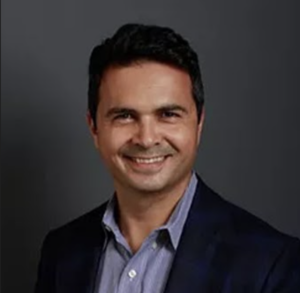
CEO, President & Director at Metallum Resources
Mr. Usenmez is a Geological Engineer and a mining entrepreneur with over 20 years of global experience and has worked in various technical and leadership roles. After working with various VMS deposits and discoveries while working with Inco, Vale and Amec, he managed a drilling company, where the company grew during the downturn. He worked in numerous VMS deposits in Canada, such as Duck Pond NFLD, Bathurst in New Brunswick, and in Northern Manitoba, mainly in base metals, such as Zinc. He co-owns Atom Bits, a rapidly growing diamond drilling bit manufacturer in Canada. He is a member of the Board of Directors of the PDAC and is the Co-Chair of Public Affairs Committee.