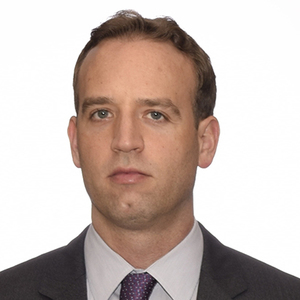
Scott Eldridge
CEO and Director at Canagold Resources
Replay available
Join us for a great event!

On 6ix: 6ix.com/event/more-high-grade-gold-update-on-ongoing-47-hole-drill-program-at-new-polaris
Automated transcript · Written by software from the replay's audio. It can mishear names and figures; the replay is the record.
0:07 Good day everyone and welcome to Cana Gold Resources webinar. More high-grade Gold, update on our 47-hole drill program at the new Polaris project in Atlan, British Columbia. I'm Knox Henderson vice president of corporate development and Speaking today will be our CEO and director Scott Eldridge. How you doing Scott?
0:29 Great. Thank you And also joining Scott is our Vice President of Exploration, Troy Gill. Hey, Troy. Hi. So here we are on a drizzly day, August 26th from Vancouver. We have an ongoing program going. Before we jump into the presentation, just to let you know, if you have any questions, just click on the Q&A button to the right side of your screen, and we'll collect the questions throughout the webinar, and I'll ask the questions at the end of the webinar. So with that, I will let Scott kick off the presentation. All right, thank you very much for the introduction, Knox, and thanks to 6IX again for setting up another summit.
1:15 Looks like we've got a great attendance here. Definitely nice to see the interest here as we get towards the end of the summer. And mostly the audience, if you listened to our last summit, that was back on July the 6th. And since then we've put out several news releases of high grade drill results, which is the topic of the presentation today. And the most notable, most recent news release since the last summit was an intercept of 30 grams over 4 meters. So we've continuously received excellent results back from the Asset Lab as we somewhat expected, and we're just growing our confidence here in the project as we move forward. I will direct your attention to our cautionary note, as we may be looking some forward-looking statements during the presentation.
2:06 So I'll start off with the investor highlights. So last summer we had a collective series of events which we call the rebirth of the company. So we changed the name from CanArc to CanaGold. We brought on a new director, new VP of exploration, that's Troy Gill joining us today. We had a 5 for 1 share consolidation. And as well, we went out with an equity raise, which was originally announced to be $3.2 million, and we upsized that to 8.4. And the primary use of proceeds for that financing was to drill at New Polaris, and that's exactly what we're doing right now. And we commenced that program just at the end of May, and it will continue through towards the end of November. And throughout that time, we'll just continue to have continuous assay results. We've actually only put out 8 out of 47 holes. So this is really just the start of the drill program in terms of getting those results out to the audience.
3:03 So our flagship asset is New Polaris, and we do have a PA on the project, and we'll talk about those robust results as we move forward here. And as everyone knows, our project is here in our home province. We're all sitting in the head office here in Vancouver, very easy to access the project up in Northwestern BC. So we do have 3 public company listings, TSX, Big Board here in Canada under the ticker CCM, and then secondary listings are OTCQB in the US, as well as Frankfurt over in Germany. We currently have about 71 million shares outstanding. We have about 11 million warrants out there that were attached to that financing from last summer. The strike on those warrants is 65 cents. We're currently trading at about 47 cents, so that puts our market cap at around 35 million Canadian.
3:52 And we do have a fairly healthy treasury here where we are fully financed for our current drilling activity. And we continuously look forward to putting more results out. In terms of our top shareholders, Eric Sprott owns 10% of the company. The Rougher Gold Fund out of London, England is also a substantial shareholder. And then Brad Cook, who's our chairman and founders, as well as a few high net worth individuals from the US. Collectively, that's our top 6 shareholders which control about 40% of the company.
4:25 Moving on to the board. So my background, I've been in the metals and mining industry now for about 12 years. Prior to that, I worked in the insurance industry. In the mining business, I've always been on the capital raising side. And collectively, over my career, I've raised about 500 million dollars for the sector, everything from grassroots exploration capital up to construction financing to put projects into production and I've now been the CEO of Canada Gold for about 3 years. Brad Cook is our founder and chairman again, many people know that name. He's also the founder and current chairman of Endeavor Silver, a very well-established multi-silver mine operator in Mexico. Gary Biles is our President and COO. He's the lead technical on the New Polaris project.
5:12 Gary has built and operated 4 gold mines in his career. The most notable on the list is the fabulously high-grade Eskay Creek mine right here in BC, where he was mine manager before the takeover. And Troy Gill, who's joining us for the presentation today, he's a relatively new addition to our team. Troy is our VP Exploration. He originates out of Rio Tinto, where he twice won their internal award for Discovery of the Year. And prior to that, he did gain some very valuable underground mining experience at Peak Gold Mines in Australia, which shares some parallel commonalities to our project here in BC, New Polaris. Philippy, Chartered Accountant, he's our CFO. And the gentleman giving the introduction, everyone knows Nox Henderson. He recently just joined us in July as our VP Corp Dev. So he's been a very welcome addition to our management team here.
6:06 Moving along to the board, Deepak Malhotra is our lead technical independent director. He's a PhD metallurgist. Andrew Bowering is our newest board member. He joined last August. That's a name that many people recognize. And he's a mining entrepreneur based out of Vancouver, very successful. His most recent success story is Prime Mining, which a lot of Canadians follow. Martin Burian, a chartered accountant, chartered business valuationist. He's our lead director from a corporate governance perspective and then of course Brad and myself rounding off the board. So let's transition over to the project side of things. So we do hold a portfolio of gold assets in the western area of Canada and the US. However, our time and attention is really dedicated to our flagship asset, which is New Polaris right here in BC. And we'll spend the majority of the time here talking about New Polaris.
7:00 But just very quickly, with our portfolio, if we hold a property that we're not spending money on, we do look to option that out to other companies to create value for our shareholders. And that's something that we will continue to do as we do hold a number of projects, particularly in Nevada that are small, but other people do recognize value in those projects and again we only option them out if we're not looking to invest our capital there. So a brief history on New Polaris. This is a brownfield site, so there was past production here during the 30s and 40s. And at the time, they recovered about 250,000 ounces of gold, mining at a diluted grade of about 10 grams.
7:45 And the old timers there, they were barging out gold in the form of a concentrate to a smelter down south in Washington State. And the operation ceased in about 1951 when one of the barges sank in a storm at sea. Fast forward to today, Brad was able to pick up this asset and led the team that discovered the parallel vein system, which now hosts a 1 million ounces at 10 grams. And we have delivered a PEA on that 1 million ounce resource. The numbers are spectacular. It's driven by the grade. We hit an after-tax IRR of 56%. The NPV in Canadian dollars touches about 500 million. And we have a very quick after-tax payback of less than 2 years.
8:32 So what differs from the past in terms of what we would like to do with this project today is, as we move this project forward and de-risk it towards a construction decision, we're not following the path of the past, which was to produce a con. We have a flow sheet that's been validated by a PA and that's the flow sheet we'll use in the fees to produce dore bars on site and this would allow us to produce dore on site fly in fly out and get paid for gold in the same day rather than dealing with all the complexities of the smelter. So at this point we're in the middle of a 24,000 meter drill program and that would lead us into an eventual feasibility study as we move the project forward.
9:16 So let me give you a more accurate depiction of where the project is located. So if you can see the star on the map, that's New Polaris. The true closest town is Juneau, capital of Alaska. Juneau is actually named after a mining prospector, And that does speak to the mining friendliness of this area. There is a lot of placer mining as well as commercial scale mines. And the closest town on the BC side is Atlan. It's about 100 kilometers north of us. So when we access the project for our 20-person camp, We go in through Atlan either by helicopter or a small fixed wing aircraft. And in either way, you'll get there in less than an hour. So it is very accessible. So in terms of the property, we sit on Crown Grants, which means we own the surface rights as well as the mineral rights, which is always advantageous as you move a project forward towards a construction decision.
10:07 And we do have Troy on the line here, and we'll do a deeper dive on geology, but at a very high level, this is a massive thermal gold vein system. And it's very similar geology to what you would see in the famous Red Lake gold mines over in Ontario and into Quebec. And we'll touch on a lot of those analogies as we move forward here. So in terms of our resources, so NI 43-101, our million ounces is sort of spread 50-50 between indicated and inferred. And the grades you can see here, the 10.8 gram per ton indicated and the 10.2 gram per ton inferred, these grades already have a 20% mining dilution rate factored in. So this truly represents what would be the head grade to the mill for this project. And if we do benchmark our grades to other operating mines in Canada and around the world, just to put this into perspective.
11:05 This would be the 6th highest grade gold mine in Canada and the 11th highest grade gold mine on a global scale. So it's a very, very high grade project and that drives all of the economics. So Troy will talk more about the drill program, but at a high level, what we're looking to do here is infill drill the inferred and also do some deeper exploration drilling where we see an opportunity to potentially expand upon our current 1 million ounce resource.
11:36 So Troy, I'm gonna pass the mic over to you. If you wanna just start off with some regional geology on BC, please. Sure thing, thanks Scott. And hello again, everyone. Thanks again for joining us here for our program update today. So my task will be to give the latest information on how the program's doing. And as well, we'll take a look live at the 3D model and show you exactly what the drilling is doing for us. But first, just briefly for those who aren't so familiar with the project and how we fit into the big picture of BC, let's take a look at the regional geology. This map just highlighting some of the larger projects in BC, especially in the geological unit that we're also located in, Mr Keane, which is mostly famous for some of the deposits, both current projects and historical ones of the Golden Triangle.
12:36 Now we don't necessarily fit into the Golden Triangle for a couple of reasons. Maybe first and foremost, we're a little ways further to the north west than a lot of those projects are. But also we are a bit different. And one of the main things, obviously there are some big projects out there, both mainly in terms of tonnage, but they're all substantially lower grade. And these are some of the porphyries, which are also not simply gold, but copper and moly, things like that, some VMS projects, that sort of thing. We are a little different in that we're a higher grade, lower tonnage, but that makes us amenable to an underground mining proposition. The reason for that is, of course, the change of the style of mineralisation, and we use the term mesothermal deposit.
13:27 That's a little bit of a historical term, but also it talks to the temperature of emplacement of the veining that contains the gold. Other types of projects you might be more familiar with is the epithermal gold projects both here in BC and quite a few down in places like Nevada. So what makes our project stand apart is the host rocks. Even though we're part of the Stikine, we're a little lower in the system. And we're hosted by greenstone rocks that have been altered to a certain level of metamorphism. Those rocks are much more familiar to people over in the east on the shield parts of Canada through especially Ontario and Quebec.
14:16 Also the styles of the gold mineralisation is shear zone hosted quartz veins, structurally controlled. Those are the sorts of things that you'd tend to see in districts like Red Lake and around Timmins, things like that as well.
14:34 So that's where we draw most of our analogies from some of the deposits in the shield areas like Red Lake, more than our own local environment around BC, where there's really only a limited number of examples of this style of mineralisation.
14:57 So talking about the project and the current drill program itself, There's a photo of yours truly up on site, surrounded by the ever increasing stacks of drill core. Obviously very happy with the results we've been getting today, holding onto a piece of the sample, the running 50 grams per tonne from some of the earlier drilling already. So the program is, as Scott's already mentioned, 47 drill holes, 24,000 metres. We have 2 drills operating on site and the program is running through, we started in May but really the drilling got fully underway in June. So now we probably will go 6 months through to November. It's predominantly an infill drill program on a part of the deposit we call the Sea West Main. But we've also got 2 exploration type drill holes, drilling a little deeper to look for that down plunge extension to the Sea West Main.
16:00 So looking at a map of the proposed drill holes and how much we've currently completed to date, we're about halfway through the program, which is great. We're 3 months in and we've drilled about 13,000 metres, 22 drill holes. So things are going well. You can see there the previous drilling, that's all by Canna Gold. A lot of it focused to the northern parts and our current drill program is planned much more to the south. The deposit itself, the Sea West Main that we're drilling on, also dips to the south. So that tells you that we're trying to infill some of the deeper parts of the system to prove that, as Scott's already said, the main objective of the infill is to bring up the inferred category of the resource, which is about half of the resource, into at least the indicated category so we can move forward through feasibility
16:58 and eventually to development. Just highlighting on the map also 3 drill holes that were actually part of the first news release we put out so that we can show them on a section. That gives you the idea, not only does it highlight the great results we've been seeing, but also how the program is performing, predominantly to infill the previous drilling, which is Canna Gold drilling. You can see there in the black lines. So it looks like these results are just doing a great job for us. Not only are they highlight thicknesses and grade, but I can't press the point too much that as long as we get intervals that are at least, if not greater than our 3 metre average mining width, at grades that are better than 10 grams per tonne, which is the diluted resource grade, we're improving upon the resource with every drill hole.
17:57 So that's great news, I think. Other things this slide points out is the consistency of the CUS main mineralization especially and of course you can see one of our deepest holes on this section piercing down at 600 meters and we're open to depth below that and we'll talk a little more about that too in just a moment.
18:22 So this slide, I might step off into the model itself and we can take a live look at how the drilling is doing. So here's a new Polaris project on the banks of the Tulsa Cora River. So let's zoom in and move underground, which is where everything is really happening. Just to make it a little easier for people to see, I might just take the surface away. And first, let's zoom in to the old workings of the Polaris Tapu mine here. You can see with the underground development, a shaft central to the system. For reference, this is what it looks like when you mine nearly 250,000 ounces of gold in an underground mine.
19:16 And if I line things up, you can see that the old timers here were mining what was called predominantly the AB vein system. And also this one here that runs down from the north, we'll call the Y veins. And the brief story of the discovery of nuclears is where these 2 systems met in places that were called the junction arcs, the miners found that they were seeing fairly consistent grades and thicknesses. So that sort of work was followed up and you can see in the later times the miners did start to touch on the tops of the Seamain West, but it was not until there was some deeper drilling that the discovery of the main mineralisation at the sea main west.
20:03 West main was discovered in the late 80s, early 90s by Cannagal. And obviously there's been a lot of continuous exploration and drilling since then. So the sea west main itself is here in the bright yellow. The black plane you can see coming through is called the number 1 fault and it separates the sea-west main in the west from 2 lenses of gold mineralisation. We just call the eastern lenses the high and the low over on that side, and they've been drilled fairly extensively by Panagola already in the past. On the west side, you can see a fairly recent dike, thin dike, cuts through the Sea West Main, that's not really much of a structural issue or mining issue moving forward.
20:55 So I might just remove those 2 features just so that we can see the Sea West main a little clearer and I'll put the drilling on so we can see where the program is up to. Zoom in a little, you can tell from the triangulation interpretation of the sea-west mine. Now this is, I should note, a geological model. This is not the block model. It's not necessarily showing you grades of potential ore or what category they're in, whether they're inferred or indicated level of resource. It's a geological model. It shows you the envelope of mineralisation and where we're drilling it.
21:45 If we look in the upper levels, are getting really well defined by the level of drilling now. And you can just tell that by the amount of triangulation in the interpretation. It means we have a very useful number of piece points on the geological model already. And as we move down, you can see there's still some work to do, especially in the lower parts of the system that we plan to drill
22:12 within the next 3 months. So that's how it's looking like within the Sea West Main and the current drilling to date. So, as mentioned, a part of the program, 2 holes, have been planned to drill down deep from the known resource. And if I just put on an interpretation of how the Sea West Main could plunge at depth. And here are the 2 holes planned from surface. And you can tell right away, these are fairly long holes. They're about 1,000 metres. 2 holes to give ourselves the best chance to drill directly down plunge from some of the last deepest drilling we can see here at not quite the 600 metre level.
23:12 They still have great intercepts in the model And we're obviously hoping that we'll be intersecting those sorts of grades and thicknesses at depth. And I'm happy to say we've started the first of the deep drill holes and really looking forward, quite excited to get results from those and get some news out on what we see down there very soon. So I think that's kind of it from the model. If we move back to the slide, sort of where we left it off, and just to reiterate again, you know, those 2 deep drill holes, looking for that down dip extension to the known resource on the Sea West Main.
24:06 Also, this slide highlights some of the best results we've seen drilled on the Sea West Main and highlighted there in numbers 3 and 4 are a couple of this program's results that already slot in as some of the best NSFs we see in the deposit. You might be asking why do we have such confidence that perhaps we could drill more resource at depth?
24:35 Here's a slide that shows the sea-west main of the new Polaris deposit, compared to other districts of similar nature, mesothermal deposits, Red Lake, Timmins and Kirkland. You can see some of these things tap depths of well over 2,000 metres and yet here we are still sitting at about the 600 metre level which we hope means we still have a long way to go.
25:07 So Scott, I think I'll hand back over to you at this point. Excellent, thank you for that, Troy. Very, very informative. So I just want to take a step back here and talk about our grade as it compares to the industry average. So it's a known fact that as we move through the decades in the mining space, whether it's copper or iron or gold, there's a trend of decreasing grades as production starts to become more and more skewed towards open pits. And that's exactly the case for gold, where the industry average now is about 1.35 grams per tonne. In our deposit at over 10 grams, and again, I'll point out this is the diluted grade with a 20% mining dilution rate factored in, we're 7.5 times the industry average. And we've all heard the proverb, a great is king, which is absolutely true.
25:57 But to me, that's a dual sided coin where great is one thing, but what about the costing side? So we actually have both of those advantages where we are high grade and also low cost. And based on our PA that I'll talk about on the next slide, our OPEX operating cost per ounce comes in at about 500 and the AISC, the all-in sustaining cost, comes in at about 630 an ounce. So once this is a project in production, hopefully we see that, we'll be sitting on the lowest quartile of the industry cost curve, which means this is a very, very high margin project. And these types of deposits are just becoming even rarer and rarer as we move forward with time. So it's
26:40 an exciting opportunity for us to do this infill drilling, combined with some of the deeper drilling, knowing that we're moving forward a project that is absolutely economic without question. So moving over to the PEA, given our high grade, the environmental footprint, the surface footprint to put this project into production is relatively small. The mill itself would only be 750 tonnes per day and that would allow us to produce 80,000 ounces of gold per year in the form of Dore bars over about an 8.5 year mine life. And to put the project into production, there is a relatively modest CapEx that we have confidence in. It's about $110M US to build the project. That's the upfront capital costs.
27:33 And we ran these numbers in terms of the economics at $1,500 gold. So needless to say, we're significantly higher than that today. So
27:42 these numbers only look better. I like to look at the after-tax IRR, we hit 56%, which is a world-class project. The NPV is literally 3 times what the upfront capital cost is at about 330 million US in a very, very quick after-tax payback. So we have a very, very high margin project here and we're going through the process of de-risking it and moving it forward. So I'll transition over to peer comparison. So one of the most basic ways to analyze a company like CanaGold at this stage of development with the resource and the PA is to look at the enterprise value per global resource ounce in the ground.
28:32 And our valuation is about $25 US an ounce in the ground. And if we compare that to our peers, and by peers, I mean projects in Canada or the US, we trade significantly below our peers. And we certainly feel with the drilling that we're doing right now, having only released 8 out of 47 holes, this is definitely an opportunity to hopefully migrate north towards where our peers said. And the average would be more in the 60 to $80 ounce
29:02 per ounce in the ground. I mean, another metric that you can look at is, you know, how do you trade at to NAV? So we traded about less than 0.1 of our NAV, which is also below our peers as well. So as we move forward here with this fully funded drill program, it's an opportunity to spread the word on our drill results and hopefully see an opportunity here to start to catch up to our peers. So moving to a conclusion, as I said, we do trade at a discount to our peers and working towards correcting that. We most certainly have our hands full with New Polaris and working hard to move that project forward, but we always do have our eyes and ears open for M&A opportunities or project acquisitions.
29:48 Primarily in Canada is where we would potentially do something. There's nothing eminent, but we owe it to our shareholders to always be aware of what's going on.
30:00 We do continue to advance new Polaris with this drill program and we'll continue to see news results coming up until Christmas time with a bit of a backlog from the assay lab. And we went through the management and board. This is a team of doers with plenty of achievements in the mining space, a collection of geologists, engineers, as well as financiers. And finally, we do have a very healthy cash position, and we're fully funded to go and execute on our drill program. So that concludes the presentation. And I'm going to pass the mic back to Knox Henderson and he's going to lead the Q&A from here forward. Great. Thanks, Scott. Thanks, Troy. That was very helpful, very insightful.
30:44 Actually one of the first questions is when you say, you know, we have high grade but low cost, Scott, what makes this project such low cost? Well, it just comes down to numbers, ultimately. And we basically are blessed with a rock value per ton that is very, very high. And we don't really have to move that much rock to access the ore. And the audience saw the slides of how our grade compares to the industry average. So that is ultimately what will move this project forward is it's all driven by the grade. And you don't need a massive operation with 750 tons per day is probably a significant factor, I would think.
31:34 100%. So it depends how the deeper drilling goes and Troy went through that in detail, but we see the 1 million ounces as a base case for the project. And as it stands right now, the way that you would optimize that million ounces is a 750 ton per day mill. However, if we make the project slightly bigger, which is certainly our goal, what we'd love to see is the production profile go from 80,000 ounces to 100,000 ounces with a 10-year mine life. And If we got to that sort of benchmark that we would like to achieve, the actual incremental increase in the capex and the size of the mill is not significant at all. We'd be going from a 750 ton per day mill to 900 to get to that hundred thousand ounces per year. And again it's it's based on successful drilling but we definitely look forward to getting those results out as Troy mentioned. Yeah and I guess the other big change from the historic mining is you're going from a concentrate to a dore on site. So maybe give a little explanation about that and why that came about.
32:42 Right. So I mean, in the past, Canada Gold had done a PEA on New Polaris, also looking at producing Gold in the form of a concentrate, which is certainly a viable methodology. It's been proven in the past. We know it works. However, when you look at the cash flow model, you're actually losing about 0.25 to 0.333 of the cash flow to the smelter. So you would have arsenic penalties on all the TCRCs, shipping and insurance. And from a capital perspective, you'd probably have about a 3 month or higher or longer working capital exposure. So when you factor in all those components, it's at this current gold price, you're just losing so much of the value by producing a concentrate. And It worked in the past, that's fine, but we want to deliver to our shareholders the real Gold price and the way to do that is to produce Dore on-site.
33:40 Thanks. And Troy, on the exploration side, I've heard in the Red Lake camp at least that the deeper you go, the higher the grades get. Is that kind of typical of this particular ore body or is that a fair statement? Well, I won't speculate too much on that, Nox, but I see a couple of other questions talking about the depth of drilling. And I guess I've neglected a few details there in that we're really proving up the resource from about the 150 metre level below surface to the 600 metre level with the infield drilling. And now the 2 deeper drill holes, which are really proof of concept holes, we're not really saying we're going to prove up this and that at that depth. It's just to show us the blue sky potential is there, that if we intersect.
34:33 They're targeting to a depth down plunge about 800 metres. So that'll give us another 200 to 300 metres down plunge. It's also a vertical depth of probably, well, it's more like a 300 metres down plunge, 200 or better metres vertical depth. And just to give you a taste of what that could mean, in terms of vertical ounces per metre, We see a number in the lower parts of the resource of about 1,500 ounces per vertical metre. I'm not going to suggest it's going to get any better, but there's also no reason to say that it should get any worse. So, if we were to add another 200 vertical metres, at least in concept with these drill holes, that's potentially 300,000 ounces that we'd have to do a lot of work to prove up to get that to any sort of resource category.
35:28 But it definitely gives us the motivation to go out and fund that and do that program. So certainly more of the same is a good thing if you're expanding it down dip. And then if these 2 holes are successful, how would you follow them up? Would you go further deeper or would you step out to the west or the east, or how would you follow those 2 holes up? Yeah, of course. It would be a systematic program of working our way backwards to the current resource of the sea west main, infilling on sections at the sort of density that we would know that we could get at least an inferred resource at this first stage. Then I think we look at further expanding down dip, which would mean drilling more and more to the South.
36:17 Not wanting to get into too many details on the geological constraints of the deposit, but they are fairly well known, and these things don't necessarily go forever along strike or laterally in any sense, but down dip for sure, there's still lots of potential for us to be following up. Yeah, okay, thanks, Troy. That was a good answer. And let's switch to permitting. From a permitting standpoint, we have a PEA and we've done some work. So maybe explain on the permitting side, what work have we done so far and to get to feasibility, what do we need to do? Yeah. So the process in very general terms, the first step you need to get to is putting together a preliminary project description and the rest of the information needed to submit your environmental assessment for certification through the process.
37:17 We are currently at the environmental baseline study level. We have a couple of years of recorded figures from the past up our sleeve, so to speak. So we still have about a year to 18 months to go. Now we've started that, it's running in parallel with the drill program, so I think we have about 6 or 8 months left before we'll have gathered the data necessary to start compiling that project description and the other documentation required for the EAC application. Okay. Yeah, I was fishing through these. Thanks for that. I'll just look at this here. Does enterprise value per resource number from the presentation include the royalty you own on Getchel? Given the news from there, it seems that the royalty should cover a nice part of your market cap. I think the short answer to that is no.
38:11 No, not at this stage. Yeah, okay, well, that's easy to answer. And then also on the community relations side, let's talk a bit about where we are just south of Atlin, who's around there. I know that there's the Taku River Tlingit First Nations. How are they involved in the project at this point, Troy? Yeah, well, I think I'm happy to say we have a very good working relationship with the TRTFN, based mostly out of Atlin. We are still in the process of signing an agreement, an initial exploration style agreement, but already we have people from the community, from the First Nation working closely with us on site.
38:57 Out of about 20 personnel on site, there's at any one time 4 jobs are actually occupied by Tlingit people, which is great to have that level of involvement. On a higher level, the Tlingit have a government to government relationship with BC. So we are constantly working with the group in a governance sense for permitting and those sorts of activities that we do. Lots of communication back and forth between the 2 groups. They have a very organized setup to liaise with industry as well as other stakeholders for other business in the region. Yeah, and I guess, you know, from the videos I've seen and talking to you, it sounds it's, even though it's up there in the North, it's not that, It's pretty easy to fly in and fly out. It's quite accessible. It's not way up in the mountains like a lot of these things in the Golden Triangle that we're near to sea level, so that makes it a bit more accessible.
39:57 And maybe share with why can we drill year-round as opposed to some other projects in BC? Yeah, sure, it's a lot further north than Vancouver, but if you enjoy Vancouver weather, you're going to get much more of the same up where we are. We are at sea level, pretty much, 20 meter elevation. We're quite close to the coast. So it's a region that does enjoy that similar coastal environment weather as opposed to, you know, really, really cold winters and lots of snow. We're barely an hour flight out of Atlin. There's lots of resources in terms of aircraft and availability is no problem for us. We've been able to stay in touch with the camp, between camp and the community really, really well. So that's the sort of things that set us up well to work into winter.
40:52 Of course, it's gonna snow, but we're in there now, the camp's in great shape. We'll gear up for winter if we choose to continue with the work and drill through, perhaps. Yeah, thanks. There's another question about permits. What permits do we have in our possession now? I assume we have an area, you know, multi-year permit and then I think you have to get each pad or drill pad permitted as you go along. Is that the type of permit that we have at this point? Mr Cameron D'Alessandro. Yes, it's called a notice of work permit and it's also a multi-year area based. So we have some flexibility to move our planned drill pads around a little here and there. Obviously there's still a limit to the permit area. That's the area-based part of it.
41:42 So that gives us that kind of flexibility. It's still, you know, that's at the exploration phase permit level. That's where we are. Yeah, and we are certainly all systems go to complete our 24,000 metres, you know, towards the end of November and we can see what the results are like and pick up from there. So that's very exciting for the company, especially to see some of those those 2 exploration holes to see what comes out of that. So with that, I'm going to wrap up the webinar. If you have any further questions, you can email me directly, nox at canagoldresources.com or phone 604-416-0337. And I'll be happy to get back to you imminently.
42:28 So thank you very much Troy and thank you Scott. So with that, good day, everyone.
Follow Canagold Resources Ltd into a list and get an email when it puts out news.
CEO and Director at Canagold Resources
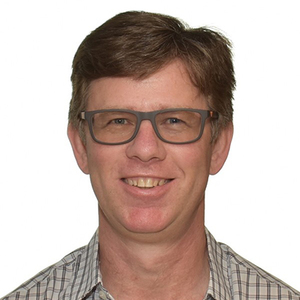
VP Exploration at Unknown
Mr. Gill has 27 years experience as an exploration geologist in a diverse range of commodities and styles of mineralization in Australia, Canada, Mexico and Solomon Islands. He was a Senior Project Geologist and Team Leader in Rio Tinto Exploration for 15 years. Since then Mr. Gill has held roles of Exploration Manager, VP Exploration and Director in junior exploration companies.