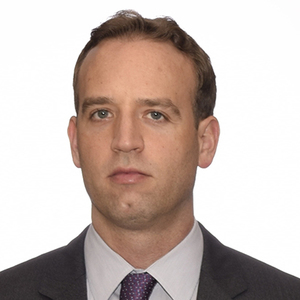
Scott Eldridge
CEO and Director at Canagold Resources
Replay available
Join us for a great event!

On 6ix: 6ix.com/event/canarc-resource-corp-western-canadas-highest-grade-undeveloped-gold-ore-body
Automated transcript · Written by software from the replay's audio. It can mishear names and figures; the replay is the record.
0:11 Hi, everyone. Thank you for joining the Kenrock Resource Corps Investment Summit today hosted by 6. Today, we're going to start off with a pre-recorded presentation from CEO and Director Scott Eldridge, and then I'm going to be inviting Scott back to answer your questions live. As a reminder, you can submit your questions in the Q&A panel on the right-hand side of your screen at any point during the presentation.
0:34 Without further ado, let's go to video. Thank you for joining today. I'll introduce myself. My name is Scott Eldridge and I'm the CEO of Ken Oryk Resource Corp. Today I'll be talking about our new Polaris Gold Project, spending most of the time on that project. And it is Western Canada's highest grade undeveloped ore body. I will be making some forward-looking statements If everybody can draw their attention to the cautionary note.
1:10 So let's start off with some investor highlights. So back in August we announced what we called the rebirth of the company And there was a series of corporate level events. Those events included a name change where within the next 2 weeks, we will be changing our name from CanArc to Canagold. And that's to reflect our strategy that we are 100 percent focused on gold projects in Canada. However, we still do have a portfolio of projects in the US that we'll talk about at the end. We announced a new director. We recently brought in a new VP exploration. We're also conducting a 5 for 1 share consolidation that will close in parallel with the name change within the next couple of weeks, and we recently closed a new financing for gross proceeds of 8.4 million Canadian.
1:58 We currently traded about an enterprise value of $30 per resource ounce in the ground, which we feel positions positions us at a discount to our peers. We do have a very robust high grade development stage project. New Polaris located in British Columbia. We have a PEA on the project and the next step to advance the project and de-risk it further is infill drilling the inferred portion of the resource and that will lead us into a feasibility study on the project. We also have a second flagship asset in Nevada, which is under option to another junior company. So combined, we do have about 2 million ounces in resources, and the projects have seen about $40 million invested in them to date.
2:48 We only operate in safe mining jurisdictions with projects in Canada and the US, but as I mentioned with the name change to Canada Gold, our focus now is strictly Canada. I'll walk you through our management and board team, most are seniors in the industry, decades of experience as we lead our projects forward. Let's start off with our public company information. So we do have 3 listings, Big Board TSX in Toronto under the ticker CCM, and then we have secondary listings in the US as well as Frankfurt. We currently have about 350 million shares outstanding. And as I said, we are about to close off on a 5 for 1 share consolidation. So at the end of the share consolidation, we will have about 69 million shares out and a treasury of about $8 million.
3:40 The warrants and options that you can see there, these will also be rolled back on the same 5 for 1 basis. We're currently trading at about 13 to 14 cents and that puts our market cap at about 47 million. Our top 6 shareholders control about 40% of the company and we did have a very strong participation from this group of shareholders in in our recent financing that also saw Erics brought go over just 10% ownership in CanArc.
4:11 I've been in the metals and mining industry for about 12 years now. I was originally working in insurance and I decided I wanted to do something on the opposite end of the risk spectrum. I went back to school to do an MBA in corporate finance and that catapulted me into the mining industry. I've had various roles including a buy side analyst, I ran my own merchant banking firm and I've been on the issuer side of the business for about 4 years now, collectively over my career which has been very focused on raising capital. I've raised about 500 million dollars for mining projects. Brad Cook is the founder and chairman of CanArk. He's also the CEO of another mining entity that most of the audience would know called Endeavor Silver. They're a multi-silver mine operator in Mexico.
5:00 Gary Biles is our president and COO. He's the lead technical on our new Polaris project. Gary has built and operated for gold
5:12 mines in his career, 3 of which were high grade underground projects, just like our new Polaris. Most notably was the fabulously high grade Escape Creek mine in British Columbia. Troy Gill is a new addition to our team. He comes out of Rio Tinto as our VP Exploration and he twice won their internal award for discovery of the year. Rounding off the management is Philippe, chartered accountant, our CFO, decades of experience on the regulatory and reporting side for mining companies. Let's talk about our independent directors. Deepak Malhotra is a PhD metallurgist. Andy Bowering, originally a stockbroker, he specializes in putting mining deals together. His most recent success story is Prime Mining, developing a gold oxide project in Mexico.
6:00 Martin Burian is a CA, CBV, very strong on the corporate governance side, and rounding off the board, of course, is Brad and myself. Let's talk about our assets. So as I mentioned before, we do have 2 flagships, and by flagships, I mean that they do have National Instrument 43-101 resources in the ground, and the focus of the presentation here will be on our New Polaris project, 100% owned in Northwestern British Columbia. New Polaris is a past producing gold mine. So this is a brownfield project that comes with many benefits of being a past producing mine. It was mined during the 30s and 40s where about 250,000 ounces was recovered at a very high grade of 10 grams per ton.
6:47 The old timers there were recovering gold in the form of a concentrate and shipping it off to a smelter down in Washington State. Fast forward to today, CanArc has completed a PEA on the project that we ran at $1,500 gold and that gave us very, very strong financial results after tax IOR 50% NPV of $333 million US and a very quick payback of under 2 years. Needless to say, at higher gold prices. This project is even more robust. So it. Differing from the past production. What we're looking at is producing Dory on site that would then be flown out rather than moving the project for it as a concentrate because you do erode a lot of the cash flow from the project to shipping and insurance and penalties at the smelter.
7:41 So the next step for the project is to move it into a feasibility study. The project is located up in northwestern British Columbia. We're about 100 km south of the town and called Atlan. That's our closest town in British Columbia, So we're sitting on about 61 crown grants, which means we own the surface rights, which will be very advantageous come construction. And the system type here is a mesothermal gold vein system, very similar geology to what you would see in high grade underground gold mines in the Red Lake camp of Ontario. This is our resource table on New Polaris. So as you can see, about half the tonnage and half the ounces sit in indicated and the other half sits in inferred.
8:28 So the grade you can see here, consolidated at about 10.3 grams per ton, already accounts for a 20% mining dilution rate. So these are the diluted head grades that we can feed the mill with. So needless to say, this is a very high grade project. If this were a mind today if we ran out and built it tomorrow, it would actually be the 6th or 7th highest grade gold mine in the world. So as we progress into the feasibility study, step 1 will be in field drilling on the inferred. So we recently received our renewed exploration permit from from the B. C. Government. Where we are fully permitted to engage 24,000 m in Phil drill program on the inferred, which would be 47 holes.
9:19 This is a snapshot of the economics of the project. So based on the resource, what we'd be looking at is a 750 ton per day mining operation that would produce 80,000 ounces of gold per year off of a very healthy 8.5 year mine life. And again these economics were run at $1,500 gold. One of the things that I really like
9:40 to look at is what is the after-tax IRR of a project. So we're hitting 56% here. So again the project is driven by the grade and that reflects, of course, in the cash costs. So OPEX operating cost per ounce is about $400 and the all in sustaining cost, which is widely used in the industry now, is $510 US. So it depends what analysts you talk to, but the approximate industry average AISC is in the $800. We look forward to advancing this project. It won't win an award for being a huge project, but it could very well win an award for being very high grade and very, very high margin. This gives you a cartoon image of the ore body. So the upper left area in yellow represents where the past production was engaged on the project. And then the much larger
10:39 yellow area just below to the right represents the 1 million ounce deposit, again, mixed of inferred and indicated. So we're very excited to infill drill this project. We can commence that in spring of next year. We've recently spent time to refurbish the camp. So we have a fully operational 20 person camp. That will help us move forward with the drilling and the feasibility study. And I'm really looking forward to the drill results. Those 47 holes that will begin in the spring. This gives you an idea of what sort of drill intercepts have been experienced on this project in the past. These are, of course, the top intercepts, but 6 m of 45 grams, 8 m of 32 grams, 5 m of 25 grams.
11:29 As we infill drill, we're certainly get results of this nature, And I think the market will will start to appreciate those results. So that's new Polaris in a nutshell. And now I'll move over to our exploration portfolio. So staying within British Columbia, we 100% on the Windfall Hills project. It's about 5000 hectares.
11:56 Can't drill this property back in 2014, where the best result was about 28 meters of 1.5 gram per ton, which is a higher grade result than our neighbor, where New Gold recently sold their project in the area here to Artemis. Artemis has advanced with a very strong pre feasibility study on the Blackwater project, and we look forward to our neighbor advancing their. Windfall Hills a project that we recently drilled. We were not able to replicate the 2014 result of 28 meters of 1.5 gram per tonne gold. So at this point, we're not going to be spending any more investment money on this project and we'll look to option
12:46 this project out to a partner. In addition to Windfall Hill. We do also own a portfolio of exploration projects in the US and we currently have our fondoy Canyon project with 1 million ounces on it, optioned out to another junior company called Getshell Gold. In addition to that, we have a couple of other projects under option as well. Most recently, the lightning tree project that we have in Idaho was optioned out to a company called Ophir. So what we look to do with our portfolio of exploration projects is create value for our shareholders and the way that we do that through option agreements is that we option them out and in exchange for the right to drill these projects other companies give us cash, shares, minimum property expenditures and typically royalties.
13:35 So we always look forward to optioning properties out where other people come in and they're willing to spend their money. And then our shareholders still get exposure to the upside on these properties without Ken Ark having to spend any of our capital. This is just a quick snapshot of the resource on Fond way, so it's about 1 million ounces at 6 grams. It is less developed and then new Polaris. This project does require significantly more drilling to even think about APA but our partner here, Getchell has recently drilled the property and we look forward to seeing those drill results.
14:09 Circling back to the enterprise value per resource ounce in the ground that I mentioned at the beginning, so Counter currently trades at about $30 per ounce in the ground. And our peers, as we see them trade more in the 60 to $80 range. And also I think there'll be a second opportunity to increase our valuation as we eventually move from the resource to reserve category as we do that infill drilling and move into the feasibility study. And at that point I would anticipate, you know, based on our peer average, more of a $100 an ounce in the ground reserve valuation versus our currently current $30 an ounce. So in summary, why invest in CanArc? As mentioned, we consider this the rebirth of the company that we announced in August. Watch for our name change that'll happen in the next couple of weeks.
14:58 We do feel that we are drastically undervalued compared to our peers, and there's definitely significant upside in our current share price. And you can see that we've had a very robust PEA delivered on New Polaris. We continue to de-risk that project as we move into drilling and study. We are led by a team of doers with significant accomplishments in the mining industry. And we do have a very strong cash position of about $8 million. As I mentioned, we just recently closed a financing that also included a strong participation from Eric Sprott.
15:32 Thank you very much everyone for listening and happy to take any questions at this point. All right, that's it for the presentation. Welcome back, Scott. We'd like to take some questions live from the audience now. We've also had some questions coming through email. So let's try to get to them as many as we can. Scott, our first question is about some of the optioned out projects, specifically for projects like Fondue, can I really claim the ounces on these properties if they're being mined by other third party companies?
16:10 No, that's a great question. So listen, when we sold that project or optioned it out to Getchell, they're a very capable company by the way, and they have our full support. We're also shareholders. So it was done at a much lower gold price, and it's a project that requires a lot more money to get it to a PEA, as I mentioned in the presentation. And our focus is Canada. So given that we had no intentions of spending further money here, we weren't getting properly valued for it, we felt that it was a good deal for our shareholders and it went through the full board approval process, obviously as we're a public company. And at the end of the day, they still have to buy it from us. So we will receive a full compensation of between 4 and $5 million US.
16:58 And in addition to that, I would point out in our enterprise value per resource ounce, I have not included the Fondue Canyon 1 million ounces. The enterprise value per resource ounce of $30 is only based on New Polaris. So given that we have a high degree of confidence in Getchell, we are assuming that they will earn into the full four-year option agreement, and we will ultimately be selling the project, which would put, as I said, $4 million to $5 million US in our pockets, and we would also retain a royalty on the project.
17:36 Thanks, Scott. So does Kennard intend to mine new Polaris or did you mean that you were considering selling the project to a producer or developer? You know, that's a very intelligent question. And, you know, as an investor myself, I'm not saying you can't make money in companies that have a good project, but are facing a very significant CapEx of $200 million, $500 million, 1 billion dollars. That's not the case with our project. Our upfront CapEx is $110M, which for a very profitable Gold mine is obviously at the lower end of the scale. My background in project financing, our team that would be the foundation to build this. I see no reason why we cannot build and operate this project ourselves and we'll make the commitment to our shareholders to do that.
18:28 However, we are a public company and we are potentially for sale And if somebody came along with the right bid, we would take it to our shareholders, but we most certainly
18:38 do not have the for sale sign on the lawn. You know, 110 million CapEx, obviously we would need a higher share price and market cap, but we've got very supportive institutional shareholders, as everyone knows. And I see no reason why we couldn't build and operate this project ourselves. Obviously, time will tell. We still have to go through the feasibility study process, but I'm optimistic this is a project that we can advance without having to partner or sell it. So if you were to move ahead by yourself, Brian's asking how will you finance the mine? Yeah, I sort of hinted on that in the previous answer. But you know, we've already been approached by royalty and streaming companies.
19:28 We have Western Canada's highest grade undeveloped ore body, we're starting to attract attention. It's starting to be reflected in our share price. And as I said, I've worked in project financing before where we could look at sort of a combination of debt, streaming and equity to build the project.
19:47 Great. So let's talk a little bit about a timeline. Joseph asks, what's the timeline for Polaris to be fully permitted and then in production? Yeah, good question, Joseph. So in one of our most recent news releases, you would have seen that we've engaged a firm to help us out with the environmental baseline. So one of the advantages of this project is that there has been environmental baseline work done in the past. So we only need to do 12 more months of environmental baseline before we can submit our permit to the BC government for the environmental permit. So in 12 to 14 months from now,
20:28 we'll be able to submit that permit. How long the government takes, we don't know. Another advantage of this project is that we would, be on a provincial permitting track versus a federal, everyone that follows BC projects knows that you know the federal processes is lengthy. But given that we have a small project here, it's only a 750 ton per day mill. We've been told by our consultants on the environmental side that we are indeed going through the provincial track. So to circle back to the timelines, which was the original question come the spring is when we will do our infill drilling program that 24,000 M. To infill the inferred and that will allow us to update the resource
21:15 to then kick off the feasibility study. So infill drilling next spring, and then that would lead us into a feasibility study. So we would be applying for environmental permits and mining permits probably in the next 12 to 18 months here. Thanks Scott. Speaking of resource expansion, and it is asking. Do you have any idea of the potential at new Polaris to expand that resource?
21:45 What would that look like? Right so As it stands right now, all the drilling is done from surface. The resource only goes to a maximum depth of 600m. For an underground mine, that's very shallow. So I made the reference to the fact that this is a mesothermal vein system. It is similar geology to what you see in the Red Lake Camp of Ontario. And in the Red Lake Camp, there's mines that go for 2345, even 6 times this depth. So the deposit is open at depth. We just haven't drilled it that far because it's challenging to drill that from surface. The real upside to this project, can this be a 10, 12 or 15-year mine life?
22:37 We don't know yet. Time will tell. The smartest way to figure that out is to put the mine in production, whether it's us or someone else, and then worry about extending the mine life after your underground mining, because then you conduct all the further exploration drilling from underground versus at surface. We already have an 8-year mine life that is more than sufficient to move a project forward. I was part of a team that put an underground mine into production in Quebec on a five-year mine life. So 8 years is sufficient. The economics are very robust. There is upside here. There's no question about that, but we won't find out until this mine goes into production.
23:21 Next question is from Michael. What about the areas in and around or below the current resource at New Polaris? Is there any exploration potential or additional targets we could look at there? And do you anticipate it to be 100% underground or would you ever look at open pit mining? Okay, so I mean, we've done some regional exploration here, and we don't really see any other potential deposits. So the real focus here is expanding the resources at New Polaris, which as I explained, would be through further drilling at depth.
24:01 And this is an underground mine. There's very healthy underground mining widths here. The average mining width is 3 meters. And the economics just can't be justified for an open pit. The strip ratio would be way, way too high. This is very clearly an underground project. That's how it was mined in the past. And that's how we're approaching it for the future. Great. Thanks, Scott. I got a couple of questions here from Brian and Chris about accessing the property. How do you access the property? It's a very remote site with no roads. Is there an airship ready for planes?
24:43 And what is the need for barging to the site? Right, So listen, there's plenty of isolated off grid minds, in parts of the world besides Canada. Why are these minds economic because of the grade? So this project is all driven by the great of. I've said a multiple times here. 10 grams per time and.
25:07 This is a fly in fly out, so we do have an air strip so you can land small aircraft as well as helicopter. And then you can actually use the river system here to barge in and barge out. That might sound weird to people that live in in cities like we all do, but in this part of the world, water ways are the transportation infrastructure, and it's highly common. That things are done by barging. There's an example of a mine in the area on the Alaskan side in the US. Heckler runs their Twin Creeks mine as a barging operation, and it is highly profitable. So it's a way of life up here that things are done on the waterways.
25:54 Great, thank you, Scott. Here's some questions about the people around the site. Heather's saying that there's a long history of opposition to barging from commercial fishermen and tribes in the southeastern Alaska. So how is CANAR going to engage with local Alaskans? Right. So, I mean, we are on the British Columbia side of the border. So we are in consultation with BC and Alaska on this project. On the B C side, the closest First Nations group is 100 kilometers north of us in the town of Atlan. They're the attack who River Tlingit, the TRT FN. They were recently at our site visit with our VP exploration about a month ago, and we do have their full support.
26:44 And. The next step in that relationship is an exploration agreement, which we're in a good faith negotiation on right now. They're pro development. What they ultimately want is the opportunity to have. Go at the jobs and we're happy to involve them in the project in that way moving forward. And as far as Alaska is concerned, any of the barging that we would do here is by service companies. So CanArc wouldn't be running our own barges. It is a service for hire business where we just use contractors to barge in and barge out. But we're a ways ahead of that. You know, we're not going to be doing any barging and exploration. It will be primarily just fly in, fly out, supported by airplane and helicopter. And you know, we have to go through the permitting process here. There's no question about that. And, you know, as we move into building this and operating it, that's when the barging would come in.
27:43 Thanks, Scott. Our next question is from Tommy. What do you plan to do to promote your company to investors so that the stock is known and that there is more volume? Good question. So I mean, that's my job on an ongoing basis. CanArc's been around for a long time and we think that changing the name to reflect our new strategy is a rebranding of the company and that will help get the word out. Today I'm actually in the Minds and Money online conference. So besides this presentation, I've got 8 one-on-ones. So we're pretty active about participating in conferences that are all online now because nobody's traveling for conferences in any industry. Our new director, Andrew Bowering, was quite active in terms of bringing a lot of his contacts into the financing.
28:29 So I think it's just a matter of building the company one shareholder at a time, participating in as many events as we can within budgets and just being proactive. We also have done a 5 for 1 share consolidation, So investors, including myself, we're very fixated on share structures, which is wise. And we've decided to do that share consolidation. So we're now well under 100 million shares. We'll be at 69 with a cash up treasury and a very strong institutional shareholder base. So I'm very optimistic that we'll progress the company forward with the new name. Great. The next question is from Joseph.
29:14 Are you considering share reverse consolidations? Well, we just completed that. So if you watch our news, the name change and the share consolidation will close next week. Great, Thank you. And here's a question from David, specifically about Eric Sprott, as you mentioned, that he is one of the investors. What was the primary asset that really drew his interest? Well, I mean, I don't want to speak on his behalf, but any of the conversations were driven around new Polaris. And, he's obviously done very well in his mining investments. The most notable 1, maybe most recent that everybody knows about is Kirkland Lake Fosterville.
30:00 So That project was very successful off the back of high-grade. I think what attracted him to New Polaris was the high-grade aspect of our project in a tier 1 mining jurisdiction just like Australia. Next question is from Carl. Any spin-outs on the horizon to divest non-core assets? We're thinking about that right now. So, you know, that's a smart question. We still hold this portfolio of projects in the US as well as the eventual compensation coming from the Getchell deal on the Fond du Huy Canyon project that somebody had previously asked about. So we're looking at a variety of options right now. It could be a spin-off for shareholders, or we could do a bundled package option agreement to put them into another public company. So we're analyzing a few options right now and we'll probably pull the trigger on something early next year.
30:56 Right. Something to look out for. Let's get a little bit back to drilling. Rick is asking what density of drilling do you expect to achieve measured and indicated categories? And what additional underground development is necessary to carry out in field drill program. Right So ultimately, we want to get the drill spacing to about 25 meter intercepts in terms of the distance between 2 holes in order to have a higher degree of confidence in the ore body. And that would allow us to convert resources to reserves in the mine plan as proven and probable. And sorry, I didn't hear the second half of that question. 0, 1 2nd.
31:42 What additional underground development is necessary to carry out infill drill programs? Right So just to clarify all the infill drilling will be done from surface not from underground. So everyone's aware that this was a past producing mine. It is a brownfield site. So any of the underground mine workings are flooded. So as we move forward and advance the project and if we got to a construction decision we would we would de-water. But that is not necessarily an inexpensive exercise and it doesn't make sense to do that now. So we will do the infill drilling from surface. All right, I think that also answers the next question from Michael. So you'd have to start from scratch from the surface because of the situation with the flooding underground, right?
32:33 That's correct. And within the rules of National Instrument 43-101, you don't have to drill from underground. So most underground mines nowadays, they do drill from surface. And once you've got a good resource that gives you sort of a 5 to 8 year mine life that has good economics, then you move the project forward and then you worry about the longevity of the project once it's in production. Our next question is from RJ. How long of a drill season is there and how many drills do you anticipate to be brought in? Should the ground be challenging as you mentioned? The ground isn't necessarily challenging but there is a bit of a seasonality to the project.
33:19 We are near the coast of British Columbia, so we don't experience drastically low temperatures. But what's more of a concern during the winter is rain, snow and low cloud cover, which makes it challenging for air logistics. So basically you can drill here, call it 9 months of the year. We will start in the spring and we'll have plenty of time to do the full 24,000 meter program. And I believe the participant asked how many drills. So 2, but perhaps 3 drills. We can run out of time here. Right. Next question is from Emmett. What is the after-tax NPV and IRR at $1,350 per ounce of gold?
34:06 Yeah, I mean, we're all optimistic of higher gold prices. You know, it's been 2000 and 1800 recently, but I think it is important to look at, you know, what sort of downside protection a project has. And given that we're a low cost, high grade mine, we still do have very robust economics, even at $13.50 gold. So the after-tax IRR at $13.50 would be approximately 41%. And then the NPV at 1350 gold would be about 300 million Canadian, about 230 million U.S. And I believe Some of our attendees may have missed it, but you mentioned the current name of the company is going to be CanArc Resource Corp and you are rebranding to CanArc Gold.
34:54 Is that correct? Yeah, that's correct. So the old name is CanArc Resource Corp and the new name will be CanArc Gold Resource Corp. So new name is Cana Gold, all one word. And I'll also add to that that our ticker will not change. We'll still have the same ticker CCM on the TSX. Excellent. I do think those are most of the questions from the audience. So let's wrap up with this one last question. Can you speak a little bit, Scott, about the blue sky potential at a new Polaris? Yeah, I mean, we have 1 million ounces here. We have an eight-year mine life. Could this be 1.5 or 2 million ounces? Does that potential exist? The answer is yes.
35:42 We would have to drill it further. So the resource right now only goes to a maximum depth of 600 meters, which is very shallow for an underground gold mine. There's plenty of similar geological comparisons that are 2 or 3 times as deep. And as I said before, we'll have to look to increasing the mine life, the tonnage, the ounces, as this project moves into production. Sounds great. So it sounds like there's a lot of news that we need to be keeping our eyes out for, for the new Polaris project. I think that is all the questions that we have today through our live and email channels. Thank you very much, Scott, for taking us through the presentation as well as answering all of our questions and also thank you everyone.
36:30 Yeah, thanks so much, Jane. It was a pleasure to do the first event here and obviously looking forward to future events to update everyone that listened in today and new people. So yeah, thank you to the audience for taking the time to listen and appreciated all the intelligent questions as well. Yeah, and everyone, please stick around after we close off the room. There is a quick survey. You can have the opportunity to leave your details so that the KenArc resource team can follow up with you directly. For more information, of course, visit their website at kenarc.net. And as always, this recording is gonna be available on six.com. Well, until next time, thank you
Follow Canagold Resources Ltd into a list and get an email when it puts out news.
CEO and Director at Canagold Resources