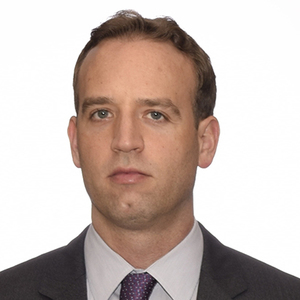
Scott Eldridge
CEO and Director at Canagold Resources
Replay available
Join us for a great event!

Automated transcript · Written by software from the replay's audio. It can mishear names and figures; the replay is the record.
0:08 Hi everyone and welcome to Canada Gold's live investment summit today hosted by 6. We are joined today by Scott Eldridge, CEO and Director of Canna Gold. Scott will walk us through a company presentation and then we'll be accepting questions live. You can submit your questions at any time on the Q&A panel on the right-hand side of your screen. And as always, the summit is being recorded and will be available on six.com afterwards. So without further ado, I'll hand it over to you, Scott.
0:37 Okay, thank you for the introduction. So welcome everyone and appreciate you taking your time to listen today. I'll just start off with a proverb from the mining sector that we've all heard before, great is king. And that's the general topic of of today's presentation. Great is king with a focus on our asset, which is the new Polaris Gold Project in Northwestern British Columbia, which is Western Canada's highest-grade development project.
1:09 I'll point you to our cautionary note. This is standard language to inform you that I may be making some forward-looking statements throughout the presentation. So we'll start off with some investor highlights. Towards the end of last year, we closed off a series of corporate-level changes. And 2021, this year, we'll be very focused at the project level at New Polaris. So last year we changed the name of the company from CanArc to CanaGold. And that's to reflect our strategy that we're now focused on gold projects only in Canada. We still do have some grassroots exploration projects in the US that we plan to divest of, but we want to make our story very clean and simple for investors, easy to understand, and we are 100% focused on our new Polaris project here in Western Canada.
2:02 We closed off a 5 for 1 share consolidation. We originally went out with a $3.2 million financing that we upsized to $8.4 million. So we have a very strong cash position to execute on our plans this year. In terms of valuation, we traded about $30 US in enterprise value per resource ounce in the ground, which we feel is undervalued compared to our peers. On our flagship project, we do have a very robust PEA, and I'll talk about those numbers as we progress through the slides, and we are advancing that project towards feasibility study. Again, we're only focused in Canada, primarily BC, which we feel is one of the best mining jurisdictions in the world, and I'll walk you through our highly experienced management and board. Let me give you a snapshot of our public company information. So we do have 3 listings.
2:51 Our main listing is Big Board TSX under the ticker CCM. The share structure you see here is post-consolidation, so we currently have 70 million shares outstanding, about 11 million warrants. We're currently trading sort of between 50 and 54 cents, so that would put our market cap sort of in the 35 to $40 million range. We do have a healthy cash position, and we have a very strong supportive list of shareholders here that includes Eric Sprott, the Ruffer Gold Fund out of London, England, several high net worth individuals out of the US, and our chairman, Brad Kirk.
3:29 So my background, I've been in the mining business for about 12 years. I originated out of insurance, which I just found a little on the unfulfilling side, wanted to do something a little more exciting, maybe the opposite end of the risk spectrum. I went back to school to do an MBA in corporate finance, and then I started off in the industry as a buy side equity analyst, did that for a few years. I went on to run my own merchant banking firm where I've raised about $500 million for the global mining sector, ranging from grassroots exploration to project financing for mine builds. And I've been on the issuer side for for about 4 years now. I've been the CEO of this company for about 2 years. I was offered the opportunity to become CEO of Cana Gold based on a previous relationship with our chairman and founder Brad Cook.
4:17 That's a familiar name to most people. Brad is also the CEO of Endeavor Silver operator in Mexico. Brad's got about 40 years of experience in the industry. Our technical lead on the new Polaris Gold project is Gary Biles. He's a mining engineer. He's our president and COO. Over 40 years in the business as well. He's built and operated 4 gold mines in his career, 3 of which were high-grade undergrounds. The most notable was the fabulously high-grade Eskay Creek mine right here in British Columbia. Our VP Exploration is new to the team, Troy Gill. He originates out of Rio Tinto. He twice won their internal award for Discovery of the Year. And prior to Rio Tinto, he was working at a peak gold mine down in Australia, which started off with a five-year mine life and went on to have an over 20-year mine life, which is quite similar to what we could see in our new Polaris project.
5:14 Rounding off our management is Philippe Charter de Calent. He's our CFO, very strong on the regulatory and reporting side. Let me walk you through our board of directors. Deepak Malhotra is our lead technical director. He's a PhD metallurgist over 50 years, sorry, 40 years in the business, spanning 50 gold projects, spanning the globe. Very, very strong in the metallurgical processing side. Andrew Bowering is our newest director. He joined when we had our 5 for 1 share consolidation. Andrew started off in the business as a stockbroker and basically he spends his time structuring mining deals, bringing private assets public. His sort of most notable success stories are millennial lithium and prime mining.
6:01 Martin Burian is a chartered accountant, chartered business valuationist, very strong on the technical and regulatory side for reporting issuers, and then myself and Brad rounding off the board. So collectively our board in management has about 240 years of experience in the mining business. Let's take a quick tour of our assets. So as I said in the introduction, today we're just going to focus on our new Polaris project. However, we do have a portfolio of exploration projects. Those are the stars that you can see on the map, and they're sort of scattered throughout British Columbia as well as sort of the western U.S., most notably Nevada. These are more grassroots exploration projects, and I'm going to spend the time today on New Polaris.
6:48 So New Polaris, it's a past-producing gold mine. There was about 250,000 ounces of gold recovered from this project back in the 30s and 40s, and they recovered the gold in the form of a gold concentrate, and they barged that south to a smelter in Washington State. And they were mining at about 10 grams per ton, so high grade. Fast forward to today, we have a 1 million ounce resource here also at 10 grams. And we have a PA on that. That was done in May 2020. That was run at $1,500 gold so needless to say significantly below the current spot price. The numbers speak for themselves driven by the grade after-tax IRR hits 56%.
7:35 NPV in Canadian dollars is almost 500 million, and the project has a very quick after-tax payback of under 2 years. So, different from the past production, we've taken a different approach on the project, and we're looking at the BIOCS process where we can produce Dore bars on site rather than producing a gold concentrate, and this is how you can truly unlock the value of this project to treat it as a fly-in, fly-out, producing Dore on site. With the PA in hand, we're now ready to do infield drilling and ultimately lead into a feasibility study. Let me give you more clarity on the location of the project. So you can see the star on the map, that's the project. We're in the northwestern corner of British Columbia.
8:23 So we're about 60 kilometers northeast of Juneau, capital of Alaska, which is named after a mining prospector. And about 100 kilometers north of us is the BC town of Atlin. So being a brownfield project, there are many benefits to that, not just infrastructure, but metallurgical information, mining method information. But in terms of the infrastructure, we do have an existing airstrip here and we have a fully permitted 20-person camp where we are planning on starting our info program probably in about 2 months from now. So we sit on 61 Crown grants, which means we control the surface rights, which will be very advantageous as we move the project forward.
9:08 In terms of system type, this is a mesothermal quartz gold vein system, and it's very similar geology to what you would see in high-grade gold projects in the Red Lake Camp of Ontario. And that's sort of an analogy that I'll revisit later, where our resource here in BC is very shallow close to surface, even though it is an underground mine, whereas these systems in the Red Lake Camp can often go for 2345 times the depth of our current drilling. Let me walk you through the resource table. So this resource, National Instrument 43-101, was the basis from the preliminary economic assessment we did in May 2020. And you can see here the grades, very high grade.
9:56 Indicated grade is 10.8 grams per ton. Inferred grade is 10.2 grams per ton for a combined deposit here of about 1 million ounces. And important to note here is that these grades already account for a 20% mining dilution rate, so these grades represent what would be the head grade that we would fill the mill. So basically with the inferred, we have a planned 24,000-meter info program that would include 47 holes. Again, we'll begin that work in about 2 months from now. And the purpose of that is to galvanize the inferred resource and move it up to measured and indicated to then become eligible to become proven and probable reserves as we conduct our feasibility study.
10:47 So let's sort of circle back to the original proverb that I mentioned, you know, great is king. So, that is a proverb in the industry that has sort of twofold to it where yes, great is king, but we have to dig deeper than that. And I'm a numbers guy, so I like to look at not just the grade, but what is the all-in sustaining cost? There are examples of higher grade gold mines in the world, but perhaps they don't have the mining widths that we do. So for example, our deposit is anywhere between 1 and 15 meters with the average mining width being 3 meters. A general benchmark in the industry is that you want 2 meters or greater. So we have the mining width and we have the grade, which means we have an AISC, which is probably half the industry average.
11:37 Depending on what analysts you follow, the AISC average is about 900 to $1,100 an ounce, where ours is actually half of that at about $530 an ounce. And this is a trend that we've seen in terms of grade over the last decade is that the average grade of gold deposits is slowly decreasing just like most other minerals and the average right now is about 1.35 grams per ton. So our deposit at 10.3 grams per ton is about 7.6 times higher than the global average, which therefore means that we have higher margin because we have those healthy mining widths. And these types of deposits are becoming more and more rare, and they can often attract sort of a scarcity premium.
12:27 Let me walk you through some of the numbers of the PEA. So the project's baseline revenue in Canadian dollars touches about $1.5 billion. Keep in mind this is done at $1,500 gold price US. The after-tax IRR is 56%. And again, it's driven by the grade here. So our EISC is about 510 US, so that would put our margin in US dollars at almost 1,000. If you want to convert that into Canadian dollars, it's about 1,400.
13:00 One of the ways that I like to look at economics of a project is how efficient is the mill? So that basically means what is your capex relative to the ounces you can produce in the future? So our installed mill capacity is about $160 an ounce, whereas the industry average would be more between $200 and $300. If you want to look at grades of operating mines, if New Polaris were a mine, this would be sort of the number 6 in terms of grade in Canada, and globally speaking, we would almost hit the top 10, being number 11. So we do feel with our million-ounce resource here at 10.3 grams, that's a great start to the project, but there is still a blue sky potential here where the deposit is open at depth, and I'll talk about that in a few slides.
13:52 Let me give you more details on the PA. So based on the 1 million ounce ore body at 10.3 grams, we would have a 750 ton per day mill and that would produce about 80,000 ounces of gold per year in the form of Dore bars over about an 8.5 year mine life. So most underground gold mines, especially mesothermal systems, you know, they'll start off at the 5 or eight-year mine life and then they'll continue exponentially from there. So we feel this is a very healthy start where we have very robust economics. The capex to build the project is relatively low. It's about $111 million US. And as I mentioned, that gives us an NPV with a 5% discount of about 500 million dollars Canadian.
14:38 The after-tax IRR hits 56% and a very quick after-tax payback all run at $1,500 gold. Driven by the grade as I've said many times here OPEX per ounce is about 400 and the EISC is just over 500.
14:59 Let me show you a cartoon image of the ore body. So I'll get out the drawing tool here. This upper left area represents where the project was mined in the 30s and 40s, And the current resource, the unmined 1 million ounces that we discovered, sits in this much larger yellow area. So this deposit is very close to surface for an underground mine and the maximum depth of the resource as you can see is only 600 meters. Again the analogy to the Red Lake Camp, many mines over there over the years have gone to sort of 3,000 meters or deeper. So we do feel that this is just the start.
15:49 Let me talk about a selection of some of the best drill holes that this project has seen. 6 meters of 45 grams, 8 meters of 32 grams, 5 meters of 25 grams. These are the type of results that we're going to see when we engage in our infill drilling program. Again, it's 24,000 meters spread over 47 holes. So throughout the spring and the summer, we should have a steady flow of news releases that we would anticipate a strong reaction from the market as we get in and work on this project. Very important to note here is that again the deposit only goes to a depth of 600 meters. It is open at depth and we've actually demonstrated that where we have 2 intercepts below the depth of the resource, one of which was 33 grams of a meter. So, we're very confident that this deposit could be 1 million and a half to 2 million ounces.
16:44 That remains to be seen with the drill bit.
16:50 Let me circle back to peer comparison. So as I mentioned in the beginning, our enterprise value per resource ounce in the ground is about $30, whereas our peers – and by peers I mean projects that are either in Canada and the U.S., most likely have a PEA or a PFS on them, the average there is sort of between 60 and 80. So we're of the belief that as we get in and do our infill drilling, we'll have steady news flow, that the market would start to recognize our story again and we could hopefully correct to our peers. And I would also layer on to that as we transition towards a feasibility study, you know, our valuation would then be based off of reserves versus resources, which command a much higher valuation more in the sort of hundred to 150 dollars reserve ounce in the ground basis.
17:42 So let me summarize everything again we're trading at 30 dollars enterprise value per ounce in the ground, we feel strongly that we should see some attention in our stock price once we get these drill results out. Again, 47 holes, very excited to get that started. We do always have our eyes and ears open for new acquisitions, even though we are focused on new Polaris, where we will engage in that 47 hole info program and leading into a feasibility study. Very strong management and board collection of geologists, engineers and financiers. And lastly, we do have a very strong cash position to go out and execute on our plans. So thank you very much, everyone. Appreciate you listening in today. And now we can move on to the Q&A. Thank you.
18:30 Great. Thank you so much, Scott. So if anyone has any other questions, please submit them now and we'll transfer, transition over to the live Q&A section of the summit. So to kick off the Q&A, We have a question that's been emailed in. What is the mining method used in the PEA? Right, so the main mining method, there are 3, but the main mining method that would represent about two thirds of the tonnage is long hole stoping, which is one of the more simplistic and least expensive underground mining methods. And then I would add to that probably about 20% of the underground mining is actually it's mine development in ore.
19:24 So that is a major contributor to our pretty low AISC, all in sustaining cost. Great. And are there any first nation groups that are involved in this project? Yes So if you require the location slide, the town of Atlin in British Columbia, That's about 100 km north of us. There is a First Nations group there called the Taku River. Cling kit First Nations, or they go by the TRT FN. And even though they're 100 km away, they are stakeholder in the project, and we welcome that. And we have a very positive relationship with them.
20:09 It is a Brownfield site, so they're fully familiar with how this was run in the past. There's no major historical environmental liabilities. And we recently renewed our exploration permit with the BC Ministry of Mines. And part of that dialogue included multiple stakeholders, including that First Nations group in the Atlan. So they were part of our renewal of the exploration permit process. They've been on the site with us recently, so it is very positive and sort of the next step forward in that relationship is You'll probably see a news release and sort of the next month where we would announce an exploration agreement with the first nations group, so we're definitely excited to work with them, and we do have their full support.
20:59 To move the project through the next steps. Great, thank you. Yeah, Carl is asking about First Nations, but he also asks about environmental or wildlife. Are there any issues around the environment or wildlife in your jurisdiction? Well, because there was past production here in the thirties and forties that gives us a lot of information. On on any potential environmental, issues in the future, but From a historical perspective. You know, one example I can give you is that the host rock is a carbonate, so there's no acid rock drainage issues.
21:40 In terms of our operations, we would have sort of a combination of dry stack tailings and backfill. So we don't we don't see, any issues there to move the project forward. All right. Hugo is asking, are there any more claims available in the area? Well, that's a good question. Is he going to run out and stake some claims? You know, we're sitting on 61 Crown grants. You know, we control the area of, you know, what we think is prospective. We've done some regional exploration and we have one other sort of potential drill target in the area. But regionally speaking, we feel that we control, you know, the claims that you would want to control it in this area.
22:31 Great. And why did Eric Sprott invest in CannaGold? Right. Well, listen, I don't want to speak on behalf of Eric, but, you know, it is public knowledge that he owns 10.2% of the company. He came in in a flow-through financing originally, and then he also participated in the most recent financing where we raised $8.4 million. But he does have a successful track record of investing in high-grade underground gold mines in top mining jurisdictions. A couple of examples would be Kirkland Lake with their fossil gold mine in Australia. Here in Canada, I believe he's a significant shareholder of pure gold mining.
23:19 Those are high-grade underground deposits, bigger than ours, yes, but, you know, we have the grade and we have the costing just like they do. So my suspicion is that he was highly attracted to the economics of this project. Wonderful. Robert is asking, is this oxide gold? Also, what is your total territory for expansions? Right, well, no, this is not an oxide deposit. I mean, Those are the types of deposits that you might see in the Yukon, there's a few in BC, there's more in the Western US like Nevada. An oxide deposit, those are great projects. You can often heap leach them to recover the Gold, but ours is a Sulphide deposit. We would definitely not want to throw our ore on a heat bleach. You just wouldn't get the recovery rates.
24:10 What we would have is a full milling operation with CIL and that would give us a much higher recovery rate than what you would see on oxide deposits. So our recovery rate is about 90.5%. We spent a lot of time on the flow sheet, and that's the flow sheet that we're gonna be moving forward in the feasibility study to ultimately have sort of 90, 90.5% recovery running this as an underground mine. Great, thank you. Hugo is asking what is your goal for production? Well, the ultimate goal in terms of the production profile is 80,000 ounces per year, and that's spread over an 8.5 year mine life. You know, there's a value proposition here with our current market cap, but if you want to look at the actual timeline of when we would go into production, You know, those are hard to guess, but. We would do the infill drilling. We would lead into a feasibility study and then go through a permitting process.
25:11 And by the way, I mentioned that we're on the provincial permitting track because we are relatively small project. This would not be a federal permitting track, which can often be longer. So ultimately, I mean, we would probably look to start construction, perhaps in about 2 years from now. Got it. So David is asking, what's the level of reserves you'd like before you pull the trigger on the DFS? That's a very smart question. So as you saw from the resource table, about half our tonnage, half the ounces are in indicated, and the other half is in inferred and the infield drilling program. The purpose of that is to upgrade the inferred to measured or indicated.
25:56 Which can then become reserves, So I don't think we'll see 100% conversion ratio, but ultimately the way that we've designed the drill program is that we'd like to see between 75 and 80% of the tonnage and ounces from inferred move up into measuring indicated to become proven and probable. We may even have some exploration holes. So, you know, there's still a chance here that this deposit could become bigger for the feasibility study. Great, that falls into his follow up question is, what's your historical conversion percentage from inferred to indicated? The historical conversion has been probably in the range of 90% converting inferred up up to indicated.
26:48 Thank you. Hugo's asking, are there other minerals? No, it's actually gold only. So there's no copper, there's no silver, no by-products here, it's just pure gold. So that grade, the 10.3 gram per ton, that's not a gold equivalent. That's based on pure gold. Great. Thank you. The next question is from Victor asking, How about gold recovery? Yeah, so I sort of touched on that in one of the previous answers. So the recovery rate that we had from the preliminary economic assessment was 90.5%. And I highly doubt that will change come the feasibility study because we're working with the same engineering firm doing all the metallurgical test work to design the flow sheet and and ultimately have knowledge on what the recovery rate would be so I don't see that changing It'll probably be the same 90.5%.
27:50 Great. RJ is asking, with the pleasant weather on the coast, how long will the drill season be, and how many drills, and when is the estimated start date? Well, you're totally right. I mean, it is sort of out of our hands in terms of, you know, how the weather behaves. You can drill this project year round, but there's a cost to that. So you know, we want to manage our treasury wisely. So the least expensive time to go drill is basically at sort of the end of spring, depending on how the weather is. So we would be running 2, possibly 3 rigs on the property. So whether it's 2 or 3 rigs will determine how long the program will take, but it will ultimately be sort of, you know, mid to late spring through the summer and even into the fall.
28:38 Yeah, great. Okay, well, Hugo's asking, is the tailings still holding gold? You know, from the previous mining back in the 30s and the 40s, it wasn't at the scale that we would be mining. So they recovered about 232,000 ounces of gold, and they recovered that in the form of a gold concentrate that was then barged out. So in terms of the old tailings, is there any ounces there that we could go after and run through our mill? They would be so small that it just, it wouldn't make a difference to our economics. So basically the answer is no. Yeah, great. George is wondering, assuming a positive FS, is Endeavor Silver a potential partner with Canna Gold on this project?
29:27 Well, I mean, that's an intelligent question, given that Brad Cook is the chairman of Canna Gold and he's the CEO of Endeavor Silver. However, the companies are very separate. I wouldn't foresee that happening, not to speak for Brad, but my suspicion is Endeavor, you know, they have plenty of opportunities in the silver space, and they'll probably keep that focus that's been very successful for them. There would be plenty of other suitors would be my guess, though, as this project progresses. Great. Last question we have here is from George and he's saying there were a lot of problems with nearby Cheftain project. What impact is this having on how the BC government will look at permitting?
30:15 Sorry I didn't quite hear the question Dasha on on the other project that was referenced. Yeah, so George is saying that there were a lot of problems with the nearby Cheftain project. What impact is this having on how the BC government will look at permitting? Yeah, again, I didn't quite catch the name and I'm not sure what specific project he's referring to, but I can certainly guess which one it is. So for our project, this would be a fly in fly out operation. And, you know, other projects in this area, you know, they may have been approaching the permitting from a larger mill throughput, so they would have been federal. They may have wanted to build a road access to the project.
31:01 So I would need more detail there. But I mean, we've had all indications from the BC government that, you know, our project is moving forward. As I said in the presentation, we just renewed our exploration permit. So that means we're fully Permitted for the next stage, which is the 24,000 m of info info drilling spread over 47 holes. We're also doing ongoing environmental baseline. On the project. We actually only have probably 10 months left of baseline before we can look at submitting our permit to the BC government for the environmental permit portion of this project, but as of today, everything's positive. Great, thank you so much. Lots to look forward to. Well, that's all the questions we have for today. Thank you so much, Scott, for going through your corporate presentation and all the questions that we got.
31:56 And thank you to everyone who attended and submitted amazing questions. If you didn't get a chance to get your questions answered, or if you think of 1 after the summit, we'll be emailing out a short survey. And the Canada Gold team will be happy to follow up with you directly. You can also find more information on their website, which is CanadaGoldResources.com. So without further ado, I'll pass it back to you, Scott, just for the final word. Yeah, thanks, Dasha, for being such a great host, and everyone, I appreciate you listening in here. Definitely some good questions. And Whichever individual it was that was asking for the permitting reference and named a project in B. C. You know, feel free to call me or send me an email and we can continue that conversation. And I can give you more detail that answered again. I just didn't quite follow which project that was that you are referring to. But in conclusion, you know, appreciate everyone joining. I hope you enjoyed the presentation today and again. I just wanted to focus all the time on new Polaris, which is our flagship. We do have.
33:00 Other exploration projects. A lot of them are optioned out to other companies where we're receiving cash payments, share payments. They have minimum property expenditures, but our true focus here is on New Polaris. So, you know, we feel it's a gem. It's an amazing project that is already high grade, very robust, and it could get bigger. So needless to say, we feel it's a good time to be a shareholder and it's going to be a very busy spring and summer for us and definitely looking forward to future presentations where we can start to talk about some of the drill intercepts that we've hit.
Follow Canagold Resources Ltd into a list and get an email when it puts out news.
CEO and Director at Canagold Resources