Automated transcript · Written by software from the replay's audio. It can mishear names and figures; the replay is the record.
2:27 Just briefly I'm going to mention our share is having performed well for the last month. We raised equity last year on the summer $3 million on August. And the current price of the shares around 10 cents and we have a very good liquidity. We are trading around 300,000 shares a day. So for a company on our size, it's a very good number. So investors are happy that they have the opportunity to invest and exit whenever they want. So that's pretty good. We have enough cash in the bank for the drilling program we wanna talk about. And we are confident after this drilling program is gonna be a new opportunities to continue developing the company.
3:21 I don't want to spend too much time on the board and management, I just want to highlight a couple of people that are important on this team. I mean, all are important, but I want to highlight 2 of them. One is Carlos Pacheco, he's our country manager. And it's important to mention that we have Carlos with us because he's over 25 years experience mining in Mexico, Mexican fellow who helped us finding properties such as San Jose that pretty much no other Canadian company could find before. So I'm sure Michael is gonna explain in more detail why I'm making those comments. But also I want to mention Monica's pin. And Monica have been on the board for almost a year with the company.
4:07 She has a tremendous experience in CSR and she's helping us to develop a proper platform to continue having a good relationship with the communities. So we have a very balanced management and board that help us to move to the next level. I'm going to stop here. I'm going to pass the microphone to Michael to start talking more details about our projects. Yeah, thank you Carlos. As Carlos mentioned, we have 3 projects right now in Mexico, 1 in Chihuahua and 2 in the state of Durango. The project in Chihuahua's son will say it's a nearly 6,000 hectare property with polymetallic scarn mineralization expressed at the surface and outcrops. And it's very important that very close to us is a mine that just shut down, which is another scarn deposit that was mined by Cheney and it's called the Bismarck mine.
5:01 So it gives us kind of a exploration model that we use and apply at the San Jose project. The other 2 projects in are the Tahaman project, which is the only project that we have a 43-101 resource on, which is about 29 million ounces at 45 grams per ton. We did discover or realize that there are high-grade feeder veins that have never been followed up with drilling. So our focus is gonna be on that down the road with Taham. In the San Lucas project, it's a small concession. It's very critically located though in elephant country. It's 4 kilometers away from Argonaut Gold's San Agustin mine, which is an open pit, heat bleach gold project. So it's visible from the ridge line where we have mineralization of San Lucas. So It's an area that's very well known for significant mineral deposits.
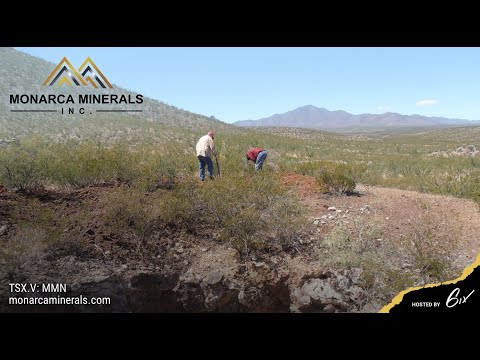
5:51 We have significant mineralization that I'll give a bit of a description on later on in this presentation about San Lucas. Next slide, please, Carlos. This map indicates our project, the San Jose project, very close to the Bismarck mine, as I mentioned. The San Jose project is only about 25 kilometers south of the border with New Mexico. It's easy to get to. It's a two-hour drive from either Juarez or El Paso in Texas. And so it's an easy ground to get into. It's a paved road all the way to the agricultural settlement where we base our operations out of there. The agricultural settlement is Guadalupe de Victoria. It's about 15 kilometers east of the project area.
6:42 And the project we have there was acquired in 2019 for 100% interest for total cash payments of $150,000. The owners retain a 2% NSR of which we can purchase half of it for a single payment of $100,000. So we got into the property by realizing the real potential on the surface that other people had overlooked and got in very inexpensively for the acquisition. It's a property that had very limited production in the 70s, some reported high gold, silver, and base metal grades, but critically, no drilling has ever been done on the project and so it's wide open for a drilling project. It's drill ready right now, we're ready to start drilling.
7:30 The indications that we saw at the surface were very strong mineralization and alteration. That led us to do a geophysicals program in the area where the old mines are located, and I'll get into a bit more detail on that further in the presentation. So right now, we're planning out, have finalized and made application for a drilling permit. And we're going to start out by drilling about 5,000 meters of drilling scattered between 10 and 15 holes, depending on final depth. Next slide, please. This is to just give you an idea of the kind of mineralization that we're seeing at the San Jose project. On the right-hand side is a cross-section through Peñoles' Bismarck mine that I mentioned.
8:18 There were very minor expressions of the mineralization at the surface. You can see where the red lines kind of thin out. So it was very minimal surface expression. They ended up doing a geophysical survey like we did back in the 90s, and they came up with an initial inferred resource of 13 million tons at 52 grams silver and 11% zinc with some other base metals. And so our geology is very similar to this. In that cross section, you can see on the right, in purple is the mineralizing intrusive, and to the left in green and blue are the limestones. And the mineralization occurs at the contact in SCARMS and it's carbonate replacement mineralization along that intrusive limestone contact. And so we see something similar at the San Jose project, except we're not on the margins of an intrusive. The intrusives are underneath us.
9:09 There's some expression of them at the surface, but the real potential is that we're up higher in the mineralizing system. And so we're seeing much higher precious metal grades than they appear to have at the Bismarck mine. The mineralization we see is 3 different intrusive phases. Mineralization is associated with each one of them, but mostly the latest dacite dykes, or I'm sorry, diorite dykes. And So the mineralization is hosted in limestones and we do see alteration in the intrusive, this typical of large scarn systems. And very importantly, is we see a very broad area of kilometers away from the contact, 1 to 2 kilometers away from that contact with a dolomitic alteration in the limestones, which is a classic indication of a significant sized hydrothermal system. So we're very excited about the project.
10:00 And if we go to the next slide, please. We can talk just a little bit about what we've observed so far in the geophysics that we did. So the mining concession is on the right, the area where the geophysical survey was done and where we're planning on drilling is in that oval area. So there's a lot of ground that has yet to be explored to the south in particular, but just generally around the mineralization that we see at the surface. We did, based on surface mineralization that we saw alteration, We did 167 chip channel samples across mineralized veins that go up to a 2 meter stick in places and we did get some pretty significant values out of that. And we, in one of the scar veins that we have sampled, We got almost 10 grams per ton gold and 257 grams per ton silver. So significant mineralization of the surface associated with base metals.
10:55 Based on the mapping and sampling we did, we did a geophysical survey. And in the lower, in the right hand
19:37 And we took 90 samples. The 90 samples were showing very high grades. We had 1 sample that was 110 grams per ton gold and 168 gram per ton silver with base metals and that was about a 1 meter channel sample. So there's significant grade there and of the samples we took there, taking the average grade of what we got, excluding that very high grade intercept or outcrop sample of 110 grams, the remaining samples averaged 3.2 grams per ton of gold and 110 grams per ton silver. And so the mineralization is significant and what we're really focused on there is getting control of the surrounding concessions. We've been in contact with the owner. They're willing to sell those concessions to us. What we want to focus on is expanding the land package and then doing a more thorough evaluation and doing additional drilling. Again, like in Tahoma, they only drill to 200 meters deep, and those high grade veins that I mentioned some of the grades on that we've seen, extend to depths greater than 200 meters. So what we wanna look for is, because we have limestones outcropping only about a kilometer south of the project, of the concessions that we have, that if we have limestones at the base of the volcanics, where those veins intersect at the end, we're looking for potential for significant Monto style mineralization.
21:05 And so we're excited about all 3 of our projects. They're well located in Mexico. They're projects that we understand very well and I'll hand it back to Mr. Espinosa for the rest of the presentation. Thank you very much, Mike. I like to share this slide. It's a comparable analysis with some other peers, exploration companies in the America focusing on silver and gold and What you can see here, it's how Monarch Aminio is still an undervaluated company So in other words, it's offering a lot of room to grow in terms of price of the share. Currently we are trading around 49 cents per ounce equivalent of silver. So it's a discount of almost 60% compared to the average of the industry.
22:06 So we feel very, very comfortable that with the exploration we're doing in San Jose, we want to have a very good appreciation from the market. So this is a great opportunity to join Monarca on this time of or on this stage of the company. And I talk briefly about Monaco Spina and our social management strategy. And what I want to highlight here is we are working really tailoring the strategy for community relations on every project. So it's not, every community is not the same, with not the same interest or needs. So what we are doing, it's working really to do something unique on each community, understanding and became part of a community.
23:02 Just to mention in the case of San Jose, we rent our houses in the community. So when we go down there, we stay with the community. We are neighbors in the community. We are not just like someone that is in and out. We are really getting part of the community and we are having a big support from them. So that's the strategy we are doing. And just to close, just to mention what could be a Monarcha good opportunity to invest? And 3 of the key components is the upcoming drilling program that Michael talked about, 5,000m on San Jose project that we feel very confident that Luna shows the phases about a great property, a polymetallic property with a lot of growth to grow.
23:55 That it's an excellent opportunity. And now with the recent trip he did to Mexico and shows to the south of the area where we are currently working. Looks like a continuity. So we believe it's going to be a big, big success. Generally speaking, we have a very positive portfolio, gold and silver, Durango and Chihuahua, and still undervalued company with a high liquidity and very good acceptance in the market. We are in a country that is a friendly jurisdiction for mining so we feel comfortable working in Mexico. And we have a very, very strong local team that also helping us to continue developing our properties.
24:42 So I'm going to stop here and open the floor for any questions you might have. Great, thank you so much, Carlos and Michael. Yeah, now we're gonna jump right into the Q&A. So if you do have a question, feel free to submit them now. Our first question here is for Michael. What areas offer the best opportunity for more exploration at San Jose? I mentioned earlier that we did do some surface reconnaissance exploration following the geophysical anomalies to the southeast, and we did see expressions on the surface of alteration, in particular dolomitization of limestones, which is what we see at the area to the north where the geophysics, the physical grid is. So the indications are an expansion of exploration potential of 2 to 3 kilometers to the southeast. So that's an upside in terms of general exploration.
25:38 The main exploration, of course, is the drilling that we're going to be starting here probably in the early part of August, depending on road construction time. So there's a lot of upside in many areas of the project. Great, yeah, and what kind of mineralization do you expect to see in the drilling? Well, particularly the sulfide minerals, as indicated by the chargeability and IP anomalies, is that we expect to see sulfide minerals in the drilling, hosted in scarn. One of the things that we see at the surface is a good base metal grade. So that's leakage from something bigger at depth where the IP anomalies are occurring. And so we're seeing leakage of base metals and precious metals to the surface along thin vein structures and those vein structures are going to be a leakage from something larger at depth and because they have base metals we expect base metal sulfides and precious metal fibers.
26:37 Got it. Yeah, and with some of the sampling having resulted in high golds and silver values, is there any opportunity focusing on that? Well, yeah, there are. The high grade gold and silver sample that I referenced is in one of the veins at the Guadalupe Pana project, which is at the south end of the geophysical grid. And so, it's standalone, it's very high-grade, and so there's certainly potential to have potentially minable veins with the precious metal values again because we're above and the mineralization the mineralizing intrusives you know we expect that those kind of grades are probably going to continue. We have to drill it. One of the drill holes we're going to drill is going to be crossing that vein at about 50 to 100 meters steep with the idea of testing the veins at the same time as testing IP anomalous.
27:30 Great, thank you. And Carlos, in addition to the San Jose project, what are the plans for Tehamin and San Lucas projects? Well, in the case of San Lucas, which is a great property, but it's too small. It's about 80 hectares. What we are doing, we are in negotiation with the owner of a land package around our concession. So we are expecting to acquire something around 700 hectares in total. So As soon as we close this deal, we want to have a much better property to explore. And then we need to decide whether to continue developing that property or probably to get an agreement with Algonaut, which is like 5 kilometers from our property.
28:24 So, but either way, it's a really good property. So we are happy on the process of negotiating this acquisition because it's going to change the opportunity for good on San Lucas. In the case of Tehamin, Tehamin We Heritage, a bad relationship with the community. The previous owners did a lot of mistakes with the community. So we are working on the community, redeveloping the relationship. So we want to show the community we are more responsible than the previous owners, and we are doing the work on the right way. So first step is to rebuild the relationship with the community. And then we want to do a new exploration program because as Michael mentioned, during the presentation, the drilling program was in a very shallow areas and we believe there is something deeper.
29:23 So we want to open the relationship with the community, have access to the property and start a new drilling program in Tejada. Great, thank you. We have a question here. What are the next catalysts you're working on to recover the share price recent performance? Yeah, that's a great question and a very timely question. The permitting process for the drilling program in San Jose was highly affected by COVID. Mexican government closed the offices. So it was it was it had been very difficult in terms of timing getting through the whole process.
30:11 So this delay causes a down price in the share price because we haven't been able to start trading and come back to the market with news about this plant. So the next catalyst could be 1, the acquisition of the plant package of San Lucas that I just mentioned a couple of minutes ago. But the other one that is going to be a strong one, I'm totally positive, is the execution of the drilling program. As soon as we start drilling, I'm sure the share price is going to perform well. And as soon as we start reporting to the market, the results of this drilling program is going to be even better.
31:00 Great. Thank you. Our next question here is, is the silver mineral visible in the oxide part of the mineralization and what is the silver mineral? I'm sorry, could you say the question again? Yeah, is the silver mineral visible in the oxide part of the mineralization, and what is the silver mineral? We haven't seen any specific silver minerals. What we do see is the remnants of oxidized galena, which is lead sulfide. Typically in scarn systems and many deposits in Mexico, when you have silver, it's in the lattice of the galena crystals. And so you have to use flotation to recover the galena to make a lead concentrate, which is where most of the silver reports to. Got it. Thank you.
31:46 Octavio is asking, is it possible to visit San Jose project at some point? Sure. Yeah. Well, Michael was there just 2 weeks ago in preparation for the drilling program. And of course, yeah, we are planning to bring an analyst also from Canada to visit the project. And I mean, it's a very nice area in terms of the quiet area safety, no big issues. So it's a good community. We are very lucky where we are. So it's, yeah, it's possible to visit at any point. Sounds great. Carlos, are you planning to raise more money soon? Well, actually, it's an interesting question because we currently have enough money to continue with our plans for the drilling program.
32:41 So that is one of the reasons we are not very concerned about the current price of the share. As I mentioned before, I believe the share is going to perform well as soon as we start drilling. So we have enough money to do this drilling program. And we have about 4.5 million dollars in warrants from the last private placement. And we talked with the institutional investors and some of the investors that participated on the private placement and they expressed interest to convert the warrants after the drilling program. So it's gonna be very interesting to see how many people start converting, to see if we really need to raise more money soon or not.
33:29 Probably the conversion from the waters will be enough for the next phase. We're probably going to go for a small round, probably in the fall. Okay, thank you. And Carlos, I know you mentioned COVID-19 and how that's impacted some of your plans. Can you go into more detail about what that was like? Well, yeah, as I mentioned, fortunately for us, our staff and people in the community haven't been affected for the COVID in terms of health. However, logistics have been a real nightmare. So fortunately things are getting better in Mexico. The vaccination is moving in the right direction as well as, you know, in Canada and the US.
34:18 So now Michael has been able to visit Mexico. We've been able to finally submit all the paperwork and all the process for the environmental permit. So now we're just waiting. It's a period of 4 weeks waiting to get the final response. We feel confident it's going to be fine. So I hope and I think I believe now COVID is going to be more in control. And I mean, we still need to be very careful, but we're going to be able to continue working. Great. Yeah. Looking forward to it all getting better. And just in closing, I know you also covered this a bit, but just why invest in Monaco Minerals?
35:07 Yeah, yeah. As I mentioned, it's one of the reasons it's a junior exploration with great assets in Mexico, which is an excellent jurisdiction for mining. And also, we have a very, very good liquidity for a junior company. So quite often when we talk with investors, one of the concerns could be, okay, the product looks good, but sometimes timing is not the best. And what if I want to exit? If you see the stats for the last 12 months, we trade over 63 million shares. So it's an average of around 300,000 shares a day. So really, I think it's a good opportunity for someone who wants to take some risk in your portfolio on the junior company and have the opportunity to product it if they need to.
36:00 Great, Well, thank you so much, Carlos and Michael, for taking us to your presentation and the Q&A. And thank you everyone for attending and asking great questions. If you think of a question after the summit is over, we will be sending out a survey where you'll have the opportunity to leave your details, and the Menorca Minerals team will be happy to follow up with you directly. You can also find more information on their website at menorcaminerals.com. And I see that we have one more question to sneak right in before the end, so I'll ask this one before we close out. But how much of your cash will probably be used for the St. Lucas acquisition? I cannot share the information at this point, but It's a really, really good deal.
36:48 So yeah, investors will be very happy when we close the deal. It's great. Great, well, I guess that's a perfect note to end off. Leave them wanting more, But thank you everyone for attending. I'll pass it back to you, Carlos, if you want the final word. Yeah, I just want to thank you and thank the audience to join us today on this event. And definitely we're gonna keep the market informed about the acquisition in San Lucas, about the progress in San Jose. And of course, also on Tejaven. Tejaven is a process that is going to take more time, but step by step, we want to build a solid company. You