Rob Ghiglieri
Administrator at Nevada Division of Minerals
Replay available
From the mines to the markets, this event unpacks the immense potential of U.S.-based mining companies in shaping a self-sufficient energy landscape. Join us for exclusive insights on lithium, zinc, silver, and copper, and the revolutionary technologies they power.
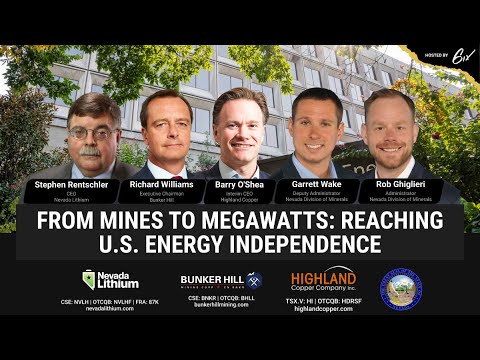
On 6ix: 6ix.com/event/from-mines-to-megawatts-reaching-us-energy-independence
Automated transcript · Written by software from the replay's audio. It can mishear names and figures; the replay is the record.
0:08 Our title for today's discussion is From Mines to Megawatts Reaching U.S. Energy Independence. I'll be serving as a moderator for this event as today we gather with a shared goal of advancing projects that drive economic development while upholding our profound responsibility as good stewards of the land. The US has the potential resources that can lead to its own energy independence. There are many regulatory bodies to ensure these projects are advanced the right way though. For some housekeeping rules, this event is being recorded and will be available to watch on the coming days at six.com or on YouTube. We also encourage you to submit questions in the chat on the bottom right hand side of your screen, as we hope to lead them into the conversation today. But gentlemen, thank you for joining me today. And I think the best way to start off is with introductions. So why don't you tell us who you are, what your role is and how long have you been there for? And I'm just gonna go from left to right based off my screen. So Garrett, why don't you kick us off?
1:01 Well, hello everyone. My name is Garrett Wake. I'm the Deputy Administrator with the Nevada Division of Minerals. I've been with our agency for about 8.5 years. I have some experience with a junior mining exploration company, oil exploration, as well as an engineering company prior to joining the state. I'm happy to be here with everyone today and joining the discussion. Thank you. And Stephen?
1:28 Yeah, hi everybody. I'm Steve Rentschler, CEO of Nevada Lithium. We are currently obviously trying to advance the lithium project in Nevada. Been with the company for 2.5 years now and very happy to be here as well.
1:44 Barry. Hi, my name is Barry Oje from Highland Copper. Just recently stepped into the CEO position, but I've been the CFO for the last year and a half. Highland has a couple of nice projects in Michigan in the state where we've been very happy with how we've been treated. We have one of very few permitted copper projects in the US. Look forward to discussion. Thank you. Rob?
2:09 Hello, my name is Rob Galerie. I'm the administrator for the Nevada Division of Minerals. I've been with the agency for 11 years. My background is in geology by trade. I did exploration in Nevada for gold, silver and other critical minerals that are on top of that. We've been in the state working on mining since we were initially created. So this is a big aspect to the state and the agency for anything to do with mining here in the state.
2:36 Thank you. Richard, I know you just came in a couple of seconds late. I just was asking for introductions. Your name, where are you from, what's your role? Thank you, Carl and everybody. Sorry, I'm slightly late. Richard Williams, Executive Chairman at Bunker Hill Mining Corporation. We're restarting the Bunker Hill Zinc Silver Lead mine in the Bunker Hill Superfund site in the Silver Valley, Idaho. And as such, it will be one of the first major operations to start in the Superfund site since those programs started in 1969, and will be in production this time next year. Thank you. Now that we have 2 Nevada representatives in a company that's operating out of Nevada, I thought we would kick it off with that conversation.
3:28 Especially with the government in LeBarton being supportive of the mining industry, Can you talk about some of the specific ways Nevada is helping mining companies operate and grow in the state and if your state is at all unique? Feel free to join in whoever would like to kick it off. Yeah I'd like to take this one from the beginning. Like I just stated, Nevada is not new to mining. Mining was a key aspect to becoming a state back in 1864. It was a major economic industry for the state then and it still is today. We currently are the number 1 gold producing state in the United States. And if we were a country, we'd be the fifth largest producer in the world. The Fraser Institute, which ranks jurisdictions throughout the world, currently ranks Nevada as the top mining jurisdiction in attractiveness for investment in the entire world.
4:21 There are multiple states and state agencies as well as federal agencies within the state that deal with mining. First off, like you mentioned, Governor Lombardo is in favor of mining. And the few key things that they want us to make sure that we represent and say from the governor's office is Nevada is open for business when it comes to mining. We are currently, through one of his first executive orders, requiring all state agencies to look through their existing rules and regulations and identify ones that were outdated or unnecessary. That includes looking at regulations throughout the mining industry as well. We're committed to work with the federal partners within the state to be able to go through the permitting process and identify ways that we can streamline the permitting in Nevada.
5:11 This has been a key aspect for not just Nevada, but the U.S. In permitting mines.
5:17 And recently, the interagency working group with the Department of Interior at the national level actually identified Nevada as the gold standard for permitting in the US. Currently, we are looking to have build upon that and the relationship we have with our federal agencies.
5:41 Recently also on top of that, the Governor's trade just recently did a trade mission with Canada and identifying other provinces that have strong mining backgrounds as well as coordination with technologies and supply chains and signing to MOUs with that to be able to help identify not just the mining sector but especially with critical minerals and lithium, and the ability to have the full circle of the lithium supply chain, not from exploration, production, to downstream processing and development and manufacturing of batteries, as well as long-term for recycling. So that is just kind of a kickoff. If Gary would you like to cover anything else? No, I think you summed it up pretty good, Rob. I mean, we'll talk about this I think a little bit more later, you know, specifically ways that Nevada can help.
6:33 There are many routes that companies can look towards, our agency being 1.
6:40 If companies that haven't done business in the state before are thinking to do business in Nevada, There's a lot of information that can be transmitted. And our agency is just, the Division of Minerals is one of the, I think one of the leading agencies in the state when it comes to providing information that's necessary and available to mining companies looking to do exploration or to mine in the state. So you can expand on that a little bit. But I think I think you covered it pretty well.
7:11 I would I would just chime in. If anybody hasn't seen that interview, if you go into YouTube and you can see Governor Lombardo's, it's about 7 minutes. I think it was on Bloomberg News where he talked. It was very, very clear that the man understands the value of mining to his state. And also I believe of what's gonna be happening with lithium giving the EV revolution everything going forward and Nevada's place in terms of U.S. Energy independence in this sort of next revolution. But I can't tell you from being a management of a company that's doing business in Nevada, how absolutely breathtaking it is to hear words like what he said, to hear initiatives like getting rid of old regulations, and basically looking at this in an opportunistic way.
8:02 People don't, I think, understand too just the history of Nevada and also Arizona, how much land is actually federally owned. So the interface between state and the federal government is particularly important. And when you have a governor who's literally out there saying, hey, we're here to exponentially make things easier in terms of permitting and everything else,
8:26 it is something that is opening the doors, I think in a far more illustrative and palatable way than simply saying, well, you know, we were number 1 in the Fraser Institute in 2021, which is a tremendous, I mean, honor, quite honestly. It's the number 1 mining jurisdiction in the world. And then again, 2 years later, I mean, I think Nevada really gets it. And I just can't tell these fellows from the Division of Mineral Wealth here how happy we are to hear that they have the same outlook towards this whole thing as the companies operating in Nevada have. Thank you. And We do have 2 panelists that are operating within the United States, but not within Nevada. So, Barry and Richard, if you guys have any further comments to add? Well, thank you, Carl. If I can, Barry, is that the first thing I'd say, having been a Chief Operating Officer at Barrick Gold, I know Nevada very well and it's great to see how, it was fantastic back then, but it's great to see how it's evolving and how central it is to this US-centric strategy.
9:33 Does not surprise me to read and hear what the governor has said. It's absolutely superb. It's echoed, of course, in the state within which we're operating in Idaho. And, you know, if you think about our particular challenge, and gentlemen from the administration, you'll recognize that starting a mine site within a super fund environmental cleanup site is something of a pioneering effort. And the
10:01 way in which we've managed to do that is by working exceedingly closely with the state and the federal agencies, most specifically being the Environmental Protection Agency and then now the IDEQ, the Idaho Environmental Quality Department. And they've just been outstanding in terms of supporting us in our efforts on the very understandable condition that we meet the very high standards expected of mining within the United States. But it isn't beyond that. What we have to do to start in a Superfund site is to just do the right thing. And we've had no problems at all, in fact, being encouraged and visited by the agencies as well as state officials throughout all of this and it's been nothing
10:51 but a positive experience. I'd add that we've also had a particularly positive experience. I think we're fortunate in Michigan to be operating on private land. So to some degree that means we don't have federal involvement. But I will say that the state of Michigan has really distinguished itself over the years that we've been working with them. You know, the way a state or a federal party can be helpful is to be prescriptive in their process and stick to the timelines. And I would certainly say that Michigan has done that. We have permitted our mine in Michigan in 1 year time following the appropriate baselining. Naturally a stringent process, but I would say Michigan is, They're not there to trip us up. They're there to make sure we run through the process appropriately, fairly, and we had a very good outcome.
11:43 Thank you. And Maybe I'll stick with you for a second because you are looking at building a mine. Maybe we should discuss what are some of the key factors you evaluate when deciding whether to develop a critical mineral deposit? How do you balance investment costs, permitting, local community impacts, factors like that? Yeah, certainly. I think the first thing that comes to mind is just license to operate. And when I say that, I don't mean permits. That's certainly 1 element of license to operate. Permits are naturally critical and they pave way to you stepping into the state. But license to operate is something a little different. It's meaning that you're actively engaging with all stakeholders across the board, making sure that the community wants you there, and making sure that everybody is really up to date and up to speed on what you're doing. When you have that license to operate, that allows you to look at your capacity to execute. Can you actually build the mine?
12:38 Do you have the resources? Do you have the labor? And once you put those 2 things in place, the last piece, I suppose, in terms of factors is looking at your ability to finance. Those are largely dictated by your license to operate and capacity to execute. So those are how I look at the key things that we look at when building a mine. And naturally for investors, They look at economics, but they too also look at the ESG factors that define your ability to execute. Richard, you're also building a mine currently, right now, aren't you?
13:13 Certainly am. And again, I think Barry covered it on behalf of the old industry brilliantly actually. Congratulations, Barry. License to operate first, money second. It's exactly right. And the way in which we're having to be, when we, our story was helped in many respects because we have an intact mining permit. But the mine, which ran for 90 years along with its smelting operation, was understandably dismantled when the cleanup started from 1981. So we needed to know a number of things. Firstly, technically, was it possible to restart in a Superfund site from a regulatory and technical perspective? So that's the license to operate piece.
14:00 Secondly, would we get the support of a community that had previously been 15,000 strong, but was now 1,500, courtesy of the closure of the mines, whose mean household income was still stuck in the 1980s? Not unsurprisingly, we found that to be yes as well. Then through the technical business, is the metal in the ground? Well, we will be quid reserves back in the 1981 classification. There was no doubt about that. Was there infrastructure sufficient to gain access to that? Yes. Was there then our ability to build a processing facility?
14:37 And with that, at a time of tight supply chains and high inflation, we also looked to recycling other capability that existed within the United States. So bought a processing facility off the closed mine site at Ponderay owned by Tech and brought that to site. Enhanced it by buying a mill from a closed mine site in Montana from Barrick. And you can see what we're doing. Essentially, we're recycling old opportunities and putting it together in ways that generate new value, which was critical to what we wanted to do. When I look through the US government agenda from the various executive orders issued for critical metals and so on, there's a constant reference to recycling and looking at regenerating as a part of all of that. So our particular lane that we walked down, which was specific, Barry gave the very good general answer, was looking down that particular regeneration
15:35 lane and seeing what benefits we could deliver to both the community and the nation, as well as quite obviously our shareholders from that unique regeneration perspective. So slightly different, but as a subset of what Barry brilliantly described. Thank you. I want to bring the Administrator and the Deputy Administrator back into the conversation here, so I'll address this question. How can mining companies support the state in expediting their operations and speed up the time from exploration to production?
16:09 Well, I'd like to just start with echoing what's already been stated. Realizing it's the license to operate first, right? That is the constant communication with the state permitting agencies, the federal permitting agencies, and more importantly sometimes local communities. We're seeing that here in Nevada in multiple projects of the need for the engagement early and then engagement often for those opportunities. Dealing with the state agencies, you're gonna be able to get the needs and desires met pretty quickly and identified early. You're gonna know what's gonna be needed for your permit. You're gonna know what you're gonna need to do to be able to embrace the funding, to be able to meet the reclamation requirements and everything else involved with mining. But it's gonna be really important for these companies to come in to make sure that that constant communication with the stakeholders and community is going to be vital in the very beginning.
17:10 Yeah, just to add one more thing, be a good steward, you know, on top of communication on that social license, from the time that you start exploration, your company is entering into an agreement with the state or wherever you're at. And so, there are companies that, Most companies go about it the right way. They follow their permit, they follow their bonding and everything, and that's fantastic and that's an asset as you move forward. Everyone knows the names of the companies who don't do things the right way.
17:44 If you always maintain that good steward of the environment. You know, communicate early and often. You will find that those moving down the line in the permitting process or in interactions with regulatory and other agencies, it's a lot easier when you communicate and they know that you are doing the right thing at all times. So that's a big one as well. Great. I'll bring Steve into the conversation as we are talking about energy independence in the U.S. And lithium demand is expected to grow exponentially in the coming years because of the EV market. What are some of the key challenges in ramping up lithium production and processing capacity? And how is the industry addressing such changes?
18:31 The issues, it's funny, sort of remain the same over time. The thing that's changed here is the acceleration of the need to basically take care of that demand. You know, everybody hates to say, oh, it's different this time, but it really is, because I think in normal circumstances, you would never have, essentially, the development of demand without some sort of a an industry supply backdrop that you could fall back onto. To make up these tremendous gaps that are being projected I mean this is all obviously a consequence of the turn towards electric vehicles, the green revolution, etc. And you see the demands also being put on copper and other strategic metals. But you know what's really going to happen here is I think you're going to have a sea change in terms of how end users come to acknowledge the fact that they need to get involved with the supply chain in a much earlier way than they previously would want to. I often tell investors sort of the stories, my experiences as I talk to potential end users.
19:35 You know, well, what are your plans? What is it that you would ideally like? And frankly, what you often are talking to, people you're talking to, are people who've never faced these kinds of essentially dilemmas or problems. If you think about it, if you work for a car company and you need aluminum, you've always known where to go, you know what the specs are on your aluminum, comes down to cost, quantity, etc. Now it's a totally different ballgame where if I'm talking to people and they're saying, well your production is going to come in 2030. I need to take care of my near-term needs first. And I say, well, yes, the problem is if you don't take care of companies like mine, talk to us, help us with financing, permitting, all these other things, it won't be 2030 any longer. It will continue to get farther away this is one of the continuing dilemmas that companies like ours have as their advanced exploration companies junior developers.
20:26 Is that there's always a constant need. To X. Essentially accelerate the you know things never go 100 percent right This is always about mitigation of risk. One of the big things that happens is uncertainty rears its ugly head. You see things like happen with Thacker Pass relatively recently in terms of the permitting and then that put a delay on them, etc. And of course, there's always financing risks. Right. This time, I think we're going to see things change relatively quickly as the end
20:56 users come to the understanding that if in fact, they don't become investors in companies like ours, and of course, this is in different metals as well, not just lithium, that supply gap is never going to be basically taken care of. And then you become faced with, well, what are the opportunity costs of not being able to put a battery in a car and a car in a showroom?
21:16 So I think that is the major challenge is getting the mindset changed. I think when you hear the state of Nevada talking as it is, you see that there's clearly a tailwind that's going to help. I think that you can see extraordinary things happen when you have the alignment of federal and state and local governments. If you're talking about cleaning up superfund sites, obviously then you see how that all can mesh and work together. I point to past experiences where that didn't happen and there were obvious benefits that were that were never basically taken care of. And I always talk about Roja, Montana over in Europe, where you had essentially a Superfund site from the Roman times that could never get cleaned up because of political reasons and non-alignment of purposes and things like that. But here in Nevada, I think that we really have the opportunity to do something special with flexible government agencies who understand the optionality of what's going on. And I think we're gonna have the tailwinds of a burgeoning lithium industry at our back to help this whole thing out with investors and companies alike.
22:20 Thank you. Well said, Stephen. Larry, as an emerging copper producer, how do you see Highland Copper contributing to the US energy independence and the transition to EVs and renewable energy?
22:32 Well, similar to the other metals represented on this call, copper is moving towards a pretty stark supply-demand imbalance to reference an S&P report that's been recently published by the year 2035. Supply is expected to outstrip demand by a factor of 3 to 1. And acknowledging that naturally some of the supply, some of the demand side factors in some pretty favorable assumptions in terms of electrification,
23:00 the gap will be wide one way or the other. And I guess I'd acknowledge that on the supply side, you know, there's been limited investment over the last period of time, mines are more challenging to put on stream, input costs have increased, so on and so forth. So there's a real need for producers to come to being now, for investment to come in from a development perspective now. In terms of how Highland Copper fits in, the nice thing is that we are largely through certainly the exploration and early development portion of the cycle. We'll all know that that portion of the cycle can take 10 plus years to bring yourself to a study, to a comprehensive resource that you're willing to move forward on. Highland has moved through all of those pieces, recently completed our overall permitting process.
23:49 And when you think about that projected imbalance, which actually peaks in the year 2035,
23:56 companies coming into production now can actually assist with that supply demand imbalance. So that's how we look. Naturally, we look to do it soon. We'd like to go into project financing in 2024 and be part of the solution. Richard, how does a silver zinc Company play this discussion today? Silver Sync and lead. Don't forget lead, of course. One of the things about lead is it's one of the forgotten metals of the energy transition. And one of the advantages of lead is that 70% of the lead consumed here in the West is from recycled lead, which is a very much part of the long term strategy. I don't know how much of the copper consumed in 2035 or 2050 will come from recycled copper, but some of it will. And that's a key part of it. But to get to the point of the question, we're in a, if you load in all of the demand for infrastructure, power, plus plus, and you put geopolitical tensions on top of it, we're in a Western demand-supply-deficit situation.
25:07 If you also fold in there the fact that capital has been, the amount of capital available for the mining industry has shrunk since the global financial crisis of 2008 by a considerable portion. There's less than half of what was available in 2007 available now to the Western miners. We're in a position where supply is tight because of capital constraints. People look at permitting, they look at those other things, those are all factors, but it's capital constraints more than anything else in my view. And then on the demand side, we've got all this new demand coming in. So it applies for zinc and silver too. A couple of bits on those metals though. Zinc is not seen as a battery metal at this stage. Technology is evolving where it may become so, particularly in static storage, which is growing as a battery technology, particularly connected to solar and wind power.
26:08 But zinc here in the United States, and I round the numbers up, consumes trending towards 1 billion pounds of zinc a year. And 60% of that comes from Alaska and the Red Dog site with tech. Now that is going to end at some point
26:25 in terms of their charts, it's in 10 years time and that isn't going to be replaced from within the United States, although there is Homoza in Arizona, there's Bunker Hill, and there's a few others. So it's going to have to rely on supplies from allies. And allies in this case, quite clearly, is Canada, Mexico, Peru, and elsewhere. And it's interesting to observe the US set up the American Australian Critical Metals Task Group, where the Australians have allocated 6 billion Australian dollars to the development of critical metals in that supply chain. There's a way in which the US is dealing with this in a very sort of intelligent way that aligns with other strategies. One other point I'd make on the supply chain, Bunker Hill is part of it. Bunker Hill used to have a smelting operation, which courtesy of the very good laws that were passed at the end of the 60s and early 70s, Clean Air, Clean Water, Environmental Protection Act, was shut down. And the same
27:26 happened to, I say, hundreds, but certainly tens of smelting and refining operations across the USA. And so it's investing in downstream refining that's very interesting to see how that evolves over time. We will send ours to Tech Smelter in British Columbia, which produces, for instance, 60% of the germanium and gallium consumed by the US, particularly its defense industry right now. But that refining hub, and then investing into that refining hub is gonna be key when looking strategically at all the solutions. The good news is there's not a single member of the US government, federally, state or otherwise, that doesn't recognize these challenges and doesn't have the support required to help get moving.
28:15 The bad news is the private capital markets aren't moving fast enough to allocate the capital we need. And it's up to all of us, governments included, to see what we can do to nudge them in the right direction.
28:30 I'm not sure I'd be saying that if I was in a Nevada lithium business. I think you're probably in the best jurisdiction with the most exciting metal. But if you happen to be in zinc, lead and silver, that we're in a wonderful jurisdiction that we tend to be the last dog at the ball when it comes to capital compared to you. But that's the end of my long rambling statement, positives and negatives on zinc, silver and lead. Well, to your point, if I may interrupt just for a 2nd, Kyle, to your point, Richard, thank you for that acknowledgement. But just in general, I think for investors, what sometimes gets lost, unless you've really been involved with the industry, when you talk about shortages, you know, whether it's 60,000 tons or 100,000 tons or 2 million tons, you know, in some cases, and I'll talk specifically about lithium, the amounts that need to be found to process, et cetera, over a relatively short time period have never been done before. Essentially, I would say that it's an impossible task and that price is gonna become the limiting constraint
29:32 on demand. But the thing to remember about that is, in my opinion, is that if you have a shortage of 1 pound, 1 ton, 1 ounce, or 100,000 tons, it's an upward force on pricing. And this comes back to, I think, all of the comments we're talking about with regards to available capital. And I think in particular U.S. Investors have been missing from the natural resources markets for a long long time. But I think there's going to be a renaissance and I'm not going to be surprised if lithium is to a large extent behind us because I think Nevada is going to become the centerpiece of the U.S. Lithium industry going forward. Obviously copper, lead, zinc, all of the other critical metals are going to be taking place and have a place in this entire structure because of the requisites of the US government.
30:20 But this time I really do think it's gonna be different and the pricing I think is gonna make this basically self-fulfilling prophecy come true. The value of all our projects is going to go up. That's obviously going to attract capital. And I see it's not sort of a dog chasing its tail type of an event, but it's going to take 1 event. I mean, we've seen it in Nevada with, you know, GM and Sackerd, things like that, and Ioneer, Riley Ridge, things like that. But I think there's going to be small companies that are all of a sudden going to have bedfellows that people really didn't think about. And when that happens, I predict there's going to be sort of a dam bursting. That kind of a thing is going to happen and is going to trigger essentially, I think, you know, a rebirth of the mining industry and the investment in the mining industry in the US. So we'll see what happens.
31:12 Kyle, I'd like to make just 1 statement to reiterate something Richard said. There truly is a shortfall of capital, particularly for development assets, be it at a state or a federal level, having funding come in from an authority speaks incredible volumes. Not only is it just 1st capital in and a financial boost for your project but it really speaks to the license to operate and when investors down the line see that as a vote of confidence for the project from inside the state you begin to see further money coming in. So listen, I think that is a critical piece for all states to consider. We do know that Michigan does put its balance sheet to use and we're certainly hopeful to step into a process there.
32:00 Thank you. I'm gathering a lot of people are in agreement that the private industry needs to help support these projects, but in terms of the government, maybe you can educate us on these policies and initiatives taking place. Richard, you did touch on this Australian American 1 that I wasn't familiar with. So what policies and initiatives are taking place at the government level currently that are helping us progress in this goal? Would you like me to answer that first?
32:31 I want to leave it open, but if you want to start, for sure. Well, again, I'll go back to the the US government. And again, I'm very much conscious. I'm, I'm saying to people that may know more, much more about it, me on the call. But, but, you know, with our engagement, there is that the Defense Department, for instance, since the Defense Production Act of 1950, has been managing stockpiles of critical metals very efficiently for a very long period of time. The fact that those metals have changed, gallium and germanium, came in in the 80s, which related to satellite technology, etc. So the fact that they say, I wish to secure more of the supply chain and have more of it at home or within allies is not a new concept.
33:19 But what has come in under the current government is a series of, and it's been built on from previous governments, a series of initiatives designed to secure the supply chain with the purpose being not defense, but energy self-sufficiency and energy transition, as well as the wish to inject capital into infrastructure to upgrade American or North American infrastructure and do it within the states, but also broader, stretching out even to places, or not even, but places that are tangential to the United States and Mexico, Canada, and elsewhere we're seeing happening. So I'm not going to give you the list of presidential executive orders or all the pushes, but what I'd say is there is a federal interest in developing mining for all of those reasons.
34:11 What I find interesting is the more than 1 looks at it, the more opportunities for securing that support I see, be it in terms of training labour, be it in terms of tax credits, be it in terms of direct access to capital, and more. An area that is of concern, I think, for the whole North American industry, is a shortage of trained labour. And I think I've also seen efforts going into that area to assist in the development of that because you know we're a cyclical industry and labor comes up and down depending on booms and busts. So I'd say that's a more of a general point, but for anyone listening on the call, mining industry investors, if you go to the relevant parts of the US government website and information systems, there's a very extensive list of all the things that you can get.
35:06 And I've been very surprised, and our CFO certainly is, as the many opportunities that exist there to help us that weren't immediately obvious before we started looking for them. I thought you wanted to unmute there for a 2nd, Robert. Do you have anything to say? I mean as just stated right the federal government has invested quite a bit of money recently into the research and development of critical minerals throughout the United States. In the state also, State of Nevada is looking into doing similar, not to that extent for money, but there is opportunities that the companies do have to be able to meet with state. Our government or our state created the Governor's Office of Economic Development.
36:02 Abilities to be able to meet with people throughout the state, look for opportunities to be able to potentially provide tax abatements and other ideas to be able to increase and encourage development here within the state. So it is happening at the state level as well, but it is pretty unprecedented the amount of funding that has put forward recently by the federal government in the bipartisan infrastructure law, as well as the Inflation Reduction Act, to go to this research through the Department th energy and others to look seeing some of that as we there's been funding development of direct lith new technology that may b what were an economic res Nevada to becoming econom there's a lot of different ways that the state as well as federal government is looking to try to increase the production of minerals.
37:04 Thank you. I can just touch on one point. It's a historical point, but it's relevant to today as well with respect to government assistance. We get our power from the Pacific Northwest primarily as a result of investments in hydroelectric technology in the 30s, 40s and 50s in Oregon. We pay 4.7 cents per kilowatt hour, which as any miner will know is virtually free. Now that's as a result of massive US government investment done in the run out of the Great Depression and the transformation of the US at the back end of that industrial phase. I think we will see over time, modular nuclear technology playing a similar role, not necessarily in the most populated areas, but both the US, Canada and other countries, I can speak of the UK as well, are pushing this technology forward.
37:57 Imagine what the supply chain will look like when you can put modular nuclear technologies into those remote sites in Northern Canada, for instance, which drops your structural cost base dramatically. These are things that will happen over time. I can't give you a timeline for it, But I wanted to mention that because sometimes when people are looking at government support, it's what will this project do? But those strategic adjustments into the fabric of the nation, both its education, its power, its transport, its access to markets, its refining capability done using new technology is what really changes things. I'm not an expert on lithium or the critical metals, more exotic critical metals supply chain. But I have noticed Defense department money going into refining capability for critical niche metals related to the defence needs into Mountain Pass or elsewhere in the States.
38:56 And we'll see that building over time. And that's what I think will start to attract and it should attract private capital because essentially the government has, by doing that, lowered the structural cost base of mining operations within the areas they wanted to happen and that means increased margins which by definition should mean increased private capital. So I want to just mention that point as a example of an advantage we have from history that I think will be repeated on a go forward basis by the current governments. And I think another thing to remember too, what I find is that it's an iterative process when you speak to people, and I think it's an educational process. Again, not everybody's been in natural resources or been exposed to it for great lengths of time, and many of these people are now basically forced to being decision-makers having to deal with it.
39:57 When you look to your point exactly about sort of maybe a renaissance in the nuclear industry to try to facilitate regional power. Obviously down in Nevada, we have a tremendous amount of alternative energy between the hydro coming out of the Hoover Dam as well as solar panels and things like that. But it was very interesting to me when a whole Inflation Reduction Act came through in terms of legislation. Then it took about, I think, another 9 months for essentially the correct government entities to figure out how they were going to administer it. You know, and I noticed a lot of the money was going towards technology. And I think that this is sort of a throwback again to where the US investment mind has been for a number of decades. And also a lot of very vocal proponents of electric vehicles making comments about the need for refineries, you know, and there's enough lithium to go around and all this sort of thing.
40:53 But the reality is, is that the amount of money that it takes, the amount of capital really to start to sustain from the ground roots, a new industry, and let's just say it's lithium, but it could be a different metal, whatever it's going to be. At the beginning stages, it's really not a lot. I actually had written to, I think it was the Department of Energy or whoever was doing the administration or asking for guidelines on this whole thing with the billion dollars coming from the Inflation Reduction Act and saying, well, why not give, as an example, a car companies, allow them to have credits for making investments in Explorers, it's a pittance compared to what you're offering in terms of EV tax incentives. And there simply isn't going to be enough lithium in the out years unless this is done.
41:40 And I think part of the problem is that, again, you go back to the experiences that many of us had who've been in this industry and watching these time frames just get longer and longer and longer, whether it's copper, zinc, gold, whatever it is, time from putting a shovel in the ground at the beginning to actually getting an operation up and producing just continues to lengthen. And in the particular case of energy independence and specifically lithium and the other critical minerals, this is just the time that we don't have. So if we continue to talk to the state agencies who can help us with federal agencies and the whole interaction, I think we have a much better shot at making this whole thing go forward in the timeframe that we need it to. Yeah, beautifully said. I do wanna take a moment right now to just address for anyone that came in late that we are accepting questions from the audience and it's probably best if we start getting into them. I want to encourage you guys to ask questions here. So the first one I'll pose to the group is from Adrian. Are local slash federal incentives structured to favor relatively smaller mine companies in particular, or is the size of the mining company irrelevant?
42:51 I would answer at the outset, I don't think that they're advantageous necessarily to the smaller companies. There tends to be some money that's more available for companies that are more advanced, in particular towards getting their feasibility studies finished. And there's an actual progression, if you're not familiar with the industry, sort of going from a resource estimate to then a preliminary economic assessment and then a pre-feasibility study and a feasibility study. But you know when you go back to the very beginning of the process that's really where you know capital starvation starts. And there really has been not been the allocation from these funds that you that you see out there. It's more for the battery technology, for those types of factories, for funding feasibility studies, for loan guarantees, things like that. And that's sort of precisely the kind of opportunity that I think would make the biggest difference in terms of fulfilling the demand supply gaps, at least that we're seeing in lithium that are going to be coming by the end of the decade.
43:56 Yeah, I would say there's certainly a little less available for early stage expenditure, which of course is challenging for development companies that don't have revenue. Certainly what we're seeing in Michigan though, and this is looking at some of the grants that the Michigan government has made over the past year or 2, it's been reasonably equitable. Naturally, in Michigan, money does go to the likes of GM and Ford, of course, and they're supporting electrification as well. We've certainly seen funding go into smaller regional companies, particularly when new jobs are being brought into the region. So I will speak highly, certainly, of how Michigan seems to support business. Rob, it looked like you went off mute for a second right before Stephen took over. Did you want to add anything to this? No, I mean, I think I just echo kind of the comments that were just said it's it's not so much the size of the company It's the process and the time that they are in Where they're at in their process and where that available funding is put towards a lot of this federal funding was put towards research Right, And so a lot of these companies may not be in that same timeline of research. They're looking to develop a resource or identify a new resource.
45:10 Exploration in the minerals industry is not a quick turnaround turnkey operation. It takes many years for these companies to be able to put the clues together to able to identify an actual resource. A good example, like what we talked about, is the Thacker Pass project. This Thacker Pass project wasn't initially identified for lithium. It was identified for hecaride clay for drill muds. And then at the time, the commodity price of lithium wasn't there So now you're looking at these change in commodities the change in price in the markets and everything else To where that's gonna affect it. And so the funding to this really isn't to the specific company level, it's to where they are in their process. Thank you. I'll keep you on here for a second because there is another question on the state of Nevada specifically.
46:00 Rock says, noticing that the companies on the call are all headquartered in Canada. Does this create an issue with Nevada governance and general treatment of the companies? So it does not. And there's a reason behind that. It's because just like what we've been talking about, investing for these exploration in early development companies, it mainly comes from Canada. I worked for an exploration, junior exploration company that was headquartered out of Canada, but every person that actually worked for the company minus the one personnel that was in Canada lived and was working in Nevada. It's just an economic driver for where these companies can initiate, raise funds, raise capital to be able to do the work on the ground in other states as well as Nevada. Thank you.
46:48 D.T. Harris has a question here. What are the perspectives of Idaho and Michigan governors and respective divisions of minerals on mining in their states? Well, I mean, I can't obviously speak for the governor specifically. I can say that Michigan has been permitting mining projects recently. So that speaks in and of itself. The Copperwood project, which we're looking to bring online, was permitted in 2019. There's a second project in our portfolio that we're joint venturing that is currently going into the permitting process. We certainly have optimism for its prospects. So again, I can speak favorably for Michigan as a mining district and it's quite interesting. Obviously when people think about the US, their minds go directly to Nevada and Arizona and fairly so.
47:39 But there are other strong jurisdictions. Michigan has a rich history in mining and a lot of the regions, as you know them, are underdeveloped since mining left. And naturally it's a source, a very positive economic source as and when it comes back in. It's certainly something that we're looking to articulate. We've recently started putting together third party report on the economic benefits of bringing our mind back into production in the near future. And it would be fantastic for the state of Michigan. Idaho, if I may, is again, Idaho has got a rich history of mining like Nevada has. And there are many projects that are being sort of developed within Idaho now.
48:29 A point that was made by Rob, I think right up front, is the difference between being on private land or or and and federal land or public land we're on private land. There's that same distinction for those who don't understand it in in the United States is important with respect to the pace at which you can get certain things permitted but the standards of which you've got to meet are exactly the same in terms of environmental and other management. So, what I'd say with respect to Idaho and there's a lot of Idaho companies, is that we get superb support out of Boise and locally, as long as we do things right. And federally, there's money that's been deployed into, say, Perpetua, looking at that Antimony source, or into Gervoir, looking at that cobalt source within the Idaho Cobalt Belt and again within the Silver Valley byproducts of the Silver operations or in our case of base model operations particularly interesting but you'll see it across there. If I can just go back to the previous question about being headquartered in Canada. Yeah, I'm the only one outside the United States. Our CEO lives 10 minutes walk from the mine gate in the Silver Valley, Idaho.
49:45 So we're actually, as you said, for capital raising reasons, have a headquarters listed next to the exchange at which we're raising money on. But in real terms, as the only non-American on the team, It's really an American business. And that's really helped us as well with those local relationships that are so critical. Garrett, I haven't heard from you for some time. And I think this is a question I probably should have posed at the beginning, but maybe it'd be beneficial for the audience. What does the Nevada Division of Minerals actually do? Yeah, so thank you. So we're actually not a regulatory agency when it comes to mining. So it's a little bit misleading.
50:32 Being the Division of Minerals, we don't regulate minerals. But what we do is we, there are several ways that we promote and assist in the responsible exploration for and the production of mining. And what that looks like are things like our open data website. We have basically someone who works nearly full time on building out our means to provide information to the public, to exploration companies, to mining companies that can assist them in their projects. And so if you visit our website, you can just type in Division of Minerals on Google or go to minerals.nv.gov. On our webpage is our open data website, and there is just a ton of information there from mining claim information, education information, information on land use and land issues.
51:27 Just so much information is available there and it can be tailored to, you know, the specific applications we have on there, can be tailored to use for whatever you're looking to do. So if you're looking for critical minerals, for example, not all of this data is ours. Not all of it is data that we have created internally. But we pull from all over the place and put all this data in 1 hub. So critical minerals, we use the USGS MRDS dataset, pull that in, you can look at that along with mining claim information, how much money has been spent on mining claims in certain areas of the state, and kind of tailor your research to whatever it is you're looking for. So it's really an information aspect that our agency assists.
52:15 We put out a few publications annually. We report on production statistics. So we put out maps and reports saying who mined what and where they mined it. We pay for a survey known as the Nevada mineral exploration survey, a biannual survey that kind of gauges investment interest across the state. And so we kind of look at how companies are feeling about the industry, what are their major concerns? So that's a big one. Our mineral industry report goes into a lot of detail on where not only mining is occurring, but where there's active exploration and what companies are exploring for. So there's just a lot of different tools and avenues that we have available for doing research in those areas.
53:08 We do regulate dissolved mineral exploration, so we can assist with that. Prior to 2019, it was very difficult to explore for dissolved minerals without a water right. In 2019, our agency, along with several other government entities, worked together to find a way to make dissolved mineral exploration feasible in the state. We have all of that information on our website if anyone's interested. Just to add one last little bit to that one as well. I mean, The history of our agency actually dates back really to 1943, when the Nevada government put together the advisory mining board.
53:53 And then in the 50s, the Oil and Gas Commission, which is something we do regulate as well, was put together and combined throughout the 80s and 90s with variations added to it. But the education and dissemination of information on the mining industry is in our statute and are one of our main priorities and goals. It's kind of an economic driver, economic development for the mining industry within the state of Nevada. And Rob, I was just going to ask, as a Canadian, does every single state have one of these divisions of minerals? And are there more advanced states than others? Yes and no. There is other agencies similar to ours. A lot of them though are merged with the potential permitting agency at the same time, which having us separated out I think is very advantageous for the industry as well as permitting.
54:48 So there isn't that overlap of permitting the mines. We are more of the information and factual data provider on the industry within the state. I do think we are fairly unique in that aspect. Everything we do is for the responsible exploration production of these minerals. The last legislative session or 2 sessions a was a bad actors built th session to where if there coming in, not fulfilling including reclamation, put them on a potential list to be able to prohibit them from doing work in the future. And so we're not coming back to the historic legacy sites. We do not want to create any more new sites within the state of Nevada. So this is just one of the many things that we do look at in the state to be able to provide the responsible exploration for these projects.
55:45 I'm sorry, I did want to add one more thing too. We do run a reclamation bond pool, a small bond pool for mostly junior mining companies. So there are a few agencies. The Division of Environmental Protection in our state runs 1 as well, but it's more geared towards larger companies. So for junior explorers, we see a lot of notice level junior exploration companies will bond through us because the reason our pool was set up was to expedite the process and to make it cost-effective for junior companies. And So we see a lot of small companies bond with our agency. And they work with us on a one-on-one basis to get that done. And we can turn those bonds around very quickly. That's cool. Great. That's it for the questions I had prepared. We're running low on time, so I think closing remarks would make sense at this point.
56:33 We will address the last question in the audience and have Barry kick it off here with that question actually. It's just a specific question to your company. Question for Highland, what's planned for Copperwood in 2024? Yeah, so naturally, you know, we're eager to step into development. We've put all the fundamental building blocks in place. Obviously the geology and the reserve is ready. We're permitted and we're continuing to build, as we discussed, license to operate in the region. Recently, we just hired a site manager at Copperwood, and the kind of guy that you really need and want. He's local, been working and operating in the region for 30 years. The kind of people that truly bring you credibility as you look to go into development.
57:19 Naturally, capital is the next step and we're not today I'd say in the capital markets environment that are supporting pure junior projects. We do suspect that that will turn around and naturally we're working towards the process there. We're looking at funding, ideally from Michigan State. We'd like to continue on that process. That will be a first good step. And from there you step into the more broad financing process. And in the meantime, you prepare yourself for when the markets turn appropriately, which we think will be in 2024, complete the funding, and as we are allowed to step into development. I say all that with optimism. Naturally, a construction decision isn't always totally in your control.
58:06 To some degree, you're at the mercy of the markets. What you can do in the meantime is prepare your company and make your project better through engineering optimizations, which we will also do. Continue to build license to operate And as and when we have the chance, I look to build the mine in the soon future. Thank you. Richard, do you have any closing remarks for today's discussion? Well, I'd say this on Barry, you've got on your company, you've got 2 directors that I know very well, Caroline Donnelly, without whom we wouldn't have the Bunker Hill mine finance from Sprock Streaming and Resources, and Mel Miller, who worked as sort of head of supply chain with me when Barrick, 2 absolutely outstanding individuals in the industry. So, you know, best of luck.
58:52 And Stephen, I ran a drilling business in Afghanistan in 2011 to 14, working for the US government, and we drilled sale our lithium out there and so on as part of seeing if that part of the supply chain would work. Obviously the war didn't quite work out the way everybody hoped it would so we didn't do that but the best of luck to you with what you're doing in that great state of Nevada. And on my side, Sam Ash, who we have, he graduated from high school in Elko, Nevada, and a lot of the guys down there that work with us at Barrick and are working with us at Idaho. And I mention all that because on this call, it's a very special relationship in my view in North America, and particularly the United States and those that are engaged in doing what it can for this remarkable industry. And I just wanna thank the government officials on the call here for all that you're doing. We all know that you do everything you can as we do, but there's so much to do. So thanks for setting up the call, 6, and thanks for everybody for allowing me to be part of it.
59:58 I'm sorry I was late getting on the call. That was our fault. No worries about that at all, Richard. Stephen, any closing remarks from you? Yeah, pretty much, I just want to say how grateful I am for the opportunity to essentially be involved with a company that I believe is in the greatest mining jurisdiction there is, involved with an industry that to me has got the most auspicious outlook for fundamentals that you could possibly imagine going forward. And that, of course, is the lithium industry. We have a lot of things that are going on right now at Bonnie Clare, our lithium project, which is only a couple of hours away from Las Vegas. You know, we're an advanced developer. We're going through our preliminary feasibility study work right now.
1:00:45 We have tremendous optionality looking at different things in terms of brine, looking at the potential of developing this in different ways, all with an eye towards the fundamentals that time is really the key. And time is important in a number of ways for the end users, but it's also important because clearly the state of Nevada gets it, the governor gets it. He wants to get as much value out of this entire stream as possible. When we're all said and done at Bonnie Clare, we're not gonna be shipping concentrates somewhere to get upgraded. Hopefully our material will go right out the doors, right into a battery manufacturer who won't be too far away from where we are. So we're tremendously optimistic about it. We've got a tremendous amount of value that clearly the market isn't giving us any value for. But we hope to turn it around, thinking as the headwinds of the market start to change in 2024, it'll become readily apparent. So I appreciate the time. Thanks so much to everybody else on the call. Had a really very good time.
1:01:45 Thank you. And from the administrator, Deputy Administrator of the Nevada Division of Minerals, do you guys have any closing remarks for the people in attendance today and the panelists? I mean, I just kind of reiterate the comments I made at the beginning, right? Nevada is a mining state, it has been from the beginning. We are Blessed with the endowment of minerals that we have within this state gold silver copper We're going to be touring a vanadium deposit here later this week. There's a lot of critical minerals, cobalt, graphite and others that are going to be required for this transition. Our governor sees that. He knows the importance of it. And like I said, Nevada is open for business when it comes to this.
1:02:33 We're looking for opportunities to work with companies to be able to make these projects go online and be able to be a full transition and the entire lithium chain as well as other potential critical mineral chains throughout this process. Gentlemen, thank you so much for your time and for the audience that attended today. If you did come in a little late, it is being recorded and will be available shortly on YouTube afterwards. So look out for that. But thank you guys all for the great discussion.
Follow 6ix into a list and get an email when it puts out news.
Follow Bunker Hill Mining Corp into a list and get an email when it puts out news.
Follow Highland Copper Co., Inc. into a list and get an email when it puts out news.
Follow Nevada Lithium Resources, Inc. into a list and get an email when it puts out news.
Follow State of Nevada into a list and get an email when it puts out news.
Administrator at Nevada Division of Minerals
Deputy Administrator at Nevada Division of Minerals
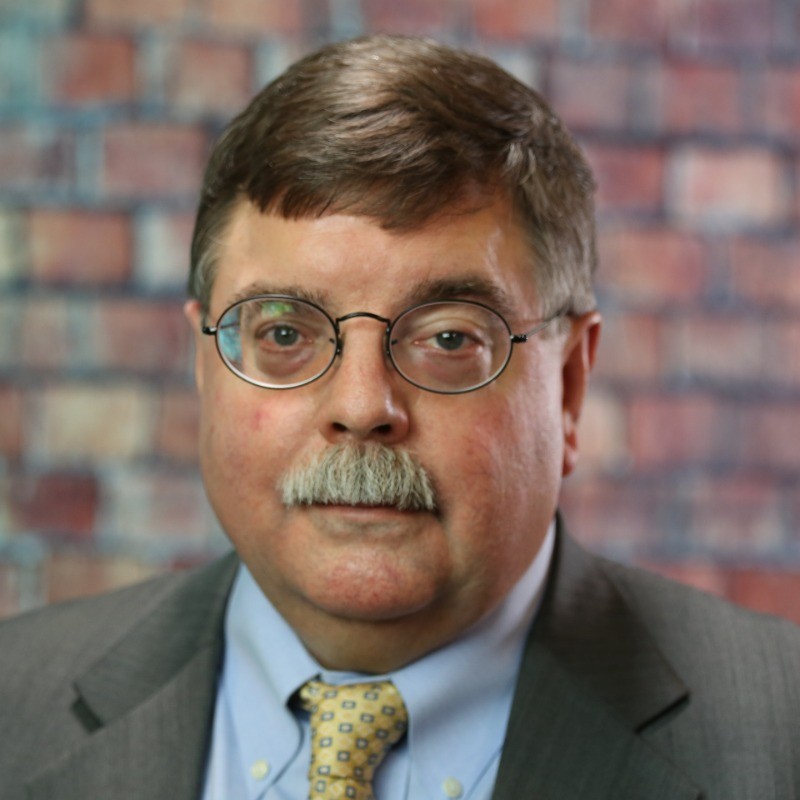
CEO at Nevada Lithium Resources
25 years of experience in institutional investing. Founding member of the Chilton Global Natural Resources Fund, with peak AUM of >$4B USD.
Executive Chairman at Bunker Hill Mining
A former COO of Barrick Gold Corporation from 2015-2018, Mr. Williams is a global executive with an established track-record of value creation, pioneering and transformational leadership within the Mining Industry and other demanding assignments. Amongst other notable achievements, this helped Barrick deliver an 80% improvement in the company’s operating profit over his three years, and the total overhaul of the Company’s relationship with the Tanzanian Government following a breakdown of relations between a Barrick subsidiary and that government. Formerly, the CEO of an African and Central Asian focused exploration business, and Non-Executive Director of Gem Diamonds PLC, he was also the Commanding Officer of the British Special Forces Regiment – the SAS. He is currently a Non-Executive Director of Trevali Mining Corporation, Chair of Trevali’s HSEC Committee and an advisor to mining companies facing complex operational, political or ESG challenges. BSc Economics, University College London; MA Security Studies, Kings College London; MBA Cranfield University.
Interim CEO at Highland Copper
Mr. O’Shea has over 20 years of finance experience across diverse industries and countries. Mr. O’Shea was CFO of Fiore Gold Ltd. from May 2018 until its recent acquisition by Calibre Mining Corp. Prior to that, he spent eight years with New Gold Inc., initially as Vice President of Finance where he oversaw financial reporting, financial planning, internal audit, and tax and then as Vice President, Business Development, responsible for corporate development, investor relations, and strategic capital allocation. Mr. O'Shea is a Chartered Professional Accountant and has an Honours Business Administration degree from the Ivey Business School.