Automated transcript · Written by software from the replay's audio. It can mishear names and figures; the replay is the record.
18:26 It's unlike any other project I've come across, just because you're literally right next to a small town and it's a pro-mining town too. Permitting is a cinch. In fact, our landholding is about 90% of it is on patented claims, meaning privately owned, so we're not even dealing with the federal or state regulators on most of our permitting. We're able to fast track even what already is a fast track process in Nevada versus other jurisdictions around. So, you know, I work, My brother runs a company that's based in BC and I hear the headaches that they have to go through. Nevada, I'm like, my goodness, why would you guys choose to put your focus there? This is, you know, I sleep like a baby at night generally.
19:17 There's just so many less headaches and they're clearly supportive of the industry. You never have to worry regardless of what administration is in office. They're not going to be messing with a good thing to any great extent. So I think, you know, other than maybe a tax credit type system to help fund generative exportion, that would be nice. But at the same time, you know, I'm not gonna kick a gift horse in the mouth either. Right. I mean, I don't know the decision between A&W and Subway is a different one. I was going to say A&W is the dead winner there, but. Oh, you know you've got the options. Yeah, I agree with the guys. There's not, you know, it's a great place to work. I think one of the issues with Nevada is 1 is its cost entry is difficult for companies.
20:05 So consolidating land positions is timely and costly. There's a, you know, all the big guys own the biggest tracts of ground in Nevada typically. So most of the properties you see small companies picking up are fringe assets, you know, away from major trends, helps to live in Nevada. So our team all lives on the Carlin trend. So we got a bit of an inside track. I meet a prospector for a beer that owns ground. You know, that's a quick way to pick up new ground that maybe might not be available to other groups. But all in all, it's a pretty awesome place to be working. Great. Well, it sounds lovely. So I was wondering, at the state and federal level, what is your outlook on the future of mining in Nevada and as well the future of mining in the States. Are they moving in the right direction? Andrew, I might hand this one off to you. Yeah, well, I don't see any clouds on the horizon, if that's what you're asking.
21:02 Being focused on Silver, and it's a Silver Gold property that we have, but being focused on Silver, you know, they're really pushing a green movement down there and are insinuating they're going to be moving forward with some pretty substantial initiatives, certainly on the solar front and on the decarbonisation front. Silver is a critical metal in all of those things and I think the notion of having a domestic supply of that, that can be mined ethically without a massive footprint. I mean, What we're going to be developing and moving forward with are a series of historically ultra-high-grade, past-producing underground mines. We're breathing a lot of fresh life into that. What that means is there's going to be a very low footprint of disturbance at surface. I think not only do I not see any roadblocks, I think moving forward, we'd be getting a lot of support both locally and federally to see projects like this come back online versus having to go to far flung places of the Earth where maybe human rights conditions might not be the same as they are up here, where environmental conditions might not be the same up here and where we're employing a large workforce.
22:11 So, I've got really nothing that is keeping me up at night on that front. Any thoughts, Mike? Yeah, no, there's, I mean, the mining history in Nevada, I mean, it has a huge impetus. A huge impetus has been built up over decades. And it would take a major schism to be able to kind of slow that down. Just think about a huge speeding train going along and how long it would take for it to stop. And that's kind of what you're talking about for Nevada. And so there's a huge incentive for the state itself to kind of keep that train going in full steam. And it actually, it's in control of that train. It has a lot of power to keep that train moving.
23:04 On the federal stage, you are gonna naturally, as you go through the different parties in power, you are gonna see some variances in regards to what people will focus on and what potential sticking their fingers in the pie that they would like to do. But I think that's just a small variance that really will not affect that speeding train. Yeah, you know, at the federal level, I think, like Mike was saying there, it's probably not going to change dramatically. I think especially with kind of the green revolution that's going on, especially with the new administration, there's a recognition that the critical minerals are required to kind of put that stuff forward. So I think, you know, we're not gonna see huge changes there.
23:54 One thing that kind of concerns me at the state level, which not a lot of folks outside of Nevada are aware of is that the state is proposing a new mine tax essentially, which is really just a cash grab to offset costs related to the COVID pandemic and the loss of jobs, et cetera. So there are states proposing the taxing of gross revenues on mines, which if you think about it, would you, getting taxed, if a company were taxed on their gross revenue instead of their net, that could be a serious problem for putting or keeping mines and extending mine life. So don't mean to be a Debbie Downer on it, but that would be a concern at the state level that, you know, I think it's gonna get resolved and I don't think it's gonna pass, but that would be something that could affect all of us if it does pass. And I think, you know, it's not just Nevada that had to deal with COVID. I wouldn't be surprised to see headlines like that come up pretty much every jurisdiction on the world because countries ultimately like other people's money and they're gonna find a way to try and get it. I think Nevada is the one place where you're gonna see such a pushback on something like that, that I don't see much chance of that actually happening, but you're gonna see that everywhere else too. So it's just sort of, we're all, as they like to say, we're all in this together.
25:12 Yeah, well, I don't wanna go too much into COVID, but I was just wondering how the pandemic did affect your operations for each of your mines? Well, for a number of the general factors, and one of course is travel. I'm based in Vancouver and our project is in Nevada. We do have people in the States who can kind of stick handle things, but a lot of our technical team is up here in Canada. So, the COVID-19 has kind of put a bit of a damper on the freedom of movement. However, it did not affect us last year. So we were quite fortunate enough to basically go from start to end on our drill program and not have anything hamper the program.
26:08 Now, staffing though, and everybody's gonna talk about this is the assay lab. I mean, okay, it's wonderful that now that you've kind of drilled your program and you've taken your samples and you submit it to the lab. But then it was on a never, never plan because the lab itself had issues with their personnel through the COVID period and hiring people. And so this was kind of one of the longest waits that I've ever endured for samples. So that was a direct impact that definitely kind of sent us back on the time schedule awaiting our assay results, which of course were wonderful. Of course. Just filming suspense. Yeah, I think a lot of people are finding that the delay times have been an issue, but Andrew, Chad, any other challenges during COVID?
27:01 Go ahead, Andrew. You know, this time last year when things were getting potentially really scary in the news and people had no idea just how bad it was going to be and what the mortality rate was going to be, and You saw the videos of people just dropping over in the streets in China. It looked very, very scary. We did have an ongoing drill program going on at the time and we decided to cut it short just to wait until there was a better idea of what the guidance was going to be and what we could do to mitigate the risk. We called it short by 1 drill hole and then it gave us time to do some retargeting. It also gave us time to, This time last year, the markets were absolutely whipsawing up and down and no 1 knew what was going to be happening from that standpoint either. We were able to wait it out, get better guidance and when we were able to get back going, Everything just started lining up with an emerging bull market and precious metals. Everyone remembers what it was like between late April to early August. It was just a steady, frothy build, lots of people jumping back in and it was a fun time for everyone.
28:17 And COVID ever since then had very, very little effect on what we're doing. Obviously we do follow the CDC guidelines down there, but at the sites, we've had 0 positive cases. And yeah, it hasn't slowed us down 1 bit. In fact, we keep scaling up. We've got more people at our site now than we ever have at any other point in history. That's great. Charles? Yeah, It didn't slow us down very much. We all live down here. So I bought a 20-foot travel trailer and all 3 of us slept out in the woods for 6 months working on each of our projects. So that's the best form of social distancing we could come up with. So I partnered with a drilling company when we founded the company. So access to rigs was a non-issue.
29:03 I prepaid my assays to the lab 6 months in advance, which guaranteed us three-week turnarounds through the COVID pandemic. So we tried to be proactive with how we approached it, and it worked for us so far, so. Yeah, That's great. All right, well, I want to take a deeper dive into each of your respective companies. Are there any major catalysts coming up for you in the coming year that you are working towards or any news that you wanted to share? I'll throw it back to you, Chad. Sure. We got a pretty busy spring first half of the year plan. So from a catalyst perspective, we have a drill program at Salina, which is infill and step out drilling on our new discovery, the shallow oxide play down silver gold play near Ely. And then we're going to follow up with a drill program at Carlin East, and that's a really exciting program. We've wanted to drill it for a few years, but with Barrick making, or Nevada Goldmines making a new discovery at their North Leaville deposit, which is only 3.5 kilometers, downtrend of us on the exact same fault zone.
30:02 They're drilling up to 23m of 33g per tonne in the same host rocks that cut across our projects. That's a huge potential catalyst for the company and positive news out of that will be a game changer for us. Last year was about making the discoveries that are property, this year is going to be focused on showing the market just how big these things can possibly be. We've got a multi-pronged drill program going on right now with about 40,000m laid out. I'd be shocked if we don't drill much more than that. But the focus of that drill program, we've got 2 rigs just living in one of our target areas, which was the last producing Silver mine in the district when production shut down due to low metals prices in 1930.
30:51 What that's going to be doing is that's the focus on delivering the resource estimate. We plan to have that out by Q4. We think that's going to be a significant rerating event for us. It's also going to justify us the ability to then look at going underground and driving a decline because that's where the rubber is really going to hit the road for us next year. When you're drilling from surface, you've got to get through a lot of rock before you're hitting the veins that you're targeting. But once you can open things up underground and start teeing off at the veins right at their face, it's where things really start to pick up the pace. In addition, we've got 2 other rigs at our site. One's drilling out another target area, which also represents a former past producing mine, which we're showing significant extension potential there already. And then we've got another drill rig that's focused on making new discoveries and that drill rig just hit 0.143 vein, which we didn't know was there in this DPB target, which we're drilling out, which is going to be adding significant tonnage to what we already had significant tonnage potential hopes for in this one area where we're doing the resource definition.
32:08 There's a mix between infill drilling to put something tangible to paper that the market should be able to value us on very, very shortly, but then we'll have the upside baked in on the exploration drilling and on the new discovery-focused drilling. So, yeah, lots of drill results between now and then. If we end up getting that $50 or $100 Silver that I kept getting promised by Mr. Sprock and all the other commentators that this should be a year for the ages. So buckle up and enjoy the ride. All right, well, looking forward to it. And Mike, what about you and Gitchell Gold? I know At the end of last year, we drilled 5 holes in our central area on just 2 fences, and these 2 fences were 1,000 feet apart.
32:55 And all those 5 drill holes hit either as anticipated or better intersections. So it's very easy to kind of move from that. We're looking at starting drilling in May. We're starting with 1 rig and we're going to kind of build up through the year and kind of get bigger and better. And so we're going to start kind of stepping out from our discoveries from last year, and basically start building up the ounces in the ground and kind of really showing the people kind of how what the potential is at Fond du Huy Canyon. And the one thing that kind of Fond du Huy Canyon brings to the table that a lot of other projects don't is, is it's it's a, the geological setting allows for some really kind of high grade concentrated zones.
33:43 So you're not going to be chasing kind of low grade materials, you know, you know, for thousands of feet, They're internal to the system and really integral to the mineralizing system are these kind of like high-grade conduits that really kind of very quickly, you know, like add ounces in the ground and they're all, you know, close to surface. So, you know, yeah, so we're quite, we're quite excited to kind of what we're going to be doing this year. Great. Well, it sounds like exciting news ahead for all of each of your companies. Just to close out this panel discussion, then we'll open the floor up to Q&A. So for everyone watching, if you have a question, please submit it now. But just in closing, what are the takeaways that you want investors to leave with after this discussion? If there's anything else you want to emphasize and highlight, now is your chance.
34:37 And I guess I'll throw it back to Mike so we can reverse the order here. Well, as the price of gold kind of drops, as anybody kind of looks at a gold price chart today. I think it's kind of bouncing kind of along the support level. And if you look at any of the companies, you know, commodity, precious metal companies trading, you can see that they've kind of taken a fair hit in their share price. So I do kind of invite people to definitely take a look at ourselves as well as the other companies that are being represented here in the panel, because now might be kind of a really good time to kind of evaluate your investment and invest in Nevada. Great. Andrew?
35:24 Yeah, well, it all depends on what you're looking for. Within the Silver space, what we have is super unique, not just because of the jurisdiction, but because about 70% of all Silver production comes as a by-product of large base metal mines, be it Copper, Lead, Zinc. What we have in Nevada is something special because Tonopah is historically averaged at 100 to 1 Silver to Gold ratio. And this is high-grade stuff. Over the 30 years of commercial production history, the average grade produced was at over 2kg Silver equivalent. Money's going to be going to the stories that seem to be having that great potential. What we're trying to put together is something that's going to be a high margin, all-weather style project.
36:14 We've been putting 1 foot in front of another. We've got well over 40 to maybe 50 drill results out that confirm that our first drill hole, that 30m of a kilogram per 10, wasn't an anomaly. It's a trend. We've got multiple active sites and we're drilling into something that in the Silver space, if you want to be tied to Silver, we're a pure play precious metals district in the heart of Nevada, in what's rated the number 1 mining jurisdiction on the planet. High grades at that. Not only do you get Silver, but you get Gold. Our highest Gold grade so far is 26g. Our highest Silver grade so far has been over 2kg. It's not in Timbuktu, it's not in Alaska or the Yukon or Bolivia or Mexico or Peru. This is literally halfway between Las Vegas and Reno with a highway crossing our property. And as I said, an A&W within about 100 meters of where we're drilling right now.
37:16 Yeah, that's the major takeaway is the A&W really close to you. I've got a sponsorship with them. So every time I mentioned that, I got one of those frosty mugs. All right. And Last but not least, Chad. Well, my IR guy is going to kill me if I don't mention that our ticker symbol, which I forgot to mention, it's RDG on the venture and RDGMF on the OTC. There you go, David. But another thing I want to point out is we have these 3 projects that are really swinging for the fences, deep, high grade, huge upside. But what I didn't mention at SWIFT, and I probably should have, is this is a silver deposit that has bulk tonnage potential, which is very rare in the US. The only real comparison would be the Rochester mine, which is about a 21 gram per tonne open pit silver deposit.
38:05 Our current drilling has statistically, we're drilling 60 grams per tonne and greater is our average oxide silver gold grades on an equivalent scale. So we're drilling, you know, on average 30 to 40 metres. That's a 10 to 12 storey building of greater than 2 ounce per ton silver at surface. So lots of potential scale at Salina. And I think that's something that we're hoping to really get on people's radar this year is that we have a legitimate bulk tonnage silver play that is a bit unique in Nevada. So we're excited to go after it this year. Great, absolutely. All right, well, with that, I'm going to open the floor up to the questions from the attendees here. So we've got some questions already coming in. Shane is asking, This is a question for everyone, but are your companies outsourcing the geology modeling work or do you do it in-house?
38:54 For whoever wants to start. Yeah, well, you know, we're fortunate to, the first hire I made when I joined BlackRock was the addition of Bill Howell as our Executive Chair. He's also the technical driver for the company. Bill, well before joining here, he used to be head of exploration for Placer dome, which at the time, up until they were taken out by Berrica, was the third largest gold mining company on the planet. And also the mover and shaker when it came to Nevada exploration. I mean, he's literally worked on every large mine down there. He wears many hats down there, but modelling is something that he seems to be really, really good at.
39:40 It's been amazing to see, with every drill hole we put out, to see the internal leapfrog model change and expand and grow and get more predictive. But to answer your question, he's the one doing pretty much making the coffee in the morning, turning the lights on and picking out the drill sites and then interpreting the data. So we do that all in the house. Yeah, because I mean, nowadays, I mean, most technical teams are required to be multifaceted and you do require that sort of like in-house modeling capability. But you can only take it so far. I mean, then all of a sudden the overriding regulations kick in and you can't publish anything that you've actually created in-house. You actually have to have an independent party be able to confirm it and authorize the publish of it.
40:32 So at some point in time, you have to actually pass it over to another entity who will then further model it and then produce it. All right, and Chad? Yeah, all of our modeling's in-house. We got a leapfrog setup and 2 great geos on the technical side that are constantly updating the model. Yeah, great. All right, well, our next question here is from James. With deep drilling comes risk. How is each of your companies mitigating that risk at your projects? I'll take that one. We actually partnered with a drilling company, so that's how we've been able to mitigate risk to the shareholders. Future discovery in Nevada for multi-million ounce deposits is going to be deep.
41:17 Any major deposit that you see that's been made in the last 10 years has been made below 500m steps. We were able to drill for a lot cheaper than the at-market rate and it's a huge advantage for us. The benefit is evident for us. The mineralizing starts at surface, so we don't have to worry about deep drilling. Moving forward this year, the majority of our drilling will be delineating to the depth range of about 600 to probably about 800 feet or so. So you can kind of pop off a lot of holes with a, under a reasonable kind of economic basis. If you are gonna entertain drilling deep holes, you wanna be going for large targets.
42:06 That you're not, you don't wanna drill a, try and drill a small target with a deep hole. So for example, one of our projects to the North is sort of like a high-grade Copper porphyry target, and it's going to be sizable. So, you can drill 2 or 3 holes and it's kind of either going to be there or it's not going to be there. And so that's kind of how you approach it. You have to be kind of very strategic in your project selection as well as your drill plan because money is king. The best way to mitigate any risk with drilling is to start off with and gather as much data as you possibly can. With Tonopah, we've been able to hit it out of the park from literally our first drill hole because we weren't starting with a clean sheet of paper. We had 30-years worth of production data from the multiple operating mining companies that were working our project 100-years ago. We weren't testing to see if the veins were there and then of course, you have to figure out which way they run. We knew where they were. We knew where the underground workings were. We knew where they started mining.
43:20 We knew roughly the grades they were producing at. So really, it was very, I mean, all drilling is risky, but our first drill hole wasn't to determine whether the veins were there, it was to determine a proof of concept. And that proof of concept was simple. All the records said they stopped mining due to metals prices tanking in the late 1920s. And the records say that these companies had planned to continue mining for many years. In fact, they did development work along a number of our targets but never actually got around to extracting the ore. The proof of concept was simple. We knew where the historic workings were. We knew where they'd effectively stopped in their tracks. All we did was we pointed the drill hole just a little beyond where we thought they left off. And if we hit the mine, sorry, if we hit the vein, we know we were right. And by golly, we were.
44:15 We hit 29m of something about a kilogram per tonne and that opened things up. Had they had the opportunity, they wouldn't have stopped mining that. They left that there and that just really said, okay, game on. With all this new attention now being paid to Nevada, is there any competition for drill crews? Significant. Every time we try and get our hands on another drill rig. It's like pulling teeth, but the more we can get the better. When we started drilling in June of last year, we started out with just 1 RC rig. We were only planning on doing 7,500m. We kept connecting and people kept throwing more money at us.
45:03 So then we got 2 rigs and then by October we had 3 rigs and then in January we got 4 rigs. It is hard to get rigs, especially when you need them and especially during busy season because it's not just juniors down there. You've got some of the biggest gold mines on the planet, all competing for the same resources and all using the same labs as well, which is also part of the delay. So it's tough, but with money And I guess ample planning in advance, it can be done. Yeah, I mean, with every blessing comes a curse. And I mean, Nevada is fairly kind of ripe for exploration and discovery. The gold price that the huge increase in gold price that you saw occur last year and kind of carry forward through this year, that really has brought a bigger focus. It's kind of like a funnel.
46:01 You've got a lot of interest kind of being funneled into a small hole. And so with that interest, then of course you're competing quite heavily for resources, you know, such as drill rigs. All right. Makes sense. We have a question here for Chad. Oh, Chad, do you have something to say on the? No, I'm just gonna hit the drill contract home again. So like it'd be like, we don't have to compete in drill rigs, at least on the RC side. And luckily I've been living in Nevada for 10 years, so a lot of these guys that run the drill companies are my neighbors. So I see them at baseball or golf, and getting access to rigs is usually fairly straightforward. Got it. All right, well, so I have another question for you about the bulk tonnage silver at Mazzalina, the discovery that was made in 2020.
46:50 Tom wants to know how you see that prospect bearing a resemblance to Rochester mine, and does 3 million, that one, okay, thanks for your perspective on the state challenges. OK, so I guess he was asking about if it has a resemblance to a nearby mine. Yeah, well, it's still really early. When I make the comparison to Rochester, I'm more just talking there's only one open pit Silver mine in Nevada to speak of. Rochester is the only one. Average grade there is 21g per tonne, but it's a massive open pit operation. That's 200Moz of Silver. I'm not saying we're there yet, but that's what we'd be to know what it takes to become an open pit silver mine in Nevada. You're looking at at least 21 grams per ton oxide. And so we're drilling 2.5, actually 3 times that. So I think for an early start, we're targeting a bulk tonnage scenario, but significantly higher grade.
47:47 So we'll see how this drill program works out this year. Great. Mike, question for you. Do you have any plans for drilling the Star Project this year? We do. And I know I've been focusing on Fond du Huy Canyon in this discussion today. But fairly close to the North is a project that's never been drilled before, but it's kind of been worked on and developed over the last 5-years. Extremely high-grade Copper, Silver and Gold. You don't see that very often, the triumvit of those minerals being so nicely expressed at surface. We've been developing some really compelling geophysical targets that we will be drill testing this year. That's a bonus project in our arsenal.
48:34 Some of our major shareholders, surprisingly, they're really focused on the STAR project in excess of our major flagship project, Fondue Canyon. Perfect, great. I have a question for you, Andrew. So now that there's been some drilling results that have been made of the SilverCloud project. Is there going to be a decision on spinning off SilverCloud as a new company with shares distributed to existing BlackRock Silver shareholders? Yeah, that's a plan that we had all along. I think we announced in September that we were contemplating spinning out our Silver Club property, which is in Northern Nevada. It's right at the top of the Carlin trend, where it intersects with the Northern Nevada rift.
49:30 It might be the most prospective Gold mining area on the planet, certainly top 1 or 2, but Silverclad is very grassroots. It's 45km2, it's got Gold throughout. It's been drilled in 4 different areas Just in the last couple of years, we cut Gold in 3 of those areas. But anytime you have 2 projects in a company, you're really only going to get valued based on one of them. And when we started connecting at Tonopah, we realized we got something serious and something very special on our hands. Silver cloud was not getting any valuation. Up until we picked up Tonopah in February, March of last year, Silver cloud was our standalone asset and we had about a $20M market cap at the time, just based on that.
50:18 And once we started hitting at Tonopah, I realised that we were getting 0 value for Silver Cloud in that. So what we want to do is we want to focus and laser in on what we're doing at Tonopah and put 1 foot in front of the other and methodically advance that towards a resource and hopefully development and who knows 1 day if we'll be the ones to put in production or not. But certainly we see that sort of potential there. So I do like the idea of spinning it out. I do like the idea of spinning it out. I do like the idea of having another poker chip to play with because it was shown that our management team can find opportunities and add value to them both cheaply and in a way that wildly benefits shareholders. So SilverCloud, with those drill results out now, that now frees us up because we've been in a bit of purgatory for the past 4 months as we've awaited these results to 1, interpret them and 2, That now frees us up to look at how we'll go about doing the spin out and doing the things that are required, like updating technical reports and also figuring out, you know, there are, SilverCloud's a very coveted project in the sense that it was a formerly Newmont, Placer Dome and Tech Resources project.
51:35 So lots of major mining appeal there, just given the area it's in and the large land package and the early successes that it's had. So, yes, that's very still much on the radar, but our focus, our bread and butter, our valuation and how we're ultimately going to be judged on what we do with Tonopah, and that's going to be the value driver for us this year. But I'd love to be able to get my hands on another vehicle to play with and make some money. Because ultimately, I'm a shareholder in BlackRock first and foremost. That's how I joined the company in the first place. So if I can find a way to unlock and to create value with that, absolutely I'm all yours. Great. We have an interesting question here from James and I'm going to ask it because I want to know the answer to this. Are any of the miners giving thoughts to developing or creating a crypto coin to participate in the exciting blockchain economy?
52:30 This could be a first for the mining industry. So there was a, I took a meeting without really doing a bit of research on who it was with or the reason I thought they wanted to talk to me about something. Turned out they wanted to talk to me about coming out with a, they were selling me an investment in their mine and I was going to be backed, their ounces in the ground would be backed by crypto. Now this is 3 or 4 years ago and what he was effectively saying was that we're going to, we've got this deposit, don't really ask me too many questions about it, but we think there's gold here and we'll sell you a coin based on the gold in the ground. I asked him a couple of questions about the project, just in terms of viability.
53:17 Turns out the project would have never seen the light of day in 1 million years. It was an absolute scam. And what they're trying to do is just hop on the bandwagon, get people excited about the crypto asset, saying that it's backed by ounces in the ground. Well, That's all well and good, except if those ounces in the ground have 0.000% probability of ever seeing the light of day and being mined economically. That was my first foray into it. I got the hairs on my arms stood up and I said, OK, you know what? Let's not make this more harder than it needs to be. We're miners. We're here to find, build and develop viable projects. And I think in all of our situations, I think that if we're successful on that front, it would not be us being the ones that are going to be mining it ourselves.
54:08 We'd all have big targets on our back by that point. I don't really think the Kinrosses or the Nevada Gold mines of the world, or Newmonts or Newgolds have any interest in that. Just keep it simple. Stick to good projects, stick to delivering good drill results and I think the rest will take care of itself. I think I agree. I think It's something that maybe some of the majors could consider, but any junior that would say that they're doing that, I think is exposing their shareholders to incredible risk in a business that's already probably as risky as it gets in the speculative stock market space. So I think that we should stick to the big guys. I have no additional comment. I just wanted to know what your thoughts were.
54:57 Mike, we have a question about Getchell Gold from James. He is a little bit less familiar with Getchel Gold and he is asking what is 1 undeniable justification for him to become an investor in Getchel Gold Corp? Well, the simple answer is growth in value. And I mean, when we were, this was a little over a year ago and we were kind of looking around for projects and we wanted to kind of start to kind of brand Getchell Gold as kind of one of the more preeminent explorers in Nevada. We were looking for a project that not only kind of could provide us with that foundation that would kind of set us up to for that growth path, but actually had that apparent untapped potential that we can very easily or very readily unlock in a short period of time.
55:58 And so as we hunted around, I mean, quite quickly we kind of zeroed in on Fond du Hoc Canyon because it came with a very sizable historic resource and a voluminous dataset. There were probably over 700 historic drill holes and some sort of a fairly kind of middle scale open pit mining. So evident, the mineralization was evident, it was at surface. And as we kind of really dug, kind of rolled up our sleeves and kind of dug into the data down to our elbows. You can actually see you in a very short period of time where you can kind of prove up not only that the mineralization that was historically drilled and the vast majority was kind of near surface, that you can start showing the continuity and the thickness of the mineralization.
56:53 And, you know, as evidenced by our recent drill program, that's exactly what we've shown. And so this is only the start. And I think as a value basis, it's really the untapped potential that we are going to kind of unlock over the next little while, that's really the story here. Great, thank you. Andrew, have you considered a merger with Summa? Yeah, Summa Silver is right next door to us in Tonopah. We control the western half of the district and they control a large position on the eastern half of the district. The story of Tonopah was that the discovery was made on the eastern 0.5 by large outcropping veins at surface. The mining started right away. They did no drilling back in the day and they followed these veins right at surface along strike and down dip.
57:45 All the early production in the district happened on the East side. Then as companies came in and established a setup shop and started discovering new mines, it went westward. The Western side of the district was where the last of all of the commercial production there happened up until when metals prices in the late 1920s, early 30s. From our perspective, the West always represented the blue sky. It represented certainly the best looking targets that we were able to ascertain in the district. And we haven't, I mean, we've been going pedal to the metal. So when we started drilling, I think Suma and I both came out with a plan 7,500 metre drill program. We did 30,000 metres. I think we ended up doing 15,000 metres last year and there's still a lot of results from those pending, but they've had to stop and recalibrate and I think they took 4 or 5-months off drilling and they're going to get started again, while we've just kept going and going and going.
58:46 So what I'd say is, There could be a possibility where it makes sense, but what we're defining, our model is coming together with every new drill hole we get. We've got 2 historic mines that we're showing significant new life potential to. If there's a way to bring them in that made sense from an evaluation perspective, we'd consider it. But right now it's far too early because there's just not enough data from what they're doing so far. But in a year or 2 maybe. But I wanna try and establish our data first and that's on the back of the drill resource that we're gonna be putting out by the end of this year. I think that's gonna be the game changer for us. And then from there, maybe we can start picking off some smaller companies that could be agreed to.
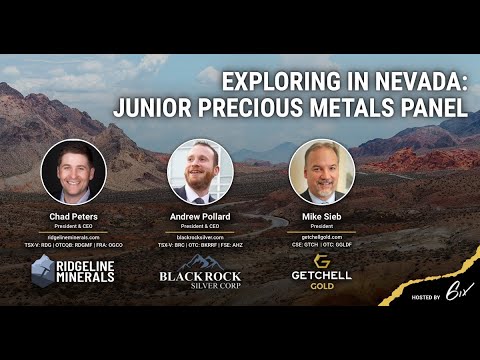
59:35 Great. Well, thank you all so much. This is all the time we have for today. An hour goes really fast when it's such great discussion. So I want to thank you all, Chad, Andrew, Mike, for your great insights and discussion today and taking us through the live Q&A. I also want to thank everyone who submitted questions and joined us at this panel. If we didn't get a chance to answer your questions or if you think of 1 after, we will be emailing out a short survey and you'll be able to leave your contact details and we can put you in touch with any one of these companies. And with that, I'm gonna close things off and thank you again for taking the time to join us today. ♪♪ Bye!