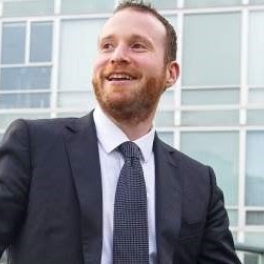
Andrew Pollard
President & CEO at Blackrock Silver Corp
Replay available
Join us for a great event!

Automated transcript · Written by software from the replay's audio. It can mishear names and figures; the replay is the record.
0:08 Hello everyone and welcome to BlackRock Silver's live summit today hosted by 6. I'm pleased to introduce our speaker for today, their president and CEO Andrew Pollard. Andrew's going to be taking us through a company presentation and after we're going to be accepting questions. So just as a reminder to everyone in the audience, please submit your questions in the Q&A chat found on the right hand side of your screen at any time during today's event. And if you'd like to get in contact with the BlackRock Silver team, feel free to fill out the survey that's linked in the chat. As always, the summit is going to be recorded and it'll be available on demand on six.com in the coming days. So look out for that if you need a refresher. Without further
0:38 ado, Andrew, I want to pass things over to you so that we can get started. My goodness, thank you very much, Cam. It's Good to be here. Let me pull this up. Yeah, well, listen, it's been it's been a long time since we've done a long form 1 of these with you. And really, one of the main reasons I wanted to do it is I think, you know, we're coming up to an inflection point for the industry. And that inflection point is something that I see as just being the major headwinds that have faced the industry for the better part of a full year now. And that has obviously been, you know, the Fed weighing on the most aggressive policy that they've had for 40 years. It's driven valuations down across the board. But the juniors are the ones that get hit the hardest. You know, what I'm excited about is I think the next Fed meeting, which is coming up next week, you know, might just be the last of the hikes. In fact, that's what the prognosis is, you know, maybe one more 25 basis points hike and then that.
1:33 But what that means is that there's some light in the tunnel finally, because for about a year here, maybe even longer, really since 2020, you know, good news just is a liquidity event. Drill results are not being rewarded. What I think right now is that turn. Silver and gold are doing what they've been supposed to be doing. You're starting to see those conversations pick up more in the mainstream media. You're looking at the de-dollarization of the US dollar as you're seeing companies align with China and Russia. So a loss of reserve currency, you're seeing bank crises where people are taking some of their deposits out and they're starting to put that into gold and silver. But what we have right now is the juniors, especially are in a bit of a lag time because silver and gold have started running. I mean gold's, you know, French kissing, it's all time high right now and probably, you know, in the not too distant future will be coming right through there.
2:29 Yet ounce in the ground valuations have yet to move. So, you know, you could call it lag time or you could call it delayed gratification. I like delayed gratification because, you know, I think what we're doing right now is staring down a massive re-rate, not just for ourself, but for the entire sector as a whole, as money starts coming back into gold and silver stocks specifically. So very excited to get out here. We've got a lot of activity behind the scenes right now. We've got assays pending on one of our projects. We're about to start drilling a multi-ounce Gold discovery that we made last year. We're going to be following up on this. It's a brand new discovery. And then, as many of you guys know, we're backstopped by some of the highest grade ounces in the ground in the entire Silver industry right now, of any undeveloped Silver project.
3:19 We've got the goods. Now the market's just got to start doing what that's going to be doing. So, you know, we'll certainly be making some forward looking statements. I've got 3 different projects at 3 very different stages of discovery right now. And all of them, I look forward to seeing what they're going to become over the next weeks, months and years. Frankly, I don't know what's going to be the biggest project that we have. But all I know is that From a project portfolio point of view, things have never, ever looked better. And then you see the stock price. I mean, this time last year, we hadn't put a resource out. So we had 0 ounces established. We had 0 lithium discovery and we had no silver cloud multi-ounce gold discovery, and we're trading at about 3 to 4 times evaluation.
4:07 You know, ounces in the ground right now are trading less than half of what they were this time last year. But what's interesting is that silver and gold are back up to those same levels. What that means is that I think right now we're in that point where the juniors are highly, highly levered and it's not going to take much for them to move right back up to the valuations they were from announcing the ground valuation that they were last time silver and gold were at these levels. So there's a lot to look forward to. Listen, it's been a hell of a ride. I joined BlackRock 4 years ago, May. And BlackRock wasn't a new story. In fact, I was a distressed shareholder in the company long before I ever joined. But in May of 2019, it was all but on death's door. We were $0.03 in a $1M market cap when I brought a new management team in to turn things around.
5:01 Since then, we've really turned the corner. We've made 3 discoveries. We're now backstopped by some of the highest grade ounces in the ground in the Silver industry. And we've been all over the map. Our first drill hole at Tonopah, we hit $1.60. That was right when silver was last near $30 and gold was back at the level it is today. Since then, we've made 3 discoveries. Within a year of picking up Tonopah and drilling it, we established 1st Majestic Silver as a strategic investor in us. They came into not 1, but 2 different financings that year, which is unheard of for an early discovery story. Within 2 years of our first drill hole at Tonopah, we were included into the SIL, the largest silver mining ETF in the world, following delivery of our maiden resource last year. We've got analyst coverage and here we are, I told you I joined at 1 million dollars, 3 cents, Here we are, we're 65, $70 million, and frankly, I'm pissed off about it. But that being said, this is the real deal. Tonopah's the real thing, and the story just got a whole lot better.
6:12 You'll see, we just closed the financing in March. We got $4.5 million in the door through that. We're funded for a program at SilverCloud, and I think that's a program that's going to have the wow factor based on what we know. And yeah, it's been a wild ride so far. We've been facing headwinds really since we hit on our first drill hole at Tonopah, which you'll see is that big spike up there. But this feels like, you know, the sustained leg up for the industry that we've been waiting for because once the Fed starts laying off that weight a little bit here, money's going to come in and you'll see things re-rate, you'll see interest come in, you'll see M&A pick up, and all of a sudden people will be deploying capital like they once were. Let me move this forward here. So I guess my challenge today is that typically in one of these things up until now, we've only had one, really 1 project to speak of.
7:10 Recently, we've made 2 brand new discoveries on 2 separate projects, in addition to what we've got going at Tonopah right now. So if you guys thought I used to talk fast in these presentations, well, buckle up because we've got a lot to get through today. You know, what you can see here is that, you know, we're a Nevada focused company. We're primarily focused on high grade silver and gold opportunities in the wonderful silver state of Nevada. And really, our modus operandi early on was to get as much good ground in established districts as we possibly could, simply because they say the best place to find a mine is in the shadows of an old head frame. Our Silver Club project is at the top of the world's largest gold mining complex.
7:56 We're on the Northern Nevada Rift, which is right adjacent to that. The Northern Nevada Rift is the highest grade gold system in Nevada. And we're on trend of what were 2 of the highest grade gold mines in the world when they were in their heydays. So that's the Beverly Hills of, I guess, the gold mining industry. Down at Tonopah, Nevada, we're in the second largest silver district in the Silver State of Nevada. And it's easily one of the highest grade historic silver districts in North America from a historical context. What we're showing right now based off our initial drilling is that by putting 1 foot in front of the other and picking up where the historic miners left off, yeah, our grade stands out, not just in North America, but our grade right now is up there with it's just us and Vizsla as the 2 highest grade undeveloped silver resources in the industry right now and we're showing some significant growth potential which I'm excited to tell you about there today.
9:00 Turns out Tonopah is also not just an established silver and gold district, but it turns out our land holdings there represent the cross section of what's becoming like the Carlin trend of lithium deposits. You've got some of the largest lithium resources in the world, certainly in North America, are on the same trend that we are. And in our search for gold and silver exploration, in our hunt to grab as much ground as we possibly could in the early days around our silver discovery. We went looking for gold and silver on some new claims. Instead of finding that, we found a whole bunch of lithium, which sets us up for my favorite 2 words. Those 2 words are partner-funded.
9:47 We've got a partner that we brought in, a Lithium company that is funding drilling right now. They put out some initial assays, which are even better than our discovery holes, and there's more assays pending there. We've got 3 different discoveries at 3 different stages of discovery. We're a discovery-driven company. We're on the very far left side of the Lassonde curve, but we're backstopped by high-grade ounces at Tonopah at our lithium discovery right now. That's going to have a resource on it by the end of the year. That's what our partner is working toward. So that one's a more advanced discovery. And then you've got Silver Cloud, which is pure grassroots, 1 intercept, 105 gram meter, and that's just the Gold alone intercept. And we now know that there's a structure there and we're in the shadows of the 2 highest-grade Gold mines in Nevada.
10:43 And we finally got some strings to pull at. So life's pretty, the future is looking bright across all 3. Now our flagship is Tonopah. Many of you, you know, and I've seen the registrations, I see a lot of familiar faces, but there's also some new ones. So a lot of this, you know, current investors will have heard before, but as there's some new faces, we'll do a bit of a refresher too. So the Tonopah Silver District, this time about 100 years ago, would have been the center of the universe in precious metals mining within America. Tonopah was discovered in 1900, in between 1900 to say 1930, it produced 1.8 million ounces of gold and 174 million ounces of silver. But my favorite part about all of that was that all of that production came from just 7.5 million tons.
11:35 What that means is that it's really, really high grade. And it also means the metallurgy there is phenomenal. It's just gold and silver. There's nothing else in their silver equivalents. There's no lead, copper, zinc, nothing like that. This is a pure play precious metals district, and it's got grade. Now the exciting thing about this is that really since production shut down in the 1930s, no work had happened on their project simply because it was disjointed, it's patchwork of private land, so private claims all owned independently. We're the first group to come back in roughly 90 years after production shut down on a property, consolidate it and literally pick up where the old timers left off. And it actually sounded too good to be true when we picked it up.
12:22 But we've proven that the old timers did in fact leave a lot behind. The story of Tonopah is really just the story of their production. It was discovered in 1900. Big outcropping veins that surface. You know, Nevada is known as the Silver State primarily because of the Comstock load, which was discovered in the late 1850s, early 1860s. That was such a rich deposit that it actually helped fund the American Civil War. It was that contribution to the war that gave them their seats in the Senate. And it led to this massive gold rush to Nevada. Now that gold rush petered out by around the 1880s, 1890s. And by the early 1900s, about something like 80 percent or, yeah, 80 percent or so of the population in Nevada had left to chase riches elsewhere. Really, the only people left in Nevada at that time were just cattle ranchers and First Nations people and it just so happens that Tonopah was discovered by a cattle rancher And his trusty mule who as he was walking between camps that was discovered in 1900 It led to the last big gold rush in Nevada prior to World War I. Really, the lower half of the Walker Lane gold fields, Beatty, all of that was discovered because of the gold rush that Tonopah brought. So They say that Nevada became a state because of the Comstock, but it stayed a state because of Tonopah Silver
13:52 District discovery and all of the riches that it unlocked. Up until the mid-1930s, Tonopah itself, the Mizpah Hotel, was the largest building in all of Nevada at 5 stories high. So Nevada, you know, Tonopah as a real, real place in Nevada history, you know, people like Mark Twain went through there. Wyatt Earp was a deputy sheriff in Nye County, in Esmeralda County, where our project is. So, there's some major historical figures that have come through there. In fact, Howard Hughes actually owned a large part of our property in the 1960s. So, when we picked up Tonopah, we wanted to show one thing. What you'll see here is that production was like a hockey stick charred up from the discovery to when the major mining companies all set up shop in Tonopah in the mid 1910s.
14:48 Lots of consolidation happened, but it dropped off a cliff around World War 1. And then you'll see in the 1920s, things really, really took a turn because up until the 1920s, silver was pegged at about a dollar an ounce. By 1930, it was $0.25 an ounce. That sent everything in the district belly up. There was no real commercial production happening in the district beyond 1930. There was a lot of stuff happening with the surface level deposits and such, small-scale mining, but no commercial production. We're the first group to go back in and really it was a proof of concept when we picked up the property and the proof of concept was simple. It was that the old timers did not stop mining because they ran out of Gold and Silver. They stopped mining because the low metals prices forced all the companies into bankruptcy.
15:37 Well, guess what? We proved that. In a year and a half of drilling, we put out our maiden resource estimate. And our maiden resource estimate just focused on the 2 areas of our project that the old timers were either mining or preparing to mine, i.e. Did underground development but never got around to pulling out the ore. We showed in just a year and a half worth of drilling that they left behind in just those 2 areas, about 43 million silver equivalent ounces. As I said, our silver equivalents are just gold and silver. Now, what our resource shows is a very robust deposit. We constrain this about as much as you possibly could. I mean, you'll see resources that juniors put out and they'll go for the highest grade and the biggest possible ounce number you can get. And the way to do that is you say you, instead of having reasonable vein thicknesses, you'll go down from a metre and a half down to 1 metre. That means you'll get more ounces put in there. It also means dilution is less of a factor, meaning your average grade ratchets up. We used really,
16:46 really constrained inputs into this model. We stope optimized it, meaning everything in this model has to fit within a mineable shape, meaning if it's too small to mine, it's not getting in there. So we present everything in block diluted grades. Now that's a big thing to watch because most other juniors, especially when they're trying to go for a big number, they'll present their resources undiluted. If we presented undiluted, that means you're probably going to add another 30 to 35% to your grade. But we wanted to factor that in. We wanted to trim all the fat and provide a real resource that the corporates will want to do. Why would we want to do that? Because we already have strategic investment from 1st Majestic, but we want other companies to look at us too and not say that that's a BS resource. Well, this is not a BS resource.
17:35 We put block diluted grades, we stope optimised it, and we based everything off of actual projected mining costs. And it's all tried and true mining methods. This is an underground deposit. We only use long-hole stoping and cut and fill. Our deposit, the way it was modelled, was roughly 80% long-hole stoping and about 20% cut and fill. There's no exotic mining methods. There's nothing that we're trying to mine veins that are under a metre or under a metre and a half. No, this is just the stuff that's there that can be reasonably done. And from the conversations we've had with the various companies that have taken a look at it and gone to the data, they're saying, well, I think you could have put a little more in there. This is pretty conservative. So that's where you want to be is when a major says, yeah, we think we could do a little better with that. We'll unconstraint it more.
18:26 But what we know is that this is a robust deposit. Anytime your average grade is more, your block diluted grade is more than double your cut-off grade, you're in a really, really good place. You'll see our average cut-off grade, based off of all of the projected mining costs and the economics, is 200g per tonne. And Our block diluted grade is 446g, more than double that, which means this should be a very low-cost operation as it advances. How does this stand out compared to our peers? Well, pretty good. You'll see that BlackRock is denoted here. The only company that right now can say that they're slightly higher grade than us would be Wiesla.
19:14 Now, I think we're actually about the exact same grade. They just presented theirs as undiluted. Ours is factoring in dilution to that. We're about the same grade there. Next up would be Dolly Varden. And then there's a huge drop-off in grade. Why is that important? Grade is king. Grade is margin. The number 1 issue most of the major and mid-tier mining companies are facing is that they've got these old, they've got these exhausted mines and they've already mined the high-grade stuff. They're going lower and lower and lower grade. That means their margins reduced. If you're going to look at acquiring something as an M&A target, do you want to buy something that's already pretty low grade to start? Or do you want to buy something that's really, really high grade to begin with and can really shoot up your profitability? Well, we're head and shoulders pretty much above everyone else in the industry. And the biggest thing we've got that no one else has is that we're not Mexico, we're not Peru, we're not Bolivia, or even the Golden Triangle.
20:17 We're private land in Nevada, halfway between Vegas and Reno, drilling on either side of a highway right now, walking distance to a town. So as I said, back in 1900, it was just cattle ranchers and First Nations. Well, this is the cattle rancher, Jim Butler, who discovered Tonopah, which led to one of the most significant discoveries in Nevada mining history, not only because of this, but because of all of the other discoveries that followed within quick succession. What stands out about Tonopah is the Silver-Gold ratio. Literally, what they mine, it's about 100 to 1 Silver-Gold ratio. And we see that reflected in our drilling. So if we drill, say 500g per tonne Silver, we'll also have 5g gold in there. But it's the pure play stories that command the most attention in the market.
21:11 Silvercrest, we put up on this to show what producers are valued at as they de-risk their projects. Silvercrest just entered commercial production last year. What's interesting about Silvercrest, you see them way over along the X axis. Their average grade right now is probably about double ours. But what's interesting about Silvercrest, their maiden resource was nearly identical to our maiden resource. They put theirs out in 2018. Their maiden resource was 3.4Mt at an undiluted grade of around 550,560. Ours was 3Mt at a diluted grade of about 450. That's the same grade. It's about the same tonnes. Now, the difference is that we factored in metallurgical recoveries to ours, which that alone makes them about the same tonnage.
22:03 And we also stope-optimized ours, meaning we cut out a lot of the gristle, things that didn't fit within mining shapes. They also modelled to, I think, 0.5 metre as they were exploring a very exotic mining concept called Rasu Mining, which didn't end up working out for them, which so they've changed their mine plan. But what I'm getting at is this is how these discoveries start. Our initial resource and Silvercrest resource were exactly the same, just constrained differently. And now how is their grade more than double? Well, as they start drilling out the high grade structures and as you go underground and start drilling out the high grade structures, what that does is you're not necessarily adding new tons, but the average grade of the deposit ratchets up. That's what happened to them. As you ratchet up the grade, the ounces ratchet up too.
22:52 We're in that exact place right now, but we still have huge step-out and resource expansion potential from surface that we're trying to lock in before we go underground. But what I just want to, you know, wouldn't say impress on you, but impress upon you is the fact that, you know, this is how these things start. They start small, they start lower grade than they actually are, and they get bigger.
23:17 So this is what the district looked like in 1912, I think it was in the lower half of your screen. It's an East-West vein system. So the discovery was made from big outcropping veins. Jim Butler and his trusty mule came across these big outcropping veins that surface on the east side of town. They did no drilling back in those days. They just started mining from surface and everything went westward. As they went underground, all of that production, if they lost a vein, they just drift across until they hit new ones and they keep mining it. But all that early production I showed you was from the east side of the district early on. And then as things went forward to say the late 1910s, 1920s, all that production went to the centre of town and then to the west side of town. So we control the western half of the district. You'll see the boots here and then the boots here.
24:10 It's a big consolidation. And really what happened was the missing link for the district was this purple claim package here. It was the claim package owned by a company called the Tonopah Extension Mining Company. That's the company that was operating what was known as the Victor Mine and our Victor deposit. They went bankrupt in the late 1920s. They were picked up out of receivership in the 1930s. And they were held ever since, until we were able to get our hands on this. It's this purple area where effectively all of our resources, it's this purple area where all of our upside is established. And yeah, it's been a missing link. But I'll tell you what, what's been funny is that this is the centre of the Walker Lane district, one of the biggest gold trends in Nevada. There's a mining museum right next to our property right here, talking about the significance of our property.
25:04 Geologists and engineers have been going through there for 20, 30 years. No one had put a drill hole into our property until we got our hands on it. It was hiding in plain sight the whole time. This yellow line crossing us, that's US Highway 95, that's what connects Vegas to Reno. So, you know, a few things interesting from, you know, and you don't need to be geologist to sort of get this, is that Tonopah itself, it's sort of sandwiched in between 2 caldera margins. So calderas are the big blow off tops of volcanoes. So you'll see a big volcano to the north and a big volcano to the south. The volcanoes were different ages, but it's the north caldera here that is responsible for the really, really high silver ratio.
25:52 Now, what you'll see is that caldera cup, that margin, like a coffee cup, it starts to turn up. Now, where it starts to turn up, where this arrow is, is really exactly where our property is. And what's interesting about that is, is what we're finding is the mineralization, you know, we thought this was an East West district. Well, it turns out that mineralization starts to follow. It goes from East West to, it starts going up around that margin of that coffee cup and that mineralization starts to turn up towards the north. We'll come back to that but that's sort of the understanding is that things the mineralization the vein system circle the coffee cup or the caldera margin. Now the story of our property is the story of the underground workings. So what you'll see here, all these squiggles represent the mining or the development that happened on a project.
26:41 The northeast portion of our project, that's where a Victor deposit is. Now, that's a deposit that they mined for 10, 15 years. It was the thickest vein in the district. And as they went deeper, they hit the water table and the mine flooded out. This is a big company, an industrial Titan magnet named Charles Schwab, not the financial Charles Schwab, but another really rich guy, was on the board of that company, the largest shareholder. He had his geologist and engineer scope out years and years of mine life beyond where the mine got flooded out. He loaned the company a debt to fund water pumps and diesel generators to come in. Back in those days, you couldn't just get them delivered in 6-months or a year. It took years and years to get delivered, commissioned in Europe, shipped over and stuff.
27:31 And in that time, that same company, the Tonopah Extension Mining Company, drifted across underground while they were waiting and hit a whole bunch of other veins right in the centre of a project. These veins, they were preparing to mine. They were called DPB system, Denver Paymaster Bermuda veins. By the time the water pumps, diesel generators came in, metals prices tanked, the debt they took out with Charles Schwab, he called it, and the company went bankrupt and no one's been back since. So this is what we inherited when we took the property over. There's no drill data. We inherited the workings and the workings gave us a little bit of a footprint of what was going on there. Now, here's where we are current day. You'll see that the green polygons, The 2 green polygons represent the 2 areas we drilled out for a maiden resource. As I said, those are the 2 areas they were either mining or preparing to mine, but didn't get around to it. So those 2 areas where we were able to drill out about 43 million ounces just from surface, We think there's way more there once we're underground and can start drilling out the high-grid structures.
28:35 But this is where that coffee cup, that caldera margin comes into play. Since we put out our resource, we did a whole bunch of drilling there last year. We did 25,000m. We made a whole bunch of other intercepts. We hit our highest grade intercepts ever at the project down here. It was 6.5kg Silver equivalent. There was 37g Gold and I think 2.7kg Silver in there.
29:00 We also hit a massive structure up here with multiple, multiple drill holes. And I mean, it was a thick structure. It was over 4m thick. We had grades up to 800g Silver equivalent. Now what we see happening is early on, we actually thought that this structure, this vein would have been related to the top vein here. You'll see this blue line that cuts across, that's a big fault system. So we just thought it was the offset of the Denver vein at the top there. What we understand to what we think is going on, a little bit more drilling is required, but what we think is going on actually is this structure here is most likely related to the bottom structure here. And what's going on is it's starting to follow up.
29:45 It goes from east-west to really, really northwest. Well, that's the case. A whole bunch of intercepts that we made even pre-resource that we couldn't really connect the dots to, say, you know, in the south-central part of our resource area that we thought were there, that we thought we could show continuity for a resource, but we couldn't seem to tie them together. Turns out they're not the same veins. We think the intercepts at the bottom of a resource and all the intercepts that we have along the outer shell of our resource are actually related to this top structure up there. Now, if that's the case, that's a big structure. It also means that we still need to find the offset of, or we still need to find the other veins as they go to the north if they're there. But that's a big structure.
30:33 We know there's significant strike potential there. And yeah, we know that it's wide open. It's wide open to the north there. We also know that all of our areas that we've drilled out are still open in 3D. Since our resource at Victor, for example, we've hit down plunge of where the resource left off substantially. So we know that system, the plumbing's got deep, deep roots. Victor's going to grow in 3 dimensions. DPB, Yeah, as I said, our highest grade drilling happened post resource. And we're tying that with a massive structure all the way to the northwest there. All I know is that it's, you know, globally, this is already a world class resource that we've already established. But our understanding is evolving quickly and this thing has some room to grow here.
31:23 You know, I told you early on that, you know, when we took the project over, it was all private land that we have. So our main core position, which is mostly this blue part, you'll see the highway here in red, but we wanted to stake as much adjacent ground as we had because we always thought the caldera geologic interpretation was going to come into play and things should start jutting up to the northwest. That was always what we surmised, We just didn't surmise it was going to happen that aggressively at the bottom. Well, what we did was we staked another 20 square kilometres above our 5 square kilometres of private land there.
32:00 And We went in search for gold and silver. We didn't hit any in this green area at the top. What we did hit was lithium. We had people beating down our doors once we announced those discoveries to do a deal on it. We optioned off, or actually we didn't option. We've entered into an option earn in agreement with a company called Teerlac who are spending their own money right now drilling this for us. They've completed 11 drill holes already. They went originally just to twin our original RC Scout drill holes. The first 5 drill holes that they've released came in 40% to 85% higher grade than the twin holes that they went to follow up on. It's way higher grade Lithium than we thought. Now, what's interesting about Tonopah is you've got that East-West Silver system that we've got, and that we've clearly got the extension of, and it's wide open, but there's a North-Northwest Lithium belt, which is emerging really, really quickly. And it's due to a breakthrough in extraction processes, bringing online a whole bunch of surface level clay deposits, which prior to that were uneconomic.
33:08 And I use the Carlin trend analogy simply because the Carlin trend was always there. There was always gold, but it was only up until the 1960s that there was a breakthrough in metallurgical recoveries that allowed those lower grade systems to come up. And it brought these massive monster mines online right away. This is what this lithium belt is turning into. You've got 3 of the largest lithium resources in North America on this trend, including Rhyolite Ridge, which is about 30 miles from us. Right next door to us,
33:45 Directly bordering our project is a company called American Lithium. They just put out a preliminary economic analysis that showed $5 billion US NPV on it, after-tax. It's scoped out of being one of the lowest cost operations in the world with an after-tax IRR of like 38%. Our grade profile is lining up very similar to theirs. We're drilling out a massive amount of land right there. I think just the results that Tierlach announced last week were from an area over 4km2 and then they've got more drill holes pending. This is going to have significant tonnage and our grade stacks up very well. So effectively what we've got is the cross-section of a Silver Gold system with an emerging lithium system. And I mean, that's a pretty good place to be. I'd say that we're like a leverage call option on the price of silver right now when silver ounces re-rate. Just to get back to the same level they were, you know, when silver was last at $25, $26. I mean, ounces now are trading for less than half of what they were February of last year when Silver was last at $25-26.
34:53 So huge re-rate, huge leverage call option on the price of Silver there. But I'd call our Lithium exposure as a free warrant for investors. I mean, that could be a nice little, so that could put a little, some pep in our step. Just the nice thing about Tonopah is the infrastructure. We don't have to build anything. That's our drill rig set up next to the Comfort Inn and Suites and the Subway sandwich shop. There's a Burger King on the other side, so you can pick whatever you want, but drillers love it. Means you don't have to move power lines, build roads. That's that highway I was telling you about. We don't have to build man camps either. Tonopah's quickly re-emerging as a central hub.
35:32 There's lots going on down there. So it's about as good of a setup you're going to get in mining. It's a lot like Val d'Or. You know, Val d'Or, the old Integra was drilling underneath the Toyota dealership. Here we're drilling under a Burger King. So it's too good to be true from that perspective. Now, this is a nice little addition to the story because I told you 4 years ago, myself and Bill Howell joined the company. It was on the back of our Silver Cloud project. Silver Cloud was just an idea at the time. As I was telling you before, Silver Cloud is right at the top of the world's largest Gold mining complex, which is the Carlin Trend. Now we're on what's known as the Northern Nevada Rift, and It's a very different style of mineralization.
36:18 Northern Nevada Rift is known for low-sulfidation, epithermal, high-grade, vein-hosted deposits. We're next door to 2 of the highest-grade historic gold mines in the world. In fact, the Midas mine, which we're directly on trend of, and our discovery looks a lot like, was probably the biggest cash machine in the industry 20 years ago. That would be what Fosterville was, you know, 3, 4 years ago in terms of grade. It was spitting out cash. That's where Franco Nevada and Pierre Lassonde made their name, eventually sold it to Newmont. And the Midas mine was the reason why Newmont was profitable in the early 2000s.
36:54 Our discovery hole looks a lot like the Midas discovery hole. Our system is in the same structural geology of Midas. And We were thinking that this was going to be a throwaway drill program for us. You're always hoping to hit something, but this is a blind discovery. There's nothing outcropping its surface to guide you other than There's lots of Pathfinder elements there. A little bit of luck was involved, a little bit of grace. And we have a hell of a geologist, Bill Howells, who spotted this hole. But we did a 3 drill hole program across 3 different parts of this project. And it's a massive project. It's 45 square kilometers, mostly untested. And he hit 70g Gold and 606g per tonne Silver over a metre and A0I told you Tonopah is the highest grade Silver, undeveloped Silver project or top 2 in the world right now. This intercept is the highest grade intercept we've had ever as a company.
37:49 And we now know where the structure is. We can follow it up. And that's what we're about to do. Now, SilverCloud is very, very interesting because, well, I told you it's an epithermal system. Now, the number 1 Pathfinder element you have for epithermal mines in the world is Mercury. Well, SilverCloud happens to be in an area known as the Ivanhoe District. The Ivanhoe District was the largest Mercury producer in America in the 40s, 50s and early 60s. It turns out Silver Cloud was the largest producer of Mercury within the Ivanhoe district, meaning Mercury everywhere. There's multiple Mercury prospects. In fact, Silver cloud is not named after Silver. It's named after Quicksilver, which is Mercury. It's what they used to call Mercury. It's a cloud of Mercury right at surface. There's other things like Cinter there.
38:39 What we know is that across the whole property, it's showing a massive geothermal system where the mercury and the silica bubbles up to surface, showing you that there's this big hot spring system going on, but the gold and silver drops off in that boiling zone underground. Knowing that you've got mercury there is a
38:57 good start. Knowing you've got the project that was the biggest contributor to Mercury mining in the biggest Mercury mining district in America in its heyday. It's a good piece of land. Geologists love going to this project simply for that reason. It's like you're going to Disneyland. Now, what you got here, this is our project, Silver Cloud. This is Newmont's Gold Strike mine. This is the Carlin Trans here. This is the largest mine in North America. So, you got the largest mine there, completely unrelated system, But then we're also in an area right next door to Hollister. Hollister produced at an average head grade of 34 grams per tonne gold. Midas, however, produced at a head grade of just under about 30 grams per tonne, but it produced way more ounces. Now, why is that? Midas, all of their mineralization was hosted in the volcanics. They had this thick, thick, thick volcanic rock package that allowed for the veins to be really constrained within it, but it gave them just a larger structural architecture to grow and develop. Hollister, all their mineralisations in the Paleozoics, uplifted.
40:08 Silver Cloud actually has a bit of both. half of our project, if you cut it down the 0.5, the eastern 0.5 is uplifted Paleozoics. Now at Hollister, the vein system goes East-West. It points directly at our project. In fact, we actually found 8 veins outcropping its surface on the North Eastern portion of our project and those veins go east-west. Well, that means that it could be the same system as Hollister and you know we've never really tested that. We tried to drill that with an RC rig a couple of years ago but we couldn't right get that get down to the target area we're trying. We need a stronger drill. Now most exciting though is that the other half, the western half of our project, looks a whole hell of a lot like Midas. Midas was bigger, Midas was a cash cow, and what's interesting about Midas is their vein system, the veins are oriented north-northwest.
41:01 The veins are, The mineralization is the volcanics. They produced all of their stuff from veins that were about 1m to 3m thick. Well, guess what we hit? We hit about 1.5m vein system thickness, which is what they have at Midas. It was all in the Volcanics. I told you they averaged 30g. Our discovery hole was 70g Gold, 600g Silver. This looks like the extension of that same system or a parallel system, but our system is running the same way. It's hosted in the same rocks and the grades are pretty stupendous by my point of view. So what we're going to do, we've got a whole bunch of data now. So this was the reason Bill joined the company, Bill Howell, our Executive Chairman and our Head of Exploration. Bill used to be effectively VP of Exploration for Placer Dome.
41:54 Placer Dome was the player in Nevada 15-20 years ago before they got taken out by Barrick for $5Bn or $10Bn. This was a Placer Dome project. This was one of the last Greenfield projects that Bill had while he was running Placer's exploration. He made a discovery at the top of, on one end of our structure, he hit, I think, 12m of 5.5g Gold. But it was right when Gold prices were tanking, majors were getting rid of all their generative exploration and Placer lost their exploration budget. No one has really been back into this project in about 15 years. They've tried to follow up that original discovery that Bill made, but no one was able to pin the tail on the donkey because once again, you have to figure out having 1 intercept is no good. That intercept could be going 20, 30,100 different ways.
42:50 Figuring out which way the system runs is the hardest part. And what he did was a lot of drilling went to follow up on it. Every single one missed. We went in between 2 historic drill holes, which both had nothing. And he said, okay, we'll drill the one in the middle. And that's where we hit this discovery. So what we now have is we've got 2 pierce points on the structure, separated by 425 meters. We know which way things are running now. So what we're going to be doing, we'll have the drill rigs setting up at some point in late May, and we're going to step out on either side of that 70-gram gold discovery and start putting 1 foot in front of the other. This is one of the highest-grade discoveries in Nevada in many, many years. It's in the best area code in Nevada right now. This would be like the Golden Triangle of BC, except unlike the Golden Triangle BC where there's 40, 50 juniors all picking up land and spouting off drill results and beating the drum.
43:48 In this part of Nevada, there are no juniors. It's only the major mining companies. That's what's so unique about this project. This is 45 square kilometres. It's effectively a time capsule from the early 2000s when the Midas and the Hollister discoveries were really gaining prominence, but it sat untouched. We came in, we've made this discovery. If it's anything like Midas, this thing has the potential to not only garner huge attention, but this could be a massive, massive high-grade system we're on. This program that we have upcoming, I think has potential to be the biggest program we've had since we made our first drill hole discovery at Tonopah. Because if we hit there, you better believe it, right now we're the donut hole in the middle between Midas and Hollister. Guess who owns Midas and Hollister?
44:39 That's Hecla Mining. They've got 2 mills already built and ready, all hungry for high-grade ore. Just north of us is Jarrick Canyon, which is owned by 1st Majestic. We don't need to build anything at Silver Cloud. The barometer of getting that into production would be very, very low compared to what it is we're doing at Tonopah, where We're trying to envision our own standalone mill and processing facilities and stuff. Right now we're getting there quickly, but Silver Cloud at those grades, I think if we can hit, I'll just show a little bit of size potential there on this upcoming program, we'll be a big, big target on your back. With that, I'll just leave you with a few things. As I said, we've got assays pending from our partner funded drill program on our Lithium deposit.
45:26 This Lithium deposit, it's next door to a $5 billion project, net present value with a grade profile, rock profile, geological profile that we've already established. We know it's there. We've already drilled out 4km2 with core. That has potential to be big. Should our partner earn in, we'll own 30% of that, which 30% of something that big should really move the needle. Also, we're a high-grade Silver-Gold system with a potential Lithium complex added to that too. I think we really stand out. And Silver Cloud, this is a discovery that frankly I always thought was there, but I thought the chances of hitting it were really low. This thing has the potential to gain significant prominence in the industry. It won't take much drilling there to really put 1 foot forward on this discovery. We don't think the grade we hit was an aberration or an anomaly.
46:25 We think that system has the potential to go even higher if we're lucky. But certainly, we always thought if we hit, the target would be a metre and a half of say 30 grams gold. Well, we now have that structure. We know it's roughly between 12 and 0.5 to a metre and a half thick along the way. And the grades, if you hit it right dead on that boiling zone, those are going to pile up, the ounces pile up very, very quickly. So with that, maybe what I'll do is take some questions if Cam wants to come back in here. Cam, I think your mic's muted. Sorry about that. Great presentation, Andrew. And yeah, we'll be entering into the Q&A session now, folks. We're going to be trying to get through as much of them as possible. We do have a lot, though, Andrew. But if any of your questions go unanswered just due to time constraints, I'll be passing along your questions to Andrew after the facts that he and BlackRockSilver can follow up. First question from James, how involved is Majestic now in the BlackRockSilver planning and decision-making?
47:27 Is Majestic an active partner or more of a silent investor? No, very good question. The best thing about our deal with 1st Majestic was that there was no strings attached. This is a very famous silver district we're on. We obviously got started really, really quickly to attract them to 2 separate financings was really, really good, but we didn't want to limit our options because if all of a sudden you've got like a joint venture or a strategic that has pro rata financing abilities or they're too involved, then it might scare away potential bidders. So it was very important that there was no strings attached that early in the discovery. 1 promising thing, though, is they didn't just come into our thing. I told you that Tonopah is an East-West Silver district. You've got the discovery on the east side of town and all that production westward. So we've got the blue sky aspect of the district. But there's another company called Summa Silver that owns the eastern 0.5. They've been drilling some good stuff and they've got some targets way out to the east that they're going to be testing very shortly, too. And why that's important is 1st Majestic also made a financing, made an investment into them, too. They're clearly laying roots.
48:42 But, you know, this is something that effectively every silver company in the world would want right now. I mean, listen, most silvers produced in Mexico, Peru, China, Russia, Bolivia. Now, Mexico right now is becoming a more hostile place to do business. I mean, look at what they've done with Fortuna and their San Jose mine there and the games they're playing on just renewing their environmental permit on an existing mine that's been producing for years. That's been sending shockwaves through there. First Majestic, I mean, the Mexican government was there in litigation with them for years on taxation issues. I mean, 40% of Mexico is controlled by the cartels. You don't have that in Tonopah, on private land. Peru right now, there's been a huge drop in Silver output from there because you've got all these illegal blockades.
49:35 People can't get access to their projects. And a lot of that Silver production is actually coming from the large Copper mines they have down there. You're not going to get that here. What we have is a pure play, ultra high grade precious metals district on private land in Nevada. Why the private land aspect is important. I don't think I touched on this is because when you're private land, you don't need to get the federal government involved on any of the permitting state and county level permits. That's it. Nevada even has its own EPA. What that means is that when we want to pull the trigger and going underground or doing anything like that, it's probably, you know, a 6 to 12 month process on that and maybe 18 months all in. For other projects trying to permit could be years and years with a big overhang of will they, won't they? We don't have to worry about which administration's in, we don't have to worry about the feds canceling BLM leases like they did with oil and gas.
50:30 We're the architect of our own destiny down there and we can go whenever we want to. So that brings me back to 1st Majestic. They're a great partner. Keith changed their motto when they came to Nevada. For 19-years, their motto was 1 country, 1 commodity. When they made an investment in us and Jarrett Canyon, they changed their model from 1 country, 1 commodity to 2 countries, 2 commodities because of Nevada. So, but we're, yeah, it's open-ended. There's other, you know, there's certainly no shortage of groups kicking the tires or 0.5 kicked the tires and maybe waiting for that M&A surge to pick up. All right, great. Adrian Kekul wants to know, after the recent cash raise, what percentage of total expenditure is going to be budgeted for drilling? Yeah, that's a great question. I can tell you, Historically, last year, for example, I think we raised about $17M in fiscal 2022.
51:22 15 of that went into the ground. I did the math, $0.85 on every single dollar we spent last year went into our projects. That's about as high of a ratio as you'll find in junior mining. We're not a lifestyle company. If I was a lifestyle company, we certainly wouldn't go as quickly as we are. We're probably the quickest. We went from 0 drill holes in our database in 2020 on Tonobah to vein-hosted underground resource in about a year and a half's worth of drilling. We could have milked that for years and years. We didn't. We want to get this thing moving. A rolling stone gathers no moss. All I know is that what we try and do from our financial point of view is for every $10 we spend in the ground, I get maybe a dollar for telling the story and for, you know, getting out and road shows and all that, but it's about 10 to 1 ratio. And then you've got all the other aspects of running a public company, lawyers, listing fees, accountants, all that sort of stuff. But yeah, we're looking for something similar this year. So We just did that financing raise in March.
52:33 We got 4.5 million in just under. That's fully financed for a SilverCloud program. We're gonna be laying out our Tonopah drill program shortly. We're working on the backend right now to work on that model. I told you that the lower model of the DPP resource where things start going up, we think we can tie a lot of those independent intercepts that we had early on but couldn't get into the resource because they were modelled incorrectly. We think we'll be able to get those in. And then we've got this big structure, which we want to figure out just how much drilling is needed to get that big step out in and work our way back. All I know is the vast majority of all the money we raise goes into our ground and I don't see that changing.
53:18 Right. Tom wants to know, is the lithium hard rock, clay or brines? It's clay. So it's a lithium, it's a claystone deposit. It starts right at surface. The corollaries right now, would be American lithium was right next door to us, who had that PA told you about another company down there, which made a lot of waves in the last 3-4 months is a company called American Battery Metals, ABML. They're a US listed company. They put out their made in resource estimate right around PDAC in March, I want to say. That deposit is one of the largest in North America. They're both trading for about CAD$600M to CAD$700M Canadian market value right now. Right now we're getting 0 love on our deposit. But we're, as I said, Tierlac, our partners, not only has more drill holes coming out, they're going to be doing concurrent bulk samples because, as I said, it's right at surface, so they're going to take some big multi-tonne bulk samples so they can get a head start on metallurgy. They're going to do a PEA concurrently sometime next year. So not only will we have a resource coming out on that probably by the end of the year, but a PEA on that soon to follow. So soon enough, we'll have a resource at Tonopah with another resource on that come to follow probably 2024.
54:33 We'll have a resource on our Lithium and Silver clouds, that really fun stage of that Lassonde curve. Because right now we've got a couple of intercepts, we know where the structure is. And if it's as high-grade as that system is known for, then buckle up. All right. Richard wants to know, are you looking at reprocessing the dumps? Yeah, that's something that's been, you know, the only real studies that have been done since production shut down in the 30s was on the tailing stuff at surface. And historically, I mean, that's actually what got Howard Hughes involved in the 1960s on our property was there's a lot of tailings. So historically, I think there's a resource out, you know, can't be relied upon obviously because of 4301, but we've got about 1 million tonnes of surface of crushed rock from a historic resource point of view, and that averaged about 0.44g per tonne Gold, which is very high because while it's at surface, but it's already crushed, The hard yards have already been done. You've got a lot of heap leach mines in Operation Nevada, which are wildly profitable, like 0.3, 0.4, that have to do with the crushing and stuff. Ours you don't. That's something that's there.
55:44 We haven't touched it because it's been there. It's not going anywhere. It could be 1 day, but the time to do it's not when silver is at 25. The time to do that is when it's at 50 or 40 or whatever. And it's sort of just an added icing on the cake for the groups looking at us too. Right. Adrian wants to know, with respect to your medium-term outlook for your silver assets, what are the metrics that you're going to be using to say that you've done enough drilling and it's the time to begin the process of ultimately getting to a construction decision? Yeah. So, you know, What we want to do initially is we want to scope out just how big the system is from surface. It's really rough. There's nothing guiding us at surface in Tonopah there, because if there was, the old timers would have mined it a long time ago.
56:30 Everything we're chasing is probably 200 to 600m below surface. That's sort of where the mineralization is. And as I said, our interpretation is getting better. The more data you have, the more on point you're going to be. What we're showing right now is if we can drill out and scope our ounces out from surface, that's just the rough sketches. Ultimately, what we want to do is have a point where, you know, you can look at it from surface and say, OK, it makes sense to go underground and put a tunnel in. We look at tunneling. And once you're underground, the path to production is very, very quick because you'd be looking at our Victor deposit. Our first drill hole hit 30m of a kilogram per tonne. If we could bulk sample that hit, I mean, shit, you're making money hand over fist. But to get there, you want to show the tons and the ounces from surface and what any corporate will look at. And all the financiers will look at it and say, okay, well, you're doing this wide space drilling up there.
57:34 You've got a good handle on the vein widths and the tonnes and the average grade from surface. And we know, and the corporates know, and the bankers know that once you're underground and you can start drilling out the structures from under there, the grade's going to ratchet up. So whatever we put out from surface, everyone knows with a geologic background that it's only going to go up. So what we're trying to show, that's a tough question. All I know is we're happy drilling from surface. Probably If we can connect the dots between that big step out to the Northwest and the lower portion of DPB and connect that, that'll probably be enough to get people really over the moon here. I don't think it would be us driving that, though. I think it would be someone else, you know, one of the majors, because what we have is so unique from a grade profile and from a silver jurisdiction profile. There's nothing like it. Private land in Nevada versus Mexico or Alaska or Keno. I mean, no, this is this is too good. So I think that, yeah, we're just trying to show rough size potential and then someone will want to scoop it up. Right, well, listen, folks, we're already gonna be going a bit over time here with this final question. We really appreciate the great engagement we've got in the Q&A. And like I said, I'll be passing along everyone's questions that have gone unanswered directly to Andrew so that he and his team can follow up later. But Andrew, just a final question before we wrap up the day. To recap, What do you see as the biggest short-term catalysts over the next 2 to 3 months?
59:03 Sure. Well, I'll give you a two-day catalyst if that works. So the Silverminer ETF, the SIL index, that's rebalancing as of May 1st. What that means is that they generally do all their trading, the one trading day before, which is Friday. Now, they don't tell you what their allocations are going to be, but I think right now they own about 4 million shares of us and they keep reallocating up. So I don't know. I mean, don't hold me to it, But generally when they do it, they soak up a whole bunch of shares all at once. So I'll be very excited to see if they re-leverage. We're only 1 of 35 key holdings in that index. And most of those are like the big kahunas, the 1st Majestics, Pan Americans, those guys, the Hecla's, the Coors.
59:49 We're the smallest company in there, but they put us in there after our mated resource. That's 1. Second one is we've got drill results pending from our Lithium stuff, our partner-funded drilling. I think we'll have another set out in the next week or so, is what I've been told. And then the biggest catalyst on our point, the one that I'm very, very excited for is us getting back up to Silver Cloud. We've got drillers lined up, permits are effectively in hand. All we're waiting for is Mother Nature to be kind to us, because Northern Nevada's had the worst winter in 50 years. The snow only started to melt up there like a week and a half ago, but it's warmed up really, really quickly. So it's just some, we're letting the snow melt because there's some, our passage in there is sort of flooded out right now. Give us, you know, We'll reevaluate in about 2 weeks or so and hopefully we can get up there quick. But that's going to be 1 that I think everyone's going to be watching.
1:00:43 And then Tonopah, we'll have updates on that and layout our program there. We'll probably try and get the drill rigs there at the end of the summer or maybe Q3, once we have a better handle on the model and where we'll get the most ROI for drilling. If we can plug in a few holes to bring on a lot of tons internal to our resource or just connecting the dots in that one structure, then that's the lowest hanging fruit we'll ever have. So, yes, 3 projects, 3 commodities, all with action this year. And we're backstopped by ounces in the ground already so we ain't going to 0.
Follow BlackRock Silver Corp into a list and get an email when it puts out news.
President & CEO at Blackrock Silver Corp