Andrew Pollard
President & CEO at Blackrock Silver Corp
Replay available
Join us for a great event!
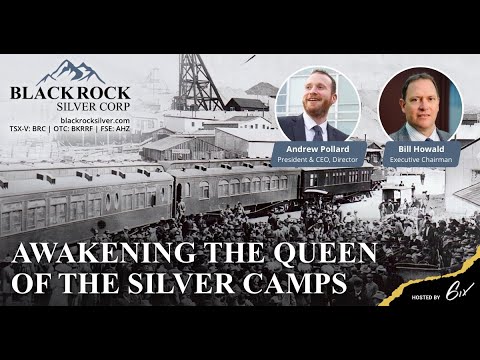
On 6ix: 6ix.com/event/awakening-the-queen-of-the-silver-camps
Automated transcript · Written by software from the replay's audio. It can mishear names and figures; the replay is the record.
0:08 Hello, everyone, and welcome to BlackRock SilverCorps Live Investment Summit today, hosted by 6. I'm pleased to introduce our speaker for today, President, CEO, and Director, Andrew Pollard. Andrew will walk us through a company presentation, and then we will be accepting questions live. So remember, you can submit your questions at any time on the Q&A panel on the right-hand side of the screen, and we'll get to them after the presentation.
0:31 And as always, this event is being recorded and will be available afterwards to watch on SIX.com. So without any further ado, I'll hand it over to you, Andrew. Thank you very much, Dasha. It's great to be here with all of you. It looks like there's a lot of new names on the registry here. So I'm very excited to introduce the story to hopefully some new potential investors. But for those current investors, I'm very excited to also give you an update on your company. This is the first presentation I think we've given since we went through with our name change. Many of you have been holding us since we were BlackRock GoldCorp and man my how times change. So certainly I'm going to be talking a lot about the future here because I'm not running a company for today or tomorrow. We're building something that in 6 months or a year from now, we're hoping to generate a significant premium on.
1:28 I came into this story originally as an investor, not looking for a job. So my interests are aligned with you. I want to make money, Gold, Silver, it doesn't really matter. Ultimately, we're trying to make a return on our investment and every dollar we're deploying into the ground right now is hoping to generate a premium moving forward. And we're sort of at a very interesting stage of our iteration right now. As you can see, last year we really came out of nowhere towards the end of July when we made what was the single best drill hole on a gram-metre basis in Nevada all of last year, and that added about $100M to our market cap in the span of about 2-weeks. It really put the industry on notice that what we've got our hands on here is something special. Now, when we time that drill result, well, I didn't say we timed it, but when we released that drill result, it was when things had gone to a slow boil for the industry. I mean, you'll see from this time last year, mid-April, right after the shakeout from, I guess, COVID originally last March, there was a slow build across the industry. Silver prices went from around $12 all the way up to about $29 the week we released that drill hole.
2:47 Also, gold prices, The same week we released that first drill hole was the same week that it reached its all-time highs. Since then, it's been challenging for the precious metals market in a whole. It's been about 7 out of the last 8 months have been a slow decline. You look at the GDXJ, you look at the GDX. But at the same time, what we're showing right now is we're not just a one-drill-hole wonder anymore. We did 30,000m worth of drilling at our flagship project between June and December of last year. This year we've embarked on a 40,000m program. We've gone from discovery to we're going to be tabling our very first, our maiden resource estimate on our project within the next 6-months.
3:33 We're moving really quickly. As I said, what we're doing right now is we're deploying capital so that in 3, 4, 5-months we'll be able to recoup that value when we come out of the gates. As you'll see, we're very well financed. We did a $10M bought deal financing, which is also very rare for a pre-resource stage company to even get offered back in February. Right now we've got 4 drill rigs at our project and some very strong institutional supporters, including Eric Sprott. SSI Asset Management out of Zurich is our largest shareholder right now. They're the largest gold fund in Europe. So, you know, right now we're just sort of, you know, we've planted some seeds and soon we're going to go reaping up the crops.
4:22 We're a Nevada-focused company and that's important simply because for many of you, mining is hard enough as it is. Jurisdictions shouldn't make it any harder. Many of you might have been following the Fraser Institute recently, just came out with their top list of mining jurisdictions globally. Nevada was number 1 last year. And that's big because Nevada is known for gold predominantly, but it's known as the silver state for a reason. And we're one of, well, we're easily probably the most exciting silver story in Nevada right now. So lots to look forward to. We've got 2 projects in Nevada. Our flagship and the one I'm going to be spending most of our time talking about today is our Tonopah West project. Now, this time 100-years ago, the Tonopah Silver District would have been easily one of the most significant precious metals districts in the United States.
5:18 You know, it was an absolute monster. But, you know, since around 1930, nothing's happened. There's truly been hiding in plain sight, halfway between Las Vegas and Reno. And we've, what we're doing right now is we're showing new life to this historic district. And yeah, putting 1 foot in front of the other as we as we push things forward. We also have another project in northern Nevada called Silver Cloud and, and don't let the name fool you. That's actually a gold dominant project. It's 45 square kilometers right at the top of the Carlin Trend, right where it intersects another very prolific gold belt known as the Northern Nevada Rift. So, you know, This is easily one of the top, most prospective gold mining regions on the planet. We've got 45 square kilometers up there, which really, we're getting 0 value for that right now in our company. And I'm going to tell you why shortly.
6:19 But it represents a very, very significant poker piece you have to play with moving forward. And I think there's a lot of upside there for investors. So the Tonopah Silver District, this is the second largest Silver district in the state of Nevada. Nevada, as I said, is known as the Silver State for that reason is due to the Comstock load and the Tonopah Silver district. Historically, Tonopah produced 174Moz of Silver and 1.86Moz of Gold. What makes it very unique is it's a pure play precious metals district that is Silver dominant. You're getting exposure at roughly 100 to 1 silver gold ratio in the best mining jurisdiction on the planet.
7:09 So whether you like silver or you like gold, you're backstopped pretty, pretty well. In terms of location, it doesn't get any better than this. As I said, it truly marks the halfway point of between Vegas and Reno. The highway that connects the 2 comes right across her property and the town of Tonopah is right next door. In its heyday between say 1900 and 1930, Tonopah was producing up to 14 million ounces silver equivalent per year. So this was a very big, big deal. And more importantly, the grades it was producing it would put it in the top tier of Silver jurisdictions globally. They were averaging over 1300g per tonne pure Silver back in those days that they were mining. There's very few companies right now that are doing that. As I said, Tonopah itself is the second largest silver district in Nevada, the silver state behind Comstock Lode.
8:05 Now that's historically, we've got reason to believe that had precious metals prices not absolutely tanked in the mid 1920s when they became unfixed due to the Pittman Act, they went from about a dollar an ounce down to 35 cents an ounce in the span of about 4 or 5 years, which sent every single large mining company in the district belly up. No one's been back in since, but We know that what they were modelling back in those days, there was a lot more, based on historic reports, a lot more joy left in many of the mines. We know that if things keep going the way we are and are drilling, Tonopah has every potential to become the largest Silver district in Nevada. And guess what? We own more than half of this prolific district.
8:54 So as I said, we changed your name recently, about a month and a half ago, 2 months ago. And the reasoning behind that, I've been getting emails since we started putting 1 foot in front of the other and hitting in such a high rated tone about why are you guys still calling yourself BlackRock Gold? And, you know, I didn't want to be cheesy and I didn't really want to give into that. But ultimately, it was the Fraser Institute rankings that changed things for us. Gold companies in Nevada are a dime a dozen. There's 30 to 40 of them, all active projects, all going and it's hard to compete. But when you start looking at Silver projects globally and where the bulk of production comes globally, we realise that we've got something really special. Not only is Nevada the best mining jurisdiction, hands down globally, and we've got On the right-hand side of the slide here is the Fraser Institute rankings of all the jurisdictions.
9:53 Nevada is number 1. When you start to correlate those with the top silver jurisdictions globally, you've got Mexico, Peru. Mexico didn't even make the first column. They're down to number 42 on the list. Chile, number 30. Peru, number 34. Well, that was last year too. If anyone's been following what's been going on in Mexico for mining companies lately, what's been going on with Peru with the elections coming up. You know, they're talking about the leading candidate in Peru's saying the N word, nationalization, or at least using that as a bargaining chip to further extract more royalties and more revenue from mining companies who are held captive because you can't really move mine. What you're seeing now in the silver space is companies looking to get out of those South American countries and not get out in the sense of close down their operations because the government actually did that for them last year.
10:51 Peru, Mexico, Chile, Argentina all shut down for months at a time due to COVID. You know where it didn't shut down? For a single day. Not 1 mine in Nevada shut down for one single day due to COVID. You're starting to see a flight of capital looking for new homes from large silver miners in Mexico. You saw that with 1st Majestic just last month. They shot a big bow across the Mexican government by changing their motto, which was 1 country, 1 commodity, which was their motto for the last 15 years. They ended up buying a Gold mine in Nevada because they're tired of being shut down. They've got the government coming after them for $500M in back taxes, which are under dispute. In Peru right now, as I said, you've got companies, the second largest silver producer in the world, their leading presidential candidate right now is talking about taking a larger site. Slythe.
11:50 You saw Fortuna just this week try and spread their jurisdictional risk. Fortuna thought they had that covered by having Peru, Argentina and Mexico. Well, guess what? They're getting into the gold business now, and they acquired Rox Gold in Burkina Faso. Burkina Faso seems to be more enticing for them than Peru. Let that sink in. In the silver space, most of the investment dollars right now are going to, in the juniors at least, the growth stories are going to Mexico, they're going to Peru. You've seen some great drill results coming out of Argentina lately. Well, guess what? If a company is looking to spread jurisdictional risk and they're looking to get out, these are companies that won't be commanding a premium in the marketplace because no one's gonna wanna buy them. We're building something in Nevada that in terms of grade, in terms of size potential, in terms of jurisdiction, this is gonna be something that is absolutely gonna be on every single silver primary producers radar as they look to spread jurisdictional risk and offset their reserves as they continue to mine if the government allows them to open back up.
12:57 So let's talk about the district. What we're going to do today is I'm going to start from the macro. We're going to talk about the district, then we're gonna talk about our property, then we're gonna talk about our targets, and then I'm gonna go right into the micro and talk about just one of our veins in particular. And then we've actually got a presentation on our geologic model, which is something that continues to be updated because we've gone from not having a single drill hole in our property this time last June to now having about 45,000 meters of drilling under a belt. So Tonopah in 1900, it would be in the middle of nowhere back then. It was discovered by this rancher and his trusty mule. And they were effectively walking in the middle of nowhere. The story goes that he stumbled over this big outcropping vein, picked up one of the rocks around it and realized it was ultra heavy. And thus one of the most significant discoveries in Nevada mining history was made. And I don't say that lightly. Tonopah was actually one of the most significant discoveries because it led to the last frontier gold rush mining into the States prior to World War I. And it led to many, many new significant discoveries, including the Bullfrog District, Goldfields, which now make up the southern half of the Walker Lane Gold Belt. But none of that would have happened without Jim Butler and
14:27 his trusty mule here stumbling across those outcropping veins and realizing that there's some joy here.
14:38 So Tonopah itself, when I say there was no drilling in it historically, this wasn't a blind discovery. He literally stumbled across this outcropping vein at surface, and they started mining these things right away. In fact, Jim Butler was one of the original minds behind the whole leasing of claim system, and he became one of the richest people in the state on the back of that. He was leasing out claims by the foot. And it led to this massive gold rush. So after the Comstock was discovered in around 1859, that actually funded the US Civil War. And because of that, Nevada became a state. After that petered out in around 1880 to 1890, over two thirds of Nevada's population had left.
15:28 In fact, there was many calls in the Senate to rescind Nevada statehood. It was the Tonopah Silver Discovery and the influx of people and capital and revenue that it provided that actually solidified Nevada as a state. And effectively what happened back then was In 1900, the discovery was made. You'll see it was a hockey stick chart graph up in terms of production. They did not drill back then. They just mined these big veins outcropping at surface. They followed them along strike. And Tonopah itself is an East-West trending vein corridor. So the discovery was made on the east side of town, which is where the town of Tonopah is. And what they did was they started mining these veins along strike and down depth. So all of the historic production happened on the east side and it moved westward.
16:16 And that's very notable because guess what side of the district we control? The west side. So what you'll see is it went all the way up to about 14 million silver equivalent ounces per year in terms of production. And then right around World War I, fell off a cliff. Now, the real nail in the coffin for the district itself was in 1923, when silver prices tanked. They went from $1 an ounce down to about 35 cents an ounce, which represented in 1930, right as the Great Depression emerged. What that did was it sent pretty much every company in the district belly up. And these weren't mom and pop type operations. Between 1900 and 1905 it was, but there was a big consolidation rush between say 1905 and 1915 where some big major mining companies were coming in of the day and setting up shop.
17:08 Tonopah was the basis for many of the companies on the San Francisco Stock Exchange and the Philadelphia stock exchange. All these companies took out significant debt. They had big, big teams. And ultimately, when metals prices took an unforeseen nosedive, it sent all of them into receivership. Now, that's significant because since those companies were in receivership, no one's really been back into the district. And until we were able to get it all consolidated, put together, and now we're the largest claim holder down there. So on the lower left portion of your screen, you'll see what the district looked like in 1912. That map there, all the different colors of that claim map of the Tonopah Silver District represent different producing companies.
17:58 Guess what? If you cut that map in 0.5, we control all of the Western half of that now. And what that looks like is, this is what a claim block looks like now on the larger picture on your screen. Now the secret sauce behind what we've done here, those I guess green and pink parcels, Those have been consolidated by a company called E-Leagold Royalties over the last 10 years or so. But it's that purple piece there that was the missing link. And that purple piece represents the holdings of the third largest mining company in the district back when it was going full tilt. It was called the Tonopah Extension Mining Company. That claim parcel there has been held by 1 family since 1930. They were smart enough to pick it up out of receivership and it's been passed down generationally up until last year when we were able to marry all of these parcels together, bring them together as 1 and that really kick-started this new exploration drive in Tonopah.
18:59 That silver parcel there, That's something brand new. That was the missing link for us. It represented a donut hole in our claim map until we actually picked up those 3 claims just a few weeks ago. We should be closing on that transaction at some point this week, but That's a very crucial piece of the puzzle for us. The other thing to note about this property package we have is it's primarily on privately owned claims, patented claims, meaning we're not dealing with the state on lots of permitting issues. The holding costs are effectively nil for us moving forward. We're not dealing with the BLM for permitting drill holes. We're able to fast track this, move forward. We're really only dealing with the federal government when it comes to permitting.
19:48 So, you know, this isn't a grassroots project by any means, and our drilling sort of shows that to be true. We had about 55 kilometers worth of historic underground workings on our property or historic tunnels. What that gave us was a nice little roadmap to show where the historic miners were finding joy with their previous,
20:12 I guess, silver and gold veins. And it gave us a good idea of where to point the drills. Now, the story of the district itself, because precious metals prices took such a big nosedive in the mid-1920s, lots of these mines on our side of the, on our portion of the property, They unequivocally, according to the historic document, did not shut down because the engineers and the geologists there thought they ran out of ore or reserves. They shut down just due to the business side of things. We had a good idea of where to point our first drill hole. Our first drill hole last year was truly a proof of concept. And that proof of concept was simple. We wanted to prove the concept that they did not stop mining because the veins ran out where they stopped. We wanted to prove the concept that just as their historic reports indicated, these veins, these extensions of known veins continue on.
21:06 And guess what? That's what we've proven so far on our drilling. Now, aside from being a great state to operate in, and aside from comparing it to the rest of the Silver space, just from a jurisdictional point of view, we're not in the middle of nowhere. We're not using helicopter-assisted drilling. We're literally right next to one of the most significant towns in the Walker Lane District. We're about 40 kilometers away from Kinross' Round Mountain Mine. The town of Tonopah is literally right next door to where we're drilling, which is good because most of our portion of the project has no development on top of it, meaning we've got free range pretty much everywhere we're going, whereas the eastern 0.5 actually has hotels and towns and houses and stuff on top of it.
21:57 So, you know, we've got not only, you know, rule of law, no cartels, you know, the only security in Tonopah is at the casinos. But we've got, you're walking distance, in one of those photos there, you'll see the Comfort Inn and the Subway Sandwich Shop and in between is a drill rig. It does not get better than this. So it's about as favorable as it could possibly get. Full cell phone reception, which is very unique. And our head geologist, Bill Howell, is very spoiled. I let him pick this project up. There's far worse places to be. So this is what our project looks like when we delineate it down into just individual target areas.
22:45 What we've shown on our initial drilling is that there's mineralization all over this property. This is a wildly active geologic area and it's got thick veins and they're ultra, ultra high-grade. Last year, as I said, we completed 30,000m of drilling on our maiden go there. We only intended to do 7,500m originally when we got going, but we were hitting at such a high rate that investment dollars kept coming in and we kept deploying that capital. That's leading us up to this year, which is where the rubber is really going to hit the road for us. If last year was about making discoveries, this year is about showing the market just how big and high-grade these things can possibly be. I think it's going to be a wild next few months for us in that regard because we've been putting our head down, we've been deploying capital, we've got 4 drill rigs active in this small area and it's only about 5.5km squared.
23:45 But once again, at the rate we're hitting, the tonnage is going to start to pile up pretty quickly. Our mission this year, we've got 40,000m of drilling and we are going to have one key deliverable and that's going to be delivering a made and resource estimate on just 1 target area which is called the DPB mine. Well it's the DPB target. It was the last operating mine in the district when things went belly up and That now represents 7 different veins we've hit in this one area. That's the central part of your screen. I'll show you where we are. The DPB area is right here. We've now hit 7 veins in this area.
24:30 Originally, we were only talking about 4. Right now, we've got 2 drill rigs focused on infilling these known veins. We've got on one of them up to about a kilometre and a half worth of strike. The best part is that we're doing drilling throughout the rest of the property too. Not only are we going to backstop our valuation and give us something that analysts can rate us on, on an ounces in the ground basis within the next 6-months, but we'll have upside drilling too, focused on 2 other target areas. One is continuing to step out across all these known veins and test new targets, and the other is at our Victor area, which is where we hit that wonderful hole 1. This is the result of our Maiden Drill program last year.
25:21 We started with proof of concept drilling. That proof of concept, as I said, was testing to see if the historic records were correct and there was additional extension material on the veins. But obviously, too, we had to make sure that the veins really were where we thought they were. We've got over 40 significant intercepts from that first round of drilling ranging from 1m to 29m in thickness. We're using a cut-off grade of around 200g per tonne Silver equivalent. We've hit Gold up to 26g per tonne pure Gold. We've hit Silver over 2kg. We've got, I believe, over a dozen drill holes that have encountered plus 1kg per tonne Silver equivalent in our drilling.
26:04 As maiden rounds of drilling go, what we've accomplished here is really impressive, I guess, in the grand scheme of things. Now, when you un-busy that photo and you actually look at what we're drilling into, as I said, we've got 10 different veins we've hit along the way. This is significant. These veins range from 400 meters in strike, which we've now delineated. All of them remain open, by the way, but the smallest vein we've now encountered is 400m in strike, up to 1.5km in strike. As I said, the thickness tends to range from a metre up to 29m. So, things can start piling up here very quickly, especially when you look at the grades that we're encountering. This truly has the potential to be one of the top 10 silver primary projects on the planet.
26:56 You know, from a, I guess a macro perspective on the silver market, You know, most of the silver companies out there with silver in the name aren't actually silver companies. They're polymetallic. The bulk of silver production globally comes from copper, lead, zinc mines, and silver just represents a small credit. Sometimes that credit may be slightly dominant, but it's generally mixed between a whole bunch of other commodities. So you're really not truly getting that leverage to silver. Well, guess what? Tonopah at 100 to 1 silver to gold ratio makes this a pure play precious metals district, but you're getting 100 to 1 silver gold ratio, meaning you get that silver exposure. Should things really, really go on a move here in the silver space, this is going to be one of the best jurisdictions on the planet to place your money, let alone the M&A premium we should start attracting as companies look to flee South America with their investment dollars. Once again, they're not shutting down their mines there, but when it comes to spending money on new acquisitions, they're not going to Argentina. I can assure you they're not going into Peru right now, And Mexico is going to be tough to find that money. They're going to be looking at places like this.
28:06 So this is what's known as the Victor target. And Victor was the site of our very first drill hole. It's the one that added about $100M to our market cap overnight. And this is the thickest vein in the district of the entire Tonopah Silver District. We had reason to believe that where they stopped mining it in around 1921, it was 24 metres thick. And the reason they stopped mining it was simply because as they mined it down, all the way down to around 1880 feet, they kept it, they got below the water table, water kept pouring in. They brought in electric water pumps, which, by today's standard, it's not a lot of water they're dealing with, But electricity wasn't all that reliable in the 1920s. So every time they turned it on, it would cause rolling blackouts and brownouts, which isn't what you want when you've got 100 people, you know, nearly 2000 feet underground.
29:00 What they did was they took out a significant amount of debt financed by a guy by the name of Charles Schwab personally who happened to be on the board of directors of the company at the time and they sent away for heavy duty diesel generators to be commissioned in Europe and some water pumps that would pump out the water. Now the story goes that by the time the water pumps were delivered and the generators were delivered and shipped over, metals prices had tanked and the debt that they used for that development sunk the company. Well That gave us a pretty good indication. A company like that with Charles Schwab on the board and also their largest shareholder wouldn't be taking out all this debt had they thought that there was no joy left. We've now proven over 480m worth of strike. We know that for a fact because our next door neighbour to us on the eastern portion of the district is a company called Summa Silver. As soon as we hit on our side, they set up a drill on their side and they encountered plus kilogram per ton Silver equivalent mineralization on their side, which would be the same vein projecting outward. We're also now testing, and we've got drill holes pending, which I'm expecting we should be releasing very shortly, to test the Western extension of this, which was actually cut off by a big fault known as the Pittsburgh Monarch Fault. If we connect on there, there's a big, big potential to add more strike and more ounces.
30:25 But the main, the big kahuna on the property is our DPB target. This is the target here, which we're going all in on delivering a made and resource estimate on this year. We're going to use this one to backstop our valuation and get us additional analyst coverage because once we actually have ounces in the ground that we can prove, and at the grade, we're gonna be hard to deny. But more than that, we're gonna use that, we think we'll re-rate significantly on the back of that, and that will give us the valuation that we need to justify going underground, driving our own declines, or looking at opening up the historic workings to start drilling off at these veins underground. And because we're privately on private land, the permitting required to fast track towards development or bulk tonnage samples and ultimately production, this will be very, very, very quick, lightning quick should we keep hitting at the rate we're hitting. Now, as I said, it's hard to really get a sense of this target when you're just looking at this cross-section.
31:30 What I'm trying to impress upon you is that back then, they were mining 4 veins there that they knew about. As they didn't do any drilling back then, they could only mine the veins that they saw that were right in front of their eyes. We've now delineated 3 brand new veins in this target area, all with significant strike. And I'm just going to show you what this looks like from 1 vein perspective. This is DPB. So this is the Merton vein, which was the fourth vein in that area that they were mining. This is our largest vein so far that we've delineated. It's still open, but so far we've got mineralization over 1.5km. Now imagine we've got 7 other veins just like this that we're working on drilling every 50m for this infill program. We're also still stepping out along strike as well. So there's huge size potential here. What I want to impress upon you is, on any vein system like this, you're going to have ultra high-grade chutes where you're making money hand over fist, and then you'll see some lower-grade zones as they get to more high-grade chutes.
32:40 Here on Merton, we've got 1.5km of mineralised strike delineated. You've got the lateral high-grade zone that falls within a certain elevation, but we also know that there's these chutes that go down at depth. So you look at 1.5km and then you look at the vertical extent of the mineralization that we've got identified here, that's about 500m. The other veins that we've delineated in this area, the Paymaster vein is 1.2km so far. The Denver vein is about 1km. We've hit a new vein that we announced in our last release, which is a brand new discovery, which we call the 76. That's over 425m. This is where you make your money. This is where the tonnage builds up.
33:28 And the width here, we're averaging well over a metre and a half to 3 metres in this area across these sorts of grades. But there's very few companies that can boast anything like this in terms of grade, in terms of size potential. And when you put the kicker in, which is the jurisdictional premium and the M&A premium that we get because we are a pure play silver district. I think we're going to be, well, it's hard for me to fathom a reality where we're around this time next year, just given how competitive the landscape is. In the interim, we're going to be trying to add as much value as we can, deploying capital, showing ounce potential, and certainly this resource estimate that we'll deliver this year is going to be the difference that makes a difference for us. It's going to be a slow build of drill results.
34:17 And there has been a little bit of a gap here as we switched predominantly from RC drilling last year to core drilling, which takes about twice as long and then you added processing times. But so I've shown you the project, I've shown you the district, I've shown you a vein. Now we're gonna show you the model. And Bill Howells, who's our executive chairman and the driving force behind what we're doing at the project right now, he's recorded a little tour of the model in LeapFrog. So I'm gonna hand it over to Dasha to highlight. Thank you, Andrew. So here we're going to look at the leapfrog model. This is a plan view and the area is shaded in gray. Here is the outline of our claims.
35:03 Recently, we picked up an area in the middle here that you've seen in the previous slides. And let's take a crack at the model here. So what I'd like to do is let's do a cross section through the middle of the property. And we'll look westward. And what we've got going on here is In blue are the faults. In red are the veins from the historic literature. So those are veins that we know. In purple are veins that we've identified recently in our drilling. And in green are veins that are starting to develop as more drill holes are put into the system here.
35:58 So let's just, I think that one of the best things to do is to kind of look at it in section first. And we can see this unit here. This is the bottom of what's called the fraction tuff. And that's a post-mineral unit. So you can see all the veins end at that fraction tough. And of course, some of the faults we can see at the surface. So we know they are later than the fraction tough. Let's go ahead and have a look through the model. I think one of the easiest ways to look at it is if we look at it in plan view. And so let's do that. And I'm just going to go over here and turn a couple of things off that will get in the way.
36:50 OK, so there's our surface again and our claim outline. We're going to go just below the surface and look at this as if we're looking vertically at the down on the on the model. So over on this side of what's called the Pittsburgh Monarch Fault, this is the Pittsburgh Monarch Fault here. These are the historic workings of the Victor and the merger vanes. This is one of the classic veins that has been talked about in the district. This is one of the flat rollover veins. And as you get towards the surface, that rolls over flat and becomes steeper as you go to the north. You can see there's a fault here. This is the extension fault. There's not much offset across the extension fault.
37:41 And it looks a lot, at least the same orientation, as what's called the 76 fault. So that thing also has very little offset as we move our way across. Over here, this is the Merton vein. And just to give you a sense of scale, From this point here to the edge of the model over here, that's about 1.5 kilometers. So we've got quite a large distance, long distance, on this vein. And obviously, there's a more productive elevation to the vein, as we can see down here around 1,600, say 1,500 meter RL down to about 1,200 meter RL.
38:30 That spot right there is running almost 300 grams of silver equivalent. So those are our known veins in red, the Denver, the Paymaster, the Bermuda, the Merton. This over here is the merger and underneath it is the victor. The purple veins again, this is the mule vein, the 76 vein, and this is a new vein that we're working on between the Pittsburgh Monarch Fault Zone and what's called the McCain Fault Zone. So let's just work our way down and we can see some of the higher grade zones down in here. Start to see values approaching.
39:19 This one in particular is almost 400 silver equivalent. And as we get over here at this elevation, what we can start to see is here's the merger vein again, the Victor vein here in red, and then this new vein that we call the cash boy. And it's starting to put out things that are over 500, almost 600 grams of silver equivalent. 600g of Silver equivalent. It's always good to see the model and how the veins project from a plan view. You see that the mineralization, just that we know about right now, goes all the way across the property.
40:09 We were barely even touch scratch the surface in terms to the Western extent of our property package. As I said, the story of the district itself, the discoveries were made on the east side of town and then all the production went westward. A lot of these veins, the Denver, Paymaster, Bermuda, Merton, they were mining them but they only got a certain portion of the way down. Everything to the left is still open there. We keep stepping out and we keep hitting. The size potential here is going to be really something quite new. In the silver space, this is going to be one of the most significant discoveries of the past decade or so. And certainly when you look at it from a jurisdictional point of view, it's not Argentina, it's not Peru, it's not Mexico. This is Vegas, baby.
41:00 So with that, I'd certainly like to open it up to some questions here and we can go from there. Great. Thank you so much. Lots of questions here. So Andrew, it seems like there's a lot of drilling going on. When can we expect next SAs? Yeah, so imminently, Very, very soon. We had a bit of a gap there in the past month or month and 0.5 or so, simply because last year, as I said, the bulk of our drilling, we had up to 3 rigs going last year, 2 of which were RC. And RC, you're drilling, I mean, they pump out these holes really, really quickly. They're drilling, you can drill maybe 2 holes a week with the RC drill. With the core drill, it's up to 10, 11 days on some of the targets. Then you had the processing time. Then, of course, something that the whole industry has seen is that lab times have slowed down as well. What we had there was when We shut down for the holidays in December.
42:03 When we came back, we only had 1 core drill rig going. Then we got 2 core rigs going. Then we got 3 core rigs going by the end of February. Now we've got 4 drill rigs going. We've got a backlog of assays. So far this year, we've laid out 40,000m of drilling that we want to do. We've completed about 17,000m or so, and the bulk of those assays are still pending. But what we're starting to see now is that window, that little gap there, We're out of Purgatory now. We're heading to the Promised Land. It'll be very regular here on in and as soon as days, if not within a week, will be the next set. From here on in, it's going to be a nice slow build as we work our way towards that one deliverable, which is the resource estimate. And frankly, the past 2 months not many companies have been rewarded anyways for putting out drill results.
42:53 It's been a pretty crummy time for precious metals companies. We're saving our powder for when it counts. And I'm thinking that May is going to be well, if the last 2 or 3 May and June and July's are any indication should be a nice time to start deploying some potentially high grade results here. So soon is the answer. Soon. Great. So David is asking, what is the status of the potential spin-out? That's a good question. As I said, we've got another property in Nevada called Silver Cloud. Once we started hitting in Tonopah, anytime you've got 2 prospective projects, you're really only going to be getting fully valued on one of them, or the valuation is only going to be tied to one of them. We knew that early on after we started hitting Antonapa, that that's now the flagship.
43:47 Anything we do with SilverCloud, unless we hit a major discovery, whether we miss or whether we hit, it's really not adding anything to our valuation. We thought that the best way to unlock value for SilverCloud would be to spin it out and dividend it to companies. SilverCloud, before we got Tonopah last year, was our flagship property. We had a market cap anywhere between US$20M and US$30M just on this Greenfield property up in Northern Nevada, just on the prospectivity of it, And we were getting none of that for us. So we decided that we were going to do effectively a free kick at the can drill program at SilverCloud because our targets were really, really good. And we sent one of our seed drills from Tonopah as we were winding down for the holidays and sent it up to Silver Cloud to test these targets.
44:38 The main target it was testing up there was called the Northeast Veins Target, and that's directly adjacent to Hecla mining's Hollister Gold Mine, which about 5-years ago was the second highest graded gold mine on the planet. I think they were producing at 34g per tonne head grade. Those veins actually go right up to our property boundary. On our side of the claim map, We've got a mercury mine there, which is the mother of all Pathfinder elements for these vein-hosted low-sulfidation deposits. But we actually had 8 veins outcropping its surface. Now, on this last program, the unfortunate thing was the drill we sent up there, based on our modelling, should have been sufficient to hit the rock, the targets within the right rock package.
45:24 Unfortunately, the volcanics that we're trying to drill through actually tended to be a little deeper than we projected. So We ended up not really being able to hit that target the way we envisioned. Ultimately, what that means is that target with 8 veins of cropping and surface remains untested, which is actually good and bad. I would have loved to make a huge high-grade discovery there, but it means that it's still on the table. What we did generate on that drilling was something very interesting. We drilled 4 different target areas between 12 holes. One of those target areas hasn't seen any drilling since the 1980s when Newmont made a small discovery there. We put a couple of drill rigs in 1 area called Quiver and we hit about a, it had to be about 50m or so of about 0.2 or 0.3g per tonne Gold equivalent.
46:13 Now that wasn't going to move the needle for us, But what that does is it represents a lot of smoke. Because with these low-sulfonation epithermals, you'll see a nice halo of mineralization if it's above the sort of boiling point. But it means we're still too high in the system. But that's a very interesting area because that area has a lot more in common from a structural architecture point of view as does Midas. Effectively, what this does is it's given us a whole bunch of new data. The targets are as good as they've ever been. This is 45 square kilometres in the most prospective Gold mining region. The targets are juicy. What we're looking at right now is we have to update our technical report to proceed with a spin-out and that's something we're looking at doing.
47:02 This is a project that was formerly, it had a discovery made on it by Tech. It had a discovery made on it by Placer Dome, under which Bill Howell had 12m of 5.5g per tonne. And it had a discovery on it by Newmont. But all those discoveries were made at the wrong time. Most of that drilling happened around 1999 and 2001 when Silver prices went that. What that means now is We're the first junior to really be active up there. We've got some good targets. This is a major mining project in a junior company. And it's generated, even though the market would have liked more from those drill results, it's generated significant interest from a corporate development point of view. So We're looking at a bunch of scenarios. The spin-out is one of them.
47:51 The question is, for companies that might potentially want to make an investment in us or ultimately take us out, are we worth more from their eyes with this project in there, or would it make sense to spin it out still? And that's something we're evaluating. So there's lots of interest from an M&A perspective on it. It's a poker chip. We have to play if we can sell it for cash or keep a royalty or enter into any sort of joint venture where it can see the budget and work it deserves, then we'd love to maintain that. But ultimately, BlackRock, Silver, as we are now, we're focused pretty much 100% on Tonopah. We're not going to be going on any expensive treasure hunts up there, despite the potential bounty that that area has to offer.
48:39 Everything's on the table and we're just waiting to see how some discussions unfold. It's a very interesting proposition we've got our hands on up there. And for the interim, our value, even though we missed on most of those from a market perspective, as I said, the whole reason going into the spin-out discussion was that we got 0 value on that. That was solidified when we released those results because it really didn't move the needle other than 1 day we sold off a few cents and then we moved right back up the next day. Tonopah is what we live and die by. Tonopah is what we're going to be known for within the Silver space. And I think Tonopah is what's going to ultimately do very well. Great. Thank you. Buster is asking, do you have any plans to consolidate tailing from historic mining for heap leach to generate cashflow?
49:28 Yeah, we've got about 30 years worth of historic mine dumps on our property and tailings on our property. And those were actually the only thing that were studied in the last 90 years, because they're at surface. No one was drilling into the historic mines in our property until we got our hands on it since production shut down. But what lots of groups did along the way was they saw these big heaps of crushed rock at surface that were processed and metallurgical recoveries have gotten a lot better since 1900. We've got 9 different mine dumps on our property and a massive amount of tailings, which have been studied. We know from historic reports, there's probably about 1 million tonnes at surface grading at about 0.4g per tonne or so Gold equivalent.
50:20 There's plenty of operating heap leach mines in Nevada that are making money with less than that. And keep in mind, this rock's already been crushed. So yeah, that's something we can do. We've had lots of people, there are lots of companies that do want to, well, their entire business is just reprocessing old tailings. And we've certainly had our fair share of solicitations. But I believe that What we're seeing right now in the silver market, we'd be remiss to do anything in the short term. I think we're about to have a really exciting couple of years in front of us. And this stuff can be scooped up and processed any time in between, but that's expensive rock that's sitting right there and yeah, it could be worth a lot of money 1 day. Right.
51:06 So we have a few questions about Eric Sprott. First, when did Eric Sprott get involved and to what extent in terms of dollars? And then Louie is asking, would it make sense to merge with Summa since Eric Sprott has positions in both companies? Why delay in results? You had said that with 4 rigs, news would be constant. Yeah, well, you know, part of the, I think I addressed part of that. Just the delay there was with the switch between RC drilling, which pops out drill holes very, very quickly to predominantly core rigs, which drill at maybe half the speed, maybe a third the speed of the RC. So, and then we were adding rigs as we go. So we're right past that window, you know, the eye of the storm there where things are very calm and it doesn't look like much is happening at surface, but I can assure you we've never been busier from a project standpoint. I mean, We've got 4 rigs down there, probably 30 people whose mouths were feeding every month just in Tonopah.
52:11 As I said, this should be an exciting summer as a slow build from here on in between now and putting out results that will all be thrown into that pot, which go into the resource estimate. In terms of Summa Silver, this is a wildly active district and they've been hitting some absolutely phenomenal grades too. We've been going a little faster than SUMA. I think they drilled 15,000m last year. It's amazing that this district, their story is very similar to ours. They're the first group to go in and target the historic workings on their side of the district. In 90-years, we both started drilling, Suma and Blackrock started drilling within 2-weeks of each other, meaning this district, which is the hub of the Walker Lane district, we're 40km from Round Mountain, which has produced over 15Moz of Gold. There's hotels.
53:07 Tonopah is the stargazing capital of the US. There's a lot going on there. And it's amazing to think that for 90 years, nothing happened there in these mold mines. And then within 2-weeks, 2 companies both acquired their land holdings in the district and started drilling. Now, last year, we drilled 30,000m, they drilled 15. This year, they've laid out 10,000m of drilling there. We've laid out 40,000. Our targets, at least from my perspective, are higher confidence. We've already delineated 10 different veins, so we're not reinventing the wheel. We're just stepping out along strike and we're working our way in along strike on that info program. And who knows what other else will keep hitting along the way. Great, thank you. Adrian's asking to what extent has COVID affected M&A activity in the precious metal sector?
53:57 Yeah, well, it's gonna start, you're seeing it play out right now in real time. First Majestic, you know, for 15 years, their motto was 1 country, 1 commodity. They have 3 different minds in Mexico. Well, guess what, when the government comes after you for $500 million in back taxes, when The government also creates a mining police force, which they charge you. I'm aware they're charging certain companies up to 500,000 dollars US per month for their protection. That sounds like racketeering to me. That's like, you know, what the mafia used to do in Brooklyn. You know, nice pizza shop you got there, be ashamed if something happened to it. Those are all taxes. Those come on the bottom line. At a certain point, enough's enough. It was COVID in Mexico, with COVID in Peru, with COVID in Argentina, with COVID in Chile, all those places got shut down.
54:46 Didn't shut down in Nevada. So you're seeing in real time, Fortuna Silver, they're Peru, Argentina, Chile, or Mexico, sorry. They're now in West Africa. First Majestic bought Jarrett Canyon, a gold mine in Nevada. You're going to start to see all these companies needing to offset some of that risk because shutting down a mine isn't like just turning off the lights. Most of these places are the town. These towns, people, cost 1st Majestic tens of millions of dollars just to keep the lights on when they couldn't make any money. Nevada didn't shut down. It didn't affect anything for a day. Turnaround times at labs have slowed down a little bit, just due to social distancing and all that. But other than that, you know, it's a place to be.
55:41 Great. There's lots of questions here, and I realize we don't have all that much time, But our last question here is, is the plan to take Tonopah all the way through to production? Yeah, well, yes, and we're acting as if we are. Ultimately, I think it's going to be a feeding frenzy in terms of M&A moving forward. There's, you know, only a third of silver production globally comes from silver primary projects. So what we have with a silver primary project at 100 to 1 silver gold ratio already puts us in the vanguard of projects globally. When you look at the grade wise, I mean, you know, we're averaging right now is sort of in line with what MagSilver or SilverCrest are averaging on their stuff. Those are multi-billion dollar companies.
56:27 But guess what? You know, when you start looking at it from an M&A perspective, if companies are, if the bulk of silver production comes from Latin America and those Latin American companies are all facing the same headaches, they're not going to want to do M&A within the same countries they're trying to get out of. They're going to want to go here. I think this is easily going to be one of the most attractive exploration growth stories in the Silver space of the next few years. We've got the team to take it all the way. We've got Bill Howell, who's our executive chair and geologist. He's the former head of exploration for Placer Dome in the Americas. He's discovered over 100Moz of Gold.
57:13 In terms of general managers, you can't get anyone to scale up a project quicker than him. We went from 1 rig to 4 and if we can get our hands on more rigs, we likely will, but it's easier said than done. Next year, once we deliver this resource, we'll look to start going underground. That will require new people or new skill sets. We're very capable of attracting those. Along the way, if someone wants to purchase us, it's out of our hands. As I said, I came into this as an investor. I control nearly 4M shares, liquid, probably 6M when you take warrants and all this in. I bought most of those in the market along the way. I certainly don't want to under-promise and just take something that comes along the way, but ultimately it's in shareholders' hands.
58:02 We'll see. But right now we're just deploying capital, adding value at the project level. Everything's being thrown into that pot. That pot goes towards the resource estimate. We'll have upside potential baked into that too, because we're not just doing an in full resource program here. We're still testing new targets and we're still stepping out at Victor. You know, I I'd be surprised if we're around this time next year, just given how few silver companies there are, especially in good jurisdictions. But it's not whether it's not whether I want to do anything. It's ultimately who can make an offer that the shareholders want to accept. All right, yeah, fair enough. Well, thank you so much, Andrew, for taking us through your presentation and the live Q&A. And thank you everyone for joining us today and submitting all these great questions.
58:47 I know we didn't get a chance to ask all of them, so we will be sending out a brief survey and the BlackRockSilver team will be happy to follow up with you and answer them directly. You can also find more information on their website at blackrocksilver.com, And a copy of this presentation is available to download in the handouts tab. So be sure to do that before we end the webinar. And I'll pass it back to you, Andrew, just for the final word. Yeah, no, thank you very much for all logging in and taking time out of your day. I know you've probably got better things to do, but ultimately, as I said, right now we're just in that eye of the storm where things are very, very calm despite everything that's happening around us. We've never been busier and I think we're going to start to see that steady stream of stuff coming in that will show value as we work our way towards our deliverable this year. And hopefully we time that with a good market. So, Silver is looking good here.
59:42 We should command a premium being in Nevada, but ultimately, the next 6-months will probably be where the rubber hits the road for us. Thank you for coming along.
Follow BlackRock Silver Corp into a list and get an email when it puts out news.
President & CEO at Blackrock Silver Corp
Executive Chairman at Condor Resources
William (Bill) Howald is a successful entrepreneur who founded several public companies as well as led the exploration division of a major mining company. He has extensive experience building effective exploration teams and delivering quality resources. As an executive, Mr. Howald has provided strategic vision, planning, and implementation of many values creating programs for junior and senior gold producers. Most recently, he led the acquisition, build-out, and start-up of the Florida Canyon mine in west-central Nevada. To date, Bill has raised approximately $300 million in project financing for properties in Argentina, Brazil, Chile, Peru, Dominican Republic, and Nevada. Prior to creating junior mining companies, he was General Manager of Exploration, the United States and Latin America, for Placer Dome Inc. During his tenure at Placer Dome, Mr. Howald was an integral part of the teams that delivered over 100M ozs of gold resources to the Placer portfolio. Several of these resources, including Turquoise Ridge, Pipeline, Pueblo Viejo, are now mines. While there, he also oversaw the last systematic drill campaign done on Silver Cloud.