Transcript
Automated transcript · Written by software from the replay's audio. It can mishear names and figures; the replay is the record.
0:09 Hello everyone and good morning or good afternoon, depending on where you are in the world. Thank you for joining West Gold Resources live event where we're joined by their managing director and CEO, Wayne Brownbong. Following the brief update, we will have a live Q&A session. So please feel free to start submitting questions in the chat at any point during the conversation in the bottom right corner of your screen. Now this event is being recorded for your viewing afterwards.
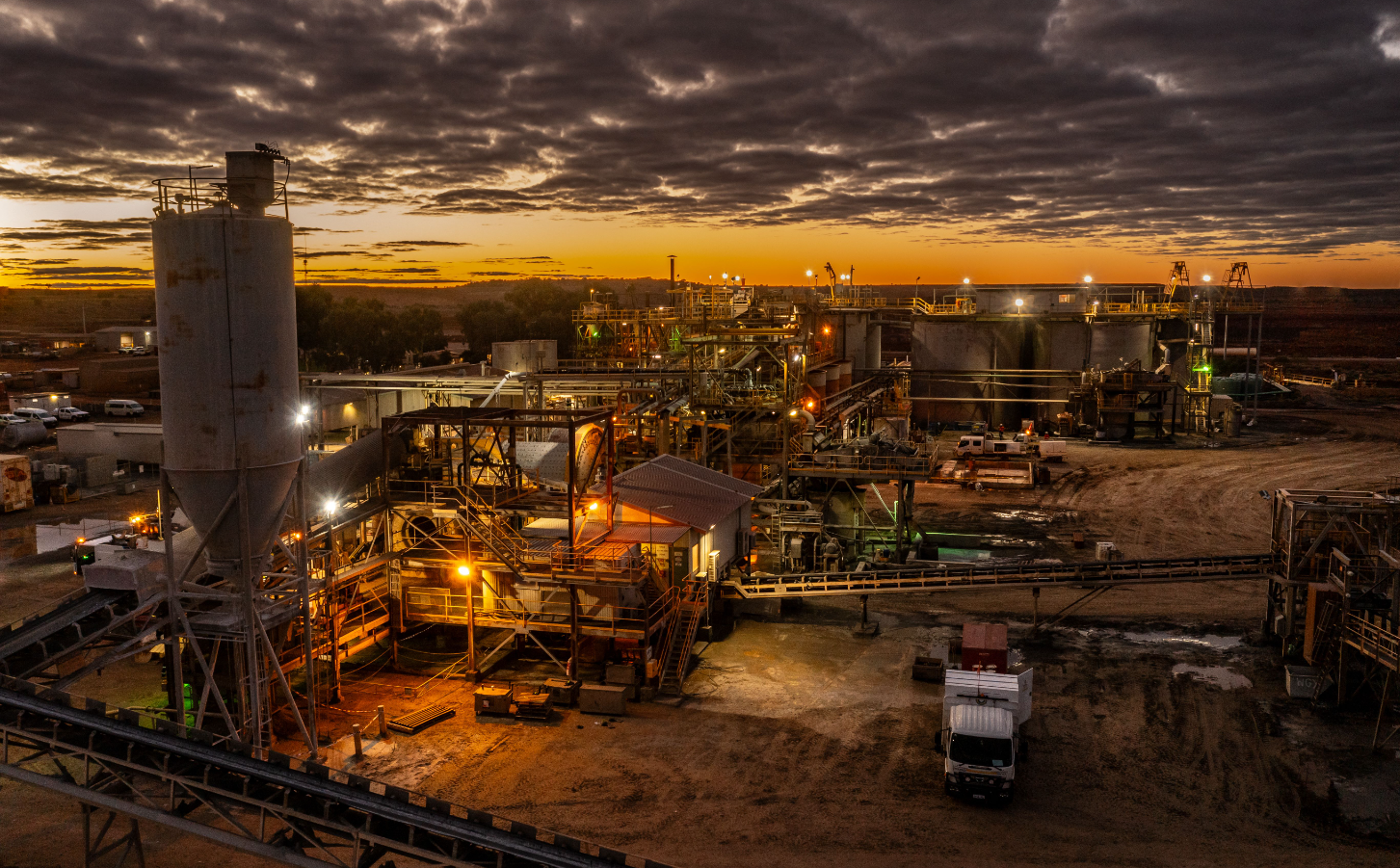
0:32 With the housekeeping out of the way, Wayne, thank you so much for providing this update today. Can you just start with the walkthrough of the Q1 results for the fiscal year 2025, which is actually the first quarter post merger, correct? 100%. Thank you, Kyle, And welcome everyone to this webinar. Apologies for those who patched in last week. I planned to do this from our Beta Hunt mine site in the Southern Goldfields, but the tech guides chose to frustrate that. Anyway, today I'm in Meekitharra in Western Australia at our Bluebird South Junction mine. And really just want to touch on 3 things. A quick recap of our Q1 FY25 results, talk a little bit about the upgrade or the integration of the Karora and the West Gold assets and 3 speak to a new appointment in their leadership team.
1:23 Starting with our quarter 1 FY25 results. West Gold made an announcement on Monday, Australian time this week. And what we normally do at the end of our financial quarter, we do what we call a production or a quarterly flash. We provide the market an update on our produced ounces and our cash position, and then follow up within a couple of 10 to 15 days with the full detail of the quarterly results. On Monday, we told the market that Q1 FY25, Westgold had produced 77,000 ounces of gold. This was a record production for the company and it was a record for 2 reasons. It was the first quarter where we had production from the Southern Goldfields assets. But the merger between Karora and Westgold finalised on the 1st of August.
2:16 So quarter 1, July, August, September, October,
2:21 sorry, July, August, September, we only got the benefit of 2 months of the 3 month quarter of the Southern Goldfields production. July's production from the Southern Goldfields was to Karora's account. That was around 13,900 ounces. So if we had the benefit of 3 months of production, the total production would have been 90,000 ounces for the quarter. Anyway, Q2 will be the first quarter ahead whereby we get 3 months of production from
2:51 the Southern Goldfields and 3 months of production from the Murchison. So overall, a solid result for the first quarter, which was a transitional quarter whereby we only were accountable or responsible for the Southern Goldfields assets for 2 months. Look, this Q1 overall, it was a, as I say, a transitional quarter. We effectively self-funded and closed a $1.4 billion merger with Karora Resources. We are really proud to basically now be working with the Karora team and I'll talk in the next part about how the integration of the Karora team is going with the West Gold team. I won't stop you. Please go on. You discussed the production results, but go ahead and talk about the integrations of the Karora assets.
3:41 How is it going so far? Kyle, it's going really well. I mean, last week I spent the week with my board at Beta Hunt, as Paul Hewitt would call it, the beast. And I can assure you the beast is getting ready to roar. You know, I love that term. And the more time I spend underground at Beta Hunt, the more impressed I'm by the team that we've ended up joining the business and also the asset. Beta Hunt and Higginsville was going through a period now where we set out a 100 day integration plan. And this was well communicated to all the West Gold staff. The 100 day plan starting in August was really that we would get involved in Beta Hunt, Lakewood and Higginsville. We would basically, I'd send myself and the management team out there just to watch and try and understand where the real gaps and the opportunities were.
4:32 We didn't make any significant changes to the Southern Goldfields business during August. We really wanted to understand what the team needed down there to try and improve safety and productivity in the mine and in the processing plants. From September, we started to make changes and those changes really were to backfill the team down there with additional safety personnel. We started to make adjustments to the underground mine at Beta Hunt. We've already started to see productivity lift. And at Higginsville, we installed a new general manager. And our view of Higginsville is there's a massive exploration opportunity down there. We just need to think our way through. So overall, the 100-day plan looks like this. August, understand in detail where the gaps are in the Southern Goldfields.
5:25 September to October, start to make those changes whereby we needed to backfill Either people, process or equipment. Certainly we started to do that. And at the end of the 100 day plan, the overall businesses are fully integrated. Once our Murchison and Southern Goldfields businesses are effectively 1, then we can start to ratchet that business, leverage that sunk capital on that team and start to basically see production increase. So overall, I'm really happy how things are going. The Southern Goldfields team,
5:58 the XCorora team has been really welcoming. They've been really welcoming about the things we've been bringing, which has really enhanced safety processes and personnel. We've now deployed 2 underground drill rigs to the Beta Hunt mine. We said we'd do that very quickly. So we've now got 3 underground rigs sitting, currently 2 running on the beat on the Fletcher zone. A third one should have been manned over the weekend. I haven't had an update yet. So the strategy of drilling Fletcher fast and hard is starting to take shape. And with Higginsville, again, starting to,
6:36 we are in the process of sending another drill rig to Higginsville to focus on the small 2 boys underground, which is a fascinating little mine, sort of doing 20,000 tonnes a month at the moment at around 2.5, 2.6, but no drilling. And we know from our own experience with our merchants and assets, the game changer to productivity and production is drilling. We've drilled our assets in Meekitharra, where I am today, hard for 2 years. And we've taken a very small mine, Bluebird South Junction. We've effectively doubled its production to half a million tonnes per annum, and it's about to step up again to over a million tonnes per annum. So overall, sort of 70 days into the integration, but the teams are really starting to gel.
7:24 Thank you for that Wayne, very thorough explanation. Also this week, you just recently announced the appointment of Aaron Rankine as the new COO effective January 2025. Can you elaborate on this transition and what Aaron brings to the table?
7:42 Yeah, this is a really key appointment to us. We've basically been running Jacob Messiah, who is one of our general managers from our Q operations, stepped into the role of interim COO when our previous COO left some months ago. We've been looking for a person with a very specific skill set. Aaron Rankin comes from a group called Parenti. He's a very well-known mining engineer and he's been working in a mining contractor for 13 years. What are mining contractors renowned for? Productivity and efficiency. In those businesses, they have to basically get the maximum out of their capital. They know how to drive mine productivity. And what Westgold is now is a much larger owner operator. Really keen for Aaron to join. He'll start in January. He'll bring a skill set which we desperately needed in the business in terms of someone that can really drive these mines for higher productivity, really optimise our capital, try and upscale our team in certain areas. So, Aaron is a very well-known
8:45 mining executive in Western Australia. Really happy for him to be joining this team. But most importantly, I mean, Aaron is culturally, he's a very good fit for this business. Yeah, he'll start in January. Most importantly, what we've announced yesterday in terms of the leadership changes is the new appointment of Aaron, but also the promotion of Jacob Messiah. Jacob Messiah is a young professional, been with us for 13 years, has run our Q operations, has run our Fortnum operations and previously actually ran the Trident mine at Higginsville. This is a story about career development within this company. Jacob started as a young engineer, has worked up to general manager in an operational sense. And now we've appointed him to the new role of general manager of projects and operational readiness.
9:38 What is his brief? To basically manage all our capital projects and mine expansions and new mine starts so that the production team under Aaron can focus on production projects, getting them to a point where they're
9:52 mine ready will be Jacob's role and then he will hand them over to Aaron, Aaron to mine. So look, this is really an evolution in the, in the, our structure here. It's also adding additional bench strength to the executive team that I manage and I'm very, very proud on 2 reasons. Proud because of the career development opportunity that we've provided to Jacob and really proud that Aaron's joined the team to add more bench strength. Excellent. Thank you, Wayne. We covered the 3 topics we wanted to today, but there is questions in the chat piling up. So I'm going to start addressing the Q and A, please individuals that came in a little late, feel free to submit questions in the chat. Just starting them now. And, and Kyle, I can see the chats if you like, I can just roll through them. So I think I even know some of the where some of the questions are coming from. Sure. For the people that aren't following the chat that maybe are just listening to audio. Do you want me to read them out loud? Or perhaps if you do go ahead and read them out loud. But I'll kick off this first one here. Hi Wayne, with the expansion of West Gold's portfolio over time, is there any possibility of a capital raise in the future? Steve.
10:59 Thanks for that Steve. In a word, no.
11:05 Excellent. Perfect. Straight to the point and like it. John has a question here. Hi Wayne. I think there was a fairly big drop in cash in Q1 versus Q4 of 2024. Can you please explain
11:18 the difference really? Hey, John, I think I know who you are. It's a really good question. And what you'll see in the quarterly, which will be coming out on the 30th, is a waterfall chart basically showing where the drop in cash went. I mean, I have to keep reminding myself and the market that we fully funded a $1.4 billion transaction. In terms of that transaction, which was done in cash and script, 126 million went straight to the, in cash, went straight out to the Karora shareholders. The deal costs were large in this thing. Change of control payments were large. We ended up having to purchase the Cali Metals shares. There was also obviously cash associated with the repayment of the Macquarie debt. So there was around $160 odd million of transaction costs, including the cash that went to
12:12 the Karora shareholders. And we're going to depict that in full colour in about, well, when the quarterly comes out. Yes, there is tax payments. There is a deferred tax payment stamped duty on this deal of around $60 million, but that's not payable at this point. Now, West Gold does have a wide investor base. Do you intend on, as Greg is asking,
12:39 reporting in US dollars as well? Oh, 100 percent. I think the last roadshow I did in Toronto some weeks ago, we reported it in Canadian as well. But again, in all of our releases, and this is something we're having to get used to now. I mean, having to report everything in Australian dollars, which is our cost space and US dollars. So look, Greg, absolutely persist with us. We are, you know, We are new to the TSX and the North American market. We just have to start to change our approach so that people don't have to do the A dollar conversion. And this is, I guess, the challenges of having a very large Australian shareholder base and now a large North American base, you'll see our releases start to report both of these numbers. So yeah, good point. Thank you, Greg.
13:27 And he does have a follow up question here that you can probably shed some light on regarding 100,000 ounces versus total production of 400 to 420 with the annual target? Look, absolutely. I mean, really there's no science, not much science behind the fact that we've reported a FY25 guidance of between 400 and 420. We told the market that, you know, putting these 2 businesses together is going to take a little time to optimise. So you'll start to see a much stronger run rate in the second half of the year. You know, 77 really was 90,000 ounces for the first quarter, which was pretty close to that 100,000 ounce target. We'll start to see these things lift in Q2, Q3, Q4, but very much, our production for this year is strongly back-ended to the second half. When Bluebird South Junction starts to come online expand, Beta Hunt was already doing better than we would have thought, but again, we will see more consistent production out of Beta Hunt in Q2, Q3. Even the small 2 boys mine is doing better than we thought. But anyway, more colour to that in the quarterly at the end of this month.
14:39 Yes, a lot to digest, including for the analysts. Is there any
14:45 expected update from analysts regarding future projections? And I think it's really the next question there I can see from
14:55 the next query. Could you please explain when we might get a 3 year FY25, 26, 27 view? Key point here, again, a 3 year guidance. I won't be doing at the moment. We just need to do the work. We've literally today, well this week, had control of the Southern Goldfields assets for 9 weeks. So we just need to do the work to be able to define that 3 year look forward. What we are in the process of doing over the next few weeks is trying to provide some colour and a little bit of detail about where we see the growth coming from the business. What that won't be, it won't be a 3 year look forward, but it'll certainly look to detail what our FY26, 27 plan is, which people then can draw conclusions from. I mean, even in the release we'd made yesterday about Aaron, we're really talking to the business, having a view FY26 of 500 to 600,000 ounces of production.
15:53 What I need to do now is provide some support to that and that presentation is probably a week away. Understood. Thank you. Now, if I'm not mistaken, you're no longer mining the nickel, right? So the individuals are wondering about the impact on losing the nickel credits. The real impact is 0. I mean, Karora had stopped mining the nickel soaps before the merger closed. And so for us, look, the nickel, we don't speak to nickel in our presentations, but let's be clear, we're really interested in nickel. The nickel endowment of Beta Hunt is enormous. We will work through the process of when the Nickel price changes, be ready to mine Nickel again. And this is a commonly, not something well understood in Australia, probably well understood in North America. The Nickel mineralisation and the Gold mineralisation in Beta Hunt is not co-mingled.
16:50 It's not co-mingled. Actually quite separate stopes. So today we're mining the Gold stopes in A zone, Western Flanks and drilling Fletcher. When the time comes, we'll be ready to start mining the nickel stokes again. But at the moment, this is all about getting the Gold production to where we need to be to meet guidance. But we're very much developing a longer term view around the nickel optionality. Just back to the question, the real impact at the moment of losing the nickel credits, I mean, Karora weren't producing a lot of nickel ore. We're getting more of a benefit from an uplifted gold price in Australian dollars, which just for the North American audience,
17:35 the Australian dollar gold price right now today, $3,973.
17:42 We are not far away from breaking through $4,000 Australian dollars per ounce in gold. So I mean these are numbers which I never thought I'd see it in my lifetime but you know 3973 Australian dollars an ounce. We're setting the business up to try and make sure that our cost base will shrink. So whatever happens with the gold price, we can keep this business going and profitable.
18:12 Now, I believe we already addressed this question. So I'm going to jump because you were just talking about nickel production and how Corora was not producing nickel. But what were they produce in the past 2 quarters before the merger?
18:23 Why don't you touch on that? Gold production? Yes. Again, so the gold production from the Corora assets for July was 13,900 ounces. So that times 3 was what it should have produced. The Karora assets actually had a pretty poor last quarter. So you know that 13,000 should have been higher. And there's a key nuance here. Our numbers, and it probably feeds into the next question, there was around another 18,000 ounces for the quarter, the previous quarter, the last quarter of Karora's ownership that never got delivered. There were high grade stopes that were scheduled that again, that didn't deliver, sorry, weren't mined during that quarter. That 18,000 ounces wasn't lost. It was just deferred into the next quarter.
19:13 So stopes that were planned in the A zone and Western Flanks have been mined now. So I mean, any loss of revenue is really about timing, not loss of ore. So we'll pick up those answers over the next 2 quarters.
19:26 Right. Understood. The next question here is from Ganesh. Wayne, what excites you the most? When do you expect the small celebrations with significant drill results?
19:40 What excites me the most? Man, at the moment, every time I go to beta hunt, I just go, wow, this thing is so under drilled. I mean, it's starting to do on a, it's starting to deliver on the plan that Karora had set. I mean, Karora had invested really well in terms of infrastructure. They put a second ramp or decline into the mine. And you know, their view was they could get this mine to 2 million tonnes per annum of output by Christmas. It's actually doing that now on a daily basis. But we've got to change some of the, there's some engineering issues there which are minor, which we have to fix to get this consistently doing 2 million tonnes per annum. The mine can do with 2 ore bodies being mined, A zone and Western Flanks, we think it can do 2.2 million tonnes per annum. Drilling Fletcher, which is the thing that really excites me, I see as the catalyst to take Beta Hunt to around 2.5 million tonnes per annum, which the infrastructure can do it. We've just got to do the drilling. We're already sitting on Fletcher. So once the drilling is complete, turning Fletcher from a prospect to actually a mining front is really quick. So in my mind, the next,
20:49 there's 3 milestones. Get Beta Hunt to 2Mt consistently, then see it expand to 2.2Mt
20:58 in the next calendar year. And then we bring Fletcher on to get it to closer to 2.5. That's driving 1 level of excitement. The other level of excitement is Higginsville. We keep going to Higginsville and going, wow, this package of ground, which we, West Gold, owned a long time ago, is effectively being frozen in time. Karora, in some sense, focused on Beta Hunt. Higginsville has had no significant exploration for probably 10 years under our previous ownership, long before I was here, then through RNC Karora. So, it is wide open for exploration success.
21:35 Those 2 things in the Southern Goldfields really excite me. And back to our Northern business, the Murchison, where I am today, Mekithara, the Bluebird South Junction mine is really getting me excited. For us, it's now, if you like, it's the beta hunt of the North. The mine currently is being expanded to about 1.2Mt
21:56 per annum. We're continuing to drill and we think we can get that production rate up to around 1.5. So I'm really excited now. We've got these 2 businesses, the Murchison and the Southern Goldfields. We've got expansion projects running in the Murchison, which is Bluebird South Junction. Our Great Fingal mine, which I was at yesterday, That looks fantastic. First production quarter 4 FY25 and in the South, Beta Hunt. The team there is already starting to flex that mine and the production is going up. So look, there's a lot happening within West Gold at the moment and I think you'll start to see that our production increase over the next few quarters and our costs start to fall pretty rapidly. Thank you. That was great.
22:41 Rick's next question here is wondering about a third decline in the southernmost block of the Beta Hunt mine? Look,
22:48 absolutely. I'm not sure when that would be, Rick. At the moment, this is a fantastic mine. The 2 declines that have been or ramps that have been installed, we think we can get 2.2, maybe 2.5 million tons of production up that infrastructure. And look, God bless Karora for investing in this. This mine is fantastic. A third decline. I'm not sure. I can't see that in the short term. I think we can do more tonnage with the existing infrastructure that we've got. So, look, that would be a first world problem to have. What we will do at Beta Hunt, I can see the drilling
23:25 being 3 rigs running soon. I mean, there is more drilling in the bottom end of the package and Beta Hunt really is, and Paul used to draw this image of Beta Hunt. It's 7 kilometres long. There's drilling in the top 4 kilometres of it. The bottom 3 kilometres,
23:42 completely under drilled and wide open for extension. So the game changer at Beta Hunt will be drilling and that's something which we're very happy to invest in.
23:53 Thank you. And I apologize if we've already addressed this, but Carl just worded it really nicely regarding capital deployment strategy. Given the cash generation potential of the combined new West Gold, is it expected to reinvest all into new assets, further resource and reserve increase, or is it a combined strategy of dividends and growth? Hey Carl, this is a fantastic question and this is something which I think about as an image. All of those, the answer is all of those things. I see our business as a Venn diagram and we have to get the Venn diagram to overlap whereby The business has to be profitable to the point where we can reinvest in drilling and reserve growth. The business has to be able to consistently generate dividends and returns for the shareholders.
24:41 So this is where we have to find the balance. We also have to
24:46 reinvest capital in expanding our mines and expanding our processing facilities. So this is the delicate balance in mining companies that we have to focus on every day. The business has to be safe and profitable. It has to be able to self fund its own drilling to extend our mine lives. And it has to be able to consistently provide returns to shareholders.
25:09 And that is those 3 things, those 3 levers I think about every day. We did that last year in West Gold. We reinvested in drilling out ore bodies to extend our mine lives, expanding our mines and we provided dividends to our shareholders. Bolt on the Southern Goldfield assets, same program. We've now got a bigger engine and that Venn diagram is in some sense, I'm hoping if we get it right, to increase our returns to shareholders. So that is the 3 things that we always think about. How do we reinvest for long term sustainability and profitability?
25:49 And how do we always maintain a level of returns back to our shareholders?
25:54 That's and with the next question here, do you think the market has realized this potential yet or What's the sentiment like post merger so far? I'd say no. In a lot of sense the market is I'd say has had a glimpse but doesn't quite understand it yet. And that's really down to us. We've told the market, you know, we've spent 5 months on working on the merger with Karora. And then we closed that merger in August the 1st. And what did we do as an operating team? We dived straight back into the business to try and start the optimisation of this business. It's actually been around 9 weeks post merger now. And probably today, or this week is the first time that I've come up for air and we've now got to a point where we go, okay, we sort of understand, we understand where the growth opportunities are. Now we've got to get on the front foot and start to explain it better to the market.
26:50 This vision and strategy document which we're working on, which we're in the process of releasing to the market,
26:56 hopefully provides more detail about what we see the path forward. So really, yeah, at the moment, it's really been hands on. Let's start to optimize the bigger business and the business effectively has doubled in scale.
27:12 That's no excuse for not for us not being on the front foot to communicating. So long story short, I think in certainly in Australia, I've got a lot of the shareholders curious about it. Beta Hunt's there, wow, this is this has been a massive deal for Westgold. Westgold has doubled its scale. Its market cap now is $2.5 billion Australian dollars. It's now the challenge is upon me and my team to explain how we move the company forward and up.
27:41 Well, you're explaining very thoroughly right now and there's no shortage of questions, so I'll keep on rocking here. SRC is wondering, would you please share your priorities and plans regarding the Higginsville open pit prospects?
27:56 SRC, have you been reading the presentation that I've got being worked up now? And it'll speak to some open pit opportunities at Higginsville. As we sit here today, we see there's no open pit mining running at Higginsville. The Pioneer pit which Kuroil was running came to a finish a month or so ago, but we see the Higginsville package wide open for open pit opportunities. My expectation is that we will go back, we'll restart open pit mining on some advanced prospects in the second half of this financial year at Higginsville. But for us, that's where the, across the whole group, that's where we see the open pit potential as being the strongest. Thank you. Now, John has a two-part question here. Wayne, can you give us a timeline, if we can pin you down on one of those for expected tonnes and ounces to ramp up at the Beta Hunt in the next couple of years?
28:52 And secondly, do you expect big bell production to reduce in the next 2 to 3 years?
29:00 Really good questions there, John. I'll unpack that in 2 halves. Yes, we're timeline for a ramp up at Beta Hunt happening as we speak. I mean, Karora had mapped out a scenario of getting it to 2 million tonnes per annum by Christmas this current year. It's on track to do that. I think and then the next
29:23 milestone that Paul used to speak to and Lee was to get it to 2.2 million tonnes per annum. Early in the, let's call it next calendar year. Very much on track for that. The bit I'm really interested in is about the next leg. What does Fletcher really do? Does Fletcher take a 2.5 million tonnes per annum of output or higher? Can't tell you today because we basically we will drill, we're drilling it. But that answer, we'll have the answer to that question of
29:53 how much extra production can Fletcher deliver. We'll have that answer early in the new year. Back to Big Bell. Big Bell is in a good place at the moment. I mean, this is a key nuance about the West Gold business. In the business we had before Karora, the engine room of our Murchison operations was Big Bell. The business was very reliant as Big Bell being the biggest mine on underpinning all the production.
30:20 This is changing in the Murchison. The engine room of our business in the Murchison is rapidly becoming Bluebird South Junction. And I'm pointing over my left shoulder because I'm actually at Mekithara today. Terrible. I've been to mine this morning. So what we're seeing is more output from Bluebird South Junction, less reliance on Big Bell. Thank you for those.
30:45 Ganesh is wondering, do the closure of BHP operations affect nickel plants? Has human resource constraints improved? Yeah. Ganesh, 100%. And it's not just the BHP or the Nickel West operations in WA which have closed. As an Australian gold producer, like all the other underground miners over the last 3 years, labour has been really tight in Western Australia. In the last, say, 6 months, what we've seen with, if you like,
31:18 every underground nickel mine in Western Australia being put into care and maintenance. All of a sudden, there's a much bigger supply of experienced underground staff. West Gold, Northern Star, evolution, the 3 biggest gold producers have all been beneficiaries of this increased availability of labour. So, which has been really good. Those people working in those underground Nickel mines, you know, they're all humans. We've been happy
31:47 to let them join our team because we've been running short staffed. Karora were short staffed, we were short staffed, less so in the last 6 months. But you know, the meltdown of the nickel sector and in some sense the slowdown of the iron ore and lithium sector in Western Australia has alleviated a lot of the staff issues. Excellent.
32:12 Will we hear more about the new potential coarse gold discovery at BH?
32:17 Do we know in terms of size how it compares to father's vein Kaurara had in earlier years? Great question Greg. It actually, I think the first release that West Gold did was really about this coarse gold, these coarse gold sediments in the ore body. What it really was, when we talk about the coarse gold potential, it is the Father's Day vein and it's not really a vein. It's a sediment bed which runs through this ore body. Karora or RNC
32:50 found it in 2019 and called it the Father's Day vein and it was always thought that it was only present in the A zone, the main mining zone at Beta Hunt. The release we made earlier, some weeks ago now, was to try and reintroduce Beta Hunt to the Australian market, but also let them understand that these sediments don't just exist in the A zone. They also have been found in the Western Flanks.
33:18 We're mining a site, as we speak at the moment, with some of this coarse gold in it. And great work by the Corora team. They've mapped these sediments. You can't drill for them because they're very narrow, but they're very high grade. The Karora team under Steve Devlin, I said, look, we know where this thing is going to be. It's predictable. So the release that we made was really about this high grade, these high grade sediments don't just exist in the A zone. They've now been found in the western flanks and we also
33:50 can project them and we know where we expect to find them in Fletcher. So yeah, the size of it, I mean, this is one of these things you can never drill for it because they're quite narrow, maybe 200mm to half a metre wide, but you can project where you think they're going to be. So currently we're mining stopes in the western flanks whereby we're very careful because we know we're coming up to this zone because we can project where it is. And Once we see this, we can see it in the face when we mine it.
34:21 Once we see it, we're very careful with it. So some of that ore is sitting at Higginsville today. Excellent. Thank you for that. John has a question here and correct me if I'm wrong, but I believe West Gold has 13 drill rigs now, if that's correct. No, no. Look, we're collecting these things and really happy to invest in this. Today, we own and operate 16 underground drill rigs. This is an internal capability which we had and something which we knew we could deploy across the Karora assets. So, it's a part of our business which gives us a competitive advantage on cost and also gives us the ability to move, to react quickly to opportunities.
35:06 So today in the group, I think looking out the window, we've got 19 drill rigs running,
35:14 16 of those, 17 of them are underground. Let me rephrase that. 16 are underground across our portfolio. And we've got 3 on the surface. 2 are here at Meekitharra. And I think the third surface rig is at or has just been to Higginsville. So yep, drilling, absolutely the game changer in this business. You have to invest in drilling to extend mine lives. You also have to drill these ore bodies to give the miners a better chance of extracting them efficiently. So yep, drilling is... And What about the budget
35:48 by the quarter for the drilling? We told in the guidance we released that for the full financial year FY25,
35:57 we've guided to 50 million Australian, 33 million US for total drilling for the year, of which 60% of that budget would go into the Southern Goldfields assets. So drilling in the second quarter, 2, quarter 3, quarter 4 will ramp up very much. I want to see a lot more of these rigs deployed in Fletcher and across Higginsville, with Higginsville being a strong focus in the second half. There's 2 questions back to back that work nicely with each other. The first one is would you look at dividends first or share buybacks? It's a great question and it really speaks to the way I think about capital allocation and capital returns.
36:44 Look, And this is maybe a nuance of the markets too. The ASX and the TSX or North America has a very different view of these things. The Australian shareholders really value liquidity in the stock and dividends. The North American market really seems to focus on share buybacks. I'd like to be able to do both at a certain point. We've certainly started the path in terms of being a consistent payer of dividends, and that is a strategy to consistently return shares or value to the shareholders. I'd like to get to the point whereby we could financially consider share buybacks. But at the moment, liquidity is a key driver of this stock. I mean, this is a stock which we trade in the Australian market 6 to 10 million shares a day. We're trying to work hard on the TSX to see our liquidity rise, and I'd like to see the stock do more than a million shares a day on the TSX. So again, it's one of those images, trying to find the balance between liquidity and shareholder returns, but absolutely open to share buybacks at the point when it makes sense.
37:53 And could we just pull in that thread a little more? At what point would it make sense to buy back shares versus reallocate the capital? Look, when we're swimming in cash, I mean FY25 is, that's not being cute there, but again if we're swimming in cash then starting to buy back or doing share buybacks makes sense. FY25 is a heavy capital investment year. This year we're expanding Bluebird South Junction, Great Fingal is coming online. The focus is about making Beta Hunt bigger and starting to reinvest capital in potential plant expansions, things like expanding the Higginsville mill. So FY25 is a heavy capital year, FY26, 27 is when I'd like to be in that position of the company having so much cash, it's got optionality of increasing our dividends, payments back or starting to buy the shares back.
38:56 This next individual, you mentioned coarse gold but this question is phrased a little differently here. Have you seen any glimpses of more Father's Day veins at Beta Hunt? How is the frequency of the coarse gold coming out of that mine? That's a really good question. We think about Father's Day vein and we've certainly seen these sediment beds, But there is a lot of coarse gold in Beta Hunt. Is there more of these sediments? Today, I can't tell you. But we've got a really good geological team now, which we're beefing up down there to try and understand more about this system. Look, there's a hell of a lot of gold in Beta Hunt and currently we're only mining 2 gold loads, A zone, west and flanks. We're starting to drill the Fletcher but then we're also starting to do work on loads called Mason and Larkin.
39:47 This is a fantastic asset. I mean, it's 7km long. It's been mined for Nickel for 50 years. There's 400km of underground development in there. So we're actually spoilt for choice in terms of access to what to drill. But this, where we are right now, it's about let's get more out of A zone Western Flanks. Let's get Fletcher into the game in an orderly manner and then keep drilling Larkin, Mason and the bottom 3km of the beta hunt system, which is completely effectively under it. Doug is wondering if you can provide an update on the development of Spargos, am I pronouncing that right? Yes, Great question, Doug. I mean, Spargos is another strong development opportunity. At the moment, in the process of looking at the Southern Goldfields assets, very much at the moment, we've got a lot of development projects running across the group.
40:46 Like I said, Bluebird South Junction being expanded as we speak. Great Fingal, a high-grade underground mine will come online Q4 this financial year. Higginsville, again, a return to open pit mining there. I like Spargos. I think Spargos needs a bit more drilling and I think it's more of an FY26 opportunity. I think Spargos at the moment, we look at that and go, the mine as it's structured would probably do, if we started it, it would be 20,000 to 25,000t a month at maybe 2.7 to 3 grams per tonne. I think it can be bigger. It's all about scale and a bit more drilling at Spargos, which I suspect will happen in the second half of FY25, will give us a view of, you know, can we get that development asset to 30,000 to 40,000 tonnes a month at a higher grade?
41:38 Now, I'm not actually sure if you're allowed to or able to answer this question, but what do you consider a fair share price? And Maybe I'll add on to that saying, does your team look in an annual perspective, it'd be nice if we got to X share price. Look, I don't know how to answer this other than I thought when we got to 3 dollars as a starting 0.3 dollars Australian, that was a good place to be. I see a lot more value in the share price than $3 Australian. I mean, and I'd probably really defer this question to the range of analysts who are putting price targets of anywhere between $3.25 to $4.20 Australian. I'd let the analysts come up with their assessment of value. It's really for us to try and do the work and deliver consistent results. And once we do that, people start to see what we see in these assets, the share price will reflect that work.
42:36 Exactly. I sort of dodged that question, Kyle. Really it's like, you know, every MD is going to go, we're undervalued. I'd rather other people tell me you're undervalued. Anyway, if we do the work, the share price will reflect it. No, I think you answered it well. Like you say, it's your job to say we're undervalued. You did a good job with that. Will we see any drill results from the Gamma Zone anytime soon? No. Again, 9 weeks in, like the Gamma Zone is I'm really interested in, but I want the current exploration team to be absolutely focused on Fletcher. Fletcher is the next cab off the rank. Getting Fletcher into production in the new year is the target. And we're sort of standing back at the moment looking at both Higginsville and Beta Hunt going, we need to put some expiration dollars into the deeper drilling of the gamma zone in the 50C target at the bottom of Beta Hunt. That first drilling would most likely be done from the surface. I mean, again, we can't get to the 50C target from underground. We'd be better off to plan some deep holes from the surface to try and pin down to make sure that we're in the right suburb and if we get the right hits from that surface drilling that would give us the business case to extend the underground development to get much closer to it. So to answer that question I don't think we'd get a start on that in this financial year. We'll try, but I still think that
44:07 the focus at the moment is let's just ratchet and leverage the production out of the 3 existing, or the 2 existing mining fronts and Fletcher. Understood. Now, you have many projects, so maybe you can help shed some light because I'm not familiar with this actually, but last year the rain and flood impacted January to March. How do you protect yourself to reduce impact this time? Again, we were the only Karora and West Gold last year. A lot of the mines in the southern gold fields were impacted by rain because in our country it's dead flat. When it rains, that water, it floods very quickly, but also disappears very quickly. How do we protect ourselves from this?
44:54 Within the Murchison, now the intent is always to have much larger crushed ore stocks in front of our processing plants. I mean, most of us, most of the operators run this hub and spoke model whereby you have a processing plant fed by remote mines. So you're always exposed to a haulage risk. And that, those roads, if you lose access for a day or several days, then the milk stops. How do we mitigate that risk? Always ensure we've got a large amount of crushed stocks sitting in front of our processing plants. So if we do lose a day or a few shifts of rain, we can keep going. We certainly got that optionality in the Murchison and we're starting to work on that now in the Southern Goldfields. We need to put a lot more crush stocks in front of Higginsville.
45:41 And where do we get those crush stocks from? Beta Hunt. Greg's wondering if there's a risk of being a takeover target or being too cheap by a larger gold producer. Is there ever an endgame of being bought out? Talk about overall vision and if there's a risk there. Look, I think that is always a risk for every mining company or gold producer. The way that we approach this is, look, we don't run the business by looking in the rearview mirror. We just look forward. If we're successful, share price goes up and makes us either a far harder target for others, but the big fish eat the little fish. We moved out of the little fish part of the pond by acquiring or merging with corora, we're more likely a predator than a prey.
46:38 Let me see here. Greg also has a follow-up question. Is 500,000 ounces, Let's see, at annual production, is that a possibility within the next 3 to 5 years? 100 percent. No, I think we addressed them all. There was a lot of questions. Thank you for everyone that submitted questions. I do believe to the share buyback, there's one more here. To come back to the share buyback, is there a possibility for you to give yourself the flexibility to buy back shares in the case of share price being very undervalued? I might just ask one answer. 1, I think I've spoken to our approach about share buyback but I might just unpack the question about short positions. I mean there was an arbitrage in the stocks during merger.
47:30 Now our short position is around 2 percent. You know That's quite low in the ASX market. So I think the impact of short is in the stock is certainly diminished now. I mean, I think our short position might have got as high as 11% or 12% during the time of the merger. Normally, previously, West Gold, maybe the normal short position was a half to 1.5% of the total volume. So, look, we don't see the shorters having any massive impact in the stock at the moment. I think if anything, the impact on the stock at the moment is just we haven't got on the front foot to explain where we see the growth coming from. We're very much addressing that now. Excellent. Well, Wayne, thank you so much for your time. For anyone that came in late, this is being recorded. We will have it available on YouTube within the next 12 to 14 hours I say. My Canadian office is closed for the night. We will try and get it up first thing in the morning. But any closing remarks from you, Wayne, before we head out here?
48:35 Look, probably only one, Kyle. Look, we're new to the TSX. We are now a top 5 ASX gold producer. We sit somewhere, I think we could be number 8 or number 9 on the TSX. We're committing to this market. We're committing to servicing the TSX market better. And so again, sadly for the people online, they're going to see a lot more of me both in the flesh on the street in Bay Street and in North America. But you look, we're really going to step up our marketing game to keep the North American market well informed about what we're doing. Transparency is important to WestGold. I mean, our management, the team I lead is very much about present and visible management on our mine sites. We have to be present and visible to our shareholders as well. And we'll try hard to do that.
49:25 Great start. Thank you very much, Wayne. And enjoy the rest of your day. I guess it's just getting started over there. Yeah, I'm going underground at Blue Boots South Junction now so as soon as I get off here Kyle I'm putting the gun boots on going down the mine. All right I won't hold you anymore. Thank you so much and thank you