Transcript
Automated transcript · Written by software from the replay's audio. It can mishear names and figures; the replay is the record.
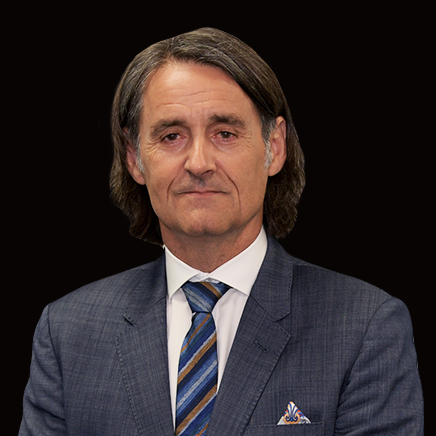
0:07 Hello everyone and thank you for joining us for this live Westcoast event. Today we are joined by Wayne Bramwell, Managing Director and CEO. For those who attended our previous session, we will follow a similar format where I will be leading the discussion with Wayne while incorporating your questions throughout. So please feel free to submit your questions in the bottom right corner using the chat box there. This event is being recorded and will be available for replay afterwards. With that, we look forward to your questions and let's begin. Wayne, thank you for doing this. Could
0:37 you please walk us through the key highlights from Q1 of fiscal year 2025? Thanks very much, Kyle. Thanks for everyone to patch in today. We work to a financial year in Australia, so we always talk about Q1 being the September quarter. The September quarter for West Gold, we speak to as being both transformational and transitional. It was transformational because we closed the merger with Karora Resources on 1 August. What we did by doing that effectively created a $1.4 billion merger, which now makes West Gold a $3 billion company. We speak, that was the transformation during the quarter. The transitional part is really the fact that for this quarter, 3 months, we were only responsible and accountable for the Karora assets for 2. So it's a weird quarter to look at in terms of production, whereby we had 3 months of production out of our mergers and business, but only 2 months of production to our account in the Southern Goldfields.
1:43 So when you look at that, you see a quarter of 77,000oz of production, where if you normalise that for a full 3-months of production from the Southern Goldfields, the production would have been circa 90,000oz. Hence it's a hard quarter to explain because it's a transition point from our old business, what we called Westgold 2.0, which is really just the mergers and assets to something we speak to about Westgold 3.0, being the inclusion of the Southern Goldfields assets. So yeah, Kyle, it was a really busy, busy quarter. It was the start of a 100-day plan of integrating the Southern Goldfields assets and happy to talk to that integration through this webinar.
2:29 Sounds good. Let's talk about this transition now. So you reported a higher all-in sustaining costs of $2,422 an ounce in Q1 versus $2,041 in Q4 of the fiscal year 2024. So if you want, feel free to elaborate on those reasons. But what I really want from you is if you could walk us through specific initiatives to bring costs back within guided range of $2,000 to $2,300 an ounce for the second half. 100%.
3:01 And look, that is correct. Q1's costs were outside our guidance range, but it was always going to be the transitional quarter whereby we were very much in Q4, certainly within guidance range. Q1, the business effectively doubled. I mean, we were effectively 13,000oz short. The difference between the 77,000oz and 90,000oz is really 13,000oz of revenue that we, if you like, didn't collect to our account in this quarter. There certainly was some production issues in Q1. There was high-grade stopes in the Beta Hunt mine that were scheduled to be mined. For lots of different engineering reasons, that schedule wasn't met and those stokes now are moving into Q2. So really, when you look at the all-in sustaining costs, heavily driven by production, and when ounces are up, the all-in sustaining comes down. Yeah, it was a busy quarter of capital investment, which in many things, a mixture of capital investment, just the transitional nature of moving from doubling the scale of business during that quarter had an impact on costs.
4:14 More importantly, what are we doing about bringing the cost down? Probably the best place to start there is really what the plan was and the integration. In the integration, we laid out a 100-day plan for all of our staff, the Southern Goldfields and the Murchison. And the plan was this, the first 30 days, we would really dive deep into the Southern Goldfields assets being Beta Hunt, Lakewood and Higginsville, and to send into these businesses to try and understand where the risks and opportunities were. We wouldn't touch the business. We'd certainly would dive in to try and understand it better having been effectively the new owners of these assets, but we'd leave the business intact to run in August. In By September, and we said this to the workforce, 30 days of a deep dive, between days 30 and 60, we'd start to make adjustments to the business. And by 100 days, the 2 businesses would be effectively 1 business integrated, from which we would then start to optimise.
5:17 So what are the key initiatives?
5:19 In September and October, we started to put additional safety people into the Southern Goldfields assets. We started to move staff around both ways. There was a lot of the Southern Goldfields businesses were quite under-resourced in certain areas, certainly in safety and production at Beta Hunt. We back-filled gaps in the org structure there with staff from our Murchison business, but we really started to understand what the cost drivers were. What we saw in the first 30 days was the Southern Goldfields business far more exposed to third party supply and contractors than we are in the Murchison. Think about every time I speak about a contractor in our world as paying services or a service provider, which is clearly going to want a profit margin on those functions.
6:12 Some of those profit margins can be between 20 and 30%. So naturally, the Southern Goldfields businesses, far more reliant on third parties, had a higher cost base. The initiatives really we're focusing on now is starting to either renegotiate contracts with third party providers or removing them because they're functions that we, the old West Gold 2.0, do in-house. So really the initiatives are about commercial practices, starting now to renegotiate supply of consumables and whether that's ground support, fuel,
6:51 grinding bull, media, everything that we basically consume in the broader business. We can now go back to the suppliers and go, hey, This is a much bigger business. We want to talk about discounts on a much larger volume of supply and we're starting to see those benefits. We're starting now to drop third party contractors out of the Southern Goldfields business. Case in point, underground drilling in old Karora business was done by third parties. Underground drilling in West Gold 2.0 was done by our own staff with our own equipment. So we've started now to put more of our underground drills into Beta Hunt. With that, we can start to reduce the amount of third-party drillers we have in that business. So long story short, we've done this before in West Gold 2.0.
7:42 2 years ago, our business looked exactly the same as the old Karora business. Heavily reliant on third parties, didn't leverage its scale and it took us very quickly to start to change that dynamic and drive costs out of our business. With the Karora business, what we see is something really familiar. We see West Gold 2 years ago. So we've got West Gold's significantly reduced the cost of that business over 2 years. With Corora, we know it can do it faster and the market will start to see significant reduction in the all-in sustaining cost, probably more evidently from Q3. Q2, we're already pushing cost out and that's about really, let's get the production up higher. With that comes reduced all-in sustaining, but you'll really start to see a reduction of all-in sustaining over, well, we think for the next 12 to 18 months. I mean, we can see so much opportunity to drive cost out of the Southern Goldfields business and leverage the bigger business north to south to see the all in sustaining very quickly start to fall back towards the bottom end of the guided range.
8:52 Well Wayne I appreciate the thorough answer. I do want to bring it back to something you mentioned at the beginning regarding the challenges at Beta hunt in August. What were these and could you provide some context? Are we talking about long-term costly issues here? No, it's a really good question, Kyle. Let me start with what the problems are not at beta hunt. And This is something that makes us very happy. The issues we saw at Beta Hunt, none of them were to do with the ore body. All the issues in terms of that were impeding productivity and production there. In some sense, there were 4 or 5 key issues. Labour, largely underground truck drivers, being able to keep the workforce in these trucks because an underground mine is really simple. It's
9:38 a hole in the ground, which you basically have to haul off to the surface. We had all broken in stopes. We had trucks available, but we didn't have truck drivers a lot of the time in these trucks. So Beta Hunt today runs 7 underground loaders and 10 trucks. There was times there in September whereby we might have had 5 or 6 trucks running. So productivity or haulage productivity was very low. We've started to back fuel gaps in the oil chart there with more truck drivers from our broader business and not surprisingly, haulage has increased. The other things that, and that's something that we managed to do because we've got a much larger labour pool. The other issues that have constrained Beta Hunt in say Q1 was things like water. And when we talk about water in an underground mine, it's really, it needs to be explained. This is a quite dry underground mine, but the underground pumping system in it is quite, let's say, agricultural.
10:37 So in this mine, a key issue that drives productivity is having fresh water available to the machines underground that consume water. Beta Hunt has had a very, let's say, agricultural pumping system in it, which what it led to doing is recirculating very dirty water in this mine. When you put dirty water into a drill or a long hole, very, very quickly do you start to block up the radiators, the machines stop, the machines are not available, your productivity falls. So that was a really key issue which we're on top of now. We've got a freshwater source close by to the mine, that fresh water will start to be brought into the mine in this month, November and December. What does that do? It means that the drill rigs and the jumbos will run longer, drill more metres, productivity lifts.
11:29 The other engineering issue which has held the mine back was power. When we talk about power underground, effectively we have an overhead power system which we then reticulate down into the underground mine. And the key feeder into this mine had been damaged by water ingress. The hole that was drilled, the cable that was installed got damaged by water. And what that was doing was making the power intermittent in that mine. We bought a new cable, we're going to drill another hole. All of a sudden this issue, which has been a problem in that mine, will go away. And you can imagine the underground pumping system, everything in that mine is electric. If the power flicks, the pumps stop, all of a sudden you have to go back and start to pump water from the bottom of the mine to the top. So, you know, water and power inherently linked.
12:21 The other issue there has been ventilation. I mean, Karora has started an upgrade of the ventilation system, which we're pushing on with, because this underground is a big mine. It's hard to conceive, but this mine is
12:35 50 years old. There's 400km of underground workings in here. So when people hear that, they should think, wow, 400km of underground workings. It's a big mine. Being able to manage the air inside of that mine is in some sense complicated and in some sense simple. The ventilation upgrade, what we're doing is basically putting bigger fans, or Kuroa had started to install bigger fans to basically push more air into this mine, which, you know, that we're about 40% through that process now, but there are things that we can do internally to make sure that we're optimising our ventilation. So really, I've really touched on 3 engineering issues, power, water, ventilation, which we're in the process of fixing now.
13:23 And some of those fixes are quicker than others. And the other one is people. So the people issue is now where it needs to be in terms of being fully manned. Those other 3 engineering issues are in some sense, not expensive to fix, case in point. The water fix here in terms of fresh water source, I think our total exposure to that fix is around a hundred thousand Australian dollars. It's tiny. The power fix, a new cable to run from the surface to the top, that cable is $250,000. Drilling the hole is probably $250,000. So none of these engineering fixes, people should hear as, oh, there's a big capital hit coming. These are small capital commitments, which we're starting to deploy now.
14:13 Excellent. Really appreciate the thoroughness here. You maintained your fiscal year 2025 guidance of 400 to 420,000 ounces, despite the transitional Q1. So given this implies a higher production in the second half, could you walk us through the key drivers that give you confidence in this back-end weeding? Yes, 100%. And look, we're really confident about guidance, it being back-ended. And I hark back to say 2.5-years ago when we effectively West Gold 2.0 started. It took 2 quarters to get West Gold 2.0 stabilised and then the production went like this. It took, in some sense, it's the same operating model. It's the same playbook with the Southern Goldfields where 1 quarter to understand and stabilise, second quarter basically start to optimise and then quarters 3 and 4 onwards, productivity up once we fix some of these problems. So hence, really the cost or the production kick in the second half, the real question is where is production going to come from in the second half? We're already seeing productivity and mine tonnage, mine outputs from Beta Hunt starting to lift.
15:28 Even in September, we had a production record out of Beta Hunt
15:34 and that was a whole week of that mine doing 6,500t a day of ore and waste up the decline. 6,500t a day by 365 is a number much bigger than 2Mt per annum run rate. But what we're seeing is these engineering issues are making that run rate, we can maintain it for a week or 10 days, but then overall it's still inconsistent. So in the second half of this year, we would expect that the average run rate for Beta Hunt will be closer to that 5,000 to 6,000 tonnes per day. And that's when the production starts to kick. In the second half, we're already starting to see production starting to lift from the small 2 Boys underground at Higginsville. Literally 2 months ago when we walked in there, that mine was doing 10,000t to 15,000t a month. It's now starting to do consistently over 20,000t and we think 25,000t a month out of 2 Boys is achievable.
16:31 Why? All you're doing there is drilling. The ore body is in some sense quite simple, but there's no drilling in front of the miners there to inform them better about the ore body. In the Murchison business, back to what we call the Northern business, the Murchison, the production in the second half will really be driven by increased outputs from the Bluebird South Junction mine. Now, this underground is fascinating. And for the ex-Karora shareholders, Bluebird South Junction is like our Beta Hunt in the north. So now we've got 2 of these big growth engines. We've got Beta Hunt in the south, Bluebird South Junction in the north, and Bluebird South Junction will hit a run rate of above 1Mt per annum early in the new year. So
17:15 the way that mine's going, it's gone from 250,000 tonnes per annum to 500. It's on track now to be doing 100,000 tonnes a month early into the new year and then lifting again. Hence, that drives increased outputs from the merchants in the north. The other reason that the production in the second half will kick, we'd always scheduled that our new Great Fingal high-grade underground mine would start in Q4, and it's still on track to do that. So There's a lot of levers that we can pull in the second half. We're already pulling those levers. Bluebird South Junction expansion underway. Beta Hunt productivity starting to lift. Output from 2 buoys starting to lift. And great fingal coming on. So yeah, we're quite confident about the second half.
18:05 Now, a little later down the road here, the new Polar Star load intersection of 13.71 metres at 18.2 grams per tonne. Gold appears significant. Given this is emerging as a potential third mining opportunity alongside Bluebird and South Junction, what infrastructure capital investment would be required to expand from your targeted 1.2 million tonnes per annum to the suggested 1.5 run rate. And what's your preliminary timeline for this potential expansion?
18:40 And look, I can see in the chat room there, and so there's an overlap in the question here. So let's just talk about Polar Star. When we talk about Bluebird South Junction, and I don't have an image on the screen there, but if you look to the most recent release we made on Monday about Bluebird South Junction, this is a really long system. We say this system is sort of 7 to 11 kilometres long. We're actually mining a small part of it and it's a set of loads. So as we sit here today, we're mining 2 loads within this Bluebird South junction complex. And we talk about it as a mining complex because it's got 1 name, but there's multiple loads which we are continuing to identify. So we've got this mine to close to, let's call it 500,000t per annum by mining 2 loads, Blue Bird and South Junction.
19:34 South Junction is getting bigger and that will probably get this mine to about 1 to 1.2 million tons per annum. And through the drilling, we've identified this other load, which we're focused on now, called Polar Star. Polar Star and the drill release we made on Monday this week, the Polar Star interval of 18m at 13 was the best drill hole that we've ever drilled in this system. What it's doing now, what we can see is that there is a business case rapidly being worked up to commit to starting to mine Polar Star. And if Polar Star comes in, we end up having 3 working areas in this mine, which should propel the mine outputs towards 1.5Mt per annum. The good news about that, capital to get Polar Star in to online, very small. I mean, we've already got an open pit. It would be a new portal to access this ore body.
20:29 The drilling is showing this thing is as good as South Junction. So our confidence around this mine is growing very quickly. I mean, and we're not going to stop drilling this Bluebird South Junction complex. And I see one of the questions here speaking to the other loads, which we show on some of our long sections of Eden, Hope and Archanar. We're just going to keep drilling this system. We're certainly seeing that there are these other loads there, which we don't know much about, but because we've been focusing on Polarstar, South
20:59 Junction, Bluebird, But this system is still open at depth and laterally. So Bluebird South Junction is now is rapidly growing. We're setting this mine up for a really long future. In our sense, that's what we're grappling with. We keep drilling it. We can't find the edges of it, which is the first world problem to have. It keeps getting bigger and it's still open at depth. So look, it's pretty exciting. And why we love this mine so much is 600m from our processing plant. And this sort of segues into another question here that I can see in the chat room about an expansion of the Bluebird mill. The Bluebird processing plant had been configured for oxide ore originally. So on soft rock, the existing infrastructure had run as high as 3Mt per annum of throughput.
21:53 We run it on 100% hard underground ore. So, on hard ore, which is what we are processing now, it runs at about 1.6Mt per annum. Bluebird, very quickly, the underground Bluebird South Junction is going to be quite well matched with that mine within the next 12 months. So already we've started an expansion project, an expansion study on the Bluebird mill. And the intent is to get the Bluebird mill, and we think the right throughput is 2.5Mt per annum. Modifying this plant from 1.6Mt to 2.5Mt is actually not that complicated. It's really about upgrading the crushing circuit and the grinding circuit. The leach circuit is capable, I think it's got 50 hours of leach capacity.
22:38 So we're in that study now to determine what the level of capital is required to do that. And even more importantly, being able to upgrade that plant to 1.5 is something that we can do while it runs. Additional crushing and grinding equipment can be installed in parallel while the main plant is running and then there'll be a period of cutting it over. So I'm not sure what the capital will be for that yet, but we'll certainly know what that capital will be early in the new year. But again, this is one of these first world problems. Being in a position to think about expanding the Blue Boot plant to 2.5 is not a position we've ever been in. What it really gives us the ability to do is drive our operating costs down. And that means the returns out of that whole merchants and business will lift.
23:29 I can jump into the chat room here, Kyle, and just pick up some of the other questions if you like, or I'll leave it, throw it back to you, Tim. There's 1 specific question, and just for the audience, just to let you know, I unfortunately have a hard stop in the next 7 minutes here, but correct me if I'm wrong, Wayne, but there's a pending resource update this month, right? So what percentage of these recent high-grade intersections particularly from the Polar Star load will be incorporated in this update? Yeah There will be what you'll see in this resource upgrade, this Polar Star stuff will be in, but what you'll see in this resource update is really a conversion of inferred into indicated. So maybe the headline doesn't change, but you'll see the classification change.
24:15 So resource conversion is what it's about. So converting inferred into indicated really gives us the basis to do a mining study and make a commitment to basically start Polar Star. Look, I'm going to go early here and saying Polar Star is a no-brainer. The board is really excited about what they've been seeing in the drilling. So I don't think there's going to be any pushback on starting Polar Star. And in terms of probably the second question that flows from that is, how quickly can Polar Star come online? We know with South Junction, from our first drill hole to first stoke was about 6 months. So if production in Q4 of FY25 out of Polar Star could be an opportunity, but maybe it's more like a Q1 FY26. But once we get the green light, we will go hammer and tongs on bringing that thing online because then we have 3 working areas in that mine and we can start to fill up the Bluebird Mill with this high grade ore.
25:20 Well, listen, we have time for one more question and there's a lot in the chat here. So I'm going to leave it in your hands. All I ask is please read the question out loud for the people watching the recording afterwards. But we can tackle one more here. Yeah. Great Fingal, any further update on the shallow reefs? We're into the shallow reefs already. Again, there'll be a bit more information on the shallow and early mining opportunity in Great Fingal over the next few weeks. But when we think about Great Fingal, what the study said was early production from Great Fingal would be Q4. We're already starting to nibble on something at the moment. So, stand by on that one. Beta Hunt, whilst you have discussed the huge potential within the 7k tenement? Do you view the tenement surrounding Beta just as perspective?
26:06 Yes. Short answer. Higginsville. Higginsville. The question is 2 boys. Could it be viewed as an early fender or does it have more potential than that? It's a great question. I actually think it's got more potential than fender. In our mind, it looks a bit like fender, but it's got grade. 2 boys, most importantly, 600 metres from an ore body called Trident, which was mined and more than a million ounces came out of Trident. So Trident, 600, a million ounces, 2 boys, tiny amount of production, 600 metres, no drilling. So getting in between those 2 things and drilling, could 2 boys become Trident? I'm not sure, but there's only one way to find out and that's to drill it. So we're starting to drill 2 boys now.
26:55 And a quick comment on Kuliko, please. On which one? Kuliko, or I'm sorry if I'm pronouncing it wrong. The second last one in the chat here, quick comment. No comment on ColourCo, that's not us. ColourCo was a part of the spin out, so that went with the Karora team. So no visibility, no, we don't, We have nothing to do with Coloco. There was 2 comments from Juergen here. Thank you, Juergen. Consideration to consolidate the share count to increase the share value. At this point, no. I mean, in terms of increasing the share value, What's the answer to that? Drill. Unleash the drills and basically add value through extending mine lives. Focus on plan expansions to drive our costs down and generate higher returns. So look, it's probably the answer for this question. It's not no about consolidating the shares.
27:50 It's not now. At the moment, the focus is on production up, cost out. That's what's going to drive value in the company. Looking at acquisitions, Ganesh, we are absolutely focused on organic growth at the moment. And what we're continuing to see now is so many opportunities within the existing package, both the Murchison and the Southern Goldfields. I mean, there's so much inside the cabinet here. We're going to focus on that. Drill baby drill, Scott, you'll be happy to know we have adopted that statement. Maybe some of the marketing is a little different, But unleashing the drills today, I think we've got 18 drills drilling across the package and we are absolutely leaning into this drilling business because we can see places like Beta Hunt today, 3 to 4 drills operating. It's either 3 or 4. I know we've got 4 there, whether the fourth one's manned, but we are drilling the hell out of Fletcher and trying to bring in a resource update in Fletcher early in the new year. At Mekitharra today in Bluebird South Junction, 4 drills going hell for leather. I know we've got a drill on the surface at Great Fingal, drilling a new target called Mountain View, and we've been trying to get on the ground at a thing called Peak Hill near Fortnum. So, man, We have unleashed the drills and we'll continue to do so.
29:19 Listen, Wayne, I promise I'll get you out here on the hour. We'll be seeing you again. Thank you for all the questions and thank you for addressing them in such a thorough manner. Is there any closing remarks? And for anyone before your final comments, anyone that came in late, there is going to be a replay of this, so don't worry. But any closing remarks, Wayne, before we head out for the day? Kyle, look, for people new to the story, this was again a transformational and transitional quarter. So, quarter 1 was quite choppy because we weren't, you know, we didn't have control of the Southern Goldfields for full 3 months. We only had 2 months. 1 month of that, August, we were on the business, but we didn't touch it. So, we only started to drive different changes in the business in September. This quarter Q2, already we're seeing improvements in productivity and profitability.
30:09 Cost out will continue to be visible in this business, really visible in Q3, but I can assure the shareholders and listeners, the only things we can control here is cost and productivity. We don't look at the gold price because we can't control that, but we just focus on the things we can control, which is cost and execution. Anyway, the news flow will be strong out of this business. We've got a much bigger machine now. We're super excited about Peterhunt, Bluebird, South Junction, delights us every day. Great fingers, not too far behind.