Transcript
Automated transcript · Written by software from the replay's audio. It can mishear names and figures; the replay is the record.
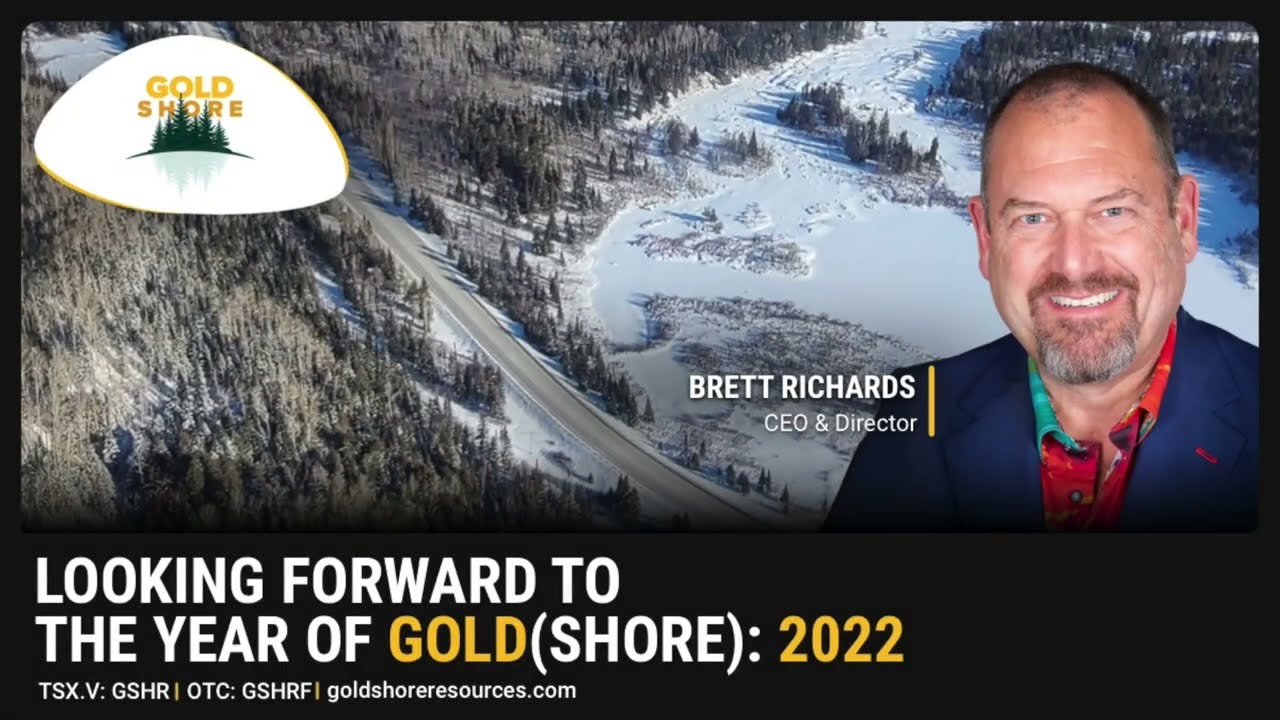
0:08 Well, hello, everyone, and welcome to Goldshore Resources Live Summit today, hosted by 6. We're joined today by Brett Richards, Goldshore's CEO and Director. Brett's going to walk us through a company presentation and after we will be accepting questions live. So as a reminder, you can submit your questions at any time on the Q&A panel on the right-hand side of the screen and we'll get to them after the presentation. And As always, the summit is being recorded and will be available to watch afterwards on SIX.com. But without any further ado, I'll hand it over to you, Brett, to kick us off. Thanks for the introduction, Dasha. I appreciate it.
0:40 And thanks for everyone for attending today on a very cold, snowy day, around 24 inches of snow where I am. So when we're done with the summit today, I'll be out there shoveling diligently for the next few hours. But belated Happy New Year. And I think, you know, I wanted to get in, you know, get in touch with our shareholder base and our potential shareholders and talk a little bit about, certainly what some of the accomplishments were last year, because I think we had an exceptional year of execution and what to look for in 2022. And I think
1:25 getting a fresh look backwards after we had completed the year, in a year in which we had signed the deal with Westdome to acquire the Moss Lake Gold Project. And we put together a $25 million financing to support it and to support the development. And then going through all the TSX approval processes and back and forth. I think we were quite fortunate in a COVID stricken environment to be able to list when we did and as we did. And I think the timeframe of that was quite unique. We got approval on May 31st and we started trading on June the 4th. But, you know, and as I've said in previous summits, we took that time to kind of build infrastructure at site and hire a team of people that we needed to execute on our short and kind of middle-term objectives.
2:27 And they include part of the 100,000 meter drill program, but they also include a number of other aspects when you look at project development. It included the, I'll say the engagement and the consultation with 5 of our Indigenous partners and host communities, starting back in February of last year and regular and ongoing today. We participated in the Indigenous First Nations traditional opening ceremony from Lakda Malak with the traditional chief and the elder leadership on the Moss Lake site as we opened it up in the summertime. First drilling commenced in August and in November, we went back to the market and raised another $10 million to support this large program.
3:19 And technically on the ground, although there were some challenges, there's no 2 ways about it. We had forced fires that we had to deal with in the West that caused over kind of 4 weeks of downtime in July, August, and September at various periods with government mandated rigs down. We had COVID throughout the year, and the challenges of transporting people from across the country and respecting personal and health and safety protocols and those protocols ascribed by the government. And this sector has a significant skills shortage And as we found it very challenging to recruit good people last year, and we continue to feel that shrinkage in our industry.
4:15 And then, compounding it all last year was the fact that we had a sluggish gold environment. We had a gold equities trading environment that nobody cared about. Nobody cared about the gold price last year. And I remember, and you guys will quote me, sitting here this time last year and sitting here in March of last year saying that, all of the kind of the fundamentals are starting to align for a gold price to make a good solid run into a trading range, which I quoted as being 1800 to $2,200 And in essence, I said that all year and it never happened. And again, those macroeconomic drivers and features that continue to prop up the gold price, but should drive the gold price much higher than what it is, are all in place and they're all getting stronger, yet we haven't seen any, I'll say, sector rotation of assets to move from a sector and get and move back into natural resources.
5:20 I still think we're in for the biggest kind of 10-year bull run in metals and natural resources we're going to see in our lifetime. And that is everything from precious metals to battery minerals to base metals. And you've got infrastructure spending like never before. You've got infrastructure to support electric and decarbonization efforts around the world, which means higher utilization of copper, higher utilization of aluminum in less cases, but you've also got the battery mineral supporting the electrification and the decarbonization. So in a timeframe when inflation is not just looming, inflation is present and being here for over 12 months now and at levels that we haven't seen since 1982.
6:13 So again, this perfect storm that I described this time last year is just getting bigger and bigger. And we still haven't seen that sector rotation of money come into gold equities. And we haven't seen it come into our space generally, not just in precious metals, but also in other commodities. So, today I'm going to walk you through some of the things we're going to work on today and some of the things we can expect. We did have some press out this morning. Again, more of the same. I'm really jazzed up about the fact that we're continuing to see mineralization both at depth and laterally outside of the existing historical 2013 resource. This is very encouraging for a number of reasons.
7:08 It means that the deposit that we have, it means that the mineralization along this big, long 20 kilometer trend, this strike is going to be much bigger than the resource that we have identified or that was identified in 2013. There will be significant step out to that. There will be significant lateral step out to the resource and I think there will be significant step down at depth as well. The first few press releases we put out, the first several holes that we have drilled have all indicated that. We're getting good correlation to the historical data sets, and we're also getting new information, new mineralization outside of the known resource.
8:03 And we're getting some higher grade structures, which I think are very, very encouraging. They will ultimately bring the grade up. And these are also getting quite encouraging. But I think the focus that we're on has not changed, it has not wavered. We are still confident that we can create the next tier 1 asset in Ontario. And a tier 1 asset is a 10 million ounce resource, a 10 year plus mine, 10 year plus a year life of mine, with average annual production greater than 500,000 ounces, and being in the lower half of the cost curve, which is less than $900 today. When you look at our current economics, we can see a path to all of these. Now, there are all, and I caveat it, they're all conditional on drill results, I get that. But we also have, you know, 7 to 10 kilometers in the Northeastern part of Moss Lake that's all been drilled and is mineralized and 3 to 5 kilometers southwest of Moss Lake, which has been drilled and is mineralized.
9:22 And again, didn't come get pulled into the resource back in 2013. And not enough significant work was done between 2013 and 2019 when Westholm had it. So the resource never changed. But we are going to be adding significant data to this so that by the end of this year, I expect we're going to be able to demonstrate that path to creating a tier 1 asset is well there. And if we don't hit some of these criteria, we're certainly going to be very close and we're certainly going to be able to show a path that it's just going to take more drilling or more work to understand it better. But this is what we've set out to achieve, creating the next tier 1 asset. And everyone knows the, I'll say the highlight points as to how we're going to achieve that both with people, with capital and with resources, and look to be able to deliver, you know, consistent and similar results that we did this morning throughout the year as we get through our program.
10:33 I'm not going to kind of spend a lot of time today on the historic slides where we acquired the Moss Lake acquisition, the terms. And I think I've spoken enough in the marketplace about our team and our people and our board and the strength behind us and the drive behind us as well. I think that's like kind of goes without saying. But I think where we are today is we're going to continue to deliver on these results. I have said all along that, I don't think there's a lot of geological risk in what we're doing, what we're trying to achieve.
11:19 As you can see, we have a 20 kilometer known trend at Moss Lake. We have several areas of known mineralized trends, both at Hamelin, at cold stream and up at Iris. My apologies. I've got a bit of a COVID environment here in my house and I probably have it. So I'm just trying to kind of get through this. I've got my apologies. So I have, we'd say we have quite an extensive history here, but we have quite an extensive no mineralized trend. Someone just asked me about the historical drilling. And you can see from one of the historical slides here that Moss Lake has had about 110,000 meters drilled historically, and Coldstream has had about 45,000 meters drilled and Hamelin about 9,000 meters drilled. So collectively there's been about 160,000 meters drilled on the property over the last, let's call it 25 or 30 years.
12:29 And again, I just for, I'll say for just for a refresher, you know, Moss Lake, we are getting very similar results to this. We are getting north of a gram, we are getting big long intercepts
12:47 of anywhere from 30 to 50 to 90 to 100 meters and in 1 hole add up to kind of over several hundred meters of mineralization throughout the hole. And we actually had 3 zones in the most recent hole 2107 that has come back and there's mineralization over 810
13:12 meters on this hole. So I think what we're establishing is the definition of a much larger resource here. You can see it in the early holes in holes 1 and 2. The resource extension goes quite far to the south and southeast and also at depth, down quite deep. Also near-surface mineralization and good correlation to early holes. Again, this is going to demonstrate well into the financial model when we get into PEA that there will be near-term cash flow due to the near-surface mineralization. Just a little update on the infrastructure. We've got a little snow. I just shot a recent picture into this. This is our core shack and our camp where we operate.
14:09 And we now have, we have 5 rigs running right now, but we did have a slow start to the end of last year and early this year, we shut down for 2 weeks as all drilling companies shut down. We did have a bout of COVID early on, we still are dealing with it. We have isolation, bunkhouse, and we are isolating our COVID cases. And quite frankly, as I said to now, I'm in Northeast Toronto and we got 24 inches of snow and Thunder Bay got hit with twice that. And they've also had extreme temperatures down as low as 35 below Celsius, all through the Christmas time and on our startup. So these are challenges. They're not challenges that are insurmountable.
14:55 They just slow down production. They slow down one's ability to be effective out in the field. I talked about this, about the geological risk, and I don't see there being much of it. We've talked in the past about other risk factors, whether they're metallurgical risk, whether they are, you know, whether they're environmental risks or social risks or other ESG risks. And I think we've addressed a lot of them throughout our early program and we're gonna continue to address them going forward. This still comes back to me as execution risk. And we're trying to do everything we can to execute in the time frame that we have said. Again, I'm going to kind of fast forward to some areas of update. Just waiting of update. Just waiting for...
16:00 Bear with me. Here we go. And slides going a little crazy here. So this is our updated drill program. And I said kind of in Q3 and Q4 last year that we would be through our program by the end of next year. We'll start the resource update kind of Q4. We're still on track to doing that. I would like to get some earlier holes into Cold Stream and Hamlin. I still see a potential copper spin out as being kind of one of the exciting features going forward. But yeah, again, there's nothing we can do on that until we get through the lion's share of Moss Lake drilling, both infill and step out drilling, and we can get through the lion's share of our program.
16:51 Again, topography and weather is very important to us in our drill program at Moss Lake because we require to be on top of the tundra, which is wet in the spring and summer. And in the wintertime, it's capable for us to be drilling on. So we need to use this time to get some meters into Moss Lake. And we'll get into Cold Stream and Hamlin a little later on. But this is kind of the program, how the program looks for the balance of the year. And as well, I would expect that we're gonna enter 2023, completing the PEA, the update to the PEA with brand new economics. And we've seen, and I've spoken to, all the metallurgical test work we're gonna start and do. I think we're gonna start doing a lot of it next month into March, April, May, both bottle rolls, column testing, different heights, liberation testing, size fraction analysis, et cetera. So we're gonna be going into extensive metallurgical testing as well in order to support the assumption we're going to be using on recoveries, which we think we can get into the low 90s.
18:09 A lot of work going on behind the scenes, not just drilling. We've got work going on in ESG with our indigenous partners, with our indigenous partner contractors on the baseline, environmental baseline study. So lots of activity going on for the first part of this year, but everything is gonna be driven on drill results. And I think you're gonna see more of the same, and I hope you see more of the same because that's what we've seen so far. And that is just gonna continue to validate, again, the size and scale and potential of where this deposit could go. When I talk about a tier 1 asset, I say it because I really do believe that we are on a path in order that we can demonstrate that. And I have to get the results.
18:57 I have to be able to get them to you. I have to put them into our model. I have to put them into
19:02 a new PEA and I have to demonstrate that this is truly a tier 1 asset. But in my experience, this has the framework of a tier 1 asset that will be highly attractive to a lot of the big guys later on. I've made some slight adjustments to this. This is the kind of the outputs from the PEA that was updated in 2020 by Westholm. And the adjustments I made, I really just wanna focus on the after-tax NPV here, which is close to $600 million. And again, today, when I'm talking about valuation metrics about this company, and we're still trading around $60 million, companies like ours transact at 0.3 times NPV, that's $180 million based on our project economics where we should be trading.
19:52 So it's something that I just wanted to put more emphasis on rather than the pre-tax side of it, although it's a much bigger number. I think it's important to know that this is our starting point. This is where we're going to start. There'll be lots of optimization. Even if we were able to double the input of ounces, doesn't mean we double the all of the other economics. Some will get higher, some will be optimized lower. And there will be
20:20 that right point of size of project, CapEx, production output, and then mine life. And we'll determine that towards the end of the year once we kind of get through our resource update.
20:36 I've updated the trading comparables as well because I think it's important to understand where we still are in our peer group. We continue to be last And there's lots of questions around why, and there's lots of, I'll say, assessments as to kind of why we trade at $15 an ounce. And I don't have a definitive answer, but I do know one thing. It is as market-related as anything. When I talked about sector rotation of assets and fluidity of assets coming into the natural resources sector, it hasn't happened. And people are not going to leave positions in order to buy big positions of gold shore just yet. I think it's a matter of when, not if. I think the sector rotation of liquidity is going to come into the natural resources sector, into the precious metals sector. I think it's going to be this year. Mind you, I said I thought it was going to be last year. But I just can't see this with the US financial situation, with inflation at levels of what they are, greater than 1982 levels. I think we're going to see a lot of pressure on the gold price to go up as a safe haven to other things that are negatively affected by inflation, like consumer packaged goods, like consumer goods, like, you know, those types of sectors are heavily impacted by
22:02 inflation. Industrials are to a certain degree as well. So I think we're going to see partial sector rotation or full sector rotation at some point in time. And this, I'll say this movement of capital into precious metals will certainly kind of recalibrate us. So I don't see a lot of downside from where we are today because it costs you $30 to explore and to put ounces at inferred on a resource statement. So we're actually trading at under cost in my view. And our peer group still has a kind of an average of around 40 or $45. So we're still trading at kind of a third where our peer group is.
22:48 And project multiples, and there's been another transaction I'll add on to this of Agnico acquiring Kirkland Lake. I think we're going to see more M&A later on this year as the markets start to get more active. And let's see where we get to. But I go back to our original point. I have to execute. I have to get down our road of executing in our program. And getting to 8,000 to 9,000 meters a month is what we need to be achieving. It's going to be very difficult in January, February to do that because of the weather, but we'll quickly pick up on that in March and maybe do a bit better in the spring.
23:37 So I think, in summary, I think what we're going to see is much more of the same. There hasn't been a lot of structural changes to GoldShore. It's just a validation of what our thesis was from the very beginning. And that is, we think that this resource is much bigger, much deeper, much wider than it currently is known to be. And we're going to go, rather than take this through its financing and production exercise, we're going to see if we can make this a tier 1 asset. So that's kind of our short form of the presentation for this time of the year. I hope to be able to continue to deliver these types of results so we can update the market as we go along and as we get a little closer to the end of the year.
24:29 Thank you so much, Brett. There's a bunch of questions here, So I think we should just jump right into the Q&A portion of the presentation.
24:36 Robert is asking, I think copper will have a good year in 2022. Could you tell us more about the copper on the property? Yeah, So we've got 2 really, really good areas, I'll say high-grade areas of copper prospects here, up in the Northeast in this banded iron kind of formation, up in this BMS area, and down here in this IOCG deposit, which we think is an IOCG deposit. We'll have to do some more analysis on that, but down where Hamelin Lake is. And these are exciting because not only was there a historic copper mine here at North Coldstream, the whole surrounding IP, the whole surrounding area looks like it could, it also hosts multi-elements.
25:24 And we're going to be analyzing this for not just copper gold, but Copper, Gold, Silver, Lead, Zinc, Moly.
25:34 So a whole suite of elements. We want to see what's going on up there, as well as Hamelin. And we know that we have historical results at Hamelin of just under a gram and 0.35% Copper over 150m. So pretty substantial intercepts. And so That's the excitement. I just need to advance it. There is a bit of a competing priority for capital. Moss Lake is our focus. Moss Lake is what we're focused on. When I'm able to have the time and rig availability to put some holes in both of these areas, we're going to. We need to test them and we'll see where they go. I'm just very optimistic and very excited about it. I just wish we could do it faster.
26:20 Right, of course. Michael's asking, what is the cost of drilling per meter and what do you think will be required in drilling to prove up tier 1 asset? And He also asks, what is the average finding cost per ounce?
26:33 The average what? Finding cost per ounce. Yeah, well, the average finding cost, to put an ounce of gold on your resource statement, over the last kind of 20, 25 years I've been in this business. It averages for inferred resource anywhere from 20 to $30 for kind of indicated, you know, more like 60, 70, $80 measured, you know, $100 and anything up into a reserve is gonna be north of 150 to $180. And those are general kind of rules of thumb. And that's why I say, we're trading under what it actually costs you to find this stuff. But we started with a Greenfield site and we found 4 million ounces. We would be trading at much less than what it cost us to do that. And that's why I think the market has said, well, OK, well, it's a historic resource. You better prove it's a real resource.
27:26 It was proved up once, but you're going to have to do it again. And I think that's why we're kind of where we are and why we're being, I'll say, trading at a discount to those types of valuations and to our peer group. But I think, again, it's a matter of when, not if we will recalibrate. And it does cost us anywhere from, this is a very flexible number. We don't like to give trade secrets away, but it's around 200 and change dollars per meter to drill. And you know, there are additional things that we do that probably take that closer to 270 or $280 a meter, multi-suite element assaying cost more money than just assaying for gold and silver, So those types of things. So I think you can, you kind of use that as a fairly, you know, general range.
28:22 Great. Thank you. William saying many Canadian SA labs, at least in BC seem to be struggling with backlogs at the moment. Do you know the situation for labs in Ontario? And is there any reason to worry about delays in Goldshore's upcoming drill program? Yeah, we've experienced delays. I think our delays are not as prevalent as what we've heard around us. We actually have pretty decent turnaround time, quite comfortable with it. We have paid a premium to get the first few holes out, not much, but I thought it was important for the market to hear all that information before Christmas, which we did. And we'll be reverting back to kind of normal turnaround times of kind of 6 to 8 weeks.
29:12 Once we have, I'll say, a continuous flow of news, it's not really going to matter. Once we get a continuous flow of news, whether we wait 4 weeks or 8 weeks, it's still gonna be continuous and just a matter of when it was actually drilled. So yeah, no, it's not really affecting us. Could it impact us down the road? It could. And it's like all of our risks. And I just wanna be open with everybody about this. Execution risk is sometimes the hardest. It's about making sure you have the people, making sure you have trained drillers, make sure you have rigs available that can actually work through this weather and all the associated equipment needed to work on tundra, water, et cetera. You know, it takes a lot
29:59 of coordination and getting those right people sometimes means bringing them in from other parts of Canada and or other parts of the world. So, the coordination of all that is quite important. And then getting the turnaround on assays and getting the turnaround on interpretation of that information. Again, it's all very complicated, but I see the 3 biggest things as threatening our ability to execute. And Certainly COVID is one of the 3, and I don't know which one it is, but certainly one of the 3. Weather will delay, it will not prevent us from executing, but it will delay our execution.
30:44 And lab and turnaround time of other technical information. And some of that's because of COVID, some of it's because of the market, and some of it's because they don't have the people necessary to do it, is becoming kind of a problem. So yes, it's a external people thing, it's a COVID thing, and it is a kind of a weather related thing. But those are the risks that we have to manage every day. Great, thank you. So Andrea is saying we're entering an inflationary environment, but the gold price is stagnant. What will this inflation do to the all in sustaining costs? Well, it depends on where you are and what some of your inputs are for your cost structure.
31:38 Inflation kind of tracking 4% to 6% over the past 230 is problematic and it's gonna continue. And that will put pressure on the gold price. We certainly believe in that, but we'll have to take a consensus view of some of those inputs. For example, if we were using, if we were in the Yukon or Nunavut or somewhere where we had to bring in diesel or some sort of carbon fuel to power our operation, we would be looking at 35 to 45 cents a kilowatt hour to be able to do that. We are on the Trans-Canada Highway and within a kilometer or 2 of 7 cent per kilowatt hour power, maybe up to 10 cent, but that's a substantial, I'll say, off X discount to kind of where some of our competitors or some of our peers would have to use in their inputs.
32:46 There will be, you know, variable cost increases along the way. And maybe the tier 1 cost curve of being in the mean of it being at $900, maybe that goes up to 1000 or maybe that goes up to $1,100. But I would expect to see the gold price go up more than that. No, materially more than that. If the gold price, if OPEX was to go up $100 or $150, I would expect the gold price to go up twice that. But we just don't know. We haven't seen the dynamics of the gold price movement for other reasons. But, you know, OffX is certainly going to go up for all operators this year. Thank you. Michael's wondering why didn't Westdome move, want to move this project forward on their own, since it seems like a good project?
33:39 Yeah, it is a great project. And I think, you know, maybe I'm speaking a bit out of school, But if I was West Dome, I would have acquired this project to put additional ounces on my statement.
33:58 And trying an evaluation on those ounces akin to what I'm getting for Eagle River and Kina Complex. They did that probably with some success because they paid very little for them and we were able to transact at a reasonable price, $15 an ounce. So I see $14 an ounce. I see that as a good value for us. But what Westdome saw was they weren't going to develop this in a rising gold environment and a rising kind of commodity cycle. They wanted somebody to develop it. And although they may not got a front end, front end up upfront payment like they would have liked, like 50 or 100 or 150 million dollars, they can certainly get exposure to the Gold price run by being a strategic shareholder of GoldShore, which they are. They hold 26% of our stock.
35:00 And there are additional progress payments to be made of $20 million in shares over the next several years. So they see this as a strategic investment that 40 or $50 million doesn't really move the needle for them, but 5 or 6 times that does really, really does move the needle for them down the road. And that changes the face of their company. So they see this as a very strategic investment. Thank you. Kind of this question is a three-part question. So he's first asking, how many indigenous bands are you obliged to consult with? Is your proximity to Kwetiko Provincial Park creating any specific challenges environmentally? And then lastly, he's asking, how many drill rigs are needed to complete your proposed drill program within your projected time frame?
35:55 We should be able to get through our program this year with 4 to 5 drill rigs. We may bring in 0.167 rig in order to mitigate that, maybe 0.143 rig. We pay on a per meter basis. So production is vital to us. So under normal circumstances, we should be able to do this with 4 rigs, but we're bringing in additional equipment to make sure we execute. The indigenous groups that we have discussed with so far, there have been 5 of them. None of them actually have, I'll say, land ownership or they don't actually have, they're not actually on our land package, but they have traditional rights through the whole area of kind of Northwestern Ontario.
36:48 And the groups that we've engaged with and talked to and continue to talk to on a regular basis, and there's been 5 of them, they've been very good and very helpful with us along the way. And the proximity to Quintico Park is, it's something we'll be looking at, I think, as we get into the permitting phase, and that's probably somewhere down the road, but it's not something from our environmental baseline study that has impacted us to date. There's been no issue. Great. There's 2 questions here about when production might ultimately be expected. Again, speed to production is a function of how fast somebody wants to do it.
37:38 If capital was not an issue here, I think we would get through this program this year. We or somebody could get through a feasibility study bankable within another year and that would take another, I'm going to say, 50 to 100,000 meters of drilling to the point where not only have you identified a tier 1 asset, you've proved it up to be 1, and you've got it in a bankable state. So that's from today, that's 2 years. So all of this year, all of next year, and then you would get into a year of permitting and project financing. And the capital for this will be pretty substantial. It'll be north of 1 billion dollars. And I suspect that we will get, we will probably, it'll probably take about 12 months to do all of that and permitting maybe a bit longer. So I think the nearest term you're going to see, the nearest timeframe you're going to see production here is probably not before 2027, because this is going to take 18 months to build. 2027, 2028, I think is the earliest time that we can expect that.
38:53 And somebody asked me the other day, they said, well, why are you so excited about the gold price now? Because it's not going to have any impact on your project for 6 years. And there's some truth to that. But the other reality is companies like ours trade on gold price. And in order for me to add value, the share price needs to go up. So I can continue to raise capital at higher share prices than the first one. And we're not seeing that dynamic in the market yet, and that's unfortunate, but that's why it's important today. The inputs we would use for a PEA will all be long-term consensus type. They'll be very conservative, both on power inputs. They'll have power, water, people, CapEx, other CapEx caveats, non-measurable, non-technical aspects of inputs into the PEA will be quite conservative because of the, I'll say the nature of this project being kind of 4 years, 5 years away from production and a 10 year mine life where discounted cash flows actually get actually, you know, they get discounted to close to 0 after 7 years. So that's the way people will look at this.
40:19 I'm excited about the gold price now because I think it's going into a sustainable environment at $18,000 to $2,200 sustainable forever and up from there. And that's encouraging because this project works all day long at those levels, at the historical resource levels, not only that, but also the levels that we'll take it to with our drill program. Great. Russell is saying the Hamlin mineralization zone has been outlined as broad and intermittent. What is your focus on the drill program in that area? Is it 1 to prove up a continuous zone to test the depth, including the grade or to disclose parallel zones?
41:09 A bit of all of the above. And and and Russell and I know each other and Russell has some property out in this area. I think what we're trying to understand here is how big this Copper anomaly is, whether it's standalone, whether it is a bolt-on to a larger Copper-Gold or Gold project such as Moss Lake. We're trying to see if this has legs to kind of be a standalone spin out. You know, the information we have so far, the core we have so far, we only have 9,000 meters of it, but it's pretty exciting what we see. We've seen others in the area as well. This may well turn into something quite material.
41:59 It may not. It may just add more value to the larger Gold Shore project, which will include Moss Lake, Hamelin and Cold Stream. That may just be a big package of assets that you have a processing plant that deals with all those elements through a series of different flotations or different processes to separate and extract the minerals. Or you end up making a concentrate that you can send to Sudbury and have it smelted. So there's a number of ways that we'll be able to approach this. There's a lot of permutations to what we're looking at. But yeah, I think I want to understand Hamlin Lakes, the extent of mineralization along the strike in this area at depth and to see if there is a, you know, maiden resource to be had there. That's the first question.
42:53 There's a question on here I have to answer. It says, I've never heard the area in Thunder Bay referred to as tundra. It's not exactly above the tree line, but there's areas that it's very, very much like tundra. It's Moss Lake, it's called Moss Lake for a reason, because there's a lot of moss and water in the area that we can't drill on in the spring and summer. We call it tundra because it feels like tundra when you're walking on it, but you would never be able to put a vehicle or a rig on it. And in the summertime, there's a course of water on top of it. So we just call it tundra. We know we're not above the tree line, but We like to call it Tundra. Great, thank you. Paul's asking where he can find the last technical report. Is it on CDAR under Westdome?
43:39 Because he can't find it on the Goldtree website. Yeah, I'm happy to send it to him. If he wants to reach out to me, I can send it to him directly, but it should be on CDAR, either on Moss Lake Gold Mines or on Westdome. I know it's in one of the 2 because I remember seeing it there. Perfect. We'll just send it afterwards. I think in closing, Mark's question is, Brett, thank you for your aggressive management and promotion of Goldshore. Although probably a premature question, what are your long-term objectives for GoldShort? Is it a possibility you will acquire other properties while simultaneously continue to mine Moss Lake?
44:24 You have a great question. I'm actually looking at other properties now. I don't think it's appropriate to come out of the gate last June and September and October and immediately start looking for a second project. We're always looking for a second project. It's the amount of time and focus and energy we put on it in order to get there. I can't take my eye off the ball here at Moss Lake. We have to, as I have said many times, we have to execute. So I can't take my eye off the ball. But I think there will be, your question about what your strategic view of where this goes and what this looks like is, and I've been very frank with everybody, when we get through a PEA, we will be at what I would call critical mass. We'll be at a resource I think, you know, the market will like. I think there'll be a number of players out there that would want to have a look at GoldShore at that point in time. And I also think that, you know, we're willing to have those discussions with people because I'm going to be hard pressed to start and put together 50 to $100 million of getting into feasibility study and getting into permitting and getting into, you know, pre construction preparation and those types of things. You know, that's a lot of capital. I'm what I What I've always said is I'm trying to create as much value in a shorter period of time as possible.
45:53 And I want to give my shareholders an off ramp. I want to give them a liquidity event. And yeah, if there's a second project in our portfolio, we'll carry on with it. We'll do this again. We may do this with, you know, if there's a copper spin out of Hamelin Lake or Cold Stream or whatever, or other land roll-ups in the area, we'll look at that at the appropriate time. It's not now and I can't be seen as spending a lot of effort and time on looking at properties, which I should be focused on Moss Lake. That's just the reality. But yeah, it's not going to end in 2 years' time. If we were to bring in a partner or we were to look at selling Lost Lake, it doesn't end from there. We will continue on and we will continue to look for other ways of creating kind of really strong shareholder value by the fact that we have a strong team that can distill through projects. We have origination ideas come across our desk all the time.
46:59 And we've got such a skillset that we can assess them and we can bring the best to the top quite quickly and then hopefully be transactional and look to bring in a second project that way. So it'll happen, it's just not going to happen, it may not happen right away. I think that's the message. Great. Maybe quickly before we close out, we can just answer these 2 last questions here. Charles is asking any chance of drilling this winter on the Hamlin Lake? Not likely. No? No, not like I don't think Charles, I don't think we're gonna get down there. You know, as you know, we're probably we're building the road around the backside. We'll probably get there in May, June.
47:49 That's what it looks like right now. And you've described a lot of exciting things, but Mike is asking, what are you most excited about? That's a good question, because I'm excited about a lot of things. I'm certainly not excited about the snow I'm looking at outside right now. But the fact that we got this right, and we haven't proved it yet, but I think we got this right. We said from the very beginning that this was going to be a much larger resource. And this is, you know, I am not the geological brain behind all this, far from it. You know, Pete Flindell and to a lesser degree our tech committee and who would also involve, you know, ex-Westone people or Westone people who were on this project originally.
48:43 They're the ones that said, and Pete was the one that said, that this is much bigger than what you see, Brett. And 80 million tons, maybe we can take this to 150 or 200 or more, but it looks like, and every indication looks like, from the work we've done from the geophysics, the work we've done for, you know, analyzing historical drilling and core and current core is, I think, I think that Pete called it right, is that this is much, much bigger than what we originally thought or what Moss Lake Gold Mines originally thought, because they didn't have the wherewithal to drill it as we are drilling it, and we do. And I just think, now we're in a position where we're gonna be able to demonstrate a tier 1 asset and that's exciting. And so having the potential to have the next detour lake or it is pretty exciting.
49:44 And yeah, there's other tier 1 assets in Ontario and Quebec. And I refer to it a lot because, you know, I remember when they were, when Gold Shore and Detour Lake, sorry, when Detour Lake were at our stage of development. And, you know, I think it's exciting. Great, well, I wanna thank everyone who joined us today and submitted questions. If you do think of a question after this summit, feel free to reach out directly to GoldShore, and I'm sure they'll be happy to follow up with you. And also thank you so much, Brett, for taking us through the presentation and the Q and A. I hope you feel better and good luck with the snow. I'll pass it back to you if you have any last things that you want to close out on. Yeah, thanks for everyone for joining. I know it was a, you know, it was not the traditional presentation. I just wanted to just be open and frank with everybody about, you know, about some of the achievements of last year, but but what we're going to see this year, because there's gonna be a lot of monotony, there's gonna be just drill results coming out, there's gonna be other information come out. But what it is, at the end of the day, it's validating kind of what we've already said, and what our and what Pete has said all along.
50:56 This is much bigger. As we get closer and closer to the end of our program, and we get to the mineral resource update, you were gonna be able to demonstrate it. So I think this is gonna be an exciting year. This is the watershed year where Gold Shore is gonna change dramatically on in every possible way, size, shape, form, substance. Everything is going to change this year. And then going into 2023, let's see where the gold price goes. Let's see how it performs this year. Let's see if we see this sector rotation and the impact of inflation on the gold price. Let's see where we are. But it's an exciting time to be a part of Goldshore and something like this. So thanks everyone for your time and look forward to this in a couple of months time. I'll see you at AME Roundup in Vancouver at the end of this month. I'll see you at PDAC in Toronto, early March and look forward to chatting with anybody anytime. Take care.