Transcript
Automated transcript · Written by software from the replay's audio. It can mishear names and figures; the replay is the record.
0:00 Alright, we are now live. Hello everyone and thank you for joining us for another Live Investor Update with Darcy Vis, VP Exploration at Gold in Excess Mining Corp. Now I have some questions prepared as this is a live event, but we would love your participation. So If you have any questions, please feel free to ask them using the chat button, which is located at the bottom of your screen. As always, this event is being recorded and the replay will be made shortly after we conclude today. With that, Darcy, welcome back. Why don't you tell us where you're standing on right now?
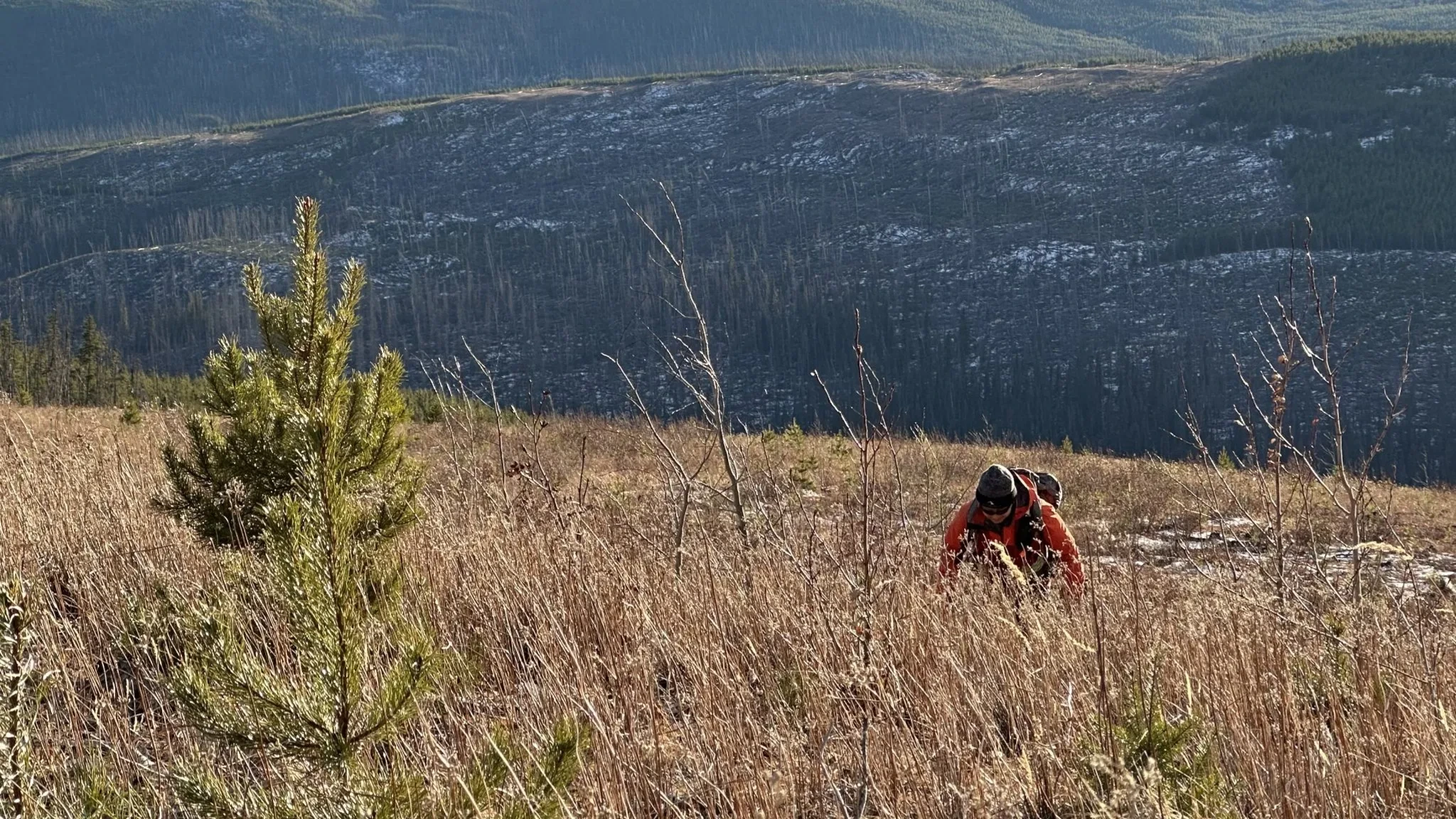
0:30 Hey, Kyle. Yeah, thanks for having me. Obviously, I'm outside. I'm just on the fish pot property right now, checking out the drill program as it progresses. We're doing a quick site visit here. I figured I'd take everybody outdoors with me. I didn't think it would be this cold, but it's just below freezing right now. It's trying to snow, but luckily it's holding off. So yeah, pretty exciting. Well, let me say congratulations on starting the first hole at Lightning. What made Lightning the right zone to start the program?
1:05 We did a lot of extensive drill planning and targeting and reviewing all the data that we had. The Lightning zone always came out as a priority area. This is where we got our 5.65g per tonne Gold sample and hand sample, as well as some of the historical grades from this region. We also had a really convincing resistivity high that followed a long trend of what we were targeting. We started here. Road building to this spot as well was a lot easier. There are some existing roads already there, so it made perfect sense for us to start in this location. We're excited to be here. This program spans 6 zones in roughly 8 to 10 holes.
1:51 How did you decide which targets made the cut for the first round?
1:56 We just looked at everything that looked best. When I do my drill planning, a lot of it starts with geochemistry first. I'm a geochemist at heart. We look at all of the surface sampling and the physical geology. Then we add in the geophysics to really start to narrow down those zones and create compelling targets, looking at things like resistivity anomalies. We're looking for epithermal-style mineralization, which is often associated with these resistivity highs, as well as looking at the magnetics and then also looking at the virtual drill data as well. It's all overlapping. Anywhere where you get overlapping anomalies is a good target. We had several of them. We circled them on the map. We said, this is what we want to target, set up our drill plan based on that, And then move forward. Of course, the property is a lot bigger than the zones that we've identified so far as well.
2:53 So we're really excited for this drill program and for future exploration as well on the property. Why don't you go ahead and elaborate on that. What would tell you that the epithermal system is connected to the porphyry source at depth, if there is 1?
3:07 Yeah, so they typically are associated. It's just a matter of how deep your porphyry is. It could be kilometers down. They could be associated. You could have other things in the region. They tend to be connected. They're all what we call hydrothermal magmatic systems. And so here we're really looking for epithermal alteration on surface and mineralization. But we're keeping a really close eye on large alteration halos that may indicate porphyry that may be associated with the epithermal or might be older or younger. But we're really looking for a propolytic style alteration, chloride, epidode, philic, quartz, Pyrite and Potassic, as well as targeting several of these magnetic high centres, which can often be associated with magnetite within porphyry deposits.
3:59 We're targeting both. Whether or not they're connected, if we do find either, is a good question. That's something that we'll have to tease out through age dating and all of that stuff. But again, we just go where the mineralization is and then we'll figure out why it's there after. Now, it was the 53-line-kilometer 3D IP survey, which played a big role in defining these targets. What really stood out to you most in the chargeability and resistivity data?
4:33 Yeah, so basically we had really good surface data from historical sampling and mapping, but we didn't have a lot of subsurface data. So we knew where on the surface we want to put drill pads, but we didn't know what our azimuth and dips were going to be. That's why we did the 3D IP. We also didn't have a very good handle. We knew that there were several regional faults and structures, so we didn't want to do just a regular conventional 2D IP, because if we laid our lines incorrectly, we might have been going along these faults and things. So what we did is we did a 3D IP and it really came up with some really strong resistivity anomalies, which we targeted, as well as chargeability.
5:21 The chargeability highs in this region, lots of times you associate chargeability with increased Sulphide percents and things, but here we have a fair amount of sediments and some of them are somewhat graphitic. Graphite can cause chargeability anomalies as well. We're a bit more sceptical, but we are very confident in our resistivity highs. That's really what we were targeting from the IP mostly. But on all my drill programs, I always target several anomalies all at once. So we test to see what's causing these things, right? What's causing the resistivity? What's causing the targetability?
5:58 And if it's mineralization, that's great. If it's not, then at least we can filter it down and try to find the true anomalies that are associated with our mineralization. Now, you and I have chatted a couple of times before, and Gold and Access evaluated new technology, virtual drill, Alongside conventional data sets. So how well did it output line up with IP, geochemistry and mapping results? Yeah, so I was actually looking at this last night. So we got the virtual drill results before we got the IP results. So it was somewhat of a blind test. It did line up quite well with our known areas, basically. So we told them, we just gave them an area. We said, We provided an element that we wanted to find, which in this case we said just look for Copper.
6:53 And then it did highlight zones that overlap with the IP resistivity anomalies as well. So it gave us increased confidence. Obviously the drill bit will do the talking and we'll see whether or not these anomalies are true. They also gave us a depth component. So several of our drill holes, as we drilled to depth to target these resistivity and magnetic anomalies, We're also plugging through these virtual drill anomalies that are identified. We'll just see what comes up. If it works, that's great. We can expand it and use it on other parts of the property or on other properties. If it doesn't, we're still drilling down to depth anyways. So we're not losing anything or costing anything extra than we would have. But we're pretty excited and confident at this level that it did work.
7:41 And we'll see what's in the drill core. Now Fishpond is about 65 kilometers from Artemis Gold's Blackwater mine. Which geological similarities to Blackwater give you the most confidence in your property? Yeah, I mean, it's all about the rocks. The rocks look very, very similar. We're within the Hazleton group, volcanics just on top of them, actually turning into the Utsa Lake sediments as well, which is right in that age window where we have blackwater. There's also a lot of alteration similarities. You know, we get a sericite kaolinite alteration on surface. We're getting quartz alteration, silica flooding. We have black dendritic sulfide, similar to what they're seeing there.
8:31 Our grades from the surface grab samples are somewhat similar. All those boxes are ticked.
8:38 We're relatively close. It made the most sense to use that as a way to explore our property and try to understand. Of course, we don't pigeonhole ourselves in theories. We're exploring this as an epithermal and potentially porphyry style deposit. We're looking for all the conventional things as well, but we're also keeping an eye on the sort of unconventionalness of the Blackwater style mineralization to see if it matches. And that will come into play as we get more drill results and as we try to narrow in our targets and things to see if we're getting close to getting something similar and where we need to be going next. For people who joined the call that don't know, Fishpot has only seen about 378m of historical drilling across 2 holes.
9:27 What did that earlier drilling teach you? Did your team learn anything to help you design this program?
9:41 Those drill holes are just over there. They drilled in this on the Lightning Zone originally. They didn't go very deep. They did get some relatively higher, like they got I think 0.6 grams per tonne Gold over a section. They didn't really get beyond the surface sediments. They were in the sedimentary rock package. They didn't plug through into the andesites below. It gave us confidence that there's potentially something there. The first drill hole we did here, we twinned one of the original Phelps Dodge holes, but we just went deeper. It gave us confidence that there was something there. What they intercepted wasn't fantastic. Also, we really only had the gold values for that drill hole. We didn't have any of the multi-element geochemistry or anything like that.
10:35 We really wanted to understand that. All of those assays that we're going to be sending in, we're going to be getting fire assay gold and four-acid ICP-MS multi-element geochemistry. We'll be able to fingerprint these things a lot better. It is nice to see that somebody
10:50 noticed the same things that we were noticing in the past and targeted the same area. But of course, we're going deeper and we're doing a much more extensive program than they did. We've got high hopes that we'll find what they missed. Now you did get some surface rock samples back, which returned up to 5.65 grams per tonne Gold, 11.35 grams per tonne Silver, and 0.42% Copper. How do those surface results shape your expectations for what the drill might hit at depth? All that surface, I really love surface rock data. The surface is a very nice canvas for understanding geology. We're obviously looking for thick intercepts of comparable grade.
11:38 We'll find out whether or not we see that. But it did give us confidence that yes, there is Gold here somewhere. We don't know the volume. We don't know average grades or anything, but it's around here. The mineralization is here. And it also showed that we're looking at a relatively polymetallic style deposit. Obviously, we're targeting the Gold, Silver, Copper, but there could also be Lead, Zinc as well. So that's sort of the grades that we're hunting for. Currently we're looking for a bulk tonnage, lower grade style deposit. But of course, we're not going to turn away high-grade, low-tonnage either.
12:16 I think it was a good example of what mineralization should look like and what ROCs were hosting it. So that's really what helped us with our targeting. Now Golden Access just closed the second tranche of the placement to help fund this program. Which is great because we were just talking before this call and it's been a rough market out there, but you guys closed this with ease, which is nice to see. When do you expect investors will see the first assay results though? Yeah. So yeah, we just closed the second charge. We got $1.25M in the bank, a mix of flow-through and hard dollars. Obviously, a lot of that money is going into this existing program that we're doing now. We're sampling the holes right now. We're obviously drilling right now.
13:04 We're hoping to get results at some point in early to mid-January. Ideally, we get them before VRIC and Roundup in Vancouver. Again, labs are pretty slammed right now, so We're playing that by ear. We're trying to get everything sampled as quickly as we can as the core comes out of the hole and we log it and geotech it and everything. We're targeting that. Of course, We'll keep everybody up to date on how that goes. We're trying to send shipments in as quickly as possible to get them in the queue. The industry is hopping. It's busy times. The labs, a lot of them are getting pretty busy. We're looking at probably 7-8 turnaround times on any lab in at least Western Canada, probably most of Canada at this point.
13:54 It's all on us to get it there as soon as we can. I'd love to close this off with one final question to set investors' expectations. This is truly Greenfield exploration. Looking past the first phase, what would a successful program need to show to justify a larger follow-up campaign at Fishpot?
14:15 Basically, all you really need is hope that there's something nearby that we get good alteration. I think that would be enough for us to keep pushing. Deposits are difficult to find, obviously. Everybody knows that. That's the bare minimum. But of course, having us intercept zones of mineralization and get good results, it's going to make everything easier for everybody. It really reduces our risk and attracts investors and whatnot. So, Bare minimum, a little bit of hope that we're in the right track. Best case scenario, we find something that's truly remarkable. Anywhere in between there, we'll be very happy. I think that this project has a lot to offer and we're excited to really see what comes out of this.
15:06 We'll continue to be drilling here for the next several weeks and hopefully the snow stays off. If it does, that's fine. We'll deal with it. We've got plows and everything. We're all set up and we're operational. We're excited for the results as they come out. Great. Well, Darcy, thank you for taking the time out of your day. I'll let you get back to work there. Thank you again. We're updating the investors out there. Until the next update, we'll chat soon. Thanks, Kyle. Always a pleasure. I'm going to go to the Corssack and sit beside a stove for a little bit. It's a little chilly out here. And look at some good rocks. Excited for it. We're looking forward to the next update. Okay, take care. Thanks again. Take care.