Transcript
Automated transcript · Written by software from the replay's audio. It can mishear names and figures; the replay is the record.
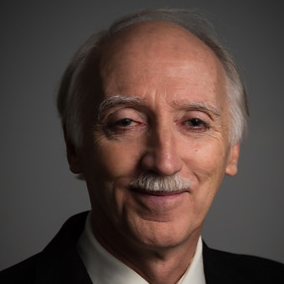
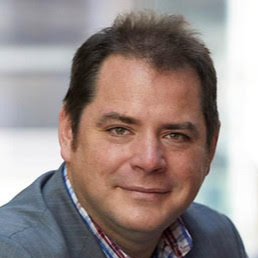
0:07 Hello, everyone, and welcome to the Capital Light live event hosted by 6. I'm pleased to introduce the speakers for today. CEO, Brian Voss. He is an investor with over 30 years of experience in commodities, as well as both private and public equity. Brian has served as a business turnaround specialist for several Canadian investment firms, spent a decade restructuring equity sales and trading departments, as well as proprietary investment divisions. From 2012 to 2016, Brian ran the Goodman Blue Spring Mutual Fund. During 2018 until 2024, Mr. Boss was integral to the very successful restructure of Zenyatta Ventures into both Zentech plus Albany Graphite. And we also have here Director Douglas McCorry. He has over 40 years of experience in the industry and was responsible for the acquisition and discovery of significant gold deposits in Canada and in Ghana, including as former CEO of PMI Gold, the 5 plus million ounce Galliano gold mine in Ghana. Until April 2024, Mr. Macquarie served as Asante Gold founder, president, CEO, and director, which grew to over a billion dollars market value. They'll be discussing the latest news release, covering some upcoming plans for the company, and after that we'll be accepting questions. As a reminder, you can submit your questions in the chat at any point during the presentation.
1:25 As always, this event will be recorded and will be available to watch on six.com shortly afterwards. So without further ado, I'll kick things over to you, Brian, so that we can get started. Great, Max, and thanks very much for arranging this with us. We're pretty excited. So of course, we'll show the disclaimer slide for a second. We are talking about the future. The future is unknowable, but the lawyers have got longer language for that than just what I've said. So let's move on.
1:56 So I want to thank everyone for joining. I certainly want to thank Doug for coming in and making this possible, not only the meeting itself, but everything we've been doing in the months prior to this meeting. And to give the folks in our room here and those watching later on, kind of a clue of to what we're gonna talk about, a table of contents, if you will. We've got bullet points. We'll talk about what's got Doug and I so excited, what's working, what are we working to improve? Where is this? Doug's exploration thesis, Doug's regional anomaly for copper thesis. We'll discuss the assays, which is the most recent press release that came out yesterday morning. And we'll talk about what our next steps are, and then we'll deal with any Q&As that haven't been dealt with along the way.
2:49 Now, Doug and I are operating as a team, so at any moment, I might stop speaking and he'll start, and we'll try and stick to our relative fields of expertise. Doug, any thoughts before we get running? I'd like to mute it. Yeah, thanks, Maxim, for the introduction and Brian, good overview and thanks everybody for attending. Hope we can pass on some of the excitement
3:19 that we feel in the company. It's a great opportunity and we're right at the rock bottom prices, which is always where I like to get into deals. So Look forward to sharing our knowledge. Thanks.
3:35 So as we normally do, these decks will be available afterwards. We try to keep them simple enough with bullet points and anyone can stop with questions at any time. But one of the things that we're super excited about is that we've got an immense amount of prospective land here. And as Doug will I'm sure talk about in a second, this is something that is really large for a company of our small size. And so one of the things that's going to help us in the future is as we prove things up, we're going to be attracting interest from much, much larger companies. So that's a bullet point on its own. The giant regional source of copper, palladium and platinum, and the coefficient in the assay samples. I'll let Doug speak to that first, but I'll tease it for those that haven't read the press release. There was a ground study done in 2015, which will come up here.
4:32 Everywhere that there's nickel, sorry, everywhere there's copper so far we've found nickel. The ratios are different, but there's a rule of thumb for that. We're certainly excited about Quebec, which is in my opinion, the best mining jurisdiction and also the best exploration jurisdiction. So what are we searching for? In round numbers, we've got 5 million tons. We want to find 30 if we can. And there's 2 ways to do that. And we'll cover a lot of that in this conversation. How are we doing it? We've got boots on the ground already. We're going to do geomagnetics and gravity. We'll assay those and we'll drill, repeat the process. This is not a 1 and done. There's a lot of land, so it'll take some time. We're also excited, or I'm personally excited about the prices for copper and nickel and palladium.
5:22 As the economy starts to structurally change at a faster pace than it has before. Doug and I are both big shareholders of the company, we won't be wasting anyone's money. And we're both coming off successes. So I want to just shout out on my half to all the Zen heads and Zenners that are in here from Zentech. Thanks for joining us on this call. And anyone who knows Doug from Asante, Thanks for joining us. Before we leave this slide, Doug, what would you say about the openers I gave you there? Yeah, great, great overview, Brian. You know, just for everybody's knowledge, one thing that wasn't in your CV that was mentioned is that another division of IC is international metals research that IC does.
6:14 So certainly, Brian can speak much more detail about copper markets and critical metals and gold as well.
6:26 So if anybody has any questions on that side, by all means, get them ready for Brian. Yep. Thanks. Okay, so you've just heard all the great things. We're trying to make everything great. So a couple of things we're working on. As you've already heard, Doug and I own a lot of shares.
6:48 I think between Doug, his immediate friends, family, the board, myself, I think we're well over 50% of the share count, which is great because as an outside shareholder, you want to have that alignment. You absolutely have that here. And the flip side to that is of course, not every share is available in the marketplace, which makes trading a little bit more difficult than it would be if you're in something like Bell Canada, just to make a ludicrous reference. So we've picked up a market maker and we're discussing adding additional exchanges for the stock to trade on. I myself always wanna have our companies nice and safely capitalized. So I always want to have cash on hand, which we do right now.
7:38 Doug, as we'll talk about, for those that don't know, is coming off a huge success with Asante. And he lives in Whistler, but Asante is in Ghana, Africa. So I really caught his attention when I said, how about we stay in the same country? We just move you when you need to, to go to Quebec and look at rocks instead of Ghana. So that's good for him, certainly. And IC Capitalite Corp, is that a great name for a resource company or an exploration company? That's a debate for another day, but normally by this time of year, July, we will have had our AGM, but of course a name change and some of the other things that would come with that are something that needs to be voted on by shareholders at an annual and special meeting.
8:23 So our date will just flow probably to later in the year as we hash these things out and call a meeting at that point. Related to that, as Doug said, this company already owns a business that generates cash selling research. If we become a raging success in exploration, that'll be an unexpected thing to have inside of a company. So We will deal with that when the time is right. Other things we're working on, and this will come up in probably subsequent calls as we know more, but the assays show magnesium. And generally, magnesium is a little more difficult to get out rather than just the crush grind float, it would stay in the tailings. But magnesium is now $6,000 a ton. So can we figure out a medialurgical process to go back to our tailings and collect that cash as well? That's something we're working on. And then field work. Field work is expensive. So when we went out in May, we used helicopters.
9:22 If we go out in the winter, it should be cheaper because we can drive out.
9:27 When we went out in May, we stayed in a hotel in town in Sheffield because again, we had to fly. Next time we go out, we're expecting to be camping on the site. And that comes back to, do we spend our time and money exploring or do we spend it commuting back and forth? The same with the headcount. So I'll pause there and turn to Doug. Okay, thanks Brian. Okay, so we're gonna move ahead on the slides, are we?
9:59 Okay, So here's a quick slide shows Northern Quebec and Labrador. And yeah, so the whiting's a bit small. I think if we go to the next slide. Yeah, that's a detail satellite image. In the center lower is Shefferville and the blue ellipsoid up in the top right is the property, that's the Ready Lake area. It's around 65 kilometers as a bird flies. And of course you start in Shefferville, Quebec and you end up in at Blue Lake, Quebec, but in between is a piece of Labrador. So just to get you positioned. That's a quick slide from the adit that was driven on the 5 million ton deposits in roughly the 1980s.
10:54 So that's the stockpile of material from underground. Gives you an idea of the surrounding. So there's not a lot of big trees or anything. It's all being scraped by the glaciers. So the next slide here was the project was originally conceived by a super geologist named Ernie Black, now deceased. His family still has some royalty interests in some of the claims that we own. And also by Ned Goodman and Ernie Black and Ned Goodman went to university together in
11:32 years and years ago, of course Ned went on to be a legend in Canadian mining, billionaire, the biggest discovery being Hemlo. And Ernie and Ned were darn good friends all through it. Ned joined the company in 2016 as our CEO and a director and for a short period of time before he kind of got ill there. But at any rate, see the project is, you know, so the project is centered. And this was a map which Brian actually came up with. I hadn't seen it before. It was some work done in the 2015 or so by the Canadian government. A major regional helicopter and float plane lake sediment sampling program. There were 28,000 odd samples taken and there's a map a little bit later on we'll show you. But the biggest phenomenon, the entire map just happens to be exactly our project area.
12:39 And it's quite phenomenal in that the 200 part per million contour for copper in lake sediments covers 800 square kilometers. And if you think about that for a minute, the amount of copper that that represents is just phenomenal.
13:02 Now of course it was moved around by the glaciers that were going back and forth and raking and pillaging the land 10,000, 20,000 years ago. So it basically scraped the rock, scraped all the soil off and, you know, deposited everything that it scraped in the lakes and the fact that the lake sediments run 200 ppm copper if you extrapolate that back to an in-situ deposit
13:33 well you know the strike length is 80 kilometers long. Yeah, there's just got to be some significant copper deposits somewhere within our land. And as Brian said, this is a multi-year project. We're starting with no 1 copper mineralization, no 1 copper nickel, palladium, platinum mineralization. So it's kind of a unique situation in that
14:08 the land is big, but we already know that the system produces a high grade material that can be mined. And this type of material is being mined in Quebec today in much tougher places than where we are. This type of mineralization is actually very easy to find. It has 3 physical properties that are very distinctive. Number 1, the massive sulfides are very, very good conductors. So electromagnetic techniques can find them. Number 2, they're quite dense. And so gravimetric, you know, if there's a reasonable concentration in 1 spot, gravity surveys can outline them quite easily.
14:57 And they're magnetic, not strongly magnetic, but they are magnetic. And, you know, that, those 3 parameters make their exploration actually quite easy. Our problem is, of course, it's a very large area. Some of it's been flown with airborne surveys. As far as I know, there's been no ground gravity work. So we're gonna have to expand some of the airborne geophysics and we'll certainly get a ground geophysics crew going on some, say 3 or 4 high priority targets that we have. So we can dig into that work in starting August, September of this year. As Brian said earlier, our task is to increase the current 5 million tons of potential mineralization that we've got to expand that to say 25 or 30 million tons, just to make the economic case for development.
16:04 And at the same time, they're, you know, given the widespread occurrence of copper, nickel and PGE mineralization, we feel there's a very good chance somewhere in our 450 square kilometers of claims that are within 800 square kilometers of copper anomalies, But there's a very good chance to find a disseminated,
16:35 a low grade copper, nickel, PGE deposit that may be exploitable by open cut to low cost techniques. So on the screen there, you can see a typical boulder, you know, because of the high iron, because of the high sulfide content, they're quite a bit of iron in them and they're very rusty, so they're quite easy to pick out. The outcrops don't look any different than that. So, and these boulders did not come very far. So the picture on the left is a typical boulder, on right is a picture of Mike Mugridge out doing some sampling on our recent little test program.
17:22 The next slide. Okay, so there on the left, you can see the regional copper anomaly. Again, that heavy contour outlining between green and yellow. That's the 200 parts per million copper contact contour. And you can see down below one of those red dots in sort of the center right, the center right is the current area where the 5 million tons of deposits are located. There's quite a few other targets that have not been drill tested or had any extensive work at all. And the map on the right is that regional Lake Sediment Copper. And again, that big red dot just off the center is centered on our 900 and whatever the 900 plus claims that we've now, that we now own.
18:15 So quite, quite spectacular. There's a detail that shows some of the showings that have been developed
18:27 by IC and previously it was known as Rockland Minerals. Rockland did a lot of good work. They did a lot of regional sampling. And so there are some of the showings. All of these have got copper, nickel, platinum, palladium mineralization. And that red rhombus in the middle is the area where there's 4 or 5 pods that add up to the 5 million tons. You can see the slightly purple colored rocks. This is a satellite image. Those would be the ultramafic sills. So they actually show up quite well, the geology, the folding, some of the faulting shows up quite well. Again, that's because the glaciers just cleaned everything off and making it a pretty easy part of the world to explore.
19:23 So next slide.
19:27 Okay, I'll pass this on to Brian. Thank you. Sure. Yeah, as any fan of mining or any critic of mining will both tell you, finding something fantastic is great, but if it's in the middle of nowhere or it's in the middle of a national park or it's somewhere you can't build, then it's a really great academic exercise, but it's not an economic one. So on this slide, I just want to spend a few seconds talking about what's already in the region. So open pit mining has been running in this region since the 1950s. In fact, the town of Shefferville was built to support iron mining via open pit in the 1950s and 40s and that mine closed in the 1980s, reopened about a decade ago, And that mine is not only helped by the town, but it's served by
20:23 rail, which goes from the town all the way down to an Atlantic port in Quebec called Sept-Diel. And so the infrastructure for the neighborhood we're in is just fantastic for a project like this. And then electricity, which of course will help us run the mine, but also run whatever metallurgical systems are going to be built later on or concurrent to make production. Cheap power is always important. And there is a hydroelectric dam, again, built in the 1950s to support the mine that has 4 turbine spots in it. Only 3 were ever installed. The third one is twice the power of the first 2. So there's lots of chances if we find something that's economic and we can go to the, we can go to the power grid and say, we want to draw this power and we'll help you upgrade everything. That might actually be a fantastic economic event for us later on, because we'll be able to sell a more concentrated product than shipping less concentrated ore, which would cost money.
21:30 And the region, the regional governments are also interested in mining. And I cite that last bullet point there, there's a CBC News report from a couple of years back, where Nalcor, which is the Newfoundland and Labrador
21:44 company that I think owns the electric dam or hydroelectric dam was willing to pitch in to help build a hydro line from the dam to an existing line. So there you go. And there's a satellite photo of the dam. You can see they've got 2 chutes open at the time and the rail line actually goes right across the top of the dam. So
22:09 there we go. And I think we're trying to get everybody out of here at 2.30 or thereabouts. So I'll just speed up a little bit. Again, more photos. There's the train on the left side, the town site, some more of the town site, and of course the... All right, here we go. Thank you, Maxim. I know you're moving the slides for us. Let's go to that, let's go to that assay result. Cause I think that's what people really want to hear about. And it's time to hand the microphone back to Doug. Yeah, okay. So look, yeah, this is on the news release that came out a couple of days ago. So basically we did a very quick assessment,
22:53 some assessment work to keep some claims in good standing. That was Brian and my first trip to the property. So we get a good lay of the land. Brought a couple of geologists along with us. And bottom line is we've confirmed, you know, everything that we expected from the past reports. Took a few samples of massive sulfides from the added area. They came back with, well, 1 assay up to 7% copper, but whatever, it just confirming
23:24 the high copper and nickel content platinum of these rocks. But we also found significant copper, nickel, platinum, palladium in just random hitting of boulders on 7 or 8 or 10 spots that we landed. That just reinforced our thesis that we had to expand the property by some 700 claims, which we've now done. And we wanna get, as Brian says, boots on the ground in a few weeks program to operate, say through August, September, to confirm if certain sections of this, let's call it pregnant, is that a good word to use?
24:14 Ultramafic sil, if we can find places where the copper and metal values increase above the average, well, that's called an ore body. If the numbers work out and sufficient tonnages, et cetera, et cetera. So the first phase will be to see if we can localize areas of disseminated mineralization with significant metal content. At the same time we have 3 distinct targets, areas all ready to find more the massive sulfides, and we'll be getting a gravity meter in there. Gravity is a wonderful technique. It looks down a kilometer or 2 quite easily, again depending on the size of the body.
25:07 If it's a small body, well who wants to find it anyways? But if it's a big body, the gravity will outline it and a very, very quick ground EM and per person could get in there with a drill pretty quick. So basically let's get our next phase of sampling done, reporting in say October, November, and then let's get into, get into a obviously is gonna have to raise some more money somewhere in here, but I'll leave that to Brian to talk about. And yeah, get into perhaps some drill holes and further work in 2025. Thanks Doug. Before we go to the sampling trip photos, let's run back 1 maximum.
25:55 We call this a land grab and I guess we should explain why. Once we figured out the regional Copper anomaly and we got the results back showing the mineralization of our May sampling trip, which showed that it's very widespread. We wanted to lock up all the land we could before doing this next step, which is reporting it as our asset results. So we have locked it up, as Doug said, we staked another, I think, 702 claims. And now those are the claims we want to go out and do work on. And then to translate a little bit from the geo speak, there's 2 ways to win here. We already know we have high grade 5 million tons. If we can find 2345, or whatever it's gonna take to get from 5 to whatever number is economic of high grade, we win.
26:46 If we find low grade but it's big and it's near surface we also win. So that's the main point I want to put across. Okay Maxon can you move us again? Thanks. So on the left side here This is an aerial shot from the helicopter in May. There's an abandoned or not abandoned, out of date, no one has stayed there in a very long time, fish hunt camp. We landed there. We're gonna try and make that our base of operations. So we're not staying in hotels, commuting back and forth from Shefferville. We'll be roughing it for sure. And on the right-hand side, I've included this because it's a photo that Doug refers to as Rosetta Stone. So with the time dwindling down, what can you tell us about what you see here, Doug? So real quick, this is a sample of the ultramafic intrusion locally called a sill.
27:40 The top part of the rock, the greeny gray rock, it's got disseminated sulfides in it. That would be your low grade kind of target. And then you'll see a fairly sharp line where it suddenly turns into massive sulfides with a few lines, streaks that show some of the ultramafic within the massive sulfides. So there's your 2 targets in 1 rock and you can see that they're intimately associated. We have to do some work to find out exactly what parts of this regional metaliferous pyroxenite, mafic material, precipitates this high-grade massive sulfides.
28:31 And we know what happens, and here's a random boulder away from the main mining area that we just smacked on this rock and here we are. So how much more of this is out there? How many more massive sulfide targets are there to find? So that's the question that's in my mind. And I think given the area we've got and given the ease by which these type of rocks can be found with geophysics, it's just a matter of time until we're biting into something significant. Wonderful. So next step, like I said, land grabs over, we've grabbed everything that we thought was worth grabbing.
29:20 It's time to get people out there. We're planning on something August and September and we'll be thinking several steps ahead, including metallurgy. And then we're going to go into the database that we have and try to reprocess with today's software, some of the aeromagnetic that was flown in previous years and see if we can't learn things from that as we apply new math to what we've learned. Maxim, can you take us to the next one? 0, good. So we thought we'd do this in half an hour. We're pretty much bang on, which is nice. And I haven't seen whether there have been questions in the chat as we went. Yeah, well, while we wait for some questions, I did have a couple here I wanted to personally ask. So can you compare any prior results or previous exploration from Blue Lake, how it compares to the current assays that you have.
30:21 Yeah, basically, the small sampling program we did just confirmed the previous work. That's it. Yeah. And then in terms of upcoming catalysts for investors, what should people be looking forward to in the next coming months, the coming year, that sort of thing? Yeah, I would say it's getting out. Well, it's basically that all the results, if you go back a slide to the next steps, that is what we're waiting on as shareholders. So we need to get all those things done, find out the results, get them reported and hopefully be celebrating the results. Perfect. Awesome. If you do have any more questions, if anyone has questions, feel free to send them in after the event.
31:13 But in the meantime, we'll leave you with this. Maybe I'll pass things back over to you for any kind of closing remarks you'd like to make about this. Yeah, just to say that Doug and I are both super excited. We've waited a long time to both be available. I mean, He's been building a fantastic company for a long time and now he's available to us. I'm available. The project is ready. The Copper prices are better than where they were for a long time. And for those of you who have been reading our press releases over the last couple of years, for a long time, the exploration area that we're going to be working, or that we worked in in May, was in a different company than the high-grade 5Mt.
31:59 And It was just in May of 2023, we managed to put everything together as a consolidation. So here we are a year and a bit later, and we've advanced a lot already, and we're really excited about moving from the walking stage to the running stage. Excellent. And Douglas, any closing remarks on your end? Yeah, no, I just agree with Brian. It's just, you know, I think there's a time for every investment. And in the mid 2015, 2016, you know, Rockland IC, the Nickel market had collapsed, etc, etc. Then, of course, you had Covid. Well, here we are, 2024. There's a huge worldwide demand for Copper. There are huge incentives to work and explore in Canada, Quebec in particular.
32:51 And we've got this spectacular regional Copper target with already outlined hotspots. I mean, it's just the perfect exploration play. Excellent. Well, thank you both for taking us through these updates here. Very exciting here. And I'm looking forward to having the recording up here for people to watch on demand in the coming year or so. So thanks again to everyone for participating and I hope you all have a great rest of your day.