Automated transcript · Written by software from the replay's audio. It can mishear names and figures; the replay is the record.
0:32 Thank you, Kyle. Nice to be here once again, and welcome to all the viewers that are out there today. Happy holidays for, we don't talk or see each other in the meantime, but I'd like to just go through quickly a presentation that gets people up to speed on what we've done, what we plan to do. It also has enough content there to fulfill those people that haven't heard the story before. So happy to expound on that a little bit more as we go through. And obviously, if there are any questions about the expiration or our plans or financing, happy to answer those at the end. So please submit your questions in the chat box. So we'll start here now. I hope everybody can see the the Cascade Copper presentation.
1:24 We're focused on exploration in Canada and in particular British Columbia and Ontario copper exploration and we'll go through some of the projects we have shortly, but I'd like to just let you know that there will be some forward-looking statements keep that in mind as we go through. Now this is a review and a forecast. So the review, I just put down a few items here that are sort of highlights of what we've done in the last year. And we've done exploration on the ground, done in 2 of our projects, 2 of our key projects, 1 at Centerfire, 1 at Copper Plateau. And we'll talk about some of those results as we go through. We raised funds during the year, surprisingly. We were able to do that, which is good.
2:13 We started our permitting at Rogers Creek, and I'd say that, you know, it's like 99% there. We've struggled a bit with getting the government to get that done in a correct period of time, but it looks like it is coming through. We also started permitting for our Ontario project, CentreFire. We've kept all our projects in good standing. We were able to, you know, fulfill all the assessment obligations and option agreements. So that's good. And regarding the option agreements, we were able to renegotiate 3 of them with the first year anniversary payments. We've cut back on the cash commitments and issued some shares instead. So that was good for us to keep the cash in the bank.
3:03 And the 2025 forecast. So our plan is to drill. And it's always been to drill. This year was a bit of a challenge, but we plan to have everything in place and ready to go in the first half of 2025. And that will include Rogers Creek. And that's in BC and Centrefire in Ontario. We plan to raise some flow-through funds, and we're working on that right now. That will probably be completed by the end of 2024 to allow us exploration in 2025. And our plan also in 2025 is to bring 2 of the projects, our Copper Plateau and Bendor projects up to the drill ready stage and we'll work on Centerfire as well.
3:48 It's probably the least work done in the past and the most to be done before we drill there. So we'll look at some of those targets as we go through this. I guess number 1, I have to let people know that we are a relatively new company. We started in April of last year in 2023. Currently, we've only got 35 million shares outstanding. And it's a great opportunity to enter and get involved with the company at this early stage, either through retail buying or through a private placement. And we can talk about that a little bit later. Not too many options or warrants outstanding. Full market cap with dilution is 53 million shares and insider ownership is about 23%.
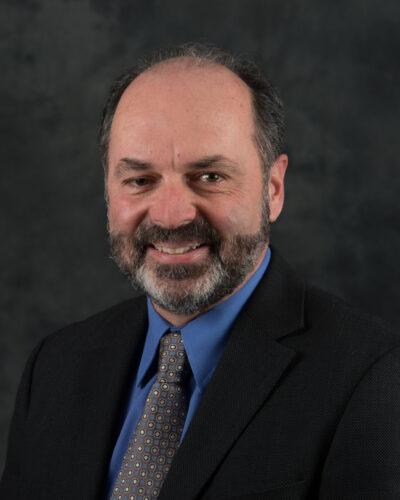
4:39 Our team, our team, myself, Shannon, we're sort of the guts of the team here. We're doing all the work on the ground and in the back office. With Shannon, he's been involved in exploration for almost 20 years now and cut his teeth in Sudbury and has worked also in Peru and in the Caribbean and British Columbia quite a bit in BC. Yannica is our CFO, she works for a few other companies, so we share her services, keeps the overhead down a bit and our director team of Darcy, Alison and Sam all contribute quite a bit to our success. And myself, I've been involved in the mining industry for probably 35 years now.
5:27 Started as a geologist on Ontario, worked through BC and Quebec and then off into Africa. Spent quite a number of years in Africa and had some great success there in gold exploration and development. So that's our team. Our focus really, when we look at exploration, we say, okay, what are the 3 items that we really have to focus on to make a successful company? And 1, the top is obviously the jurisdiction. Where are we exploring for? Where are we spending our money? Do we have a tenure on our projects? And we've said, Canada is a great place for that. BC and Ontario are fantastic jurisdictions. And the other thing about being in Canada is that capital raising these days is a challenge, obviously, and having access to flow-through shares certainly helps it. Commodity, the fundamentals for copper are fantastic, and we see copper being the metal to have and to be involved in for decades going forward.
6:30 All of our projects also have other metals associated, including copper, silver, and molybdenum. And the geology obviously is important, and we've chosen areas within those jurisdictions that have and have had very good indications of copper and gold, but existing mines and so on. So all important things to keep in mind. Now let's get onto the projects. 5 projects in total, 4 in British Columbia, 1 in Ontario. The 4 projects in BC are 3 of them are copper porphyry systems. And we've chosen copper porphyry as a target because of where we see the economy of scale being important.
7:16 Copper grades have dropped worldwide. So we're looking at big tonnage and medium to low grade copper systems and a copper pore freezer are the place to be in that respect. Bendor Mountain is a gold project and it's located in, we'll look at some more details in a second, located in a belt in a camp that has had quite a bit of gold discovery and production. And Centrefire in Ontario, it's a bit of a different mark target. It's a VMS, Volcanogenic Massive Sulfide. Usually these are higher grade, lower tonnage, and the area in that Northwestern part of Ontario is known for those types of deposits.
8:03 So we feel that we're in the great, the best location for these types of deposits. Moving on, let's get a little bit more detail on some of the areas that we're looking at. Fire Mountain, Rogers Creek and Bendor and Copper Plateau, all in the central to Western part of British Columbia, all in an area where there's been some great discoveries and great production. For instance, Tex Highland Valley Copper, you can see over here, over a billion tonnes. Copper Mountain nearby, the Copper Plateau project, over a billion tonnes of resource. Glacier Peak and Margaret, both below the border in the US and in Washington State, very large deposits.
8:49 And Taseko, obviously, up to the North with another billion ton deposit. So as I said, really big, big deposits and the grades are anywhere from 0.24% up to 0.4% Copper. So this is the target area that we're looking at. So Rogers Creek, I think most people have seen this before, but we'll go through it just quickly, just to be sure that everybody understands the benefits of the project area, why we like it so much. And number 1 is access. We can drive right to the site. We can take our drills right to the site, put them on the pad and start drilling right away. No need for any kind of helicopter remote access at all. Roads are fantastic, water, power nearby.
9:37 Target area, we're focusing on what we call target area 1, which is a mag low alteration associated with a porphyry system. You can see there's a high mag around the outside that's associated with perhaps alteration, mag alteration and maybe some scarification, but our target is target 1. Target 2 and target 3 are less a priority And if we have success at target 1 with our drilling, we'll move on to that. This is a cross-section that shows our model for the mineralization at Rogers Creek. And you can see on surface, we've had some excellent numbers of gold, copper and silver. Previous drilling that was done, we'll get into this a little bit later, but previous drilling was done before a lot of the geophysics and modeling that we have done has was done before. And they drilled on these ancillary areas, looking to go underneath what they saw on surface, but they didn't go deep enough and didn't go in the right spot. And I'll show you why in a second.
10:43 Surface work has been done. We've got all the ingredients for a good targeting for our drilling in 2025. Alteration mapping, soil geochemistry, everything is there. We're just a matter of getting the drills on the ground. This is a cutaway view of the mountain that shows the chargeability anomalies inside the mountain that we are targeting for the 2025 drilling. Magnetic lows, chargeability highs, resistivity highs as well. All ingredients that we're looking for for a successful drilling program. And then this is really the, it's a 3D rendition of the targets that we're after. And the red areas are the chargeability anomalies that we are associated with the Sulphide components of the Port Free system.
11:35 And the Sulphide components will be more than likely Pyrite, Chalcopyrite and hopefully, fingers crossed, some Boronite in there as well. So these are the 2 drill targets we're after in the 2025 zone. Copper Plateau, it's another interesting project and it's one that we picked up late last year, but just about a year ago, and sort of a sleeping giant as far as we're concerned. It's the location is fantastic. It's near Kodiak Copper's project area, just near Copper Mountain, which is Hud Bay's production mine. Brenda Copper mine, which is just further to the north, less than 20km away, was a production situation. It's closed down now, but we're definitely in the right spot. It's a porphyry system.
12:23 We've done some modelling on it. We have not done any drilling. We've just basically taken all the historic work, put it together, modelled it in 3D and come up with some good looking areas. However, we're not ready to drill here. This is one that we need to do a little bit more groundwork and spend some time on in 2025. But you can see there's a cohesive IP anomaly. These are drill holes with traces showing areas that had over 500ppm Copper in the drill holes. So very, very anomalous. And I'll show you a chart here that with the historic drilling, there's some fantastic Copper numbers and Copper equivalencies, some of them well over 2% Copper, not over huge distances, but in that package that has consistent Copper mineralization, we're hitting some very, very high-grade numbers. And maybe I'll draw your attention as well to the molybdenum components that we have there. So very good moly content, very good copper content and some auxiliary gold and silver as well.
13:31 Targeting again with 3D modeling and we're almost ready to go here. Geochemistry on the ground shows some fantastic copper and soils. And the area that has been focused on in the past is only this small area down in the southwest corner. As you can see, there's at least 2 other areas that have not been followed up with, and this is something that we want to do in 2025. And if we can come up with some drill targets there, that would be fantastic. Copper Plateau still looking at some rock samples, moly, copper, some boronite, calcite, some fantastic looking rocks on surface. So we know it does come to surface. Alteration mapping that shows the porphyry alteration halos that we're looking for. So again, all the right ingredients at Copper Plateau.
14:22 Now I'll take a break here, just a quick drink, and then we'll go on to Fire Mountain. As I said, we've got fantastic projects and I could probably talk all day about most of these, but Fire Mountain is probably the one that hasn't seen as much work. It's a new discovery. It's near Rogers Creek and it has a lot of porphyry, copper and silver gold indications, even some molly off to the side. So you can see the location here of Fire Mountain just below Rogers Creek in the same belt. Geology is right, there's structures, there's intrusives, there's alteration, all the right ingredients. This is a little bit too much to read, but I think what we'll do is go and look at the map here that shows some of the highlights of the areas.
15:14 And you can see mineralization at our key target area at this point is called Inferno, the Inferno zone, 4% Copper up to 65g per tonne Gold, 15g per tonne Silver and 15g per tonne Gold. So this has been the focus of our work in the past, but we see lots of potential along strike. And this is basically along the contact of the Rogers Creek Intrusive, which is off to the northeast here. So the southwest corner is really what we're looking at. There are other areas, the money spinner zone, which was a turn of the century, previous century discovery, more of a epithermal style, high grade gold and silver, and many other targets in the area.
16:02 This is a detail now on the Inferno Zone. We're looking at that, looking to the southwest here, and you can see that the alteration, there's a slight magnetic increase in this area that is probably from a magnetite influx from the intrusion itself. There probably is a bit of scarification in this contact area, but some numbers that we're seeing here are fantastic copper, silver and gold in this area. This is the manifestation on the surface. It's a shear zone that's related to the contact. Fantastic countryside in the area, not a lot of cover. So we can get in there and do quite a bit of mapping and sampling easily done. These are some numbers in the Copper values, the higher and larger, the hotter numbers and dots are equal to the higher values, so over 10,000 ppm Copper.
16:56 This is the style of veining we're seeing there, which is fantastic for copper porphyry systems. These stacked veins with alteration halos are important. We're getting fantastic looking grab samples on surface. Like I said, the Inferno Zone has been our focus, so we're getting up to 2% copper. So needless to say, Fire Mountain is on the top of our list for bringing up to the journal ready stage. Centerfire this is now in Ontario, we're looking at the VMS style deposit in Ontario, and it's in a belt of known mineralization, There's lots of gold, lots of VMS systems over a little bit further to the east. But this area is really heating up with treasury metals, dryden, gold, heritage mining. There's quite a number of companies, Canor Land especially, are having some good success. So I think the location here is fantastic.
17:53 We're focused on the VMS style stuff, but you can see that the surface alteration there, gossamness, rusty and very rich in minerals here, including copper and gold. So some great numbers there, 2 and a half percent copper, 1 and a half percent copper in a couple of the samples. So All very good. We were able to get on the ground and do some some trench sampling earlier this year, came up with some great numbers and what it really tells us here is that it's not one horizon at Centerfire, It's a multiple horizons and it's over a very wide width so the idea of building tons here with decent grades is really a viable target.
18:42 Not only have we worked on an option from a vendor here on this area, but we've staked our own ground further along strike, and it shows that we have the same similar looking structures and conductors and VMS systems that are extending over 4 kilometers or more
26:47 Yeah, well, it is a little bit of a moving target because the permitting has been a bit of a detriment for us. I mean, Number 1, we wanted to drill that to Rogers Creek in 2024. So what we did is we tried to advance our Ontario projects a little bit quicker so that we could jump into that one if we had to. At this point now, it looks like both of them will be ready in 2025. So, best laid plans of men, mice and men. But anyway, I think the priority for us, all other things aside, is really how advanced have we got each of the projects?
27:34 How much information do we have? How much confidence do we have in the targets that we've developed? And I would say that that still is the driver for us is the confidence. We don't want to just go and drill on something on a gut feeling or because, you know, maybe the flavor of the month is more VMS than porphyry or something like that. So we still are focused on using the money properly at the right targets with the ones that we're most confident in. And that still remains to be Rogers Creek and on Centerfire. So with Rogers Creek, the historical drilling only caught the periphery of this target 1.
28:21 For this upcoming drill program, are you considering just 1 pad to start and drill from a few different spots? Yeah, I think our targeting now is 3 holes. And it'll be from 2 different, 2 different areas, 2 different pads. And you mentioned the the previous drilling, and I did touch on it briefly in the presentation. The previous drilling was done back in 2011. So that's what, 12, 13 years ago. And it was done before they had a lot of information. It was a different operator and They had some flow through money and they had what they felt was decent targets. And they did hit some some good indications like long intersections of gold mineralization of a gram, just over a gram of like, I think it was 100 meters of 1 gram gold, which is like today, that's pretty good. But they didn't tie into the core part of the porphyry system.
29:25 And so it was a benefit to see what they had done before. And We actually did the, as I mentioned, the hyperspectral analysis alteration within some of that old core. We still have that available to us. So that's really helped us vector in on where the targets would be. And that alteration mapping, plus our inversion of the geophysics has really said, yes, this is the core and this is where we want to drill. So 3 holes potentially from 2 pads. And if we get the success that we expect, then obviously there'll be more drilling in 2025 and we'll focus on that success for sure. Excellent. Well, Jeff, we appreciate the market update.
30:11 Thank you for doing this presentation and addressing these questions. Are there any closing remarks from you before we close things off here for today? Yeah, I think, you know, we always want to be optimistic in our business. And I think we have to be optimistic that the capital markets will be a bit more generous in 2025 and I've seen signs that that is going to be the case. We look forward to the, we call it the convention season in early 2025. We'll be at the Prospectors and Developers Convention at Toronto in March. So invite your listeners and our shareholders and potential shareholders to come and join us and come and see us at the PDAC at the Investors Exchange.
31:00 We'll put out a press release when it gets closer to remind people of that. And I think, you know, the bottom line is that we do have a great portfolio of projects here. I think they're all well worthy of drilling and progressing to a higher level, to a resource stage. And I would just like to say, why don't our potential shareholders come and join us for the ride? Get involved now. Share price is low, our market cap is low, our share structure is low. It's a great opportunity to get involved in Cascade Copper.