Sonova Holding AG · SIX:SOON
Sonova — Investor Day (2016)
39 slides from Sonova's investor day presentation, 2016
Slide 1: Clinical Experience with the new AB Naída Bimodal System
Clinical Experience with the new AB Naída Bimodal System Prof. Andreas Büchner
Slide 2: Overview
Overview • Introduction of the department of otorhinolaryngology at Hannover Medical School • Recent advances in Cochlear Implant provision • Bimodal Hearing: Combined use of Hearing Aids and Cochlear Implants • Naída Bimodal Hearing Solution • Bimodal fitting formula • Binaural VoiceStream Technolo
Slide 3: The Department of Otorhinolaryngology at Hannover Medical School
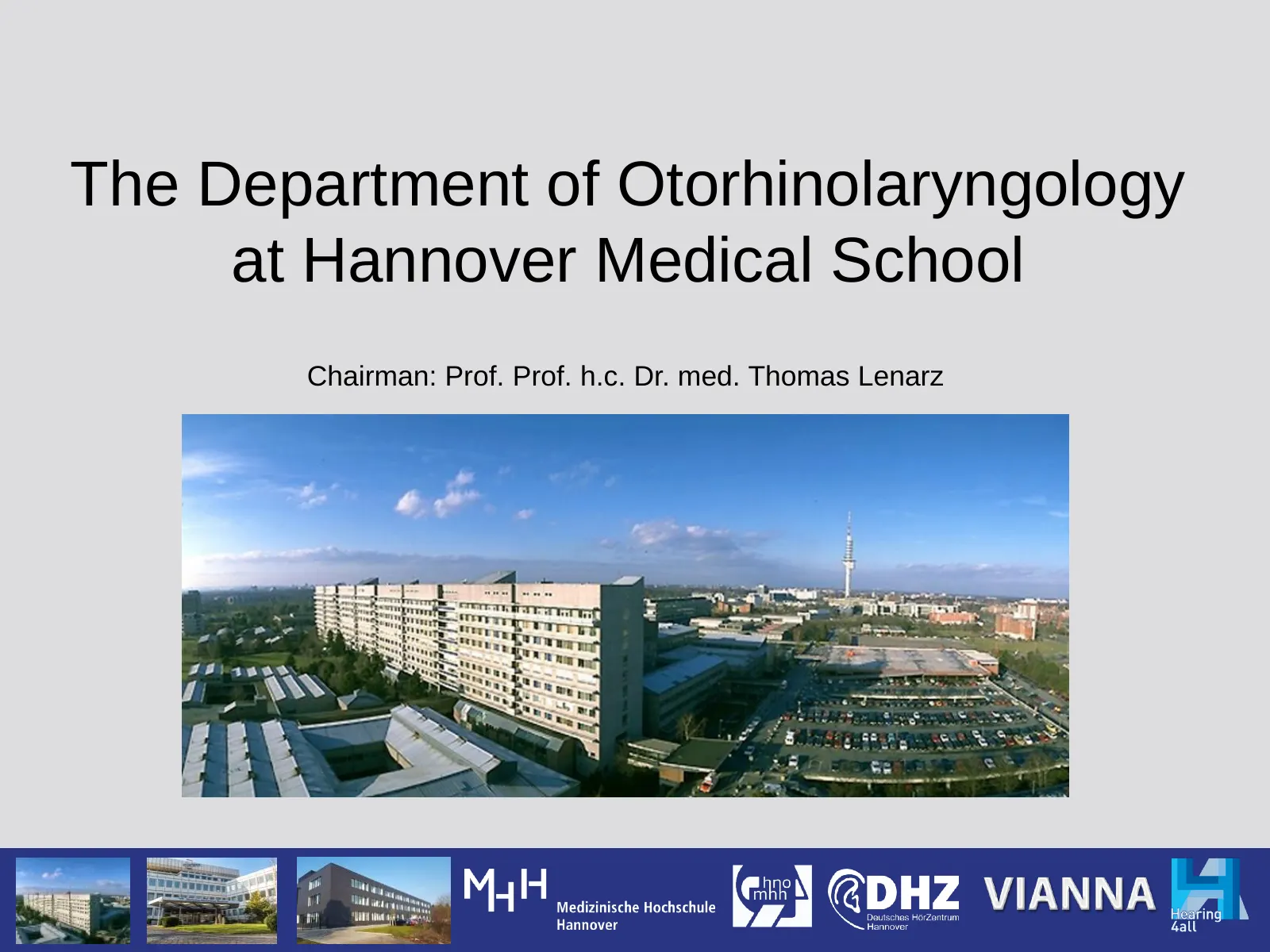
The Department of Otorhinolaryngology at Hannover Medical School Chairman: Prof. Prof. h.c. Dr. med. Thomas Lenarz
Slide 4: Otorhinolaryngology at Hannover Medical School
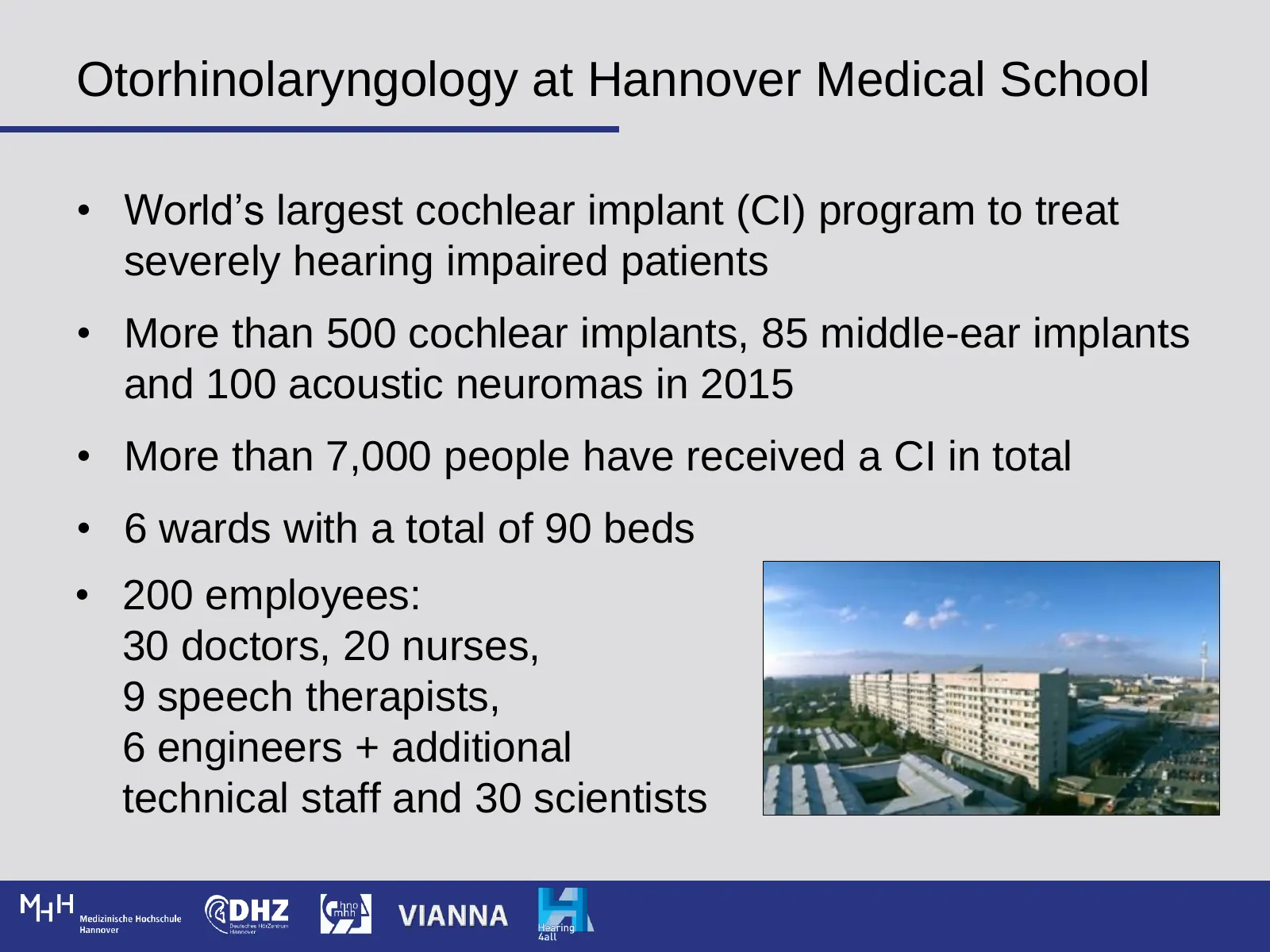
Otorhinolaryngology at Hannover Medical School • World’s largest cochlear implant (CI) program to treat severely hearing impaired patients • More than 500 cochlear implants, 85 middle-ear implants and 100 acoustic neuromas in 2015 • More than 7,000 people have received a CI in total • 6 wards with a
Slide 5: German Hearing Center (DHZ)
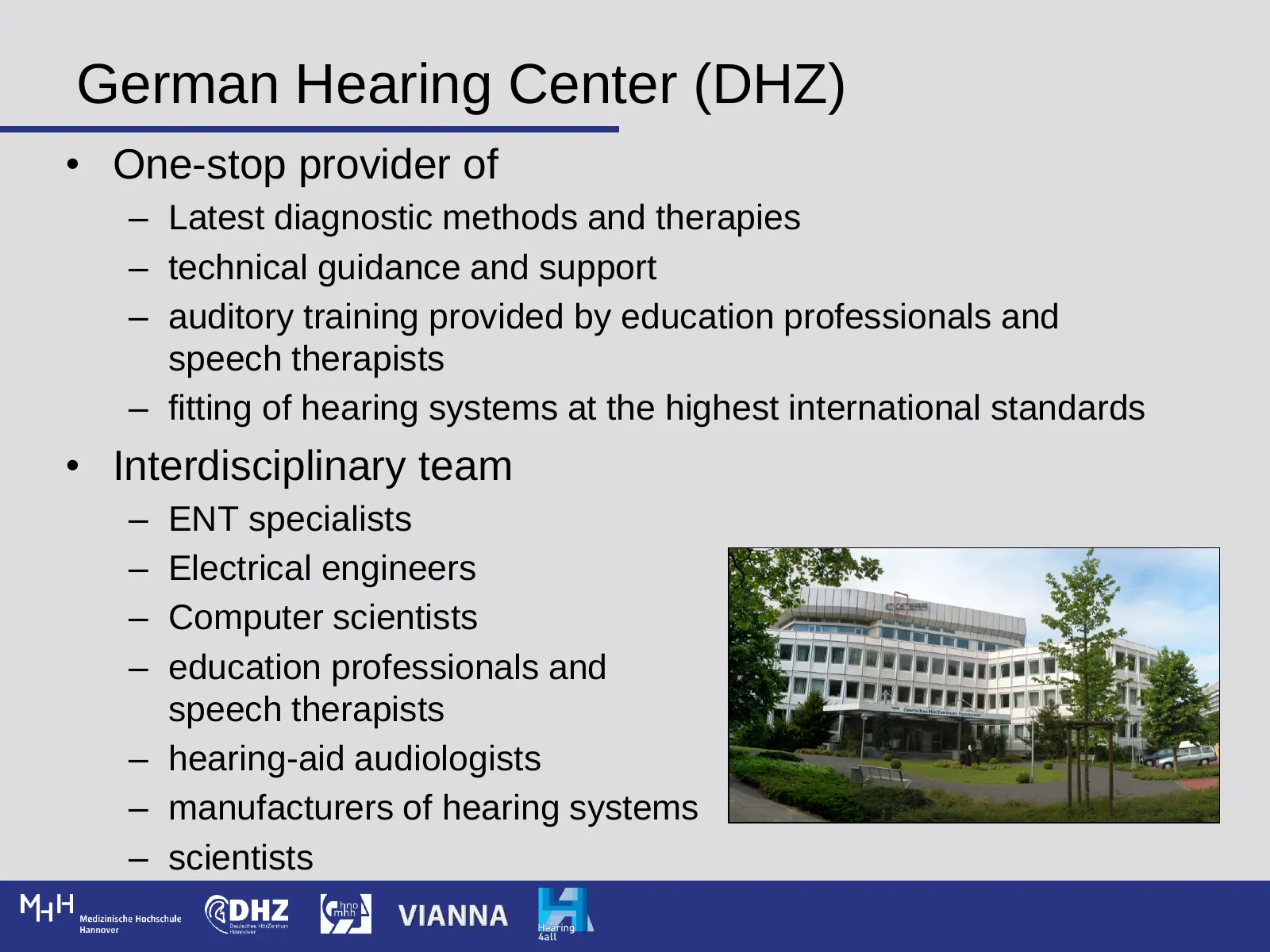
German Hearing Center (DHZ) • One-stop provider of – Latest diagnostic methods and therapies – technical guidance and support – auditory training provided by education professionals and speech therapists – fitting of hearing systems at the highest international standards • Interdisciplinary team – E
Slide 6: Recent advances in cochlear implant provision
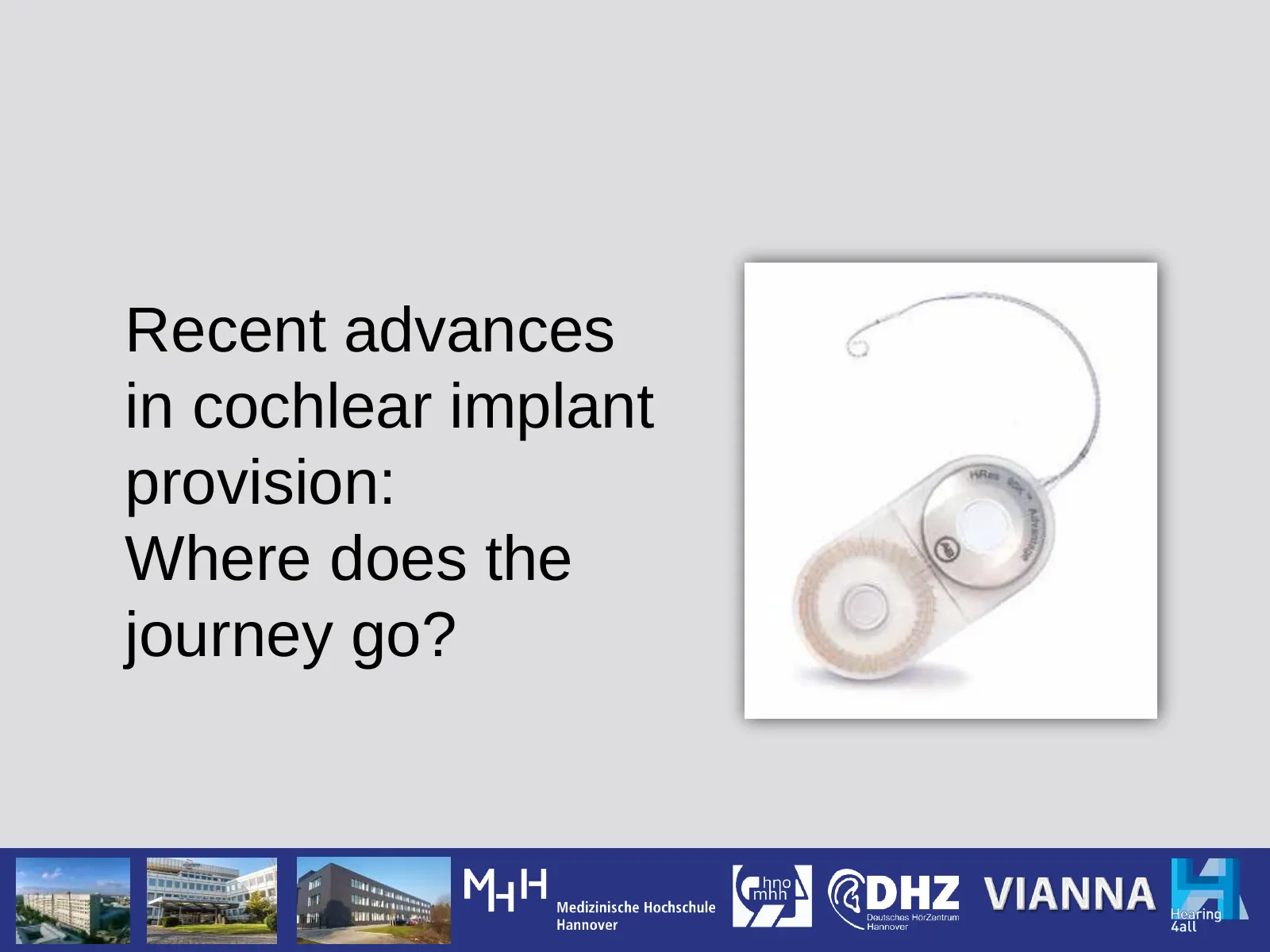
Recent advances in cochlear implant provision: Where does the journey go?
Slide 7: Normal Hearing
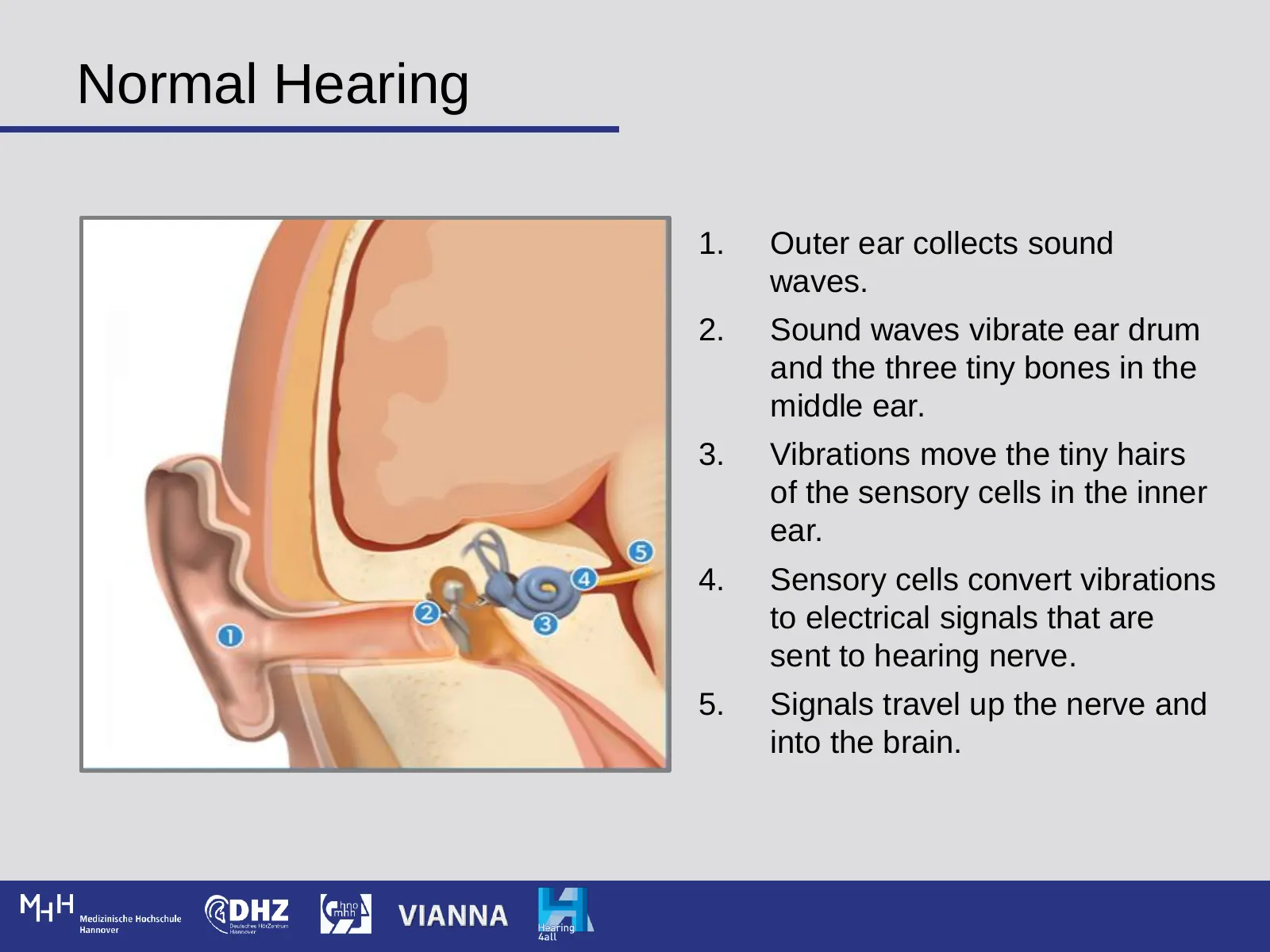
Normal Hearing 1. Outer ear collects sound waves. 2. Sound waves vibrate ear drum and the three tiny bones in the middle ear. 3. Vibrations move the tiny hairs of the sensory cells in the inner ear. 4. Sensory cells convert vibrations to electrical signals that are sent to hearing nerve. 5. Signals
Slide 8: Cochlear Implant
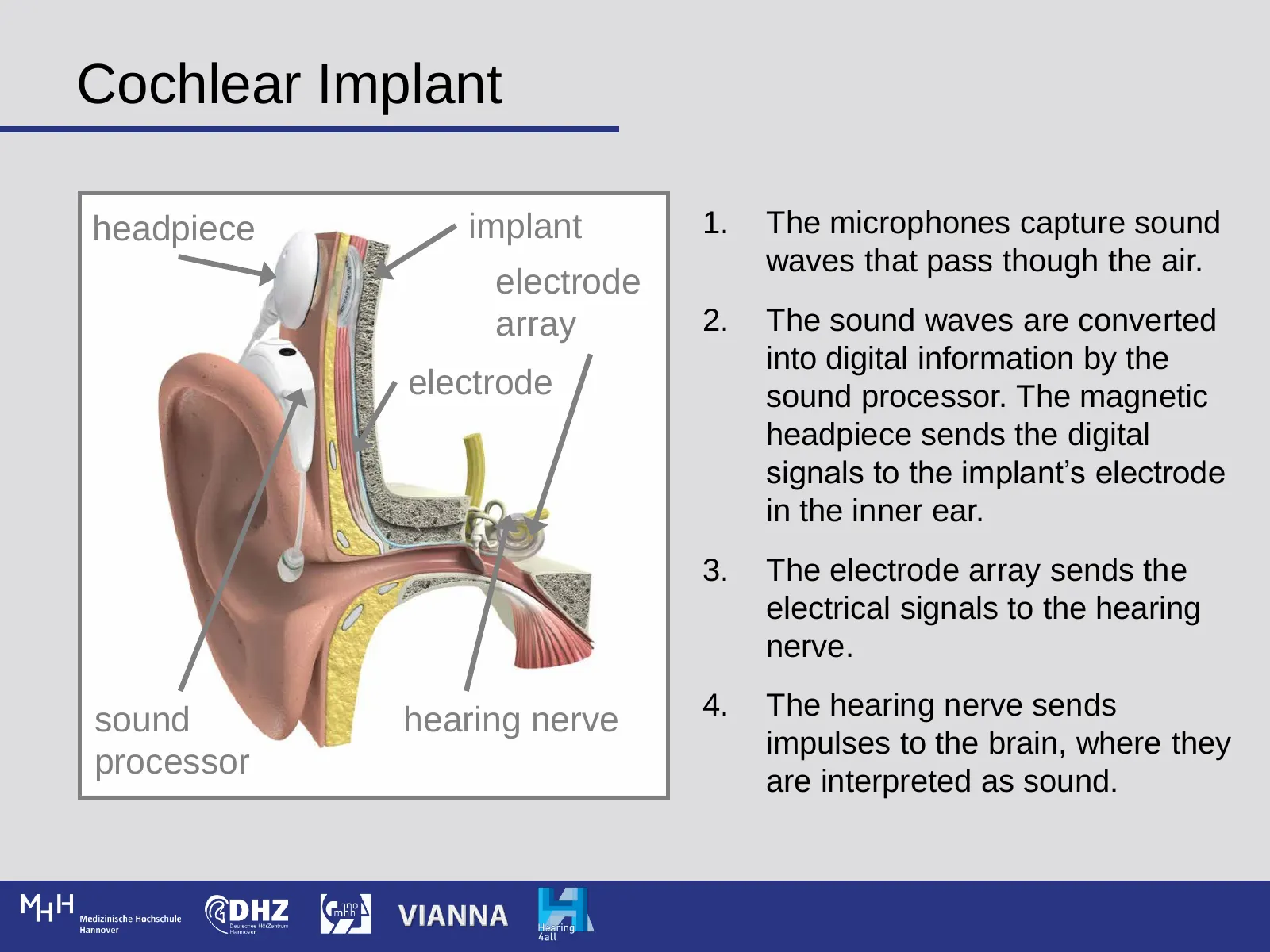
Cochlear Implant headpiece implant 1. The microphones capture sound waves that pass though the air. electrode array 2. The sound waves are converted into digital information by the electrode sound processor. The magnetic headpiece sends the digital signals to the implant’s electrode in the inner ear
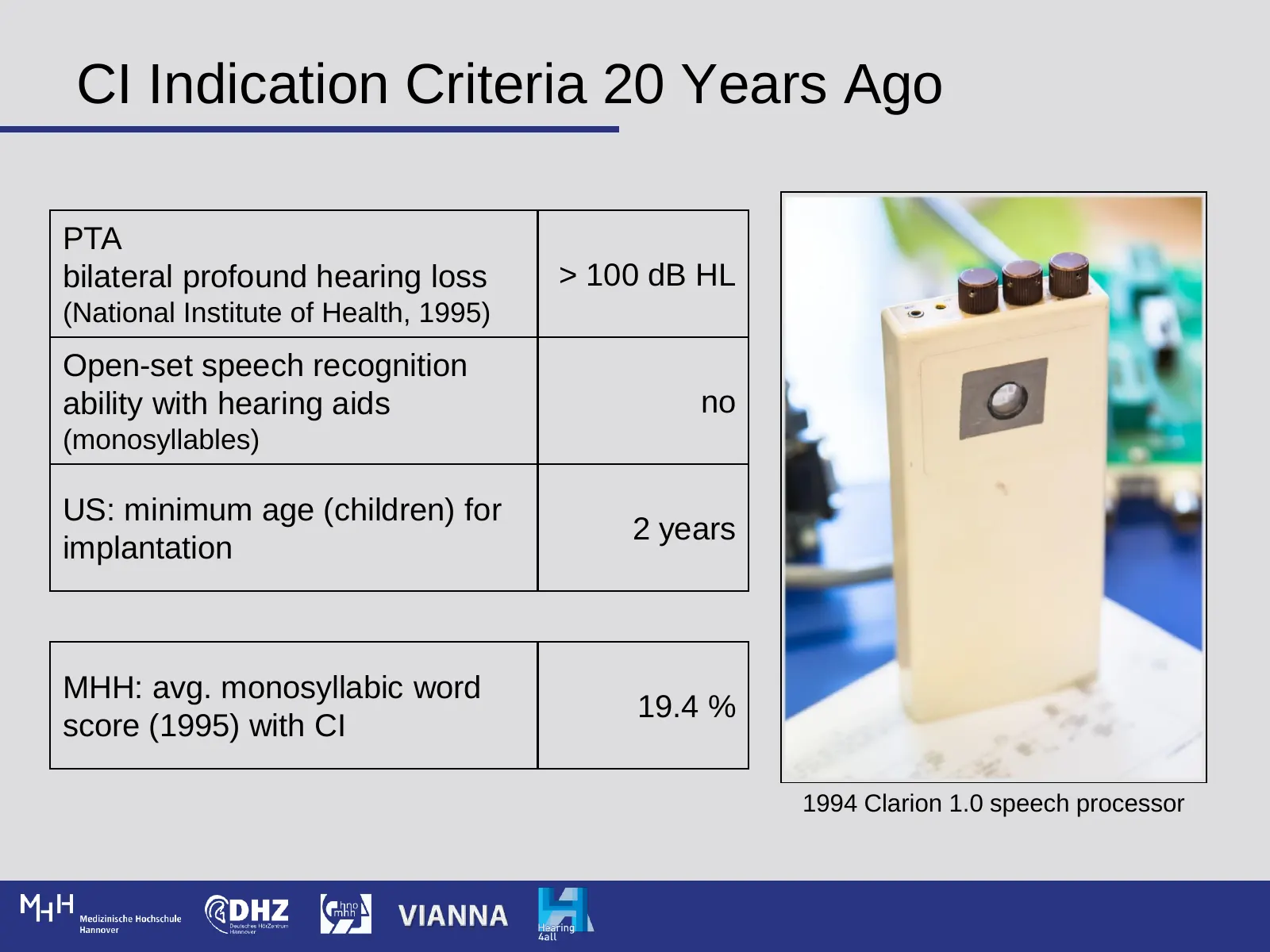
Slide 9: CI Indication Criteria 20 Years Ago
CI Indication Criteria 20 Years Ago PTA bilateral profound hearing loss > 100 dB HL (National Institute of Health, 1995) Open-set speech recognition ability with hearing aids no (monosyllables) US: minimum age (children) for 2 years implantation MHH: avg. monosyllabic word 19.4 % score (1995) with C
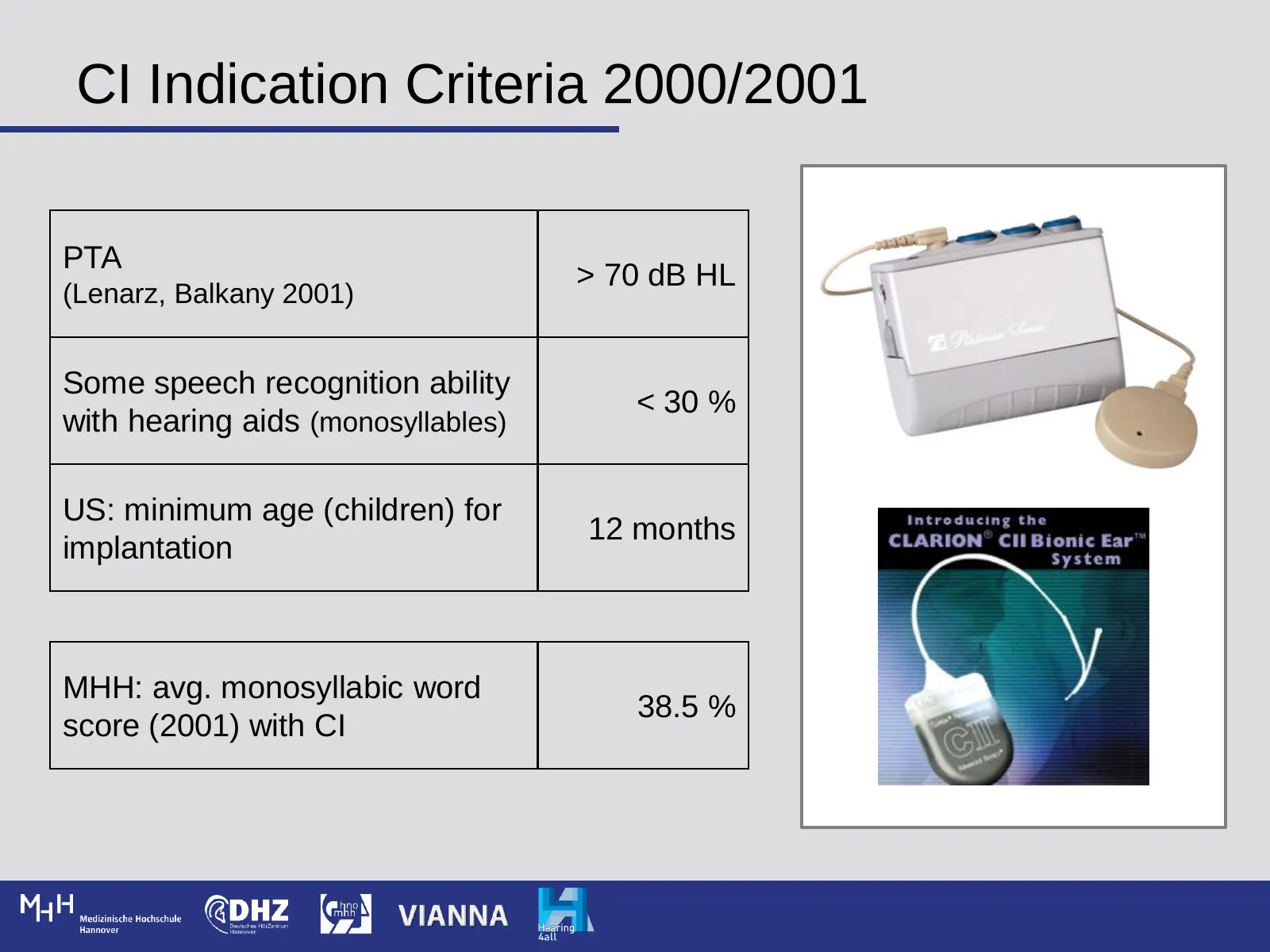
Slide 10: CI Indication Criteria 2000/2001
CI Indication Criteria 2000/2001 PTA > 70 dB HL (Lenarz, Balkany 2001) Some speech recognition ability < 30 % with hearing aids (monosyllables) US: minimum age (children) for 12 months implantation MHH: avg. monosyllabic word 38.5 % score (2001) with CI
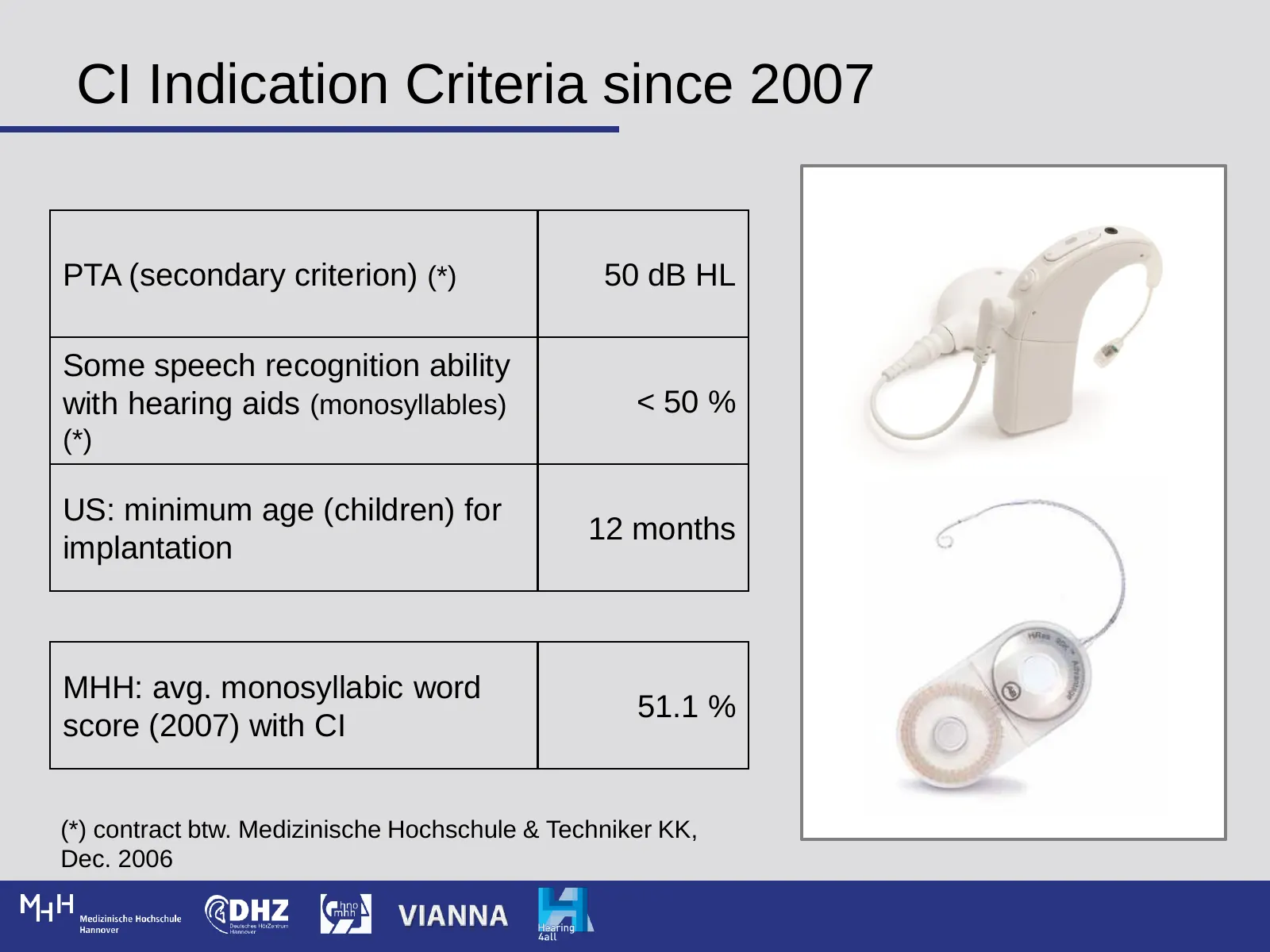
Slide 11: CI Indication Criteria since 2007
CI Indication Criteria since 2007 PTA (secondary criterion) (*) 50 dB HL Some speech recognition ability with hearing aids (monosyllables) < 50 % (*) US: minimum age (children) for 12 months implantation MHH: avg. monosyllabic word 51.1 % score (2007) with CI (*) contract btw. Medizinische Hochschul
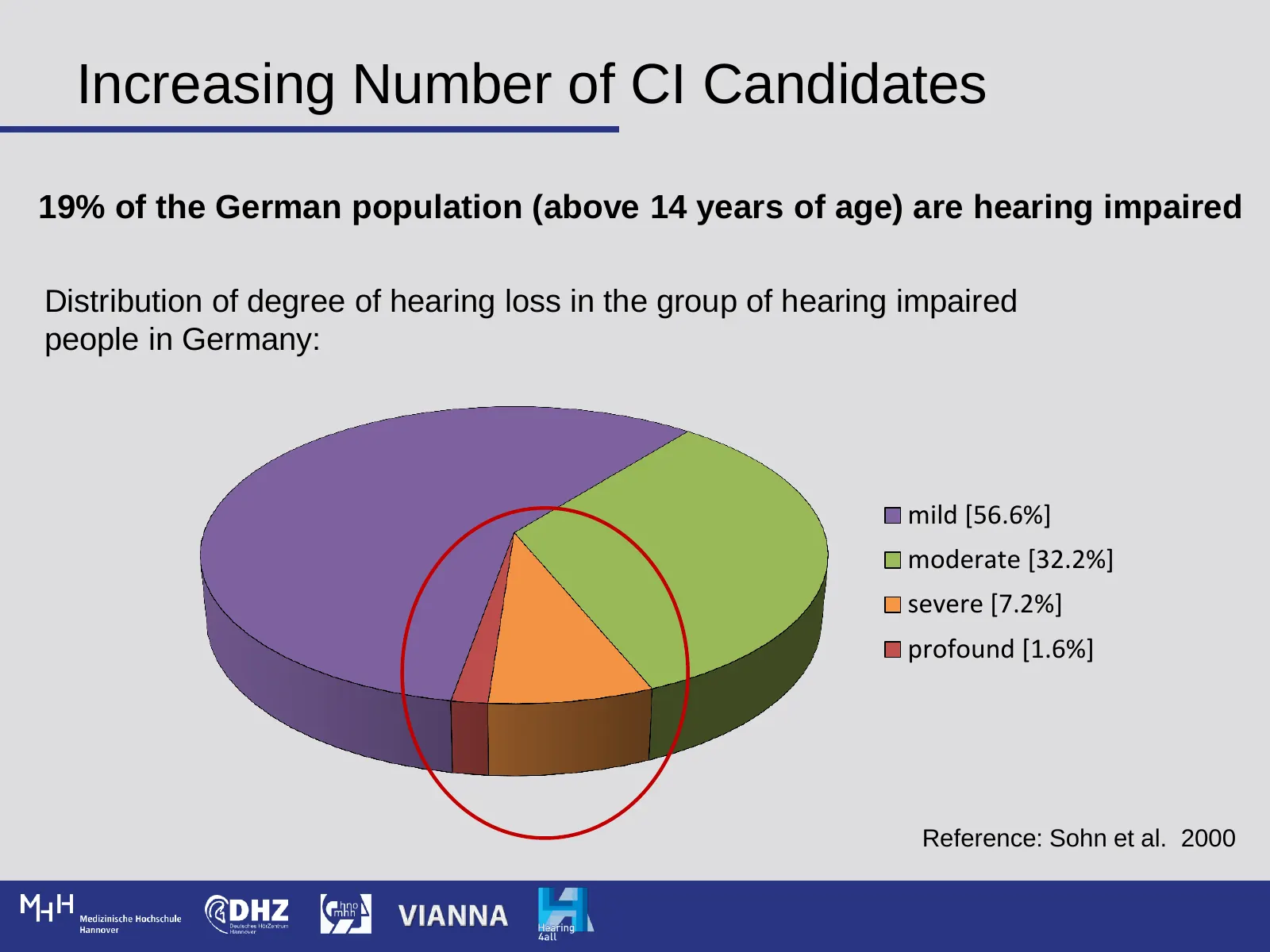
Slide 12: Increasing Number of CI Candidates
Increasing Number of CI Candidates 19% of the German population (above 14 years of age) are hearing impaired Distribution of degree of hearing loss in the group of hearing impaired people in Germany: mild [56.6%] moderate [32.2%] severe [7.2%] profound [1.6%] Reference: Sohn et al. 2000
Slide 13: Translation into Implant Numbers
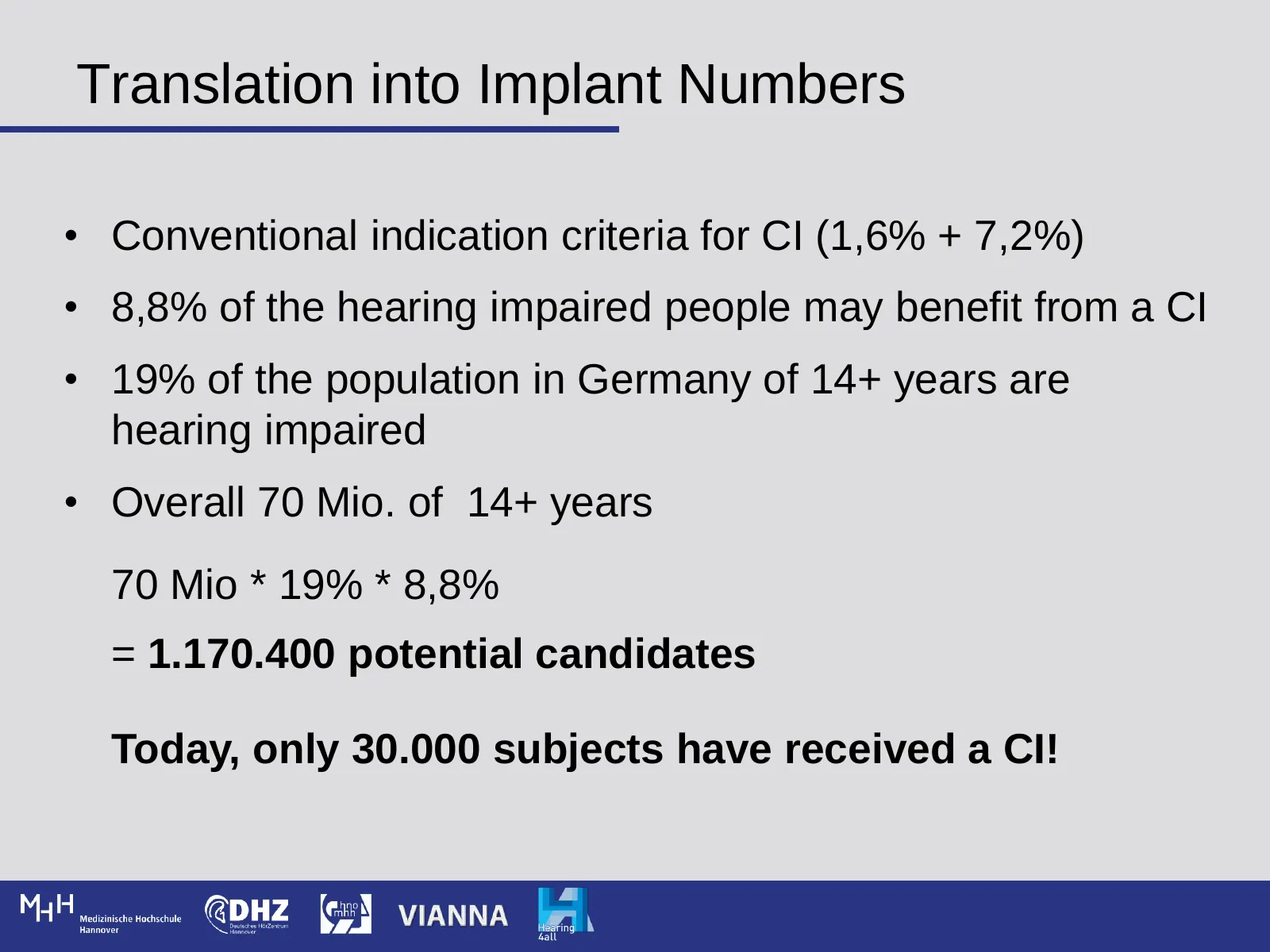
Translation into Implant Numbers • Conventional indication criteria for CI (1,6% + 7,2%) • 8,8% of the hearing impaired people may benefit from a CI • 19% of the population in Germany of 14+ years are hearing impaired • Overall 70 Mio. of 14+ years 70 Mio * 19% * 8,8% = 1.170.400 potential candidate
Slide 14: Relaxation of Indication Criteria
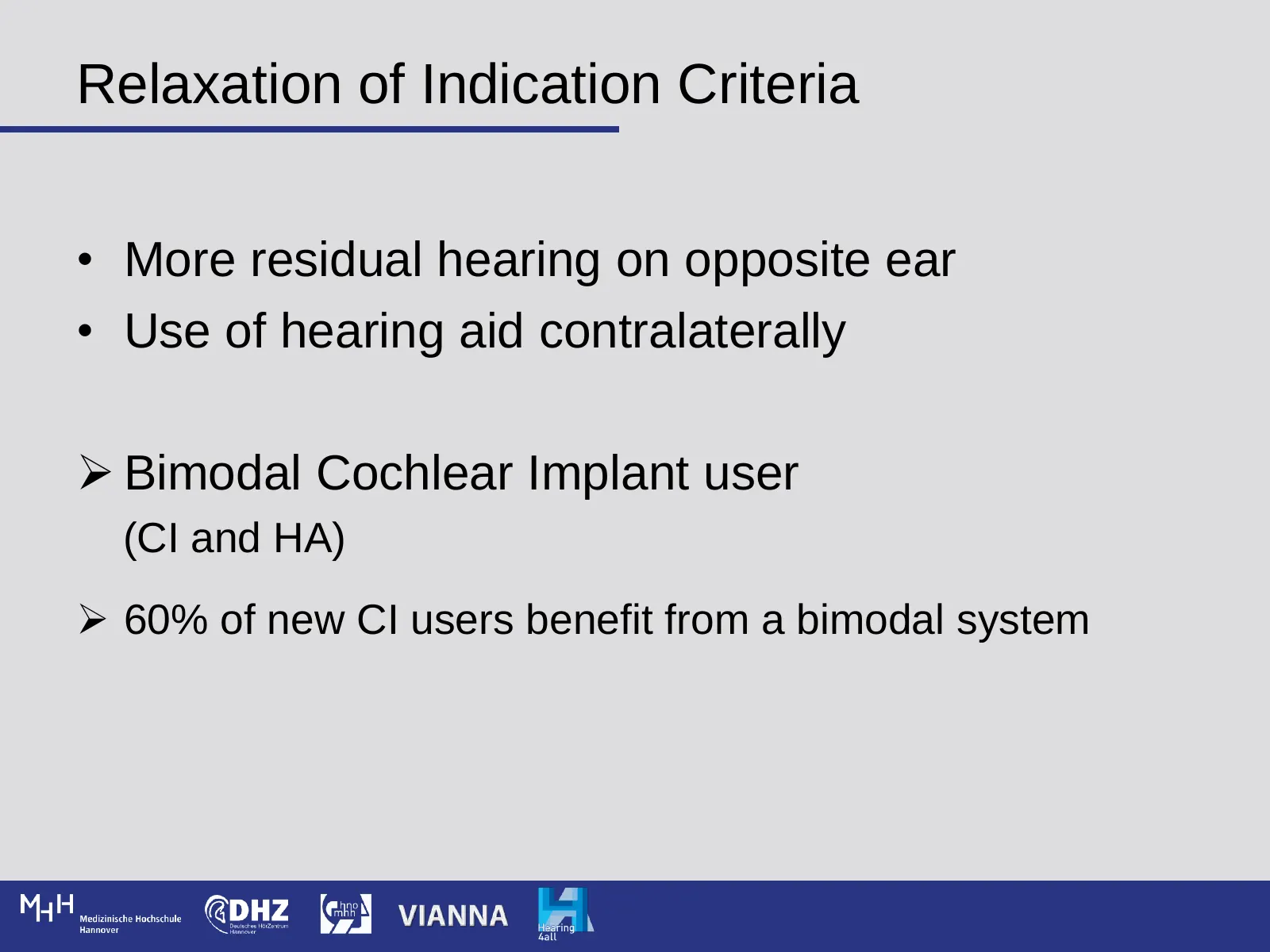
Relaxation of Indication Criteria • More residual hearing on opposite ear • Use of hearing aid contralaterally Bimodal Cochlear Implant user (CI and HA) 60% of new CI users benefit from a bimodal system
Slide 15: Development of Bimodal Population
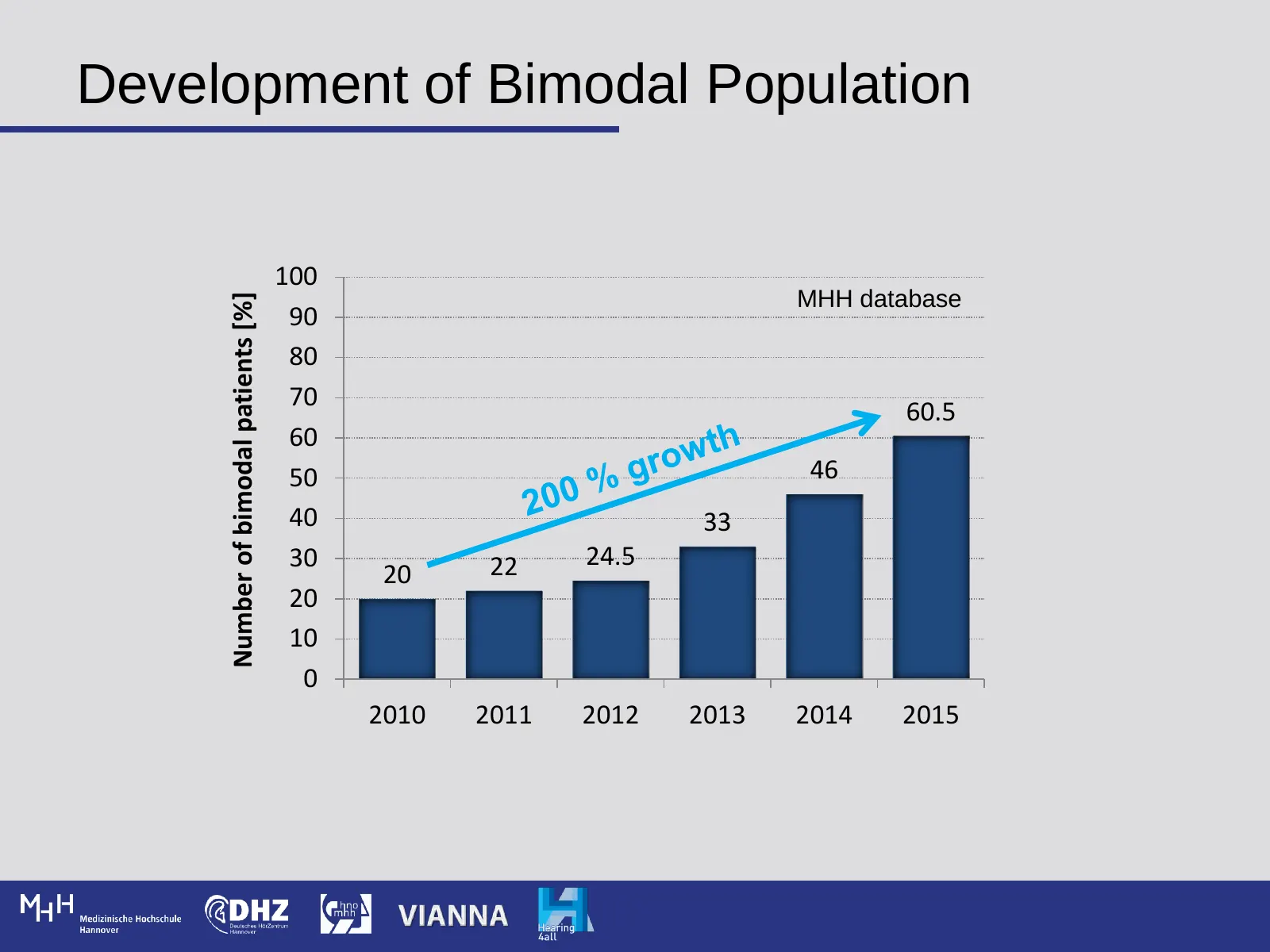
Development of Bimodal Population 100 MHH database Number of bimodal patients [%] 90 80 70 60.5 60 50 46 40 33 30 22 24.5 20 20 10 0 2010 2011 2012 2013 2014 2015
Slide 16: Advantage of Bimodal Hearing
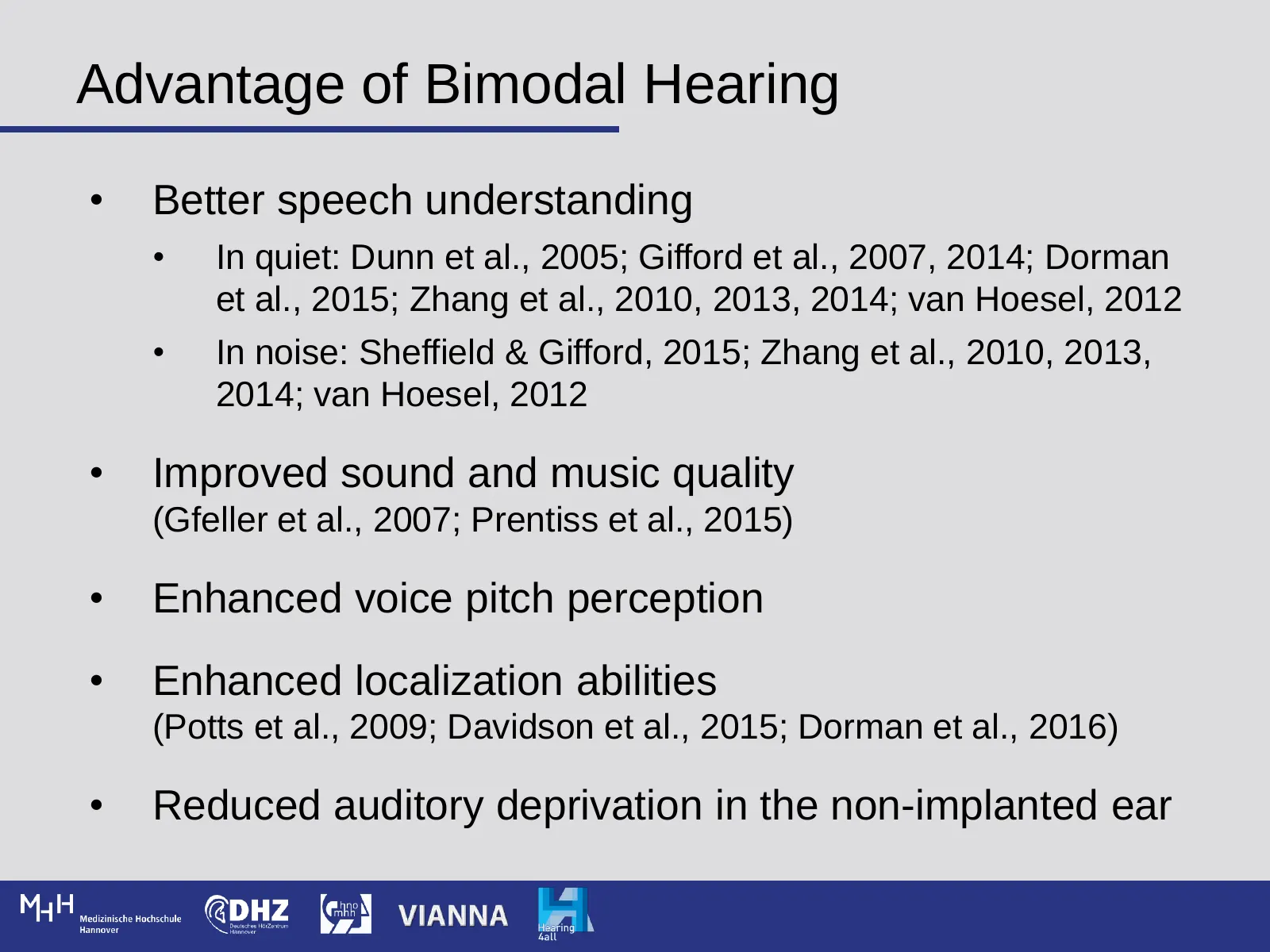
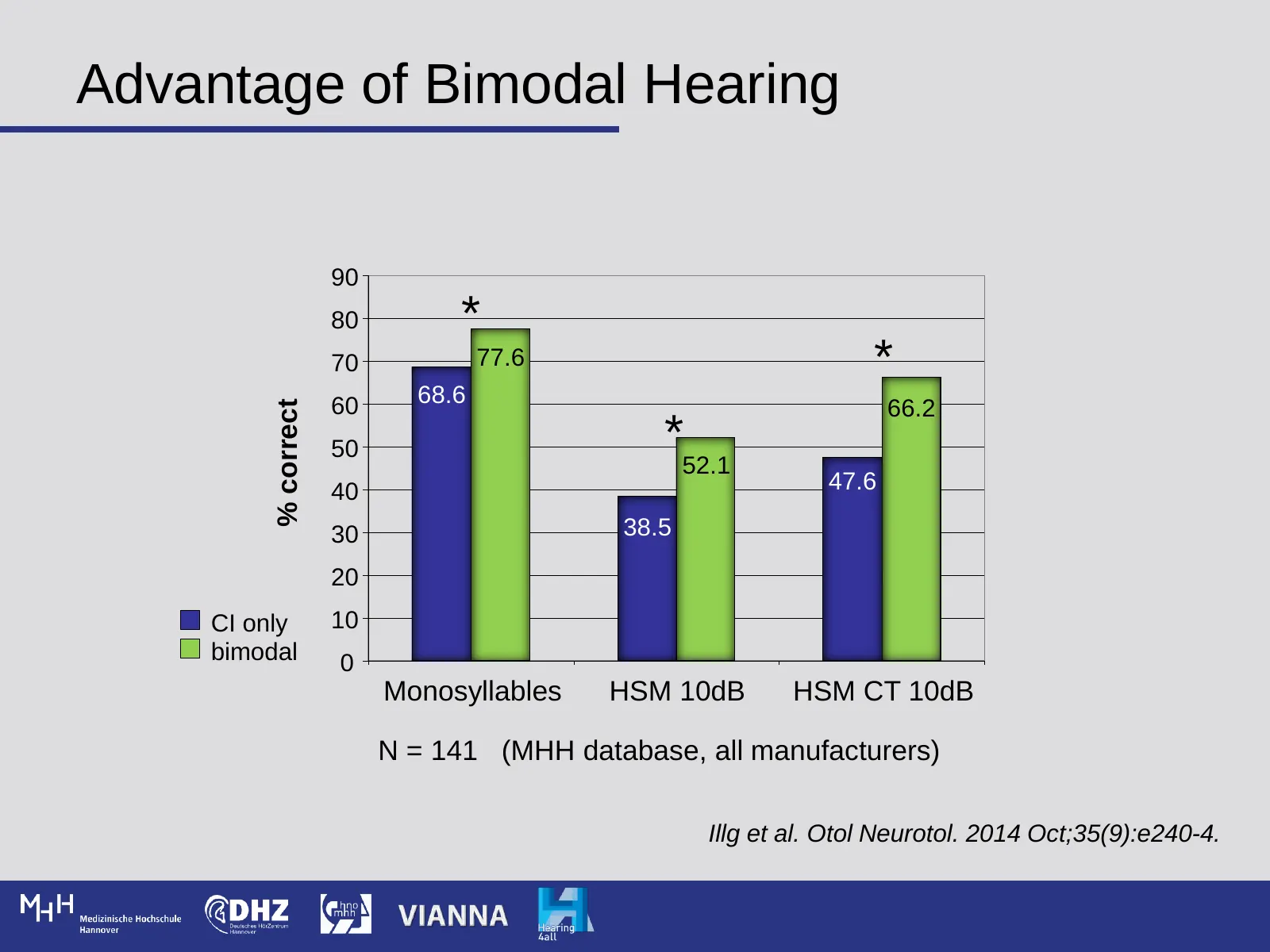
Advantage of Bimodal Hearing • Better speech understanding • In quiet: Dunn et al., 2005; Gifford et al., 2007, 2014; Dorman et al., 2015; Zhang et al., 2010, 2013, 2014; van Hoesel, 2012 • In noise: Sheffield & Gifford, 2015; Zhang et al., 2010, 2013, 2014; van Hoesel, 2012 • Improved sound and mus
Slide 17: Advantage of Bimodal Hearing
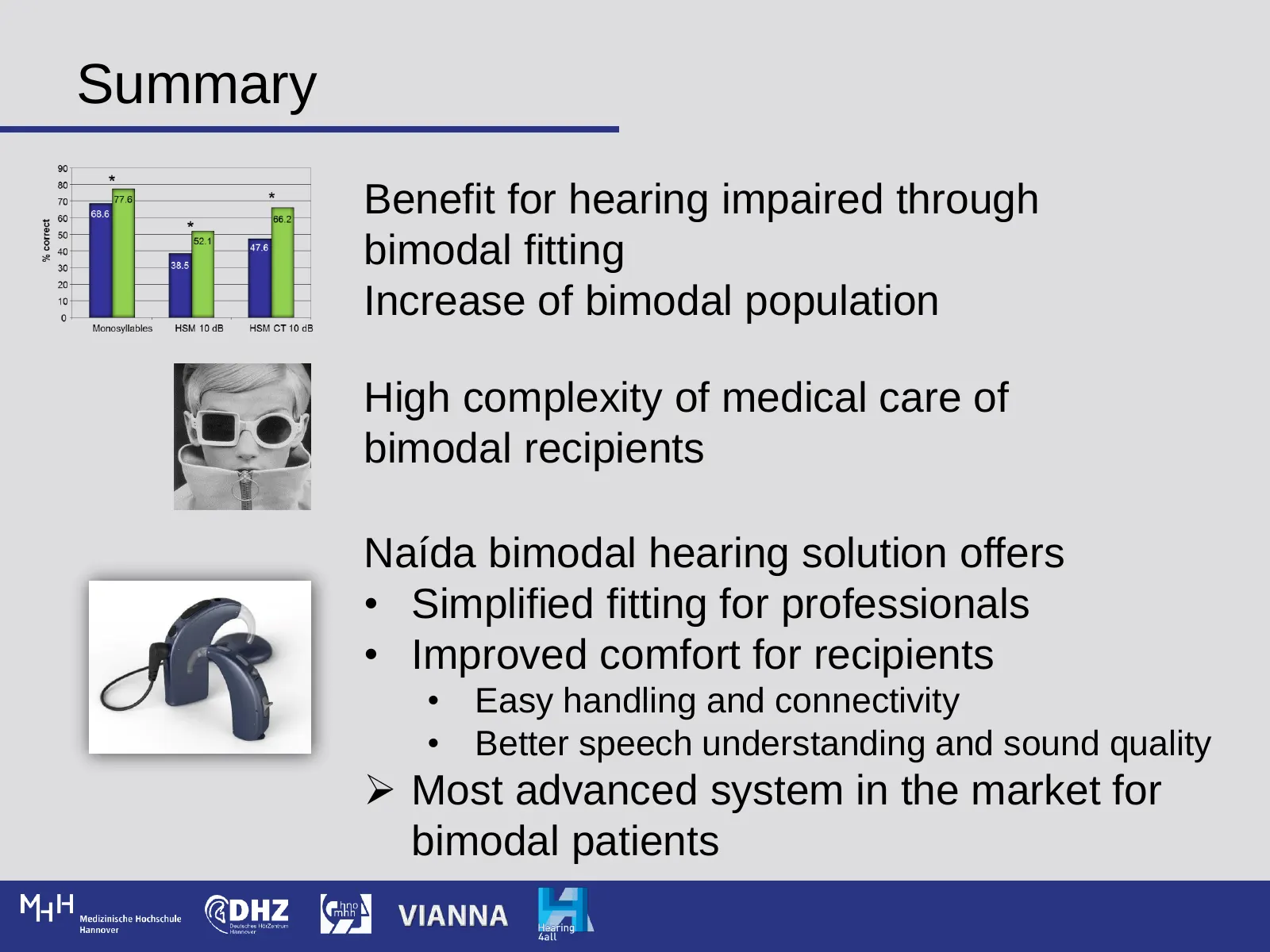
Advantage of Bimodal Hearing 90 80 * 70 77.6 * 60 68.6 % correct 66.2 50 *52.1 40 47.6 30 38.5 20 CI only 10 bimodal 0 Monosyllables HSM 10dB HSM CT 10dB N = 141 (MHH database, all manufacturers) Illg et al. Otol Neurotol. 2014 Oct;35(9):e240-4.
Slide 18: Bimodal Fitting
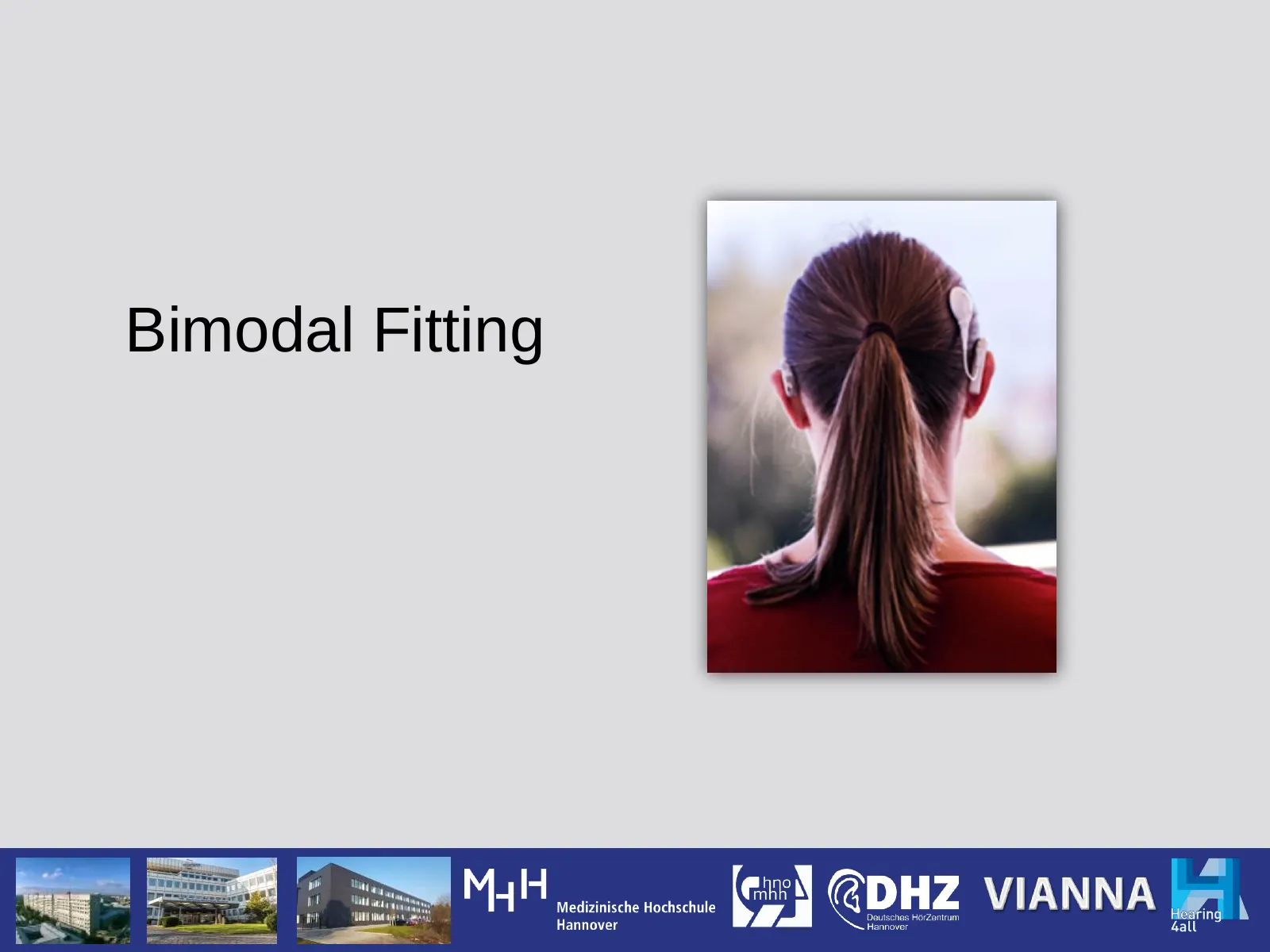
Bimodal Fitting saw (Cg) @DHZ VIANNA [ys ,
Slide 19: Typical Example of Bimodal Patient
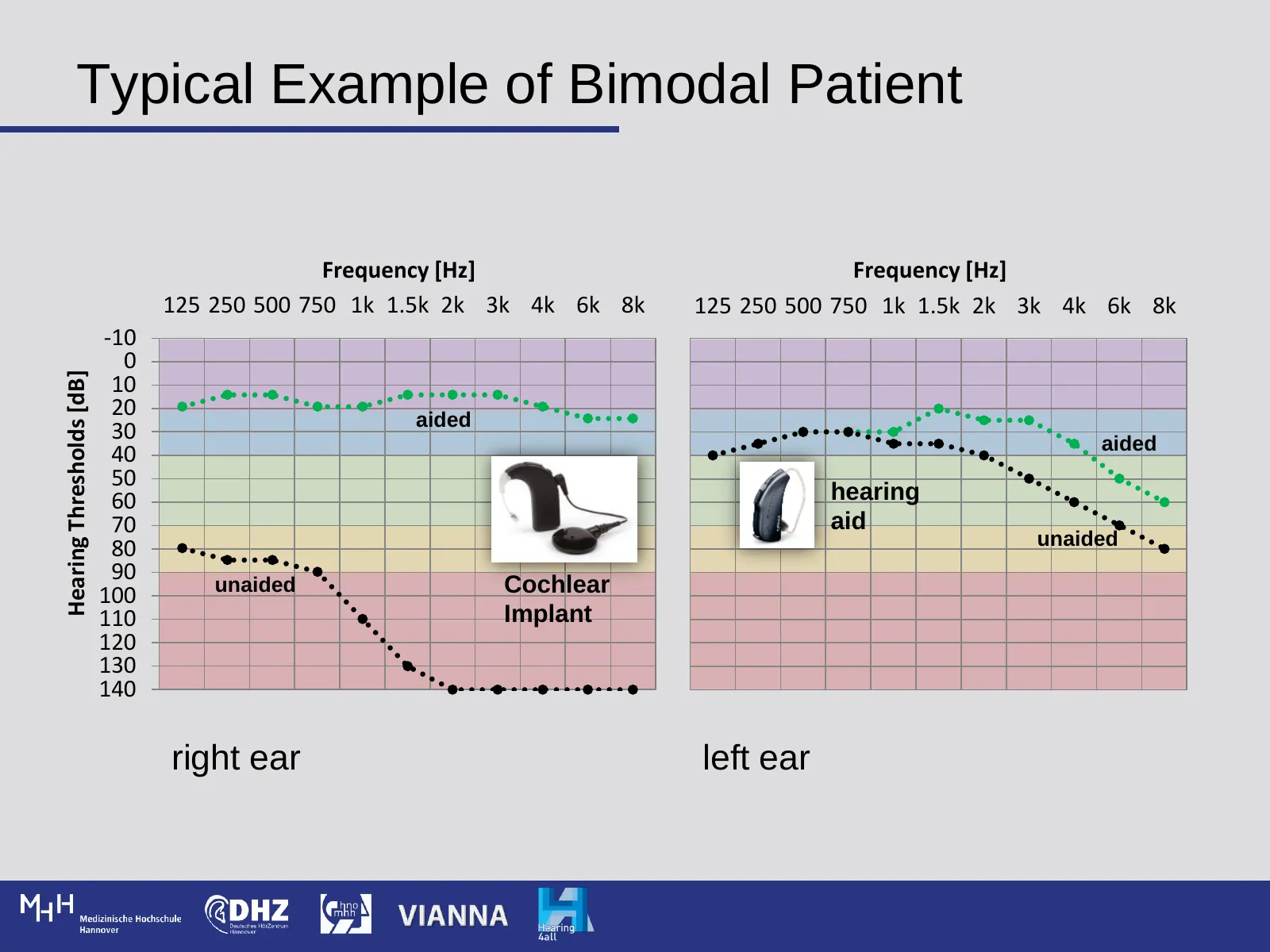
Typical Example of Bimodal Patient Frequency [Hz] Frequency [Hz] 125 250 500 750 1k 1.5k 2k 3k 4k 6k 8k 125 250 500 750 1k 1.5k 2k 3k 4k 6k 8k -10 0 Hearing Thresholds [dB] 10 20 aided 30 aided 40 50 60 hearing 70 aid 80 unaided 90 100 unaided Cochlear 110 Implant 120 130 140 right ear left ear
Slide 20: Recipient Journey
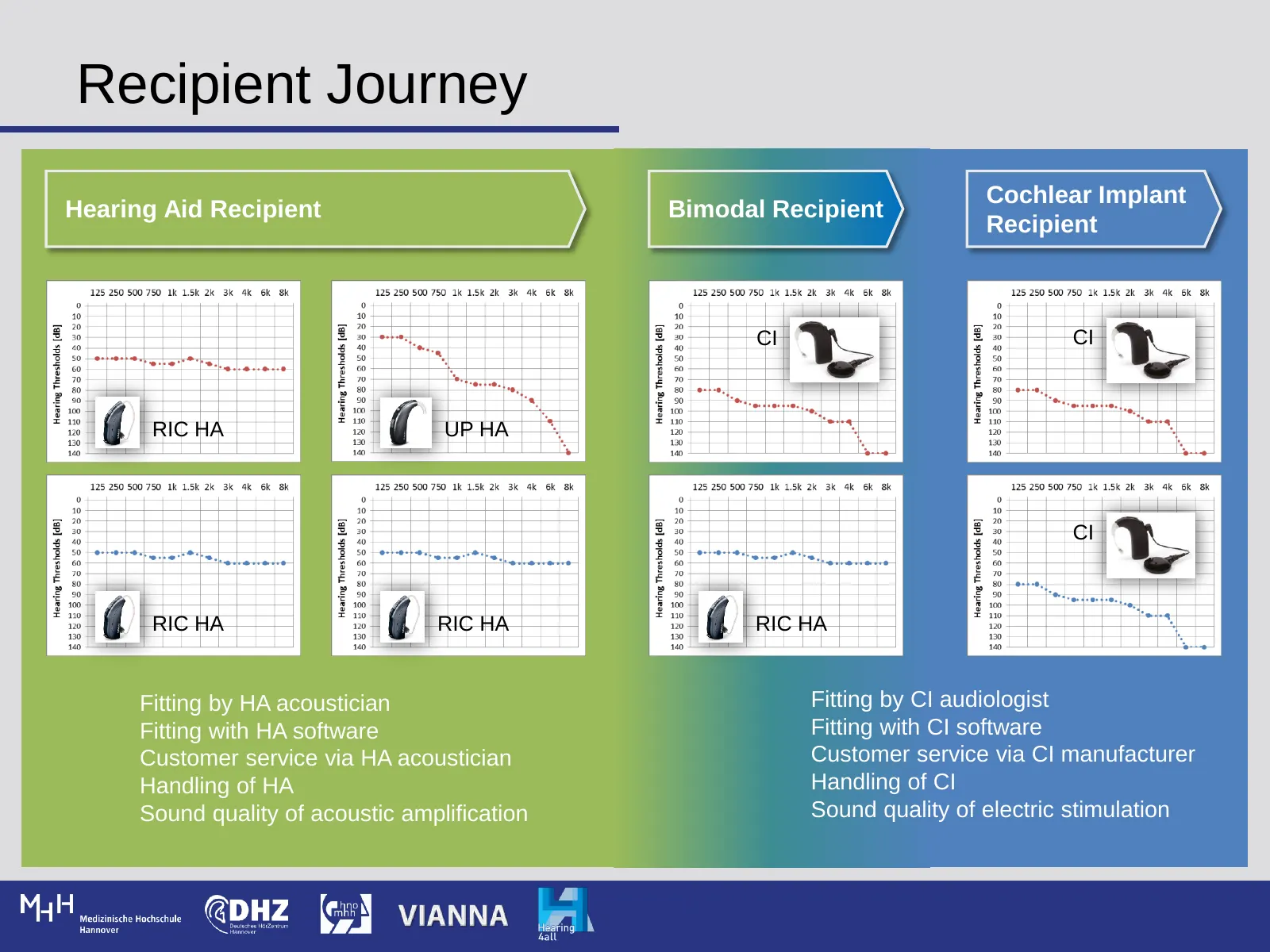
Recipient Journey Cochlear Implant Hearing Aid Recipient Bimodal Recipient Recipient CI CI RIC HA UP HA CI RIC HA RIC HA RIC HA Fitting by HA acoustician Fitting by CI audiologist Fitting with HA software Fitting with CI software Customer service via HA acoustician Customer service via CI manufactur
Slide 21: Complexity of Bimodal Fitting
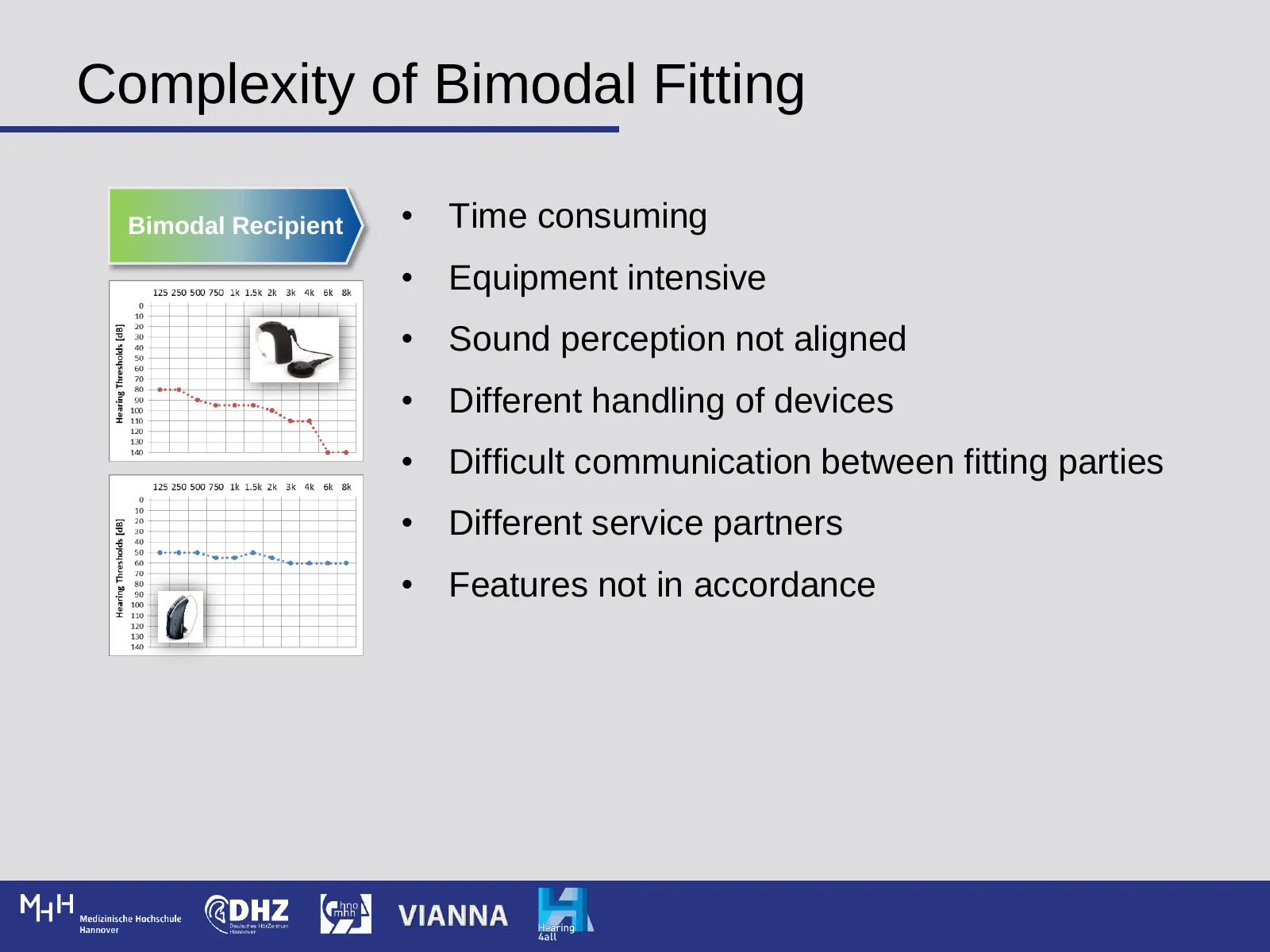
Complexity of Bimodal Fitting Bimodal Recipient • Time consuming • Equipment intensive • Sound perception not aligned • Different handling of devices • Difficult communication between fitting parties • Different service partners • Features not in accordance
Slide 22: Naída Bimodal Hearing Solution
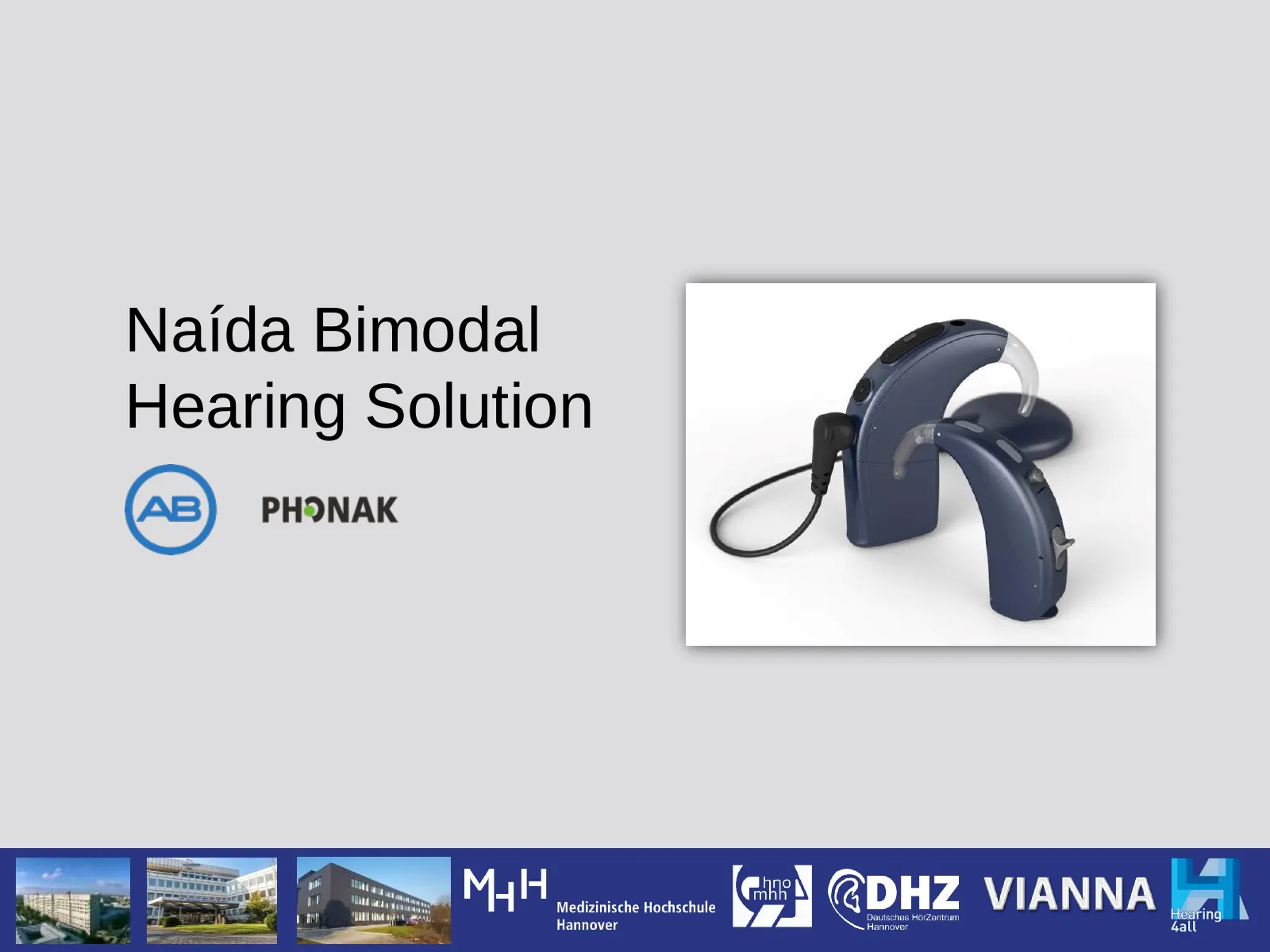
Naída Bimodal Hearing Solution
Slide 23: Unique Key Features
Unique Key Features • New Phonak Naída Link hearing aid specially designed to work with the Naída CI Q70 and Q90 • Distinctive Bimodal Fitting Formula • Shared Front-End Processing and Automation • Shared Controls (QuickSync) • Bimodal wireless solutions • Ear-to-Ear Audio Sharing (Binaural VoiceStr
Slide 24: Phonak Naída Link Hearing Aid
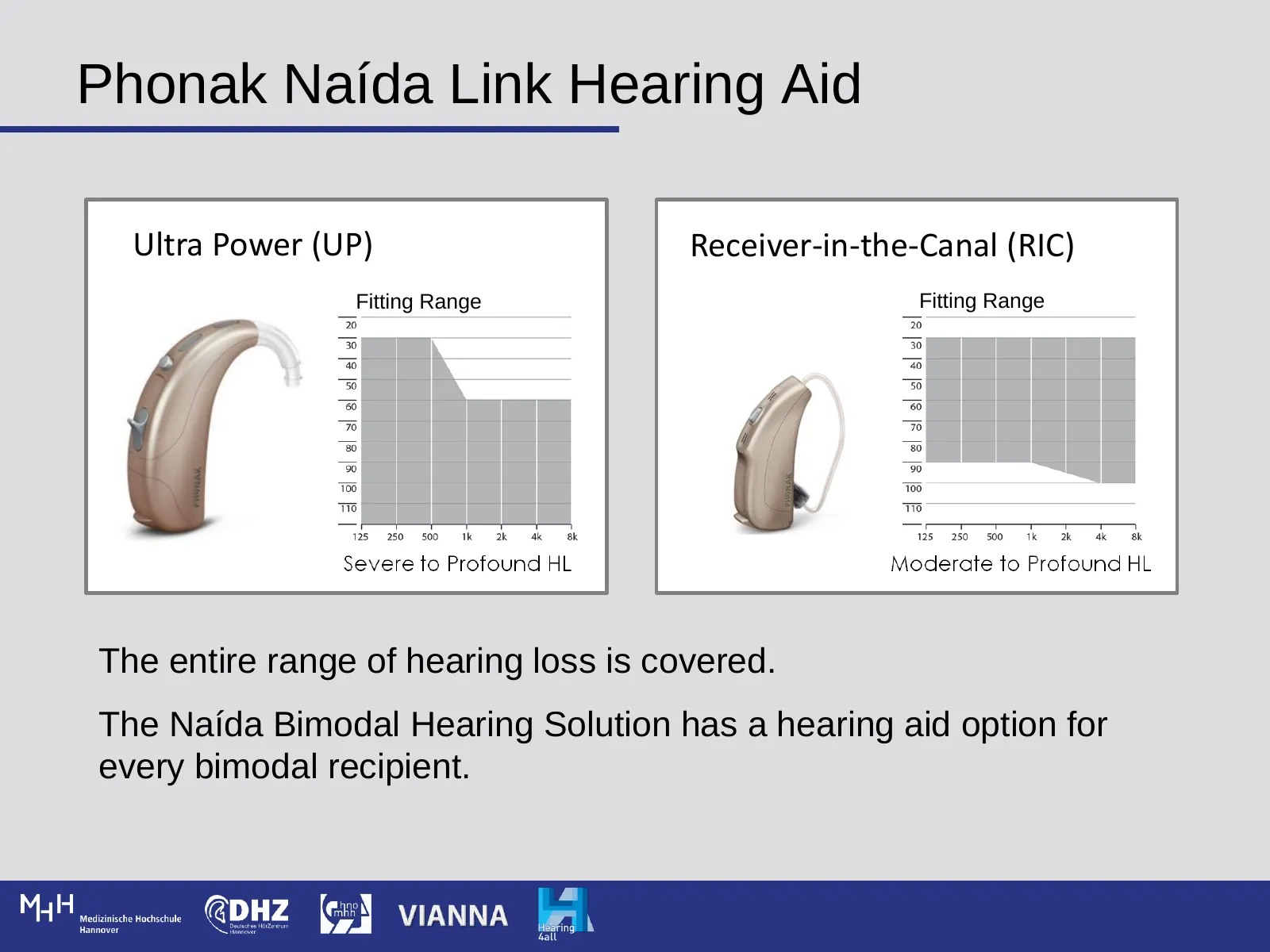
Phonak Naída Link Hearing Aid Ultra Power (UP) Receiver-in-the-Canal (RIC) Fitting Range Fitting Range The entire range of hearing loss is covered. The Naída Bimodal Hearing Solution has a hearing aid option for every bimodal recipient.
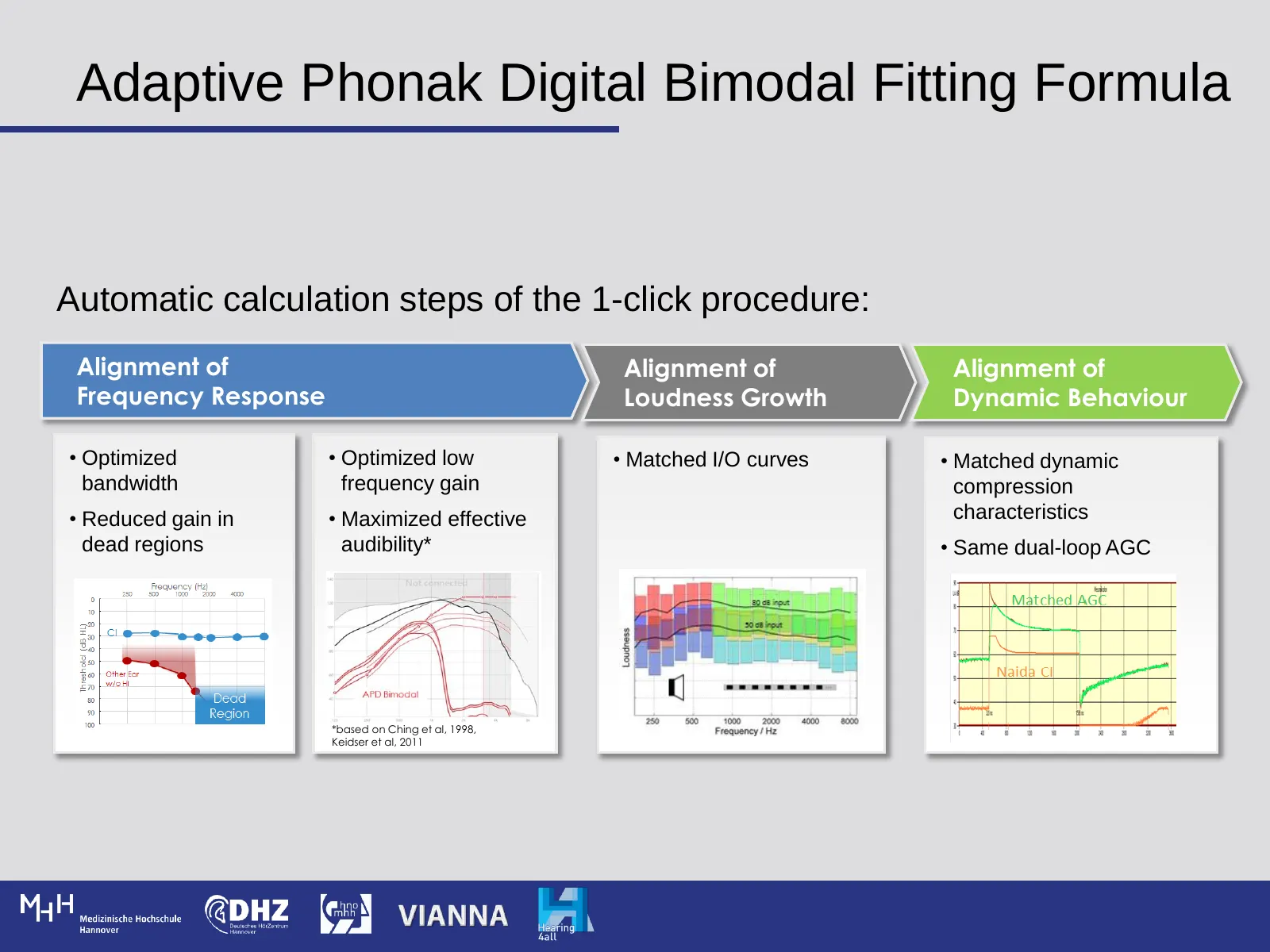
Slide 25: Adaptive Phonak Digital Bimodal Fitting Formula
Adaptive Phonak Digital Bimodal Fitting Formula Automatic calculation steps of the 1-click procedure: Alignment of Alignment of Alignment of Frequency Response Loudness Growth Dynamic Behaviour • Optimized • Optimized low • Matched I/O curves • Matched dynamic bandwidth frequency gain compression •
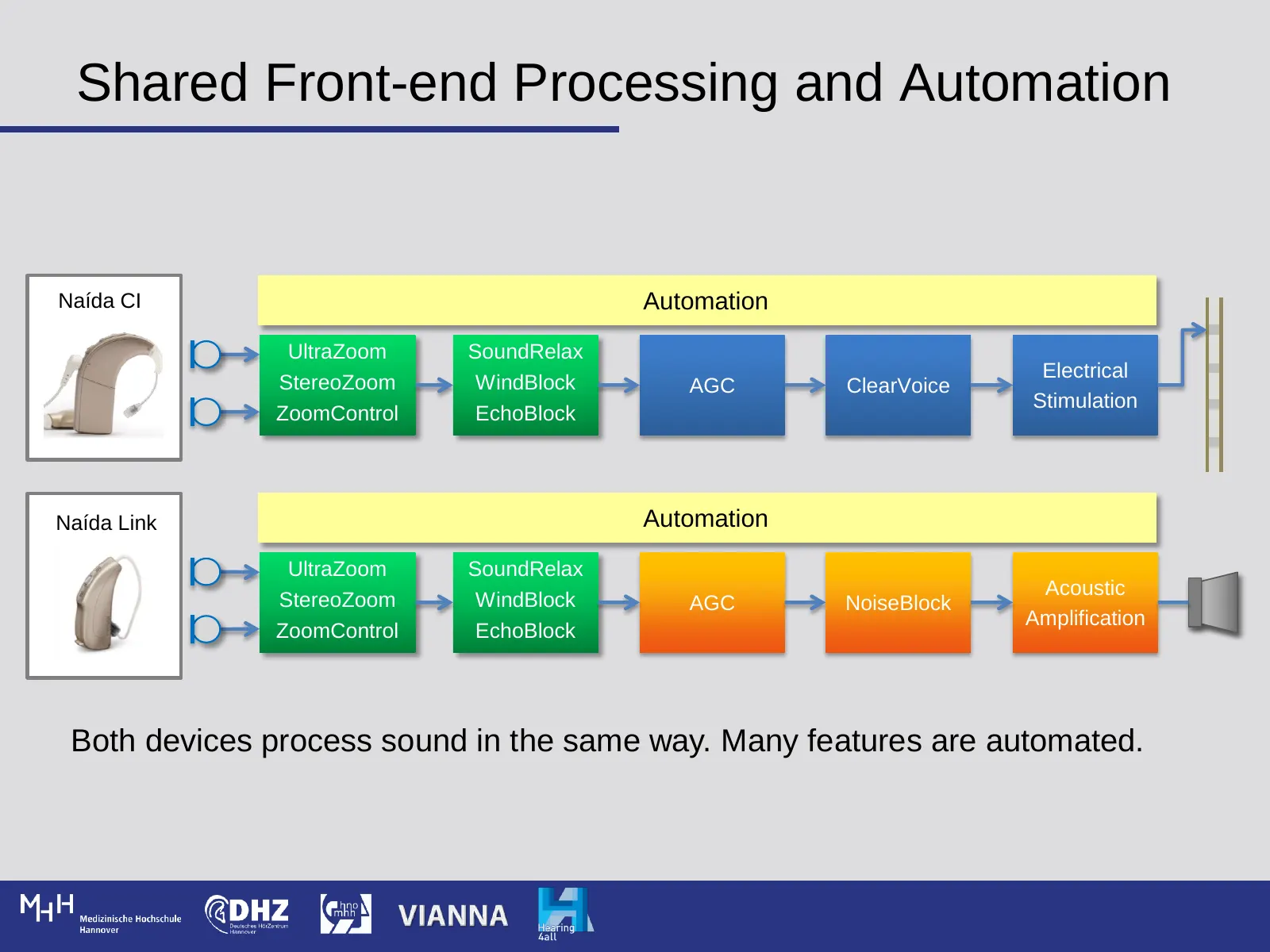
Slide 26: Shared Front-end Processing and Automation
Shared Front-end Processing and Automation Naída CI Automation UltraZoom SoundRelax Electrical StereoZoom WindBlock AGC ClearVoice Stimulation ZoomControl EchoBlock Naída Link Automation UltraZoom SoundRelax Acoustic StereoZoom WindBlock AGC NoiseBlock Amplification ZoomControl EchoBlock Both device
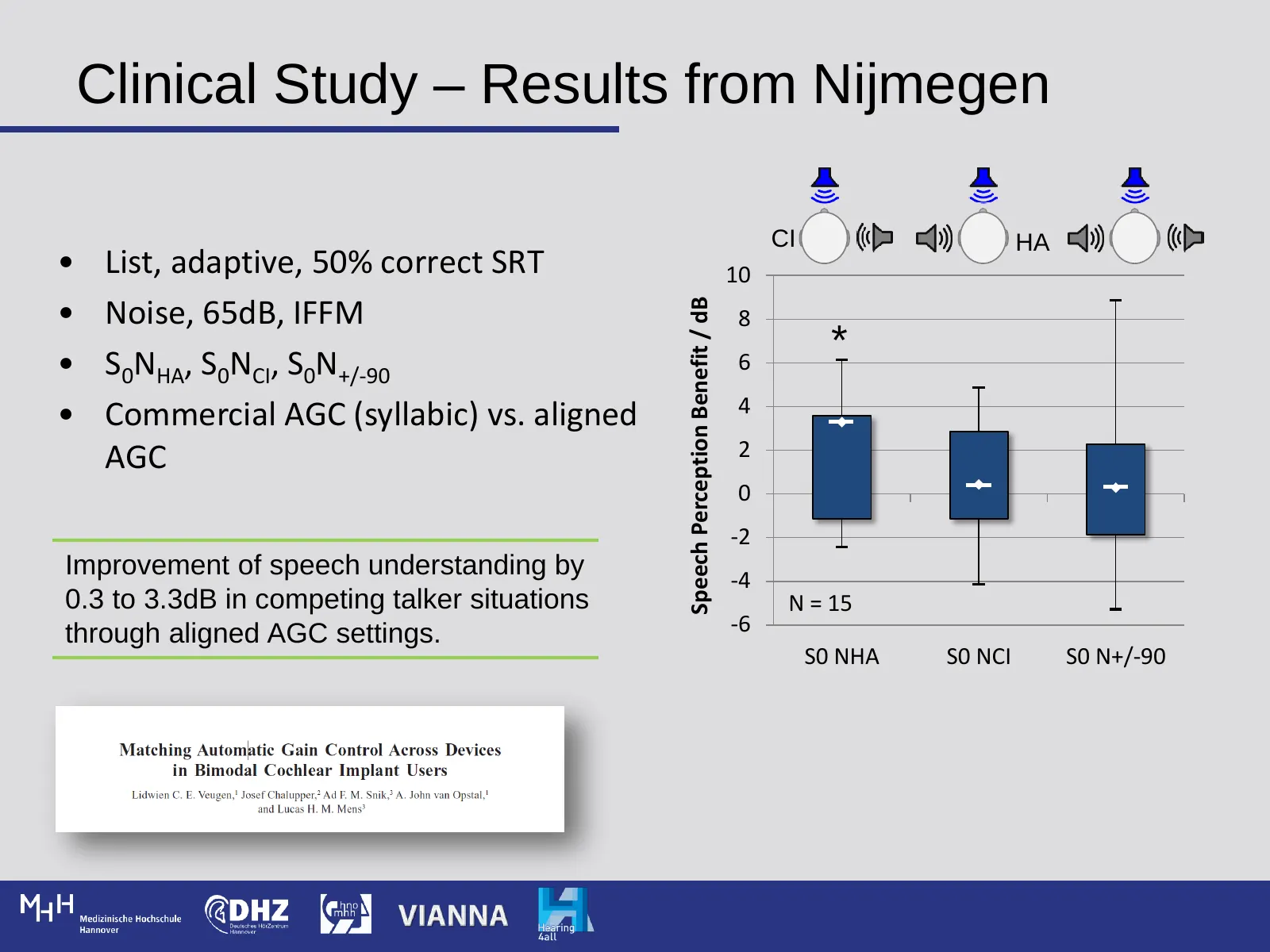
Slide 27: Clinical Study – Results from Nijmegen
Clinical Study – Results from Nijmegen CI HA • List, adaptive, 50% correct SRT 10 Speech Perception Benefit / dB • Noise, 65dB, IFFM 8 • S0NHA, S0NCI, S0N+/-90 6 * • Commercial AGC (syllabic) vs. aligned 4 AGC 2 0 -2 Improvement of speech understanding by -4 0.3 to 3.3dB in competing talker situatio
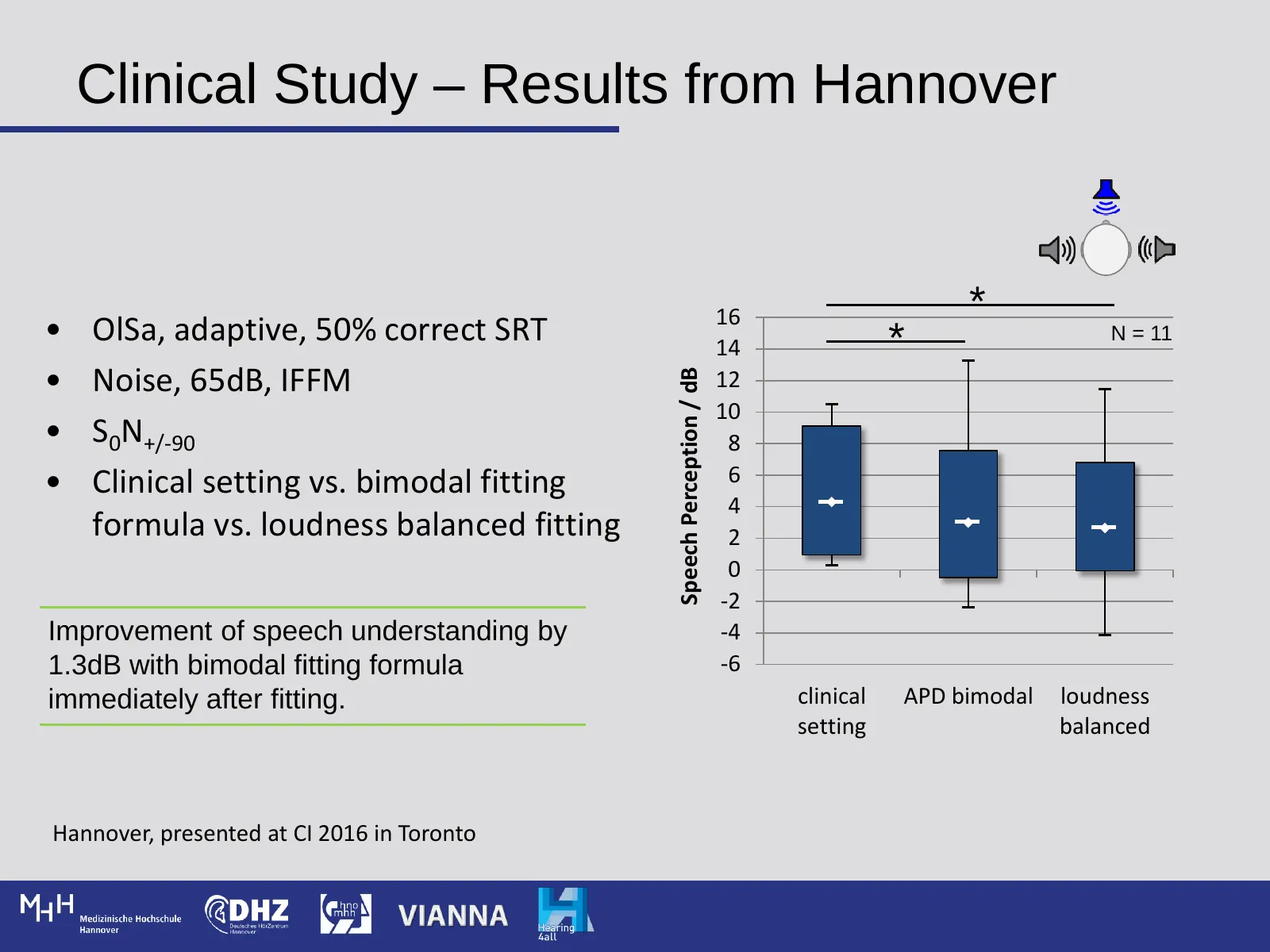
Slide 28: Clinical Study – Results from Hannover
Clinical Study – Results from Hannover 16 * • OlSa, adaptive, 50% correct SRT 14 * N = 11 • Noise, 65dB, IFFM Speech Perception / dB 12 10 • S0N+/-90 8 • Clinical setting vs. bimodal fitting 6 4 formula vs. loudness balanced fitting 2 0 -2 Improvement of speech understanding by -4 1.3dB with bimodal
Slide 29: Bimodal Fitting Formula - Summary
Bimodal Fitting Formula - Summary • Bimodal Fitting Formula aligns fitting parameters of hearing aid according to the Cochlear Implant • Similar speech perception with bim FF after a “one-click” fitting compared to a fine tuned HA fitting • Harmonized sound between hearing aid and Cochlear Implant
Slide 30: StereoZoom
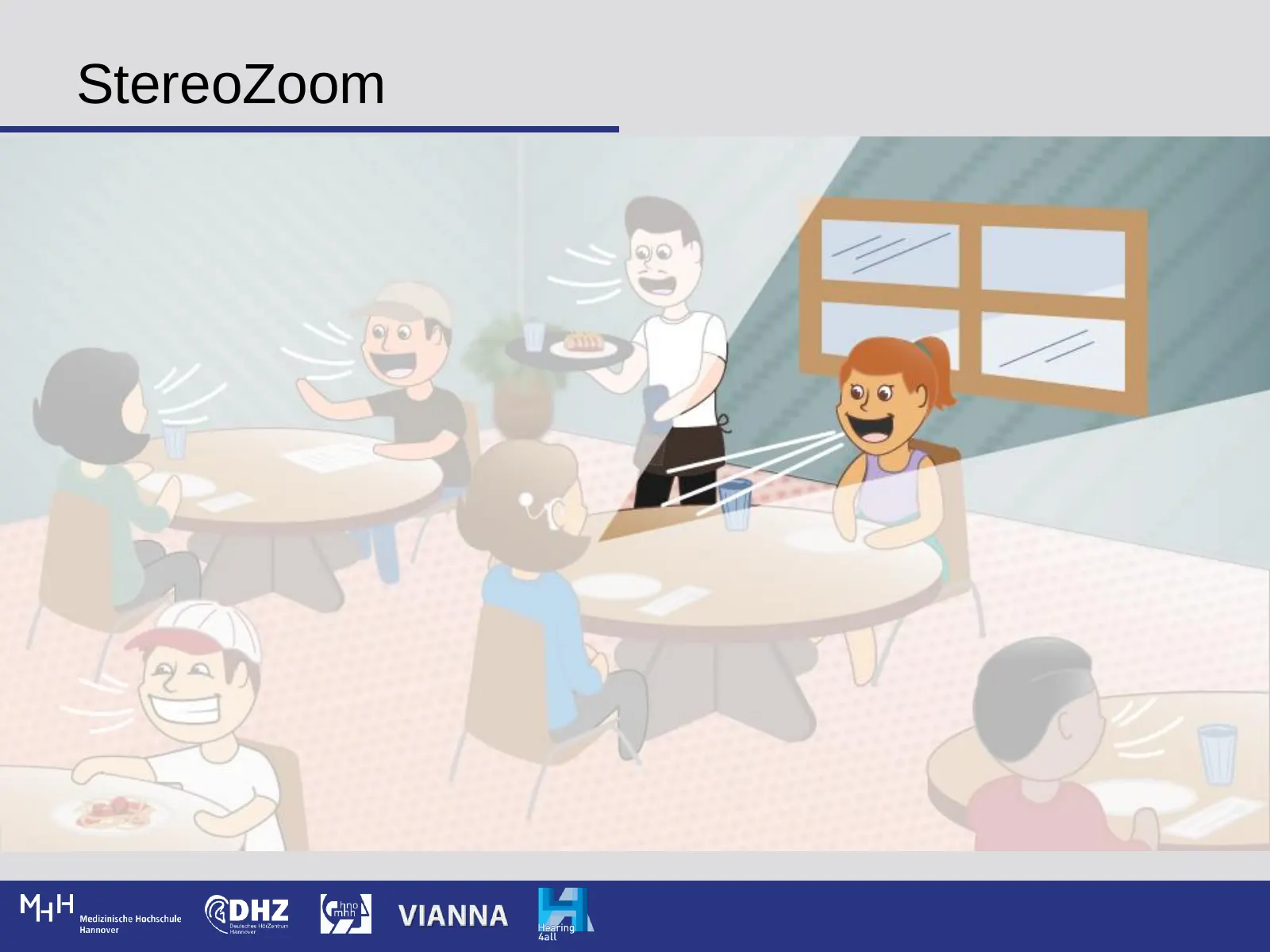
StereoZoom
Slide 31: Clinical Study – Valencia
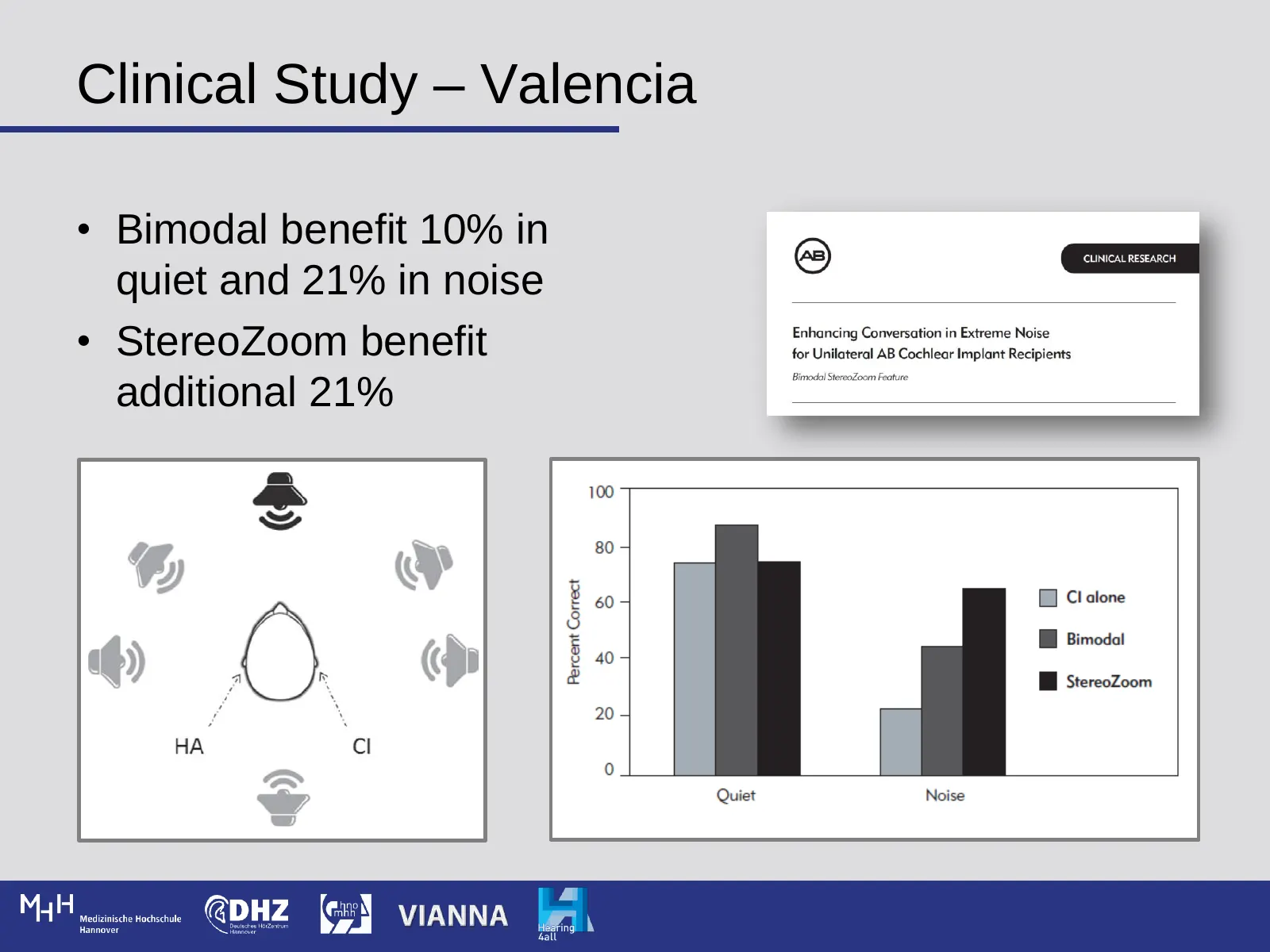
Clinical Study – Valencia • Bimodal benefit 10% in quiet and 21% in noise • StereoZoom benefit additional 21%
Slide 32: Clinical Study – Hannover
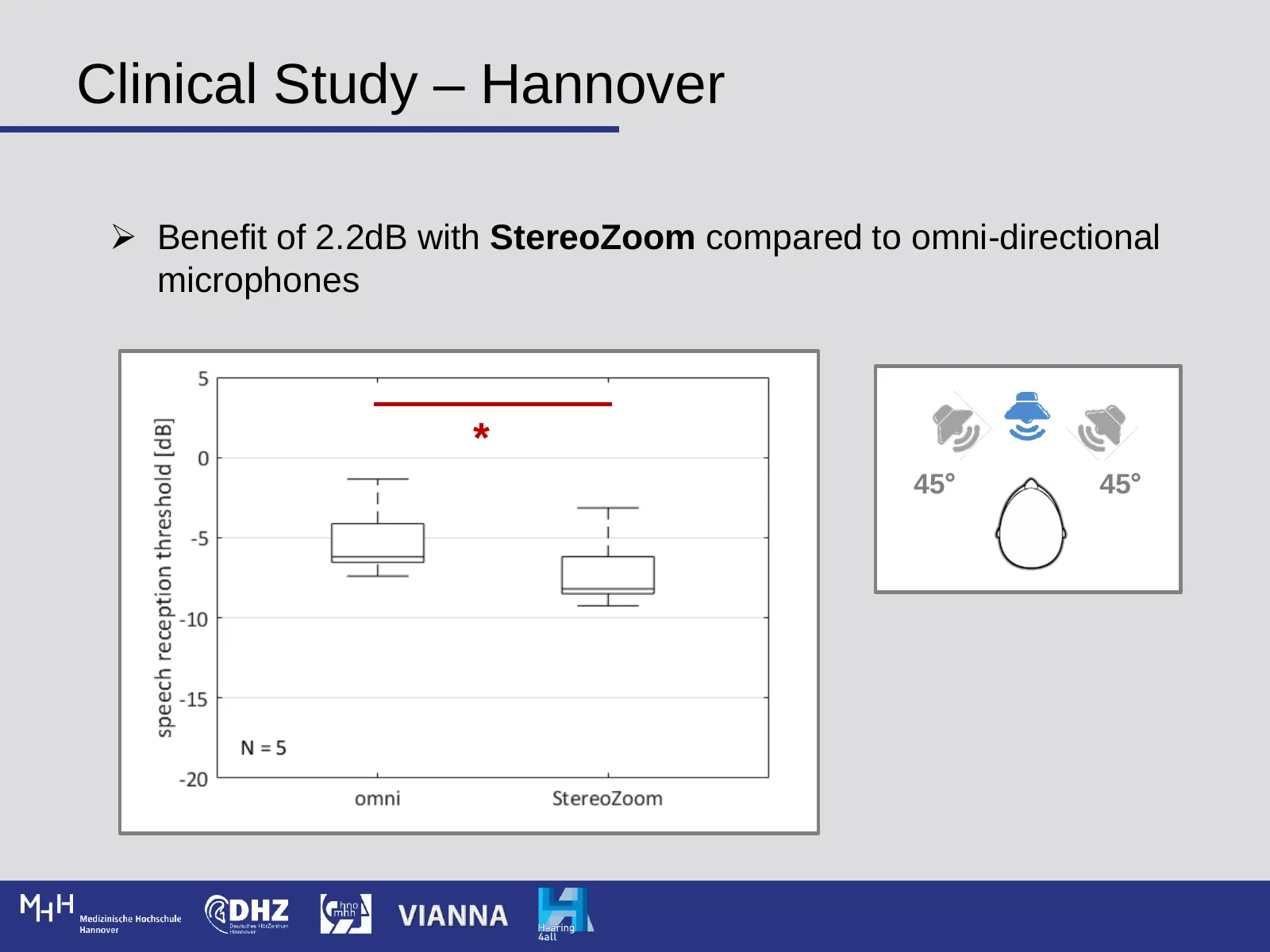
Clinical Study – Hannover Benefit of 2.2dB with StereoZoom compared to omni-directional microphones * 45° 45°
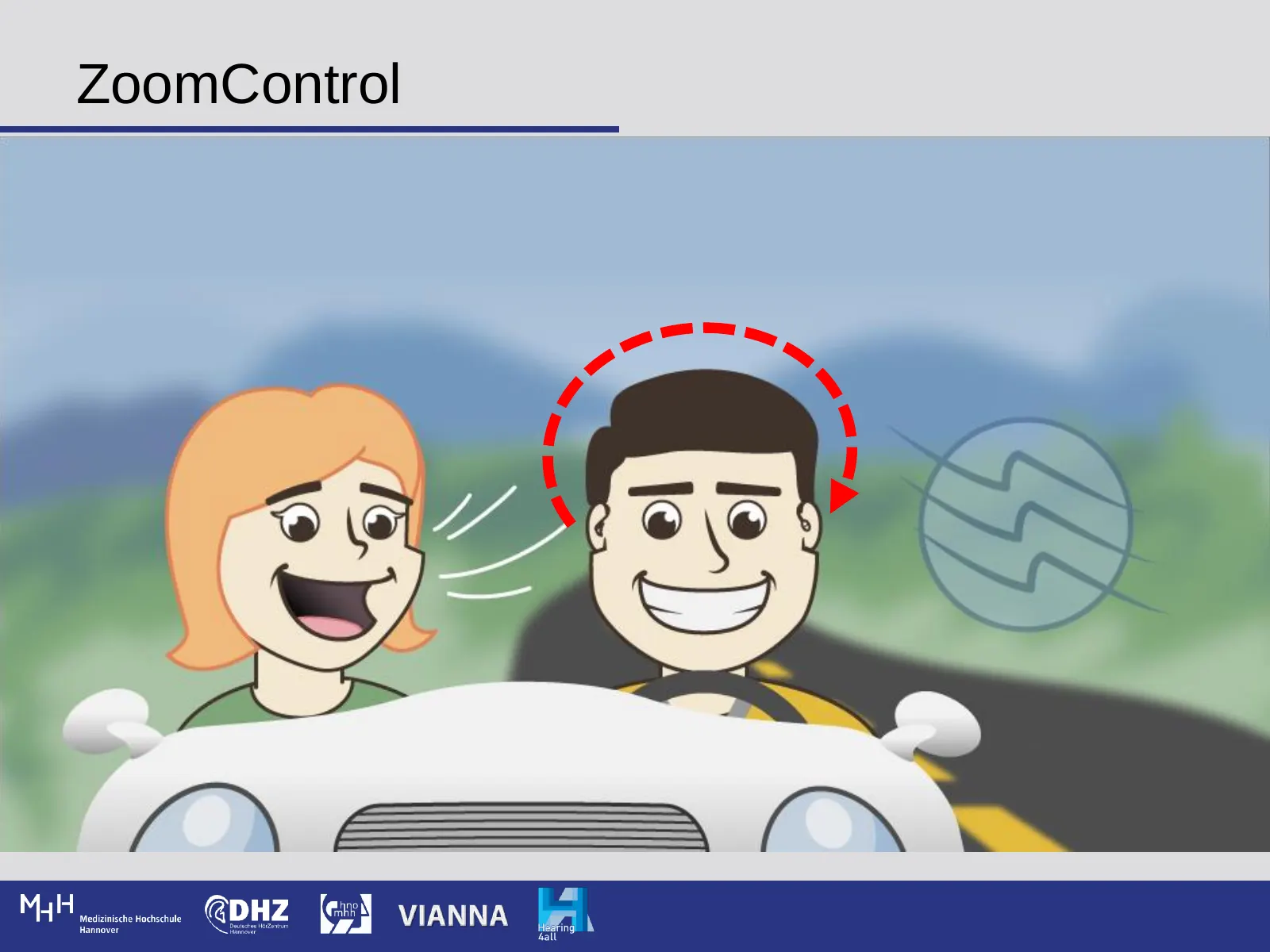
Slide 33: ZoomControl
ZoomControl
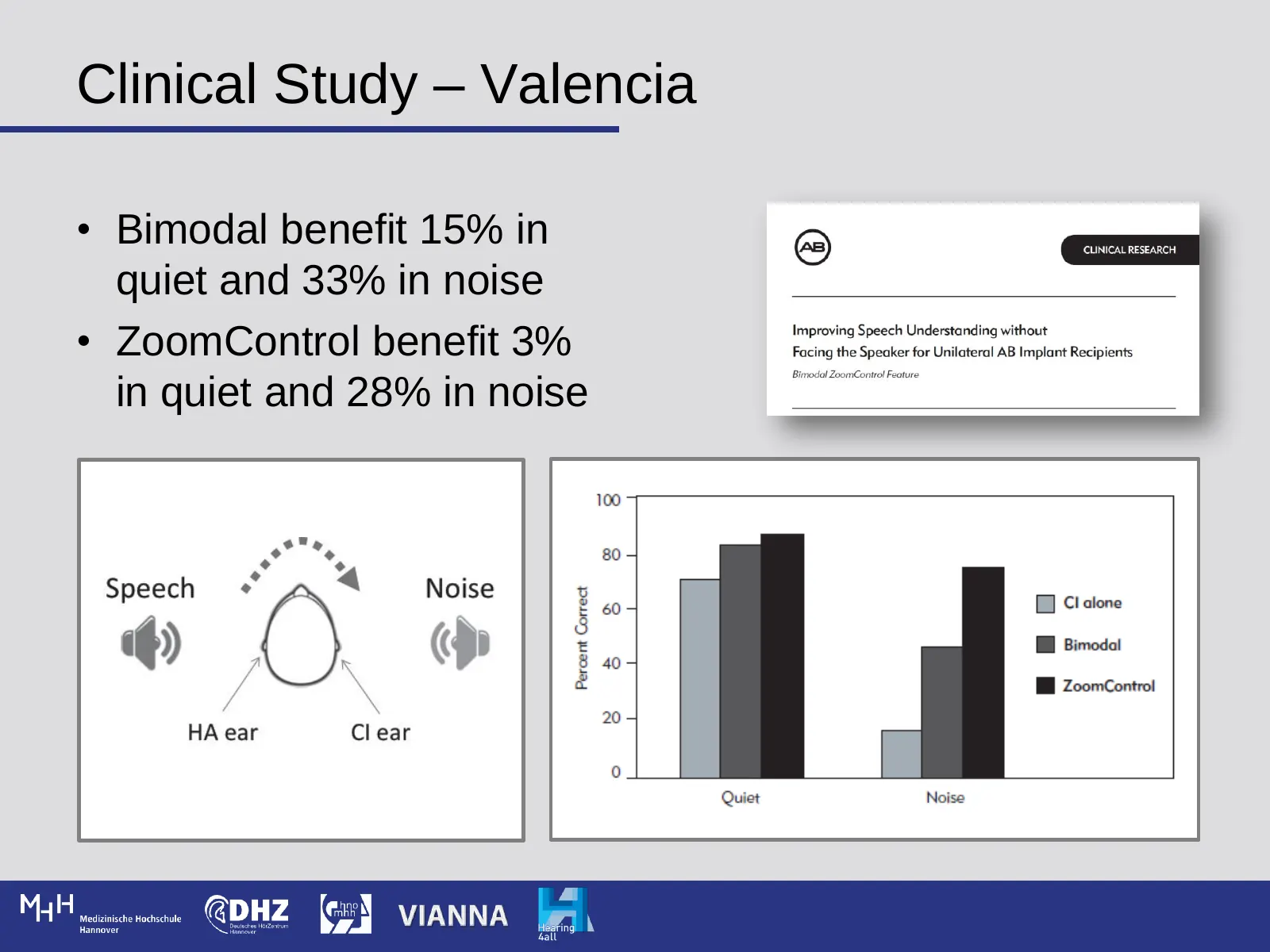
Slide 34: Clinical Study – Valencia
Clinical Study – Valencia • Bimodal benefit 15% in quiet and 33% in noise • ZoomControl benefit 3% in quiet and 28% in noise
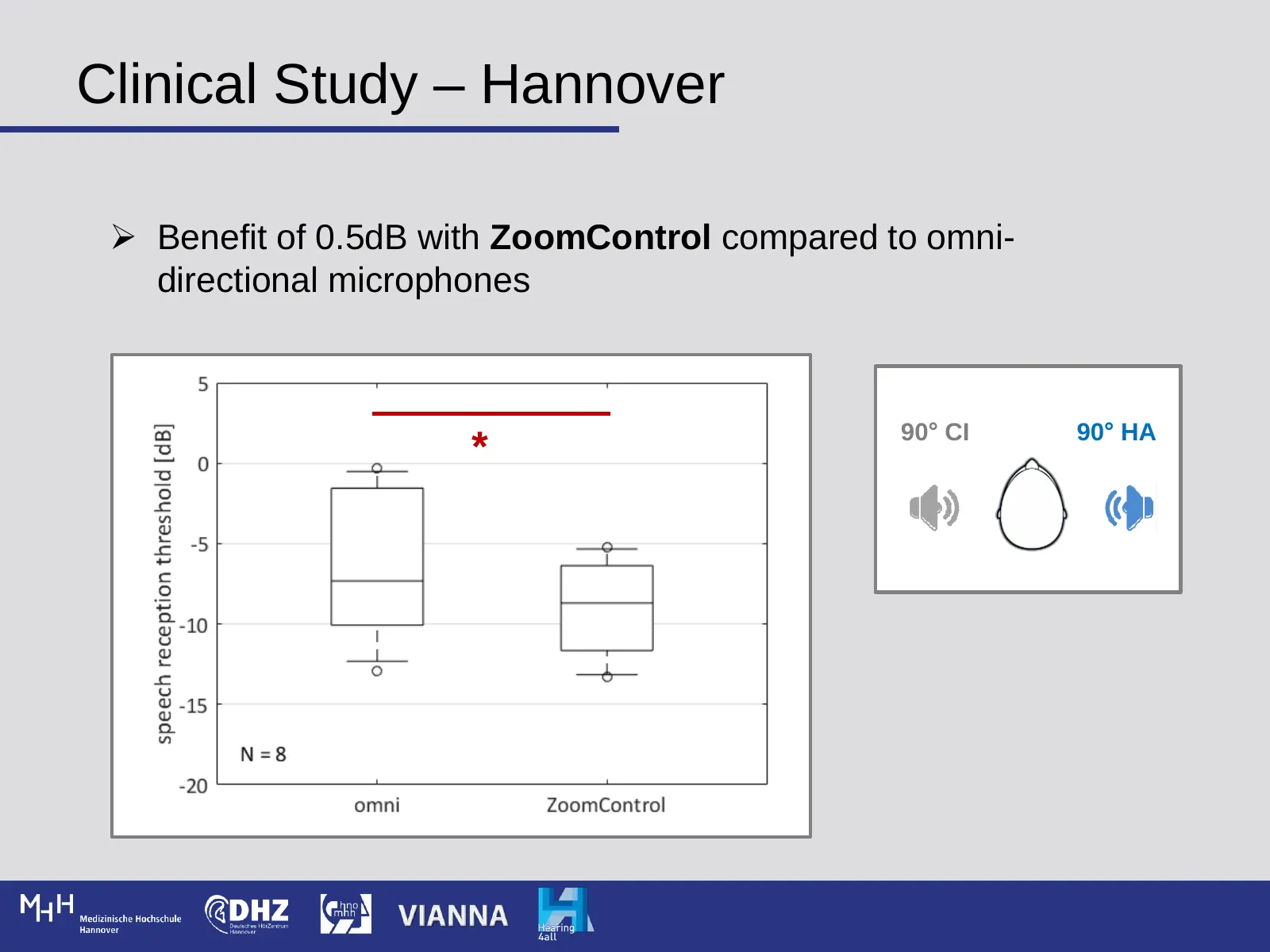
Slide 35: Clinical Study – Hannover
Clinical Study – Hannover Benefit of 0.5dB with ZoomControl compared to omni- directional microphones 90° CI 90° HA *
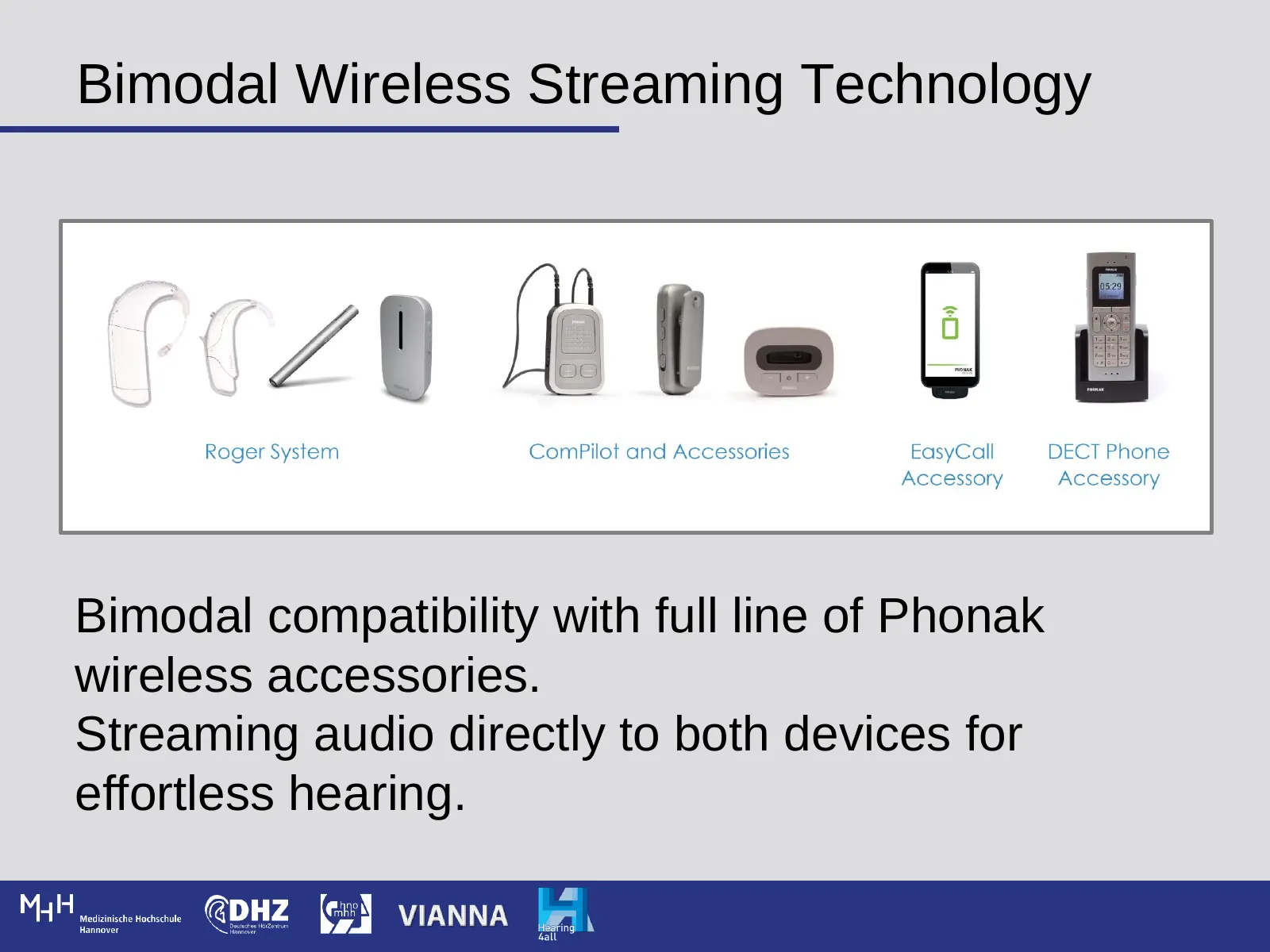
Slide 36: Bimodal Wireless Streaming Technology
Bimodal Wireless Streaming Technology Bimodal compatibility with full line of Phonak wireless accessories. Streaming audio directly to both devices for effortless hearing.
Slide 37: Testimonials
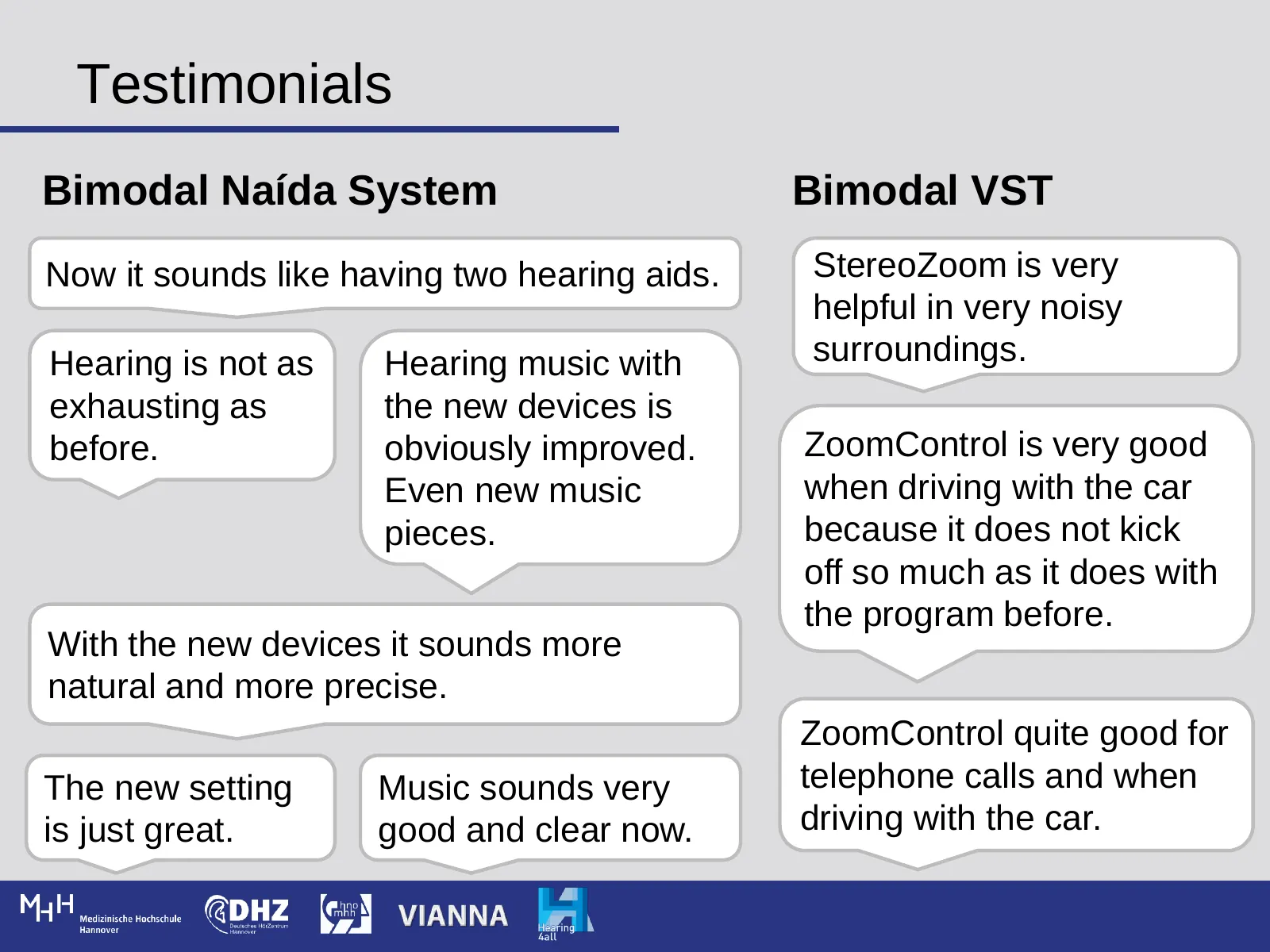
Testimonials Bimodal Naída System Bimodal VST Now it sounds like having two hearing aids. StereoZoom is very helpful in very noisy Hearing is not as Hearing music with surroundings. exhausting as the new devices is before. obviously improved. ZoomControl is very good Even new music when driving with
Slide 38: Binaural VoiceStream Technology - Summary
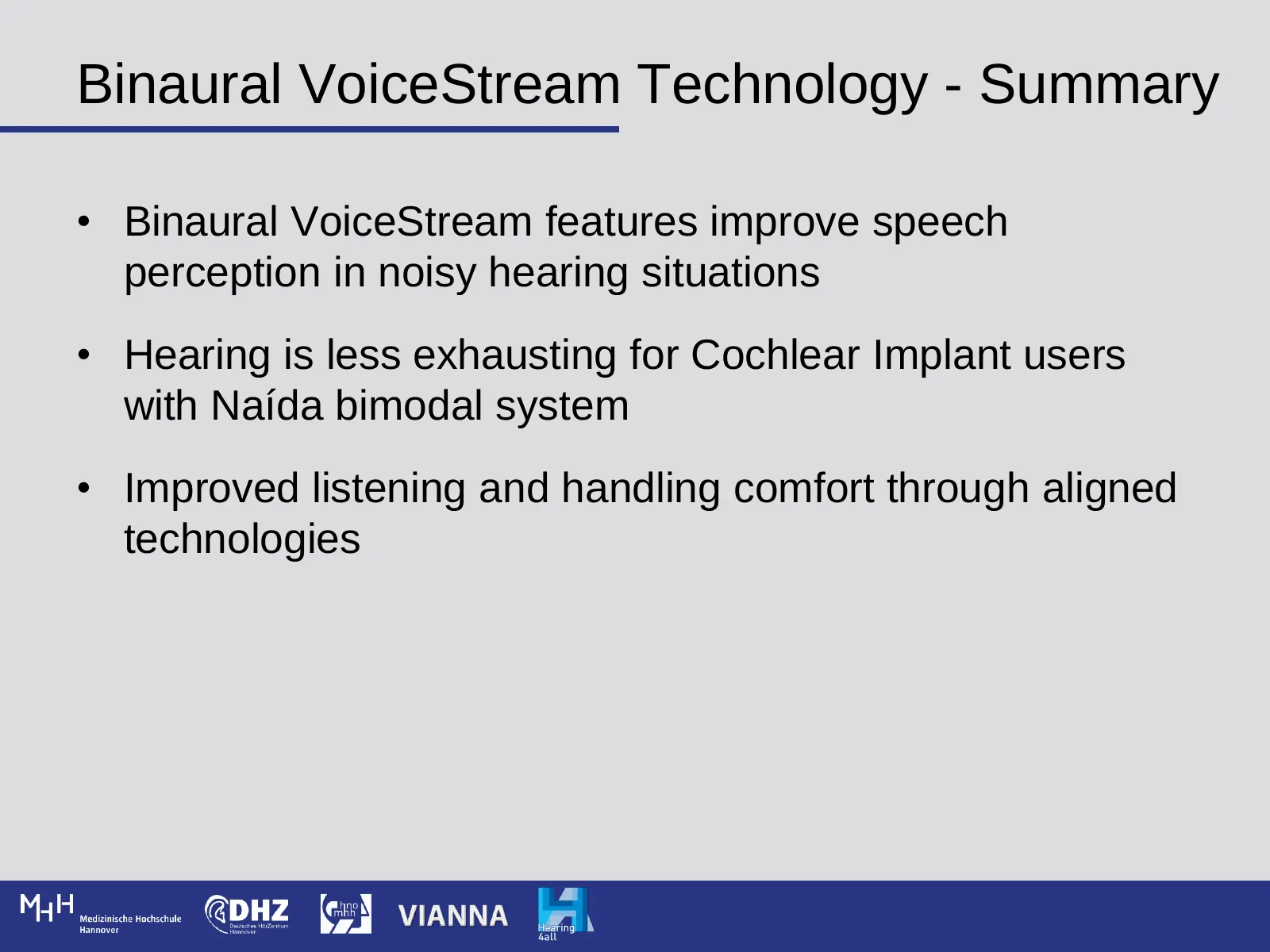
Binaural VoiceStream Technology - Summary • Binaural VoiceStream features improve speech perception in noisy hearing situations • Hearing is less exhausting for Cochlear Implant users with Naída bimodal system • Improved listening and handling comfort through aligned technologies
Slide 39: Summary
Summary Benefit for hearing impaired through bimodal fitting Increase of bimodal population High complexity of medical care of bimodal recipients Naída bimodal hearing solution offers • Simplified fitting for professionals • Improved comfort for recipients • Easy handling and connectivity • Better s
Source: Internet Archive copy of sonova.com
More decks from Sonova Holding AG
 H1 2026/27 Earnings Presentation29 slides · Nov 12, 2026
 EUHA 202642 slides · Oct 14, 2026
 Corporate Update (September 2026)13 slides · Sep 18, 2026
 Investor Presentation (September 2026)24 slides · September 2026
 FY 2025/26 Earnings Presentation36 slides · May 18, 2026
 Investor Day (March 2026)36 slides · Mar 23, 2026