
BOSTON, July 31, 2026 (GLOBE NEWSWIRE) -- Tiziana Life Sciences, Ltd. (Nasdaq: TLSA) ("Tiziana"), a biotechnology company developing its lead candidate, intranasal foralumab, a fully human, anti-CD3 monoclonal antibody, announces quantitative PET imaging results from the third patient with Multiple System Atrophy (MSA) in the Phase 2 clinical trial treated with intranasal foralumab to complete dosing.
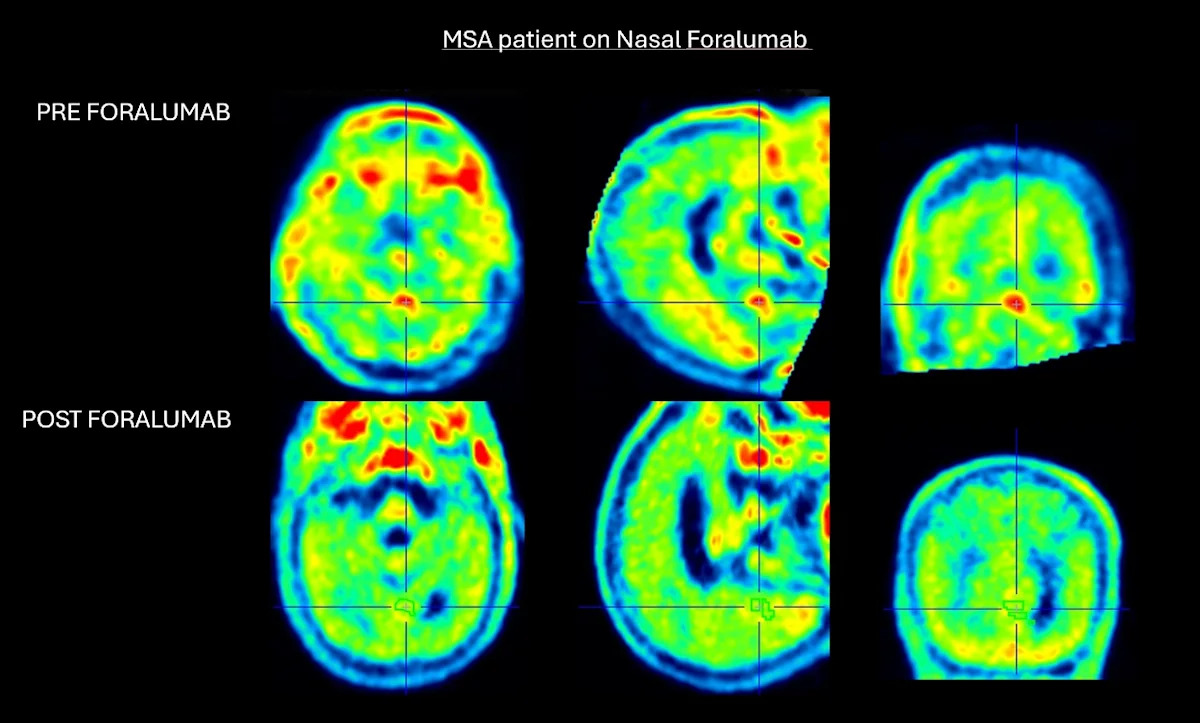
Quantitative analysis of PET scans demonstrated reductions in inflammatory activity in clinically relevant brain regions known to be affected in MSA following treatment with intranasal foralumab. The third MSA patient to complete dosing has shown up to 34% reduction in standardized uptake value (SUV) and 26% reduction in standardized uptake value ratio (SUVR) in the most affected areas relevant to MSA (basal ganglia and cerebellar white matter) in the brain. These findings are similar to the first two MSA patients, who showed up to approximately 35% reduction in standardized uptake value (SUV) and 24% reduction in standardized uptake value ratio (SUVR).
"The consistency of these PET findings across MSA patients, based on our lab's approaches, remains encouraging," said Tarun Singhal, MBBS, M.D.,M.B.A., Founding Director, NeuroPET Program, Ann Romney Center for Neurologic Diseases, Brigham and Women's Hospital, Mass General Brigham and Associate Professor of Neurology at Harvard Medical School. "In this third patient to complete dosing, we again saw quantitative reductions similar to those previously seen in the first two patients and reinforce the PET imaging evidence supporting biological activity of intranasal foralumab in dampening neuroinflammation in this devastating disease. Correlation with clinical features and further confirmation with additional quantitative techniques should be performed."
Figure 1: PET Scan of MSA Patient Treated with Intranasal Foralumab
"Seeing reproducible reductions in neuroinflammation on PET imaging in a third MSA patient further strengthens our confidence in the potential of intranasal foralumab," said Ivor Elrifi, Chief Executive Officer of Tiziana Life Sciences. "These data build directly on the positive signals already observed in the first two MSA patients, as well as in non-active secondary progressive multiple sclerosis and moderate Alzheimer's disease. We remain committed to advancing this program for patients who currently have no approved disease modifying options."
PET imaging comparisons conducted before and after treatment demonstrated marked reductions in radiotracer uptake across disease-relevant brain regions. These findings suggest a reduction in neuroinflammatory activity following administration of intranasal foralumab.
Intranasal foralumab is a fully human anti-CD3 monoclonal antibody designed to modulate the immune system through mucosal tolerance mechanisms and reduce inflammation without the systemic toxicities associated with traditional anti-CD3 therapies.
MSA is a rare, progressive neurodegenerative disorder characterized by autonomic dysfunction, parkinsonism, and cerebellar ataxia. There are currently no approved disease-modifying treatments for the condition.
Tiziana plans to continue evaluating intranasal foralumab in additional patients to further validate these findings and better characterize the therapy's potential to reduce neuroinflammation in MSA.
About Foralumab
Foralumab, a fully human anti-CD3 monoclonal antibody, is a biologic candidate that has been shown to stimulate T regulatory cells when dosed intranasally. Currently, 14 patients with Non-Active Secondary Progressive Multiple Sclerosis (na-SPMS) have been dosed in an open-label intermediate sized Expanded Access (EA) Program (NCT06802328) with either an improvement or stability of disease seen within 6 months in all patients. In addition, intranasal foralumab is currently being studied in a Phase 2a, randomized, double-blind, placebo-controlled, multicenter, dose-ranging trial in patients with non-active secondary progressive multiple sclerosis (NCT06292923).
Foralumab is the only fully human anti-CD3 monoclonal antibody (mAb) currently in clinical development. Immunomodulation by intranasal foralumab represents a novel avenue for the treatment of neuroinflammatory and neurodegenerative human diseases.[1],[2],[3]
About Tiziana Life Sciences
Tiziana is a clinical-stage biopharmaceutical company developing breakthrough therapies using transformational drug delivery technologies to enable alternative routes of immunotherapy. Tiziana's innovative nasal approach has the potential to provide an improvement in efficacy as well as safety and tolerability compared to intravenous (IV) delivery. Tiziana's lead candidate, intranasal foralumab, which is the only fully human anti-CD3 mAb currently in clinical development, has demonstrated a favorable safety profile and clinical response in patients in studies to date. Tiziana's technology for alternative routes of immunotherapy has been patented with several applications pending and is expected to allow for broad pipeline applications.
For more information about Tiziana and its innovative pipeline of therapies, please visit www.tizianalifesciences.com.
Forward-Looking Statements
Certain statements made in this announcement are forward-looking statements. These forward-looking statements are not historical facts but rather are based on the Tiziana's current expectations, estimates, and projections about its industry, its beliefs, and assumptions. Words such as 'anticipates,' 'expects,' 'intends,' 'plans,' 'believes,' 'seeks,' 'estimates,' and similar expressions are intended to identify forward-looking statements. These statements are not guarantees of future performance and are subject to known and unknown risks, uncertainties, and other factors, some of which are beyond the Tiziana's control, are difficult to predict, and could cause actual results to differ materially from those expressed or forecasted in the forward-looking statements. Tiziana cautions security holders and prospective security holders not to place undue reliance on these forward-looking statements, which reflect the view of Tiziana only as of the date of this announcement. Actual results may differ materially from those indicated by such forward-looking statements as a result of various important factors, including: the uncertainties related to market conditions and other factors described more fully in the section entitled 'Risk Factors' in Tiziana's Annual Report on Form 20-F for the year ended December 31, 2025, and other periodic reports filed with the Securities and Exchange Commission. The forward-looking statements made in this announcement relate only to events as of the date on which the statements are made. Tiziana will not undertake any obligation to release publicly any revisions or updates to these forward-looking statements to reflect events, circumstances, or unanticipated events occurring after the date of this announcement except as required by law or by any appropriate regulatory authority.
For further inquiries:
Tiziana Life Sciences Ltd
Paul Spencer, Business Development, and Investor Relations
+44 (0) 207 495 2379
email: [email protected]
[1] https://www.pnas.org/doi/10.1073/pnas.2220272120
[2] https://www.pnas.org/doi/10.1073/pnas.2309221120
[3] https://www.neurology.org/doi/10.1212/NXI.0000000000200543
A photo accompanying this announcement is available at https://www.globenewswire.com/NewsRoom/AttachmentNg/30ec9a73-e4a3-4339-a898-67df1b9ad427