Transcript
Automated transcript · Written by software from the replay's audio. It can mishear names and figures; the replay is the record.
0:07 Good morning or good afternoon, depending on where you're signing in from today. Really appreciate everybody joining us. And I'm more than pleased to introduce Brian Penny, Walbridge's CEO, and Mark Peterson, Walbridge's Senior Geological Consultant for a digital town hall today. Gentlemen, how are you doing? Excellent, and thank you for inviting us, Romeo. Awesome. So the format for today is we're gonna go through a number of questions from me, and then we'll be taking questions from the live audience. So folks, this is an interactive event today. There's a chat button in the bottom right hand of your screen. Once we get through my questions, more than happy to hear from you guys. So please enter your questions at any time during the event and we'll try to get to them at the end. If for whatever reason we don't get to your question today, I'm going to be sending them through to the Wallbridge team to make sure they get back to you over email, but we'll try to tackle as many of them as we can during the event today.
0:55 The other thing to note is this event is being recorded, and the replay will be available because we're getting it done pretty early in the day today, probably by this afternoon. So you'll automatically get that sent to your inbox. Please feel free to share it, because at that point the event is entirely public. So let's get right into questions. I've got a list of questions for both of you. My first one is actually to Mark. My question really with almost 30 years experience in the industry, what drew you specifically to Wallbridge? Well, a few things. I'd say kind of starting from the outside, working in mainly it was, doesn't come along every, every day where, you know, an explorationist, no matter how many years of experience you've been in the game, to have an opportunity to join, you know, a new and emerging gold discovery and development story in one of the world's premier gold provinces, the Superior Province of Canada and the Abitibi Gold Province, which is kind of central core to that.
2:01 And so, right there, great address, lots of gold, but also Walbridge's, you know, land position strategically
2:13 is really quite significant. You know, they've already got in a relatively short amount of time since acquiring the Fenelon project only several years ago, they've already got 2 deposits with million ounce plus potential. And those are contained within a large contiguous land package that extends nearly a hundred kilometers along trend, along the same belt of rocks that hosts the Detour Lake Gold Mine, which is Canada's largest producing Gold mine today. In addition to that, the company has a strong balance sheet, is well funded and has a really strong, smart, focused, and committed team of people with a lot of range. We've got both experienced mining professionals as well as some of the younger generation coming into the game who were really keen and really full of enthusiasm and energy and it's just a real pleasure to be able to work with a team like this. And finally, It's just great to work with Brian.
3:32 Again, we've worked together in the past. Brian has a profound amount of global mining experience and knows the capital markets inside and out. And he knows how to maintain a healthy balance sheet just through, you know, disciplined,
3:52 just disciplined, good financial management. So you know, those are kind of the cornerstones from my perspective on what makes for a successful mining company, regardless of whether it's at the earlier, middle or operational stages of its life. Well, appreciate that. You're about 90 days on the job now, right? Or somewhere close to that. Given that, what surprised you about Walbridge's projects? I guess, particularly Fenelon and Martinier. Yeah, I didn't, I was aware of, you know, I follow all the stories and I was aware of Fenelon peripherally, but not really in depth. But I think, you know, what really struck me once I got, you know, more up close and personal with both projects and the broader package was Phenolon, it's really a relatively new discovery. And in a very short timeframe, and Walbridge had a small starter kit of a resource that a predecessor company or companies had fleshed out. And then Walbridge acquired the property and put together the land position.
5:07 But as they were building off the initial resource that they had, they very quickly and very smartly got on to some of the broader scale geologic controls. And suddenly they had a multi-million ounce gold system, kind of a tiger by the tail. And, you know, I like – everybody likes big gold systems, but what I really like about this one as well as Martinier is it's a high-grade gold system.
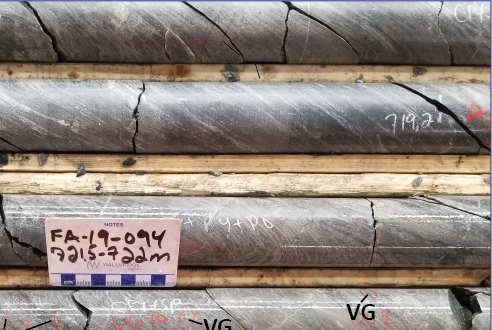
5:43 And strikingly to me, It's one of the few, I worked on quite a few gold systems over my time. This one in particular has, it's just a lot of visible gold that shows up.
5:58 And that's always a great, you know, a great thing to have in the mix. And also Phenolon, you know, you get high grades beginning right at very shallow depths, right at the top of bedrock, and the system extends vertically down. It's been explored and delineated down at least 400 meters, it remains open at depth as these Abitibi gold systems typically do. So there's, there's definitely upside for the future. But also what's what's quite nice about phenylon is, yes, it's multi, you know, multi million ounce, which which bodes well for its its long term future, but right up on the front end, it has a high-grade core that looks to be very amenable to developing, you know, a nice sized, discreet, high-grade, high-margin, underground, underground-mineable type of a resource.
7:01 And that right there is, that's just a great starting point. But then you shift over to Martinier, which is a completely separate gold system to the west of Fennelon, some 30 or so kilometers, And that's not as far along on the exploration resource delineation path as fell on. But it definitely has all of the earmarks to offer the same type of size potential, as well as high-grade potential. And in some respects, some parts of it may even be even higher grade. It's a different type of an animal geologically, somewhat, from fennel on, but again, you know,
7:52 a nice million-ounce potential and lots of room to grow it. And, you know, we've been drilling on both, but this year and right now, the main focus is on seeing what we can do
8:08 to grow the size of Martiniere even more beyond what it is. So, those 2 components right there are a really nice combination to walk into and be able to drive forward. Awesome, appreciate it. Our next question, and great questions in the chat by the way, I will certainly get to the ones that I've seen so far. One question is for both of you. I'm gonna start with Brian. A lot of people call Canada 13 jurisdictions in a trench coat, just because of how different working province to province can feel. With your major projects in Quebec, what would you consider the advantages or challenges of working in La Belle-Pravance? Thank you. And you know, Quebec is one of the most favorable jurisdictions on the planet to work in. You know, The latest Fraser Institute study ranks Quebec as number 5. I believe Quebec should be number 1.
9:09 The government financially supports exploration in the far north to the tune of a 38.5% cash refund when you file your tax returns for qualified expiration expenditures that are not financed from Quebec Flow-Thru. Quebec Flow-Thru subscribers would get that benefit. As you can see recently we received the check for 8.1 million dollars and that is this refund for the 2023 tax year that will go into our coffers and that will be part of our program in in 2025.
9:50 In addition we have great support from our local communities, whether it's the town of Matogami, with our First Nations partners, the Luskaginish, Washasibi, and the Abitibi-Winni First Nations. We have pre-development agreements with the 2 Cree communities. We're working on 1 with the Algonquin community and
10:12 great relationships. We have bi-weekly meetings with the communities. We're operating as if we have PDAs with the 3 groups. We share the economics equally. And we're working early to develop a long-term relationship. One of my challenges, and this is me personally, is I grew up in Sudbury. I have the equivalent of about grade 10 high school French knowledge and with a lot of the traveling I'm doing I'm about to subscribe to some services so when I'm leaving Toronto and driving up the fennel on I've got 4 hours of uninterrupted French tutorial so you know my goal is to improve that you know it's it's later on in life I'm not a linguist but I'm sure I can get a lot better than I am today.
11:05 That's great. I learned French reading Tintin, so that's always available.
11:09 I'll throw it to Mark, your experiences working in Quebec and what you think of working in the jurisdiction. Yeah, well, I've worked a number of places throughout the Americas, a bit of time in Australia. I've never really
11:24 had much opportunity to work with a project in Quebec until now. But what strikes me, I guess it's something I've always known, but now I'm seeing it, experiencing it firsthand, that it's a very friendly mining jurisdiction. It's got deep roots in Canada's mining history and will continue to have, you know, grow those roots. And with that, you know, it comes with the benefits of having, you know, good access to the resources you need for mining exploration and development and ongoing operations. And those are, you know, the tangible physical resources, but as well, a very deep pool of very experienced
12:10 professional talent and skilled trades in the mining sector. And It's just committed to continuing along that path as one of the premier jurisdictions in Canada and in the world
12:28 for mining. Not just gold mining, but that's what we're focused on, but certainly other things as well, as we're seeing in other parts of mining sector. In terms of challenges, you know, I'm mainly a technically focused guy. You know, I do think about the economics of things a lot because that's really what drives everything. But from my perspective, and it's not unique to Canada, I think it's more just unique to working in the north. Yeah, obviously you've got, you know, it's more remote. So you've got some logistical hurdles that you just need to need to deal with. And we deal with them well. But but it, you know, it's a factor.
13:15 And more specific to geology. And one of the reasons the Phenolon project and the entire detour Phenolon trend has remained less explored relative to other parts of the Abitibi, is that We're exploring undercover. There's not a lot of bedrock exposed at the surface, so we have to use more advanced, more indirect methods to guide us in determining where we want to go and explore. And so we're leveraging that to maximum effect. But it certainly presents a challenge, but it's not unique to Northern Canada. This is just a trend in the industry overall. And we'll continue exploring undercover, we'll continue to be a trend going forward.
14:03 So we're managing to it. But finally, I think the thing that I was less familiar with, but really A really nice bonus is, and I really mean this, culturally, even though, you know, when you go to Quebec, I don't speak French, hopefully I will pick it up as I progress along here, But the people are just so genuinely, genuinely open, friendly and wanting to help no matter doesn't doesn't matter, you know what what you're doing, It's just a really, really welcoming place to just spend your time and to work. So that I didn't expect, but I thought I should mention it because from a personal perspective, having worked in many places, it's one of the better places I've come across to put my time in.
15:11 That's hard to overrate a welcoming community for sure. I've got one for Brian, and This is a question that we got a couple of places via email. The stock has seen some shorting recently. I'm curious what you think the source of this is and what it means for both holders of the security and prospective investors. Well, how I can answer that question is, you know, recently our stock has traded between 9 and a half and 11 cents. We have good support around 9 and a half cents and resistance at 11. Our short position is less than 0.25%
15:44 of our issued notes standing. So you know, on face, it's not a big problem. It's down to 1.8 billion shares. And it continues to decline. We continue to follow the Safe Communating Mining Group with respect to their paper on naked short selling.
16:03 We believe this is a regulatory matter but if the industry can put pressure on the regulators to deal with this, you know, that would be good news as well. We did support them with a donation in the fall of 2020. We're monitoring this issue, the situation, and we're learning like everybody else as this project moves on. Awesome, appreciate it. One question, so I remember we already talked about it briefly when we were talking about Quebec, but last week obviously received a tidy sum from you Quebec for a tax refund and obviously congratulations. The speed of the delivery is great news. I'm curious where that money's going in 2024 and I guess I'll throw it to Mark sort of as a way to give a geological work plan for the rest of the year. Well, can I tell you where the money's gonna go first? Sure, yeah, please. And we're gonna talk about the plans for 2024.
16:56 Please, please, David. You know, we closed the quote of the strong cash balance with this refund, which came very early this year. Usually we get it in the fall and September, October. This year we got it quickly, which thank you to the Quebec Revenue service for sending us that money. With that, we're earmarking to close the year with 14 roughly, 14 to 15 million in the bank. That is earmarked for 2025. So this money is not going into the ground this year, it'll go into the ground next year. Mark has a program for 2024, which he'll discuss further.
17:34 But, you know, assuming as we figure out our program for next year, assuming that we have a similar sized program, you know, the delta between $21 million and $14 million is, is, you know, financeable, even in the most challenging markets.
17:52 So we're not gonna blow our brains out this year. We've got a steady hand approach and that money will finance the startup and probably, you know, half of the year, if not more than that for next year. Okay, helpful context. Thank you. And I'll throw it to Mark for that kind of exploration updates and what's coming. Yeah, so we're about halfway through the year, of course. And so far this year, we've drilled a little more than half of the planned drill meters for the year. We expect by the end of the third quarter, when the field season comes to a close, we expect to have completed on the order of 20 to 23,000 meters of drilling.
18:41 What we've achieved so far in the first quarter was our initial program at Fenelon, which was really a continuation of a broader drilling campaign that began about the beginning in early 2023
19:04 to do some kind of combination infill and short step out drilling of the fennel on resource. We completed about 2,300 meters in the first quarter,
19:22 and that pretty much rounded out, I think, the objectives that were set out at the beginning of 2023. We released those results a few weeks ago. I was quite pleased with them. What they demonstrated and further confirmed was we have high-grade mineralization
19:47 that's showing up in a cluster of, I call them sheeted vein swarms without getting too technical, but they start right up near the surface. So we've confirmed the great continuity, or added confirmation to the grade continuity of the near surface portions of the resource. And in addition to that,
20:13 the deeper portions of some of the same drill holes provided additional confirmation of grade continuity in that higher grade core that I mentioned earlier. And then we also, this time around, it wasn't, you know, 2300 meters was not a big campaign, but we did take a stab at a couple of step out holes. One of them closed things off in an area way on the far northeastern edge of the resource,
20:46 where we already knew continuity was a bit sketchier, that was in the original part of the resource that was there when Fennell, or when Walbridge arrived. But the other hole gave us a couple additional 100 meters of strike extent to the deeper Tabasco and Area 51 contact zones, which definitely will merit some follow-up down the road. So after we finished
21:24 with the Fenelon campaign, we transitioned over to Martinier. We actually doubled up. We had 1 drill to start with. We added a second drill at Martinière. And we just recently completed our phase 1 program at Martinière, which was on the order of 10,000 meters, completed. That went very fast.
21:51 And that drilling was primarily directed at doing a bit of infill and incremental step-out resource drilling, but also to collect material, mineralized material that will be used to go toward metallurgical process test work that will feed into our ongoing technical studies that my colleague Francois Chabot is spearheading. So we've done
22:25 a fair spread of metallurgical drilling through the Martinière resources, it's currently defined. And in parallel with that, we did drilling to collect data for geotechnical and geomechanical rock mass characterization work that Francois needs to put together a PEA level kind of a mine plan for Martinier. So that work is pretty much done. Coming up, actually next week, May is almost gone, believe it or not, We will be heading back out with the drill to start work on some of our high priority regional targets that our team has identified.
23:11 Right now, we will be starting in an area in between Martinier and Fennelon,
23:17 working on some areas that really haven't been much drill tested before at all, but we're seeing very, very good indications out of the geophysics and some of the regional geologic compilation work that's been done. So that's going to be happening coming up in June. And then come mid July, we'll be going back to Martinier for phase 2. Now phase 2 will be more oriented toward, you know, more of the earlier stage exploration step out to try to grow the resource beyond, beyond what we can see right now in front of us. And we've already had done a little bit of that on the tail end of the phase 1 program that's given us some, some real encouragement, what we're seeing in the drill core.
24:03 And then come later in August, once we wrap up phase 2 at Martinier, we will have a phase 2 regional drilling campaign. And on that one, we will be moving to targets to the west of Martinier, where currently we can't do any work because there's
24:28 a hiatus in drilling for a portion of our property while we let the caribou calving season run its course. They were there long before us and we have to respect them. They're very important members of the community. But we will be going back out west of Martinier on some high priority targets out there. And in terms of news flow, I would expect, I'm expecting to have all the final results of Martinière phase 1 drilling in hand and ready to release around mid-July, I think is what we're looking for. And then come toward the back end of Q3 in September, we should, I would expect we would have the results of Martinier Phase 2 and then the results of our regional program both around that same time frame and then
25:31 the last part of the regional program, probably in early Q4. Well, that's what it's looking like right now. We're tracking very well in terms of performance to budget, which is always a good thing. We haven't had any surprises there.
25:49 And yeah, our team is staying on top of all of the various moving parts that drive one of these programs. Awesome, appreciate that update. My next question, I had a version of it, but Glenn Westerhoff in the chat has a better version of it. So I'll simply ask his. He says, it looks like we're into a new bull cycle for golds. And this is a question for Brian. How is Walbridge positioned to capitalize on this upwards momentum? And what are the target goals we want to achieve to see investments grow in value? Well, you know, it's something we I've been in this business for almost 40 years now. My most my first senior role was CFO of Kinross in 93. So 30 years, I've seen cycles. I remember 250 to go dollar gold like it was yesterday.
26:38 What I can say is that what I'm seeing right now is the valuations are starting to return to the senior producers. And, you know, they'll be the first to benefit from the higher metal prices because it immediately impacts their earnings and cash flow. Then it'll trickle down to the middle producers
27:01 and ultimately to the junior explorers because we're the furthest away from monetizing that. There is a time lag. This has been repeated over the 3 decades I've been involved and it is very similar. You know, will the money filter down into the juniors,
27:19 you know, early next year, later this year? Well, you know, the market will determine that. You know, Mark's got a great plan. We have a great team. We have a great property position, 830 square kilometers. We're focused on advancing that project. Our biggest goal is in early 2026, sooner if we can get it done quicker, we will publish a combined PEA for Martigny and Fenelon because the 2 properties are 30 kilometers apart. There are definite synergies.
27:52 You know, we're doing a lot of trade-off studies on Fenelon, looking at Martinier as well. So, you know, that is our, you know, midterm news flow. And then in between, we will be looking at 1 thing that Mark didn't mention was the MET results should come out in the fall of this year sometime.
28:16 So you've got a good idea of our news flow until next year and then obviously in the fall of the year we'll put out our business plan for 2025 on where we're looking to advance the project. But I'm excited. I think this is a great opportunity. You know, things we need to look at, do we go back and look at the CAPEX and build a more scalable plant that, you know, makes financing easier, yet to be determined. But we're looking at everything right now with the goal of improving the overall economics of the projects when we put together this combined PEA in early 2026.
28:57 Great, thank you. Now, Mark, bear with me, because I know you already answered this question to some degree when you outlined your plan. But not to put too fine a point on it, what is the next major milestone for Wallbridge on the exploration side? And when can investors expect additional drill results this summer? Just to reiterate. Yeah, sure.
29:17 Yeah, in terms of news flow and draw results, as I mentioned, the next batch should be coming out in mid-July to cover off on the Martinier Phase 1. And then in early to mid-September, I would expect the balance of results from Martiniere phase 2 and a bit of our regional program results in terms of news flow there. In terms of the next significant milestone, I think it would be a combination of just what comes out of, you know, what comes out of our exploration news flow. But in tandem with that, as Brian mentioned,
29:56 the results of the metallurgical test work that we've initiated along the technical studies front. So what really impresses me again about Walbridge is it's not a 1 deposit type of an exploration story at all. It's really an early stage exploration junior play, but with an already
30:26 built in and moving pipeline, beginning with Fenelon being the more advanced, Martinière not too far behind it, and then, you know, the regional, the regional upside piece that we're, you know, we're not turning our back on. In fact, we're giving it, you know, we're giving it full, our full attention as well. So it's, it's really those 3 legs on the stool that I think underpin the Walbridge story and why it's kind of, in a way, it's unique in terms of what's out there, in terms of its stages of development
31:03 and the upside potential that it still offers at multiple stages on the curve. Great, thank you. Next question's for Brian. And again, thanks for questioning the chat. We're just about to get to them. I'm almost through, I promise. But this question for Brian, what's your current cash balance and when are you likely to need to undergo a financing next? Well as I mentioned earlier, you know we closed the quarter with a strong cash balance. We got the 8 million dollars.
31:30 I don't like to talk about non-published cash balances because it is a bit selective, but I did guide you to we're looking to close the year with $14 million in the bank, and if we propose a $21 million program against next year, you know, there's a $7 million deficit that we will look to finance between now and mid next year. Great, thank you.
31:57 Last question, I think for just Brian, curious what Walbridge's broad philosophy is when it comes to stakeholder engagement in the region? And do you anticipate any roadblocks as you move towards a PFS and FS?
32:10 You know, we got in early. We meet with our partners regularly. Every 2 weeks, we have a meeting with our Cree partners and at least once a month with our Algonquin partner. We are truly partners. 25% of our workforce comes from the First Nations communities. We have great support right now from them. You know, as we get into an IBA and other things, you know, we're investing to make that process streamlined going forward. You know, our biggest challenges were in the middle of nowhere and the logistics of, you know, getting materials and supplies and, you know, we have a camp environment, so organizing that and,
33:00 you know, that's about it. MIKE Perfect. Last quick question for both of you before I get into the audience questions. Appreciate everybody's patience. Really what are you most excited about going into the second half of this year? I'll start with Mark. Well I'm really pleased with what we've achieved so far, not only in the execution, but the results that have already started to come through. Exploration is, it really is a results-driven process and, you know, we're getting very strong, positive results. We continue to get them. So I'm quite pleased with that. And yeah, I'm really looking forward, now that we've kind of taken care of some of the more predictable, call it infill resource drilling at Fenelon and Martinier, you know, what I live for is really to grow resources and create more value.
34:04 And as we turn our attention to the regional program and step out exploration at Martinier, that's really kind of the tip of the fun spear, if you want to call it, give it a name. That's what all exploration geos, what really drives us, is creating value, creating opportunities that didn't exist for people in the past, and just making that next discovery. I might use tip of the fun spear in the future. It's very, I'm talking about. Just made that up. So I'll quote you. I'll shift to Brian for what you're most excited about in the second half of the year. Well, what I'm most excited about is the continuing drilling, looking for new discoveries, similar to what Mark said, the results of our regional programs, the completion of metallurgical results, because initially Belmoral about 8 years ago did some metallurgical drilling.
35:02 Unfortunately, as the resource has grown, some of that work was outside where the resource is today. That's why we're doing this. It's the right thing to do, to do it up front rather than leave it later on. And I'm most excited about in 2026, the combined PEA because the deposits are so close to each other. There are synergies that we haven't uncovered yet that we're gonna work our guts out over the next 18 months to get it into a plan. And then from that, you know, develop a permitting timeline, your project description, and, you know, get into the next higher level studies after that. Great. All right. Well, let's jump right into audience questions. So there's quite a number. I'm going to tackle them mostly in order, unless they're a combination, in which case I'll combine them. But if you ever feel I haven't addressed your question, please let me know in the chat, and I'll get to it.
35:57 So MLB, this is during one of your earlier comments about ExplorationMark. He said, it's great to hear the reinforcement of the resources and potential. But he's curious, what, if any, downsides have you seen to date with the geology of the projects? I wouldn't say I've seen anything that really gives me pause. I think as we understand, what makes phenyl on tick as an ore body, we will continue to learn, but I think we are doing the right thing by focusing on that centralized high-grade core where we know we've got a chunky part of the resource that really lends itself to development at a meaningful, at a reasonably achievable scale.
36:50 So that's, you know, that's quite encouraging. I think the broader resource of Phenylon, you know, that's just, you know, really good gravy for future upside. Probably the, you know, the thing that gives me the most pause is it's really the challenge of exploring undercover up there. There's just a lot of cover that you can't see through. We're in the process of developing plans for how to deal with that with a different type of drilling program to drill through or to actually drill that overburden profile, because there is gold in it.
37:37 And that, you know, if we can get a handle on what's happening in that profile, that'll give us, you know, one more tool to vector in on, you know, the better parts because 100 kilometers of a belt, that is a lot of ground where a lot of things can happen. And we already know where 2 pretty interesting things are happening along that belt. And we have a lot of smoke that's shown up in legacy regional drilling that's been done, as well as some of the more recent exploration drilling that Walbridge did just last year. So that's probably the biggest challenge, is just exploring under the cover and doing that both effectively and as efficiently as possible.
38:23 Great. A question from Fred in the chat. He asked if it looks like the high grade hit at Ripley was a one-off. At Ripley? I don't know the answer to that because we really have not turned our attention back toward it since that was done last year. So I would have to say the jury would still be out on that. I don't know if we're going to turn our direct attention back to Ripley this year or not. But what I would say about Ripley ties it back into Fenelon in general, high-grade intercepts are very common throughout the system, which just speaks for a strong, robust gold system on the one hand. And on the other hand, you have to, the challenge is how do you model that and come up with good, robust estimates to support, you know, good mind planning, good development plans.
39:25 And, you know, we're also working that front as well as, you know, the ongoing exploration program. I didn't speak to that very much, but we are very, very focused on how we're gonna, you know, continue to build our models and learn as we go to come up with, you know, good, robust estimates, the estimates that we really understand and the folks downstream and technical studies and beyond can really work with. Great, thank you. This question from Don for Brian. He asks that given the recent challenges in attracting institutional investors, what steps are being considered to enhance your strategy and better address shareholder concerns?
40:15 Well, we're always looking at our strategy. We're always looking for how we can improve what we have today. So, you know, we continue to advance our strategy discussions. We are very busy on the IRR side of things. We are at the Quebec conference next week, which I think we've got almost 30 meetings now. Last fall in Zurich, we had 20 some meetings, a lot of smaller institutions are booking meetings, asking questions, and hopefully that will resolve in purchasing of the equity at some point in the future. It feels like the market is turning. We're spending a little bit more money to get out there and tell our story. We're going to do more sessions like this in the future because We recognize that the shareholder base that's on this call right now is as important as large institutions.
41:07 And we will continue to work at that. We've got a plan for this year. And later on this year, we'll tell you what our plans for next year as how we're gonna continue to advance the project and create value for our stakeholders. Great, thank you. Matt asks in the chat, with the closure of Glencore's operations in Matagami, has the government approached Wallbridge in a way to help foster the growth of your properties or to help support the future of Metagami? Well, unfortunately, that was a base metal asset. And it comes with many years of production there and a very large tailings area. And the process plant would have to be significantly modified. It's too small. And because of the grade of the ore to ship it to the metagamy, it would probably eat too much of the economics. So it's off the table.
42:02 Great. Thank you. Next, I'm going to combine a couple of questions. And this also includes one we got on email. People are looking for anybody on your team to address the concerns presented by Crux Investors as they've noticed that it has seemingly impacted share price? Well, as far as Crux is concerned, I've looked around, I've listened to it. We've completed a PEA. It is not a pre-feasibility study. It's not perfect. It's the best information we had at the time. As we learn more, we will continue to advance it. There will be more infill drilling. A lot of these questions that he has will be answered in the future.
42:48 So I think he was a little hard on the team, but that being it, we understand his concerns and as we go forward with our drilling, we're addressing them as part of our programs. Is there anything you want to add to that, Mark? Yeah, all I can say is, it ties back into what I was saying is, We leverage everything we learn as we move along to improve and specifically to what the gentleman with Crux Investors was speaking toward is, you know, modeling estimation. And, you know, we've engaged some, you know, a very experienced mining professional, resource estimation consultant, who has in his background includes being the main geologist, resource estimation geologist responsible for Detour Mine once upon a time and other large gold projects around the world.
43:54 And he has worked both the operations side of resource and reserves estimation and mine planning, as well as the front end, you know, pre-development part of the spectrum. So he understands both ends, you know, both in terms of what's needed on a deliverable and then what do you do with that deliverable going forward. So we take this very seriously. And you know, we have, you know, we have more drilling, more drilling to do as well as more drilling that we can bring into our model and estimates over and above what's already in the PEA. Great, thank you. MLB in the chat, you addressed this question, Brian, but you're both more than welcome to comment on it, obviously. You know, just a few years back, Walbridge was on Sprott's top public awareness list. And then he asks really, do you believe the Walbridge share price is in the right valuation place as of May, 2024, or share prices a couple of years ago, more representative of a true valuation for Walbridge in your esteem?
44:59 Well, what I'll say is, we put out a PEA on Fenelon last year, mid last year, so almost a year ago, that said that at $1,750 gold, it has an NPV of $721 million, as in Canadian dollars. Our current market cap is a little better than a hundred million dollars. I believe we're grossly undervalued. The challenges in this marketplace is with very few institutional buyers out there, you know, there's not the support that would be in more normal market conditions. We have to work through this. We have to deliver on our plans. We have to set deliverable goals and achieve them.
45:46 You know, is it more representative where we were 2 years ago? All I know is today we're grossly undervalued and that's our prime directive right now is to focus on how can we bridge the gap, what can we do to advance the project and create value for all of our shareholders. Great. Mark, I don't know if you have additional comments on the same point. No, I think Brian's captured it quite well. Perfect. So right off the next one, I'll say, Mark, the chat's gonna make you blush a little bit. He says, Mark, I think most shareholders are a fan of yours and they're curious if you're gonna be joining Wallbridge as something beyond a consultant. Not to make you laugh. I do suspect Yes, that's definitely in the future here.
46:34 All right. Thank you. We'll leave it there. W Crooks asks, can you tell us what's happening with Agnico Eagle at Detour East? Well, what I can tell you is that the Detour East agreement is, let's take a step back. We entered in the earn and agree with detour east when, you know, access to capital was better, but we wanted to focus on Fenelon and Martini. It was, it borders onto the detour mine and it was a logical place. The deal was done with Kirkland Lake Gold to earn into it because chances of us getting to that property to spend money, you know, would have been difficult. So, you know, the earning agreement was signed. They've done, you know, some exploration work, you know, some surface sampling, other things.
47:21 But between now and in the next 18 months, in order to earn their 50% interest, they have to spend about $5.5 billion. I believe we're going to see drills turning this summer and clearly next year as well. So I think that the activities there will increase over the next 18 months. And that is another source of news for us as well, or potential news flow. Great, thanks. We've got time for, I think, looks like one more question. Now this is a question I see all the time, answer obviously just to the best of your ability. But Monty says, Tony McCooch is a mind builder, He must be chomping at the bit to develop Fenelon. And the question I think I ask every explorer at some point, is Walbridge going to be a gold producer or is it an exploration company?
48:11 Up to both of you. Well, ultimately, you need to build a plan to achieve commercial production, because that's when the value creation happens, when you have access to cashflow, and ultimately you can pay dividends. But there's a lot runway between now and then. If in the interim, somebody says they can do it better to us and offers a significant premium, obviously we have to consider it. But for now, our goal is to explore, to improve, to permit and ultimately build it. Could we build it today with a hundred million dollar market cap and an initial capital outlay of about $600 million? It would be very challenging, if not impossible to finance it. So what we have to do is to continue to work, continue to tell the story, continue to hit our goals and our objectives so that we can improve our valuation, which makes that challenge a little smaller.
49:13 There you go. Mark, any additional comments on that or I feel we're all set? No, it's a very logical question. From my part, what I can say is, over my 30 plus, actually nearly 40 years in mining and exploration, I've had the good fortune to be involved in projects that have been from discovery stage through resource delineation development, through mine startup and ongoing commercial operations. For my part, I'm good to go. And, you know, as far as as far as we, you know, as we take this company, but as Brian said, you know, at the end of the day, we're here to create value for shareholders and do what's right for, for the shareholders and for the company.
50:04 But yeah, we've got a strong, young and diverse and enthusiastic team. And yeah, whatever comes is, we're gonna take on and we're going to get it done.