Transcript
Automated transcript · Written by software from the replay's audio. It can mishear names and figures; the replay is the record.
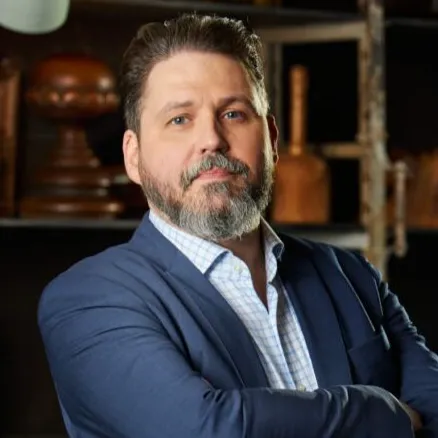
0:04 Good morning, good afternoon, or good evening, depending on where in the world you're signing in from today. I've got with me today, Wilhelmer Wilhelmsen, CEO and Chairman of Ubique Minerals. Wili, how are you today? Very good, thank you. Very good. Awesome. So now here's how today's going to work. Wili's going to give a brief introduction to you, and then I've got some questions for him. But this is an interactive event, so please do use the chat button on the bottom right of your screen to ask questions at any time during today's event. We'll hopefully get to all your questions today, but if for whatever reason we don't, they run out of time or it's a little off topic, whatever that might be, I'll make sure that Billy gets your question along
0:34 with your email address or phone number so he can get back to you as quickly as possible. The other thing I'll say is that today's event is being recorded and will be available for replay probably in the early afternoon Eastern time. It'll pop right in your inbox. It'll be available at the same link, but also be available on Six's YouTube channel also in early afternoon Eastern time. But that's enough out of me. I'm going to throw it to Vili for a brief presentation before I get in on some questions. Vili, take it away. Thank you, Romil, and the rest of the people in the audience. If I introduce you, Big Minerals, this is our first event.
1:06 We're a typical junior exploration company with projects in Namibia, which is our main project now. We have around 1,600 square kilometers of licensed area in Namibia, mainly predominantly for zinc, lead, silver, gold, and copper. We also have 1 license covering uranium and some vanadium and titanium. It's a big spectrum of minerals. It's a relatively early grassroot exploration. I'll just very quickly browse through some of our slides here and introduce the company. So we are working on uploading our new front land assets and focusing on Africa and other territories.
1:52 So like I said before we've got 1600 prime land back in Namibia and we're also looking at various other projects around the world. So just to give you a quick Namibia overview, Namibia is a very stable African country, very good to operate in, legal framework works and all infrastructure is there and
2:20 All our areas and our exploration licenses lie very close to very good infrastructure. So that's no issues there. So if we start with the Otavi mountain land where most of our licenses are, I mean it's a very well-known region. We have the Chumip mine and the Kombat mine, Bakaukas and other mines in a very close permexity to our area. So, and if we go to the Aronco Desert, which is very close to Swakopmund, and Walvis Bay, which is the export harbour for southwestern Africa. Our license there is very close to both the Rossink and Langerhandrick uranium mines. We're almost smack in the middle there. We have made some uranium discoveries but we're also looking for other minerals there.
3:21 So again, short brief on our licenses. I will make the presentation available for the ones who want to go into more detail of the presentation. I'll make it available to Romy for sharing. But I just wanted to take, like here you can see the positioning in the Otavi desert where we have the Apennaap mine, Kombat mine, Bergaukos mine, Suumep and the Chuti mine. These were all relatively large mines at that scale. The Combat mine is being reopened by a Canadian company. And there's a lot of neurology within our licenses. Again here are mineral occurrences. And here you can see the unexplored area that surrounds this area.
4:12 So we hold very much hopes and we're very optimistic of great discoveries because this area is relatively greenfield in its exploration up until date. So I'll leave it to Romil to throw some questions. Awesome, I did have a couple questions if you don't mind. So I wanted to start obviously talking about this Namibia project, because I know increased the ownership in our 500 to 99.66%. What drove the decision to take near complete control of the Namibia project? And how do you figure it fits into your broader strategic vision? Well, we originally invested in this project when I came and joined the UBIG about, is it now 4 years, 3 years ago or 4 years ago.
5:08 And we had then about 25 cents stake.
5:13 And that project actually came with me in UBIG when I joined UBIG because our investment company, my personal investment company, we funded the first exploration for R500 in Namibia. And what we felt is that we wanted to take more control. We felt that the previous management of R500 was a little bit working a bit in a slower region. So we approached them and
5:42 we managed to get to an agreement of us taking over the project. So we did that in December. So over the last 6 months, we've been analyzing all the data, we've been working on license issues, whereas we need to get access from farmers and governments and it's a bit of a paperwork, but we've used the time well. And also it's given us a very exact definition of pre-set targets, which we're gonna access now. So that's the rationale behind taking control. No, it makes sense. Appreciate that. Now I just wanna talk about the geological potential of the project really quickly. So I know your licenses cover similar geology from what I can see to the Sumab and combat mines where Sumab operated for over a hundred years producing high grade ore, copper, zinc, lead, cadmium, I think 20 million tons lifetime.
6:34 But I'm curious what specific geological indicators give you confidence in the potential of the licenses that you have in R500?
6:41 Well, of course, our geologists have looked up the mapping of the area and the geological structures. And what we've also done is we've done some geophysical and astro-inventory work, which is, like I said before, predetermined certain targets and certain geological occurrences that are very similar to, like you mentioned, especially the Bergaukas and the 2 map systems. So we know that they are underlying that. There's some overburden in our area and which has, what do you say,
7:19 in previous years, people were looking at what was obviously there. And now we're looking at more of a geotechnical part of what's underneath the overburden. Right. I appreciate that. And one thing, and this I just learned reading out the project. I know that a lot of the Eastern area of your licenses have had less exploration due to that Kalahari sand, which as I understand it hides the underlying geology and limits geochemical
7:45 signatures. What's your plan for addressing that kind of technical challenge and what geochemical methodologies are you employing?
7:53 Well we are of course like I said before we have done some astroimaging and we've done some mapping but one of the things that we're doing now, we're sending out a group of geologists now to the area and we'll be doing that over the course of the next couple of months. And one of the, what I say, is a little bit of a fun fact, but
8:16 the best geologist helpers are actually termites. So what we do is we sample the termite mountains. The termite mountains can be up to 456 meters high. And what the termites do is they go all the way to water surface and they take everything up. They lift all the minerals. So one of the first things of sampling that we're going to do is to, in a certain
8:43 framework, we're going to sample these termite mountains and of course focus on the area where the asterimetry and the geofish has indicated potential minerals. And so We use these little helpers in these first stages.
9:05 Yeah, interesting. I've actually never heard of termite exploration before. I think that's fun. Now, speaking of those 2 geologists, I know Dr. Helen Salmon was mentioned as accompanying the geological team for that Geochem Exploration. And you also have Paul Lemon on board, as I understand. What's, first of all, if you could speak to both of their expertise, but also what's your current exploration timeline and what should investors be looking for in the rest of 2025?
9:29 Well, so Like I said, we are now planning and we're just in the process of receiving access permits to the land from the farmers. So in order to be able to just access the areas. And it's more of a formal thing, but it's time consuming. But so we expect now just early August for August and September to have our people on the field
9:57 on site, both in the southern areas and in the Northeast. And so we will be coming with, I would assume that we're getting a constant flow of news from August onwards throughout the year. And so, yes, we're quite excited
10:19 about the targets and results. And yeah, so investors can expect to get constant news flow from now on, now that we've got everything under control with the project and hopefully some exciting one. That's great. Yeah, hey, always love news flow and I hope to see you multiple more times over the course of the summer. I wanna talk about the multi-metal opportunity at R500 because The area
10:46 has produced not just base metals, but also those byproducts, the vanadium, germanium, gallium. And I think you've reported uranium mineralization discoveries as well, is that correct? Yeah. Yeah. So how significant is the multi-metal potential for the project's economics? Well, it is. And you know, previously when I was the CEO of St. George's Eco Mining and we were always talking about green mining and etc etc a lot of people think that green mining is using some environmental friendly mining methods but it's not necessarily that. Being green in mining and
11:23 eco-friendly, that is about extracting all the minerals, not just taking all the minerals out that are possible to take out. So we're not leaving some huge stockpiles of,
11:38 you know, some other metals for someone to come after 10-15 years and extract them. We've tried to process the whole spectrum of the metal. This is often overlooked because people get so focused on just going there for the copper that they leave all the metals because they say, oh it's not economically viable to extract them. But in many cases that's wrong. You just need to adjust your process and et cetera. So.
12:06 Okay. One thing I know you talked about Namibia as a very stable political jurisdiction with the good infrastructure. What I'd love if you could expand on that a bit, But I also am curious how you view Namibia's regulatory environment and UBIQ's positioning there competitively. Well, we're quite excited about Namibia. I mean, in my experience, I've been in the exploration business and I've been in independent business for now over 30 years. And of course, the regulatory environment is often tough. It doesn't matter if it's in the exploration mining or what it is. And my experience of Namibia has been nothing but positive.
12:53 I mean, 2 years ago, or almost 3 years ago, we made an offer to acquire the Namib Latin Sink Mine. Unfortunately, we didn't manage to finish that. But during that process, we had to deal with competition, authorities, and all kinds of regulatory bodies. And yeah, some things took time, but that's like everywhere. So I can't say that Namibia has been anything but
13:21 good when it comes to the regulatory things. Coming back to the infrastructure, there's very good infrastructure in the areas where our licenses are. We've just driven through there on tarmac roads. So that's not an issue. There is a road coming all the way from Sampia to Wolvis Bay, which is a good road. It's a little bit heavy on the traffic of large trucks hauling all the copper from Sampia down to Woolwich Bay, but that also can be an opportunity for even if we go into production in these areas that you're in the line of where the ore is going. So
14:08 that's a very good strong point within Namibia. That's great. People say nothing better about a project than being close to a paved road. So it's always nice to see those nearby. Now, I wanted to change gears just for a second, because I know you're planning on divesting from the Daniels Harbour project on Canada's East Coast. I'd love if you could just share more information about the status of that project and what's up next there. Yeah, so Daniels Harbour is an exciting project. It was an old mine that was closed in the late 90s, early 90s if I remember correctly. But it's just,
14:41 what we say, we've decided to take our resources now and focus on Namibian projects and other projects. So basically we want to also expand not just being a SYNC-led exploration
15:00 company. So that was the main idea behind to divest from the Daniels Harbour project. And I appreciate that extra context. Now one thing, looking at your capital structure and kind of looking towards growth for the future, if all the ventures convert, my understanding is you'd issue 10.6 million shares, so about 11% dilution. How strategically are you looking at balancing the need for that growth capital that obviously all junior miners need with concerns about shareholder
15:30 dilution? And what's the funding strategy for the next phase of exploration? Yes, well it's a good question. We feel that we did a very good deal by structuring the deal in this way and the just over 11% dilution is the maximum dilution. So if the debenture holders hold on to them and our share price goes over certain milestones then the dilution might be less. And of course as a CEO and chairman I'm gonna do everything to increase the value for shareholders and increase the value of the company. Hence, our funding strategy, for example, now while our shares are at a historical low, they're actually at the same place where the one I take took over in 2021.
16:24 But since then, we've managed to take the share price over 20 cents and we intend to do that again. But so I tend to try to
16:36 raise as little as possible while the share price is depressed to avoid exactly that, to avoid the dilution. But like you say and correct, junior exploration companies have no other means than just to raise money and we need to do that on a regular basis. But my strategy is to raise as little as possible while the share price is where it is and to raise when the share price is more in favor of it. If you can say so. I appreciate your candor there. And speaking of starting in 2021,
17:12 you started as interim CEO and you've since become chairman and CEO. I'm curious, how has your leadership approach evolved? How's your thinking about the company evolved? And what lessons from that previous experience and including the terminated Nami Blood and Zinc mine, how's that informing your strategy EBIC now?
17:30 Yes, so it's a good question. And there's a little bit of a story behind this all this because when I came in as an interim CEO, the general idea was that I would then move up to be chairman and we would get him a new CEO But then I just quite liked the chairman that was there, late David Lonsdale. So I didn't want to lose him. But unfortunately, he passed away. And I took the position as CEO and chairman. But the long-term strategy is that I will move up
18:03 to become chairman and lead from there and we will get an operational CEO to take on the project as such. So that is the long-term strategy, but we need to be in a little bit better position on cash in all the fronts before we start adding to more staff. We've been very prudent on our approach of spending and et cetera through the years. And we're
18:30 also been very lucky with the management, have been supporting the company. We've got some certain strategic shareholders that are supporting the company and have done so and will do so. So that is very, very good
18:46 and important for junior mining companies. So, and coming back to the Namek-Leden SYNC deal, yes, unfortunately, the timing of that wasn't the best for us. We actually managed to raise about 95% of the purchase price for the project, but at that time, there was a bit of a dip in the sink prices and that stooped the remaining investors.
19:17 But we should still keep our eye on that project. I understand it's not yet sold, even though people have been looking at it and et cetera, et cetera. You never know what will happen in the future. Sure. No, I appreciate that. And you never know in mining. One thing with junior mining companies facing, we'll call them challenging capital markets. There's evidence that it's turning around, but it's still, I think, in a challenging period. How do you differentiate Ubiq's investment proposition? And if you're talking to potential shareholders here in the room, I know there's a number of investors here. What does success look like for them over the next 2, 3 years?
19:52 Well, like I said, I mean, what we have here in Namibia especially is, yes, there are Greenfield projects. We are looking at also acquiring more advanced projects in Africa and in other places and also
20:10 similarly green field projects. We would like to make the discovery and follow it through and create the value proposition that way, and I think that is very important. And so the long-term strategy is to increase our land package but also, where applicable, decrease it. We are not just holding licenses just to hold them. We want to go in, make a discovery. There's nothing there. We just retract. And we're not clinging onto them just to say, oh, we've got this landmass. We want to be effective in what we are looking for. We want to make discoveries and we have the technical capabilities and knowledge in-house to take a project from Greenfield. I've done that in my past. I've done everything from taking a very challenging exploration project in 18 months from being nothing basically into having a geocompliant resource.
21:11 So that's very important for our future shareholders to know that we have that capability. We've also built up a mine from inside the mountain in a very challenging environment. That's great. I know there's a number of questions that have come in from the folks in the room. Also some questions came in on email. So I'm just going to run through a couple of those right now. For the folks that came in late, I saw there's a group that came in late. There's a chat button in the bottom right hand of your screen. Please feel free to ask questions. We'll get to as many as we can today. First one I wanted to go through, just Wesley, a quick question. When will you begin trading again? Very good question. Sorry, I didn't mention that. So we have finished all our accounts and everything that we need to get trading again.
22:02 And I expect, I would say, hopefully within the next 2, 3 weeks, we'll definitely file all the documents within the next week or so. And then we just have to go through the regulatory bodies to be able to see, you know, it's a process. We file everything and they sent us a list of things to do. We do them and then we're back trading. Great. One question from somebody who I think popped in a bit late. They're just asking, what is this year's campaign at R500? So if you wouldn't mind just reiterating quickly what the plan is for this year's campaign. Yeah, so this year, like I said, we're going to send a team both into our Otavi desert and our Ironco area licenses.
22:51 We have targeted certain areas, which is a primary target, but we've identified to our roster imagery and geophysical work. And so we're gonna be focusing on them. We've been honing on and getting access licenses from farmers and the government bodies where applicable and so we're expecting to send them now probably second week of August and so and They will be more or less in and out these areas over the coming few months. And the good thing there is an all-year access. There's no rainy season that we have to adhere to, etc. At least not in the South Ark. That's helpful. Julia from the chat asks, how long is the permitting process in Namibia and is it faster when it's critical minerals? No, the process is, it can be dauntingly slow, but you get there eventually.
23:50 And that has been one of the few issues people have complained about. But that said, I understand from, of course, we went through this process when we were trying to acquire the Lame Bledensy mine. We went through how all the licensing process had gone through and etc. But I understand that since there have some improvements been done. However, that said, the mining ministry, there is a backlog in licensing and paperwork there. And they've been trying to make some adjustments to the system to make it more effective, but it really hasn't been. But hopefully that's... It's obvious they're trying to improve it. Sure.
24:37 No, no, appreciate that. One question I've got for you, and I always like to ask this as we close to wrapping these kind of intro events for a company, is what are you personally most excited for in the second half of 2025? What are you looking forward to? What keeps you awake, buzzing with excitement for you, Bikin, in your head? Well, of course it's the Namibian protests and I must say, I love the country. The country is beautiful and people are beautiful and good people in general. And so I'm very excited about making a new discovery in Namibia. And of course then, you know, I can't really say, but there are a few projects that we're also looking at that are very exciting and I can't disclose at that moment. And the good thing with them is a couple of them would actually come with non-dilutional funding.
25:32 And I think that's important for shareholders to know. I know, that's exciting. So hopefully, we said we're back trading relatively soon after some paperwork. Looking forward to seeing that and also the news flow that's continuing for the rest of the summer. Vili, thanks so much for running through the presentation and for chatting with me today about Ubique and everybody who joined, thanks for popping in today and asking questions. I'll be sending through all the questions that were asked just in case there's any additional details that Vili wants to share but I'll also make sure this replay gets out. It's early afternoon, so please do share it to anybody who you think might find it interesting. But Billy, thank you so much. I think this was fun. Thank you. And I just want to say thank you very much for having me and also to the shareholders out there and people wanting to be shareholders. Feel free to drop me a line on email or give me a call.
26:19 My email and numbers are readily available to anybody. So feel free. Perfect. Awesome. Billy, have a great afternoon. Everybody in the room. I hope you enjoy the rest of your day.