Transcript
Automated transcript · Written by software from the replay's audio. It can mishear names and figures; the replay is the record.
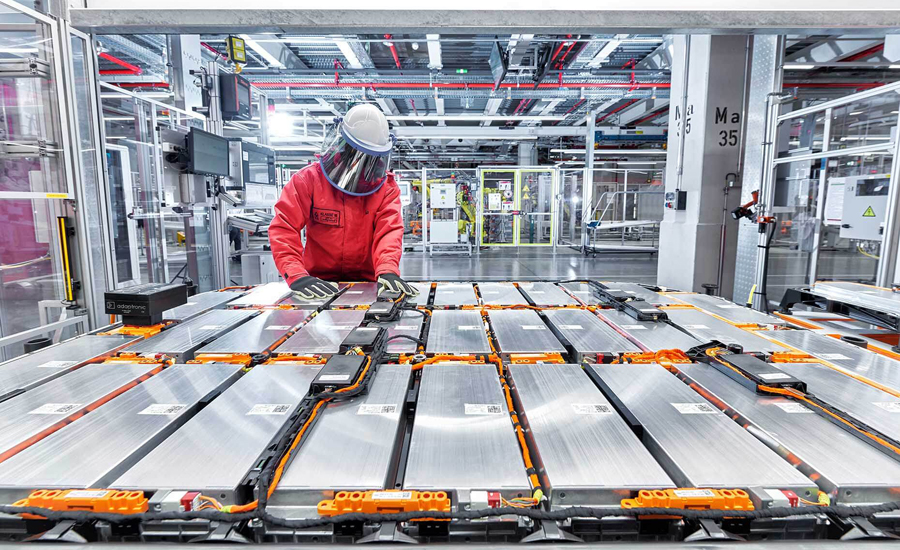
0:08 Hello everyone and welcome to today's panel on the state of recycling in 2024 for energy storage and charging. Today we're joined by some great panelists, Deb Shabambaram, PhD professor and Nevada regions researcher at the University of Nevada, Reno. Carlos Vessen, CEO of Full Circle Lithium and Corrado de Gasparriz, CEO and Chairman of Comstock. Now this is a live event so we encourage you to ask questions in the chat which can be found on the bottom right corner of your screen right there. Please feel to ask away and I'll try my best to integrate them into the conversation. But let's get started with introductions. Gentlemen, please introduce yourselves, providing a quick 1 to 2 minute overview, explaining why you're joining the panel to discuss the recycling of energy storage and charging in 2024.
0:59 Bardo, why don't we start with you? Sure.
1:02 Thanks, Kyle. It's a pleasure to be here. So I've spent, I think, the substantial majority of my career in the renewing and recycling of electrification products. Of electrification products. So I started my career taking petroleum coke and recycling it into synthetic graphite, then using that graphite to recycle steel in an electric arc furnace. And, you know, as electrification
1:33 is now really moving from heavy industry into the mainstream, you know, with EVs and with solar panels and with all these electrification products, we see 2 implications. One is landfills being overwhelmed by these waste materials impacting the environment negatively. And then secondly, the absolute and desperate need for more of these materials as it continues to grow. So Comstock is sitting squarely, you know, in those supply chains. And it was a pleasure to be asked to participate today. Thank you.
2:08 And thank you for joining us today. Carlos, why don't we go with you next? And you're just on mute, by the way. Of course. Thank you, Kyle, for the introduction. And full-circle lithium is a, I would say, a fully integrated processor manufacturer of lithium products. We are focused on lithium and battery materials reintegration and what we do have as assets we have a lithium carbonate plant in the state of Georgia in a town called Nahanta which is very close to the border with Florida and we have 3 distinct business lines that feed this plant 1 would be midstream recycling which is a business that focuses on recycling lithium from waste material, either from industrial and chemical waste.
2:58 The next business item, which is the one we'll be talking about today is the battery recycling efforts and we'll talk a lot more about that and the third one will be a lithium refinery business which is everything that is not recycling
3:13 in terms of where our business is focused meaning that we work with upstream assets in order for them to process raw material into saleable lithium products as well as any other endeavor within the refinery and processing business in the lithium space.
3:37 Thank you, Kyle. I'm Dev Chidambaram. I'm a professor of chemical and materials engineering at the University of Nevada, Reno. It's not Nevada. It's right. People who say that. I'm Canadian. I'm the only faculty in the state with the actual degree in electrochemical engineering and we created the batteries minor at the University of Nevada, Reno to train the workforce. I was the one who designed that and I still offer the various course. On the other side, we are also trying to know what has the ingredients to be a world leader in lithium loop, the lithium cycle all the way from the mineral extraction refining usage and the recycling part of it. And so for that we were just awarded the NSF engines.
4:23 I'm a copier on that and the tech lead and the tech hubs, EDA, Department of Commerce tech hub designation that we are going getting towards for a full phase 2 proposal in a month. And I'm trying to help Nevada become a leader in the space. Thank you. And I think your pedigree deserves a lot more of an elaboration, Dev. If you could actually just continue educating us on your accomplishments, both in general and for the discussion at hand. Okay. All right. So let's start with my education. As an electrochemical engineering, that is a very unique and a niche topic and one that we are actually seeing in the country right now that there is not a trained workforce that is required at the level that is required for every company, every business to hire in this space.
5:20 So my main thing as an educator is to help develop the workforce at the university. My second hat is to on the research side to help Nevada become a leader. So in this, that's where we have created. So for the education, as I said, we are created batteries, minor sustainability, minor. But on the research side, we have been working with, we have an asset funded project. We have been working
5:45 to develop a high capacity lithium ion battery at low temperatures because NASA needs it at low temperatures. Right now it is, we have developed something that works at minus 30 degrees Celsius at a capacity that is about twice the commercial EV battery capacity. It is undergoing the patent protection. And one of the, the student who has been working on it, a doctoral student, he's actually on this call, Jason, he is just waiting for this patent thing to go through so he can defend and graduate and go out and do bigger things. We set up the batteries lab and we have been pretty much working with all the battery companies because we have the materials characterization suite. We created something for industry to use that through something called a Nevada Center for Applied Research and a materials characterization Nevada. So pretty much all the battery companies in the space in the region are using those tools to analyze, characterize their materials, to characterize their processes.
6:45 Now the next part is how do we take this to the next step?
6:50 So in this case, that's where the NSF engines comes in and we propose that we have the ingredients, we have the minerals, we have the mining companies, and we have Tesla Gigafactory 20 miles from here utilizing that and now the recycling companies including Comstock, Redwood, they're all in the vicinity. So we need to be the leader that does this entire cycling, the whole circle for lithium. And so that's what we proposed for the NSF engines. We are one of the 44 that got selected for the type 1 and we are getting towards the type 2. And simultaneously we also applied for the Department of Commerce to get the designation. We are one of the 31 to get that who are the only ones who are allowed to apply for the next phase 2 to create this economy.
7:38 And that's what we're working on right now. I have to ask because what caught my ear was the battery for outer space minus 30. I'm in Canada here and it gets to minus 30 long at my parents' house. So very interested. I don't know what you can and cannot disclose on that, but like any of the metal makeup, I'd love to hear more about that. Sure. I cannot give you specifics but we identified where the glitches were in the regular cells, right? So NASA wants it to work at minus 60. That is their ideal goal because they're sending it on their Mars rover and space shuttle that's going outside. How do you use it even if you can bring it to minus 30, you can use a little bit of a heater if this still maintains the capacity to bring it to temperature. The EV bed is a completely different one. We have, we started off with lithium ion with graphite and people have been sticking with that and pretty similar electrolytes.
8:41 And so NASA's work has always been on the low temperature side. And when we reviewed the literature, we came up with that saying that those are the only guys who are doing it. So we published the paper as a review, and that's where we got the information. Okay, these are some of the things that we need to actually move forward using the electrolyte changes, the electrode changes. So we incorporated that separately one at a time, and then both of them together, and that's where we are right now.
9:11 Jason still believes that there's a lot more room to improve and I told him that is true and he can do that once he graduates and goes out for the for the bigger price rather than at the university as a student. He has proven himself as a PhD student. Excellent. Before I bring the other 2 gentlemen into the conversation, just
9:33 one more question. You've been a researcher and an educator for quite some time. How has the we have people on the panel with solar panel recycling and EV and battery lithium recycling? How much is this industry evolved since you've started? Significantly, we did not have this industry 5 years ago. People aren't even talking about this, right? I remember in 2019, I submitted a proposal to the Department of Energy on recycling lithium-ion batteries. And it came back saying that, sorry, that is currently, it's not a program that funds that and and on 2021 our then governor Sissel like visited the lab and I gave him a quick white paper on this and now everybody's talking about it there are companies moving in And so the awareness has come in. But I still think that we are in the very, very, very initial stages of this. That is for the battery. The solar panel recycling, it's a completely different issue.
10:30 Most of them are coming out of service now from the 2000 early 2000 era that were put into place with a 20 year warranty. The cadmium telluride based thin film solar panels there. You know the first solar at least has a consumptive contract saying that you can return it back to them. But that's not the case with the other silicon-based solar panels. It is so cheap, the material. How do you recycle this economically and get it back in? They're piling up, and there are companies that are starting to do this. It is not an easy simple process and for the solar panel they're going to come up with something that has to be economically viable with the glass but for the battery side there's quite a few more companies especially with the bipartisan infrastructure law bill that put in hundreds of millions of dollars into this.
11:24 And there have been several technologies. The first one was, you know, if you think about it, it's, oh, let's burn the thing and let's refine it and pyro processing and get that out. We are going to be emitting some of the fumes, that's okay, but we know that technology really well, we can do that.
11:41 Now it's most of the cases, what can we get out of it at environmentally friendly levels?
11:47 Can lithium be extracted economically? Though pretty much most of the recycle companies are looking at cobalt and nickel, which are the most expensive metals. And therefore the lithium is an add-on that's not going to, if you were to ask a company just to recycle lithium. Now that lithium price have fallen so much. I don't know how economical those process are going to be with all the nickel and cobalt because nickel and cobalt here's the cash when you do have been expensive companies have been moving away from nickel and cobalt. So now we are going to be getting baddies without the nickel and cobalt that needs to be recycled, without the economics that is promoted by the nickel and cobalt. And so we are looking at, everyone is looking at process that can make this really viable and at scale. So there could be things that can happen in a laboratory research like ours that may never scale up. And so that's a critical part that we need to keep in mind. What is scalable?
12:45 What is achievable? What is practical in terms of what technologies we are betting on. Very interesting, very interesting. Thank you. We're going with Corrado here. Dev posed a couple of the challenges with solar panel recycling. Why don't you highlight what from what I understand and let me see in my notes here ahead. Corrado, Comstock has mining fuels and metals. Comstock metals is the solar panel recycling part of the operation portfolio, right? Can you provide an overview of the circular process, your,
13:24 your, what exactly you're extracting from the old panels? Absolutely. Yeah. So in, in 2019, we invested in, in some technology that really took initially the black mass coming from recycled lithium ion batteries into precursor cathode active materials. And then we developed the front end of the process to crush condition and separate those materials. And I'll tell you what was really pesky was a lot of the laminates in the cells and the plastics in the battery packs. So we were finding that we were producing reasonably good quality materials, but that the laminates were sort of preventing us from getting all the way to battery grade, which is what we really need to do, which I think is the critical success factor for the recyclers.
14:19 In that process, to your point, we realized that, you know, the lithium ion batteries were extending their lives. They were also working on secondary lives. And for sure, it's going to be a huge critical market for sure. But immediately solar panels were starting to overwhelm communities and landfills and especially in the southwest region of the United States. So states like Nevada, Arizona, California have most or substantial majority of the deployed panels or farms. And almost 100,000 tons of end of life panels came out of the market last year.
15:07 But staggeringly, they're projecting it to be a million tons by 2030. I mean, I mean, so to answer your question, Well, first of all, we identified a technology and integrated it to deal with these laminates and plastics. And in the process of doing that, we brought in some new leadership that really had a lot of experience in not only recycling materials but eliminating safely these laminates and plastics. And so now we're starting up production
15:41 and the number 1 value is keeping them out of the landfills and that manifests itself by being paid I would say handsomely you know a tipping fee to to take these materials but then we do crush condition and separate the materials and we get silver and not large quantities, but it's very valuable cadmium in substantial quantities.
16:09 It's toxic, you know, if disposed of improperly and then steel, aluminum, copper, you know, and silica. The beauty of our processes in the conditioning and separating process, we're able to reuse all of these materials. So, but the revenue piece that's associated with the recovery of those materials is probably only 15 or 20% of the total because the revenue we get from tipping fees is very robust and we're doing good. So we're keeping them out of landfills. So we believe it's an immediate market. We believe it's critical to be deployed. And we also believe it will prepare us downstream for other electrification products.
16:59 Because in the other electrification products, be it fuel cells or be it of course, lithium ion batteries, there's other hazards that come with transportation, and that come with storage that we don't really feel with the solar panel startup. Great, thank you for that overview. Really appreciate it. Carlos, I want to bring you into the conversation now. Full Circle Lithium was newly listed. It came to market last year. Can you talk about the journey of starting this company? I know there are a few companies looking at recycling
17:32 batteries. I don't know how many are focused on lithium, but what sets full circle apart?
17:38 Sure. So, I mean, like that said, it's not an easy endeavor to recycle lithium form from lithium ion batteries. In fact, you know, the name lithium ion batteries, you should be while you're recycling the lithium, and potentially the other minerals, but it's the other way around, you're recycling everything that's not lithium. And that's what's happening in the industry. And let me start by saying that I'm way beyond, you know, the, the, the devs of the world in terms of knowledge the the intricacy of the I guess the operating of the batteries and all the you know all the I would say the engineering side of things but I look at things and I try to look at things more simplistic through the eyes of the guys that finance the business and that's my job putting people that are smarter than me together to make things work.
18:24 So to that end our business is processing and manufacturing lithium products And our main focus is lithium. We have a plant that produces lithium carbonate that can produce from either lithium chloride or lithium sulfate. And then from there, we need to find feedstock. And one of the feedstocks is, of course, the battery recycling business, which we're talking about today. But the good thing where the market is today is that we also have 2 other businesses. One is the recycling of waste material from chemical industrial companies that contain lithium and we need to clean that out process in a way that's obviously
19:04 doable to produce lithium carbonate battery grade or at the level that the client needs it to be. And then the refinery business as well that we can process I would say raw material into lithium carbonate either technical battery depending what the client wants. Now on the recycling side the better recycling side I believe and you know we're fairly new to the industry like you said we we we made up the company maybe a year and a half ago. We went public last year. Many different aspects of our company are changing and evolving depending on where the market is. And if you see lithium going down 70, 80 percent in price, you see nickel going down 50 percent in price. Cobalt is down 50 percent in price. I believe depending on how you evaluate the graphite, graphite, which you don't even recover, they burn it, is down 30%.
19:52 Copper, it's maintained because it's more than that's for product, but it's also down. So the industry in terms of economics, you have to be really smart in how you do things and you got to think about it differently. I think Dev and Corrado mentioned a couple of these things in their conversation where it's not easy. So you got to think about it differently. A lot of the recycling efforts that have been done so far in the battery and lithium-ion battery came from the typical recycling process in the general batteries, which is crush, grind, melt, and put it in a furnace and recover whatever it is. Not really clean. So we've thought about it a bit differently. We can't really talk about the intrinsics of it, but we're essentially taking apart the battery.
20:40 We're not crushing it. We're not going through that process and trying to recover as much as we can in all materials, specifically lithium, because that's our core understanding. Now, what we've done there is that we've, in our company, we've created a, what we call a fire suppressant solution that we can take apart batteries, fully charge, meaning that we can recover a lot of the lithium compounds within the battery easier and safer in order to recover that in solution which is what our process does.
21:14 Now independent of that you know in Corrado alluded to this in the I guess in the solar panel side of things, you get a tipping fee. In the battery, you don't get anything. I believe that as you, as this industry evolves, like that was saying, we're in the initial stages. I do believe that there's going to have to be some sort of tipping fee for restocking of batteries because the margins are not there the technology is almost there but not not there yet Some of depending on the size of the battery, depending on what type of battery, if it's industrial, if it's LFP or NMC or NCA, all these types of batteries will have potentially different ways of processing them, potentially, maybe not. I will see how that evolves.
22:02 But at the end of the day
22:04 these this black mass as everybody talks about which seems to be this mythical thing out there and it's all different because the black mass that goes to Corrado is going to be I don't know 50% different from what I get and we let's say we have the same process well it's not gonna work it's not gonna work so you need to make sure that if you're if you're I would say getting the batteries and doing your own black mass is one thing you can control to a certain extent what you how you do things but I don't believe that is the way you should do all batteries I don't think the black mass situation or the way you process some of these batteries have to be through black mass depending on the size of the battery and all these things and the compounds within the battery.
22:51 I know I threw out a lot of kind of information out there but that's that's what we're trying to do. Simplistically it's not it's not easy but at the end of the day I agree with what Devon and Corrado have said that it's starting there's been a lot of successes along the way and a lot of failures I foresee a lot more failures as well and successes along the way and usually you don't want to be the first out of the gate you try to to a certain extent Dev has done that with his with the battery and the NASA thing But I mean when you're doing an industrial product and an industrial way that has to be large and efficient you're going to have to take a little bit of good from other players in order to make it better. And that's the way we see it. But we're trying to do bottoms up where our focus is lithium and we want to recover as much lithium if we can. That means that when we do that it's going to be much easier for us to recover the other products too. But we want to make sure that we recover the lifting because that we need that for what we intend to do in our own company going forward. So I'll stop there. No, no. You said a lot of interesting things and the thread I want to pull on is the tip and fees. So
24:02 is this currently solar panels, there's a tip and fee, EVs, no. Is the tip and fee on the consumer, the person buying the solar panel, the EV, is it at the front end when you're making the purchase? Like we're at a weird part in the industry where EVs are a little too expensive for people's price point. It's an interesting discussion to have. So I'll leave it open to the group on that. I can answer just for the photovoltaics, right? So because their end of life and because there's no secondary use, they have to pay to have them disposed of safely in landfills. And so that means the solar farms, the companies and or the person who owns a home that's having their panels replaced on their roofs.
24:51 They have to pay for them just like when you when you get new tires on your car. You have to pay for someone to take them away and dispose of them properly.
25:01 You know so so. And so really and when we think of competition we're technically competing against the landfills. But but logistics is the second variable. So you might have to pay $500, $600 a ton to have somebody dispose of this material. But depending on where it's going, you might have to pay $100, $200, $300 a ton to get it there.
25:25 So we're strategically locating our facilities, northern Nevada, Southern Nevada, Northern Arizona, Southern Arizona. Why are we lining the California border? Because all the panels are in California, Arizona, Nevada, and California has made it illegal to send these things to landfills, which we think is very smart. You know, so they're all flooding east. You know, it's funny to say they're coming east to Nevada, but that's what's happening. Right. So and I also want to I want to compliment Carlos because, you know, I think, you know, you said it too, Kyle, that, you know, being first is not necessarily best. I got to tell you like our view has always been it sounds like what Carlos is saying is if you can make battery grade lithiums, if you could make battery grade lithiums, if you could make battery grade materials, if you could make quality anything, trust me that the market's going to be there to buy them.
26:27 Right. If you rush right to deploy capital with processes and that overspend that don't work. You're going to be in trouble. And I don't I don't know why you would necessarily do that. You know. So so you know the market's growing fast enough. The materials are needed that if you can produce good quality especially in North America there isn't even a supply chain you're going to have customers so quality and getting it right I think is the first step right then growing it exponentially
27:04 will will follow. Anyone else has further comment? I will add on to that based on both what Corrado and Carlos said. One of the things that Carlos hit upon was this black mass, right? In the investment community, that's like a mutual fund, put everything in there. We don't know which one is a better one, right? But within that, there'll be a few stocks that are really good. If you can take that out. So it's a hedge your bets, let's put everything in there. And then a batch to a different batch of black mass is going to be very different and the industry is now starting to recognize some of these issues and we are actually looking at a longer part of how do we how does the industry regulate itself to make the recycling and the materials available?
27:51 One of the things that we are hearing a lot about is modular batteries on EVs. So it's easier to swap them out and take them out. Currently, if there is an accident on an EV car, many of the insurance companies will total it because they don't want to fix that. There's no real infrastructure to fix a battery on an EV car that is in there right now. If it's modular, you can take that out. You can swap the battery out. And if some of the batteries have really died soon you can take them out in Canada put in a different battery pack that also has the logistics of you know knowing what the batteries are if the companies can code them into what is the elements in there, right, that's that makes it easier. So Redwood Materials is working with Tesla to take their batteries that is not meeting specs. This is coming right off the manufacturing line. It is not meeting specs.
28:45 They know exactly the chemistry. It's a lot easier to recycle those compared to somebody puts in you know 20 different batteries from 20 different manufacturers with all kinds of additives minerals in there that you don't know that comes up as a black mass and that process is not going to be viable. So thinking about those kind of things and how it can be modular, how it can apply to a particular kind of battery. Now we are going more into lithium-ion phosphate. There is no nickel. There is no cobalt. How do you make this economically fully viable that support that you know carlis was saying about the tipping fees even lead acid batteries when we get one in the store for your started battery you pay $15 to $35 fee that they refund you so they want to make sure that is not ending up in the landfills. There has to be some kind of regulations and tipping fees like that to make this ensure that this supply chain on this battery ports are safe and are handled properly.
29:50 Interesting stuff. Yeah, And I think I mean just to add a little bit to that I think you know looking at it just pure financial right. You know I see some of these investments in CapEx that when I look at the economics
30:08 and Corotta alluded to this, it just for the life of me, I just don't see this ever going to generate any returns from shareholders. And when I say shareholders, it could be us 3 here, us 4 here putting money, but it's the institutions that really have the money so you know a lot at least on the battery side inside let's just talk because that's what we're talking on any other business. 1 company that does something wrong, independent of how they did it, just because they were first out and they just tried their best, but it affects all of us. I really root for everybody because at the end of the day if they succeed we are going to succeed in that grand scheme in the sense that it pulls us up it doesn't pull us down but as you know as any nascent industry what can allude to that you're going to have failures and it's pulling us down at the same time by the way that all the these material prices are going down and the capital market whatever I mean the US market I don't know how the US market has goes up but in our industry our junior industry we're going down and there's less eyeballs on juniors and I would say entrepreneurs and startup companies that are trying to get through this maze. So it's very hard for us to do it. Now, I mean, and I'm going to throw a little bit of kind of full circle advertisement here. But what we're trying to do
31:38 to mitigate the fact that there is no tipping fee and there is no, to a certain extent, help from the government available ASAP is that we utilize the materials that we recycle internally for some of the other processes. So if we wouldn't be recycling batteries, we would have to go out and buy certain of these materials out there. So it's not as cheap. So for us, it makes sense to recycle some of these batteries and recycle some of these materials and then reuse them in our either absorbent when we do some of the processing extraction lithium from solution and or when we do our fire suppressant solution some of these materials go in there as well and that fire suppressant solution not only helps us recycle batteries but also hopefully once we do all the relevant studies it also makes will help with all the fire issues and concerns that are surround the lithium-ion battery, which, you know, hopefully our solution is there to mitigate some of the that risk.
32:43 I think that that type of ingenuity from not only us but others has to happen to survive in this market because if you're just plugging along doing hydro or pyro or a combination of the 2 and putting billions of dollars to work, good luck because not everybody can partner up with Tesla, right? I mean, there's obviously the gentleman that runs Redwood is an ex-Tesla employee. They understand each other well. I hope that they succeed. But the amount of money they're talking about for me is just outrageous in terms of CapEx, but you know, you can partner up with other types of companies and move this forward, I guess, in the nascent stages until things kind of start working. So I just wanted to add that too, because tipping fees are going to be important. I don't know how fast that's going to happen and then you get regulations of shipment and logistics which are enormous through states and you're shipping this thing so it doesn't get any easier.
33:41 No great I'm going to transition to the public markets based off of that Carlos. If 1 succeeds in the industry it's such a niche industry that many people feel the uplift, it goes the opposite way to it, 1 struggles, maybe it put the black eye on the industry. What is the key struggles the industry is facing and on top of that for these retail speculators, investors that want to they see this movement and this transition. What do you look for in these companies? Is it patents and partnerships or or what are we looking for? But you know one of the things I do hear in what Carlos is saying which I think is very wise is you know if you're working if you're working you know working with you know partners working with you know some suppliers some customers establishing yourself right getting the process to be effective.
34:55 You know it's safer the market's dynamic we can certainly one thing we can predict is how unpredictable right the commodity prices that the you know the efficacy of the supply chains there they're just being established so there's a lot of dynamic you could use the word volatility if you want, right? It's petrifying, right? It's just scary. You know, so establish yourself, establish yourself with some counterparties, right? Start getting the cycle going and working. I think it's very important. Don't get ahead of yourself, right? Establish a quality solution. Again, one thing I think we're certain of is the demand will be there for quality solutions.
35:42 And then third, the logistics of it all. He mentioned hazardous, transporting and storing hazardous materials. It's very expensive with a downside, right? So, establishing good, safe logistics, including how you handle and manage. And I would be more concerned about the quality and stability of those processes versus you know the speed at which you're growing them, because I think the market will pull you. It's going to be a demand pull here, right? But you have to establish a quality system that can then respond to that demand.
36:37 Carlos, did you have any further thing to comment on? Well, I look at it more, I guess, more pragmatic. And you see this in gold and silver and copper, in terms of, you know, how things happen there. And look, I mean, what's the problem with industry? CapEx, OpEx. I mean, you're saying things that you don't understand or you're saying that it's going to be a billion, but it's really 2 billion. And you kind of the CapEx creeps up every single time. So I would say that, you know, before you run a marathon, you better make sure that you can run 5k or even less than that. But usually what we want to do is that we want to do this extraordinary news release that says we're going to produce 50,000 tons of lithium carbonate by the end of the year. I mean, there are no operations in the world that are 50,000 tons. So you're going to tell me as a startup, you're going to do 50,000 tons. Well, I don't believe that. And people now are understanding lithium market and the battery materials market a little bit better.
37:35 That includes our, you know, our shareholders and that's institutional retail. So they're going to call your bluff a lot of these times. So look, CapEx is running up, OPEX is running up, pricing is volatile and it's going to continue to be volatile. So you want to see the margins compressed and expand. And depending on where you hit them, you may be lucky and be able to finance a business where you may be dead in the water because you hit one of these downturns and nobody wants you, which is why a lot of the things are happening right now. So the diversification of business is a good thing. Going smaller rather than larger and proving it out as small is also a good thing. And then people, right? I mean, I'm not that. I don't understand all the relevant information and data and all the I would say the engineering side of things when you look at the battery but I know the market so I and I'm you know I'm a people kind of a CEO So I hire the people to run this. So, you know, that's the way to build a business. You can't have all technical people because usually the single people just heads down and do the good job, but they don't see the market.
38:45 But you can't be to see all market and no technical people because then what is it that you're doing? I mean, it's all a lie. So it's a good combination of both things. So on the people side and then also on how you progress through your, you know, your business wise, I think that's a problem. And that's what I see. And when things are good, and it always happens in gold and silver and copper and everything, tons of projects come up, right? Oh, it's like mushrooms in the morning and where they grow almost, how is it that we had maybe 4 or 5 or 6 lithium recycling companies and all of a sudden we have, I don't know, 50. That's because the market was really good for a while, 12 months ago or 18 months ago and all these guys came up, but now you're going to see some of these disappear, merge, or, and which is a good thing.
39:37 I mean, yeah, you purge these as you go forward. So my 2 cents, that's what I wanted to say on why I think there's, you know, the problems that are occurring in the industry right now. I'll add on to those 2 Corrado's and Carlos's points. Carlos actually touched on this a little bit earlier as well. You know there are so many companies that come in and say, oh, we are going to do a hydro and then we're going to recycle. If you now take up all the recycling companies, how much they'll be recycling in 2026, 2027, it's always 2 years projected out, right? We don't have that many cars by 2030 to recycle. All these companies that they're saying that they will recycle that much of the material. We have to look at and I have assisted a couple of as a, you know, before the chat started, I was mentioning to you about my family background. I've assisted a couple of companies in what kind of technology is this? Is this something that we will invest in?
40:38 Lithium America, it's a good story that they found the largest lithium deposit. They're coming up. But now see what has happened is that other companies are getting lease from BLM and saying that, oh, we have the lease on this land. There's lithium available. If you dig any land, you're going to find some level of lithium somewhere, right? But is it economically extractable? And that's where the data comes in. You have to go in and look at that and say, okay, you know, these companies that are now showing up with saying that they can mine lithium from this land, I don't think that they can economically do it. The concentrations are so low or they don't have the process yet because 1 clay is not the same kind of another clay. Each one has to be individually developed. So similarly the batteries, the technology has to be developed and that technology has to be assessed.
41:27 Whether 1, it is viable, 2, is it unique enough, and 3, is it commercial value? I mean, is it scalable? Sometimes they're not scalable. And so people can assess these to see you know which ones are the ones that you're willing to bet on in the longer term. Now, I know a few of you gentlemen have meetings soon so I want to wrap up and typically when I wrap up, I let the companies do a little pitch. What can we look forward to in 2024? But I want to start with you and I'm going to phrase the question this way because you're an educator here and I feel like a lot of retail investors they might be younger people that might be looking at a career change where can they go to get education in this space and just for the people that are doing due diligence in the space. We're a good outlet. So feel free to talk about your university or but if you know of any reputable courses online or what have you, please feel free to help the audience.
42:29 Thank you. Actually, I'm actually proud to say that UNR started the first batteries minor in the country. And we created the first battery scores at the undergraduate level. The students go through a complete lab from starting from raw materials, powders to making the batteries, testing them to failure, understanding that part of it. I can recollect a conversation where one of the battery manufacturers came in, they were looking for recruiting and they asked, oh, do your students have any Globox training? I was like Globox? I mean, they're doing the whole batteries. They go, oh, most of the students do not have the training to work in a glove box. That's important for us. So even simpler things that are important are not available in most of the regular education, right? Nowadays a bachelor's degree gives you something, but you do need a little bit more advanced degree to specialize if you're interested in batteries and you do need to find groups and universities that are doing this. A lot of the new students coming on board because they're seeing this huge government push in terms of funding and in terms of education. So they're coming out but the ones that started a little bit earlier have a little bit more of an edge.
43:40 And it's not just at the master's, PhD level. You also have to go down at the community college levels because the workforce required for all these companies, it's not just at the highest level, it is at all levels. So we are working with our partner sister institution, the Truckee Meadows Community College and other community colleges in the state, 6 of us are part of this NSF engines. They're part of the tech hubs, trying to develop courses, trying to develop these certificate programs that people can take, even working professionals who want a career change, they can do a graduate renewable energy certificate program through UNR, get some level of background going into this online course. So the educational thing is going to improve. One of the things, the branding, many times when you say chemical engineering, it's not the same thing. Materials, people don't understand what that is. And that needs to get out to the public so students and potential students can understand what they're interested in. The current generation is highly, highly motivated to work in the climate change space.
44:43 However, they can help. And it is our duty as an educator to give them those opportunities and we need to work with companies to provide them internships so that they see a pathway and the companies see a pathway to attract this talent force and keep them with the country here. Excellent, I love that. Carter, we will go with you now for Comstock. What can people expect for 2024? Just some closing remarks. Yeah, absolutely. So we've started securing across the spectrum. It's funny, our customers are our suppliers, right? So with the tipping fee model, our suppliers is a critical part of the equation so we've started securing quite rapidly supplies you know trucks of solar panels are rolling in you know even before we were ready to take them we're waiting for one last permit we're expecting it within the next few weeks which means commissioning in February and production starting and production starting up in March. And then we literally want to have 3 or 4 facilities over the next 2 to 3 years as I said you know along the California border so quite exciting in terms of ramp up and growth in the meantime as we ensure the quality of the existing system, we'll start to experiment with other electrification products, batteries, you know, our, you know, black mass is a funny term.
46:13 We produce gray mass with our solar panels, and we would produce white mass with hydrogen fuel cells, black mass from lithium-ion batteries. So hopefully, ultimately, you know, we'll expand out, but we're with Carlos. Like we want to walk before we can run. Excellent. Thank you. And Carlos? This time I did take my mute off. So, we're focused on all our business models. We've already refurbished our entire plant and it's operating, but our first, I would say, hopefully claim to fame would be to put our first commercial plant on the midstream recycling industry which we're recycling I would say waste material from 1 chemical company in the US. We have 2 others on the go that hopefully we get these term sheets and binding agreements signed over the next few months and weeks and work towards getting not only one client but several clients this year and into next year and ramping up the tonnage of recycled material, lithium material that we're producing on the midstream recycling. On the battery recycling, we are still going through some of the tests like, you know, Corrado is saying we're walking before running, but we have created significant volume of batteries that we're going through and analyzing and we already have significant amount of gallons of product that we'll put through our lithium carbonate plant and recover some of the material and that's going to happen the first half
47:43 of this year. The FSS which came which is the fire suppressant solution that came from our battery recycling business it's also very important for us so you will see some news to that this year in regards to how we're going to partner and try to market that solution into the I guess into the broader supply chain and that has many different types of usages. And in fact, we talked Kyle back a month ago or so weeks ago about this specifics of people can see some of that video. And then the rest of refinery side is we're focusing also on raw material. You know, we talked a little bit about the way that some of these mining companies are popping up and some are real, some are not real. And if you have a resource, but you can't extract it, process it into a saleable product, there's no value on that resource, right? So a lot of these technologies need to be tested in some of these resources. Not 1 technology is good for every single project. And we're working with several projects, not only in North America, but also in South America. And we intend to give some of those results over the next I would say 1 or 2 quarters. So all our businesses are kind of trying to move forward in this market. Obviously it's not the best market to be in tell you truth but we foresee that all the battery material metals because of the fact that the inventory is going down and the fact that you know we're seeing cuts in production and many of the producers we're going to see a rebound in
49:14 pricing in a very short term. Thank you, Carlos. And thank you all for participating today. Really appreciate it. And for everyone that attended. If you did come in a little late, this event is being recorded and will be available on YouTube. So you can feel free to watch it again, but gentlemen, thank you so much for the great conversation. Thank you very much.