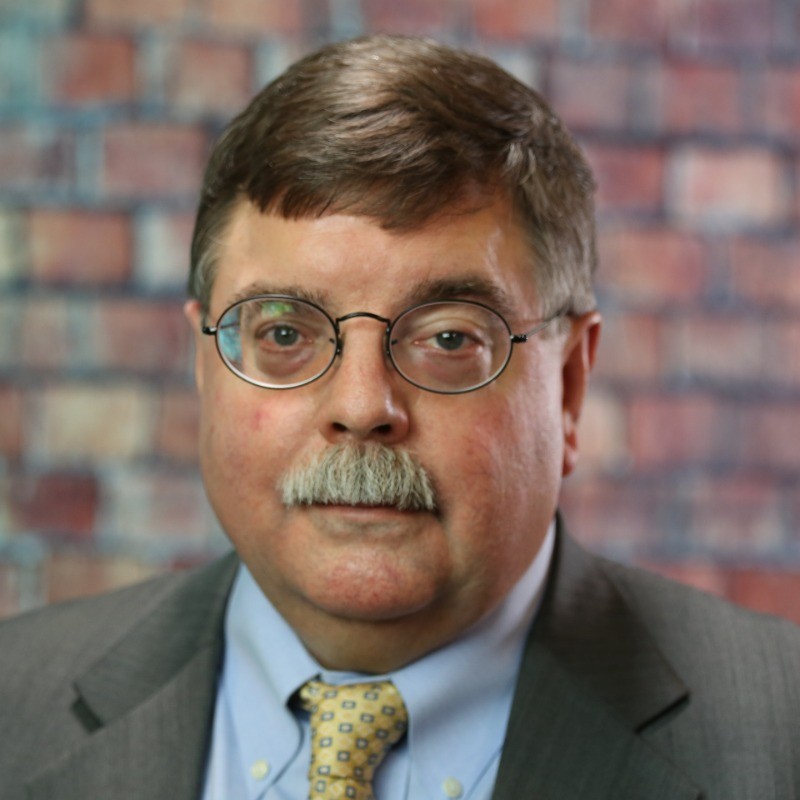
Stephen Rentschler
CEO at Nevada Lithium Resources
25 years of experience in institutional investing. Founding member of the Chilton Global Natural Resources Fund, with peak AUM of >$4B USD.
Replay available
Don’t miss this electrifying session with Stephen Rentschler, CEO of Nevada Lithium, as he illuminates the pathway forward for Nevada’s lithium industry, energized by the Governor's strategic support. Unlock insights into the world of sustainable lithium production, critical policy measures, and how Nevada Lithium intends to take advantage of government support as it develops its Bonnie Claire lithium project, located near Las Vegas, Nevada.
On 6ix: 6ix.com/event/the-rise-of-nevada-as-a-lithium-powerhouse
Automated transcript · Written by software from the replay's audio. It can mishear names and figures; the replay is the record.
0:08 Hello, everyone, and welcome to the Nevada Lithium Live Summit hosted by 6. I'm pleased to introduce the speaker for today, Stephen Rauchler, the CEO. Steve will walk us through the incredibly bullish sentiment we are hearing from the Nevada governor about lithium mining in the state. And after that, we'll be accepting questions. As a reminder, you can submit your questions in the chat at any point during the presentation. As always, this summit is being recorded and will be available to watch on Six.com afterwards. Without further ado, I'd like to hand things over to you, Steve, so that we can
0:38 get started. Thanks Max, I appreciate it. I appreciate everybody taking the time to listen to these comments. Last week, I think there was a very important interview that took place. And it was essentially the governor of Nevada, Joe Lombardo, who had gone up to Canada to talk with the Trade Commission. And what essentially the governor was doing was asking the Canadian government how he, as the governor of Nevada, could extract the maximum value from the lithium industry across the entire spectrum of the lithium industry, and acknowledging the fact that Canada was really at the forefront of this. And the reason I think it's extraordinary is for a number of reasons.
1:23 One of which is that during times of market turbulence, it's very important to have certain fundamental pieces of your investment proposition, your core philosophy that you can hold dear to. These are the kinds of things that you think back to. They're not buffeted by short-term volatility because a quarterly number was missed or something happened in a different country, etc. These are really sort of the, again, the fundamental tenets of why you're invested in a certain area and frankly in certain names like the monolithiums. And I think the governor's remarks are really one of those fundamental tenets that you want to keep close to you as we advance and create value in this entire industry going forward.
2:10 You know, I talk occasionally to people about my background as an institutional investor. And the reason I do it is again, to just sort of bring out or highlight the importance. Of knowing why you're doing what you're doing- you know we're not talking about being short term traders here. To develop a natural resources asset takes a long time There's going to be ups and downs, but the reason we do it is because the potential reward is so high. So if you take again those times of market weakness, you look at them as opportunities rather than negatives, as long as you're secure in your investment philosophy, it really helps you to weather the storms. What the governor said specifically during the interview was that Nevada is open for business and he specifically called out Canadian businesses. He was more than welcoming.
3:04 There's a historical relationship between the state of Nevada and Canadian mining and mining-related businesses. There are over 100 of them listed on the Toronto Stock Exchange. And the man went on to basically show a very thorough understanding of the importance of the mining industry and the importance of the lithium industry to the U.S. Going forward. He recognized the role that the federal government in the U.S. Plays in terms of legislation and how sometimes that legislation can be off the mark and he recognized the role that the state would take and would need to take in terms of communicating some of those errors to the government. He correctly identified the fact that it takes 7 years, essentially, from when you start a project to put a shovel in the ground and construct it.
3:54 And he was adamant about his role of bringing that timeline down, not just a little bit, but exponentially. It was just so full of so many different remarks. It also included remarks about gold and silver and copper mining and the importance of it to Nevada. Go to our website at Nevada Lithium, go to the media page, you can find the link there and watch the interview. It's that important. 6 minutes, it doesn't take long and it will bring you great comfort. You know, one of the things that I wanna say is that I can't overemphasize the importance of having all levels of government aligned.
4:41 You have in the U.S. Of course we have the federal government, then we have the state level, we have the local. Many places it's the same. And obviously over the course of history there's been contention between the state and federal governments here. Our country in the U.S. Was, you know, founded essentially with emphasis on states' rights. However, when you get all 3 of them aligned, it's just incredible the things that can be done. And I would argue that having the state government on the side of what we're trying to do and trying to develop the lithium industries is perhaps more important than having the federal government, where the federal government often thinks that, well, all size fits 1, or one's, pardon me, 1 size fits all. And things get jammed down the throats of the state and the local governments.
5:28 Well, the state has, obviously, the ability to communicate to the federal government to help redress some of those issues, and obviously can help relay the local issues up to the federal government. And when things aren't working in alignment, you often get examples where there are clear things that should be taken care of but never are. One of the very long-standing mining issues that I often talk about is Roja, Montana, or Romania, where there's clearly a non-economic, an environmental problem that should be taken care of that goes back literally thousands of years and basically acid drainage going into the Danube River, but because you can't get basically the, you know, the state and the local governments, you know, and the NGOs to agree to this, you have a continuing problem, which everybody agrees should be taken care of. Well, obviously, in Nevada, you have exactly the opposite of that.
6:31 I mean, what does the government want? You know, or I should say even more precisely, what does the governor want? Well, you know, he wants to bring mining jobs into Nevada. Now, Nevada is already the fifth largest gold producer in the world. And many of you might know that it ranks number 1 in the Fraser Institute survey of basically how easy it is, how beneficial it is to develop an asset in a certain area. And Nevada always ranks number 1, 2 or 3. You know, I would argue after the comments that the governor made, you know, it should just be listed as number 1 for the next decade. I mean, they were that powerful. But, you know, why does the governor want those jobs? Well, in Vegas, or I should say Vegas is not the only thing going on in Nevada.
7:22 The mining jobs that the government wants to keep are on average 110 US dollars per head. Now That's not for the CEO of mining companies. That's the average across every position at the mining companies in the entire state. That's almost double the average wage in Nevada and basically in the US. These are high paying jobs that the governor wants to keep here. You know, even though Nevada is the fifth largest gold producer, over the course of the past 10 years, gold production has gone down, silver production has gone down, copper production arguably has gone down. Lithium is the future for Nevada, And the governor recognizes that.
8:06 I think that what we want to think about is going forward, how will companies like Nevada Lithium be able to take advantage of what the governor is trying to do. Many times we hear government officials, particularly at the federal level, talk about, well, we'll make permitting easier. We can do thus and so, but really the answer that at the federal level tends to be throwing money at certain things. At the state level, things can really get done. We have a lot of things that we would like to address as Nevada Lithium to help the governor going forward, and you can bet that we will be talking to him about it. And these are things that affect, as an example, the quality of life, you know, for the people who would come to work at Bonnie Clare over time.
8:52 You know, getting the permit being made easier to build additional housing, to have economic zones created so that we can get proper grocery stores or supermarkets. There isn't even a supermarket in the local town by us, the town of Beatty. Ways to basically change the educational curricula of the children to have more of an emphasis on the engineering, the mathematics, the types of jobs that will turn into the high-paying jobs that we want for the future. And it's all these things that the state government will be the most responsive to. All of this basically adds up to why I think Nevada is going to emerge as the centerpiece of the US lithium industry. For a number of years, I've been talking to a lot of you about just the sheer prevalence of the number of projects in the state and how a common infrastructure similar to the Pilbara or the BC coal fields would emerge. I think you're going to see it here. I think the governor clearly understands the value of it.
9:58 So I wanted to highlight this governor's interview because I know a lot of you don't have time to watch Bloomberg News Network or you sort of hear about things peripherally, but it's that important. The tailwind that the governor's remarks will provide to Nevada I think are just tremendous. Remember what we're trying to do here. There is a lithium industry that basically has to increase its supply at the rate of 25, 30% over the course of the next 7, I don't know, 8 years to meet up with a demand profile that's essentially been embedded by law. And once it's embedded, at least in the US through the budgetary process, I don't believe I've ever seen an example where it's taken out.
10:44 That means the EV penetration is going to continue. Lately, the EV penetration rate has actually been above the straight line penetration rate that I had penciled in. So, regardless of short-term variations in China or whether or not the Chinese metals traders are dumping inventory back and forth, I just find it very reassuring to keep one's eye on the longer term goal and those systemic, fundamental types of philosophies, foundational principles that brought you to the lithium industry at the very beginning. So, what I wanted to do is essentially confine my remarks to the government and to the governor of Nevada for the purposes of this little talk. Of course, I'd be remiss if I didn't say that I am the CEO of Nevada Lithium with a tremendously robust value proposition in the billions of dollars, but we'll leave that for another time.
11:41 I encourage you to go and look at the video. As I said, bookmark it. It's on our website. And at this point in time, I think I'll keep it short and see if we have any questions, anything that I can answer. Yeah, perfect, thanks a lot for that, Steve. We have one question here. Is there alignment between the local, state, and federal government when it comes to lithium mining, and Bonny Clear specifically? Obviously, the governor is very positive about it, but how is he helping lithium miners? Well, the first thing to remember is that the states of Nevada and Arizona are different than a lot of the other states in that the percentage of federally owned land is tremendous. It's over 75 percent and came out of some basically I think it was a treaty of Guadalupe. So the Bureau of Land Management, the federal government has a tremendous amount to say.
12:33 That being said, you've already seen differences emerge in some of the other projects coming up, like Thacker Pass, etc., where the federal government might go back and forth, and the state obviously wants to see these projects be developed and these jobs be put into place. The states are not going to win in the end against the federal government if That's essentially the question. But there are certain local things that can be done to ease the burden on companies that are trying to develop the assets. You know, I think a lot of it will be when a common infrastructure is developed. If you think about railroad right of ways or adding lanes to highways, Again, I mentioned some of the local permitting that could take place that would certainly help the quality of life.
13:24 Water is managed by the state of Nevada. We're looking at essentially some ways that I would say are a little bit out of the box to address our water needs and take advantage of the fact that we just had 2 hurricanes occur in Nevada, never, I don't think ever happened before, has left us with a surplus of water. And you find that when you talk to the local government, they're just, you know, they're more conversant about the local issues, and it certainly makes sense. Whereas when you talk to people in Washington, again, it goes back to sort of 1 size fits all when it doesn't. And It's that gap, it's that bridge across that gap where the state government can make such a difference. So, you know, the states can't create rules that can basically defy the federal regulations, But they can certainly help to, let's just say, bend the federal regulations in ways that make more sense going forward. It's going to be a very, very helpful aspect for companies like ours going forward.
14:28 Excellent. Thanks. Thanks for that answer. OK, so another question here is, can you comment on current cash and cash burn farm in, farm out, JV potentials, potential for state grants, loans, etc.? OK, sort of in reverse order, the way I think about it with, you know, looking to the federal government for funds and everything. Previously, all of the money has gone towards what I call the science, the technical aspect, not talking about the construction loan guarantee of Thacker but Just some of the smaller loans that you've seen, not really for the development of the asset itself. I personally think that's going to change. I think it's going to change as a consequence of the fact that, well, I believe you're going to see the entire U.S. Lithium industry start to migrate towards Nevada.
15:18 Previously, the battery plants went to the Midwest close, and you even saw the most recent one in Montreal, because the car companies and where they were in the U.S. Midwest. Now, I think the recognition of the governor saying, hey, we want to get the value too, it makes sense to see those companies start to move out by us. I mean, obviously Tesla's already there. Redwood Materials is there. But to get the full value from the batteries and the recycling and everything, I think the game is on and so everything is going to be coming towards us and some of that federal money, potentially state money, will be available actually for the resource development. You know, our burn rate is somewhere around $50,000 or $60,000, I think, a month corporately.
16:04 You know, it depends on the rate of drilling in terms of the rest of the money that's going out. And I think, you know, at this point in time, we have over $5 million Canadian in the bank, and again, tremendously variable with regards to how much drilling that we're doing at any given point in time. So I think I got all the questions answered with that. Yeah, I think that's an excellent answer and just Jake, let us know if that answers your question. So question from Knox here. What are the permitting bodies you must deal with in the States? So BLM versus private land, federally and native relation, federal and neighbor relations, and any other special interest groups? Yeah, one of the interesting things about where we're located is we don't have any cultural issues. There really aren't any indigenous peoples who are located by us. That doesn't mean you won't find an arrowhead or something like that, obviously.
17:00 You know, we also don't have any endangered species that we need to worry about in our basin. So it's pretty much going to be the BLM. Of course, we're going to have to deal with Nevada with water and air permits, but that should be pretty much the extent of it. Now, you know, people always emerge whenever you develop an asset. So I'm certain that we will be having discussions with, you know, indigenous tribes from farther away, you know, who aren't necessarily located right next to us, because that's just the nature of the beast. But it should be a pretty clear cut path for us through the permitting. I'm not saying that the NEPA, which is the National Environmental Policy Act process is certainly easy, But the hoops are understood. So getting through them, allowing the time to do it is what it is. We're doing the background work that we need to set the stage for all the other necessary pieces of the permitting like the mine operation, operating plant, things like that can be added in as we basically get to, you know, the completion of our pre-feasibility study.
18:07 I think that's an excellent answer. Thank you. Some of your Clay competitors expect their stated OPEX from the PEA to rise by the time the feasibility is completed? Do you expect OPEX on the Bonnie Clare project to rise as well? You know, actually I expect our OPEX to go down. You know, I'll tell you why. First of all, one of the things I like to make sure that people understand is we've always sort of thought about the lithium industry in terms of tiers or, well, not tiers, but necessarily generations. Let's put it that way. You had brine, you have hard rock or the pegmatite, spodumene, and then everybody lumped everything else into, say, clays. And the reason people didn't really pay too much attention to the distinctions in that third area is because we never needed to have the lithium, right? So really, it wasn't ever thought that these projects would be developed.
19:01 But there are very big differences. And the way I like to think about it is that that third generation, let's call them sedimentary, and some of them are clays and some of them are not. And here's what the difference is. If the clay essentially encapsulates the lithium, you need to burn your way through it. And the analog I like to think about is refractory gold, where you have to hit it with sulfuric acid, burn your way through it to get to the gold. Sort of the same sort of thing with the lithium. Our particular method of recovery does not use acid because the lithium is not inside the clay mineral itself. It's in the pore space between all of the other stuff that's there, all the other sedimentary materials, some of which is clay. But by sorting it out and getting to the lithium that's there, we add a reagent to it, which is sodium sulfate. We heat it up and we wash out the lithium and recover it in that way with warm water. That's our primary recovery. And then after that, everything's off the shelf in terms of ion exchange and things like that.
20:02 The reason I think our costs are gonna go down is because when we did the PEA, there was no optimization of the reagent cost taking place. Basically, we should be able to recycle those reagent costs. And the engineers tell me that, you know, they think that 50% is a reasonable estimate. So of our operating costs, the reagent costs is, you know, 25% of the total cost of the material that goes into the plant. So theoretically, the way I look at it is, is we could pick up 50% on 25% or 12 and 1 1 2%, just through recycling of our reagent costs. The other thing that is gonna come in in a sort of a secondary way is I'm pretty convinced that we're gonna be able to make potassium sulfate, which is potash fertilizer. Now, it's not proven yet, but we have elevated levels of potassium and ponyclair.
20:57 If that's so, you could apply that revenue stream in either a by-product or co-product form, but essentially what happens is you knock your costs down. Ioneer has a boric acid revenue stream that they use to knock down a lot of their costs. So it'd be a similar type of thing. So there's no doubt that inflation is a very real thing in asset development and you're gonna see inflation in many different areas. However, with regards to operating costs, I'm very confident that we're gonna be able to hold the line there, if not do better than what we did in the PEA. Yeah, Thank you for that. Another question here from J-Pow. Status of road buildup after recent floods? The roads are fine.
21:42 We've continued to put a lot of gravel down. One of the things that that we've been addressing, and I think I've told this story before, but because of the sheer expansiveness of Bonnie Clare, and just imagine a rectangle 13 kilometers high by 11 kilometers wide. That's the footprint that Bonnie Clare fits into. Where you come off of Route 95, which is an interstate in the US, and you get right onto a drill road. I mean, our gate is literally 50 meters from Route 95. Previously, we'd get on that road, that drill road, and take a 25-minute drill ride, pardon me, a truck ride out to the drill site. And that's about 20 miles an hour. So whatever that would be, 30 kilometers or 25 kilometers an hour. So we're driving another road through here, which means putting down additional gravel to get to the drill sites and cut that time down considerably that. You know over time as we increase the number drill rigs in the in the you know the area that we're looking in. That kind of efficiency gain is going to become more and more important.
22:44 But the roads- Are fine I was I actually just got back- hosting a tour I was up there 2 days ago. You know as a matter of fact it was dusty as all get out there's a little lake that's still over by the drill rig because there were rains. Over the course of the weekend nothing of course like what we had previously. But absolutely nothing that's hindering us there. And the core rig is steadily progressing. Excellent. And will the plant be built with a potential for production increases in the future? Would we get enough water to increase production? That is exactly the way I look at it. The resource that we have at Bonny Clair, right, so over 18 million metric tons of lithium is just more than we would ever need. I mean, we have a 40 year mine life. For those of you don't know, it's 32,000 tons of lithium carbonate a year, which uses a very small percentage of the overall resource that we have. To me, the obvious thing to do is to scale up the production size. The way I think about it is probably on the order of 2 phases. Again, I think Thacker is doing 50,000 and then 80,000 or 90,000 in the phase 2. And it would be, I think, a similar type of thing is the way we would look at it. The idea that you always want to do if you have the resource is to scale up in a modular fashion your plants so that you can just sort of tack on additional lines to get the
24:14 tonnages up. It's one of the things, one of the trade-offs that we'll be looking at as we go through PFS, because obviously you're going to have an increased capital expenditure up front. To build something larger but again staging it can mitigate that increased cost- you know there different things to do it's essentially big trade off study. But certainly the resources is there. You know, the other thing that I'm thinking about is when we prove that we can do hydroxide, and I'm confident that we'll be able to do that, We'll want to see about, you know, adding the flexibility to do either lithium carbonate or lithium hydroxide. Again, remember that we're not making an intermediate product here that needs to go someplace else, certainly not like China and be upgraded. We're making a finished battery-grade lithium carbonate. We already proved that back in the early part of the year. And I'd say fairly certain that we'll be able to do a lithium hydroxide.
25:12 And over the course of the last few years, I've seen the argument go back and forth, which is going to be in greater need is going to be the hydroxide or the carbonate and I've always been pretty agnostic about it and said well I think that both are going to be needed and if we have the potential to put the flexibility into the plant we should do so. I think we're going to get that opportunity. And if in fact we do prove that we can make the hydroxide, we will do that cost benefit analysis as well, going into PFS. So we're going to have, I think, a lot of different types of things coming out as we go towards PFS. And a great follow-up question here for you. So if and when you do prove the ability to produce hydroxide from lithium, would the existing CAPEX slash OPEX estimations need to increase in order to account for producing sludge refining hydroxide since our existing metrics are based on lithium carbon infection.
26:08 I think that that's logical that you would have to add something to it so therefore there would be an increased cost. However, the question I guess becomes, you know, how is that offset by potentially increased revenue? And that's one of the things that you would look at. Now, you know, if, if it were to turn out that we could produce hydroxide, but we could only do it with a negative impact on the overall economics, then it wouldn't make sense to incorporate that flexibility. I'm not a metallurgist, not an engineer. I don't know at this point in time if perhaps you could share certain lines and maybe you get an economy of scale that would actually make it overall cheaper. But, you know, in my mind, I'm thinking it would probably be a wash at the very best.
26:57 But it wouldn't surprise me if the CapEx went up a little bit and the OPEX went up a little bit to provide that flexibility. We'll have to see. But one of the big things that I think investors need to remember about a lot of these projects is, it's not like copper where if you get to 0.999 or 0.49 copper, that kind of thing, that will suffice for basically all of the needs. Here you can get to that level of purity, call it 9.9.5% or 99.9%, but you could still have other little bits and pieces, elements that, for whatever reason, you can't get out. These are different, say, maybe aluminum or sodium or iron, whatever it may be. And depending upon your geology and your recovery process, you may not be able to get that out. That's why our ability to to produce battery carbonate that we you know battery grid carbonate that we that we mentioned earlier in the year was so important because sometimes that doesn't get proven until the very end.
27:59 And you know I'm very very confident again that we're going to get be able to do the hydroxide. But the fact that we have carbon in our pocket, in my opinion, puts us ahead of many, many of our peers. Do you speak with these other lithium junior companies, these peers in Nevada? And is there a need to form a lobbying group to push for some of these changes like permitting, infrastructure, etc.? Yeah, there are already some variants of variants, various alliances or groups that I've seen being formed and I've reached out to some of them. Whenever I'm, you know, at conferences or shows of any sort where I see other CEOs or management of other juniors in Nevada, of course we talk about that and the need to do it.
28:45 I think it's what's, again, one of the big benefits that's gonna come out of the governor's remarks. It's not so much that they were unknown. I mean, we've always known that the state of Nevada was mining friendly. I mean, again, perennially number 1 in the Fraser Institute of jurisdictions. It's just that it was so public. And I think it's gonna embolden, in particular, a lot of the smaller companies who might not have known the particular avenue to pursue, to get to someone who could help. Believe me, when you start talking to lobbyists about Washington and this and that, you get a lot of different opinions as to which way you should go, et cetera, and all of them cost money. And, of course, when you're a junior developer, that's one of the things that you really don't have that much of. So the fact that the governor's come out in this way, I think that you're going to see a plethora of communications start to emerge that's basically going to be there to facilitate the, you know, hey, what can we do to streamline this? You know, what's your real problem? All these sorts of things. And believe me, the types of things are really, they're across the board. It's everything about increasing the quality of life, again, for the people who are gonna be working at the projects, to something like permitting, permitting a grocery store that doesn't exist because the mining town that used to exist, you know, lost all its jobs 30 years ago. Just very, very strange and diverse types of things like that. So, yeah, the communication starting to increase and I think you're going to see increase even further amongst all the different companies.
30:16 Excellent. And a little bit different comment here. So can you comment on what the strip ratio will be considering the borehole mining technique that you plan to use? Well, theoretically, the borehole mining strip ratio would be essentially 0. And that's one of the beautiful aspects of it. Again, if you imagine taking a vertical drill rig and going down to your depth, and let's just say, you know, our real high-grade material has been coming closer to the surface. But let's just say for argument's sake that you started 1000 feet or approximately 300 meters, something like that. And you drill down and at that point in time, you know, your drill stem is only, I don't know, 12 inches, 16 inches wide, something like that. But you get down there and that's where the excavation starts.
31:04 So remembering the borehole mining is what they do at Cigar Lake with Cameco. You start to inject high-pressure water and you rotate that string and it starts to erode a cavern out. Well you're not bringing any material to the surface that you don't want. It turns all into a slurry that you pump right back to the surface. Because you went down to the depth that you immediately wanted to, where that high-grade material is, almost by definition, there is no strip. So that all comes back up, you excavate for as long as you can, you know, and then continue to another borehole, you know, when you basically get to the point where you've exhausted the material in that particular area. You know, obviously very different than an open pit. Now, one of the things that I've been talking to people about with an open pit and since the beginning of our company is that even though we are using the borehole mining technique in our PEA and in our PFS until we have reason not to, is because of the ESG attributes.
32:07 However, when we did the PEA, we looked at a lot of different economic scenarios of different mining methods, including open pit. And we thought that the ESG profile from the borehole mining was something that would really appeal to the car companies. And I will tell you it really does. So from an open pit perspective, We know the economics are similar to the borehole mining, they were 2 years ago. I don't expect that things would have changed too much, but one of the things that has changed is that the subsequent drilling that we've done over the course of essentially a year and a half from PEA has shown much higher grade material coming much closer to the surface. That would enhance the economics of an open pit.
32:54 So if for some reason borehole mining does not prove to be viable, we have a very nice fallback position, which is the open pit. We've continued to advance the work on the science that's needed in terms of looking at the slope angles of an open pit, the strength, the competency of what would be involved there. And if we need to pivot, I don't think we'll lose but more than a few months. You know, money is always, I would say, the most important thing for junior developers, but in the particular case of the lithium industry, it's a very, very hard to say if not time is really the most important, because When I speak to lithium end users, it's invariably, how quickly can you get me the material? Because the opportunity costs for them not getting the material are so high.
33:40 So all of that, a long way to say is that strip ratio and borehole mining is in my mind, essentially nil. And if we were forced or if we decide to go open pit in the future, we should have a very nice looking strip that should be only getting better as time goes by. Excellent, Thank you for that detailed answer. A couple more questions here. What's the timeframe for the PFS? PFS, I think we have to acknowledge the fact is getting strung out a little bit. I still think we can do that by the end of 2024. We got knocked back a little bit with our drilling because of all the weather coming in and the fact that the transaction which occurred, I guess we finalized it in June or July, took a bit longer than we had hoped for. That was a transaction that got us 100% of Bonnie Clare.
34:33 So it knocked us back a bit. The odds are that we're going to get stopped by winter weather in Nevada. It's not necessarily the cold weather. It's really a question of that the ground just becomes softer and softer because the water doesn't evaporate without those very high temperatures during the daytime. It's a very interesting thing about Bonnie Clare and the particular hydrological basin that we're in. And I never really knew this previously, but there are over 230 hydrological basins, different basins in Nevada, you know, have their own unique attributes with regards to how quickly the water basically recharges and how high the water table is, all these sorts of things. And in Bonnie Clare's, you know, the water table is very, very shallow. You don't have to dig down much at all, and you start to hit the water. Well, what that means in terms of the firmness of the ground, which is essentially a sand, is that if that water content is very high and you get a lot of rains like we did with the hurricanes, or even some very severe storms that come through, you have to wait for that water to evaporate. I mean, you can keep piling gravel on there as much as you like, but then it becomes a cost benefit analysis. How much money do you wanna spend on gravel versus drilling?
35:47 So 2024, I think is still our best guess. We've tried to make it so that our only gating factor would be the drilling in the fields because we can't control as much of that. But In the meantime, the metallurgical work is continuing at a very fast pace. I mentioned the hydroxide, which I hope to be announcing relatively soon. And then we'll be looking at the sulfate of potash. The borehole mining consultants will be producing reports. They're going to tell us a lot more as to the conclusions about borehole mining. I anticipate we'll know a tremendous amount by Christmas time. And you know, we have the permitting in place. Essentially, the engineers will start writing the reports as soon as all the assays are back and the drilling is done. And it will take them a couple of months to do that.
36:37 All in all, I just try to be realistic and transparent with people. If we can accelerate that By 2 or 3 months, of course we will. But I do think it's going to be the end of 2024 from where we are now. Excellent. So we've got 2 more questions here. So 1 from Gully here. I know you shared in the past your expectation of buyout to be at 30% NPV. What does it take to increase that to 50% or higher? You know, whether it's 30% or 50% from my perspective, if I were a mining company, let's just say we sold to, We sold that to a mining company that wanted to develop it, or maybe an energy company, something like that. My experience has only always been with those types of transactions. You have to leave some meat on the bone for the person who's going to take the project. It doesn't make any sense if they spend 1 billion dollars for something that in the end is only worth 1.1 billion dollars for them. So you have to acknowledge that.
37:40 What would make it go from say 30% to 50%? Well you could perhaps change the terms of the deal a little bit in terms of maybe it's not 100 percent buyout, something like that. It would depend on what the forward thinking is for lithium prices on the part of the acquirer would be. You know, perhaps, you know, my guess might be that say 30, $35,000 lithium prices going forward is a reasonable long-term price. Maybe yours is $15,000. I don't know, maybe a mining house is $50,000. If that's the case, the NPV, according to their calculations, is going to be a lot higher than what mine is, and therefore they can afford to pay me more for it. I think what I wanted to illustrate with that particular scenario was that we have more than 1 way to skin a cat here. Sure, can we build Bonnie Clare? Absolutely. Put together the team, do everything that we need to, put the shovels in the ground and have at it. And over time, we should expect the accretion of the market cap of our company to get to net present value. I mean, for the life of me, sometimes I can't understand why things sell for more than net present value, but I've seen it in the gold industry many more times than I care to recollect because I could never figure it out. But there's always that possibility.
39:01 Alternatively, as I said, in a shorter timeframe, you take a percentage of NPV. To me, the real question is going to be, can you get consensus between a potential acquirer and us on what a reasonable net present value is, which is essentially going to come down to, all right, pick the long-term price. And then to me, whether it's 30%, 35%, 40%, whatever that percentage is going to be, it's going to take a secondary, I think, a secondary spot compared to that beginning calculation. But that's the way I look at it. I think it's a reasonable way to look at it. I think that's a great answer. And Gali, let us know if that answers your question. Steve here says he came in late during the earlier discussion on current capital and burn rate and asks if the company has any future plans to raise capital.
39:56 Well, right, as a junior developer, at some point in time, we're always going to be looking to raise capital. I can't really tell you on the timing right now. You know, we've got plenty of money in the bank to continue. As I said earlier, you know, what that really comes down to, the big burn rate is with the drills. You know, we've got 1 core rig going right now. My gut is that, you know, wintertime is going to stop us. That will bring it bring down that burn rate. But we've got millions of dollars in the bank right now that we don't need to use right away. Clearly, market sentiment is not good. We're just starting to get the word out about Bonnie Clare. I mean, our market cap at whatever it is now, $50 million Canadian in comparison to the values illustrated by the PEA, the differential is just tremendous. And I would obviously like to shrink that a bit before we raise capital again.
40:53 You know, that being said, we obviously are always talking to people. You see that we just added a very prestigious shareholder group in July. The Dutch billionaire, Marcel Bakorn, is very, very well known in Europe. And I know that we were being talked up over on the continent amongst his friends, things like that. That's how these types of things work. I mean we'll have to see the opportunity that's presented to us but at the second there's no need to that we have to raise money. So we'll you know we'll do this in a when we want to raise money I think is the best way to think about it but we're good for now. Excellent, so I think that's all the questions here for today. So thank you, Steve, for taking us through this wonderful discussion around the Governor's thoughts and also through the wonderful Q&A session. I also want to thank everyone for submitting questions and today's recording will be available to watch on demand either today or tomorrow.
41:55 So look out for that. And you can find more information on Nevada Lithium by going to the website. So Before we wrap up, just passing things back over to you, Steve, for any closing remarks you'd like to make. Again, thank you all for your time. I know people don't have the time to follow a lot of these things as closely as those of us who are working in the industry do. I would just say again, go to our website, put that link, bookmark the link to that BNN interview or anywhere else, and just fall back to that during times of, let's just say, investment turbulence. I think that will help you sleep better at night. And with that, I think I'll end it.
Follow Nevada Lithium Resources, Inc. into a list and get an email when it puts out news.
CEO at Nevada Lithium Resources
25 years of experience in institutional investing. Founding member of the Chilton Global Natural Resources Fund, with peak AUM of >$4B USD.