Jeremy Link
President & CEO at Kiboko Gold Inc.
Replay available
Join us for a great event!

On 6ix: 6ix.com/event/the-golden-harvest-exploring-quebecs-riches
Automated transcript · Written by software from the replay's audio. It can mishear names and figures; the replay is the record.
0:08 Welcome everyone. My name is Matt Michelber, host of the Junior Resource Investing Podcast and Substack. I'm excited to be back hosting another 6 panel. This one titled The Golden Harvest Exploring Quebec's Riches. Today, we're diving into the intriguing world of Quebec's abundant natural resources and how its unique jurisdictional qualities sets the stage for success for resource explorers and their investors. To wit, the Fraser Institute has Quebec ranked eighth in the world for mining jurisdictions, and Quebec consistently ranks in the top 10 across a whole host of internal topics to that ranking. 28 different metals and minerals are currently being extracted in Quebec. 0.2 of all of Canada's mining output comes from that province. There are approximately 200 active mines, quarries and sand pits throughout the territory, including 27 active mines as of 2018.
0:57 I'm excited to be joined by a lineup of exploration executives who know well the advantages and details of Quebecois environmental science, economics, policymaking, and industry. Together we'll dig into the nitty-gritty of how Quebec's approach to resource exploration brings together the quest for economic growth and environmental responsibility. Joining me today are Jeremy Link, CEO of Koboko Gold, Norman Champagny, CEO of Quebec Precious Metals, and Justin Reed, CEO of Troilus Gold. Welcome everybody today. How are you? Good morning. I'm well, thank you. And yes, as I say, thank you for joining me here today. So why don't we'll start off really, you know, simple here. Well, Jeremy, Norman, and then Justin, why don't we just take turns introducing yourself briefly and then just discussing your individual companies with us.
1:46 Sure, I'll go first. So I'm Jeremy Link. I'm the President and CEO of Kiboko Gold. We work in the Abitibi region of Quebec, where we're exploring for Gold. We've just wrapped up an 11,000m drill program over 70 holes, which is intended to verify a bunch of historical drilling for use in a resource estimate that we're planning to report before the end of this quarter. So really by the end of next month, and it's an exciting time, And we really enjoy working in Quebec for the most part. It has its pluses and manages and some disadvantages. And that's what we're here to talk about today. Sure, I'll dive in next. My name is Justin Reid. I'm the CEO of Troilus Gold.
2:36 We've been a public company for about 5 years. We purchased the past producing Troilus asset from 1st Quantum. Over the last 4 or 5 years, we're located in the Fort Tad Evans Greenstone Belt, which is just north of the Aptiti. We've drilled about 250,000m. We've defined 8.1Moz of Gold equivalent so far. And expanding shortly with a new resource. Well capitalized Brownfield development moving forward through the permitting process now. Looking forward to putting a
3:19 20-year plus large-scale gold and copper asset into production. And certainly we're benefiting from the landscape of operation within Quebec. Looking forward to the panel today. Thank you for having me. Thank you, Justin. Norman? Norman Champagny, I'm the CEO of Quebec Precious Metals. The company was created 5 years ago by merging 2 existing publicly trading companies and assets from the third one with the goal of finding the next gold mine in the James Bay region with the support of Goldcorp, today Newmont and the largest pension fund in Quebec. Since that time we've been drilling, drilling and drilling. We haven't achieved our minimum target of 2Moz of resource, but we'll be back drilling later this year, we've just completed the financing.
4:11 We also have exposure to Lithium in James Bay that, as you know, or some of you may know, there's a lot going on in James' Earth for Lithium. We just released today the result of a study that was done with the LISGOSPOT to identify many target areas of high priority on our projects, which will also be subject to field follow-up. And lastly, we have the only rare earth project in North America that has had a full feasibility study. It's called Kipawa. And we inherited that project and we look forward to creating values from that. Thank you gentlemen. So just to start this conversation off, why don't each of you take turns again here highlighting an example of how Quebec as a jurisdiction has already benefited you and your company And we'll go in reverse order. So, Norman, you'll lead us off, then Justin, then Jeremy.
5:05 There are a number of advantages in Quebec. First of all, the stability of the regulations. There have been some changes, yes, over the years, but stable regulation, which means predictable results as far as what you
5:20 get from the government and authorities in terms of permits and delays and information to a verifiable taxation regime and if you work where we are in James Bay you get 37.5% back if you spend what we call hard cash money. And also if you do raise flow through funds and you get a very good fiscal regime that helps minimize dilution and at the same time raise the funds you need to do exploration. We have in Quebec a very good database that's publicly available for finding what are the best places to explore. We have a good land management system, clean management system, which makes the process quite efficient, a qualified workforce.
6:12 Quebec is a mining jurisdiction. There's a mining culture here, which also benefits everyone. And I would say good infrastructure, not everywhere obviously, but where we are in James Bay because of hydroelectric project we have paved roads we have power obviously and we have communities that are quite happy to work with you as long as you do the right things. That's how I would summarize the advantages of Quebec. Thank you, Norman. Justin?
6:44 Norman kind of stole the best parts, but I'd expand on some of that. Certainly taxation, access to capital and well-priced capital in an expensive world for exploration. You know, As an example, Trost just got a check back for $9.5 million from the Quebec government, which is a direct result of the 37.5% we're getting back from our dollars spent. Just to add on a few nuances, I guess, to Norman's comments is, certainly security of tenure. I've worked around the world like my colleagues here, and security of tenure
7:29 is really paramount. And in Quebec, there is such a well-established rule of law and development that it makes it quite easy to navigate. Your map is well laid out. Skilled labor, certainly. I think that all the First Nations land claims are settled. Right. And so from that standpoint, it's a very clear track. Obviously, you still have to do an IBA and you have to bring your stakeholders in as partners and work through the process, but you're not starting from scratch and there's well-established protocol. And really for for Troilus right now we're benefiting from government subsidies, pro-development opportunities.
8:20 Normanda are a part of ClanNord which certainly is going to help us develop additional infrastructure as we move. And I have a full 171 KB line into my site already from the past production, 50 megawatt substation. We're paying for power for 3.2 cents a
8:40 kilowatt hour right now, which is the cheapest in the world and it's great. Then maybe before I throw it to Jeremy, it's just a shareholder base, access to capital and access to capital that I think a lot of our competitors outside of the province don't have. When I look at my largest shareholders right now, the case, FTQ, Investment Quebec, Sidex, Estée James Bay. So 3 of the largest pension funds on my name and the smaller development focus pension funds are involved as well. So there is a pool of capital
9:21 that you can access in Quebec that other jurisdictions don't have. And for us, that really separates because We're all competing for capital and capital is incredibly hard to get right now. Excellent. Jeremy?
9:38 I think both of those gentlemen really touched on everything. For us, I think one of the big benefits about working in Quebec when we got started was access to data. There is a tremendous amount of government data available. Now you do, we trust it, but we have to validate and verify it, which takes a lot of time. But it's amazing that you've got this unbelievable database full of stuff available online at your fingertips.
10:08 And if you contact the government and you ask if there's any secret files For your project, they turn over a handful of other things that were involved for your project. Once you have claim and title to it, it's a very inviting place to come and do work. Yeah, excellent. Thank you, gentlemen. I mean, I think that you've articulated well, all of you. I think you've stolen all my notes. We could probably just pack it up and go home now. But I mean, there's a few categories I think I'd like to discuss here more. I mean, I think that, you know, Normand, you were mentioning it, and Justin, you followed up with this on the concept of just tax advantages and credits and allowances and subsidies. I think maybe it would benefit people to listen to how much that sort of the, from the company side of things, how much those tax advantages make a difference.
11:02 Could maybe, and we'll start with Justin, then Jeremy, then Norman, do you also want to touch on, maybe, you know, highlight 1 or 2, you know, government subsidies or advantages or tax credits that benefit you, and then maybe try to compare that, if you can, to the tax burden of other jurisdictions and how much of a difference it makes. Well sure, and I would say, you know, the one topic certainly that separates Quebec from others is the flow-through. You know, Not only do we get a return on hard dollar spent, but we can pass that return on via flow through credits to external shareholders as well, which ultimately means we can raise capital at a premium and that premium
11:51 manages the dilution to the best of our ability, if you will. And in Quebec, we also have things like charity flow through and super charity flow through. And we raised 50 million dollars, I guess, about 2.5 years ago. The majority was super charity flow through, we raised it at a 80% premium to market. And so ultimately, that is the best capital possible for your shareholders.
12:21 And like Norman said, if you spend the hard dollars, which are non-flow through dollars into the ground, and we've done that as well lately, you get that money back. And so that means your dollar goes a lot further. The opportunity for success or for a new discovery is increased when you're getting $0.37 back on the dollar. You know, you're able to drill not 5 holes, you're drilling 7.5 holes. Think of it that way or more. And so that allows the companies to move faster and have a better, and again, a better chance of success in the future. And from the government standpoint, why are they doing this? Because like you said, they have 27 mines in operation. They probably have 5 mines under construction. They probably have 15 mines in permitting right now.
13:11 And as such, Quebec is a pro-development, resource-focused province and mines end. And so they want to constantly replace that and it's a huge source of taxation and unbelievable benefits to the province in the longterm. So yeah, I'll leave it there. And then we can go into CDE credits for development taxation as well as you start to put down ramps and shafts and things like that. So
13:45 It's just not the exploration stage. It's across the development platform in Quebec, which again, makes your dollar go further. And in the BAT market, especially in the precious metal space, like we are at this very moment, your dollar goes a lot farther. Well said. Jeremy, any follow-up to that? Yeah, absolutely. When we did our IPO, we did the Quebec charitable flow-through as well. We received nearly an 80% premium relative to the pricing of the ordinary shares, which was fantastic. And also because it's the charitable flow through, it goes back into an investor that you want the stock to go to, which is great. People who, you know, not all flow through investors are credited equally.
14:35 And so it just really allows you to make sure that the stock goes into the hands that you'd like it to go into.
14:45 And then in terms of, you know, I agree, Quebec is pro-development, you know, that tax regime is just, just incredible. You know, we are our only problem with the tax regime is that it's the unpredictability of when we will actually get tax returns. Sometimes I think our average is like at least trailing 18 months, stuff like that. But yeah, but other than that, it's money that you don't have until you have it, right? So it's just been a fantastic experience so far on the taxation side. And I agree with Justin, you know, the shareholder base in Quebec is tremendous. You know, they don't, when we first went to Quebec, people told us like, oh no, you have to be a Quebecer to work in Quebec.
15:34 And that was not our experience having worked elsewhere in the world.
15:38 And we found it to be the same case in Quebec. We were welcome to come and work there. The Quebec funds invested in our story and yeah, Quebec is once again a wonderful place to work and invest in. Excellent. And Norman, final thoughts to you? Very good comments and thoughts from the other panelists. I'll add a couple of points, 3 points. First,
16:08 with the critical minerals focus in Quebec and across Canada, maybe other places in the world now, With the flow-through regime, you're able to achieve a very high premium. The financing we completed now, we're able to get an 88% premium. As long as the flow-through funds are spent, at least 51% of them on exploration for critical minerals, in our case, lithium, combined with the gold that we are going to explore for, then you satisfy that. So 88% is very good. Now, With respect to delays in getting money back from submission of expenditures
16:54 and taxation forms, our experience has been that you work closely with the authorities and if you have very good and organized documentation, then you can get 6 to 8 months return. So that's pretty quick after submitting information at the end of your financial year. And I would agree completely with Jeremy. Yes, I am a Quebecer,
17:19 and speaking the language, it helps in Quebec, but Quebec is open for business in mining. As long as the companies act responsibly and do good work and work closely with the communities in a safe and environmentally sound manner, everyone is treated the same, which is very important. Well, why don't we discuss more that concept of widespread political and social support. I mean, this topic, we talk about political parties, local shareholder support, indigenous and Indian support, and what it takes to kind of court them, permitting government communicativeness. I'm anticipating, gentlemen, maybe this might not warrant 3 separate answers for each one, but I'll make sure that I'll each give you an opportunity to answer a separate question to lead off that conversation.
18:07 But Norman, let's return back to you. I mean, I guess it's a fairly simple question. I mean, when you see the CAQ, the Parti Quebecois, the Liberals, I mean, Is it comfortable to say that all 3 of the major parties have a widespread support of the resource industry? I would say for 2 of them, that's true. If you go back 10 years ago, we had a brief episode, unfortunately, where we had the PQ in power and it wanted to change the rules radically. It didn't really happen. Some rules were changed. That was not good. And we saw the ranking of Quebec go down considerably based on the Fraser Institute survey. But that's beyond us.
18:52 And I don't believe we're going to see personally a return to that. Because everyone understands that in order to have risk capital invested in a risky industry, mining generally, especially the exploration part, you need to have stability. And if you change the rules, then you get penalized very quickly. So I think there's a broad understanding in Quebec across most of the parties that this is the case. Jeremy or Justin, any clue you want to add to that conversation? No, I totally concur with Norman's comments and then also access to the decision-makers and the politicians from a lobbying standpoint.
19:43 We've been very lucky and my colleagues certainly have as well. We can go in and see any ministers at any time, travel down to Quebec City, book a time. I find all the doors are open from every ministry, and so from the top all the way down and that's really that really saves a lot of time because in Quebec resources the opportunity unlike other jurisdictions to develop communication relationships right to the top of the decision makers, may not change outcomes by any means, but certainly being able to develop relationships with the decision makers helps for easier transfer of knowledge and decision making and makes for a smoother process. So Of all the jurisdictions I've worked in around the world, I found Quebec to be absolutely the best.
20:53 And Jeremy, any thoughts on that one? No, I've got nothing to add to that. I think both of you covered that topic very well. Sure. So why don't we move on then to questions in terms of local support, right? So I mean, this can be, I want to come back to government support, but maybe I'll finish this thought process off on, I mean, so, and Jeremy, I'll have you, you can tee up on this 1 1st, but what is the level of community buy-in? And I'll discuss kind of indigenous and then you support afterwards. Maybe let's just talk about just, you know, in your region, Jeremy, where you're working. I mean, what is the level of kind of community support and community buy-in? Yeah, so far community support and buy-in has been good. All the local businesses are happy to see us there. We work out of a town called Amos, which is about an hour north of Val d'Or, about 15,000 people. They've got a history of mining, exploration and services.
21:50 They're all based in the community. When we looked at our project, our biggest concern was that we see that there is almost all the mines in Quebec seem to be underground. And we were concerned that people might be concerned, many concerns around us looking for a near service open pit, that that could be an issue for us. And the call we got back from more than 1 person was that to meet another open pit mine like Canadian Malartic, which employs 1000 people, like they were just excited to hear that we were coming here looking for something to create economic activity locally. And that's been consistent with working with the First Nations as well, is that everyone's looking for opportunities to be developed locally.
22:39 And as long as you try to hire locally first, I think everyone in the community is very happy with you. Excellent, thank you, Jeremy. And then Norman, I'll let you filter in here. I'll talk about the James Bay region, in Cree language they use the term Iwichi, James Bay Territory. I'm sure Justin can add a lot more based on his extensive experience that they have at Troyes. They've signed 3 agreements with the province of Quebec and the first one goes back to the building of the hydro dams to foster economic activity in the region, responsible economic activity. The last one was signed only a few years ago. You can engage with the CRE, they're very business oriented.
23:26 They want to be engaged early, they want to see some benefits, but they also want to see that you're operating responsibly and we've done that by hiring people and working on our drilling crews. We also participated in the cleanup of all exploration abandoned sites in the area with together with other companies. Now We've had meetings with them, we show them what we're doing, we've engaged with the local tally man that has crop lines in the area to make sure that you can monitor the territory. These are little things, they're not big things, but they are important. And you need to do that as soon as you start doing work there. With a view that if you get to a stage where you need to ask for a mine permit, then you'll get the Cree communities or community closest by, talking directly with the government.
24:22 I'm also director of another publicly trading company operating in the same territory, but much further south, same situation there. And what we've done for that company also has a Cree on our board of directors. So these are my comments. Thank you. And then Justin, you want to fill in there? Yeah, I'll just add a few things. You know, I'm kind of in the Southern James Bay working at it. In the non-Cree communities, we, in 2022, we injected. Shibugamu, our main center, Shibugamu-Chapay is population of around 8,000, plus or minus. It's resource focused skilled labor. And the livelihood of the communities are based upon resources, mining and forestry.
25:10 Troilus alone put in $26M into that region last year. And now we have Saone there, we have Blackrock, there are Blackstone there. There's a huge amount of development, certainly in the Shibuku area. With regard to the Cree, We've had an incredibly, we work with the community directly out of Miss Disney. We inherited a relationship really as Inmet operated Torellis for 14-years, produced 2Moz of Gold and 70,000t of Copper, shut down in 2010. The 1st IBA signed of the James Bay Accord was Inmet and the Cree.
25:55 And so we've inherited that 14-year productive and beneficial relationship. We signed a pre-development agreement with Mysticine. And last year of that $26M, almost $10M went into the Cree communities directly. We formed 2 very significant JVs with the Cree. 1 through our drilling contractor, which is Shibukumu Drilling, with Escan, which is their economic development corporation of Mysticine. They formed Mycan. And so we have Cree content and Cree leadership on our drilling platform.
26:40 And when you're drilling 250,000,300,000 metres, that's a lot. And also all of our contracting, I call it hourly labour, goes through a new JV that we formed with Mistisni as well. So our biggest challenge with the Cree is managing expectations because Troilus was a producing mine. Upwards of 25% of the employment at Troilus were Cree from Mestizone. And many think you just turn the mine back on and they can come back to work. So laying out the exploration permitting regime is our challenge.
27:27 What I think is very uplifting for us is that, if you go to the community of Miskisnee right there, there are right now, there are 1000 people between the ages of 18 to 30 who are looking for employment. And we're working with and the local communities are working on training and building capacity. And so being able to get on the ground floor, being partners with the CREA as we move towards a development or an exploration scenario, it develops that goodwill. And so we have to remember we're there for a short term, a short while, this is their land. We have 4 tallymen or trap lines that happen to go right through the middle of our open pit, finding how that happens.
28:19 And, you know, we're working with those families to be able to provide opportunities for the families, the impacted families, the communities, then obviously the greater Korea of Quebec. So, very sophisticated. I've worked with First Nations in Canada and Indigenous around the world before, and I would say that in Quebec, the level of sophistication is incredibly high. And so from a business sense, we don't waste a lot of time on nuances and things that aren't gonna get us to the ultimate result. The Cree are very business minded, very entrepreneurial, and are able to provide everything that we need because they're backed by a huge amount of capital as well.
29:17 And that sets Quebec apart. Everything we need, we can source from the Cree communities, which I'd say most other jurisdictions you can't. Yeah, wonderful. No, it's well articulated. I think, Justin, I think you were earlier in your answer, you discussed permitting and just the relative ease of permitting, I suppose we'll call it that. But I mean, it is true, right? Fraser Institute, again, in a survey of resource executives, permitting in Quebec is ranked very highly for reliability and efficiency. I think 80% plus of executives rank it as an advantage. Jeremy, and then Norman, and then Justin, and again, this might not be a full three-parter, but I mean do you guys just want to discuss how what what you're at what what if things looked like in terms of permitting process for you and then maybe again just to highlight the distinction here compare that to maybe other jurisdictions you have experience in that what maybe wasn't so so pleasant.
30:17 Sure I think that order makes a lot of sense because Kiboko is at the earlier end of the stage of all 3 companies that are here today. So for exploration permitting, it's really straightforward. We identify where we want to go work, do some drilling. We submit permits for that. We identify how much of the trees we want to remove to create drill pad access, submit it to the government, and within 45 to 90 days, we get permits back. The government handles the First Nations engagement component of it as well, although we found First Nations to be a pleasure to deal with when they've had questions. And then, yeah, you get your permits, they're good for 30 days, and then you can renew them just like pretty easily for about another year roughly. So it's, yeah, for our point for expiration, it's quick, it's fast, And I look at other jurisdictions where it's, including across Canada, where now people are saying it's 6 months to a year to get their drill permits, maybe even longer.
31:30 And it's just another reason to want to work in Quebec versus other jurisdictions in Canada. Becomes such a challenge to gain any momentum with that level of delay or lag rate. Normand. To our experience, I mean, in James Bay, typically we collect all the information we need to submit to the Ministry of Natural Resources and Forests and submit that and we get a response within 30 to 60 days. It's also important to have a good relationship with the person that handles the application, meet with that person, and understand what the workload that that person may have with respect to other permits that have been submitted.
32:17 But the experience has been quite positive. Again, you have to make sure all your information is in order and there's a clear understanding what your program is going to be and how you're going to execute it. Yeah, I won't say much on the exploration side, but I agree with Norman. For us, communication with the authorities is key. Developing a relationship with them so that they learn to trust you as well. You drill as much as Norman has over his career, and Terosa, you have to have that relationship and trust. The more trust you have, the easier it becomes. So I won't focus on exploration drilling. We have 2 very large open pits that happen to have 30M cubic metres of water in it. And we've gone through the complete regulatory process to start dewatering.
33:16 And certainly when you're in Quebec or any jurisdiction in Canada, water is your single biggest or most important issue. And you know, it took us a year, but it was essentially a full mini EIA if you think of it that way, but consultations with our First Nations partners. And we're permitted to, we bought a water treatment plant from Newmont at Eleanor, we have it set up. We don't need it until we get to the bottom of the pits, but we're discharging into the environment. And that is a major task. And to be able to do it that fast with our partners in Miss Disney is absolutely huge. And tells you about the pro development requirement or ability in Quebec.
34:07 And then when you start to permit a mine, there's a number of steps, but we've submitted our detailed project description. And we are through the definition process now, and we're into writing our EIA. But in Canada, We have the province and we have the feds. And I've got to tell you, we're not really worried about the province only because Quebec is so well-defined. We know our project managers, We know all the analysts who are involved in our case. We know what they need. We have weekly, if not daily communication with them as we move forward. And it's a process, but you know the map, you know the road, the roadmap that you're working on and you have to have a really qualified team and permitting is one of the most important things you do. And we do, luckily.
35:13 The Feds are the wild card. You know, I certainly think we'll be permitted easily 6 to 8 months ahead of a federal one, for sure. And that's essentially maybe the size of the bureaucracy, but certainly just Quebec's focus to getting you forward. So in Quebec, you can permit in a couple of ways. You can align your process so that your provincial and federal process to build a mine is 1 process, but it becomes very, very bureaucratic. Or you can break it up and you can do a provincial and federal stream separately. And that's what we've chosen to do, namely because we have the First Nations support on our side, and we know that the province is fully behind us. Obviously, they're our largest shareholders, and they bought on our private placements and Quebec Inc or the Quebec government owns 20% of our company.
36:21 And so if we're sitting there with a provincial approval, with our IBA and the CRE approval in place, that probably is the strongest lobby you could have to the Feds for sure. And so that just shows you additional benefits of working with Quebec. They're going to work as a partner with you when you're permanent to make sure that you get shovels in the ground. So again, I can't, and then ultimately, they're gonna be there to help me finance this too, hopefully, so. No, well said guys. So let's switch over, and I think all 3 of you have touched on this to a certain degree, and this is, I mean, from now I'm speaking as a private investor, obviously infrastructure is one of those foundational things, right? I mean, what good is the world's largest gold deposit if it's in Antarctica, right? But that infrastructure plays such a huge role in the feasibility of any project, right? This can be road power, clean power, right? I know that's a big thing for Quebec.
37:28 Mining infrastructure like mills or smelters, but also kind of more less literal things like just workforce and knowledge base, right? So maybe why don't I give you guys an opportunity here to brag about, I think that in Quebec, I mean even the most farthest flung project is going to have fundamental infrastructural advantages if you put it somewhere else less developed in the world. So why don't we, Norman, then Justin, then Jeremy, why don't you just talk through how infrastructure is a benefit to your individual projects? So, James Bay region before the 1970s was an area where there were few communities and no infrastructure. Then Hydro-Québec undertook to build these big power dams, hydroelectric power lines.
38:17 To do that, they then invested in infrastructure that they have maintained very well. So you have an actual highway, a paved highway called the Billy Diamond Highway that you can drive on to get to the northern part of James Bay. From there, there are other roads. And there are airports that are operated where you can fly in commercial flights. The Cree have their own airline called Air Quebec. There are other airlines as well. So you have good access. Although it's remote, you're 1000 kilometers or more north of Montreal, you have access. You can work and there are some breakup periods in November and April where it's muddy, but you can work the rest of the month of the year for drilling.
39:06 That provides a clear advantage. So infrastructure again is good, although you are in a remote area. And I suspect that over the following decades, we're going to see the same thing for the regions further north, where the Inuits are, what's called Nunavik. But those are my comments. Yeah, I agree with all those. We're not over on that side. We come up through the route to North, which is an all access highway that goes straight North. And we are a little bit different because we're a brownfield site. And as such, we inherited a lot of infrastructure, which in this inflationary environment is really going to save the economics of a low-grade bulk tonnage deposit. Because when you look at Cote and Maginot and Greenstone that's being built on the Ontario side as well. You know, these are billion dollar builds, especially when you're talking anywhere from 30,000 to 50,000 tons a day, they're huge operations.
40:14 At Troilus, we benefit from very close proximity to Shibuma, we're only about an hour and a half drive up the highway, so road access is easy. The 40 kilometers into our site is a double lane gravel road, which is in place. You know, that's 1 million and a half dollars a kilometer to build today, US, let alone the time required to permit when you have 2 or 3 water crossings. Single most important thing I have are 2 things. Like I said, I have 60 kilometers of a 171 KB line into site to a 50 megawatt substation, which we own and I've upgraded.
41:02 That alone is 1 million dollars a kilometre to build. A substation of that size is probably a $24 million item. And more importantly though, is that it's green power. Forget about how cheap it is, it's green power. And going into production or as an industrial complex, no matter what you are, you better have a 0 carbon plan. You might not launch with it, but you know, it needs to be in your 10 to 20-year plan. We're working with Total Energy out of Quebec City in Montreal that is helping us put that in place. And then I have a fully permitted tailings facility, 6.5 square kilometres.
41:51 That's going to have a life of mine capacity. Again, if Troilus was a greenstone or a greenfield operation, our CapEx would be well over 1 billion. Having this in place, you know, it's going to keep it far more reasonable and ultimately give a better return to our shareholders. But that infrastructure is in place because the Quebec government put it in place. And we identified the Northern Shibugumu area within the front debt belt as an area of potential. And this was in the mid-eighties. And so now you have Sayona, Moblin, you have Sumitomo and Knorr Land next to it.
42:40 There's a dozen companies working and benefiting from this infrastructure that the government put in place. And so I think it's kind of one of these fields of dreams in the sense that as new areas open up for discovery and exploration, the government's racing to get it there for you. So it's a nice problem to have. Excellent. And then Jeremy. Yeah. Similarly, our project benefits from great infrastructure as well. As I mentioned earlier, the community of Amos, about 15,000 people is about a 15 minute drive from our project. Paved road. Then we've got municipality maintained gravel roads for the rest of the access and a great network of forestry roads.
43:28 We've got the low cost cool vent hybrid not far away. It's 5 kilometers. The main power corridor runs 5 kilometers away from the central portion of our property, which is great. And whatever is not available, and like Amos is one of the major service centers for mining in Quebec, but what's not available in Amos, you know, Val d'Or is an hour's drive away, Rennes or Randa, depending where you're going, is 60 to 90 minutes away in that city. We've just got a really great central location. Yeah, excellent. So just a couple of questions left here, guys. So this round will be, so one question per more sort of as tailored to your individual companies.
44:15 So we'll start with Justin here. So Troilus, right, I mean, like you say, it's Brownfield Exploration, you're kind of an advanced development company right now at this point. Lots of infrastructure comes with your market cap. I always like Brownfield Exploration for that reasons. Do you just want to discuss, you know, when Troilus was casting about looking for a project, I think you said that was about 5 years ago, you know, how much did Quebec as a jurisdiction, and how much was, you know, the knowledge of Quebec as a jurisdiction, how much did that factor into that decision-making process? A lot. I mean, 5 years ago, you know, think of what the market was like. We were battling cryptocurrencies, blockchain, and probably all the cannabis stocks. And So 1, it was impossible to find a clean shelf to have a vehicle to go public in.
45:06 And that marginal dollar of investment was going elsewhere. And so from our standpoint, We knew we were looking for Copper Gold at that time. And then Copper was a big component of what we're doing. And Trullis will be one of the largest Copper producers in Quebec. But for us, it comes back to the economic benefits we talked about earlier. How can we stretch our dollar the furthest? And the opportunity to also have the government of Quebec come in early to support your company. And we formed the company basically with the Quebec government saying, we're here to support you as we are making our decisions.
45:54 And so from that standpoint, it didn't take away financing risk, it just mitigated it quite a bit. So for us, we are in Quebec 1, obviously, because there was a good asset, a good opportunity. We were able to build an unbelievable team, but certainly access to capital and support. Quebec government are long-term shareholders. They know how to buy stocks, they're not very good at selling them, which is exactly what the 3 of us love to hear. Awesome, and Jeremy, so for Kiboko Gold, you guys are exploring, you're trying to master this, the nuggety effect, right? And so I guess my question for you then is, how has Quebec helped with that process, right, in terms of finding local experts, individuals, organizations or projects that you can draw your knowledge base from to help you move forward with this project successfully? Pardon me.
46:49 I'm gonna give you a cheeky answer. And I would say the lack of coarse gold expertise in Quebec gave us a competitive advantage. Quebec is littered with Gold and coarse Gold. Great big flakes of it. It's high-grade stuff everywhere. And so it's relatively been, until recently, relatively easy to find. But now things are getting harder to find. They're under, people are looking under glacial cover, such as ourselves. And we're looking for what we call moderate grade cortical. So not low, not high, in between. And if you haven't worked in a moderate grade system before, they're very confusing and they're very frustrating.
47:38 And so for us, that lack of experience in Quebec, which is changing, really created an opportunity for us. For me, when we go to hire people locally though, what we can borrow upon though, is people who have experience with diamond exploration. You wanna talk about nugget effect, go and look at a diamond project. So our team is literally people in Quebec who have experience working on diamond exploration. The rest of our expertise comes from Kiboko's founders and technical team. Okay, thank you, Jeremy. And Norman, so your Sakami, pardon me if I'm mispronouncing that, your flagship project, I mean, I think you also are a good example of benefiting from the history of Quebec as a mining-friendly jurisdiction, because there is a history of exploration on that land package. Do you want to just describe to me the process?
48:34 I mean, yeah, again, starting out looking for a land concession to lay claim to and accessing data and utilizing that data and the high quality, the quality of that data and the organization of it. I mean, can you just speak to how kind of all that kind of back room content helps make your job as a current explorer easier? As I mentioned earlier, we created a company 5 years ago by merging 2 publicly trading companies, and, you know, also had assets from the third one, So there's a lot of data available from the companies themselves, but also we dug into the database that is available to make sure we had the most comprehensive set of data before we started drilling. And that data was very organized.
49:22 We also, and that's worth mentioning, are part of a research consortium in Quebec called CONSORHEM, which groups 20 exploration companies and governments and researchers that focus on making better data or taking the existing data making better interpretation to help and facilitate exploration in Quebec. That's also available for those members and which groups as I mentioned 20 companies the most active in Quebec typically so that's also a big plus and for the other assets that we inherited as well and we sold that's majority of them we had to provide to potential buyers for those assets which are not gold and not James Bay good data and a lot of that data came from the government. So and the organization is very good. We have also a person that we use as part of our team that submits all the claim renewals and does all the filings of assessment report that are prepared and make sure that we're up to date with our client management and that her job is quite it's critical but it's quite easy because the way the data is organized and if we need to look at new areas as we have done by expanding our Elmarise project a few years ago then she can pull out that data, those GM files we call them, within minutes.
50:51 I can have that in my figurative within minutes. I can see also what other companies are doing within minutes. So that gives us a need to work in the James Bay region or our departure Quebec. Yeah, excellent. I think all 3 of you gentlemen have articulated well so many of these advantages, right? I mean, I love, Norman, what you're talking about. There's the ease of access to data, which I think is something that's so easy to take for granted if you've never Struggled trying to find data. So honestly gentlemen, that's it final question Then you know have a chance to I think you've all articulated Well, like I say the all these advantages Quebec has to offer Maybe I'll let you all just finish off here having a chance to discuss what your company has to offer that makes it unique and makes it compelling for investors. And so Jeremy I'll start with start with you Jeremy and then Normand and then...
51:50 Yeah, let's begin with the blue light special. Yeah. So what makes Kiboko stand out is that we come to Quebec, we've been working there since 2019, so we're coming up on, I guess, a little over 4 years now, where we spent the first 3 years as a private company doing all of the data compilation, review and validation that investors don't want to pay for in public companies. We then went public last year to fund a drill campaign to drill roughly 70 holes covering about 11,000m, using drilling techniques not commonly used in Quebec, such as RC drilling and then large diameter drilling, diamond drilling as well, with the goal of going out and verifying a large historical dataset.
52:46 When the Quebec database is great, as I said, there were something like 320 holes on the property. By the time we had pulled the banker boxes from Jack Stock's office at Globex, there was over 1000 holes drilled on or surrounding the property. And we found drill hole data for 937 of them. And so right now we're in the process of trying to validate up to, or sorry, verify up to 420 holes, totaling about 80,000m. That process is right now in the hands of our external QPs. Our internal guys have already signed off on it. And we start to have a mineral resource at the end of this month. Val D'Or mining district is Canada's most productive mining region for Gold.
53:34 Every major mining company has some form of presence there and we think that it's just, there's a reason for that because it's a great place to operate. We really look forward to reporting a made-in-mineral resource for the open pit project before the end of September. Excellent. Normand? Sorry, Normand, you've got your microphone on mute there, sir. So we're looking for the next gold mine in James Bay. We've been working on that for some time. We believe we're going to get there. Speaking of Val d'Or, the project we have, the flagship project, Sacre-Mie, is basically the size of the Val d'Or camp. We know it will be mine at some point. We'll just have to drill more to get to sufficient size to have a company come and develop it. We also have exposure to lithium through our own project which have lithium bearing rocks and also to a company that's developing exploration plans and executing them near Patriot's Metrals, a major Licheng discovery.
54:39 And lastly, we have exposure to Rare Earths and Southern Quebec to a project that has had the only feasibility study of all North American projects and it's characterized by heavy rare. So good exposure on several fronts with a good shareholder base, very good support from them and also from the Quebec authorities. Excellent. And Justin, final thoughts to you? We are developing the Troilus Goldmine. We're targeting a 20-year plus mine life, producing between 250,000oz and 300,000oz equivalent a year. We have 500 square kilometres of very fertile underexplored ground that we are actively exploring, besides expanding upon our 8Moz resource.
55:35 Our new resource will be out in a matter of a couple of months, if not sooner, and full bankable feasibility towards the end of the year. So we are looking forward to taking advantage of all that Quebec has to offer us as we move through development. Well that's it gentlemen, thank you. Excellent answers, strong answers, well-articulated answers throughout. I think that has brought us to the end though, so I guess thanks here. Maximum Kyle on 6, thank you for organizing. Jeremy Link, CEO of Cuboco Gold. Norman Champagny, CEO of Quebec Precious Metals. Justin Reed, CEO of Troilus Gold. Check out these companies, they are all strong. As for me, Matthew McKelburro of Junior Resource Investing. Thank you everybody for tuning in. Have a good day, guys.
Follow Junior Resource Investing into a list and get an email when it puts out news.
Follow Kiboko Gold, Inc. into a list and get an email when it puts out news.
Follow Quebec Precious Metals Corporation into a list and get an email when it puts out news.
Follow Troilus Mining Corp into a list and get an email when it puts out news.
President & CEO at Kiboko Gold Inc.
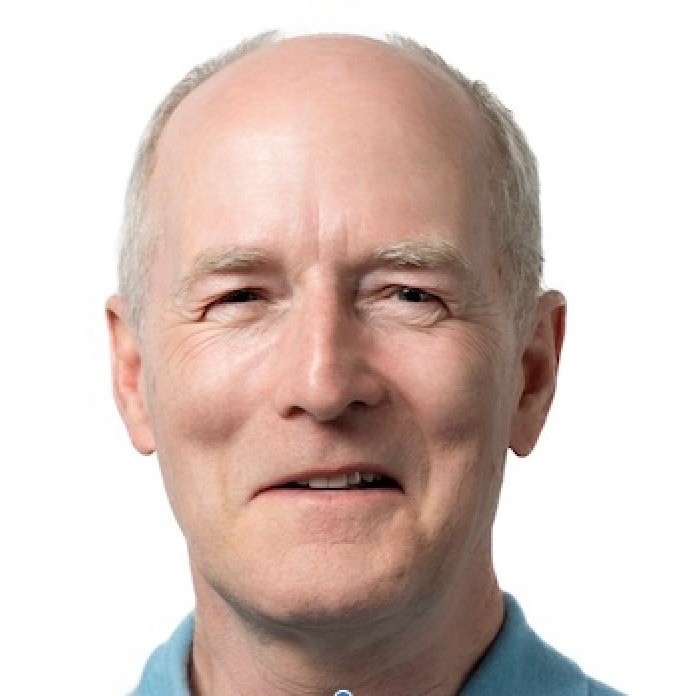
CEO and director at Quebec Precious Metals
Champigny is a geological engineer with extensive experience with both public and private companies, both domestically and internationally. He has been involved in many facets of the mining industry, including engineering, project evaluation and project management.