Transcript
Automated transcript · Written by software from the replay's audio. It can mishear names and figures; the replay is the record.
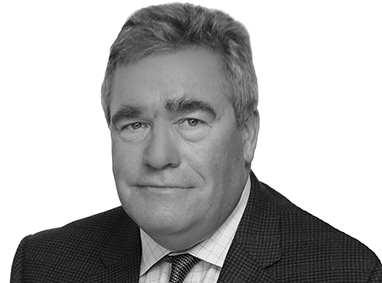
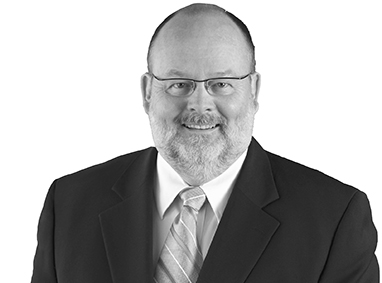
0:07 I wanted to formally welcome everyone to Star Diamond's live event today, hosted by 6. Please introduce their speakers for today. We've got Ewan Mason, Interim CEO and Chair, and George Reid, Senior VP of Corporate Development. This webinar, designed for both newcomers to the Star Diamond story and long-time followers, will be discussing the work done in 2023 and a view into what investors can expect in 2024. There will be a live Q&A following the presentation, but you can submit your questions in the chat on the right-hand side of your screen at any point during the conversation. As always, the summit is being recorded and will be available on six.com to watch afterwards as well as on YouTube. Without further ado, I'll hand it over to George and Ewan to get started.
0:52 Thanks, Romeo. First slide, please. There we go. As Romeo has mentioned, the intent today is to just give you a summary of what transpired in 2023, if you're new to the story, and to give you a bit of a look forward as to what we're expecting to do in the new year coming up. Next slide.
1:16 This is all the normal gobbledygook that we have to give if you haven't seen it before. You can read it afterwards. Next slide. Okay, so just to recap, obviously the big news of the year is we have agreed to take back the 75% interest in the Falcon project that Rio Tinto owns such that we will now own 100% of the project when it closes and it's worthy of note that we have never before owned 100% of this project. We've always had a partner in it So this is a first. In addition to getting the project back, we're gonna get Canadian 4 million from Rio to help with the costs of the transaction going forward. In addition to that, we'll be providing a $10 million environmental bond in the form of letter of credit to the government of Saskatchewan to help cover future reclamation costs.
2:08 In addition to that, we also got the bulk sample plant, which is a major give on Rio's part. It's almost brand new and it's in great shape. We have a video that we're going to show you Early in the new year about what kind of shape it's in and you'll be you'll be surprised I think the trench cutter also is in great shape. It's brand new This is actually quite a bit of interest in this piece of machinery from mining companies in Saskatchewan that want to rent it. So this could be another source of revenue going forward. In totality, that machinery that we got from Rio as part of this deal is likely worth well over $100 million. Next slide. George. So Ewan has mentioned this transaction, which we're very pleased with the result of the transaction. There's a bit of paperwork to do to get the claims moved over, the mining leases, all of our permission to operate.
3:07 And that is well underway.
3:10 I must remind you that the very large contiguous claim block that you see on that map, which is some 60 kilometers east of the city of Prince Albert in central Saskatchewan, the Saskatchewan River flowing through the southern part of the project, and very extensive claims. The kimberlites marked in red, and the 2 kimberlites that have been extensively evaluated, namely star and Orion South, are indicated in blue.
3:42 So they're in the southeastern part of the Fort Olicorn kimberlite. So we refer to the kimberlites collectively as the four-dollar corn. And then there are individual names for certain of the bodies. And we'll talk more about that as we go through the presentation. There's over 60 additional bodies, most of which contain diamonds. And ideally the project is only 20 kilometers off paved highway and the Saskatchewan power grid, which provides an enormous opportunity for future development of this project. There is access to a local pool of skilled labor, and we can go to the next slide.
4:30 We have done a huge amount of work over a long period. We have gathered very valuable information. As you see in that chart at the bottom of that slide, there was work completed between 1996 and 2022,
4:48 which included core drilling to define the shape, size, internal structure of the kimberlite, large diameter drilling to determine diamond grade, both across the body and in a vertical sense through the kimberlite. Underground bulk sampling was very important in order to obtain a very large parcel of plus 1 millimeter diamonds so that we could determine a reasonably accurate run of mine value on the diamonds. We did that very successfully on Star, and to a lesser degree on the Orion South kimberlite. That work on the underground on Orion South was curtailed by the world financial crisis. That information has then been assimilated, built into a geological model, and in the latter part of Rio Tinto's work on the project, they very successfully...
5:47 George, can you just stop there for a minute? I'm getting quite a few emails that no one can hear you. I don't know why I can hear you. Romeo, any idea?
6:02 George, could you mind... Can you hear me? I'm using a microphone which is on my desk in front of me. Can you go ahead to the more options ticker at the bottom of your screen?
6:18 And just make sure you change your role to a speaker. Speaker. Yes, it was marked as speaker. Can everybody hear me? I hope that it's still working. Are there any people out there that can't hear me? I got 5 emails. People can't hear you. I'm just checking with the chat. Are you guys able to hear George now?
7:00 Still no. George, maybe if you want to just reset the page. Apologies everybody for this quick technical difficulty. But if you want to just reset the page and re-enter as a speaker, George, I'll see if people can see you. Go right out of the talk and come back in again? If you don't mind. Yeah. Wow. This could be problematic. Good luck with that. Sorry, everyone. We can hear George, but we're just going to try and get him back in and get restarted, just a couple of seconds. Thanks for letting us know, and apologies for these technical difficulties. Closing the chat, thanks for bearing with us. We could hear him. So it's a little disorienting.
7:49 Just a couple of seconds while he refreshes the page. How about that now? Are there any people out there that can't hear me? I hope it works. George is back. Can you guys hear him now, hear and see him? Perfect. Okay. Thanks, Chad, and sorry for that. Sorry for the interruption. We're going to go ahead and Start over. Appreciate you guys hanging in with us for a few minutes. Shall we jump back to the beginning of the technical part? I think that might be shrewd, yeah.
8:39 And you were heard by the whole crowd, I presume? Everybody could hear you, yeah. Okay. Sorry about that. Let's go back to the appropriate slide.
8:51 Thank you. Let's get started again. So we are very pleased with the transaction that has taken place between Star Diamond Corporation and Rio Tinto Exploration Canada, whereby we will ultimately obtain a hundred percent interest in this shown in yellow on the map contiguous block of claims. The kimberlites are shown in red And most of those, more than 60 bodies, contain diamonds. The 2 marked in blue at the southeast end, namely Orion South and the star Kimberlite, have been evaluated to an extensive degree. And the ideal part of this project is you can see faintly on that map the red lines are paved highways we are only 20 kilometers off paved roads and more importantly we are only 20 kilometers off the Saskatchewan power grid, which will add a huge advantage to us in the future for serious electrical power use on the project and vastly reducing our carbon footprint.
10:04 So we have also an access to skilled labor in the area. Many people that live in this area have both worked on the uranium mines in the north, the potash mines in the south, and oil and gas projects in eastern Alberta, as well as in Saskatchewan. We can go to the next slide. In terms of the way forward on Star and Orion South, We've actively worked towards reducing the diamond price estimate on Orion South. There'll be more about that in a moment.
10:40 And most importantly, this work aims to eliminate the requirement for additional bulk sampling on Orion South. Orion South has had fewer bulk samples taken than Star, but we believe we can infer the price on Orion South
11:00 in a very well-constrained way. STAR aims to publish a revised mineral resource estimate on STAR and Orion South. The trench cutter diamond results will be integrated into that resource estimate. Most importantly in the trench cutter work, because it was using a very modern sampling technique, and more specifically because
11:27 the bulk sample plant, which Ewan has already alluded to, is a modern plant with a state-of-the-art flow sheet. Most importantly, it has a high-pressure grinding roll system which ensures very good liberation of small diamonds. It also has a dense media separator that recovers those small diamonds in a very narrow size range, namely 1 to 6 millimeters, resulting in an extremely efficient dense media separation recovery of the smalls. The smalls on Star and Orion South are extremely important because normally these diamonds, which on some projects are even sent to waste, they are diamonds greater than 1 millimeter but still very small size fractions, however on Star and Orion South, these diamonds have an average dollar per carat price of between
12:30 $30 and $50 a carat, whereas normally these small stones would be $5 to $10 a carat. So there is significant value in these stones. They are very well-shaped octahedra with extremely white colors. So as I've said in the past, we have done extensive work,
12:53 has been completed, core drilling, large diameter drilling, underground bulk sampling, which makes us understand the kimberlite in terms of its size, shape, and internal structure. There are a number of kimberlite units with different grades within the body, and we have to map those very accurately. We need to know the diamond grade, how it varies across the kimberlite, both in a horizontal and a vertical sense. We also needed to conduct the underground bulk sample in order to extract a large volume of kimberlite. We did 75,000
13:34 tons on star, from which we recovered over 11,000 carats. Gives us a very good idea of what a run of mine price will be for the star kimberlite. We then translated that work onto Orion South. That work was unfortunately curtailed by the World Cup financial crisis, and we collected a smaller parcel of only some 2,500 carats. However, we believe we have found a plan where we can estimate the price on Orion South with accuracy and without the necessity of additional bulk sampling. So we want to then integrate all our current information, including the trench cutter diamond results, into a new geological model.
14:26 And from that, we will develop a revised mineral resource estimate, which will then provide the baseline for the development of a prefeasibility
14:37 study moving into a feasibility study, which gives us tons, grades, carats, a reserve estimate, a mine plan, capital costs, economic model, and mine life with NPV and IRR. Next slide, please. If we look at Star and Orion South at the southeast end of that chain of Kimberlites, We see that they are in very close proximity. And in our preliminary economic assessment, which was done in 2018, we designed the pits on Iran's south and star, and we can see that those pit boundaries will be only 750 meters apart. And so we know that these kimberlites are buried underneath a significant amount of overburden, namely about 130
15:31 meters on star, but shallower overburden at 100 meters on Orion's south. There is a significant cash flow advantage, therefore, to commence mining on Orion's south. You get into higher-grade kimberlite in close proximity to the overlying glacial till at 100 meters, and you generate cash very quickly to pay back your significant capital costs. And we estimate that can happen in about 3 and 1 1 1 years. We need to, in order to put all our money where our mouth is in mining Orion South first, We need to get a slightly better control on the Orion South price, and we are very actively working at that at the moment. We are doing a very detailed quality sort of the diamonds.
16:30 Frequently, kimberlites that are even erupted adjacent to each other, as in the case of the star and Orion, have vastly different diamond populations. However, our work to date has shown that both Star and Orion have uncannily similar diamond populations. We are getting close to the end of this work, and we hope that we will be able to use Star to augment the value of Orion South because of its greater and larger sample that was taken. As I said on that slide, there are surprising similarities between STAR
17:15 and Orion South, both in geology and in the nature of the diamond parcels. Next slide, please. We recently put out a news release which highlighted Orion North. And there are significant future opportunities on Orion North, the most significant being that there is a vast volume, more than 500 million tons of diamond bearing kimberlite within Orion North. Not only that, it has a very coarse size frequency, particularly in the K148 and K120 parts of the body.
18:00 And most surprisingly, it has a very anomalous abundance of type 2a diamonds. Type 2a diamonds can result in extreme size and value and gin and tonic white goods, occasionally pink. And normally, in a kimberlite, there are less than 2% of type 2a's. However, in Orion North, we see over 52% of type 2a, which is a real surprise. And so this makes
18:39 a great incentive for further evaluation work on Orion North, and ideally the trench cutter that we have inherited from Rio Tinto as part of this deal is ideally suited to that work. So there is a great opportunity awaiting to happen at Orion North. Next slide, please.
19:03 Ewan, I think we're back to you. Thanks, George. As you will have noted, we've launched a small non-broker private placement at the end of last week because we really want to get going with this. We don't really have a good concept of how long it's going to take to close this deal because the Ministry of Environment has asked for a number of supplementary submissions and it could be 30 days, 60 days, I don't know. So We want to get cracking on this. And so basically, I've given George instructions to bring people on and get cracking so he can tell you definitively what we're going to use this $2M for.
19:46 The use of proceeds, as you know, we would like to raise some flow through units because the technical team at STAR can be funded by flow through funds. The revised mineral resource estimate most certainly for STAR and around South. That work has already commenced. We have a diamond sorter is on-site and active as we speak. We have want to initiate the scoping of the engineering towards the feasibility study and initiate a study to minimize the carbon footprint of a future mine. And there is a lot of opportunity within Canadian universities to utilize people who are working towards this end.
20:36 And not only can we minimize the carbon footprint by using hydroelectrically generated power to power the mine, but we can also sequester CO2 by crushed kimberlite. Crushed kimberlite is rich in olivine. Olivine reacts with carbon dioxide in the atmosphere to form a carbonate, and that process happens on a very rapid scale. It's not on a geological scale. It happens very quickly once the kimberlite is exposed to the atmosphere on the surface. And we are already working with teams of people that will assist us in this process so that we can ultimately generate carbon credits from the project.
21:34 Most importantly, we need to work with local indigenous groups to ensure their active participation in the project. And perhaps you might want to add a few comments about that. Sure, thanks George. We are actively looking to establish an Indigenous advisory group that will advise the board on the way forward here. We've had discussions with a number of individuals and indeed are looking to add someone to the board that will help us navigate the way forward to making this a true partnership project. And I can't say too much about it right now because discussions are preliminary, but make no mistake, that's where we're going. Next slide.
22:20 So we just remind ourselves of the true nature of this project, we have a large, the potential for a large long life mine, And we have shown we can mine 66 million carats over a 38-year mine life in the PEA, done relatively recently. Outstanding geology, contiguous diamond-bearing kibnights, and very attractive diamonds. There is the opportunity for some unique stones in the future, very large white stones, definitely yellows, and possibly pinks.
22:57 Attractive economics, $2 billion NPV and 19% IRR in a base case with a 3.4 year payback. Low risk jurisdiction in central Saskatchewan.
23:12 As I mentioned already, near existing power and transport infrastructure. The revised mineral resource incorporating the trench cutter data will add strength to the project. And then we have to provide an updated feasibility study ultimately to obtain a mining lease and get the go-ahead to move forward. In preparation for this, we have recently registered the Kuwaiti Diamond brand, which will be, hopefully, become famous and well-known for diamonds from central Saskatchewan from any of the Fort O'Lecorn kimberlites. I think Ewan might have some additional comments on the Kuwaiti brand.
24:01 Sure, Thanks George. We had a great contest which we had over a thousand suggestions of the brand name and that was selected because of its meaning which is really the North Wind. I also wanted to add that you know I've had a couple of calls in the last few days. Why do you guys keep trotting out this 2 billion? Dollar value 19% IRR with 3 and a half year payback. We keep doing it because that's all we really can do There are quite a few regulations with respect to what you can say But what I can tell you is, based on the March 2022
24:34 Joint Venture Committee meeting we had with Rio, they were outlining an 84-year mine life. So once you get past 15 or 20 years and discounted cash, it doesn't really matter anyways. But make no mistake, this is the largest undeveloped high purity diamond project on Earth.
25:00 Thank you. There We have our people and I don't know if there's any further comments, Ewan? No, we'll be adding people. In fact, we had someone show up last week to start with new diamond parcel modeling and we're off to the races. Any questions?
25:22 Thanks, guys. Thanks very much for the presentation. So before we get into questions from the audience, there's one question that came in over email. I think you tackled it towards the beginning of the presentation, but always worth reiterating. Somebody asked what the road to the PFS looks like from here, both in timeline and what the major roadblocks you might have to overcome are. Initially is financing. We mostly know what we have to do. We have to do a scoping study early in the 2024 to lay out a roadmap for the PFS. But I believe that we have a lot of experience, we have known people that can work for us, that can pick up where they've left off in the past.
26:10 Certainly, we have a vast experience in this, and we will proceed down that road as quickly as possible. We want to be inventive and innovative, reducing costs. One of the areas where There can be a lot of money expended is in developing the open pits. We already know that bucket wheel excavators provide a very efficient method of and cost efficient method of removing the overburden. Obviously, if there are methods to steepen the walls of the pits, the pits will go down 350 meters below surface, ultimately to once all of the kimberlite is mined. If we can steepen our pit walls by 1 or 2 or 3 degrees, we save a lot of money. And if there's some money to be spent in steepening the pit walls, we must look at that.
27:15 It is a project on which we need to spend some time and make sure that it works efficiently in the future for a future mine. In terms of the timeline, we believe we can get a lot of the PFS work done early in 2025 and roll that over into a feasibility study and update the degree of confidence. The PFS has a 25%
27:45 confidence and FS has 15% confidence and then ultimately every nut and bolt that goes to make up the mine needs to be costed and assembled. We have a lot of experience again in that from the past and we can update that work. I think it's worth mentioning, George, that part of the reason that we're so bullish right now is the work that Rio did. I mean, the whole time we were in discussions about how we're going to go forward, they were doing work. There's a tremendous amount of work that they have done. And basically, they have validated all of our assumptions from our previous PEA and pre-feasibility. And that gives us a great amount of confidence.
28:31 You know, most importantly was the pit stop angle that George mentioned. That was something that was a bit of a trip over earlier on, say 2016, 2017. Well, they validated that with 3 separate engineering companies. So we're not starting from 0, we're kind of starting from halfway, and we'll be using these same firms to do this work. And so that's why we can be confident that the completion date of a feasibility study is much reduced compared to what it would have been had we not had this validation by Rio's technical people. Appreciate that. Thanks. Now jumping into the live questions from the chat. This is a combination of a couple, but initially Brent asked, when do you anticipate the closing of the Rio transaction?
29:14 That's a really good question. You know, George has got more oversight on that because what's going on right now is a tremendous back and forth on the technical side. So George, why don't you get into that one? There are 3 perhaps critical elements, the easiest of which is the mineral dispositions or the claims. That transition happens basically in a day. It's very easy. But in order to proceed with that, we have to transfer the permission to operate, which is legislated by the Ministry of Environment in Saskatchewan, and that must move from Rio Tinto to Star Diamond Corporation. There are a couple of things that have to be done to get the Ministry of Environment's approval for that permission to operate to change hands.
30:08 And certainly we are very actively working on that. We have a very good understanding of what needs to be done. We just need to make sure that it is done in the quickest possible way. And then there are mining leases or there's leased land, not mining leases, leased land, that 8 areas of leased land and there has to be a land, that land has to change hands again between Rio Tinto and Star Diamond Corporation and we've done a lot of homework on that and we believe it can happen quickly. We have certainly had undertakings from the Ministry of Energy and Resources and the Ministry of Environment that they will assist us in making this happen.
31:01 I Appreciate that. Doug asks, has Rio retained any side claims? And then he specifies the Birchbark Lake area.
31:10 Just say that again. Doug asked if Rio retained any side claims, specifically the Birchbark Lake area. Not to my knowledge, They may have some claims still in their name. There were some claims that were not part of the joint venture, But those claims may have lapsed. If they haven't lapsed, we are not interested in them. Thanks. Lowell asks, is it possible to accelerate the proposed work to less than 2 years?
31:46 Let's not get ahead of ourselves. If we overpromise and under deliver, our shareholders will be very upset with us. Fair enough. Hartmut asks, which Indigenous communities of Stardiamon engage with to this point? I really can't comment on that right now for some very obvious reasons, but needless to say, it's a very important piece of the puzzle as we go forward. And, you know, I've had a few calls with people the last couple weeks saying, well, why would you do that? I go, well, because even though it's not their land, it's their spiritual lands, it's their ancestral hunting grounds.
32:27 We would like them as partners going forward. I think it's very central to a mega project development in the energy and resources sector in Canada to have your indigenous partners involved in this. And like I've said many times, we just don't want employees. We want partners. We want owners. And I think this is the best way to go forward. Great, thank you. 604 Paul asks, at what point does the status of Star change so that the diamonds, which are now property of the government, become yours to sell? I'll let George answer that because I've been all over this the last month. In order to sell the diamonds, we have to reach a stage in the project development where the Ministry of Energy and Resources of Saskatchewan gives us a mining lease.
33:22 And that's when it will change. But there are a number of hurdles to jump over before that. We have to prove through a feasibility study that we have an economic project and we also have to have financing in place to develop that project. So really until we're at the starting line, We are not at liberty to sell the diamonds. And there are a lot of diamonds, right? George over 160,000 have been extracted, as I understand it. They're all stuck in a bank vault somewhere. Correct. Yeah. I appreciate that. Shu asks, how much useful info will come from Rio at the close of escrow?
34:12 I believe we've got it all. We have We have the information already. But I would say though that our agreement with Rio basically underlines that anything that we say in the interim period between the announcement of the transaction and closing has to be approved by them, which is only fair because we don't own it yet. So we haven't been able to release most of that, including this, you know, this all of the sequestration study. These are things we are going to release as soon as we get this quote. Great, thanks. Eve is looking for a bit of clarity on the financing. He asks, the funding is at 9 cents and flow through at 11 cents. But he's curious because he thinks it was published at 14 cents of shares. He's just looking at some clarity for the numbers.
34:59 No. The financing is a unit financing, both hard dollars and flow through. And the warrant price that's exercisable out over a three-year period is 14 cents. Which is a great deal, by the way. A hell of a deal. I bought a bunch myself. Srinath asked, have we talked to James Smith in regards to their TLE funds and get them involved as a paid partner? You know, obviously, They are the closest group to the project and I can't really say anything about the discussions we've had to date for a couple of good reasons. Number 1, they're confidential, but number 2, we don't own the project yet. And I've said to many people over the last year, We're not in the business of bidding against ourself.
35:48 Once we get everything lined up you won't be able to shut us up but we have to be very careful here because I don't want someone walking in and snapping this world-class asset office for nothing. So we're not going to say too much about any of that stuff until we have it in our own backyard, 100%. Great. Mark Galambos asks, I'm going to combine a couple of questions into this one. He's really asking about the share price. He's curious what next or what catalyst is most likely to move the share price in the future. Well, I think we've got to parcel together the project deal going forward. We have to bring First Nations on board. We have to bring financial partners on board, and we have to bring the government on board.
36:36 And, you know, that's what's going to make a difference here. I don't think anybody is in any doubt what we have in the ground. What's in the ground, you know, has been in this deposit for over 100 million years and probably around for 4 billion years. It's not going anywhere. What we need to do is join the dots and get everybody on side for developing this massive project. And, you know, I think people have to realize we've been out of the box on this since 2017. OK. You know, and A year before that we were working on a deal with Rio. We have not been in a position to make any decisions or do any development work ourselves and in fact even look for investors because we were not the manager of the joint venture. All that is going to change now and we are going to do things very differently.
37:25 There's a lot of phone calls that are going to be made and meetings attended because we're not stopping anywhere. We're looking for project partners anywhere We can find them and I think you know the financial end of this business particularly with what's going on now with the recent Banning of Russian diamonds. I don't know people know this but back in early December the whole G7 decided they're not taking any Russian diamonds anymore. So, you know, this deposit is actually quite remarkable in that it's in a mining-friendly jurisdiction, all right? It's very, very high purity with lots of great big stones under there and Above all else. It's conflict-free Just so simple No, thanks There's 1 question.
38:17 Is there a chance to rent out the processing plant or Bauer to make money while they sit idle? Yeah, these are all possibilities and You know, we may even use the processing plant to run Kimberlite from other deposits. These are all things we'll figure out once we own it. Thank you. Sean asks, when do you think, and I know there's some crystal ball gazing here, but when do you think mining can actually start at the project? I mean, there's a couple of different types of mining. There's legal mining and illegal mining. So I think we'll just stick with the legal one. And George, that'll be over to you. It'll take a while because you have to get through a feasibility study and have a financeable project.
39:07 So, a very minimum of 3 years, I would think. Euan, I don't know if you want to add to that? Well, certainly once it, once it gets going, you have to strip the overburden to get at the Kimberlite, unless you come up with an alternative mining method. We're not really familiar with that stage at the moment. You need to get at the rock that contains the diamonds, which is essentially 100 meters below surface. And you need to extract it in large volumes to create a good cash flow from it. And there were many different types of mining that were analyzed by Rio under the auspice of the joint venture, including mining with the trench cutter or shaft mining.
39:56 You know, our staff has discounted most of these things, as did Rio, as not being the way to get the big deposit, but these are all possibilities, and this can be done very quickly. In fact, Rio was planning on going right ahead. They weren't going to sit around and wait. So it just depends on who's actually doing the mining. That makes sense. A couple of questions from Marty. I think to some degree have been covered, but always good to reiterate. Ask what work needs to be done and how it will take to put out a resource estimate on Orion North. There would need to be some additional bulk sampling done that could be done with a trench cutter rig.
40:43 There has been some in the past, large diameter drilling, that was done successfully in the past and has shown these results that I've spoken about in this presentation. We have a very, the core drilling is good on Orion South, but there would need to be additional bulk sampling to get a more accurate diamond grade and a diamond price. We are very far off on a price yet. We have not done a price estimate on Orion North. We may attempt that because of our local pricing person who will be on site in the future. That is certainly a possibility. But we There is huge opportunity with Orion North. Certainly in the past, when Newmont was involved in the project a very long time ago, they were very gung-ho about Orion North because of the extreme oil volume. They were deterred by the grade.
41:48 But I fully believe that the abundance of type 2s and the coarse size frequency distribution of the diamonds vastly offsets the grade. We know of other bodies, particularly let's say in South Africa, which has a grade of 1 to 2 carats per 100 tons, and yet it is a highly economic deposit because it has $2,000 per carat diamonds on average. And then there are obviously stones such as the Lesotho Promise that went up to like $40,000 a carat, you know, really remarkable stones. There is the possibility for that scenario on Orion North and Anstar. Well, actually, George, that's a good comment. And I will say right now, as I've mentioned many times, we haven't done much with Orion North. Orion North scares me. It's massive. It has over 50% in typing diamonds, Type 2a.
42:48 It really is something that's, it's very unique. And the only reason we're not working on it right now is because we're almost there on Orion South and Star. But, you know, don't forget, Orion North is there and is likely the singular jewel of this project. It's likely going to be what makes this work. And that's what gets us to 84-year mine life. Thank you. Just a reminder, we'll try to get to all the questions today, but if we do run out of time, make sure that the team gets the full list of questions and can reach out with any answers. Or if you're like me and you think of the perfect question as soon as the event is over, please feel free to email in and I'll make sure the team gets back to you. I have a couple more I wanted to get through.
43:34 Eve asks, are you aware if Newmont may have an interest in coming back as a bigger player? You know we are required under the agreement that we made with Newmont back in I think it was 2017 to advise them of any financing we do. And they have the chance to participate. We have not talked to Newmont on a strategic basis, go forward basis yet. Newmont is a far different company than it was when they were involved with us it's probably 3 or 4 times the size now and So we will have a discussion with them. I just don't know where it would go Well fair enough Marty has so much work was done over the past year on the PFS and if this is factored into your current timeline.
44:25 We've certainly done work in terms of understanding the relationship between Star and Orion South in terms of their diamond population. We worked as hard as we could on that, but certainly when it comes to engineering work, we did not have the money to proceed down that route. We have a lot of information from the past that merely needs to be refined and updated. So as Ewan has already stated, we have a lot there already and we just need to sharpen our pencil, as it were. So there is a lot of work done already, yes. Great, thanks. Brett asks, this is directly to George. Do you know how many kWh it would take to produce a one-carat stone in a lab, and how that compares to mined diamonds?
45:19 I can't give you actual numbers, but I know a certain person who was very eminent in the diamond business. When he left a project, He had a great idea of producing synthetic diamonds from solar power generated in southern Arizona, which obviously receives a lot of sunshine, and having investigated that in some detail, it was put to bed because it was not viable. So, I am of the opinion, and I don't have actual engineering numbers at my fingertips, but I am of the opinion that it is electrically expensive to make a synthetic diamond. So to call synthetic diamonds green is a complete false statement.
46:17 But the difference between synthetics and natural diamonds is in the price. So synthetic diamonds are cheaper and natural diamonds have the uniqueness of their deep 2-3-4 billion year history and their rarity. But you have to make up your mind what you want. Well, thanks George. Jared asks, when will we hear about carbon neutral mining process with the ore coming to surface, making this a carbon neutral diamond mine? Well, we have a real report on it. And we are we have made some subsequent inquiries about it. But we're expecting to announce in the new year, what we're going to do with that initiative going forward. Correct, George?
47:05 Correct. Yes. Great, thanks. Kevin asked us a question about the financing. So without the deal having closed, are you able to spend the money on the project at this time or only once the deal closes? And if it's the latter, what is the deal closing risk? Well, our council has advised that we're able to raise money and spend money in the intervening period. I would say there's almost 0 risk of this deal not closing because both parties want it very badly. Perfect, thanks. Shrineheart asks, can we hire more people to speed up the FS? He thinks most shareholders would ante up money for wages to make this process go quicker, if that's an option? Well, that's what we're doing.
47:52 George? We want to get moving with this small financing. Obviously, if you're going to go in deep and raise significant money to do a significant piece of engineering work. We have to do that with hard dollars. We can't do that with flow-through funds. We would also like to raise that money at a more significant share price. That makes sense. Rock asks, what are you gonna do with the 100 plus meters of overburden? He notes that it sounds like a lot of earth. There would be an overburden pile built that would be essentially, and we must understand that there is already some undulation in the forest of the Fortalecón, because when the glaciers receded 7,000 years ago, there was a field of glacial outwash sands that then were blown around by the wind and created a dune field.
49:02 And we would have a pile that is large in its aerial extent, but it is of a low profile. And it would be ultimately vegetated by the same material, the same vegetation as we have in the forest. So it wouldn't be an eyesore as those of you who've gone to Johannesburg in the not so distant past, There were these enormous mine dumps all over the show that ultimately got reprocessed because they were mined with inefficient metallurgy long ago. But certainly the overburdened waste pile would not be an eyesore. And ultimately with mining Orion South first, you would build an overburdened waste pile. But once you then start the pit on star, ultimately you can put waste back into Orion South.
50:06 Great, thanks. Into the worked out pit of Orion South. So the materials can ultimately be recycled. Time for just a couple more questions. So I'll try to get to some of the ones here that have been recently asked. Marty asks, just one last time, if you could repeat the PFS timelines. Well, the picture says that second quarter of 2025. Great, thank you. Aaron asks, with this financing, will the shares be sitting with Odyssey like the most recent financing? That depends which pair you're talking about.
50:56 The shares will be sitting with the purchasers and only the purchasers. Okay, thanks. Brent asks, do you anticipate any institutional involvement in this financing? Oh, yes, we already have. We have a lead order from the institution. Great, thanks so much. Now, I know there's a couple of questions left in chat, but unfortunately we'll have to get to those over email. I wanted to pose to you guys just before we wrap, what each of you are most excited for in 2024, as we're getting to the end of December? It's the ability to control the deposit for the first time in a very long time. And as I mentioned earlier, we've never owned 100 percent of it. And our hands have been tied, basically, by the partnership, which one would expect.
51:46 Now that it's over, there is no stone going to be left unturned. This is far too great an asset to not be developed, not just for the people of Saskatchewan and Canada, but for the global diamond market. I firmly believe that nothing like this has ever been seen. And somebody asked what we're gonna do with the overburden. Well, George mentioned we're gonna plop some back in the Orion South pit. That's where the Orion North overburden is gonna go when we mine that one. And George, last words on what you're most excited for in 2020. From my side, certainly there was always a concern about this mitigation of the price risk on Iran South. And I think the work that we are currently doing is pointing in the right direction that we will be able to solve that problem. We will be able to improve our revised mineral resource and strengthen those numbers.
52:46 And I think that that is a short-term achievement in the second quarter of 2024. Great. Euan, George, thank you so much for your presentation and going through the Q&A today. Thanks, everybody, who joined, particularly those who asked questions during the very engaged question and answer period. If you're looking for the recording of this it should be available towards the end of today both on YouTube and also on Six.com. But thanks everybody for joining. George and thank you guys as well. Happy holidays. I'll throw it to you guys for the last word before we jump. Yeah, thanks everybody for your interest and don't forget about the financing. We have some room left for existing shareholders. So please, if you're interested, send us your indication as per the press release. And I just want to wish you all the very best and safest of the holiday season.