Transcript
Automated transcript · Written by software from the replay's audio. It can mishear names and figures; the replay is the record.
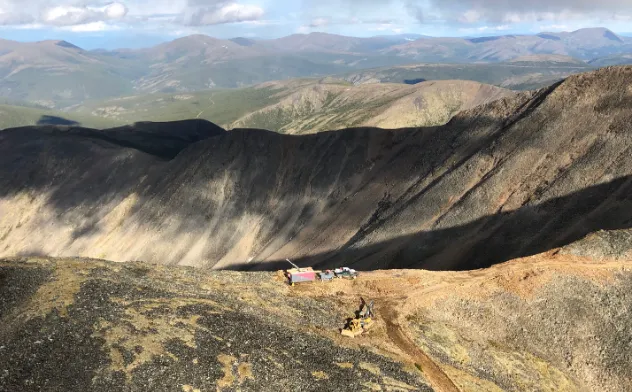
0:00 When you start to think like that, this could absolutely be a monstrous district, okay? I think that the Yukon is probably the home to the next great gold district if it wants to be. This is the whole property. It's about 28 kilometers across, 431 square kilometers. There's 11 intrusions on the surface here. They're all gold bearing. It's a unique situation where you get this many intrusions exposed on the surface that are all carrying gold. And you move in and start drilling and all of a sudden you've got a deposit here, you got a deposit there, you got one here. We don't see that trajectory slowing down anytime soon. It's definitely shaping up to be a potential mine district. Thank you so much, Cor, I really appreciate it. I would love to,
0:45 I'm So glad to have both of you on, but great to have you Quinton on as well. Would love to hear your thoughts on this news. I know you were just at site in July, so I'd love to have you guys, feel free to go back and forth between the 2 and talk all things, this project and what you're excited about.
1:03 Yeah, thanks. I really appreciate the chance to talk about this story is one of probably the most important reduced intrusive stories in the Yukon. It's emerging here lately. As Cora mentioned, you know, this particular area is really showing up as a large school district. It's not just a one-off deposit. This is a district-scale play. And the RC property, from What I've seen being on the ground a few months ago is it has got a lot of upside. I think the biggest takeaway I had from the most recent news release is that, well, it's impressive to see this many ounces come this quickly.
1:50 It's only the start. It sounds crazy, but you know when you start looking at the potential across the property, Polkoman for example, which doesn't have a resource right now, is an absolutely whopping big gold and soil anomaly that's probably going to tell us there's another deposit there. Okay, so, Gore, I guess one of the things that really caught my attention when I first started
2:16 looking at Sika in earnest, I think in 23, so after you had your first resource, which I think came out in the low, like 1.3 million if I remember right, ounces. You've seen steady growth, okay? Year over year, you've continued to update your resource based on the drill programs that you've had over the past 3 years and now you're at 5.1. So, if you just look at the chart, it's pretty steady growth. So, it would be, is it safe to say that you could see continued growth along that trajectory over the coming coming years? I certainly hope so that's for sure yeah that's that's kind of the plan yeah I mean when you think of the first resource there at Blackjack 1.3
3:02 million ounces at you know an inferred grade of I think it was 0.83 and and now you look at it we announced another update last January and it was at 1.3Moz indicated at just over a gram and another 1M inferred at just under a gram. That's rapid growth there at that first deposit that we found. Now you switch over to Ross Gobble.
3:28 We're putting 30,000m into that. We would be really astounded if we didn't add a lot of ounces. We're pretty confident that this is just to start, as you say, with raw scrabble there. Okay, and there's a lot of geologic basis to say that this is all part of a much, much bigger system.
3:48 One of the things that caught my attention when I was at site was the similarity in style of mineralization from place to place. You see the same sheeted veining, which is indicative of reduced intrusive type systems, but you see the very unique porphyritic textured granodiorites phase. And that seems to be present in each of the different occurrences. What do you think that tells us about the system as a whole? Is that telling us there's a connection?
4:17 Well, yeah, I think when you look at it, the composition is pretty much the same on all of these intrusions. They're all tombstone suite, 90 year plus or minus year old intrusions. They're all in place pretty much at the same time.
4:33 There's not much difference between them and they all have gold associated with them that we've been able to determine to date. So yeah, it's a big system. They probably are connected at depth. We just don't know what that depth is, but definitely it's a unique situation where you get this many intrusions exposed on the surface that are all carrying gold. And you move in and start drilling and all of a sudden you've got a deposit here, you got a deposit there, you got one here. We don't see that trajectory slowing down anytime soon.
5:07 Okay, well look, one of the things that I think most investors need to know about exploration and deposits in general is that, you know, it's both a combination of Mother Nature and how it formed, like where it formed in depth, but also erosion, where it's taken down the earth's surface down to expose the deposits that have been formed. And it seems like you guys are kind of in the Goldilocks zone. In other words, Mother Nature is kind of taking the system right down to the top of what would be the more prolific part of a reduced intrusive regime.
5:44 On that basis, what do you think, you've got other targets across property, you got the targets you've identified, I think back in 23 off to the southeast, but you also have other intrusives even that you haven't really tested yet. Tell us a little bit more about what you think the bigger picture is across the whole RC project.
6:06 Yeah, well if you if we can pull up that slide 8 again, you know it shows that there's an oval there that that shows the Clear Creek Intrusive Complex that we're focused on. It's got 9 of the intrusions there. But the property as a whole, you've got the Mawton and you got the Maykew and you've got all those stars there that are basically telling you that on the surface, the structural mapping, the geophysics, the geochem, it's all showing you that you've got the right ingredients to have an intrusion in that area or several intrusions. So the property as a whole,
6:50 it's enormous as far as the potential goes. But again, going back to the Clear Creek intrusive complex area there, you know where we've got the Rosgobble there, but right behind the Rosgobble to the east is the big creek stock and that's another big intrusion that is a little more difficult for us to get to because we haven't cut a road there but it's obviously on the on the map for us to carry on because structurally we're seeing a lot of indications that what we see at Rosgobel could be at Big Creek as well, at that at Big Creek stock. So yeah, property as a whole, it's going to take several years to really see how many millions of ounces there really is posted here.
7:35 Okay, well look as we know the gold industry is pretty hungry right now for large-scale discoveries. The majors are you know motoring through a lot of reserves and really there's been a dearth of discovery in the gold space for quite some time now. What do you see as making this story ultimately very attractive to a major? Are you seeing interest from majors?
8:04 Are you seeing particular triggers that might pull in a company?
8:11 You mentioned one of the triggers there that we think is that breaking that threshold of 5Moz. That's always a big one there. And then the blue sky and the potential on the property that couples with it.
8:28 So, as far as in this environment, we got a lot of eyeballs on us, put it that way. There's no doubt about it. That's good to hear. That's good to hear. One of the things that, you know, a lot of people say, oh, these reduced intrusive systems are a bit low grade. But one of the things that I think is a key characteristic of them is their metallurgy. Okay,
8:52 and I don't mean to dive deeply into the technical side of these, but I think it's really important that people understand what that means. These things tend to have free gold. They're, in other words, the gold is not bound up in sulfides or other mineral phases. It's relatively free, freely liberated and amenable to cheap recovery. And that helps things. Can you talk a little bit about what you see in terms of metallurgy, what work you've done? What do you think? What do you think? So the outcome here, do you see a system even at 0.7 gram like you have for for Roscoe?
9:28 Think about the math right now. Gold's 5300 bucks. I just checked my phone, it's up right now, 5,300 bucks. That's crazy guys. 0.7 gram, 2, 3 years ago it would have sounded insane to say you can mill rock like that. Today, Absolutely.
9:47 Tell us about metallurgy. Yeah, well, and we made sure that we did some testing before we put this MRE out on Rosgobel because people always wonder, is it refractory? You know, and we, it's very typical non-refractory, these intrusion-related Gold deposits. And again, there you go, we're getting up to 96% recovery right off the bat with a bottle roll test. So non-refractory,
10:13 that's a big plus right there. A checkmark that these things are, the milling is going to be a lot more simplified. Again, I look at Rosgobel and the QP, he said, well, let's use a 0.7 as grade. But in that 0.7, back to that pit, if you look at that pit which is slide 6,
10:36 there's a lot of 1 gram plus material right from the surface and that's what you'd be starting to mine. That's the nice thing is that you're not stripping to start mining something like this. Your first shovel load is going to the mill. So that's pretty nice to see there. And all that purple is the 1 gram plus in the model on this deposit.
10:59 But again, to the metallurgists, The unique thing about Rosgobel is there's a lot of tungsten associated with this. We've seen that since day 1. You know, big chunks of shelite, which is a tungsten mineral.
11:15 It's part of our ICP process, or multi-element analysis, so We get a sniff of tungsten or whatever element of the 52 suite that we're doing, but it doesn't digest all the tungsten. Once we started seeing a significant amount, We've shipped out 5,500 samples to the lab right now on all these drill holes, and we're getting more precise tungsten value because we think it's a significant contributing factor to this deposit. So stay tuned for that. But obviously that's a critical mineral. We may have a gold tungsten deposit here on Roscoe, which would be pretty unique, but pretty exciting too. That's Very interesting. I know that reduced intrusives systems, they can quite often have a significant tungsten component. It looks like you guys are blessed with that. I was at site last summer when you guys were, you had the first 2 holes from Rosgovle
12:17 to look at, and we took the black light and ran over, you readily see the shea light. I think what caught my attention was the shea light was quite coarse grained. It wasn't just very finely disseminated shea light, you know, for people's edification that shea light is a very challenging mineral to process because it likes to fracture and break down into very fine powder when you put it in the mill. All right, so to recover it, to see coarse grain she light like that tells me I have a very good shot that when you mill the rock to recover the gold, you're likely going to be able to recover sheet light as well. It's not going to be a very, very fine
12:54 component that's going to get blasted through the mill. It'll be something you can recover. It's also amenable to gravity recovery. Basically, you have the gold, which will definitely have a gravity component to your circuit. But you also have a she light, potential she light recovery as well. Now, when I was there in July, I think you and I were driving back from camp that day. And this was after I got to see it, the Sheilai. And I remember thinking,
13:23 you know, I wonder what the cost or the price of Sheilai concentrate is right now. And I looked it up on my phone. I think it was like $24,000 a ton or somewhere thereabouts. Tungsten has only gone up over the past few months. When you say,
13:41 I hope we didn't lose core. No, I don't. Well, I don't think we've lost him. We'll double check, make sure he can get back in. But in the meantime, Quinton, I really appreciate you speaking to this. Anyway, so look, the price of SheLight's only gotten up since then. And so, while this is a gold deposit, don't want to pretend, and it's even at 0.7 gram, you think about that, That's probably in the neighborhood and north of $100 per tonne recoverable in a mill at 96% recovery. The Sheilite component couldn't actually be a big benefit
14:19 to this economic story here. So I think it's very important. Do we track Cora down? Is he on?
14:26 I'm mid-track, but in the meantime, I would love to... Oh, there we go. Hey, hey, Cora. I'll get you back on with the mic and camera here. Yeah. There you go. You're back. A little chop in there. No worries. We lost you. We lost you. Good to have you back. Hold your back. Yeah. We took over the camera. We brought you back. Good. Well, guys, no, this is a great discussion. I don't want to interrupt. I think you were talking about. Yeah, I was talking about the tungsten while you were away. I just said that the price of tungsten has gone up lately.
14:58 And while this is a gold deposit and at, you know, 0.7 gram, 96% recovery, you're talking about $100 plus value of metal in the rock. Okay, at Roskoppel in particular.
15:12 That's great. That's great. But you know, if you look at maybe the benefits of tungsten. You bring that into the picture, maybe that could cover a lot of the operational costs here. In other words, you're gonna produce mold at a much lower price. So, Gord, one of the things that really got me stoked about your project, RC project here way back in 23. I watched you guys start work here in a couple years prior to that, had some good long runs of lower grade mineralization. I think the first resource you put out was in the 0.6-ish gram range. But you started to see high grain
15:54 at Blackjack in particular, in a few of the holes, I think in the latter part of 2023, if I remember right, maybe it was 22, I can't remember. But that was kind of a trend, like you could see that there was something more going on at depth. Do you think there's other potential for higher grades evolving as you go deeper in some of these new systems like Roskabel and Polcomare?
16:18 Well, absolutely, We don't see any difference really between Blackjack and Pilkerman and Rosgobel. Any of those intrusions, like I say, I believe they all come from the same source. Blackjack has shown that below the pit there, that we're getting some really nice numbers like 6.5m of 5.53g per ton, 65m of 2g per ton. You're starting to see potential for underground there.
16:49 That's just a start. At Roscoeble, our deepest hole I think was 450m on an angle and we had visible Gold at the bottom of that hole. So we're seeing the same thing that these are deep-rooted systems and that Gold is persistent. And the case with Blackjack, it's the same content.
17:11 It's just squeezed together more and so the grades higher, which is exactly what you want when you're going underground. So that remains to be seen, but yeah, pretty exciting. I'm going to stick with my inverted cow udder theory for the geometry of this deposit. I think that you're going to see all of these things come together at depth. And I think that is one key feature of this deposit, this property
17:37 that is going to attract a major because major mining companies, they'll have teams of people who understand and appreciate that what you're seeing in your drilling here, and it's a great resource, don't get me wrong, everything's great. But that's just the start. That's just the start of something. When you start talking about potential for things to start coming together, and we see that geology that supports it, this similar intrusive phase that you see in each one of these systems had to come off the same mothership down there somewhere. Okay, when you start to think like that, this could absolutely be a monstrous district, okay? We already see that kind of picture unfolding in nearby neighboring companies like Banyan.
18:21 They're well on their way to building a big mine. We saw it with Eagle, unfortunately, the accident at Eagle. I don't mean to dive off into the world of politics and stuff. But what do you see happening with Eagle?
18:38 And how is that going to play out with you guys and other stories in this region?
18:44 Like, what's your crystal ball saying? Well, that's a tough one.
18:52 It's been pretty quiet there as far as who's kicking tires there from our perspective. But sooner or later, somebody is gonna take that and ideally it's gonna be a producer somewhere else, somebody that's got experience, and that will just help our district because it's maturing and you need an anchor like that to move these projects forward at a rapid pace. So we'll have to see there. It's pretty quiet on that front from my side. So I've heard that maybe in April there might be some news on who they've elected to move that forward.
19:40 But in the meantime, like you say, Banyan's going great guns, we're going great guns. We're keeping the pedal to the metal and moving this forward and presumably with a PEA by first quarter of next year we want to be on that with hopefully a lot more ounces than we have now. And yeah, this district because of the fact that it's road accessible, I think can be developed very quickly. And if it's the right person that takes Victoria Gold, well, they might just take the whole district if the price is right. You know, just we'll have to see. And we're seeing, look, I'm a big champion of the Yukon. I've said this over and over again. I helped host a conference about 3 weeks ago in Vancouver.
20:26 A lot of folks from the Yukon were in attendance. I think that the Yukon is probably the home to the next great gold district if it wants to be. In other words, you know, the folks in Yukon are going to have to, and this includes First Nations, everybody, everybody in the Yukon is going to have to come to terms and decide how they want things to proceed because the gold's there, the endowment is there. You're seeing your story, you're seeing multiple reduced intruder stories emerge. We know Banyan, Snowline, et cetera. There's a lot of potential here. So it is gonna be very interesting. I was hoping you might tell me that you knew the secret name of the winner of Eagle, but it's going to be very interesting over the next few months to see how it unfolds.
21:14 Because I think once that winner shows up or once that party, and it might not be a big company, I don't know, maybe it's a small company, who knows, but we need to see somebody catalyze everything here and show that there's a path forward to making this a great goal of camp. So Bianca, where do you wanna take things? I know you got questions or people probably coming in with questions. Oh yes, tons of questions. And I know we're running a little tight. I said 930. I lied. We're going to do a hard stop 940 because I would be So remiss if I didn't at least ask some of these questions. I appreciate for some of you folks, some of these questions were touched on, but I could see from the attendees, people are coming in about halfway through. So there might be some treading over territory we've already covered, but I'd love to start with a question here from Byron King.
22:05 Could you speak to the general nature of mineralization, intrusion and sheeted quartz veins, hosted gold or mineralization? And what is the proposed recovery, any difficult chemistry? Do you wanna plow into that, Gore, or you? Sure. Sure. Well, like we did touch on it somewhat, you know, these are non-refractory. They're basically a pretty simple metallurgical process to recover the gold, whether you're doing heap bleaching or you're doing a conventional mill. We're testing both those right now. We mentioned that we just did our initial tests on Rosgolva. We got up to 96% on 2 bottle roll tests. I think 1 was 89, 1 was 96. So no surprises there, no big metallurgical problems, but we are also doing ongoing met studies. We're doing gravity and flotation and conventional milling methods to see what kind of recovery we get, see what makes the most sense. And especially with the tungsten there, we're testing that as well.
23:12 Awesome. Another question here coming from Dale Craig. On Ross Gobble, is 2026 drilling more about expansion and step outs to raise total inferred as much as possible or is there a desire to infill the 1 gram plus areas to drive initial economics and overall visibility in the markets I absolutely step out we want to build this It's okay to be in the inferred stage right now. These intrusions, whether it's Fort Knox or Valley or the Eagle Mine, they have the ability to have 5 to 10 million ounces. And we've just scratched this. We wanna make sure that we get a good handle on how many ounces we're looking at here before we start doing any infill. Brilliant.
23:58 This is going back to the map. So I'll have to have you guide me again. Could you show us on the map where the 30 kilometers of drilling will take place? Yeah, go to slide 4. You know, this is a big gold anomaly, soil anomaly on surface. This anomaly is larger than the map here. It's about 2 kilometers long and about 1 and a half kilometers wide. We've drilled 1 and a half kilometers of that. You can see the drill holes there, but there's a lot more work to do both north and south and east and west. So these drill holes will continue like you're seeing here but it'll be rows of them probably above and below this and extending to the east and the west is what we're seeing.
24:49 But we also let the drill tell us where to go. When we're drilling, we don't pre plan all of our drill holes and just close our eyes. So it's, it's an ongoing process and the technical team is our masters of this, as you can imagine, to go from a brand new grassroots project to a mineral resource after 4 months of drilling, basically it was a month in 2024 and 3 months last year. So Yeah, that's the plan. Brilliant. Next question here. It's a commentary and then a question. It's from Williams Ormaza Nieto. Congratulations to you on the team on delivering a third MRE for the RC project within a strong timeline. The continued growth in ounces and the project infrastructure and advantages such as location and access are very impressive.
25:42 Looking ahead, does SICA plan to advance the project internally through a PEA, PFS, and FS stages while continuing to expand the resource or new targets or is the company considering bringing in a major partner to support development and funding? Well, As I said, our plan is to keep the pedal to the metal and keep moving forward, which is going to be bringing into the PEA stage and the Prefeasibility Studies stage and just keep going. And organically, lots of times, you end up with a major either bootstrapping with you or you know, gobbling you up. We just don't know. But our focus is we're looking at going ahead and bringing this right through the economics.
26:30 We're seeing it after 5 million ounces that we're on that line. And this year is going to pretty much endorse, underscore, I believe, the ounces that we want to really have an impressive economic picture. We're also growing our team majorly in that direction. Awesome. Yeah, I would also chime in that you're on a growth curve right now, okay? If you look at the growth and the resource that you've seen over the past few years, it's very steady. And you can continue that growth like we talked about in the first, very first of the discussion. Okay, so, you know, what does it mean in terms of taking it straight to like PFS and feasibility? Look, you want to kind of wrap your mind and around the, what you have in hand.
27:17 And that includes some of these new discoveries, Polk Command and other things. I wouldn't jump towards PFS right away. Yeah, you can do PEAs, but we already kind of get a sense. This is gonna be a good system. Grow the story is my view. That's my 2 bits. Grow and, and, you know, sort out the economics a little bit later, because if you don't fully understand things right now, you're going to make Your goal right now is to get as many answers as you can about the size and scale of the system. So that you can make a better decision about how to advance the project towards production. Okay, so right now you're on a growth curve. I would focus, you know, a lot of your effort. That would be me and maybe a bit of your effort, 80-20, something like that. 80 percent growth and 20 percent hard yard stuff.
28:12 Yeah. No, I agree with that, Quinton. 60,000 meters this year. Drill, baby. It's more drilling than we did in the entire project since day 1. So it's gonna change the landscape for what we're looking at for sure in 12 months from now. And so Those decisions have to be made based on that information coming in. I think that it's going to be a different landscape 12-months from now with the amount of ounces, the amount of deposits and all those affect the economics on, you know, can you have 1 mill that's servicing all these satellite deposits or do you need more than 1? Well, those things will all come to light as this drilling completes, for sure.
29:06 I know we already talked about step-outs and infill, but there was another question that came in much later. So for folks maybe who are just tuning in, the question is from Ron Hoover. Do you plan to drill deeper with existing holes that showed great results at depth of those holes at Rasgobel? Oh, absolutely. Absolutely. We want to test the depth potential there. You know, vertically, we're only down about 300 meters right now. It can go a lot more than that as we've seen with the conceptual pit at Blackjack. But it's a, you know, there's a lot of low-hanging fruit on the surface and when you have these mineralized zones start on the surface you want to get your surface kind of looked after for sure as well. But yeah, we will be testing at depth.
29:56 That's a normal tendency of geologists, and I'm a geologist as well, is that we want to see what's down there deeper. You know, it's kind of like going over the mountain to the next one and see what's there. So yeah, there'll be some deep drilling as well. Fabulous. Folks, I think I've covered the majority of not all of the questions from the audience here. For you folks, if I've missed anyone, I hope I didn't, or if you just, if I have a new question just occurs to you right now, feel free to send it in to us. We'll make sure it gets to the SITKA team. I have one question apiece for each of you just to wrap things up here. Quinton, for you, you've been such a long-term supporter of Sitka for years as a seasoned geologist and shareholder. For folks, again, just tuning in, what is your summary of why you're excited for the Sitka story right now? What excites you most about the story today?
30:46 Growth, it goes back to what I just said a few minutes ago. When in exploration, when you look at the most successful projects that are out there, when they were in this phase of work, They're the stories that continue to deliver growth, positive news, good metallurgy, good this, good that. Everything was heading in the right direction. Right now, I see SICA in a very, very strong path. Yeah, there's a lot of work to do. Metallurgy, a lot of work that has to be done. But right now we already have good indications that the metallurgy is very favorable. We know from the drilling and the soils and all these other targets that Cora and his team have across the RC project, there is a huge potential for growth.
31:36 Why would I stick with this? Why did I buy more shares here over the past month or so when the price was what, 89 cents or some goofy price? Is because if you look around the gold industry right now, how many major tier 1 assets have been discovered in recent history? Very few guys, very few. And the mining industry needs these types of discoveries. And my view is this is one of them. Very well put. Cor, final word goes over to you. I'm just really curious, if we were having this conversation a year from now, what are you most excited about when it comes to the next 12 months? What's the one thing you want to leave investors with? Oh, I would say ounces.
32:24 I'm excited about building on ounces. And 60,000m of drilling. If we can keep building these ounces next year, we're going to be happy campers. I can see that just because of the confirmation that Roscoeville gives us, that we've got a good understanding of the structural controls of the gold and that opens it up for us. This project is a major company maker. The main thing is ounces. It's all going to be about ounces and how close to the surface are those ounces, what's the grade of those ounces, and of course, where's the price of gold next year?
33:12 That's the thing. That's the question. Well, look, I'm excited to talk about it. I'm excited to check in with you guys then. In the meantime, big, big, big thank you to everyone who tuned in and a huge thank you to both Quintin and Cor. Really appreciate you having you on today and learning more about this exciting development.