Transcript
Automated transcript · Written by software from the replay's audio. It can mishear names and figures; the replay is the record.
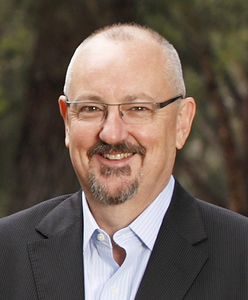
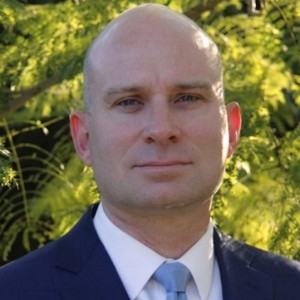
0:08 Well, hello and welcome everyone to Cerama Resources live investment summit today hosted by 6. We're joined today by Andrew Dining, Managing Director and CEO, and Paul Schmidty, VP Corporate Development. Andrew is going to walk us through a company presentation, and then we will be accepting questions live. As a reminder, you can submit your questions at any time on the Q&A panel on the right-hand side of the screen, and we will get to them after the presentation.
0:36 As always, the summit is being recorded and will be available to watch afterwards on SIX.com. But now, without further ado, I'll hand it over to Andrew to kick things off. Thanks, Sasha, and hello, everybody. I've been looking forward to this moment for quite a while, to have an opportunity, I guess, to update a lot of people on the company and the progress that we've been made. So I guess without further ado, I'll get into the deck. I guess first thing is the forward looking statements. So I urge you to read these at a later date, but you've got 5 seconds now, if you can get it through, then Good on you. So I guess moving on to Cerama. Cerama's been established for a while now. Our primary focus is in Burkina Faso and obviously gold.
1:26 The company's assets have a lot of exploration upside. We've got a large resource now, close to 3 million ounces. We've got line of sight to a mine development. We'll have a lot of news flow coming probably early next year. And one of the other things we're focused on at the moment is a dual listing on the ASX. So we think an ASX listing, particularly being Australian and Perth based, will be complimentary to the Canadian listing. And I think it gives the company an opportunity to, I guess, maximize the best parts of both markets. So I guess moving on to our assets, we're established primarily in the Hyundai belt, which is a very well-endowed belt in Burkina Faso.
2:13 There's been a lot of M&A activity there. And really, the 2 dominant companies from a land position point of view is obviously Surama and Endeavour Mining. So Endeavour have acquired Taranga and Semaphore in the last 12 to 18 months and they're busily working through those assets. And Serama, really we've just been focused on getting our assets to a point where we can advance them. So we're around 2000 square kilometres in the Hyundai belt. We've got about 70 strike kilometres of the belt. It's all contiguous, it's all prospective, and it's all in greenstone. The Santa Tura project itself, that hosts 2 deposits. So between them, it's close to 3 million ounces. So we have the Tangkora deposit, which is about 2.5 million ounces in total.
3:10 And then we have the Bondi deposit which is around 400 000 ounces and we acquired that from Orzone several years ago. As mentioned there's still adequate exploration upsides, We've got extensional work to do around the existing deposits, and we've got a number of targets that sit outside those. Post the ASICS listing which we'll use to top up the balance sheet, we've got around 50,000 metres of drilling planned. Obviously that will generate quite a bit of news and I'll talk about that a little further down in the presentation. And I think the other thing that is worth noting is that you know there has been a lot of consolidation within the belt and really there's probably one last step to go where we are.
3:59 So there's a significant consolidation opportunity between Surama's assets and Endeavour's assets in the Southern Hyundai built. So that's probably something for down the track. It's not really on the cards at the moment, but it's something that I guess Surama would like to do because within, I guess, the catchment zone of our centre of gravity is probably the best part of 5 million ounces at the moment. And 3 million of those belong to us. Post the drill program, we'll be doing a PEA. Obviously with an Australian listing, we won't be able to publish that here, but we will in Canada. That'll frame the project up for the market. We've done a lot of work internally, so we know what the project looks like, but really we need to now get some numbers out into the market so people can see it.
4:51 And I guess last not least, Cerama is, I guess, partly due to lack of news flow, but we've got a very compelling valuation on all metrics. When you look at our peer group, we trade around $5 an ounce. So I guess, when you kind of compare that to, I guess what we see is our West African or African peers, you can see in this chart here, we sit way down the scale, there's a lot of upside from where we are now, not only from a project point of view but obviously also an evaluation point of view. You can see our grade profile is quite good, We've got close to 1 million ounces of oxide and we'll look to grow that quite a bit further in the upcoming drill programs.
5:39 I think the other point to notice with this chart is the ASX listed companies are typically sitting in the top right hand side there. Your Oclo, Predictive Discovery, Marvel Gold, they're all ASX listed. There's a number of other Australian companies that have got pretty solid valuations that are operating in West Africa that don't have a resource. So we think there's an arbitration opportunity between the Canadian markets and the ASX as well. So really the company's aim over the next 12 months is to move our valuation across and get closer to our peer group average, which is just under 40 bucks an ounce US, which we think is achievable. I think part of that will be driven by the plan drilling we've got coming up and the PEA should set out for people what the project will look like.
6:37 From a corporate point of view, the capital structure is still fairly clean and tight. Company's been listed for about 10 years now. We have around 100 million shares out. We did a 3 for 1 roll up last year to facilitate the ASX listing. We've got a couple of million cash in the bank, but I think probably one of The more interesting things to kind of note on this slide is obviously the capital structure is fairly clean. We don't have a big warrant overhang. But also the, I guess, share registries, it's a pretty solid register. Our biggest shareholder is Sun Valley Gold out of the US. We have Silver Lake, which is a mid-tier ASX gold producer, have 11%.
7:23 Management, we've got a lot of skin in the game, so we're very much aligned with shareholders when it comes to trying to build value on an EV per share basis. So management's close to 10% and I'm roughly half of that. So, and then we have a few high net worths in there that hold large positions as well. Looking at the board and management, it's not a big board but it's a very experienced board. We did a reset on the board a bit over 12 months ago. We had a couple of North American directors. They stepped down and we brought on 2 new Australian directors. So you have Simon Jackson, he's actually a founder of the company. He was based in Vancouver.
8:11 He was pretty integrally tied up with Redback Mining and that transaction with Kinross. But Simon's chairman, he's moved back to Perth. I was the MD, I ran Moto Gold Mines in the Congo before Surama, so we found the Kibale project. We took that through to pre-development before RAN Gold took us out and that's producing 800,000 ounces a year now that project in the Congo My background's actually mining operations. So I'm a little different to different skill set to companies at this stage normally. So I had 12 years managing gold mines for Western Mining in Australia before I moved offshore. So obviously worked in Australia and Russia and Africa.
9:00 So I'm used to emerging markets and the challenges that it brings. And yeah, I guess having a little different skill set, we kind of see through the exploration on where we want to get things. And Adrian Byas, he's a geologist. He's quite well known in Perth capital markets. And really his passion is bringing assets to account, whether it's through development or putting them into companies or transacting them. And Steve Znieniewicz, given where the company's at, he's a fairly, I guess, important addition to the board. So Steve's a feasibility and development guy. He was on the board of Leica Podiums. So anyone who's seen Patrick Downey speak will talk quite a bit about Lycopodium because they're doing Ozone's Bomboray project, but Lycopodium's built most of the gold mines in West Africa in recent times.
9:58 Steve's been working on projects in and around West Africa for probably 25 years. So he's a very experienced guy. And really from a board point of view, kind of rounds out the skillset. So we kind of run from exploration through, you know, feasibility development operations and finance, which is really Simon's forte. And then the execs, we have Jack Hamilton, he's the guy that found Kibale, he found our Tancoro deposit as well, he's Canadian. He spends most of his time in Burkina Faso. Paul Schmid is a mining engineer. He's obviously on the call tonight. He puts a lot of forward thinking into what we're doing from a, I guess, an exploration and development point of view as well as looking at opportunities for us. And then Louis, our CFO, he's worked obviously in Australia but also in the DRC, the Philippines, New Guinea, so he's also very experienced in the markets where we operate, which I think anyone that's kind of done business in Africa, it's pretty important that you do have that depth of knowledge and skills to navigate the various challenges that do get thrown up.
11:12 So I guess moving on, talking about Burkina, some of you may be well-informed on Burkina and maybe some less informed. But Burkina, it's a very busy mining jurisdiction. It's mining friendly. It's got a modern mining code. I think there's about 14 operating gold mines there, either in operation or under development. The forecast production this year will exceed 2 million ounces for the country. And then, you know, when you look at the projects in recent times, Obviously West African built the San Brato project. I think they did 80,000 ounces last quarter. That's over in, actually near all zones project. That was built ahead of schedule and out of budget.
11:59 Taranga built Wahineon in the west of the country, in the south-west corner there, and that was also built ahead of schedule on budget. Steve's an Inderbichad director. He was the COO for Taranga when they did that, so he actually was pretty heavily involved in that project pre-development. And then you obviously have OZONE building their Bomboray project at the moment, which by all accounts is going on very well. So, it's a project, sorry, it's a jurisdiction you can get things done. You can get things financed. So obviously, AusZone's financed $190 million Bombore build. West African's build was $200 million. I think Wahignon was plus $200 million.
12:45 Both Wahignon and West African's project were funded by Australian lenders, so they're pretty focused on that part of the world. With regard to the Hyundai belt where Cerama works, it remains highly prospective. There's still quite a few significant discoveries being made, obviously by Surama, but also Endeavour and pre-Endeavour, Semaphore and Taranga. So the belt, It's still fairly underexplored and it's still a lot of opportunity there. And really, when you look at where the new mines are going to come from in Burkina now, it's really either from consolidation, like where Surama works in the southern part of the belt, new discoveries and brownfields. So we see Endeavour committing a lot of money to brownfields exploration in Burkina Faso and it's yielding them quite a lot of very good results.
13:48 So looking at our projects a little closer, our lead project is the Sanitura project, which is the red patch of ground there, which I've talked about. So it's just shy of 1500 square kilometres. It's 100% owned. We did have Acacian Mining involved in that project for a while, which slowed it up, which cost us a bit of time, but we bought them out in 2019. So since then we've been getting things, I guess, back on track. So the ASX listing is really the last piece of falling place for us. We can really push that ahead and move it up the curve. As mentioned, there's 2 large gold deposits on there and we've got a line of sight to a mine development. Immediately adjacent that project to the west, we've got a joint venture with Endeavour that covers about 750 square kilometres.
14:38 We own about 18% of that, so it's just short of 750,000 ounces, that project. It's still quite early stage exploration, but they have got some good results there in recent times. Then I guess our third project is a Kermondara project which is in the next build over. It's about 600 square kilometers. It's early stage exploration but we very much like that ground. It's quite similar to what you see in the eastern part of the the Hyundai belt where we work and the initial scout drilling and soil and all the work we've done there have yielded very good results.
15:18 So looking at the base case for development at our Sanitura project, we're targeting a long life high margin CIL mine. There's a mixture of feed sources there with varying I guess flow sheets to treat it, But within the current resource there is a high grade component. There's over 2 million ounces of plus 2 grams within that resource. The project will be a stage development, so not dissimilar to what Orzone's done with their project. So the stage 1 will focus on oxides and free milling materials, and the current resource without the upcoming drill program, we've got around 5 to 7 years of oxide and high-grade free milling material to run through a plant.
16:04 So the stage 1 will be a plain vanilla CIL plant. We expect the current gold price of payback on that will be around 12 months. This is basically done on internal work. And about 20% of the initial oxide resource will pay to establish a project. So we get very good recoveries across all material types, the plant plus 90s recovery. But I think importantly for where we work and for a single asset junior, having an oxide, just a pure oxide startup plant reduces the technical risk. You know, we're happy with any flow sheet, but I think with an oxide CIL, it's lower capital intensity.
16:54 The met on the oxide at Tancora are very good. You're looking at quite low residence time. So We think we've built a plant with a small footprint, quite low residence time, which will reduce your operating costs and I guess improve the overall economics of the project. So that's based on what we've got now in the current resource but we're aiming to add quite materially to the existing resource with the exploration we've got planned. So there is greenfields and brownfields upside to what we've got and then obviously if at some point down the track Endeavour would like to do a deal on the Bantu ground we add that into the mix and that tips in you know another 2 million ounces and that transforms the project again.
17:45 So when you kind of look a bit more closely at the project, there's 2 key deposits. You have the Bondi deposit in the northern part of Santa Tura, and then the Tancoro deposit in the south. So that's fairly flat ground. We would make the centre of gravity Tancoro and truck from Bondi. Bondi is around 400,000 ounces. It's high grade, free milling material. The whole area is fairly underexplored. We're targeting between a 3 and 3.5 million ounce resource after the next drill program. So as mentioned it's a 50,000 metre drill program that will commence post the ASX listing. So we have fairly aggressive targets set. A lot of that drilling will be shallow.
18:33 So we're targeting resource growth in, you know, sub 50 metres vertically in oxides. So we'd look to get the Tancorro oxides through 1 million ounces, which will, you know, give us a good solid 7 plus years on oxides to get going. And then we also need to validate some of Orzone's work at Bondi. And we're looking to incorporate Bondi into the mineral resource statement now, as we work on that, we'd expect to have that completed before the end of the year. We'll do the 50 000 meters, do a resource update and then knock out a PEA to frame up the project. So looking at Tanquara deposit itself, it's a very big system. We've drilled it for 16 kilometers of strike.
19:20 There's a 30 kilometer long corridor, lithostructural corridor that's very, very big. It's kind of linear and tabular in shape And we get most of the answers where we get big dilation zones, which is a zone that you can see here. So, as mentioned before, with the Caters involvement, there's been no major drill programs here since March 2017. So the project has been a bit moribund. We're just waiting for the licence to get reissued on that at the moment, which will then be the catalyst for the ASX listing, which will then kick off the drilling. But 70% of the ounces on tank or I sit within 150 metres of surface. So we haven't kind of been drilling this thing to depth. Although we have drilled the deeper areas to 550 metres. So the, the magenta areas that you can say there have been drilled down to about 550 meters. We get intercepts in the high grade areas there at kind of 10 to 15 meters at kind of 10 to 15 grams. So there are high grade chutes in there that really drive things down and it's open at depth and it's open along strike.
20:35 We had 95% recovery in the oxides here, they're free dig, they run to about 50 metres depth and about 91% in fresh with the flow sheet we're looking at. So really the upside on this, we'll be growing the oxides. So there's 2 or 300,000 ounces that are unclassified where there's not enough drill density. So we'll put some holes in there and look to bring some of that into the resource. We want to increase the strike of the main mineralised zone, so there's a few gaps between the 12 and 16 kilometre mark, so try and close that out a bit. We've identified new structures in there in the last drill program we did, which was the best part of 2 years ago now. So we've got a lot of targets there to run down. And this will be a focus for us because obviously it's a center of gravity for the project.
21:26 Looking at Bondi, this obviously sits about 35 kilometers to the north of Tancoro. It's around 400,000 ounces. It's got a lot of drilling into it. We're just remodeling this now. This will get incorporated into the resource. We will probably add another 250,000 ounces of pit-constrained resources in a pretty solid grade, I'd say well north of 2. But there's 90,000 meters of drilling into this deposit, so it's quite well-defined.
21:57 We'll probably just treat it as an inferred until we do some verification drilling on and follow up some of Warzone's work. But you know the modeling work we have done shows got potentially provided mill feed at around 2.5 to 3 grams a tonne, all free milling. And really the upside from here will come from strike extensions. We've already extended it to the south about 700 metres. We've got some high grade hits there, so the last drill hole we did hit 3 metres at close to 20 grams and that ended in mineralisation at 70 metres. It's only drilled about 250 metres, So you can see there that the grades are quite good as well. So part of the remodelling work will be seeing what we can chase a depth there and seeing if there's an underground picture on it.
22:45 Obviously this was drilled in a much lower gold price environment. So this was done pre 2010, most of this drilling. So we'll kind of have another look at that through this modelling process as well and see what other opportunities we can flush out.
23:01 From a regional point of view, as I mentioned, we've got a big land position here. It's all 100% owned. There is a scope for material increase in oxides and free milling material across the permit area.
23:16 So the upcoming exploration is really going to focus on extensional targets at Tangkora and Bondi, additional targets in the Eastern Corridor, and also some targets up near Bondi and a pyramid that you can see there that's not highlighted so well, Bamako too. The belt, it does continue to give a lot of the gold here is undercover, so our main pathfinder is gold in soils. So you know there's not a lot of outcrops so the geologists have to kind of work for their ounces. So we think there's still a lot to be uncovered in this belt and we think it's pretty early days and it hasn't had a lot of attention in the last few years. So we think once we start throwing some drill meters at it, we think it'll start kicking in quite nicely for us.
24:10 And looking at the targets, the exploration targets, we have Zinawa,
24:15 which you can see just north of Bondi there. That's probably our best real target. We got 22 at close to 4 grams from 5 metres in Zanowa and our scout drilling, plus 5 at 4.5 and 29 at 1.5. So We've got mineralisation there over about 800 metres of strike, so we're pretty keen to get in and do some more drilling. We've been waiting quite a while for the underlying permit to be reissued, and that was reissued about 6 or 8 weeks ago, so we're in a position to get back there when the season kicks off. Bamako, we've got 2 drill programs into that. It's a stack high-grade gold quartz vein system about 3 kilometers in length.
24:56 Quite a few artisanal workings there. But when we do hit there, it tends to be high grades. So we've had golden soils, kind of over 13 grams a ton, high grade rock chips but importantly the drill rig which is the ultimate truth machine, you're at 15 at 6 and the last year program we did the best hit we got was 8 at 18. So that was a 20 hole program. 11 out of the 20 holes hit significant mineralization. So that's an area we're pretty keen to get into because we think the challenges there will be continuity, obviously being courts loans, but we expect that to be 3 million high grade gold coming out of that area. And then we have Butoro, which we've done very little work on, but geologically is very interesting.
25:43 The scout drilling we have done has thrown up some interesting results, 4 at 2, 4 at 1.8, 14 at 0.6. So it's a pretty interesting bit of ground and we think there's a lot of runway here. So we've got the base case for a project development now, But the thing that we've got, I guess, to add to that is a big land position. It's basically an area play and a lot of scope to grow the ounces from where we are now without chasing things to depth. As far as further exploration optionality goes, we have the Coombe and Dara project, which is about 80 or 90 kilometres west of where we're working now. It's about 600 square kilometres, 100% owned, but it's early stage.
26:30 The most prospective corridor on it is about 45 kilometres long and sits on a major regional structural break. We've done kind of first pass soils on this, some auger drilling and scout drilling and they've all delivered good high grade results. There's about 90 to 100 strike kilometres of golden soil anomalies and defined either golden soils or artisanal workings or drilling. The biggest anomaly is about 40 kilometres long by 3 to 5 kilometres wide so we're pretty keen to get in there and punch some holes in. We have kind of got 10 gram intercepts in RC and auger drilling there, 4 gram in soils which is also very good. The tenor of the golden soils that we see here is probably double what we see at the Santa Tura project.
27:21 The last scout program we did there, we were drilling flat into flat quartz veins which is also quite anomalous for the area So anything anomalous is good. Typically we'd expect sub verticals, just hit flat things is very interesting.
27:41 And then, I've kind of touched on this earlier, our land holding is very strategic. We've seen a lot of consolidation in the belt. So I guess, you know, in the last 6 or 7 years, it's probably gone from a dozen companies working in the belt to 3. Obviously the most notable ones being Taranga, Cerama, Orzone,
28:04 Endeavor, and Roxgold, and Semapho. So we've obviously Endeavor, Gobble Up, Teranga, and Semapho. We saw Fortuna Silver take over Roxgold. So really it's just us, Endeavor, and Fortuna Silver controlling that belt. And really the most logical play now is to put Bantu and Tancoro together. Those 2 deposits are 5 kilometres apart. And if you look within the kind of catchment zone of Tancoro you've got around 5 million ounces so
28:39 you know putting them together from Surama's point of view is a no-brainer. Obviously having a joint venture with Endeavour next door helps us discuss strategically what should happen in the area, but they're quite happy doing their own thing at the moment. So, you know, that sits out there as an opportunity potentially down the track. So, you know, We're very happy with the area we are from a geological point of view. We're happy having Endeavour as a joint venture partner. We've seen the way they operate and their exploration guys are pretty good. So we see a big opportunity in the southern part of the belt, you know, the centre of gravity is where we work. So you have a project at Manor, you have a project at Punday, and now I think there's ultimately going to be a project at Tankora.
29:30 So looking at, you know, key milestones and news flow coming, obviously that's important for shareholders and news flow is something we've been a little starved of in recent times for various reasons, but we will have a resource update out in the not too distant future where we incorporate Bondi into the Santa Tura project resource. So we'd expect that to, like I said before, add probably around 250,000 ounces to the resource base, because they'll be peak constrained.
29:59 But Really the catalyst for everything is the ASX listing. So we'll look to raise somewhere between 8 to $12 million on the IPO in Australia. We don't have any intention to drop the TSX listing. Really we see the ASX listing, as complimentary to Canada, but I think importantly, the board and management are based in Perth. Logistically, it's been very difficult for the last 18 months for people based in Perth and having a TSX listed company. We obviously can't service the market. I guess it's one of the reasons why we're pretty excited to be on 6, because it's the first chance we've had to speak to a lot of people for quite some time. But The ASX listing really will be the catalyst for the next round of work.
30:49 We've got that slowly cooking in the background. We had a false start late last year where we started the process and we had to park it due to some, I guess, delays in issuing permits in Burkina. We've got some permits out, but really there's one more key permit we need to get out, that once that's done, we'll green light the IPO. Once that's done though, we've got 50,000 metres of drilling to do. Obviously, there'll be extensional work at Tangkora and Bondi. There'll be a bit of verification work on Bondi as well. And then hitting the regional exploration targets that I was talking about before. So that 50,000 metres, maybe 75% of that will be either air core or very shallow RC. So it'll be relatively inexpensive and quite quick.
31:44 So if we can get this last licence we're waiting on issued before the end of the year and get the IPO done, we should be able to get that drilling completed in the exploration season, which really runs the first half of next year. So it'll finish around June, July. Once that work's done, we'll obviously do a resource update, update the resource model, then we'll do quite a bit of work and a lot of this will run in parallel to the drilling that we're doing. We've done a lot of work, you know, that would feed directly into a PA now. I think it goes back to an earlier point, our skillset is probably a little different to a lot of other companies in our position. So we can, I guess, look ahead into what we're going to do with what we've got? We've got the skills in-house to put the thinking into that.
32:40 But when we've done the resource update, we'll work out the scheduling for the stage 1 and stage 2 of the project, look at what the right sizing is. So we're thinking at the moment, normally probably 120,000 ounce a year project with very good cash costs, particularly early on. Then we'll frame that up in a PEA so the market can actually see what we need to do, and more importantly, what the economics of the project look like. One of the things that's being dual listed, the PEA, we can publish it in Canada, but we can't publish it in Australia. But for all the ASX investors, obviously those documents will be discoverable. But I think for us, the most important thing is to get some numbers out into the market. We know what it looks like internally, But obviously we can't publish those numbers.
33:34 But I guess what I can say, the work we've done internally shows very good economics. You're looking at 12 month payback at current gold prices. And that's around $130 to $150 million capex, which we think is inherently doable for an oxide CIL that's fairly modest in size. So once the PEA is out that'll frame up what the next steps are and then we'll start work programs to support a feasibility study and start pushing the project up the curve as quickly as we can. I mentioned earlier that the West Africans Sanbrado project was funded by a group in Australia called Taurus. Taurus also funded Taranga's Wahingon project and WAF's Sanbrado project.
34:26 We know the Taurus guys pretty well. They're already kind of reaching out to us. They can say we've got a project coming down the pipeline. So, you know, we're kind of keeping them in the loop on what we're doing. Obviously, we'll be speaking to a number of people, but given the fact that we're familiar with the jurisdiction and the financing terms that they've provided for West African were competitive. We know we've got at least 1 contender in the park. And obviously, you know, Auzone have done a great job with their project, you know, not only getting it, you know, re-scoped and into development, but also funding it. So, you know, we think that the people are out there to write checks for this part of the world, you know, as long as you've got a good project and we believe that we do.
35:13 So when you're looking at the investment case, we obviously, you know, we believe we're, you know, very much a mispriced opportunity, you know, for a number of reasons, but, you know, we think over the next 6 to 12 months, once we start drilling, we'll be able to show people what the project's worth. If we can convince Endeavour to come to the table about the ground to the west of us, then that just makes the project better. But for now, we're happy to push our project ahead. But we've got a highly strategic land position. We've got a very big resource that we expect to grow that quite a bit. We've got a multi-stage development, which importantly for us, that's a stage to cap capital and makes the start up capital a manageable number.
36:02 There's still a lot of exploration runway and obviously we're very levered to the gold price. You know, so I guess to sum up, you know, we've got a great land holding, we've got a multi-million ounce resource base. You know, There's a clear base case for development. There's significant near and longer term upside. The assets are geologically very well positioned in a very prolific belt. It's very active. Obviously the jurisdiction is not without its challenges, but I'm happy to take questions on that after. But there's significant near and longer term upside for anyone investing in the company now. And if you go back to one of my earlier slides with the comps chart, I think anybody looking at that should be able to come to the conclusion that there's a lot more upside risk and there is downside risk in investing in ceramic.
36:57 And then obviously, you know, we can reduce that risk further as we add clarity to the case for development and get more drilling in. And the ASX leasing obviously is going to be important for recapitalising the company, bringing shareholders that understand the jurisdiction where we work. I think one of the other reasons why the ASX is particularly of interest to us, apart from being based in Perth, is there's a lot of Australian juniors very active in West Africa having a lot of success. We've seen, obviously, West African put Sanbrato into production. That's speaking to the Taurus guys, I think they'll have all their money back by the end of the year. So that's 18 months to pay that build off, which is exceptional. You had Cardinal Resources get bought out for plus $600 million. Perseus Resources, Perseus Mining are doing very well.
37:56 Now they've got re-rated doing 500,000 ounces a year. They've done a great job. You have Oclo operating in Mali. Predictive Discovery have a big new find in Guinea. They've got a $300 million market cap. So, Australians are quite happy to look at that part of the world. They've made quite a lot of money out of that part of the world over the journey. And we think that, you know, we can benefit from that as well. So I think in short, you know, we're a mispriced opportunity. And I think anyone that, you know, is prepared to kind of look through what the various risks are, look at our valuation on EB per ounce, whether it's purely from an M&A point of view or from a development point of view, I think we represent outstanding buying.
38:47 We've been around a while, the company's run by people that understand the industry and have a lot of experience in the places where we work and a lot of experience in mining. And we've had a slow couple of years for things that are pretty much outside our control, but we should be getting things back on track. We'll be generating a lot of news flow. And then this time next year would be like to having 0.167 summit to go through what the PEA looks like. So I'm kind of happy to leave it there and take questions. And I look forward to showing you in on some more details. So thank you very much. Thank you so much, Andrew. We're going to jump right into the live Q&A portion. So if you do have a question, feel free to submit them now. But we have lots of questions submitted already. So I'm going to just kick things off with our first question from Jim. He's asking, why has Serama chosen to list in the ASX instead of just rather on the TSX-B and when would you expect this to be completed?
39:55 Yeah, I'll take that one. Thanks, Asha. That's a good question. I think maybe if you're sitting in North America, it's probably not as apparent as when you sit in Perth in Australia. I think as I mentioned on closing there, the ASX is quite a vibrant exchange. I guess the investors and the punters on the ASX are familiar with the risks that you see in Africa and particularly West Africa. I think one of the things for us and one of the reasons we chose Euroz Hartley as our broker is that companies have had a lot of success, whether it's Cardinal on the corporate front, getting, you know, it was taken out for quite a significant amount of money. You know, Papillon, which was bought by B2.
40:44 You know, There's any number of stories there. Also, the valuations that we're seeing in Australia and the money being raised for exploration plays in that part of the world, I think eclipses what you're seeing in Canada. I think Canada, people are comfortable investing in that in the same time zones, North and South. When you start to kind of venture towards Africa, maybe you cut out some of the market, but I think from Our point of view, it's a natural progression for the company. We're based here, we've got Australian directors. It's not really moving here to chase a higher valuation. For us, I guess it's more like coming home from a practical point of view, the brokers are 10 minutes away instead of the other side of the world. So we see a lot of practical merits, but also we think the Australian market is quite accepting of the areas where we work.
41:44 Great, Thank you. And are you targeting more oxide material or fresh rock material in your exploration plans? I might throw this to Paul. Yeah, yeah. The upcoming exploration is weighted towards oxide material because that would be the material that we valued the most and that would feed into the early stages of the stage 1 development for the project. So that's very much the target for the upcoming 50,000 odd metres. Great, thank you. Jim's question is what financing plan does Serama have to support the 50 kilometre drilling programme? Yeah, basically the financing plan for us to fund the 50,000 metres will be driven out of the ASX listing. So, obviously, doing a second listing on the ASX, we need to put plenty of stock down here so we have a liquid market.
42:46 It will trade as a CEI down here, so basically a derivative of the Canadian share. They'll be fungible between the markets, but basically the funds we intend to raise in the IPO in Australia is what we'll use to fund the 50,000 metre program. So really the kickoff point for drilling is completing the IPO in Australia. Great, that segues nicely into John's question here, which is, can you please update the progress, read the Aussie IPO, and how much would you expect to raise? Yeah, just I guess with respect to the Australian IPO, we're working on that in the background at the moment.
43:32 We had a bit of a false start on that last year. We completed a fair bit of work towards the listing here. We reactivated the process about 6 weeks ago to get on the board down here, But the critical path item for us is basically getting the issue of our Tankoro license. That's been coming for a while now. The wheels turn slowly in Burkina. We'd like to hope we get the IPO done before the end of the year. The ASX has had a lot of IPOs this year, so there's a bit of a backlog for actually getting on the board. But when we do list, we'll be—depending on IPO pricing, we'll be looking to raise between $8 million and $12 million, which should fund that 50,000 metres of drilling and get us through, I guess, the PEA stage.
44:30 Great, thank you. Ken is asking, what is the current average grade of your resource at Tancori? Paul, you might want to jump in there. The average grade is around about 1.5 grams. That's for the entire Tancori deposit. The Bondi deposit to the north of that is round about the 2 mark, as a historical estimate. But having said that, we've touched on the distribution of the grades in each of those deposits. You do have higher grades and you do have lower grades. So in our execution planning for development, we obviously wait the high grade material in terms of the early feed for the plants. So that's the material that we would be targeting for drilling and also targeting for eventual mining in the early stages.
45:25 Great, thank you. Harry is asking, how do you balance drilling so many deposits vis-a-vis working capital? Can you discuss what is needed to keep permits in good standing? Councillor CASSIDY Yeah, maybe I'll take that one, Paul. There's a minimum spend requirement for permits in Burkina in the exploration phase that it's not overly onerous and typically the work that we undertake as a matter of course is enough to keep them in good standing. Really so the—with the permits we allocate expenditure across the different permits, and I'm not sure if this is where the question's kind of targeting at, but there's obviously cost of running in country that—admin and whatever that get attributed to different permits, but we tend to be working across most of the permits through the course of the period.
46:22 You tend to average the expenditure over the three-year licence period. So if you're under expenditure 1 year, you can generally make that expenditure up the following year. So as far as managing the working capital across that, just the cost of holding the licence is probably around $250,000 a year. Then I guess the total expenditure average per year across the size land holding we've got is probably about 1 million dollars US that's required. So yeah, there is a cost to stand still, which is why we're pretty keen to get the ASX IPO done and get drilling. Good, thank you.
47:08 Harry's next question is, could you go over the next 0.5 year's deliverables slash news? Yeah, we actually, towards the end of the presentation there, we had a milestones chart, but it's built around that. I guess if you kind of step through it, probably the first thing I would expect, hopefully, will be a resource update for Sanitura where we incorporate Bondi into the Sanitura project resource. So like I said, that should be done before the end of the year and Paul's been doing a fair bit of work on that. So That would kind of be that. Then the issue of the Tancoro license will be quite material, because that will then kick the ASX listing off. So it's difficult to get an exact timing on that from the government in Burkina Faso. They've kind of missed pretty much every time that they've given us so far.
48:05 But we are hoping to get progress on that in the next month or so. That will then sort of set the clock ticking on everything. So looking at new flow from there, I'm sure we'll get the IPO done before the end of the year, which is not that far away now. You know, we'd like to start drilling in earnest in January, so we'd expect, you know, to start getting results back maybe late February. So, through the 1st and 2nd quarter, we expect exploration drill results to be coming out fairly thick and fast. Then at the end of that, which would take us through the middle of the year, obviously the next thing after that would be a resource update and then following not that long after that hopefully would be a PEA, maybe late Q3 next year.
48:58 So there's quite a lot of news flow coming, but really the initiation point for that is the ASX IPO, because that's what's going to fund all the work. Great, thank you. Will the ASX listing be available to non-Australian New Zealand residents, And if not, would you consider doing a private raise in Canada as well? Another good question. With the ASX listing, we'll be offering CDIs only, which doesn't mean people cannot participate from outside Australia. The only people that it would be difficult for would be Canadians. To issue CDIs or stock into Canada, we would have to do a wrap on our prospectus to the ASX IPO, which basically means we'd need legal documents to go with that. So if there turned out to be a lot of demand in Canada to warrant the additional expense to do that, we would consider doing that. But there will be nothing stopping people participating in the ASX listing from outside Australia and really the only tough jurisdiction will be Canada, but if we find we have a lot of demand out of Canada, then like I say, we would look to kind of do a bit of a touch up on the prospectus to allow us to place
50:29 there. Great, thank you. Harry has another question here. He's asking how far will the funds from the ASX listing take you on the timeline? We expect the funds to take us through to the PEO. So a lot of the drilling we'll be doing, as I mentioned before, will be fairly shallow. So air core drilling, we budget about 50 bucks a metre for that. And RC drilling about 65. Might be a little bit of cost escalation from the last time we did it. But so there's probably $3 million worth of drilling. Then there's obviously G&A and in-country costs. But we would expect the raise from the ASX IPO to get us through to the next major milestone, which would be to putting out a PEA.
51:25 Great, thank you. Hans is asking, what is the current situation with the GV with Endeavour Mining? Is there any exploration going on there or is it at a standstill? Yeah, another good question. The JB, which is the Karen Casso project, Endeavour is the manager of that project. Since they took over Semapho, they've been going through re-logging core and rock chips. They've completed soils programs. They've redone a lot of Semapho's work and Savory's work. So they are active on there, but they haven't been drilling.
52:11 They were intending to drill before the end of this calendar year, but it doesn't look like that will happen. So there's some high-grade hits that were made in the north of that project. I can't remember the exact hits now, but they were very good. They want to drill that area the same time they drill their Bantu project next to us. So their Bantu project's in the same situation as our Tancoro licence. They're waiting for the underlying licence for that. So they're in a situation where they can't work on that either. So there is work going on on Caron Casso, but no drilling. So I would think they will probably drill that in the first quarter of next year.
52:58 All right. Thank you. I think we have time for just one more question here. I'll throw this to Paul. Where will most of the growth for your targeted 3 to 3.5 million ounce resource come from? I think our current focus is the main mineralized corridor that hosts the Tangkoro deposit. Although we've got a substantial resource there already, we see a lot of avenues for growth there. Specifically, we're looking at extending the individual loads along strike, extending selected loads to depth. But also we see the more holes we put into the deposit there, we see linking structures appear and we think that is major control on the better parts of the deposit. So we're very keen to explore those particular areas.
53:52 In addition to that, the Bondi deposit remains, I think, underexplored and it still is very prospective. I think there's both near field targets there as well as additional material in the more regional sense at that deposit. So those 3 key areas I think they will go into our immediate plans, which will go towards building up the resource base for the PEA. Great, thank you so much. So that is all the time we do have for today. I want to thank you, Andrew and Paul, for joining us and taking us through the presentation and the Q&A. I also want to thank everyone who joined us today and asked all these great questions.
54:40 If you do think of more questions after the summit, we will be sending out a short survey where you can leave your contact information and the Cerama resource team will be happy to reach out to you directly. You can also contact them directly. Their information is on the slide here. You can also find more information on their website, ceramaresources.com. But I'll pass it back to you, Andrew, for the final word. Okay, thanks, Dasha. Yeah, it's been great to have the opportunity to give people an update of where Surama's at. I think, as mentioned, we see ourselves as a mispriced opportunity. Burkina, as a jurisdiction, it's a good jurisdiction geologically. It's got a government that understands mining. So we're well positioned to get back on the road for us. It's been a slow couple of years, as I mentioned, but I think people that invest in the company now will be rewarded down the track.
55:35 Probably a bit of a journey to get back up on the plane to use a boating term, but I think things are probably looking the best they have for us for quite some time. Great. Thank you so much and have a great rest of your day, everybody.