
Jamie Levy
President, CEO & Director at Generation Mining
25 years in the financing and management of Canadian mining companies. Was CEO of Pine Point Mining which was acquired by Osisko Metals. Formerly Vice President of Pinetree Capital.
Replay available
Join us for a great event!

Automated transcript · Written by software from the replay's audio. It can mishear names and figures; the replay is the record.
2:00 Hello everyone and welcome to Generation Mining's live investment summit today, hosted by 6. I'm pleased to introduce our speakers for today. We have Jamie Levy, President and CEO. Good morning. Drew Annewall, COO.
2:18 Kerry Knoll, Executive Chairman, And Brian Jennings, CFO. Our speakers today will walk us through a company presentation, and then we will be taking questions live. You can submit your questions at any time on the Q&A panel on the right-hand side of the screen. And as always, this presentation is being recorded and will be available on six.com afterwards. It is also available for download under the handouts tab on the right-hand side of your screen. So without further ado, I will hand it over to you, whoever is starting. Hi, it's Kerry Knoll, I'm starting off. Oh, great. Thanks for coming out, everyone. And we put our good news out yesterday and we've got a little PowerPoint that we've prepared just about the feasibility study that has just come out.
3:09 So the slide here is just showing what the key metals that we're gonna be producing. These are the resources, these aren't the reserves, these are just the resources here. But we've got a significant project here and the feasibility study shows that it's going to make a lot of money for us, for our shareholders.
3:35 So over the last year and a bit, we've really assembled what I think is a really quality team here at Generation Mining. And the real star of the show today is Drew Anwell, our Chief Operating Officer. He's done the feasibility study for us and he's quarterbacked it with a lot of consultants and some of the people on staff. And he's gonna walk through all of the numbers
4:02 that we've come up with. So I'm gonna just turn that right over to Drew. Thanks, Kerry. Hi, everyone. Yeah, it's been a good run. We've had a really good team that's, like Kerry said, we had a really good team that put this together, and we had a lot of really good base work to start this feasibility study. So what I'll do in this presentation is I'll hit the high points on these slides. I probably won't go into too much detail and my goal is to get through this and then open it up for questions in the end. So again, you would have seen in the press release, it's a pretty robust project. It's in a great part of the world. The economics are top-notch. So what we have here is a 13-year mine life, producing an average of 146,000 ounces of Palladium over that timeframe and 36Mlbs of Copper.
4:55 Again that's per year. The average production in a Palladium equivalent is 245,000oz and a total life of mine payables of 3.2Moz, so a substantial operation. Now, the economic returns are what's most impressive. We've got an IRR of 30%, an after-tax NPV of $1.07Bn and a pretty quick payback at 2.5-years. And that's at metal prices that are quite reasonable. I have a couple of slides later on that will show those. And when we look at the spot price of last week, the IRR improves to just short of 50% and an NPV of over 2Bn. So it's pretty remarkable.
5:45 The payable metals for the life of mine is 1.9Moz of Palladium and 467Mlbs of Copper. And you throw in 537oz of Palladium, it's a pretty responsible and respectable result. The upfront capital that we've modelled is US$665M, certainly a digestible amount. Again, What adds to our short payback is the free cash flow that we generate in the first 3 years of production, just short of US$1Bn. Through that, it's 588,000oz of Palladium and 122Mlbs of Copper.
6:31 For the life of mine, we're looking at a Palladium equivalent operating cost of US$687 per ounce and an equivalent all-in sustaining cost on a Palladium equivalent of US$809 an ounce. When we look at the metal prices that Palladium and Copper are trading at right now, there's a pretty good margin on that. When we spoke about the team that we had doing this, We had a good distribution of folks that had been on this project historically, that understood the project and we also had some new thoughts and new ideas brought into it. So with G-Mining and Asenco, the 2 lead consultants, G-Mining doing the infrastructure, the mine design and the tying together the full report, Asenko focusing on the plant side of things, and we had HTS, Knight Piesel and Peony that contributed to the project. Overall, it's a pretty robust project.
7:35 Again, in operating, it'll be a little short of 400 jobs and during construction a little over 1000. So where are we located? A Quick shout out to Chief Machano and Mayor Dumas, our closest neighbors up in the neighborhood on the top of Lake Superior. Chief Machano is at Bictagon, Anishinaabeg, the First Nations community very close to us and the town of Marathon. We're about 10 kilometers away from there. It's in a pretty good area. It's a very active area in Canada right now. You can see from this slide, the number of operations and projects going in the area. It's well-serviced with infrastructure and it's well set up for us.
8:23 So when we spoke about the metal prices, Palladium, we modelled it at US$17.25 per oz and Copper at US$3.20. As a context, Palladium is probably trading right now, I don't have my phone handy, but it's probably about US$2,400 and Copper is around 4 and change. We've taken metal prices that represent the long-term expected price for these things and an exchange rate of $1.28. And the 2 main drivers for our operating costs are diesel fuel and electricity. What's important on this slide, when we look at the operating mine life, it's 13-years.
9:16 The total metal that's produced is 118Mt
9:23 and from a total material moved is 447t. It's a pretty digestible strip ratio of 2.8. Again, we modelled that and it
9:36 … I'll skip that for now. Where we are in total production, when you look at the bottom line there, Palladium equivalent, unpayable is just short of 3.2Moz. That's Palladium equivalent. From pure Palladium it's 1.9Moz and Copper, as I said, 467oz. So the distribution of revenue really comes from the Palladium and Copper. That amounts to about 85% And the balance comes from Palladium Gold and Silver.
10:10 So, some key numbers, again, initial capital certainly digestible at US$665M. Some sustaining capital in there, which is largely for the tailings pond equipment as the mine life goes on, and inclusion of the PGM scavenger circuit, which we will construct after the initial construction. Some of the key operating metrics, again, US$2.53. On first blush, that looks like an aggressive number, but what we see is G-Mining has done an exceptional job on managing the truck cycle times. We believe that's an executable and deliverable number. And the processing plant, as Osanko has helped us map that out, is just over US$9 a tonne.
11:02 All-in costs for operating is just over $23 a tonne. And as I said before, the Palladium, the life of mine operating costs on a Palladium equivalents are listed there at $267 and just over $800. So again, when you compare those to the metal prices that we've assumed, there's a pretty good margin on those. Now on the economics, where we're sitting right now is an undiscounted cash flow is just over US$2Bn and an NPV6 is US$1.7Bn. And the IRR is 30% and a payback of 2.3 years.
11:50 When we put in the current metal prices, as of last week, I'm falling off and they move around on a regular basis, but certainly the economics get even more robust at current metal prices.
12:06 Where are we with cash flow? Again, like I said, a prompt payback period, and we see that in the first years of production. We've got pretty good returns in the first years and it progresses on pretty steadily. A bit of a detailed slide, I probably won't go into this, it just gives you a bit of a breakdown
12:31 of the capital and distribution of where we're spending the money. So I'll leave that to you to digest. This is available on our website. We have modeled it with equipment financing included in the initial capital and through the initial life of the mine as well. Sorry, Drew, did you just interrupt? I don't know, so you can have a glass of water here. This is all in Canadian funds. I don't know if we said that earlier on in the presentation.
12:59 Go ahead. Thanks, Jamie. Okay, when we look at the sensitivity side of the equation, it's a bit small on my screen, but
13:09 the base case you can see here at a Palladium price of $17.25. Currently, as I said, it's on the higher end of this scale, so you can see the economic parameters on that side. Certainly the IRR and payback are very impressive. The payback at the spot metal prices is in terms of months as opposed to years. And it's a pretty good leverage to Copper price as well. And we know that Copper is on the high end of that scale as well.
13:42 So a bit of discussion on what the mine looks like. We've set it up as a conventional open pit and largely a conventional processing plant. We have it modelled with 3 pits. The North pit, which we see there, is the largest and that goes for the entire mine life. And the South and Central pit, we strategically targeted them earlier in the mine life, really for a few reasons. The first is they have a higher distribution of Palladium than Copper. So we feel that we've de-risked the production profile through the sequencing by mining, by bringing that Palladium production as far forward as we can.
14:34 We do that with mining the South pit and the Central pit, and it also gives us the opportunity to backfill those pits,
14:41 which effectively lowers our operating costs, our mining costs for the second half of the mine life. From a design point of view, we've also put a satellite crusher that's more centrally located to the ore bodies, which shortens up the haul cycles. And with the processing plant, We've kept it to the south of the operation in a good location. We've got a lot of topography in the marathon area, but we think we've hit a pretty good sweet spot that really balances impacts to the environment and also operational efficiencies. When you look to the west, that big brown blob, that's a fairly important and underappreciated element of a mine design. That's our tailings ponds.
15:27 What we've done there is we've separated it into 2 main ponds and we've also included water management, which really helps us for the life mining and practically manages an underappreciated issue of water management, both from an environment and an operating condition.
15:48 Like I said, it's a conventional truck shovel operation, 40Mt a year. There is a ramp up over in the pre-production and into production before we get to that 40Mt per year. The plant is fairly conventional as well. We have an SABC circuit, crusher, sag mill, pebble mill, ball mill, and then on to the flotation circuit. The flotation circuit is, I guess I would call it a little bit innovative. We're using the Woodgrove technology, the DFR cells, and we tested that through our previously communicated MET programs.
16:30 We've realised that we've got pretty robust recovery and a good mass pull on the product. The plant overall will ramp up through the initial commissioning up to 9.2Mt per year, certainly a digestible size. And the tailings, we mentioned the tailing storage area. And for interest, we do produce a Copper con, which has high PGMs and specifically Palladiums, and we'll move about 90,000t of concentrate once we get up to full speed. Production profile, as I mentioned, we looked at the mine design and we wanted to bring the Palladium production as far forward as we can to de-risk the metal price and also increase the value.
17:20 We've managed to do that. In the first couple of years, we are operating at more than 200,000oz of Palladium. That's not Palladium equivalent, that's Palladium in the first 3-years. After the initial first half of the mine life, and all the way through it, of course, we've got a payable on Copper and that goes with the full life of mine.
17:51 In addition to the, as I said up front, the Palladium and Copper are the main drivers and the value of this, but we also have a few nice sweeteners, specifically in the Platinum, Gold and to a lesser extent Silver. I won't go into detail on this slide, but largely what's important is the size of the resource. We've got 3 deposits on site. We've got the Marathon deposit, which this Feasibility Study is based upon. The resource is 3.6Moz
18:28 of Palladium. And we've got 2 satellite deposits, both Jordi and Sally, which we didn't include in this Feasibility Study as they are just resources. So from a reserve point of view, again, pretty strong. We recognise that the Palladium is about 2.3Moz, of which we get payable metal of just over 1.9Moz. So there's the distribution of the metals in the reserve itself. I won't go into detail on this, it's there for reference. We can talk about technical questions, but like I said up front, we designed this with Asenco and Hegarty Technical Services, is really to make this a plant that's very much operable.
19:21 It manages some of the issues with drying size effectively. The flotation circuit, we've validated and tested it through the test programme we did during the Feasibility Study. We're pretty comfortable that we have a robust design that delivers excellent recoveries for the payable metals.
19:42 If you can see that, your eyes are better than mine, but It really flags the concentrates we have in the concentrate. The key one is Palladium.
20:00 We've got 2 main composites we tested on. The South Pit, and you can see that we generate a concentrate grade that has a little over 170g per ton of Palladium, and in the main zone it's about 40. Those concentrates will actually be blended during the mine life. As we spoke about, the North pit gets mined for the entire mine life and the South pit comes in the first half. So it's certainly a marketable product and concentrates. We're pretty happy with that as well. One thing I'd like to just point out on this slide before we move on is something that's not in our reserves. You may notice the little RH over here on the left,
20:47 about 5 or 6 lines down. In the W Horizon, we get quite a nice recovery of rhodium. Rhodium, as you guys may know, is trading around $25,000 an ounce. And we don't have any rhodium in our reserves because over the years, with all the drilling done on this project, it was never assayed for rhodium. So we can include it in the reserve, but we know it's in the concentrate and we're going to be working with the smelters and trying to see if we can get paid for at least part of that.
21:17 It could become a significant contributor to the revenue line, yet it's not in the economics at all. We have assumed a 0 value for it. So we're gonna be working on seeing if the end smelters can pay us something for that. Thanks, Gary, that's an excellent point.
21:39 And then, sir, before we go ahead, I just wanted to say one thing. I've been receiving lots of emails and calls over the past 12 hours since our press release and I just we didn't really mention it too much but a big difference between the feasibility study and the PEA that we announced at the beginning of 2020 is obviously the difference in which Drew you can maybe talk about the difference between a definitive and a bankable feasibility study versus the PEA, but the main difference that we inserted into the feasibility, which is the increase in CAPEX, is we increased the size of the throughput from 9.2 million tons from 5 million tons. So we've almost doubled the size of the throughput. So that's a major portion of the increase in capex. So when you're comparing us, this feasibility study to the PEA, that's one of the larger differences that are out there other than that, obviously the resources are now reserves.
22:31 And Drew, maybe you could just quickly talk about the difference in the standards of a feasibility study versus a PFS or a PEA. Sure, yeah. You know, a PEA really outlines what an operation could be. The feasibility defines what it will be. So we're pretty comfortable with how we've modelled this feasibility study.
22:56 My background is certainly in operation, and so my goal was to present a feasibility study that's realistic. That's, you know, I've described it as a nice fitting suit. If you get bigger than the suit's not gonna fit and you get smaller, it's gonna look silly. So this is really a feasibility study that's intended to be a representation of what the operation would be. Thank you, sir, go ahead. Yeah, no worries. So again, we're coming to the end of the meat of the presentation, but again, infrastructure, we talked about it on the top of Lake Superior. We're on the Trans-Canada Highway. We're serviced by the CP Rail line. There's a municipal airport very close to our property. The Town of Marathon is very close.
23:44 Historically, a number of the operations in this part of the world were fully locally serviced out of the town of Marathon and the regional communities, which is excellent from a human resource and skills basis. The other thing is there's a power line. There's a number of operations that struggle with roads and power lines. And in fact, we've got a new 230 kV power line that's going across the lower part of our property that ties Wawa to Thunder Bay. And we have a historic line that goes within, across our property and which we'll actually hook up to, which is about 2K away from the site itself. So the infrastructure is, it's in a great location.
24:33 So maybe I can hand over to Jamie and we can sort of talk about the timelines that we have going ahead.
24:43 Thanks Drew. So As we can see on this Gantt chart here, we got the check mark on the feasibility study, which we completed obviously yesterday. The permits, which is the one we're working on right now is the environmental assessment. We submitted our baseline reports in the fall. We submitted the first 4 or 5 chapters at the beginning of this year and our intent is to submit the final chapters within the next couple of weeks. Once we submit those chapters our permit or EA has officially begun and the government has mandated around 277 government days to approve that. So our hope is that we can get that EA permit in hand by the 2nd or 3rd quarter of 2022. Detailed engineering is Drew's background and what we're planning on doing as soon as we get off this conference call is Drew's next steps after filing the technical report, which we're hopefully going to take us until obviously the beginning of construction, which is the beginning of 2022 as well.
25:46 And as you can see here, construction is about an 18 month period. If we can start in the 2nd or 3rd quarter of 2022, we can begin commissioning at the end of 2023 with commercial production at the middle of 2024. So it's an aggressive timeline, but as you guys have seen from what we've done in the past. We're moving along very quickly here. We just acquired the project and I believe, Kerry, was it the spring or summer of 2019?
26:09 We had the PE out in 2020, early in 2020, and now we have a feasibility study out, I guess, as of yesterday. So technical report, Drew, you can probably help out, will be filed in the next couple of weeks? Correct, yeah. And it's an aggressive timeline, but we like to move around here, so We don't want to sit back. Just a list again, I won't go into detail. I mentioned it earlier in terms of the QP's we've used on the study itself. The lead engineering firm was G-mining out of Montreal, doing the mine design, reserves, infrastructure and pulling together the entire document largely.
26:56 Asenko focused on the plant and the oversight with the metallurgy, along with Steve Haggerty, technical services. P&E, who's been on this project and actually did the PEA for us previously, have kept on the project and they did the resources and a bunch of the geological
27:19 sections of the report and KP did the tailings pond and water management. So like I said earlier, we're pretty comfortable that we've got the A team on this for the feasibility study. So we're pretty happy with what we got accomplished and what we delivered.
27:39 Gary, you want to walk through some of these folks? Yeah, well, I just, for those of you who are new to the story, I just want to kind of introduce the management team a little bit here. Jamie Levy and I have been working together for 7 or 8 years now, and we've had another company that previous to this one that we sold to Osisko Metals, and then we founded this company in 2018. And as he said, we only acquired this project in July of 2019. And Drew and Brian both joined us near the start of last year. And I won't get into all the different people, but the team has really, really worked well together. And we've been
28:23 increasing our board of directors and the independent directors over the last year as well. Jennifer Wagner just joined us. She's the lawyer in-house counsel at Kirkland Lake Gold and then the rest of it. What I'm really happy with this board is it really rounds out all the different aspects of the mining industry. We've got geophysics, geologists, engineers, legal and accounting, Paul Murphy's the chairman of Alamos Gold, Cashel Meagher's the chief operating officer at HUD Bay. So yeah, we've got a really, really strong board. And they participated a lot in the, especially the technical people in the feasibility study and reviewed it as we went along.
29:12 So yeah, we sit now with about almost 140 million shares outstanding, trading around a dollar. I think it went up a little bit yesterday. We've still got a strong group of shareholders, Eric Sprott, Lucas Lundin, Sabanier, our partner in the project. They own 20% of the project and 8% of our stock. They are the largest platinum company in the world, the second largest palladium company.
29:40 So, you know, they've got a strong skill set that can contribute to this project. And they, as you may know, they have a back-end right, which, you know, they could exercise, but they'll have to make a decision on that later this year. So, and that covers the thing, this will be posted, it's not been posted yet. We've had a little bit of a technical problem, it will be posted shortly on our website under the marathon tab. And I would encourage you to read the disclaimers here. If you're thinking of investing in the stock, you should have a look at these.
30:25 And that covers the presentation. I think we're gonna now have the opportunity to open the floor up to questions. Great, thank you so much. I think this is a great time to go into Q&A because We have lots of questions here.
30:47 So our first question is, how would you finance the 665 million CapEx? No, that's easy. So, okay, So we are fortunate in one way that the permitting is we're expecting it to take about another year which gives us time to line up that financing. So we as you know own 80% of this so we will have to come up with 80% of the funds.
31:19 And we have a lot of options. Mining has really changed over the years. It used to be you had 2 choices, debt and equity, and you usually did some combination of those 2. We've now got streaming companies out there, so we could even look at streaming possibly the gold and silver and maybe even the platinum keeping the copper and and palladium we've got lots of private equity firms have been hovering around the by the way the streaming companies have been in constant contact with us. We've got the possibility of private equity partners coming in. We've got the possibility of some of the smelters are talking about pre-financing some of the concentrate sales. And then we've got debt and equity. And the nice thing about the debt side of it is that at spot prices, we have a year and a half payback. Bankers love that.
32:12 A lot of other projects have 4, 5 and 6 year paybacks. You've got all kinds of risk on metal prices. So we have a lot of different options. In the scheme of the size of this mine, the capex is not that high. The ratio of net present value to CapEx is about 1.6, I think, something around there, which is a really good number. So I think we're gonna be able to finance this. Location also, being in Canada, we don't have the political risk.
32:44 So yeah, We will be examining all the different things. Drew, myself, Brian, Jamie, we've all been involved in mining finance for most of our careers. I've been doing this for almost 40 years and have financed several mines in the past, some larger capex in this. Great, thank you so much. Jeremy is asking, looking at the press release, I don't see any mention of the rhodium credits. These should be pretty significant. How much could these be? Well, the simple answer is we've got in the main zone concentrate, we've got about 0.4 grams. I don't know. Just under 0.6, 0.58. 0.58 grams.
33:33 So bear in mind that rhodium right now is trading at about almost $1,000 a gram Canadian. So if you look at the,
33:47 between the W Horizon where we really get a high concentrate grade. I will try this little drawing feature here and see if it works. I can do it. Okay, just circle the rhodium there. So in the South Pit, we get 2.4 grams. So, you know, traditionally the smelters have not paid people for rhodium because it was small usually in the concentrate and it didn't,
34:12 it wasn't a big contributor. However, in our negotiations, and we have been negotiating with several smelters, one of them has finally indicated that yes, we will pay you something for the rhodium. So that'll be a part of our negotiation going forward, no guarantees that we'll get paid for it, but Even if we don't get paid for it, it'll make our other aspects of our concentrate marketing more favorable because they want the material. Because we know that the refiners at the end of the day get some of the rhodium out. And so somebody is getting paid for it and we want to be part of that. But that's a negotiation that's going to happen over the next 6 or 8 months.
34:56 Great. Thank you. Sam has a 3 part question. So at $1.09 billion generation mining is 80% represents approximately $865 million. Generally speaking, what percentage of the NPV do you think similar companies trade at? Also, when does the 90 day for 7A start and what is your opinion on what might be decided?
35:26 Also, are you willing to entertain buy-out offers if they come? Lots of questions here. A lot of big questions there. I'll take a shot, Kerry. Go ahead, Jimmy. Kerry, our peer group, we did have a slide in our corporate presentation. Our peer group is trading at about one time NAV. And we're trading, I believe, I just saw a note from one of our brokers, we're trading just under 0.2 of NAV. So as you can see, we're on a substantial discount to what our peer group is trading at. We've heard some analysts talk about we should be trading somewhere between .6 to .5 of NAV. Again, we're trading at a discount to NAV on with our peer group. There's another group called Platinum Group Metals. And again, we don't have a slide in this presentation.
36:16 And Kerry, I think they're trading at about 0.7 of their NPV. Yep. So we're at a discount to the only Palladium feasibility company that's trading right now, pure Palladium company. One of the problems, and then Jamie can answer the rest of the questions. One of the issues is not problems, but we're Palladium, we're not gold. Our peers we're looking at are gold companies. And one of the reasons that we think we're at a bit of a discount is people, a lot of people, investors love gold for historical reasons and palladium is a new commodity to a lot of people and they don't really understand what it's for. But it's, I think over time, once the feasibility study and this quality of the feasibility study gets out, I think we'll get rerated.
37:08 And I think the second question had to do with Sabani's back-end, right? I believe so, I'm gonna answer it. Sabani has a back-end, right? They have 90 days to respond after we call a management committee meeting and discuss whether we wanna have them back in. So the first catalyst is us drafting or finalizing the feasibility study. So that should be done by the end of March. And then we'll advise investors in Sibania what our next steps are gonna be. We haven't made the decision when our next steps are gonna be. Our first step is to get the press release out on the feasibility study, which we completed. Next step is filing the documents, and we're all gonna wait and see what's gonna happen on the next steps. The final question about entertaining offers, any company is gonna entertain offers if they're available. We're not up for sale.
37:58 As you can see, Drew has put a lot of effort into this. He wants to build this. If something happens along the way, so be it, our intent is to build it. Our intent is that we own 80% of it, and we're gonna continue to own this project. If something happens along the way, so be it. Our intent is to build it. Our intent is that we own 80% of it and we're going to continue to own this project. If something happens along the way, then we'll advise investors as that happens. I just wanted to add one other thing with the new feasibility study, the back end cost for Sabanier to bring their interest back to 51%, they would have to contribute $206 million to the joint venture. So it's a big cost. All right. Karen, you might wanna add, you talked about comparing to our peers and being gold producers. It might be interesting just to chat quickly about what palladium is used for and why it might be discounted to the period.
38:52 Sure, well palladium of course is a precious metal and has been a precious metal forever but more recently in the last couple of decades it's evolved itself into an industrial metal as well. It's used mainly in catalytic converters for cars. What it does is it scrubs some of the exhaust, mainly carbon monoxide, which is poison, and it scrubs carbon, or sorry, nitrous oxide, which is a really bad greenhouse gas. It's 300 times more potent than carbon dioxide. So it's important for the environment, it's important for people's human's health, and it's required in every car sold anywhere in the world. So it's not like a nice thing that, it's a nice bonus to have in a car, it's something that is required.
39:44 And That is why, and it's in deficit. It's been in about 1 million ounce deficit for the last several years. Most of that extra material has been made up by people melting down jewelry, melting some, there have been some investment stockpiles. Those seem to have run out, which is why the price has gone up over the last 18 months or so. Great, thank you for that. Fernando is wondering, considering the CAPEX and ownership breakdown, what are the expected profits to Generation Mining if the option by Sabanier is exercised and if it isn't exercised? So if the option is exercised, if you think about it, if the option is exercised, We think that this project can handle about 65% debt.
40:36 If they exercise their option, that will cover most of the equity and we'll be mostly covered probably with a relatively free ride on the balance of the CAPEX. So we'll just sit back and we'll collect 49% of the profits from the mine for the next 13 years. Great. Can you break down the permitting process on a more granular level? What milestones can be expected over the next 12 months as Generation Mining works through the EA process? Do you foresee any specific potential issues to come up? Also, is it a safe assumption that there is no local opposition to the project? Go ahead, Drew, why don't you answer that? All right, so the question on the permitting and what the milestones are. So the EIS or the EA process in Canada is fairly straightforward.
41:31 We are in a almost unique situation where we're in something called a joint review panel. I won't go into details of that, but it was done historically, largely. And the previous proponent, which was Stillwater, they progressed the EIS document probably 50 to 60% of the way through. So what we're doing is we're effectively, we kept all the baseline, we kept the monitoring going. We've updated the EIS document itself. So we put in the first volume just in the first part of this year. The second volume and the technical reports will be going in shortly and the final delivery will go in probably towards the end of March. From that process, then there's a joint review panel, which is really a group of 3 people that will, for lack of a better word, adjudicate on the document itself. So it's independent of the government and they'll review our documents, they'll take feedback from the communities and whatnot. So we expect the panel to start in the summertime.
42:39 Before that happens, the government technical people will be reviewing the submission and providing questions as will interested parties, be it the First Nations in the area or anybody else that wants to comment on it. So we have a good project that's fairly, that is robust. We recognize when you're starting an operation, you can do things right. And that's what we believe we are doing. So we're not expecting opposition. The Town of Marathon and the community of Victagon-Michinabeg, which are very close and proximal to the project, have been helping us through this process, contributing to the study and the EIS.
43:26 And we are progressing with some agreements in principle with Victagon and also some of the local communities that are around here. So it will be a process as any environment approval process is, but we've got pretty good support from the communities and also the governments. The federal government and the provincial government recognize that in this time, this is a good source of jobs for the North and also eventual income for taxes. So all being told, I think it's not an easy process, it never is, but it has a well mapped out system in front of us. So a bit of a rambling answer about that. Maybe Jamie, you wanna put that into 3 words?
44:14 It's all good, You did a good job, Drew. Great. OK, we have lots of questions to tackle here. So the next one is from Harry. What would you label the most dominant technical challenge in getting the project on stream, be it in mining or processing plant? Great question. What we've designed on both the mining side and the processing side are largely conventional and well-proven designs. Again, from a mining point of view, a little over 100,000t a day, 110,000t a day when we get to peak is pretty straightforward. We've got 2 shovels and a large loader that we've modelled in it and a relatively small truck fleet.
45:03 So while the ramp-ups are never easy and we have included a ramp-up over a period of 3-years on the mining side, so again, we've been practical and realistic on that ramp-up. For the design of the plant, it's on the front end of the circuit, the comminution circuit. It's a conventional circuit, again, primary crusher, sag mill, pebble crusher, ball mill, that's straightforward. There's no innovative technology there. Because we've done a lot of historical float testing, previous to the generation taking the project, and we validated and improved those designs in our feasibility study.
45:51 So to answer the question again in a rambling manner, we designed both the mine and the plant to be conventional and realistic ramp-up timeframes for operation. So it's never straightforward, but also we don't think it's an immediate hurdle of any technical challenge. All right, Chris is asking, can you talk about which First Nations you are engaged with and progress towards IBA? Jamie? Sure, there's 3 First Nations in our immediate proximity which is part of the old project description with the government. They are Bidigan-Ishnabe, as Drew mentioned, or used to be Pick River. There's Pick-Mobart, thank you, just a little bit south of us. And then there's Pace-Platte, just under 100 kilometers west of us. There's 3 First Nation groups around the Thunder Bay area we have been in contact with. And with this new environmental process we're going through, there's a few other First Nations we're talking to.
46:57 The benefits would be from the closer communities. And whatever negotiations we've had with them, they're all confidential and we cannot share them with the public, but we are in discussions with all of them. Great. Thank you so much. Sam is asking, how long does it usually take the review committee to make a decision on the study? So we have a process in place where we can call a meeting. So first thing that has to happen is we have to publish the report, and that's a couple weeks out. And then we can call a meeting with our partner and we intend to make a production decision at that point officially and that would start the clock ticking.
47:46 Thank you. They then have 90 days to decide whether they want to back in or not. All right, well I'll move on because we have lots of questions to get to, but Peter is asking a question for Jamie. What is the priority medal for streaming, stramming out to raise capital for the CapEx? Streaming out? We have no preference. We'll go to whatever the best is for the shareholders. So we are indifferent what metal we stream. We just want what's best for obviously the shareholders. So we haven't decided on anything streaming options yet, but if we do do it, it'll be what's best, whether it's palladium, platinum, gold or silver, we'll do what's best for the long-term share price of your shareholders. All right, thank you. Pierre is wondering what is your tax rate? When do you start to pay taxes once a mine starts?
48:39 I can pick that one up. In Ontario, the tax rates, there's a 10% Ontario tax, there's a 10% provincial tax, and a 15% federal tax. And you know, we'll commence paying taxes, you know, based on the tax rules, which will be when we reach profitability. Great, thank you. David is asking, do you see a risk if automotive production changes significantly to electric from the current combustion engine? I assume palladium is not required for electric vehicles. So Palladium is not required for electric vehicles. That's correct. Although Platinum is required for hydrogen fuel cells, which is 1 form of electric vehicle.
49:26 And we produce a significant amount of Platinum. But as far as Palladium goes, No, that's, but what's happening with the rollout of electric vehicles is, and it's very clear, the estimates are that hybrid vehicles will supersede pure electrics for the foreseeable future. And people are talking about that happening all the way up till 2040. And the reason for that is just the range issue and the fact that you can go into a gas station and fill up. So what we're seeing is that, and hybrid cars need more palladium than a regular gasoline car. A typical hydrogen or a typical hybrid car requires about a gram more per vehicle. So we see the actual, as that evolution happens, we see the actual consumption of palladium at the automobiles actually rising over the next 10 to 15 years.
50:23 And then at some point, yes, if the whole fleet goes electric, there's a lot of issues about the whole fleet going electric. There's not enough electricity, first of all, there's not enough nickel and copper and lithium out there to have the whole fleet go electric. But if it does eventually at some point, Yes, the copper price will be through the roof if that happens. And we, of course, have a significant amount of copper as well. Great. Alex is asking, more specifically on the rhodium, how many grams of it overall is in the concentrate across all zones? Well, on the slide that we showed before, it was about 0.6 grams in the main zone, which is about 86%, and then it was about 2 and I think 2.5 grams in the W Horizon. So the average will be around a gram.
51:21 We haven't actually done that calculation, but it's around a gram per ton. And in concentrate, and we're gonna be selling about 90,000 tons of concentrate a year, so you can do the math. That's about a gross value of about 90 million dollars in rhodium. We're not going to obviously get that amount. We're negotiating to try to get a part of that. Great. Adam has 2 questions. What metallurgical work was carried out between the PEA and the FS, and are there differences between the payability assumptions between the 2? So I can go over what we did. We largely changed the circuit between the PEA and let me go back half a step.
52:09 The PEA was an excellent document that really summarised a lot of the past feasibility studies that have been done. There had been 3 historic feasibility studies done on the property. So, the PEA sort of tied all of those together. So, in the previous designs, it was largely based on a Copper circuit with the PGM credit. What we looked at when we looked at it was it didn't address some of the issues of iron sulphides and it didn't focus on the main metal, which is Palladium. So what we did was we changed the circuit around to make it more operable and to really target the Palladium and PGMs in the circuit.
52:58 We see that the Copper, We changed the grind size, we changed the reagents, and we added the DFR technology to the circuit and a different strategy for the regrind that really addressed some of the limitations with the previous design. So In the MET study, the first phase of the MET testing was to validate that the approach we were taking was correct, and we validated that. We saw the recoveries actually improve over the previous studies, largely with the grind size and reagents. And then the next step we did, the phase 2 met testing, was really above and beyond what was needed for the feasibility study, but it really validated the use of the DFR technology through the flotation portion of the circuit. So we actually got some extra advances on the metallurgical design and while we were doing the feasibility study.
53:58 What was the second part of that question again? Dasha? Yeah, I see a poll of that. Oh, and payables, and payables, right? Yeah, payable and assumptions between the 2. Again, where we are right now is we've got indicative terms, I think as Jamie mentioned earlier, we've got indicative terms from smelters. So we've included those in the Feasibility Study. And again, the terms of those are largely confidential, but not unsurprisingly, the Palladium and Copper payables are roughly 94%. Again, there are a few parameters that are different between them. The question is, did they change from the PEA to where we are now? There was a slight change in them and what we believe going ahead. And as Kerry and Jamie spoke about, we have a concentrate that will be highly regarded with good payables, low deleterious elements and the addition of a kicker of rhodium.
55:04 So is it changed from the previous ones that the payability's changed a little bit, but at this point in time, we put in indicative terms and there's still negotiations to be had with the smelters going ahead. Great, Thank you so much. Harry is asking, if Sabanier back in at 51% and are in control of the GV, would they then also determine time path of development? Or does the junior partner have tools to influence timeline after that? Our understanding of our agreement is that if they decide that they want to delay the project, we have the right after 6 months to proceed. But Otherwise, they're the driver. Great. Walter is wondering, what's the earliest that a production decision could be made?
55:55 Well, there's a production decision that would be, how do I put it? For our joint venture partner, and that's where we'll start spending money on the detailed engineering and continue spending on the permitting. The official production decision, of course, would be after that, and that would be once we have our permits and financing in place. Thank you. Stuart is wondering, can you comment on traditional copper smelters ability to process your expected concentrate and the percent of contained precious metals they will pay you for? So the, go ahead. Go ahead, Gary.
56:42 So the concentrate is highly regarded as Drew mentioned earlier. It's in demand. We've had 4 different groups fairly aggressively approach us to buy that concentrate. So yes, they want it. There's not a lot of deleterious elements. In fact, we don't think there'll be any penalties with this concentrate. So it's a good concentrate. And sorry, what was the second part of that question? And the percent of contained precious metals they will pay you for? Drew, I think you said before it was 94%. Yeah, that's for the key ones. That's for Palladium and Copper largely.
57:31 For the Gold, Silver and Platinum, Again, they're less favourable terms to us, meaning more favourable to the smelters. And the way we see those right now is Palladium and Copper are our main focus. They're at a little more than 85% of the value. So while there is grounds for negotiation with the smelters, the payable terms we have right now and what we've included in the feasibility are not driving the value of the project, if you know what I mean. So what we see, what we recognize is there is value for both ourselves and the smelters with them, and we see that a point in negotiation. Great, I think we have time for one more question. So Walter is asking, will the plant be allowed to operate after 13 years so the other 2 deposits can be processed?
58:26 It's a great question and at this point in time we know those are resources. We have more exploration to do. We are exploring right now the geology team up on site. Some of the areas we're looking for is, ideally it would be brilliant to have a little underground, a high-grade underground that's proximal to the main deposit. But yes, we don't have any underground resources yet. We'd like to find those, but we do have Jordy and Sally in terms of resources for future evaluation. But until they get to a reserve, there's more drilling to be done on them. And frankly spoken, we've got a pretty good asset right now, and we have time with the 13-year mine life to discover more on the property. We've got a big exploration package and some really good potential up there for sure.
59:22 Great, thank you so much and thank you to all the presenters today and thank you to everyone who submitted questions. I'm sorry we didn't get a chance to get to all of them, But we will be sending out a survey where you can leave your contact details and the Generation Mining team will be happy to follow up with you directly. This also, a reminder, this was recorded and you also can download their presentation under the handouts tab. And You can also find more information on their website at GenMining.com. I'll just pass it back to you all for the final word. I just want to thank everybody for coming out and asking all the questions. Please reach out to us if you want to follow up on any of the questions and ask some of them that we didn't get to. ♪♪
Follow Generation Mining Limited into a list and get an email when it puts out news.
President, CEO & Director at Generation Mining
25 years in the financing and management of Canadian mining companies. Was CEO of Pine Point Mining which was acquired by Osisko Metals. Formerly Vice President of Pinetree Capital.
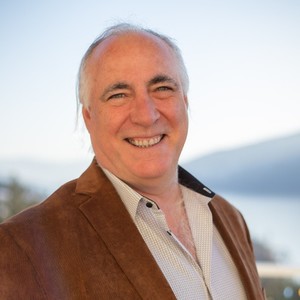
Chairman at Generation Mining
Co-founded several successful mining companies over 35 years including Wheaton River, Thompson Creek and Glencairn Gold. Former editor of The Northern Miner Magazine.
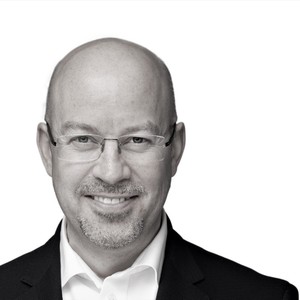
COO at Generation Mining
A Mining Engineer who was a key player in the construction and operation of Detour Lake, which sold for $5 billion last year. Previous to that he held senior positions at Barrick Gold and Placer Dome.