Transcript
Automated transcript · Written by software from the replay's audio. It can mishear names and figures; the replay is the record.
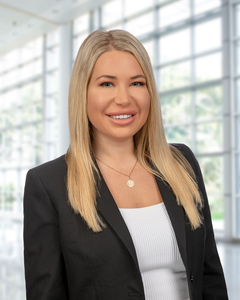
0:10 Hello, everyone, and thank you for joining us today. My name is Galena Melliger, and I'm the Director of Investor Relations with Endeavor Silver Corp. I will be opening up this very successful panel discussion. With us today for the sector overview, we have Gwen Preston, publisher of the Resource Maven, and Peter Kraut, editor of the Silver Stock Investor, who will both share with you their expertise and knowledge on the importance of adding silver to the investment portfolio. Then following that, our CEO and founder of Endeavor Silver Corp, Bradford Cook, will discuss the investment thesis for Endeavor Silver. Now I should add that Bradford is a professional geologist and entrepreneur with over 45 years experience in the mining industry as well as the current vice president of the Silver Institute.
1:01 So as you can see we have today some of the top thought leaders in our silver sector and without further ado I will pass the virtual floor over to Gwen Preston. Well Thank you so much Galina and Bradford for having us on today to chat a bit about silver. Obviously, I mean, so we both, Peter and I both always like talking about silver, but this week in particular, it is a topic that requires a bit of extra attention. So what we're going to do is I was going to set the stage a little bit more of a macroeconomic look at why commodities as a whole are set up to succeed in the next little while and then Peter will focus in on silver itself. So you can see I've titled it it's all coming together.
1:47 So what is it that we need for commodities as a whole for metals to perform? Well to simplify I think we sort of need 4 things. You need strong demand against weak supply for each metal. You need, It's helpful if you have a weak or weakening US dollar that prevents a headwind that a strong US dollar presents. For gold, you really need negative real interest rates. And then you also are helped if investors are looking at a need to diversify or to seek yield, if there's something that's pressuring them to diversify their portfolios or seek yield. And I think we have all of those conditions very nicely met. I just have a few headlines there that I captured a few days ago when I put these slides together, that show a few of these factors absolutely in place. So I'm just going to run through those 4 quickly before I give up the floor to Peter. So you need strong metal demand against weak supply.
2:44 I mean, that is what we are sitting at right now, isn't it? We have all of the stimulus coming into the market. A lot of it is focused towards recovery, right? From this COVID chaos that we've been sitting in and that expectation of significant recovery. That's what drove copper up 25% in the last 5 months, right? This is real. This is creating demand growth for metals. And we're still a little bit in the expectation phase. We're not sure exactly how this will play out and there will be bumps in the road. But All this massive stimulus means demand for metals and the backdrop of supply is not that strong because metals have not had a lot of investor support even yet, even though we've had a few years of a bull market. It's only been a pseudo bull market, so supply is not that strong. I would say when you add in sort of specific green energy and tech support from a Biden administration that amplifies the case for green metals like copper, silver and nickel.
3:43 Okay I said it's helpful If you do not have a strong US dollar, I think there are many reasons to believe that the US dollar bull run is ending. And so that supports the argument that I'm making right now. We have lots of reasons to believe in inflation, whether that's from growth or from printing or from both of them together and several other reasons. So I think the dollar won't be a headwind for us. Okay, so for gold what you need for a bull market absolutely are negative real rates. They are the most important bull force for gold and we are there. So I mean the chart above there shows real rates. You can see that the gold bull market started when real rates fell sharply in 2016 but then rebounding real rates hurt the gold market for a few years. Real rates started to fall again at the beginning of 2018
4:36 and so they were helping the bull market get going and then BAM we had COVID and now real rates are very negative they are set to stay there for years. The chart below shows how closely correlated the gold price is with real rates. So the gold bullion there is inverted, the gold price is inverted. I call that very strong correlation. And then the fourth point that I said is a bit of a need to diversify. The huge pools of low-risk capital that used to own bonds for yield, they can't do that anymore. Bonds don't yield. That's a negative real rate environment. So now they have to own stocks and bonds for price, but they have to hedge that exposure. There's inherent risk in that portfolio, but this is low risk money. So even though the stock market is strong and debt issuances remain popular, the risks are real, there's a big wall of debt coming and there is a very much talked about need to diversify some of that. So I think all of those things just really set us up for a strong market for metals going ahead.
5:41 And the answer for that need to diversify is miners. I mean, right here I have an example from gold miners. This shows how gold miners are offering yield that is standout across equities. Gold miners also have some of the strongest cash positions and treasuries of all equities out there. They're really standouts. So when you're looking for diversification, when you're looking for strength, they really do provide an answer. So I think this is a good setup, but we are here more to talk about silver. So taking that macro setup and diving more into the silver portion thereof, I'm going to hand it over to Peter to carry on that conversation. Thanks Gwen. So my spiel will be the case for investing in silver and silver stocks.
6:34 Let's start by looking at supply. If we see the last 5 years, silver mine supply peaked in about 2015. It's been declining since then and just simply got worse with COVID shutdowns as mine operators simply weren't able to get to their installations, their facilities, their equipment and so on. And so it's an industry-wide issue. In fact, silver production has been falling across the world's 10 largest silver producing countries. If you look at the chart all the way over on your right side, the top 10 silver producing countries have all seen their mine supply decline in the last 5 years. That's been clearly across the board, so there are certainly structural issues with mine supply of silver.
7:25 Let's look at where silver comes from. So 30% of silver actually is the amount that comes from primary silver mines. So when you hear about silver mining, in fact, not many mines are mostly silver producing. In fact, 70% of silver comes from mines that effectively mine mostly other metals, things like gold, lead, zinc and copper. So what this does is it sets up a bit of a of a quandary. If silver prices rise the miners at least 70% of them that actually produce silver and not as a main product. Simply don't or can't react much of the time. An increase in the silver price is not something that drives them because it's such a small portion of their revenues.
8:14 So Because of that, we consider that the silver supply is inelastic to demand. So we're in an environment with low supply combined with growing demand, and so that certainly implies higher silver prices from here. Interesting aspect of the silver sector, the metal itself, is that it's both an industrial and a monetary Metal that makes it somewhat different from gold despite being a precious metal as well So if we look at the breakdown of silver demand, 50% of it comes from industrial applications. The bigger portions of those tend to be solar and EVs. And 20% of demand In the last few years has actually come from investment.
9:04 Investment demand for silver is actually what's been exploding in the last week or so, especially with all of the Wall Street bets and Reddit scenario and saga. But it certainly has been growing also in the last few years in a fundamental way. And so that's certainly something I'm going to touch on a little bit in the next couple of slides. If we look, if we Drill down a little bit and look at where demand comes from. Vehicle demand has been soaring. Silver is very important in automobiles and vehicles in general. It's found in navigation, infotainment, power steering, safety features, auto braking and even driver alertness systems. ICEs, which are internal combustion engines, have traditionally required anywhere from 15 to 28 grams of silver.
9:58 Hybrids are a little bit higher with 18 to 38 grams of silver but EVs which certainly look like the future for automobiles require 25 to 50 grams of silver which is essentially double of what we've been used to in internal combustion engines. And If we look at forecasts for silver demand in the auto sector, last year there was a demand of 60 million ounces. Forecasts show that About 5 years out we're looking at 90 million ounces, so that's a growth of about 50% from today's levels. And another aspect of electric vehicles is the infrastructure side of things. It's not only the vehicles themselves that require a lot of silver, but also the charging stations. So certainly on the vehicle side, we expect a lot more silver demand down the road.
10:53 Photovoltaic demand. We also see strong growth there. That's solar panels and solar panels are actually the largest single industrial application for silver. Nearly 100 million ounces or about 10% in 2020 of all silver demand. The average solar panel requires about 20 grams. In the last several years, consumption of silver in solar panels. And so that should certainly balance out.
11:59 And this is the wild card, silver investment demand. It's certainly been exploding and if we just even ignore what's been happening sort of the last week or so if we look at what happened just last year it's it's gone wild and if we look back a little bit further from about 2015 ETF holdings have been up considerably. Silver demand for investment has been up. If we look back over the last 15 years, it has been a huge increase. So just in 2020,
12:33 the demand for silver was 1 billion ounces in exchange traded products or ETFs. And that's the equivalent of an entire year's of mine supply. Now I've modified or adjusted this chart myself based on the latest data I'm able to get my hands on. So it is certainly a bit of a projection. But if you look at what
12:57 silver demand has been in 2020 based on the numbers that are out, it looks like it's a huge jump even over 2019. So as I say, this is really the wild card when we look at silver demand. I believe that the investment aspect has been certainly considerably underrated and it's where I think that we're going to see a huge push in terms of obviously demand but where price will bring us. The Wall Street Bets silver squeeze that we've all been hearing about in the last few days, I think that that's something that has certainly brought a lot of deserved attention to the sector but whether that's itself sustainable is another issue. Nonetheless, silver has been highly undervalued for years if not decades and I think it's finally getting a lot of the attention that it deserves.
13:51 One of the ways that we determine whether silver is expensive or relatively cheap is through this gold-silver ratio. That's actually quite simple. So It's a way of calculating how many ounces of silver are required to buy 1 oz of gold. The ratio actually peaked at an all-time high back in March of last year when COVID hit full on and people started to panic.
14:20 Normally in in if you look back in sort of the last sort of 10 to 15 years, the average has been closer to about 55 ounces of silver to buy 1 ounce of gold. We're now down around 70 ounces of silver and trending downwards. I believe we're going to reach towards that sort of 55 perhaps even 50 level. It tends to overshoot when we're in a big correction trend. And now My number down here on the left of 40% higher, that was before the past week and the crazy action in silver in the last few days. But my estimate would be, let's say if we took a $2000 gold price and we had a 55 to 1 silver to gold ratio, that would imply about a $37 silver price.
15:09 So certainly that suggests there's lots of upside from here. It's certainly useful to look at what silver has done in previous bull markets. The 1970s bull market was certainly 1 for the record books. For about 10 years, silver gradually climbed and was back end loaded in terms of returns. Most of the gains came in the last 6 to 12 months but it was a phenomenal run with silver producing a 3640% return from top to bottom which is about 36 times and that's just in the metal itself. If we look at the last bull run from 2001 to 2011, again another 10 year run, that was a little bit more modest but still very impressive at 1080% or approximately 10 times return and again just in the metal itself.
16:05 Now let's look a little bit at what silver stocks can do relative to the price of silver itself. So back in 2016 and just a 6 month or 7 month time frame from about January to August. If we compare the price of silver to a silver ETF which encompasses the largest silver miners, The price of silver itself was up 48% whereas the silver miners were up 240%. That's a 5 times leverage in a space of just 6 months. So incredible leverage from silver stocks versus the metal itself. More recently, if we look back from March until about a week ago with the crazy action not included here, silver was up about 100%, silver stocks were up about 135%.
17:02 So that's a 35% gain over the metal itself, certainly below what is average. And in fact, that outlines what I believe is an opportunity. It's a leverage gap. The stocks simply have yet to run compared to the price of silver itself. We've seen a lot of that kind of action in the last several days. I believe we're still in early days for what silver and silver stocks can produce. So overall, I think silver stocks are likely to head a lot higher based just on their historic leverage and even not considering the kind of action we've seen in the last few days. To sum up, I edit a silver-focused newsletter. It covers the full risk spectrum of silver investments, everything from silver ETFs to large producers, royalty companies, growing producers, developers, optionality plays and even the more risky and more leveraged junior silver explorers.
18:05 The newsletter is aimed at new and experienced investors and covers everything from low to higher risk stocks. So I encourage you to check it out at SilverStockInvestor.com And remember, silver's in a bull market. It's time to ride it. Cool. Well, thanks, Peter. That was a great run through of the silver space. Obviously, this is a conversation that we could carry on for another hour if we wanted to. There's lots more detail into which we could dive. I did want to just ask one, just get you to expound on 1 thing. I mean, you're writing a newsletter that you say is for experienced all the way through to novice investors. How then do you help people understand within that range the stocks that are appropriate for them. How should people decide how they want to play this silver opportunity?
18:54 So a couple of things. One is that, like you said, and like I said, certainly we cover the whole range. So that means much lower risk to much higher risk and in many cases higher risk isn't necessary for outsized returns. There was a period from about 2005 I believe to 2008 where one of the largest silver companies actually was up 10 times and so That is an incredible return in about 2.5 to 3 years with a very low risk play in the silver space. I suggest that investors have a core position in some of the lower risk plays. And certainly if they feel comfortable with it, exposure to some of the, you know, more risky plays that are the junior silver explorers.
19:45 And I encourage them to take profits when they have very attractive profits that tend to come sometimes over very short periods of time. Sometimes it can take longer for a thesis to play out, but certainly I encourage them to take profits and they can reinvest those or either into more lower risk plays or even to look at sort of new exploration plays. It all depends. Everyone needs to know themselves in terms of their risk tolerance and but again there's certainly something for everyone and I try and let people know when I think that a specific play is overbought, oversold, and how to perhaps layer into certain positions if they think that the market has gotten a little bit ahead of them. But there's certainly something there for everyone and it's certainly a sector in a space that I believe belongs in every portfolio.
20:43 Absolutely and just so that everybody understands the way that we operate at Resource Maven is Peter and I just both write about what we are buying and selling. So this isn't, we're not, that's the premise here. We're both experts in these spaces. This is what we do day in and day out. And so we just try and share our knowledge, our ideas, and our investment moves. And so that's what our subscribers can see and if they want to participate alongside they can do so and like you say it's all about knowing yourself. If you want to be highly engaged with your portfolio then you can own a lot of Explorers. If you want to be not so engaged in your portfolio but still have exposure to this silver opportunity, you can own big stocks that are the low-risk kind that Peter was describing, or you can have some combination sit somewhere in the middle. It's all doable, but the great thing about a silver bull market is that, like Peter said, there's opportunity there no matter where you sit on the risk profile.
21:36 I think with that maybe we'll wrap it up and we will let Bradford tell you about 1 such silver stock investment idea in Endeavor Silver. So thank you very much. So, thank you very much. That was a great intro and overview on silver. Thanks to Gwen and Peter. The goal in my following presentation is really to try and show you that the fundamentals for Endeavor Silver are equally strong. So I will go fairly quickly through this presentation, 15 or 20 minutes, so we have a little bit of time for Q&A. We've entitled this presentation, Profitable Production, Compelling Growth, and that really tells most of the story on Endeavor as we move forward here into this bull market.
22:31 I will be making some forward-looking statements today so you are duly cautioned. And some quick highlights on Endeavor. We're basically a mid-tier producer of silver and gold. We own and operate 3 high-grade underground silver gold mines in Mexico. 4 key catalysts really to drive value for shareholders, both short and long term. We've in the last 2 years successfully optimized our operations and significantly reduced our cost to boost free cash flow. That was before the tailwind and rising metal prices. We have perhaps the best organic growth profile in the entire silver mining sector with not 1 but 2 new discoveries, one of which is fully permitted and we're getting ready to build it starting later this year.
23:17 And every ore body we've developed, every mine we've put into production was as a result of the virgin discoveries of our exploration group. We have not yet bought somebody else's discovery and tried to build a mine around it. We typically have bought historic districts with fabulous exploration potential, gone to work using our expertise and our treasury, obviously, to uncover new virgin ore bodies hiding below surface and then fast track their development to production to modernize and expand historic operations. And last but not least, we do pull the trigger from time to time on mergers and acquisitions. Each of our operating mines were actually acquired for pennies on the dollar during the bear market, and we continue to scour the planet for opportunities primarily in the silver space.
24:06 Last but not least because we only produce silver and gold we have one of the best betas of our share price to the silver price and it means that we outperform in the bull market. So I'm headquartered in Vancouver, British Columbia. All of our core assets are currently located in Mexico, and we have a portfolio of world-class exploration projects in northern Chile. About 2,200 people work for the company at this time. Some recent highlights, we in the fourth quarter last year posted our strongest quarterly production in 2 years with silver equivalent production of 2.1 million ounces up 21 percent And our production guidance was actually withdrawn during the COVID pandemic last April and May.
24:55 We actually had to shut down for 2 months, thanks to a Mexico government mandated suspension of mining operations. And yet we still achieved our original guidance last year of 6.5 million ounces silver equivalents. One of our dormant assets, the El Cubo mine, we've just recently agreed to sell to another company, Van Gold, for 15 million cash and shares, plus additional payments. We expect to close that here in the first quarter. And looking back at our last financial report at the end of September, we significantly reproved our financial performance year on year with cash costs down 68% to 369 per ounce silver, All in costs down 19% to $17.50 per ounce silver. Operating cash flow jumped 400% to $10 million.
25:41 And our Q3 cash position rose once again to $45 million working cap at $54 million no long-term debt. Both of those year-end numbers by the way sharply higher when we publish our year-end financials March 1st. 2020 exploration drilling, our brownfields exploration around the 3 operating mines was successful in replacing our reserves and resources and we published that report today, particularly due to significant increases at Gwana City. And last but not least, I mentioned the update today on our reserves and resources. We currently report 86 million ounces of silver equivalent reserves, 44 million ounces of silver equivalent measured and indicated resources, and 87 million ounces of silver equivalent inferred resources. If you look at the chart right, our revenue split is about 50-50 gold silver, no base metals and you can see that Guanasvi is our largest mine.
26:37 Our outlook for this year is for slightly higher production. The operational turnarounds at Guanasvi and Bolonitos are complete. We expect significantly higher cash flow, thanks largely to the lower costs achieved last year and higher metal prices this year. Our costs have drifted slightly higher in our forecast for this year, due primarily to having to pay higher royalties and mining duties to the government. And that's primarily at Guanasiví. Our largest growth asset, the Terranera discovery, we're in the middle of a feasibility study. It's expected mid-year and that should facilitate a development decision and breaking ground in Q3. And our second discovery at Peral, after a one-year hiatus in exploration drilling, we've resumed with an aggressive exploration program this year to expand the resources.
27:27 Meanwhile, in Chile, we have 3 world-class prospects. We're drilling 1 right now, Paloma, which has strong discovery potential. So let's have a quick tour of the mines. Our first and largest silver mine at Guanasivi is located in northwestern Durango State. It's the only mine where we actually produce Dore bars and refine them into pure bullion. That actually gives us the flexibility to sell or not sell our product on a weekly basis. And the operational turnaround that I referenced earlier, you can see here viscerally on the chart left, with the tons of ore per day delivered to the plant rising from 1,000 tons per day a year ago to 1,150 tons per day in the fourth quarter.
28:15 Plant capacity, by the way, is 1,200 tons per day. So year-on-year silver equivalent production was up 49%, grades were up 32%, throughput was up 15%, and that operational turnaround is now complete. The chart right shows you the impact of that turnaround on our quarterly production. Of course, higher production means lower costs, and we've been able to systematically drive our cash costs down at Guana City. Well, in ETOs, our second mine, purchased in 2007, was for the better part of 10 years our cash cow. From 2009 to 2018 we pulled over $200 million of free cash flow out of this mine, fabulously profitable mine.
29:02 And yet it also fell on hard times in 2019. Very similar to Guanasvi, we basically overstayed our welcome in the original discoveries that we made in 2008, 2009 at Guanajuato. And like Guanasvi, shutting down the original discoveries and opening up new discoveries, basically hitting the reset button, is what allowed us to turn around Bolonitos as well as Guanasvi. You can see chart left that the finally the grade profile is rising. Chart right you can see because of the increased grades and increased recoveries that our production has been rising sharply quarter on quarter. And we have also declared that this operational turnaround is now complete.
29:49 The impact of rising production on lower costs, and remember we take gold as a credit against the cost to produce the silver, and Guanajuato, that is Bola Nitos, has more gold than silver, so it means that our cost to produce the silver is actually negative. And you can see a dramatic impact in reduced costs at Bolanitas as we completed the operational turnaround. Last but not least, El Compas. It's a mine that we brought to commercial production 2 years ago. It's in the famous district of Zacatecas. On this mine, it's our smallest mine, our most gold-rich mine. It's also probably our most boring mine. It's basically chugging along steady state. Year-on-year production was up 9%, throughput up 3%, gold grades and recovery is up a little bit, silver grades and recovery is down a little bit, but all in all you can see a nice bounce back from the COVID 0.25 in Q2 last year. And of course the impact on costs, generally hovering around 0 net of the gold credit.
30:54 And we expect more of that going forward. So like I said, our most boring mine, but generating positive cash flow. So those are the 3 operating mines. Why don't we move now to our development pipeline of growth projects. First up is our Terranera project in Jalisco State, Mexico. This is a discovery by our exploration group in the last few years. Terranera has large and low cost mine potential and once it's developed, it will effectively double our production and half our costs. It's that important to the future of the company. It's truly a district scale opportunity. We just added some more properties shown in the green on the map here. We now hold over 20,000 hectares. It's almost 50,000 acres and it covers the entire district of San Sebastian. We've now mapped and sampled over 50 old Spanish mines on multiple ore bearing vein systems. And yet this district is only an hour and a half drive on pavement from the resort city of Puerto Vallarta.
31:54 After a 2 year break in drilling, we've resumed drilling last September in order to try and boost resources. And a feasibility study is about half done due for release in July. Our vision here, based on 2 bona fide discoveries, the Terranura and Laluz discoveries shown by the stars on the map, total about 80 million ounces of reserves and resources, and we're proposing to build a 6 million ounce per year silver equivalent mine with a minimum 10-year mine life. Last summer we published our final pre-feasibility study with very robust project economics using much lower metal prices, $16 silver and $1,400 gold. We generated a $137 million after-tax net present value. The internal rate of return on the capital invested to build that mine is projected at 30 percent after tax, with a payback period of that invested capital of 2.7 years.
32:55 Again, net of the gold credit, and keeping in mind that the silver gold split here is about 60-40, the cash cost is projected to be 0, net of the gold credit, and even on an all in sustaining cost basis, that is a life of mine operating costs, life of mine, capital and expiration investments, life of mine, general and administrative costs, royalties and taxes to the government, we expect to produce silver here at a measly 2 bucks an ounce. So an incredibly profitable mine in our future. So those are the base case numbers. If you compare to approximately current spot prices on the far right, current prices, you can see the incredible impact on our financial metrics.
33:40 The NPV multiplies by 2.5 to $350 million after tax. IRR more than doubles to 65%. The annual average after tax free cash flow is $57 million free cash flow. So this is a great opportunity and our exploration team are the ones who found this. There's the 10-year forecasted production, silver in the silver bars, gold in the gold bars, measured as silver equivalents. And of course, on the red dots, the silver equivalent grades. At the start of the mine, almost 500 gram silver equivalent grades. And even at the end of the mine life 350 gram grades are significantly higher than the entire sector average.
34:27 There's still some upside opportunities here in the feasibility study. For instance, we've already expanded our property footprint, adding 5,000 hectares in November. We've already started to get back to work drilling to expand reserves and resources. We're currently evaluating the potential to take the 1,600 ton plant up to 2,000 tons per day. We're doing more geotech analysis to use cheaper long hole mining that would reduce costs. We're looking at the cost of truck haulage and ventilation. We're evaluating electric equipment to reduce our carbon footprint, continuing to optimize the metallurgy, and we're looking at a trade-off between belt conveyors versus haul trucks to take the tailings from the plant down to the tailings storage facility.
35:13 And last but not least, our power supply will be also a, let's call it a more green footprint. We're looking at primarily a natural gas generator with solar backup. Next steps between now and July, complete the engineering, procurement, construction and management process to appoint a contractor. We're continuing to build out our project team. We're evaluating more upside opportunities. We've already extended key government permits. So Terranera is basically permitted and ready to build. We've already ordered some long lead items and we have a capital budget this quarter,
35:49 sorry, first half alone of about $9 million to continue ordering equipment. We expect that capital budget will jump in the second half as we get the go ahead from the feasibility study and the board to break ground. And that feasibility study is due in July. We go to the board in August and hope to break ground in September. So one of my key jobs between now and then is actually the project debt financing. I'll just briefly mention the second discovery in our pipeline. Peral is another famous district in southern Chihuahua. Here we have a historic mine that produced 4 million ounces of silver a year up until 1990. The mine's only closed because of the then low silver prices. And we acquired this in 2016.
36:35 3 years of drilling have brought us to 40 million ounces of resources. We think we can take that significantly higher. We took a year break from drilling last year, but we're back with an aggressive program, $2 million this year to expand the resources at Peral. And it's intended to follow Terranera into production. So again, before we leave Terranera, assuming a production, or sorry, a construction start in Q3 2021, and approximately a two-year timeline for both construction and commissioning. We're looking at cash flow in late 2023 and then our project team would turn their attention to Peral. Last but not least, we have fabulous discovery leverage in our company. We built a portfolio during the bear market by staking claims, believe it or not, in northern Chile. Massive alteration systems.
37:28 You can see just from the photographs here, The 1 we're currently drilling is the upper left with the red pickup. It's called Paloma. Our model for that is the 5 million ounce Solaris Norte project, 250 kilometers south of Paloma. And we've done all of the years of and millions of dollars of geological studies, geochemistry, geophysics, clay studies, age dating, and we finally started drilling in the past year. We hope to have initial results here in the first quarter. And Paloma is a very exciting high-sulfidation gold-silver opportunity with world-class potential. Lower left with the horse is our massive Cerro Marquez porphyry copper gold project. Because it's copper we're now shopping for a copper partner and we signed a number of CAs with major copper companies.
38:16 And then upper right with the alpaca is our extension of the Bolivian Silver Belt in the northernmost Chile. It's our AIDA project, not quite ready for drilling yet, we're still working on the permitting for the drill and we hope to start drilling AIDA late this year. So to sum up in Chile we have 3 world-class projects, The Cerro Marquez porphyry copper target, the Paloma high sulfidation target, and the Aida low sulfidation target. And if you look at Comparables, Cerro Marquez, you're talking about a target size capable of hosting millions of ounces of gold and billions of pounds of copper. At Palomo, our target would be about a 5 million ounce gold equivalent resource potential. And AIDA, we're talking about 200 million ounce silver equivalent potential.
39:06 So a discovery potential in Chile. All of that adds up to a sector-leading organic growth strategy. Thanks to our falling costs in the last few years, our cash flow is not only leveraged to the metal prices, but to our following costs. Our development projects give us perhaps the best organic growth pipeline in the entire silver sector with Tiraner alone potentially doubling our production and halving our costs. And last but not least, through 3 projects in northern Chile, leverage to potential world-class discovery. So, 157 million shares out, currently trading in the high $4 US range. That's about a 750 million dollar US market cap, north of 1 billion dollars Canadian.
39:54 We're listed on the big board in Toronto, EDR, big board in New York, EXK, and I already touched on our cash and working capital positions at the end of September, no long-term debt, and we expect those numbers significantly higher at our year-end financials. One major shareholder, the VanEck GDXJ Index Fund owns 6% of the company, and 1 strategic shareholder, the world's largest silver mining company, Fresnel PLC has a 2% toehold in Endeavor. 10 analysts cover the stock and again we have a sector leading beta to silver. So catalysts to drive value, coming back to where we started, continuing to optimize our operations and boost free cash flow, advancing to our next mine and double our production, extending the mine lives around the existing mines by reserve replacement and making new discoveries, we hope, in northern Chile.
40:50 We hope to also be able to pull a trigger on attractive M&A. That's an ongoing process and there's nothing in the pipeline at this time that we could announce, but we're always working on it. So why invest in Endeavor? Well, simply by developing an organic pipeline, we expect to take a mid-tier silver producer to the senior status in the silver sector. And we're run by an experienced group of management team members. We have a strong balance sheet, no long term debt, and we're a pure silver gold play. So thank you very much. And why don't we open it up for Q&A? Great, thank you so much, Bradford.
41:36 We're gonna jump straight into Q&A because there's lots of questions here. The first question is from Albert. He asks, When do you expect El Compas production to normalize again and how will you achieve this? El Compas started off with a short mine life and we've been exploring to extend the mine life. So we did make some new discoveries on what we call our Calacanto property adjacent to the El Compas plant last year. We're currently in the economic analysis to see if we can add those to the mine plan and extend the mine life. So it's a work in progress, but We're hopeful that we'll just keep the ball rolling. The analogy there would be our Boladinos mine purchased in 2007 with no reserves.
42:24 By 2009, we had made significant discoveries and announced a one-year reserve and a one-year resource. And we've now been doing that for over 10 years. All right. Oz asks, will you be able to reduce AISC further in 2021 and 2022? So Because we take gold as a credit against the cost to produce the silver, it is possible with higher gold prices to reduce our AISC. But the biggest drag on our all-in costs this year, and going forward, to be honest, is that as we've broken out into higher and higher profitability, We're going to be paying higher and higher royalties in the case of our new discoveries at Buena City and mining duties to the Mexican government. And there's not much we can do about that. Greater profitability leads to higher payments.
43:17 All right. Mike asks, there is much debate regarding the validity of the quoted spot price of silver. To avoid extent in the spot price of silver determined by derivatives rather than exchange of the physical metal. To what extent? Oh, Boy that's a ball of wax. I Think that the spot price is actually a fair Value for The physical metal and silver amongst all the metals has by far the largest derivative position. There's a very simple reason for that, and Peter touched on it at the start of his presentation. Silver is primarily a byproduct of other metals. It's the only metal traded on Comex that is primarily a byproduct.
44:02 And if you're a big copper, lead, and zinc miner, what are you going to do with your silver? You're typically going to hedge it. You want to lock in the value of your silver so that you're leveraged to your primary product, that is copper, lead, and zinc. And as a result, the big copper, lead, and zinc miners worldwide typically sell forward their silver 1 year, 2 years, even further out. Well, who do they sell it to? They sell it to bullion banks. But bullion bankers are agnostic. They're not metal investors. They make their money charging fees. And so what they do when they enter into a contract to purchase physical from, say, a copper producer, they instantly purchase a short position in the paper market so that they're net neutral on silver and they get their fees.
44:49 That's why silver has the largest short position on Comex. That's why the alleged silver squeeze over the weekend here didn't have a chance of working. Because even though Peter pointed out that mine supply is completely inelastic to metal price, you can't turn a mine on. The paper supply is totally elastic because think about it. If you're a bullion banker sitting on hundreds of millions of ounces of silver in your vaults and owning the equivalent short position in the paper market, if the price goes up, the value of your holdings just went up and you can use that value to take a small loss in your short and set it again higher. And they can take those losses all the way up to $1,000 an ounce because of the growing value of their physical position.
45:38 So that's what happened over the weekend. That was no short squeeze, actually. I think that was just some people having some fun in the silver market. All right, welcome, Peter. Do you have anything to add? I mean, Brad did a great job, provided lots of detail on the intricacies of how that works. Yeah, no, that's it. All right, Next question is from Oz, and he's asking, what is management's shareholding in Endeavor so far? Well, we wish it was larger, and if you want to send us a bunch of money, we'll buy some more. But I think right now, total management holdings are around 2%. I'm over half of that. And if you include our options, I'm around 5% and I'm over half of that.
46:25 Great. David asks, why do analysts such as those on Yahoo Finance rank the company shares as 2 buys, 5 holds, and 1 underperform. Why do they not see the upside in the company? I'm referring to the mining analyst. I think that there's 3 or 4 buys and the rest are all market performs. And I think clearly the stock tends to perform very well when we're doing well operationally and we had a great year last year. So from an undervalued, overvalued point of view, analysts are moderately positive on our under, you know, they're slightly undervalued.
47:11 If we were slightly overvalued, you'd see more cells. Albert asks, could you give more color on the Guanacheve being potentially 1 large ore body of a projected 15-year mine life? Yeah, that's also very interesting. When we made our original discovery at Guanasavie in 2004, what we called the Porvenir Norte discovery, it initially, I think, came at 6 or 8 million ounces, but we had such a large area, 1.1 kilometers long, and we ultimately drilled it down to 700 meters deep. We just closed that mine a year ago, and I think we pulled almost 40 million ounces out of that one ore body. It's continuous with the Santa Cruz ore body, both of which are now closed. And we replaced those ore bodies with 3 new discoveries, Malache, El Curso, and Santa Cruz Sur.
48:07 Malache and El Curso are basically 2 ends of what looks like 1 new big ore body of the scale of Porvenir Norte. And I actually did put in our press release today that with more drilling, we need to fill in the gap basically between Malachi and El Curso. We could have ourselves another giant here in terms of literally going from 0 to, speculatively, 40Moz. So we're back. We literally did hit the reset button at Guanasfi. We closed old mines, opened new mines, and it's almost like starting all over again. Richard asks, what is the breakdown on EBITDA of gold versus silver income percentage-wise?
48:55 Well, I mentioned at the outset that our revenue split is about 50-50 gold-silver, So the EBITDA would be the same. Mark asks, with Terranera being a major catalyst going forward, how are you thinking about acquisitions? Well, interestingly enough, with such a good discovery, our preference is actually just continue with our existing business model and make new discoveries. In fact, if you look at the sector as a whole, virtually every other silver miner relies on M&A to grow their business. Everybody does Brownfields exploration to replace reserves. But in terms of building new mines, pretty much everybody has to go and buy something. We're the exception. We always focus on generating our new opportunities ourselves through exploration. That's where Terranera and Peral came from.
49:49 Actually, that's where Guanasfi, Bolanitos and Compass came from. They were all unwanted old mines that had run out of reserves. And we recognized potential and brought it to fruition. So we do stand out in the entire industry as being the one company who are focused on discovery. And basically our motto is if you can't buy it, you have to find it. And that's us. So what is our M&A strategy? Typically trying to find undiscovered gems where we can add value, significant value through the drill bit. That's what drives our M&A. Next question is, why did you sell the Guadalupe E. Calvo project? Was it not very good? We actually explored Guadalupe y Calvo. If you go back to 2012, we acquired it as a package deal with our Alcubo mine.
50:42 And we explored really looking for something big there and it didn't come up a whole lot. So there is a historic resource at Guadalupe Calvo. It was historically actually a famous high-grade mine, but narrow. It's a small mine. And we just didn't feel that it had the potential to become a new core asset for the company. And so when we had inquiries and offers, we've accepted what we thought was a good bona fide offer. And we were going to become a significant shareholder in Ridgestone. So we are leveraged if they get lucky and find some more goodies. Great. Richard asks, can you say a few words on your ESR program? By all means, we consider ourselves to be a sustainability leader in the Mexican mining sector.
51:33 Not only did we start reporting on our ESG Galena, was it 8 years ago? I think it was 8 years ago that we started full GRI reporting on what we do in health, safety, and community, and environment. In fact, I'll tell you a quick story, which is how we learned what our philosophy is. When we arrived in Guanacivi in 2004, and we wanted to build a new mine. We realized very quickly that we had more than just exploration and development to do. Why do I say that? Because in the town of Gwana Sivi, a little town of 2,000 people nestled in the foothills of the Sierra Madre Mountains, about a 5 hour drive from the nearest capital city of Durango, there was no nurse, no doctor, no clinic, no ambulance, no paved roads, no secondary school, etc.
52:30 And so we really did have to sit down with both the mayor of the local town, it's called the head of the municipio, and the head of the local land association, the head of the Jihito, and ask them point blank, how do we actually get this done? Like there wasn't even an ATM machine in Buenos Aires. We had to pay our initial employees in cash. So we didn't want to just write checks. We didn't want to play the role of government. So we actually ultimately formed private public partnerships with the local authorities, the municipal authorities. And through that, we got a nurse, a doctor, a clinic, secondary school, paved roads, an ATM, etc.
53:16 And you know, that approach, working with the locals, engaging them and turning these projects into their projects so they could take pride of ownership in what they accomplished with us standing behind them. And that is the case for Endeavor at each of our sites today. And that is our philosophy behind ESG. It's paid huge dividends, not only for the communities, but for the company. Amazing. So Richard is asking, in 2021, 2022 and 2023, do you anticipate the gold-silver-ebit split as remaining 50-50, or moving to what percent split? Well, interestingly enough, we're going to stay around 50-50, plus or minus, until Terranera is up and running. And being 60-40, it'll skew us towards silver.
54:08 And when Prowl comes on, possibly in 2025, it's 100 percent silver. So it'll skew us even more towards silver. And so it gives us the capability to take on, if we were to pull a trigger on an M&A opportunity, to take on more gold or even copper along with silver. All right, we have so many questions and so little time, so just a few more. Michael's asking is Endeavor Silver open to M&A now and if so what drives the decision for the company at this time? Always looking to create value for our shareholders. Every acquisition is viewed from an accretive dilutive basis that is on a per share basis. Does this acquisition add reserve and resource ounces? Does it add production ounces? Does it add cash flow per share?
54:58 Does it add EBITDA per share? And it's really hard to find pure silver or silver dominant mines or companies today where you can pull the trigger and say that it's accretive. So Another reason for us to focus primarily on earlier stage development opportunities where we can add value by through the drill bit Because there are more of those but in terms of operating minds or companies really hard to find and be creative Richard says endeavors webinars are really informative Brad would you consider having on a webinar with some of the new executive team for some introductions? Well, I'd be thrilled to introduce our operating group.
55:47 You know, we've been together for years. And yeah, absolutely. Great. We have just a few minutes left. Aisha says, great talk. Thank you very much. What are your strategy plans after 2021? Indicated with STREEP ratio, open pit or UG indicated. And then she says something in French because I think she speaks French. So I'm not gonna read that. That really bears on where are we going with the company. We've lived off of the small, high-grade, underground vein model for 16 years. And we're more than happy to handle more and bigger and better of that model. But the whole point in exploring in Northern Chile was to basically grow up and be one of the big boys. And you can't get there without having a chunkier discovery, a bigger mine, and most of those are open pits.
56:44 So That's really the rationale for going into a Northern Chile in a bear market, literally staking massive alteration zones and seeing if we can't make our own world class discovery. So we are trying to move up the ladder into world class discoveries, which would help us build a world-class company. Great. Well, I think that's all the time we have for today. I wanna thank you, Brad, so much for taking us through your presentation and for Peter and Gwen, who had to hop off for your presentation earlier. And thank you for taking us through the Q&A. I also want to thank everyone who submitted questions. And if you didn't get a chance to get your questions answered, or if you think of 1 after the summit, we will be emailing you out a survey where you can leave your contact details and the Endeavor Silver team will be happy to answer them directly.
57:37 You can also find more information on their website it is www.edrsilver.com and now I'll hand it back to Brad for the final word. Fabulous, Dasha, thanks for that and again thank you