Transcript
Automated transcript · Written by software from the replay's audio. It can mishear names and figures; the replay is the record.
0:08 Hi everyone, welcome to Power Nickels live event today hosted by 6. I'm pleased to introduce our speakers for today, Power Nickels CEO and President, Terry Lynch, VP Investor Relations, Duncan Roy, and VP Exploration, Kenneth Williamson. The team will walk us through PowerNicholas 2023 achievements and provide insights into 2024's catalysts, and then we'll be taking questions live. Remember, you can submit your questions using the Q&A panel on the right-hand side in the bottom corner there, the chat. And remember, as always, this event is being recorded and will be available to you afterwards. Without further ado, I'll hand things over to you, Terry, so that we can get started. Great, Max. I really appreciate that. Let's start. So what I thought I'd do is, because it's been a while since we've been together,
1:01 to just take you through the current pitch, if you would, about how we're presenting the company when we're going out there and talking to investors and industry folks and whatnot. And obviously, by walking you through that, we'll automatically walk through our accomplishments over the last year. And while we feel we've created a really fantastic opportunity for us all to make a lot of money going forward and to create something very beneficial for the community of the Mascot and the province of Quebec and indeed the country of Canada. So without any further ado, we'll get into the pitch and we're pretty bold by saying we've got the best nickel investment on the planet. That's a bold statement, but we do it for a reason because we do really believe that and we'll walk you through how we come to that sort of bold statement.
1:55 We're not going to tell you anything we don't believe is true and everything is sort of on the up and up, but as always, 1 should do due diligence in any investment and mining as well, for sure. So just to refresh everyone, I think we're all familiar with where we're at in this world, we're in Quebec. Quebec is a tremendous jurisdiction. I think it's probably an air mine for critical minerals, the best jurisdiction in the world. And there's 3 key reasons for that. And just to reiterate those, because sometimes they're, they're forgotten about, but I think it's very material. Number 1 is the infrastructure. So Quebec's done a great job of building a lot of phenomenal infrastructure to support mining. And that's roads and power and airports, these types of things. So in our case, we're immediately located off of route north and right across the road from us is a Hydro-Quebec substation.
2:55 We're about 8 kilometers outside of the town of Namaska, which has got a regional airport close by. And it's also the seat of, you know, reason number 2 to love Quebec is, it's a relationship with the First Nations. So, Damascus, the home of the James Bay Cree, that's where they run their community from. And, you know, we have a good relationship with the James Bay Cree. All of our drilling crews, when they're in town, when they come off the rig, They go to a Cree lodge and stay there. It's a fine facility and we do as much business with them as we possibly can. And Quebec's done a great job of integrating, you know, the First Nations into the benefits of mining and they cut them in on the royalties and stuff like that. And so they really feel like it's you know there's a win-win here and creates you know obviously high paying jobs for their members you know going forward and that would be our ambition.
3:59 And the community relations are great They've got 4 mining projects being developed in the immediate, you know, sort of within I think about 100 kilometers of Damascus, 2 sort of built and 2 being built, you know, and then obviously our projects. So that's a really big thing to have the community support, because community risk in mining can be paramount. And we'll talk about that a little bit later in the show. Third thing to like about Quebec, or I'd love about it really, is their fiscal regime. So they basically, together with the government of Canada, have provided enormous fiscal incentives to explore and also develop projects in Quebec. So, we've been able to take advantage many times this year of the effectively 2 for 1 exploration programs.
4:46 So where we raise money at 50 cents or even higher, and investors get at 25, but our company gets 50. So you as shareholders don't get diluted nearly as much. And that's enormously beneficial for us for in terms of advancing the project forward. And then it also works on the development side. So to extent that one would go towards building this project in the next few years, which we totally believe will happen, there'll be potentially 30% tax credits to equip and build a new mine coming from the federal government and 25% tax credit coming from the provincial government. So almost half your costs are going to be covered by these tax credits. So that makes it really, again, beneficial to build there. So these are enormous advantages, and that really came out of the last budgets.
5:41 And when they came out, I would have thought it would have had a material impact on stock prices across the board for projects that look like they're going to get to that stage in Quebec, but it came out at the same time as the Silicon Valley banking crisis and it was a bit lost and
5:58 it's still lost and that's one of the reasons why, you know, as you listen to this presentation, there's a number of key points that make a ton of sense. And this development project benefit is a significant one to keep in mind.
6:15 When we talk about us being the best nickel investment deal on the planet, we're talking about asymmetric risk. So as an investor, and that's really just what I am, I like to have – obviously, take a little bit of risk and have a lot of potential return. I don't wanna have a lot of risk. I wanna have a little bit of risk because you gotta have risk something to get something. But I wanna have a lot of upside. And when I look at Power Nickel relative to our comparables and we compare ourselves to other high-grade nickel sulfide projects around the world. That's who we're talking about. So I'm not comparing myself to, you know, with due respect Canada Nickel or Gigal Metals or Dumont or any of these, you know, lower grade, different, you know, much bigger CapEx projects. That's a different animal.
7:07 And we're not talking about them. We're talking about these high return, high IRR projects where you've got significant sort of nickel sulfide percentage. And when you look at that, you can sort of see that we're trading at around, you know, 30 million plus, and you know, the average is probably, you know, sort of in the 300 million range. So We're trading at a deep discount. Yeah, you could say our grade's a little bit less, but there's some reasons behind that that we think is gonna change over time. But one thing's for sure, we're catching up with the size, and we've just announced our new 43-101 at 7.2, and we think that'll grow again over this next year. We'll talk about where we think that might end up.
7:53 But we're trading at a fraction right now of what we believe our peers are trading at. Everyone is down, I would say peers are all down 50, 60, 70% this year. So people are trading at very low prices. And within that, we're definitely the most undervalued. And Terry, are you able to pull up the presentation just page by page? Yeah. That would be helpful. People can see it. Oh, you're kidding. That's not the way it's supposed to go so what I could recommend Terry is but you see 1 slide there or
8:45 or I'm lost here. Next. How's that?
9:31 There you go. Okay. Sorry about that. My apologies. Good. So, just picking up off of the comparable slide, one of the other reasons why we're excited about, you know, our company going forward is our growing relationship with CVMR. So, you know, while we're innovating on the exploration side, we'll get into that in more depth. We're also innovating on the, you know, the production revenue side by partnering with a company like CVMR, who are currently doing a feasibility study on NISQ, and recently re-upped their investment at $0.90 a share, which at the time, the stock was around $0.225 or so.
10:17 Even with the two-for-one, it was a $0.45 investment. So that's a significant number. And they're basically, what CVMR does is they make finished products. So they make powders, nano powders, wire, anodes, and precursors for the battery metals vehicles. And in this process, The way they go at it, it's the most environmentally friendly in the world, which is awesome. It also yields, leads to much higher yields. So when we did our 43-101,
10:59 we ended up, our grade, which is, this is it here, was an average of about 1.13%. A lot of that is with respect to the metallurgy for the concentrate. So, you know, we didn't have a, you know, as good a, you know, recovery rate as we would have liked on making the composite. But I can tell you that the CVMR approach is a completely different animal. And so you end up with finished products in all these metals. And we'll see the brake benchmark studies will come out in the second week in January.
11:45 And we're expecting to see recoveries, you know, like 30% better than that, like in the 90s. So that would have brought our grade up to 1.5%. So that would make a big number, both in terms of obviously grade, but also affects your tonnage as well. So it really does make a big difference. And the other big thing that they get is they get a lot higher revenue for the finished product. So they're getting 2.5 to 3 times LME prices for their powders and anodes and wires and precursors, et cetera. So that really drives economics. So you've got similar set of economics in terms of cost, but you're getting 2 and a half, 3 times revenue. So that's why it's enormously attractive for us to be working with CVMiro. So we've got sort of the expiration upside, which is phenomenal. We'll get into more of that. And then we've got this production upside, which is also just as exciting.
12:40 So let's talk about the expiration. So we just sort of addressed it, talked about, we got 7.2, we had thought we'd get to 8 to 10. We only had one of our 7 holes reporting from the fall session. And that impacted that obviously, sort of the grade allocation that we talked about, if we grade goes up, obviously times would have gone up as well. But still, that was a tremendous result. It's up from the historic discovery, like 160% or something like that. It's an amazing period of work for us. And it shows, the indicated being close to 5 million tons. I guess this was the historic one this is
13:31 the yeah this is the yeah that's the current one it shows that you know you had a enormous upgrade in the indicated and that's really sort of the high confidence materials. Generally speaking, in most 43-101, especially at these early stages, this would be inverted. This would be mostly inferred and very little indicated. But going forward, as we go to expand this, we expect to do a bunch of step outs that will be much more aggressive in terms of adding tonnage on the inferred side. And we expect that, you know, if we're here at this stage now, this time next year we're easily, in our minds, going to double, possibly triple this, and then also add on, you know, a significant number of PGM ounces, which are not covered here. So we'll, I think, get to a very exciting place.
14:28 When we started, just stepping back to there, We had this historic resource, so 3.1 million tons. And then we drilled the first set of holes to confirm that. And then we really started the work, which was the holes that we started to drill last year. And then this is over the winter, started to drill 10 meters of 3%, basically 16 meters of 1.6%, 15 meters of 1.5%. These are all really amazing holes. And this is sort of what the deposit sort of looks like now outlined in the blue. And we've got a number of results still pending that we'll get in probably late January is our expectation of the assays on these holes and this is sort of what the ore body looks like from a visual perspective, so you get a little little sense of it And mostly you can see that it's, you know, we're at about, you know, most of the ore is within 300 meters of surface. So it's really been a quite a shallow deposit and that's unusual for nickel. Mostly in nickel the action happens deeper and this is why we've got on the slides here open at depth. This is what's super exciting is
15:58 that this could get a lot bigger at depth and probably higher grade because we note that the inferred grade, as you note here, is much higher. This is the at depth sort of grade. So, grade's getting better. You know, the platinum, palladium, everything is getting better at depth. So as this becomes more and more prominent, then obviously that's gonna upgrade the grade overall. And then of course, the CVMR recoveries could also potentially upgrade it as we see going forward. And the other big thing that we did this year that really sort of I think is going to transition us is we identified a new technique to help us explore.
16:46 And this has opened up a ton of new ground for us. And we've got a 45 square kilometer land package and there's a lot of opportunity on this land package. So let's get into that. So when we first stepped out, the first sort of sign of this was when we did that step out last winter and we announced that Bonanza hole of almost 8m of 1oz PGMs, enormously economic sort of strike. It was at almost the tail end. I think we drilled that in March, April. And it was what we call a winter target. So it's in a bit of a marshy area, so best drilled when it's frozen. And we had a window there, and we struck this at 60 meters.
17:37 And once we saw that, a couple of things came to our mind. And 1 was, wow, we stepped over 5 and 1 1⁄2 kilometers, and this thing is still enriched up here, this ultramagnetic sequence that we're following. So that was super exciting to show that, hey, potentially we've got this, you know, big corridor to follow. Second thing that came to mind was that super, you know, concentrated, you know, high grade like that, when that happens up top, this has happened like at 60 meters, generally it means there's something really cooking at depth. We've had some of the majors in our data room, we've had some serious meetings with them and they've talked about how explosive that one hole is and what it means to us. And so we were pretty stoked about that hole.
18:28 And the crazy part of this market was we put that news out and that day I thought the stock might double or triple in my mind, it should have in theory, and the stock went down 20%. Who's selling on that news? Well I think the guys who are selling are the predatory short guys that are against us. And that's part of the story that we'll get to as we get through the presentation. But that was an amazing sort of discovery. We're super excited about that. When we go back in January, we're finishing off 1 hole that we'd already started in the main ore body. And then we're stepping out, we'll be drilling 3 holes on this target. We're super excited about that because we've gotten some intel on that because of using this technology that we've talked about a fair bit this year, the ambient noise technology that Fleet Space has provided us.
19:22 And it basically is, just to reiterate, a super sensitive seismic. They put these geodes, which look like little landmines down on the surface of the ground. And we have to do this when the weather is reasonable. Can't do it in the winter. It has to be when there's no frost. And basically, this material, this geode sends a sound pulse down into the Earth, goes down about 2,000 meters, comes back, and is captured as a sound map. And then they correlate these sound maps with the other, you know, data that we have, drilling data of course, airborne and downhole EM, geophysics, you know, the IP, gravity, etc. So they pull all that together and it really allows us to get a much better vision of the project. And this, you know, doesn't mean a lot to us as laymen, but for geologists and geophysicists, this stuff is money.
20:26 We're developing some new visuals that we'll have ready. We'll probably do a kick-off event in mid-January where we'll lay out once after we get the benchmark studies from CVMR, we'll do another session like this, but we'll have some because we're working on some pretty cool visuals on this. And what they'll show is that we've identified a signature. So one of the key takeaways from the fleet process is that they measure velocity of rock, which is a concept that you have to sort of get your head around, that everything in the earth has a velocity. So in this case, I think it was like 4500 beats per second or something. And when that drops in around 3700, that's where the massive sulfides were deposited on the NISQ main ore body.
21:17 So that signature was almost 1 to 1. So that was very instructive and it's guiding us as we do our exploration in NISQ. I would say we really have only scratched the surface of the ambient noise technology. We've really not used it much yet, maybe 1 or 2 holes in terms of changing our planning, but going forward, it's gonna be the guiding point of how we go forward. And we'll be basically following these trends. So we know that Ant 1 and Ant 2 exist and Ant 3 and Ant 4 now to the to the west and these ambient noise tomography 1, 2, 3 and 4 basically have the same marker, same signature as our main ore body.
22:08 So it's very, very bullish that there could well be second, third, fourth, fifth pods like NISQ Main. And that's why we're super stoked about this. And this is all relatively shallow, like in terms of nickel terms from 500 meters to surface that we're seeing these opportunities. And again, that's fantastic, both from an economics of recovery perspective. And it shows that when people say, well, how big can this thing be? We've always sort of said, we got Lynn Lake at 22 million tons, the ultramafic on one side, Voisey's Bay, which is plus 50 million tons right now and on the other side, we sort of see ourselves certainly being in that range and maybe towards the top end. And the neat part about this is it's also open at depth.
23:00 So we don't know, we do know that we've got this great expanse before us, and we'll be drilling those up for sure. But it's possible that in addition to, obviously what we know to be good targets right now, that next summer when FLEET comes back and we do deeper discovery, we may find some even deeper targets. Because generally speaking, Norilsk, which is the world's biggest nickel mine, in fact, the world's only trillion dollar deposit, and Voisey's Bay, Raglan, all of that happens really more 500 meters to 2 kilometers. So mostly nickel is a deep discovery. So The fact that we've found this so close to the surface is enormously exciting and very economic.
23:52 That's another reason to be totally stoked on the exploration that we've done here and what augurs well for the future. That's when we come back to that table, when we say, or make that presentation that we're literally the best net goal investment on the planet, this is the thesis. We've got enormous exploration upside, we've got enormous production upside through CVMR, and we're trading at a fraction of what we've already sort of proven that we've found. So people get, I mean, am I disappointed in the price action of the stock? 100%. But there's some forces that work there, but we're working against them. And ultimately, nothing's gonna stop this deposit. This thing's gonna make a mine and mines get paid. So we're ultimately gonna get paid. And I say to people, you know, when they're looking at investing in power nickel, you shouldn't be buying this for a 10 or 20 or 30%.
24:49 Swing, trade, that's not how you make money in junior mining. You make money in junior mining by finding something that's going to become a mine and owning as big a stake as you can afford, relatively speaking, and you wait until it moves there. And when it moves there, you're gonna make 10, 20, 30 times your money. That's what you're betting on. That's the game. And you can't get distracted of saying, hey, I bought at 28 cents, now it's 22, I'm depressed. It's like, yeah, I bought at 28 cents too. I also bought at 10 cents. And I bought at 25 cents. And anything down here, in my mind, is a screaming buy. Now, am I biased? Yeah, but I put my own money in, so I'm clearly believing. And it's like, the evidence is clear. I'm not a, I'm actually not a very risky investor. I like to take sort of shoot the fish in the barrel. This is fish in the barrel right now, folks. That's my perspective.
25:42 And the CVMR, their participation in investing at 90 cents, which was 45, you know, with the 2 for 1 shows you what they think and their industry, their private industry, their, their, their, their, and they're putting in millions of dollars. So they're doing this because they believe they can get access to class 1 nickel, which is rare in North America,
26:05 and rare in the world. And they can they can, they need that access to grow their core businesses, which is with their clients. So you know, that's extremely bullish. So it's like, you know, you know, it's the the shorts, the predatory short sellers prey on the retail mentality where they, and this is why that process is so dark, is that they sell stock they don't own, they don't deliver it on time. And then that makes retail investors think, hey, there's something wrong here, something I don't know, so maybe I should sell too. And that's what happens. And that has led to the problem we've got in Canadian mining, which is why we've obviously exposed you to our own power nickels, our own fight against predatory shorts. We filed a formal notice this week with FINRA and with Ciro about the naked shorts that are in our stock. We believe there's at least, sort of close to 10 million shares short on the 80% of the market we can see.
27:14 And we think that in the 20% market we can't see, it's considerably worse. So there's a big number there and we've made this presentation available to PDAC, And we've talked to a lot of industry companies that they're in the exact same shoes as us. This is not just a power nickel problem. It's an industry problem. TSXV, the lowest point in history, other than the pandemic dip. Yet metals and mining Commodities are almost at the top, like 15% from the top. So this is something structurally wrong here. Now, the good thing is, as an investor, it's actually happy time, because that means you can
27:59 take advantage of these amazing bargains on companies that have delivered the goods and are undoubtedly gonna get paid at some point. And there's a good reason to believe that this change is gonna be happening in 2024. So I'm more excited now than I ever have been really about the company's approach and progress. And I'm not worried about that. And I think that as shareholders or people considering shareholding, this is like the checkered flag time. Getting back to the presentation, you know, we've always, you know, taken the approach that we want to build the world's first carbon neutral nickel mine. Why are we taking that approach? Well, fundamentally, we think it's going to lead to higher revenue for us
28:46 and greater value for our shareholders. That's the number 1 reason. Number 2 reason is obviously we're all, you know, a residents of this planet. We're trying to do the best we can by it environmentally. So there is that. How do we get there? Well, we do some, you know, common sense things. We've offset our drilling. We've worked with CarbonX with one of the leaders in the field,
29:04 getting Vero certified credits to offset our drilling, to show that we're committed to this, it's not just like flag waving. Then of course, we're gonna take advantage of our natural sort of characteristics that we've got. We've got hydropower, obviously we can power this thing with as much of that as possible. We've got, CVMR is the most environmentally friendly way to make nickel. You can make it smelt it, you can hydrometallurgy, or the chemical metal vapor process, which is what CVMR has sort of become the world leader in. It's been around for a hundred years, so it's not exactly a new thing, but it's the most environmentally friendly, and that's fantastic. So, and then finally, we ultimately think that
29:43 we will be adding a recycling facility to this greater than a day, because it'd be super economic to do that. And CVMara has the ability to take batteries, the full like battery complex and break it down to its component parts and produce them again to be recycled and sold. So we could benefit from that. So that'll be an interesting sort of process as we go through this feasibility study, and we'll bring that forward as we go on. So just wrapping up the action plans, obviously continuing to work with CVMR,
30:17 where We expect we'll get the benchmark studies out in early January, the pilot programs out probably in early Q2, and the feasibility sort of late Q2, early Q3. And
30:36 we've obviously started drilling. We've got a bunch of drill results that will come out probably in late January. We'll continue to take the ambient noise tomography information and basically update and plan our drilling as a result of that. So as I said, when we go back after Christmas, we'll be doing that one hole underneath the main deposit. We'll be stepping out immediately with the holes on the Wildcat targets, which you know where we had the great PGM results, do 3 holes there and then we expect to bring a second rig in by the end of January and drill you know Ant 1 and Ant 2, so we're starting to sort of you know hopefully tack on some new pods here that can really drive us forward in terms of the tonnage and grade.
31:29 So we've updated our 43-101. Next thing will be the, as I said, the feasibility study from CVMR, which we expect to, you know, in the Q2, Q3 time zone. And we'd expect to, you know, keep on drilling until the end of April and then get back at it after spring break. So it's gonna be super impactful year for the project.
31:56 Little update on the royalty, some of the other assets that we've got in the company that will be beneficial for us. So we're advancing conversations with a couple of key parties there. We've about to retain somebody to actually manage this process for us. And so we expect to get this concluded hopefully in Q1 of this year coming. So we feel quite bullish that we'll be able to do that. That'll be, you know, a significant chunk of change. You know, $5 million, that type of number is probably what we expect to get here.
32:35 The team, obviously, one of the good things we were able to do this year, the gentlemen that are on the call with me today, they've joined, they've actually obviously been working with the company for some time, both Duncan and Ken, and I feel really lucky that we've been able to add such talented individuals to the team and
32:54 I've been dominating the call to this point, but in the Q&A stuff, I'm gonna let them, they'll definitely dive in there and get to it. But yeah, we're really, really stoked about having Duncan and Ken join. And we'll expect to have some more new team members next year. Let's go here. Cap structure, basically, again, the one key thing to take away here is how committed the key shareholders are. So
33:26 the last 2 or 3 rounds of financings have pretty much been done by the key shareholders. Other than now, we probably, you know, I have to update this slide. CV Mara would obviously be on there. The other guy that we would probably add would have been Rob McEwen who came in and took down half of the last offering we did together with my family.
33:50 The commitment is coming from people that have been in here and know this project the best and by industry leaders. So it's like you got to feel comfort in the CVMRs and Rob McHughns of the world writing checks and the core people that know the project the best writing checks. And often at higher prices than currently where the stock price is. So That's super bullish.
34:17 So just wrapping up on the investment thesis, obviously we've made a major nickel sulfide discovery. I think we've proven to you we're trading at a deep discount to our peer group. There is some research reports coming out now, expect to get some out probably even before Christmas and then there'll be a major, another one coming out in
34:40 late January by a big UK investment bank that we think will be very helpful for us in terms of explaining our story to the world. We think we've shown that industry is invested and continues to invest. We're heading to Saudi Arabia and the UAE in mid-January to have further conversations with CVMR
35:03 and some of their other investment partners. And then I'm planning to head to Korea and follow up with some of the Koreans that are quite interested in the space. And probably one of the things that will happen next is we'll probably do a fairly major investment with one of these groups in Q1.
35:24 And that won't really be impacted by the market, somewhat by the market, but less because There's only so many of these projects around that have the potential that Power Nickel does and industry's going to pay out.
35:41 That's what will happen if this stock stays down for some reason through repression or whatever, you know, then eventually we'll end up selling this to industry sooner than we'd like to, but we'll sell it as a mine, and I'm telling you, in my view, if we sold this as a mine, we're gonna get, you know, a few hundred million, okay? Which right now we're trading at 30. So you do the math. It's gonna be fantastic for you if that's the worst case. Our best case is we are able to turn around the stock, get it to where it should be, or at least moving in that direction and be able to grow this thing into ultimately, I think what will be a multi-billion dollar enterprise over the next couple of years. So that's the dream, but we have to be practical.
36:31 Well, no company or no man is bigger than the market. The market, ultimately, whether we agree with it or not, you know, is the market. So if the stock stays frustratingly low here, we'll end up having to sell it to industry. And I would say this is the year in 2024 either the stock makes its major move to where it should be or we'll end up having to sell the thing for a big number and that will be the way we exit. But one way or another we're determined to give our shareholders a serious return And that's what this is all about. We're going to have a heavy news flow going forward. We've had pretty much heavy news flow
37:09 throughout the course of this year. Expect it the same in 2024. The drilling program has started. We'll continue to keep on drilling. We'll add a second drill. And depending on how these financings work as we go forward, a third and a fourth.
37:25 We think the ambient noise tomography has given us, Ken and I were on a call before this call talking about the, you know, with the research group in the UK. And we were just, you know, Kim was commenting and maybe Kim will talk about this afterwards when we get to the Q and A and have a comment about just the amazing number of drilling opportunities we've got. And it's trying to figure out what's the best one to focus on next, but it's really an amazing position to be in and
37:59 we're really stoked with that. The fact that we've got a multi-metallic mine is amazing, right? Especially when we get into the CVR process, which is going to allow us to really capture the value of those things. And you look at that step out, you know, the 5 and a half kilometers of away where we had the 8 meters of
38:22 almost 8 meters of 1 ounce PGMs. I mean, that's serious. And we could, I mean, I fully expect a year from now, we'll have a million ounces of PGMs on the table. So, I mean, this could be, you know, in that case, almost a PGM discovery, but it's going to have a pile of nickel too. So I mean, that's really beneficial from a value creation perspective. It's also beneficial from a financing perspective. You know, we can do royalty streams. It just brings a ton of leverage to the table. So, again, none of this has come through to the market yet, but eventually,
38:55 and like we were talking with the HANM partners, the group that's doing the research report. And they basically, we're saying, we don't know when, this thing's so spring loaded, but when it starts to move, it's gonna be, in my mind, it's gonna move, boom. And then it's gonna be like, wow, I can't believe it, I missed it. You know, I've been thinking about buying this thing. It's like, yep, that's how it works in junior mining. And nobody can necessarily predict the moment, but then when it starts, it goes, you know? So the spinoff, we're gonna talk about it in just a second. And then obviously, you know, the fact that we're in Quebec has just been fantastic for us and will continue to be. On the spin-off, we, you know, we just, because we're such a lean team, Because we've had to be lean just to survive given the capital constraints.
39:50 We had hoped to get this done by now, honestly, but it's going to be happening in Q1. So what will happen is we'll spin off our BC and Chile projects, which are, you know, in and of themselves quite exciting from a gold and copper exploration perspective, which we think will be actually into a gold copper exploration market. We're just finishing a new 43-101 in BC. And then obviously in Chile, we're sending down the ambient noise tomography to Chile. It's coming down there now. They'll be ready to get deployed in January. Basically, one of the interesting things about Chile is that we had hits like 40 meters of 0.7% copper.
40:40 That's a pretty serious hit. We weren't able to at the time follow it up because it didn't have the budget and desert exploration is really tough. And one of the reasons why it's tough is there's this thing in the sand called caliche and it obstructs the IP and gravity, which are the main sort of geological guides to exploring initially in green fields. And but what it doesn't obstruct is doesn't obstruct the ambient noise tomography. So we expect that to be will be the first guys in Chile to use it. And we expect it to be quite exciting in terms of a discovery perspective. And now that all will be part of this new vehicle and it will be funded by the new vehicle. So it would bleed our balance sheet.
41:27 And yet that'll be a nice bonus for us. And we're gonna spin that out first as a private company, and we're doing it first as a private company, so that should freeze the shorts, because they can pull all sorts of gamesmanship with spin outs of other public companies, but private deals, that's gonna be hard to duplicate private stock that only power nickel controls. Because we won't be handing it out to people unless they prove they've got a DRS. If you don't have a DRS, you don't get the dividend. And you may own the stock, and you may have owned it for 6 months or a year, yet you may not have your DRS. That's the sad reality of our current situation in Canada. And your broker, he may not even know he doesn't even have it, because it goes deeper than the individual broker level. But I'm telling you, when you say, hey, show me your DRS to get this new dividend, that gets real, because that's what we'll do, is we'll have a physical exchange by our transfer agent, and you're gonna have to show your DRS to get this certificate.
42:34 So that's when the squealing's gonna start because you're gonna say, hey, what do you mean I don't have a physical DRS? I've owned the thing for 6 months or a year and I better bloody have it because I want that dividend. And well, you should have it. And that's what'll start the pain on these guys. So anyway that's just an aside. I mean the reason to own the stock isn't the short game, isn't anything to do with the shorts, that's just the pain in the ass, pardon me but it really frustrates me, drives me crazy But the reason to own this stock is simple. We've got a really amazing nickel discovery, okay? And we've got some other great assets. But you're buying it because you've got the nickel discovery, and the nickel discovery is, we think, a once in a lifetime type of operation.
43:21 So you know the I think that this is probably a good time to sort of switch to the questions and answers and before we do that I just wanted to You know turn it over to you Ken first and then Duncan just to get some thoughts on them before we go to the Q&A so Ken Why don't you? Give us some thoughts. Why did you join the company and how do you feel it's going? Absolutely, well why did I join the company? I guess you've worked on me so hard that I had no choice. The real reason is, as a geologist to join up. No, no, I'm just kidding. The real reason is, you know, as a geologist working in the industry for many years now, like 20 years or so, one of the not hidden secret at all that we all have, geologists, is to discover something.
44:25 That's the excitement behind that. When you first hired me as a contractor, consultant, to first evaluate the geology of the project and things, I instantly fell in love with the project. The reason being, it's probably, and I'll be selfish here, but probably my best chance as a geologist to be part of a team that would discover a mine. So I couldn't miss that opportunity. It's a real deal to me. I'm still the president of my own little business, which, you know, I've put standby right now. My sole focus is working with Thierry for you guys make this thing happening. So as Terry was mentioning, I do believe it's a real deal here.
45:28 Impression as a geologist, all the ingredients seems to be there. And With the ant tomography survey that we've done, many of our interpretations that we had, geologically speaking, just got confirmed, literally, in terms of potential faults in the system, how that plays out in terms of offsetting the deposit, creating opportunities to duplicate, literally, what we've already discovered in that one, what we call structural block. Now we've identified on both sides of the NISQ main, the similar signature that we are looking for in terms of potential of hosting Nickel.
46:22 That's super exciting. The supplementary side story there, to me it's just unbelievable, was talking about my secret goal, which is not a secret, to discover something. We may have in front of us 2 mines that are completely different, 1 from each other. The Wildcat thing with over an ounce PGEs there is an entity on its own. It would not require much drilling and that's what we'll do in January to demonstrate actually that there is a tangible and significant volume attached to that spectacular hit that becomes a PGE mine in itself.
47:18 So now we have that 5 kilometers northeast, the main pod, which is the core of our focused, as we speak now, that we'll continue drilling and exploring on both sides. So as I was mentioning to Terry earlier this morning, if I had unlimited budget and as many drills, no, not as many drills, only one drill but unlimited budget, where do I start? That's a really head-scratcher right there. There are so many good opportunities that I would not necessarily know where to start. So To compensate that, we'll add a second drill as soon as we can after Christmas, probably in January, something like that.
48:10 And then we'll be able to tackle multiple targets at the same time. It's going to become even more exciting then, I think. So that would be my little wrap up for the year. Cool. Duncan? Well, you know, a number of years ago I asked one of my friends who is a pretty smart guy, I said, What makes a good company? And you know, why do you invest in particular entities? And he says, Well, listen, like, the key is, is management. And, and best managements tend to be a bunch of good guys you know not sexual comment but you know just about a good crew and as I got working with these guys You know I rapidly came to the conclusion that this is a This is a fantastic group of guys who are gonna make things happen on top of that it became pretty obvious to me in early days that this is just a super going to make history project And it's been very exciting to work with Darian, Ken, and the rest of the guys at the company.
49:27 One thing, you know, I think people don't necessarily realize is how much stuff we're doing behind the scenes. And, you know, we've been busting our butts, getting our, getting a story out to significant people and, being, being very careful at how we, we do things. And, it's a, it's a strong thought process that we use, and it will pay dividends. And I think people slowly are seeing the progress that we're making and the end results of our efforts. And it's significant. So our heads are well out in the future as to what we're doing.
50:14 And we're filling in the blanks and doing a really good job of it. And obviously, we hope we get the effect of seeing the effort show up in our stock price. I mean, I tell people we're 10 cents on the dollar, it's just ridiculous. But we're coming and honestly, you can't stay away from the industry. If the market's not going to reward us, industry will and they're already stepping up to the plate and this is a big deal. So those are my basic thoughts here. Cool. Well, listen, we've got some questions from the audience, and that's why we're here, actually. This is more about you guys than about us. So, Max, do I just sort of dive into the chat box and start answering some questions?
51:06 I'll ask the question for the team and then you can get right into it. So what did CVMR first make contact and Once serious talks began, how long did it take to finalize the deal? You know what, I met my banker friend at a Christmas party last year. And I've known this guy for a while, and he gets into this, but I hadn't seen him for a while as well, a couple of years. So he said, what are you up to? And I said, oh, I was basically looking to wind down and just do other things, but it seems like I found a nickel mine, so I'm now back to work full-time."
51:53 And he said, Oh, nickel, that sounds interesting. He says, He says, funny enough, I know these guys, they're major nickel refiners and miners. I'm saying, oh yeah, who are they? And he told me their name and I said, gee, I'm surprised I don't know them. I'm recently aware of the space now that I'm in it and I'd never heard of these guys. And he says, no, he said, these guys are real. And he says like, you know, well over a billion in sales. And he says, you know, they're cutting edge technology and blah, blah, blah. I'm thinking, damn. So I said, we got to hook me up with these guys. So I think we probably met maybe in February or so. And I think we signed the deal in August, I believe.
52:40 So that gives you, that's pretty much the timeline. Perfect, thank you. And what persuaded you to spend money on A&T? You know what I came across A&T by actually a Shareholder flagged it to me. Honestly, I was watching I do watch all of our peer companies. So for example, Talon Metals, which has got a great deposit in Michigan, Minnesota, the Tamarack. One of my shareholders said, hey, did you see Talon's news release today? And I said, no, I saw it. It's come in. I haven't had a chance to read it. He said, check it out. He said, it looks like some interesting new technology you should look at. And he's a technology guy.
53:29 So Joe Gantos, Joe, thank you. Give him credit. So I read the release and I thought well you know that's pretty interesting. They talked about using the ambient noise tomography and I read it and it you know made sense to me but I'm not a scientist but I thought okay well you know I reached out to Fleet Space Technologies, just a straight cold call in Melbourne, and eventually Steve Ledger got back to me and He sent me a white paper, I read the white paper. Again, it made sense to me as a layman business guy, non-scientific guy. So it looked to me like it was pretty promising tech in the space, but I thought, hey, I'm not a scientist, I'm easily fooled. So I put it to my scientific team, GeoVector, who have been an amazing partner for us who handle all of our drilling and our geology and stuff like that, and together with Ken. But, and I gave it to Ken, And so Ken and GeoVector, I said, Can you guys look at this tech? And do you think this is something we should invest in?
54:41 And and initially, they were quite negative. And for good reason, because it's still relatively new. And I think their concern was, hey, if we're going to do this and not do other, the normal stuff like airborne EM and downhole EM and stuff like that. And I'm not sort of like, because I'm not a traditional mining guy. I'm just an investor looking to minimize my risk and maximize my upside. So I'm all about the science. Spend as much money on the brain work as you can in mining, in my view. Drilling's the last thing you wanna do. You gotta do it at the end of the day, because that's eventually how you discover stuff. But you want to do as much as you can, you know, de risk it as every possible way you can. And so I said, No, guys, we're going to use all the tools. I think this is just as a overwhelming tool that could so I said, please do your due diligence.
55:34 You know, I'm paying your consultants, you get paid, you know, hourly to do this stuff. I wanna invest that money in you getting educated in this. And if you're, after you're educated, you don't think it's the right thing for us, then you're gonna tell me that, and I'm gonna listen to you, because that's why I hired you, because I trust you. And so to their credit, they did spend the time getting educated, I think they took 2 or 3 sessions for Fleet to really get them on side, then they all came back and they said, yeah, We like this tech, we think it could be really meaningful, and could bring all the other tech together. It might be interesting to get Ken's perspective on that, because he was on the other side. Ken, what are your thoughts? Yeah, well, you're absolutely bang on, Terry. The first time I read about the ANT technology, I frankly didn't believe in it at all.
56:24 Like, it's impossible that this could work. And just as a reminder, we're talking about, you know, passive probes or passive receptors that are capturing vibrations naturally happening in the Earth's crust, in an area in the middle of nowhere. And the question was, how will create those vibrations? We'll get no signal. And I was truly not believing in this. Talking with Steve, he got me convinced at one point that, you know, it will work. And basically it's the same thing as seismographs, but a lot more precise and sensitive.
57:13 And then he got me convinced, and are we impressed with the results? It's probably one of the good move that we've done this year, I would say. So yeah, good stuff. Awesome, thank you. Will the, now more to the CVMR side, Will the benchmarking by CVMR impact the 43-101? When do you expect the next update to the 43-101? I mean, obviously the 43-101 will be published, the full report will be out in early January. And so CVMR's benchmark study won't impact that report at all at this stage. Going forward, you know, the next update, we'd expect it would impact it because we at that point would have a validated, you know, recovery factor that would pass 43-101 standards and could be included in a updated either a 43-101 or a PEA or whatever might be the next step for us on the 43-101 pathway.
58:23 And then that would definitely be able to, we'll probably continue to run 2 pathways, the consolidated pathway and then the CVRM pathway, but one will be materially more economic than the other and probably that would be the way we'd go, but I suspect that would be the way we'd handle it. We'll start to see, I think the good news from the guide perspective is once you see the benchmarking study releases, you can sort of look at the recovery factories there and knowing that these guys have done this before, that they're quite confident that they'll follow through this with the prototypes and then that becomes black and white at that point then it becomes very 43 101able.
59:16 Okay perfect. Sometimes we have an indication on results in terms of visual evidence. Anything positive about the set of holes? And for the 1 or 2 holes you mentioned that used fleet, was fleet useful? And when will ant 1 or 2 be dug? Yeah, a lot of questions there so I think we feel You know good about this set of holes we drilled you know our historic success rate has been sort of 50 to 60%. We think certainly we're going to maintain that or improve on that in this round. You know, I don't want to get into any black and whites on it. You know, I don't think it'd be appropriate, but we certainly think you know, we're going to be achieving that or better.
1:00:05 And then the we the 1 1 that we did use the CVMR, or not CVMR, but the ambient noise on was on the whole we did release 22036. And yeah, we ended up stepping out a lot farther than we thought we would and we initially had that area we was initially designed or not or theorized as being a low-grade area and it came back as over 1%. So that was a good hole for us. Yeah, so that was an early win for A&T. I forget the rest of the questions. Oh, the one we're drilling at 1 and 2? Basically in Q1 for sure.
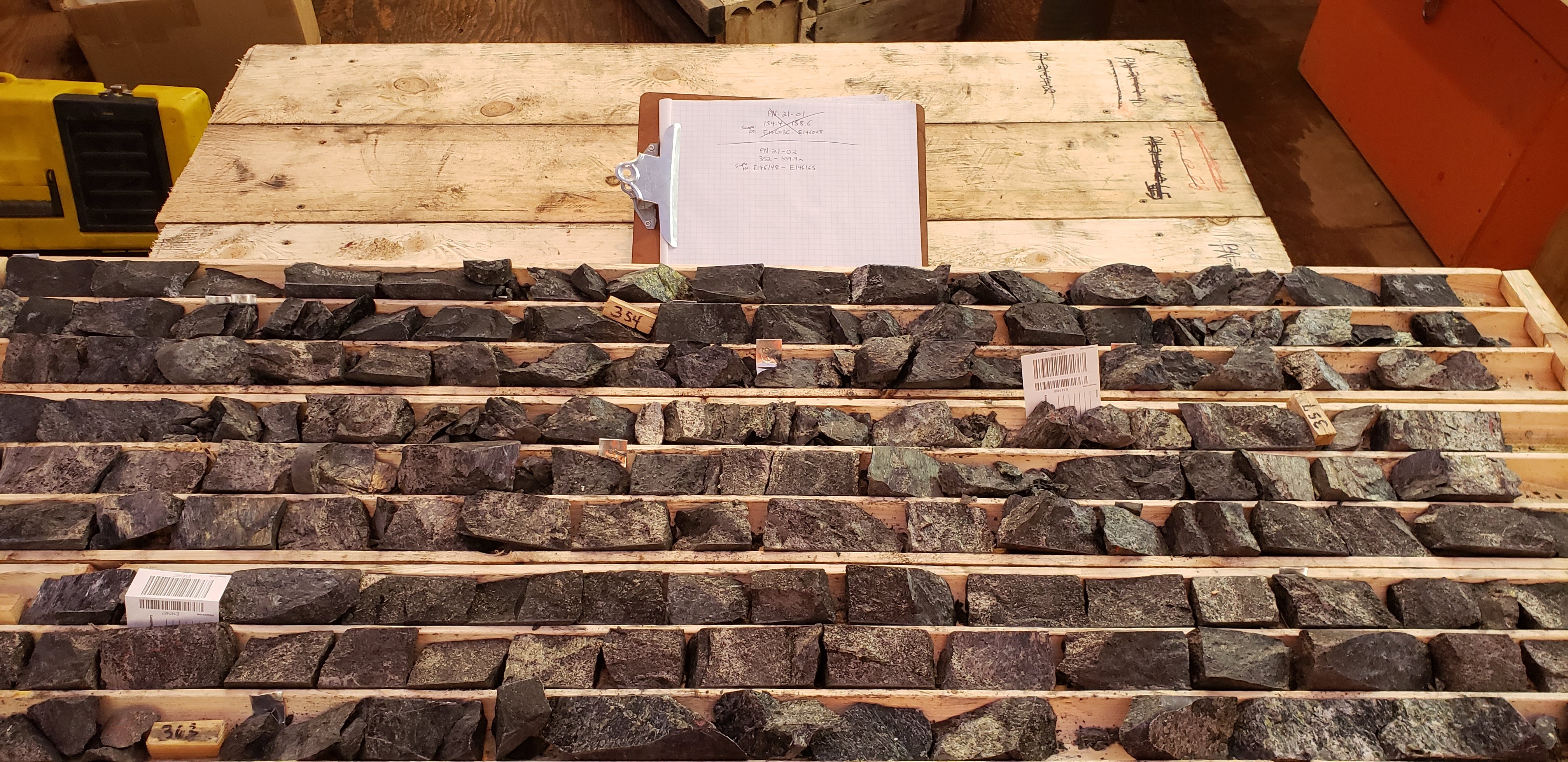
1:00:52 Probably in February, I would think, sometime in the February branch. If I may, Terry, just to complement the question, part of it was visually What do we see in the core? Yes, it is Visually very easy to to see if there is massive sulfides or no In the core and yes, we're reusing that although we don't have the assays yet this is piece of information that we're using to our advantage to better plan the upcoming drill holes or the the following drilling So we know off the bat if it's gonna be a good, decent numbers coming from the lab or no, the visuals there.
1:01:38 So, and all 7 holes were pretty decent. I can't speak About numbers, we don't have them yet, but pretty decent visually. Perfect, okay, thank you. I guess this question, I'll rephrase a little bit. The original question was about what's the lowest price you'd sell NISQ for? But I guess, what price range are you looking at and what is the timeline for that price range? How does that price range grow over time? How does it change? Yeah, you know, I mean, that's always the $64,000 question. You know, a lot of factors in that. I think these things sell for, I would say, sort of 40 to 90 million per ton, per million tons, is sort of what I've seen. You know, so there's a wide range there. So you multiply the number of tons we've got by that and that probably gets you to, you know, to sort of those numbers.
1:02:44 And then, you know, that's probably the way I would look at it. And that's probably the way that market would look at it as well. Okay, perfect. Nickel's been in rough shape this past year. What do you think 2024 will look like and why, of course, knowing that no one has a crystal ball Yeah, I mean we expect nickel to to Be probably it's probably bottomed out here and probably next year. It'll be a little bit better it probably doesn't really turn around until 25. That's what we're getting from benchmark and with McKinsey and people like that in terms of forecasts. The reality for us is that it's somewhat not impactful because the earliest we could possibly ever get this done, you know, if we, you know, had absolute cooperation and, and, you know, everything was to be perfectly timed, which never happens, would be sort of late 28 and most likely this is a 29 or 30 type of scenario.
1:03:54 And at that level, you know, any of the forecasts you look at, even the most conservative ones, suggest nickel's going to be in a serious deficit by then. So, you know, I think, and then within nickel, you have to say, are you laterite nickel, are you low-grade sulfide nickel, are you high-grade sulfide nickel, are you class 1 nickel? You know, so we're class 1 nickel, okay? So our pricing will tend to be much better. And then then within that, we're also remember, we're not just making a concentrate, we're probably going to be going to finish product. And so the these finished products that there that these powders and, and wires and anodes precursors go into are much higher value. So that's where you get into this 2 and a half to 3 times LME is what CVMR is averaging for its nickel products.
1:04:49 So that impacts it even more. You know, so I would say nickel is probably a pretty good contrarian bet right now. It's had a pretty crap year and most of the stocks reflect that. And you know, I think there's broadly good opportunities in nickel stocks and within the nickel stocks sequence or complex, we're in my mind, as we've said, that we're the best one out there. No, perfect, thank you. Do any brokers, I guess this is a question for Duncan and you, Terry. Do any brokers cover PowerNickel? If not, when might they start? So right now we've got research from Fundamental Research and Singularity, and we're expecting some updates from those guys shortly.
1:05:38 We have a brokerage, we won't steal their thunder, but one that we expect to come out imminently. And then we expect Henam partners in the UK to have a resource or a research report out in late January. Perfect, thank you. So when you get to the stage, will overall infrastructure be a big spend or is it already nearby? Yeah, we're pretty blessed in that, certainly we won't have to put, like we literally can drive to the site and there's, highways are there, power grids are there. So, so, I mean, it'll be, you know, of course there'll be infrastructure spending on the site, but, you know, we're not, it'd be like, you know, you know, planning a new subdivision in Toronto or something, you know, you have to bring in stuff, but it's there, you know what I mean? So it's like generally speaking, I've been in mining, you know, now for 10 plus years where as an active, you know, operator, you know, with, you know, like in Chile, for example, our Copacabana project where we have the royalty, that was 4,000 meters up in the Andes, no power anywhere. Like, I don't know, the nearest spot would have been Copacabana, would have been Cuban Ronca, who we ended up selling it to. That was, you know, several kilometers away. You know, so, you almost have to bring in your own city to make that work there. And like, you look at Norant,
1:07:08 you know, that sold to Wailu for 600 million in Northern Ontario. I mean, they are deep in the bush. They're not close to anything. And that's one of the challenges they've got to get the infrastructure to them. So generally speaking, if you were to look at 100 mining projects and ranked by infrastructure accessibilities, we'd certainly be in the top 5%. You know, it doesn't really get much better. Perfect. All right, thank you. Thank you very much, Terry. So that's all actually all the questions and time we have for today. So thanks, Terry, Ken and Duncan, for taking us through this presentation and Q&A session. I also want to thank everyone who submitted questions and you can find more information on Power Nickel on their website, powernickel.com. Now I'll hand things back over to Terry for the final words.
1:07:59 Well, listen, it's been a interesting year. You know, we live in interesting times. I think we certainly do. I mean, I think operationally, we executed, you know, I'm very happy with our level of execution on the operating side. We can always do better and we always try and do better, but I think the team did a great job. I'm really happy with GeoVector and Ken and the drilling crew. They've done well. Duncan's done a great job keeping the market communicated. So all of our guys have executed. I'm really happy with that. Obviously, the stock is not where we want it to be and ultimately, that's a measure and we take that seriously. We're all investors. We respect your money and your support. We're doing everything we can to deal with that in many ways.
1:08:46 We know fundamentally, one of my first mentors in this space in investing said, in the short run there can be good companies and bad stocks and bad companies and good stocks. But in the long run, there's only good companies and good stocks and bad companies and bad stocks. So we're gonna be a very good company. And at the end, we're gonna be a very good stock. So with that, everyone, happy holidays, Merry Christmas, take some time off, spend it with your family and hope to see you again in the new year, and we'll look forward to keeping you communicated as we go forward with our discoveries at NISQ and beyond.