Automated transcript · Written by software from the replay's audio. It can mishear names and figures; the replay is the record.
10:35 So that's something that we'll be trying to identify in the new year. And so both of those, and at La Estrella it's only been followed for about 100 meters on surface. And there is an edit there that's about 40 meters long and we have been sampling that. We're still waiting for assay results, for most of that, we've only received results the first 10 meters. And excuse me, we know that there is gold and silver mineralization there, but just waiting for the balance of those asset results so that we can compile the whole thing and then we'll press release those as well. So it really, with those 2 veins alone, it opens up the potential, you know, quite significantly.
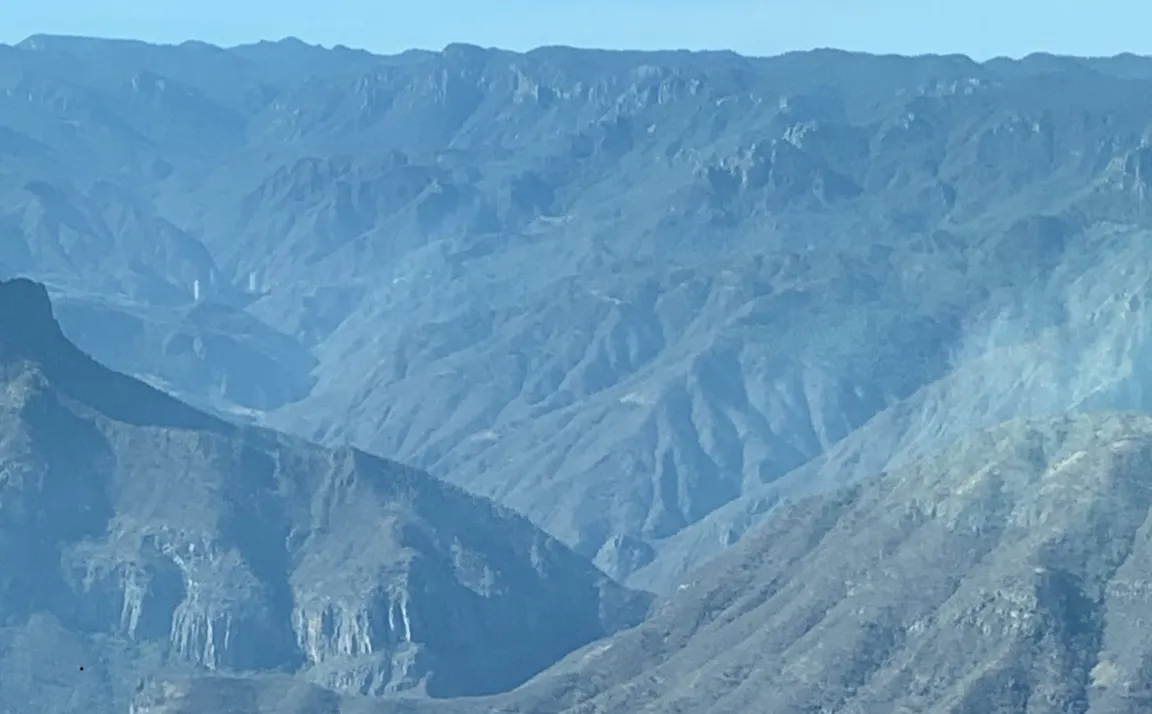
11:22 And the other thing of note is that these epithermal systems tend to have a somewhat limited vertical extent. They're very extensive, horizontally, can go for kilometers, but the vertical extent is often only a few hundred meters. And it's important to note that Al-Qa'pilin, where it's exposed on surface, is about 200 meters higher than the base of the Dos de Mayo system. And then La Estrella is about 400 or 500 meters higher than Dos de Mayo as well. And so having the mineralization exposed at surface means that we could have a greater extent of the mineralized zone preserved below the surface.
12:12 That increases the potential for additional plenty of traditional mineralized zones as well. They're terrific exploration targets and we're looking forward to drilling those in the new year. I want to take a couple of steps back because I know you mentioned the test results of the gold recovery is about 95%. Upon registration, someone submitted a question, what additional metallurgical work is planned to optimize silver recoveries? Well, one of the first things that we'll need to do is some mineralogy, because we need to identify what the silver-bearing minerals are, because that will essentially dictate what methods you use to recover them. Because silver typically doesn't leach as well as gold, And you often get better silver recoveries, you know, using flotation or some other methods, if that's economically feasible.
13:09 So we'll need to do the mineralogy first to determine what the silver minerals are. And then from there, we'll be able to determine what methods to use best to recover the silver. But from the first results that we got, we only ran 3 samples, and they varied from 40, I think it was about 41% up to 76% or something of that nature. And so knowing that one of those samples at least was getting a recovery in the mid-70s, then that bodes well for the rest as well. If we can optimize everything to get 75% or maybe even 80% recovery on silver, I'd be quite happy with that.
13:59 This deposit, by value, is about 70%-75% gold and 25%-30% silver. Gold is the dominant metal by value. And so, it's great that we're going to get 95% recovery on that. And we'll just try to get as much as we can out of the silver. No, that's great. Now, today you just announced the closing of the fourth tranche of a private placement. Care to add any further commentary on that press release? Yeah, I mean, we announced at the end of November financing for 2 and a half million. But we just found going into Christmas holidays, it was a little challenging to get people's attention and we did have some some stock come out last week from that came free trading from the last financing would you know put some pressure on the on the on the share price and so we're we just closed a little over 1 million dollars for now And we just thought we'd take a little bit of a break over the holiday season and then, pardon the pun, wrap it up in the new year.
15:10 So kind of like a new presence. But so that's the plan right now. So we should, our plan is to close it off in January. But that, and those funds will essentially go towards the drilling programs that we planned for early 2026. Another question from registration here. What progress has been made on the permitting front and what are the key milestones and approximate timelines for obtaining the necessary approvals for both drilling and the eventual production of El Potrero? So We started the whole permitting process some months ago. We just had meetings last week with both the environmental authorities and the water authorities.
15:59 As some of the viewers may know, the Mexican government just changed the water laws 2 weeks ago. And so there really wasn't very much that could be done prior to that, because everyone knew that the law was going to change. And even the bureaucrats themselves needed to get better visibility on how that was going to work in practice. And so we couldn't even really discuss it very much prior to that, but we did get a meeting right away with the water authorities in Kiliakan who look after our area. And it was a positive meeting and they asked to know more about the project and we've provided them with that information and locations and all that sort of thing and what we might need in terms of volumes of water and so on. So, we're providing all that information with them and they've acknowledged receipts and that they're working on it.
17:01 And so I hope to be able to move that forward to a reasonable timeline. It's always difficult to say exactly when because once you're dealing with the government authorities it's a little difficult to predict what their timelines are, but it is moving forward. And similarly with the environmental authorities as well, we started months ago working on that for the drilling and both surface and underground. And I mean, you know, technically speaking, we don't need a permit for underground drilling. But it's not specifically addressed that way in the regulations.
17:51 And so we're just moving forward with the sort of broader permitting that we would need for surface drilling. Because once you're underground, there is no environmental impact. It really shouldn't have an effect. But because that's not specifically addressed in the regulations, the authorities were somewhat hesitant to put that in writing. So we're just moving ahead with a broader permit that would include the surface drilling. So we're just collecting all that data now because that program is effectively being compiled and completed as we speak. And so all of that information will be submitted to the government probably by mid January.
18:41 And then I think we can expect permits for all of that in a reasonable timeframe, maybe 30 to 60 days or so after that's submitted. And other permits, you know, for plant construction, channeling stem, you know, things like that will involved. But having said that, I mean, the plant exists and it was an operation, albeit 35 years ago, but it's a disturbed site because it was an actual operation before. We're using existing roads, existing infrastructure, so we're not creating anything new really. So that should make it go a little bit quicker. Plus the fact that it's an underground operation, it's not open pit, so it has a very small footprint on surface.
19:34 And the other thing that we're working on is with the Federal Electrical Commission to extend the power line, and which is about 3 kilometers as a crow flies, but following the road, it'll be about 4 and a half to 5 kilometers. And so we'll be looking at extending the power line down to the plant. So we're just working with the authorities and with a contractor to do that work as well. And then, probably lastly, one of the things that we would need would be an explosives permit once we actually get to mining. And that has to be granted by the military in Mexico. But that typically only takes about 6 months. So, you know, we would apply for that as we get closer to actually starting production.
20:21 But to rebuild the plant, we're anticipating the actual work, the physical work itself, and ordering the equipment, installation, all that sort of thing. We think we can do that in less than a year. So the biggest unknown really is all the permitting that needs to be done. But I think We can get everything that we need also in about a year with the various permits that are needed. There are quite a few, once you start to break it down, there's probably at least 20 different permits that need to be obtained. So it's not a simple process. There's not just 1 permit. It's quite complex. But our guys are on it. We've got an environmental consultant working on it and environmental lawyers in Mexico City and so on.
21:13 So there's a team of people that are working actively on this. Now, you touched on the change in the water laws. For viewers not familiar with these changes, do you care to highlight them? Yeah, I mean, in our view, it's actually a positive change because previously you could actually buy and sell a water license in Mexico. And so it somehow had gotten to the point where water had been commodified, if you like, and it really created a bit of a speculative market for water, which, you know, if you think about it, water in any country really, you know, it should be a national asset.
22:03 It belongs to the people. It's a basic human right is access to clean water. And yet it's gotten to the point where people were buying and selling licenses like real estate and speculating on trying to make money from it. So it was really, it was a bit of a bizarre system. And so, people recognized that it needed to change, especially in agricultural areas, it was making it difficult for farmers and so on. And so they did change it. And so now you can't do that. You can't speculate on buying and selling water and that sort of thing. So it took away that possibility and opened it up. So now you just have to go through, you know, the government authorities, which, you know, the federal water authority is called Conagua in Mexico.
22:56 And so just go through them and they'll take a look at what you need and decide, you know, on what happens beyond that. So as I said, we had a very positive first meeting with them and they're working on that now. So I'm optimistic that that'll go well. And so we don't have to go out there into a bit of a black market looking to see whose license we can buy. No, that's great. As we move into 2026, what are the key catalysts and milestones shareholders should be watching for? What would a successful year look like for Pinnacle and how do you see the Elkwood Trail project progressing through the coming year? I think it's gonna be a really exciting year, Kyle.
23:42 You know, we're just gonna get started on the drilling And, you know, as I mentioned, going right into underground drilling is something that's pretty uncommon for a new project. And, you know, we've only had this project for less than 10 months now, and yet we're going right into delineation drilling, which will then, you know, evolve into a preliminary mine plan. And, you know, as all of that is taking place, we'll get going with the surface drilling as well, which will be testing all these new targets that we've talked about, and hopefully, you know, expanding on the overall upside potential for the project. So that'll be ongoing throughout most of the year, I think.
24:30 And as we do that, once we have comfort and variability on the mine plan and the amount of, the grade and the tonnage that's available to start, then that will give us the comfort to move forward with a production decision. And then we can start ordering equipment for the plants. And as soon as we have the various permits in place, we can get going with the plant reconstruction and move forward to get it back into production. To finance all of that, we've been talking to metal traders as to some kind of a financing package that would finance us through to production, as opposed to having to go back to the markets to finance it through equity. So those discussions are actively taking place And I'm cautiously optimistic that we can put some kind of facility in place that would allow us to do that. And of course, once we're able to announce something like that with specific terms, we've signed an agreement and able to say that we are financed to production, then I think that will be a huge milestone for this project and for the company.
25:58 That's something I'm looking forward to as well next year. And in the meantime, I'm also, well myself and my team are actively looking for another acquisition as well, because Alpatrurro is really just a first step. It's a means to an end if you like, because we're really looking at building a company here, a producing company. This is not just about 1 project. We just want to get this one going, get the cash flow as quickly as we can, and continue to build the company from there. But as we're doing that, we're looking to see where the next acquisitions is coming from, where the next mine is coming from. So, we have several high priority targets right now and we're evaluating those.
26:43 And it always takes a few months to get through your technical and legal due diligence and site visits and all that sort of thing. And then ultimately negotiations, working all those out and then drafting agreements. So it does take some time to do that. But I'm hopeful that next year we'll have at least one other acquisition as well. So that's going to be certainly a key milestone in terms of building the company as well. Nice. Exciting times ahead. Bob, thank you for doing this update. We wish you well for the holidays here and look forward to future updates in the new year. Thanks very much, Kyle. All the best for the holidays for you.