Transcript
Automated transcript · Written by software from the replay's audio. It can mishear names and figures; the replay is the record.
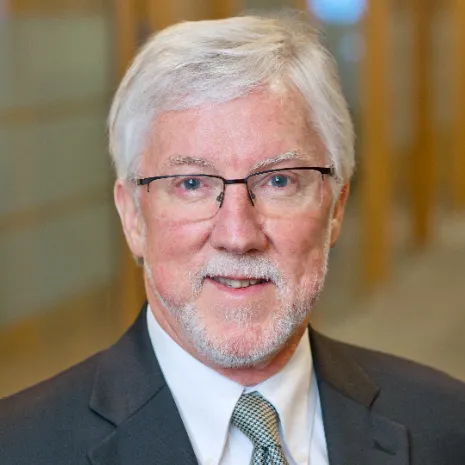
0:04 Hello everyone and thank you for joining us today. I'm joined by Robert Archer, President and CEO of Pinnacle Silver & Gold. Today's focus will be regarding this week's press release on the high-grade gold and silver on surface and in the underground workings at the El Potrero project. I'll link the press release in the chat. And speaking of the chat, please feel free to submit any questions you may have as we would like to make this as interactive as possible.
0:26 Robert, thanks for taking the time out of your busy schedule to do this. I know you're in Quebec City for a conference, but care to start off by providing your initial thoughts on this week's press release. Absolutely, Kyle. Thanks very much for the introduction and a pleasure to be back on the show. So this, yeah, we had some Really exciting results out earlier this week from our El Potrero project in northwestern Durango in Mexico. We've only just acquired the project in February, so we're only about 3 months into it. The guys have been busy sampling both on surface and in the underground mines that exist on the property and the results that we've been getting are very exciting. We knew it was a high-grade project going in with reported average grades around 10g per tonne gold equivalent. But so far from our channel sampling underground, we're getting individual samples up to 37g, 37.3g gold and 346g silver. 7.3g Gold and 346g Silver.
1:37 Across composite channel samples, 19g Gold and 4.1m Silver. Really nice grades. This is all in what we call the Pinos Quatis mine, which is the central mine of the 3 historic mines that are there on the property. The 3 mines together cover a strike length of about 500m. We started with the middle one and we've pretty much completed the sampling of that mine now. There are 2 levels to the mine and the best results came from the upper level.
2:23 So that gives us a good indication of, you know, where the best mineralization is in order to target drilling down the road. We just have a small raised sample, which is a raised tunnel connecting the 2 levels and we'll be sampling the walls of that to give a third dimension of the mineralisation. We've already moved on from that middle mine over to the Dos de Mayo mine and they're well underway sampling that one as well. Those results will be out in due course. But we're just systematically working our way through.
3:09 It's great to have these underground mines to be able to sample the mineralization and That gives us a really good sense of what we're looking at and will help us to target the drilling down the road. In addition to the underground mining, the guys have been sampling on surface and They found an old pit with some vein material in the pit, that's about halfway between the Pinus Quartus and Dos Domingos Mines. That's a distance of about 200 meters, where there's no underground workings at all.
3:47 They found some mineralisation there with visible gold and what we call ganguro bands. Those are black bands of electrum and silver sulphides and that returns assays up to 2,280g silver and 13g gold.
4:10 Again, very high grade. Very excited to see that in an area where we really didn't know anything about that in the past. We didn't know that there was mineralization there. If we can connect the old lines and show that there's a bit more continuity there, across that 500m or more, then that bodes well for the prospects for the project as a whole. The guys have now traced the vein system out for 1.6km, 1,600m along the strike. And then it sort of disappears under overburden. So it's giving us a sense for the size, you know, scope
4:57 of the system here. In this part of the Sierra Madre and with these types of low-sulfidation epithermal deposits, the greatest extent is horizontal. It's not vertical like in some places like eastern Canada and so on where the mines go vertically for thousands of meters. But In this area, the vertical extent is sometimes just a few hundred meters,
5:25 but laterally it can extend for kilometers. We know that at the nearby Topia mine, which is only 13km away. That was the first mine we acquired with Great Panther. Those veins continue for about 4km along strike and you can follow those for a long way. It lowers your development costs having that because you're not having to sink deep shafts and deal with pressures and temperatures and water tables and all that kind of stuff. It's a great way to start and we're really excited about these results. Thank you. You're getting new barons to figure out where to drill and all investors like to know what's the scope and timeline for your plan drilling program and how many meters do you expect to drill in 2025?
6:24 We're still developing plans for that as we progress with the sampling program. Given the progress that the guys have made and what we still have left to do, I anticipate a drilling program in the fall, maybe September-October time frame.
6:45 In terms of the size, I think, given what I said about a lot of this minimization being very close to or at surface, we'll probably be drilling a series of fairly short holes to be able to test that. So it's not like we have to drill a bunch of deep holes or anything and big program. And we can get a pretty good sense of this system by drilling a series of short holes along,
7:16 initially along this section of the 500 metres, where the underground mines are, drilling in and around the mines, because the mines have never been drilled before. And one of the things that we'll probably consider is actually an underground drilling program, which might prove to be economic and
7:40 add a lot of value rather than drilling from surface. So that's something we're gonna be looking at. But yeah, I suspect in the fall and probably a first pass program, and considering maybe somewhere around 3000 meters, you know, it wouldn't have to be huge, but it would get a lot of information from a program like that. So it's, you know, it's not going to cost a huge amount. And we've got easy road access into the area. So that's great too. And prior to drilling here this month, you're expecting a plant inspection, right? So you're fully intended on bringing this into production. What's your realistic timeline for production and estimated capital requirements for the refurbishment of this plant?
8:31 Well, obviously, we'll know better after the assessment, but yeah, you're correct. We're going in there in about 2 weeks
8:39 and we're taking in someone who is an expert at this, you know, that's what they do And we'll get a better sense. But from the high-level estimates that we've been given so far, it's looking like maybe a million and a half to maybe 2 million to get the plant – yes, US dollars, that is – to get the plant back up and running again.
9:10 And in terms of time frame, the basic infrastructure for the plant is quite sound.
9:20 And I don't think it's going to take a lot of time to actually do the work on it. In terms of actually getting to a production stage, the biggest unknown factor is really permitting. I think, relatively speaking, relative to other mining projects, I think this one could go fairly quickly, because it has several advantages. 1, it's a disturbed site already. The plant is there, the mines are there, the roads. So it's not like we're going into any pristine area. And even though it's not permitted now, it was in the past.
9:58 And so that's 1 advantage. The other is that because it's underground and at present it's a fairly small operation, it has a relatively small footprint. From an environmental standpoint, it doesn't cover a lot of area. It's also on private property, so there are no issues as far as that goes.
10:26 Durango is a mining-friendly state and Topia is a well-known and established mining district. We have 4 operating mines surrounding the property. So this is an area that is very familiar with mining. So all of those things are positives leading into production, but we have to remember we're still dealing with government authorities and their ability to process permit applications and that sort of thing. So, all the stuff to work through that. But on this upcoming visit, in addition to a plant assessment, we're also taking someone in who is a permit expert, basically, you know, someone who would know what hurdles we might face, what hoops to jump through, you know, that sort of thing. And so He'll be assessing the site and the mines and the plant and then give us some idea of which permits we need to apply for and what that process is going to look like, what we need to do now to start baseline studies, whether it's for water, flora, fauna, all that kind of stuff, so that we can get that underway.
11:42 One of the nice things about this project is that We can be doing all these things in parallel. So while the guys are continuing with their exploration, mapping, sampling, drilling, that sort of thing, we can be assessing and then rebuilding the plant, rehabilitating the underground mines at the same time as we're doing all the work for permitting. You've got basically 3 parallel tracks that can be going at the same time.
12:10 Maybe even a fourth. Have you conducted metallurgical testing on the Gungoro mineralization?
12:16 What recovery rates are you expecting? We haven't done anything specific to this project yet. That's something that we'll probably get to in the next few months. It will be somewhat dictated by the plant assessments, because the plant was set up as a Vat-leach Cyanide and followed by a Meroprobe circuit to produce a Gold-Silver.
12:46 So when we do this, we'll get a sense of whether that may be the best way to proceed or if we might be able to use some other kind of methodology
13:00 like a flotation or something like that. But we will be doing some metallurgical work fairly soon in the next few months, I would say. But just based on experience, and from the assays, the very preliminary work that we've seen, there's no base metals in the system. This is strictly a precious metal, gold, silver system. There doesn't appear to be any deleterious elements in there. And nothing that should really affect the metallurgy in any way. I suspect that the recoveries will be in the 90s, 90% specifically. I can't say until the work is done, but it should be relatively high.
13:50 I'm optimistic about that as well. I want to transition to exploration potential. With 1.6 kilometres of mapped veins but only 500 metres of historic mining. What's your strategy for exploring the remaining untested strike lengths? It's really going to come down to drilling. At the end of the day, we're trying to map in as much detail as we can, given the exposure. You know, we'll be doing a little bit of trenching as well. And, you know, as I mentioned, this little discovery that the guys made with that high grade silver and gold on surface, that was just an old pit that they found that someone had dug many, many years ago.
14:39 And so we'll be doing some trenching, uncovering that, and trying to get a better understanding of the controls on the mineralization, and particularly the structure, which way the veins are going and where they might come together. And another thing that will be fairly key to that is a LIDAR survey that we plan to fly probably late summer. And the LIDAR is, for anyone unfamiliar with it, it's sort of like an airborne laser survey really
15:15 that kind of sees through the overburden and the vegetation, and picks up the rock surface and identifies the structures in the rock, which are extremely important in hosting the veins and the mineralization. That will be key to the interpretation as well.
15:41 We'll use that in conjunction with the mapping to put together the drill targets along that section of the veins where it's not so well exposed and where there are no underground workings. So that's basically the strategy, but it'll come down to drilling to properly assess what's there and what's not. And as I mentioned, one of the things that's gonna be key is the elevation, because of that vertical extent of this type of mineralization, you need to know where you are in the system. Otherwise, You might drill underneath it, you could drill over top. And in an area like the Sierra Madre, there's a fair bit of topographic relief.
16:27 It can be quite rugged in places. And even though It's not too bad on the property itself. We can get around pretty well, but there's still several hundred meters of elevation change between different areas. You do need to know where you are in the system so that you can best target the drilling. Now, this question might be a little premature until you do get your results back, but how do your grades compare to the nearby Cienega
16:59 mine and Are there operational synergies you can leverage in that district?
17:07 When you get to the point of production, you have to take a look at the continuity of mineralization and how you want to approach it and what size of operation you want because from what we're seeing so far, we have some very high-grade mineralization in the underground workings and that's terrific. And it'll really come down to whether you want to take those high-grade pockets and just mine those specifically on a smaller tonnage basis, or if you want to average that in with some lower-grade material and increase the tons in order to increase the throughput at the plant. Because sometimes you can get economies of scale by doing that.
17:56 And so from what we're seeing right now, there are some terrific high grades. But when it comes time to making a production decision, we might decide to average those in. The average production grade may be a little bit lower than what we're seeing. That's often what happens in some of the larger operations. And the Cienega, for example, is 4,000 tons per day. It is one of the largest underground mines in Mexico. And from that standpoint, they're probably averaging in a lot of the lower grade material in order to increase the throughput at the plant and lower their unit costs basically. And same sort of thing happens at Topia and some of the other mines in the district.
18:46 So we'll have to see what, as I say, it's a little bit premature for us to determine that at the moment, but it's certainly nice to have the high grades. And for me as a geologist as well, the high grades also indicate the intensity of the system. And you like to see that because it does show that there's very strong mineralizing fluids there and it's been quite a powerful event. So it's nice to see that. In terms of operational synergies, the biggest thing really is the town of Topia is about 30 kilometers by road and That's our main access point. You can drive in from Durango, but it's about a 7 or 8-hour drive, and rough roads at times. But we fly into Topia typically. And Topia, When we first went in there in 2003, just before acquiring the mine, it was shut down at that point. It was just a sleepy little town, about 3,000 people. And then once we got the mine back operational again in 2006, it gradually built up over time.
20:02 And now Topia is more than 9,000 people. So, The mine has brought a lot of economic benefits to the town and it's really become an operational center for that particular area. It's a great source of services and supplies. As I say, there's the airstrip there that we fly into and there's a lot of skilled
20:33 Mining contractors, that sort of thing. We've already been able to take advantage of that. When we fly in there, we can just stay at a hotel in Topia and then drive around to the project. But our guys on site have rented a house in the local village, and they're hiring local people. We've hired mining contractors to go in and clean up the underground mines to make them safe for our guys working underground. We have all that local expertise right now. From an operational standpoint, that's the biggest thing really. We are in a well-established mining district and we'll be able to take advantage of that. You mentioned you're going to be bringing on a permanent expert, but to your knowledge, what are the key permanent requirements in Durango?
21:26 And are there any legacy issues from the 40-year private ownership? No legacy issues that I'm aware of. As I say, the basic infrastructure for the plant is still there, so I mean, that's a, I don't know if you'd consider a legacy issue, but it's a positive feature in my view. But I don't, as I mentioned, it's on private property and that's a big benefit because in order to apply for a permit, you have to have an agreement with the surface rights owner. And if the surface rights are owned by 1 or more local communities, then that can sometimes be problematic depending on where you are.
22:14 And that's true for any jurisdiction in the world. We face that in Canada as well as for Latin America or Africa or wherever. So being on private property, and as I say, we have a good relationship with the local, the surrounding communities anyways. So I don't see it being an issue at this point in time. But no, we'll see how it progresses. But Right at the moment, I'm not really anticipating any major issues. One final question here, and I'll let you get back to the conference. Beyond the initial 100 tonnes per day operation, what's your vision for scaling up El Potrero and growing Pinnacle?
23:01 So, it's sort of, yeah, that's a two-pronged approach. Part of our business model, I guess you could say. Growing the project, we'll just continue to do what we're doing and do more drilling. And the project is almost 1,100 hectares, and so it's a good-sized area. It's broken into 2 parts. So there's the one section with all the historic mines and everything on it and we'll be continuing to try and grow that through sampling, drilling and so on, as I've been discussing. There is another portion to the property not very far away.
23:46 We drive through it on the way to the mines and that's never been explored at all. Yet there are reports of artisanal mines on the property. You can see some very strong alteration in the rocks on the road cuts. So there's, you know, geologically, you can see that there's probably something going on there, but we just haven't really had a chance to look at that and test that at all. So, you know, that's something that we'll be looking at as well in order to test that area. But in addition to the property itself, we're going to be looking for additional opportunities, both within that immediate area and elsewhere in Mexico and possibly even other countries like Peru and so on.
24:40 But, you know, the Alpetrero is a bit of a stepping stone, I guess you could say. You know, people shouldn't look at it from the current size and say it's too small or whatever. You know, that's just the fact that it's small is what allows us to move it forward to production quickly. If this was a much larger operation, it would take a lot more capital and a lot more time to move it towards production. But our goal is to move this to production as quickly as we can. And if we can start to generate some operational cash flow, then we can build the project out of that and avoid having to go back to the markets as often.
25:27 And at the same time, that provides us opportunities to acquire other opportunities, as I say, in the district or elsewhere. So I'm already looking for our next opportunity and we want to continue to build the company that way just through acquiring other similar opportunities, you know, past producing mine, get it back up and running again. And then, that's essentially what we did with Great Panther and it worked very well. So it's a business model that I'm familiar with and I know what works and I want to try and do it again. Robert, thank you so much for your time. Thank you for this update. Until next time, we look forward to seeing future developments with Pinnacle Silver and Gold.
26:14 Thanks very much, Carl. I appreciate it. Much Kyle, appreciate it.