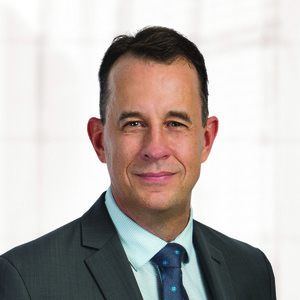
David Christie
President, CEO, and Director at Orford Mining
Replay available
Join us for a great event!

On 6ix: 6ix.com/event/orford-mining-identifies-significant-lithium-potential-on-land-package
Automated transcript · Written by software from the replay's audio. It can mishear names and figures; the replay is the record.
0:08 Hello everyone and welcome to Orford Mining's live summit today hosted by 6. I'm pleased to introduce their president and CEO, David Christie, who's going to be walking us through a presentation and afterwards taking your questions live. So to join the Q&A, make sure that you submit your questions in the Q&A chat on the right hand side of your screen at any time during today's talk. But without further ado, I'd like to hand things over to David so that we can get started.
0:33 Thank you, Cameron. As you all know, Orford Mining is a exploration company focused on Quebec. This week, we announced that we are exploring for lithium in the area where we're already exploring for gold and nickel. So I'm going to walk through the reasoning for that and our critical minerals exploration package. I will be making some forward-looking statements, have you read those at your leisure. Just to remind you, we have basically 4 key project areas now. The Kigovic project, which is gold and copper, actually has some lithium potential. West Raglan, which is a nickel copper PGM project. The Nunavik lithium projects, which there is about 6 properties plus a number of smaller ones. And the Châtelle Regional Gold and Copper project, which we are currently drilling. We have about 1,700 square kilometers of land now in these projects across Quebec.
1:28 Our stock price is around 12.5 cents right now, sitting about a $20 million market cap. We've had quite a boost in the past week from about an $8 million market cap. So it's been good to see the market reaction to our investment into the lithium space. Alamos Gold holds just shy of 25% in the company. And we had at the end of October over $3 million in the bank. I'm just going to skip over that. That's more for your own reading. That's on our website. As you know, we have a great team, myself experienced both as an analyst and geologist in Canada. And then we have LJ St. John and Michelle Sorrentino, 2 very experienced geologists who run our programs and the rest of our teams. Our board is very well experienced.
2:16 John McCluskey, CEO of Alamos Gold is on our board. Of course, Lawrence Smith, ex-asset manager and analyst. Mark Goodman, who was a VP and CEO of Dundee Corp and very familiar with the junior mining space. Ben Polinger is the VP of Exploration and Business Development of A-TECS Resources, which is drilling some interesting things. And Monique Rabideau is a director and a lawyer with Thomson Reuters, so a very well experienced lawyer as well. And of course, we have Peter McPhail, our chairman, ex COO of Alamos Gold. So very experienced board. So, you know, why lithium? You know, we'd be looking at our project area and the lithium space for a while. Sometime this past fall, I started looking at the fundamentals of lithium and then started talking to my team about the potential for lithium in the Nunavik region, close to where we're already working, so it's not too big of a stretch. When you look at the electric vehicle batteries and the sales and the projections going forward, it's quite stratigraphic, That's 1 reason.
3:18 Then you look at EV sales and the component of lithium batteries that are going into them. And it continues to increase despite other types of batteries coming on market. So we believe that's gonna continue going forward. And You can see these numbers here. The lithium batteries continue to move forward as do the nickel batteries. So nickel composition of battery is huge as well. Just a slide on the nickel composition, nickel growth in both electric vehicles and the batteries that are using them. And so we believe that that usage of nickel is going to continue to grow. And you can see that the price demand for nickel moving forward here. So on the lithium side, the LCA, LCE prices have been very elevated in the past number of years, and they continue to move forward. And we believe that that's going to continue moving forward as we move into the next number of years. A number of countries, as you know, have ending combustion engines by 2030.
4:18 A number of others are reducing it to, you know, a certain percentage of the market. So we're going to see a continued increase in the need for lithium and nickel and cobalt in the years to come. As lastly, you can see here, the inventories of lithium in China, which usually has the most lithium concentrates on hand. And they're just decreasing as we speak. And that's why you're going to, you see the increasing prices over the past number of years. So that leads us to this last slide, which I thought was quite an interesting benchmark. I'm sure you've probably all seen this. The number of mines that need to be found in the lithium space, the cobalt space, the nickel space, and of course, the graphite space. These are all essential ingredients in the electric vehicle batteries and electric storage batteries as well.
5:04 And you can see that the number of mines that need to be found here is just incredible. So we got quite a task in front of us. But where are we in Canada as far as our lithium acquisitions? We acquired 334 square kilometers of land and 6 properties, plus a number of smaller ones and another 6 or 10 properties that are quite small. But the reasons we acquired these properties, and we now have what is about 6 times the size of Manhattan just for lithium. The Quebec project itself has lithium potential as well. We had a number of grab samples that we took on that property, which are very high in lithium. And then we have the reasons we stake the properties we did. There's map pegmatite on those properties and or lithium in lake sediments that are in the 90th percentile or higher for Quebec, based on the government data that's there. Or there's anomalous grab samples taken by the Quebec government. Plus we're near geological boundaries, tectonic geological boundaries, where you tend to have spodumene-bearing pegmatite rocks being in placed. And this is the same type of thing you would see down in other areas where they're looking for lithium like the James Bay area. And I want to point out on this map, you know, you see on this map, 2 big mines to the east of our projects, the Raglan Mine and the Nunavik Nickel Mine. These are 2 well-known world-class nickel mines. They have a road to a port called Deception Bay. We're about 70km from Kigavik to Deception Bay.
6:28 When you look at other areas in Canada that have 1,300km to get to the nearest port, we're in a pretty good place here to ship out spodumene concentrates. So I think this is a world-class critical minerals hub here, and the potential for lithium on the properties we've staked is very high. Just moving quickly, look at the nickel space as well, because it's also part of the critical minerals world. You know, we have a JV with Wailu Metals. We're right now in the budgeting phase for this year's programs. It's a very large project, 700 square kilometers of land, sitting on the same trend as the Raglan mine. Raglan has the same reserves today as when they first started mining there, basically. Very high grades, up towards 3% nickel, over a percent copper. This is really good stuff.
7:18 It also has PGMs and cobalt in it. So we're right next to those with our lithium claims. So we're still in the critical minerals game with lithium and nickel now, and not just the nickel game. And of course, Wiley metals is earning into that project. Great high grades on that project. You can see here across the frontier zone, which is probably our most drilled zone, grades up to 3.2% nickel, 1.3% copper over 28 meters, along with a platinum, palladium and cobalt in there. So really good grades. And this year, we discovered a brand new zone at the boomerang zone in the eastern part of the project, probably the highest grade we've had outside of frontier on the property to date. So a lot of work to do yet. The property is vastly underexplored.
8:01 Again, 707 square kilometers of land. So it's hard to say that we've drilled that very well yet. So lots of work to do here. Great relationships with the First Nations. We try to employ as many people as we can up there and use their services. So just quickly summarizing who we are. We have very strong strategic shareholder support with Alamos Gold at 25%, massive land position and what we believe are 2 very underexplored gold district, large new land tenure covering very strong lithium targets in Nunavik. This is an area that's never been explored for lithium before, and we've picked up what are the best lithium anomalies in the area. We're not tying onto someone else's discovered lithium. We went out there and searched and looked at the data and picked the best possible targets in the area. We have very strong financial technical partner
8:51 on our nickel project at West Raglan with Wailu. Of course, we're in Quebec, which is probably one of the safest and most proven mining jurisdictions in the world. A couple of upcoming callous, of course, we just said we're at the VRIC conference in Vancouver, PDAC is coming up, and then in June is the mining events of the north in Quebec City. We will have, we're drilling right now at Châtel-Églé, we'll have results there in April or well, late early March and then again in April. And of course we're gonna have our Kigobik lithium projects and West Raglan project budgets sometime near the end of February, early March. And that's my presentation for now on the lithium projects. I would love to hear your questions. Yeah, absolutely, David. To everyone in the audience, as David says, if you have any questions, please submit them in the Q&A chat on the right-hand side of your screen. To start with, first question, David, Do you foresee any permitting issues for the lithium rich portion of your land package?
9:50 I don't foresee any issues in exploring that land at all, no. We're in a land that is open to staking, open to exploration. We work well with the communities up there. We'll make sure they understand what we're doing. And no, I don't foresee any issues really at this point in time. Well, fair enough.
10:10 There's another question. Some outfits like Goldman Sachs are less bullish on lithium in 2023. Can you explain why they're wrong? Well, I'm not gonna try to argue against Goldman Sachs as a little junior explorer, but I don't think 2023 lithium prices are gonna affect Orford Mining. We are a company with exploration properties that aren't going to go to production for a number of years. So the excitement for us will be in exploring and discovering lithium deposits as opposed to selling lithium product. Therefore the pricing in 2023 versus 2025, I don't think impacts much. Okay, fair enough. Speaking about timeline, what's the 9 to 12 month thesis for investor returns? So I think you have to look at our company at all sort of the 3 main commodity packages we have. So we have 2 very good gold projects.
11:04 So right now we're drilling the Jatel gold project and we're on our 5th or 6th hole. I think we're on our seventh hole actually. So very good project.
11:15 Drilling is going extremely well. We expect to have some results before the PDAC and then the remainder of the results by the end of March. So that'll be sort of the first catalyst for investors to see those results and take those to your own investment thesis on where you want to see the company go. And then the second thing will be, the budgets that come out for West Raglan and Kigovic and the lithium projects in the next few months and what we're gonna do on those 3 projects. And I believe that nickel prices and lithium prices will continue to move higher. Will they always go at the same trajectory and incline that they have been in the past couple of years? I'm not sure about that, but I think they're moving higher as more and more electric vehicle batteries are needed. So I think you mix all that stuff together. You know, when you look at, or if we're not just a 1 commodity or a 1 project company.
12:05 We're a very small company, but with a lot of potential optionality to investors. So you get optionality on the nickel in a big
12:12 way. We're right next door to Raglan Nickel Mine, which is one of the best nickel mines in the world. Huge optionality to that. We have the same grades on our project. Now you get 334 square kilometers of land exposure to the lithium market. We're going to take a first pass exploration effort on there, doing ground exploration, sampling, that type of work. So not a lot of risk to investors, but potentially huge reward. And then of course the gold side of things, the Kegelvik project, brand new gold district, never explored before us. We're finding high grade gold across the entire project. And then we've got the Jatel project down in the Abitibi, right next to Agnico Eagle's original gold mine and the Maple Gold JV. We're hitting the same kind of stuff they hit. We have the same trend as they had at the old Agnico Eagle mine. So lots of potential here, lots of optionality to 3 different commodities.
13:03 Fair enough. Eric has this comment, he saw some negative press over the weekend in regards to the Damascus community and the fear of the Wabuchi deposit being too close to their community. He has a couple of questions. Is your project portfolio in Nunavik well located? What's the farthest distance to a deep sea port? And is there going to be exploration synergies on the field?
13:28 So let's go in sort of reverse order. First of all, exploration synergies in the field. Yes, we will use the same camp we have for the nickel project, West Raglan, and the Kigabik project for most of the lithium projects. Some of them we might use the town of Salliwit, which might be a little closer to some of the projects. So we might use that as a logistic hub for some of the projects. But we're quite a ways from Sally, but we're still 40 kilometers away from there. That's probably the closest to lithium projects. So we're not next door to any of them. And we're 70 kilometers from a deep sea all season
14:06 port that ships out nickel concentrates every month. So, I think that answers all your questions. We're very close to a deep sea port, so it makes us very logistically saved, I would say, versus some of the districts that are looking for lithium, because you are shipping out of concentrate. Okay, fair enough. Just another question about timeline in 2023. What do you think it's going to take for exploration of this lithium resource? Sorry, I don't understand that question. What's the exploration timeline this year for the lithium resource?
14:39 So we won't have a resource this year. We just stake these projects. They're very new. No one's ever explored for lithium in this belt. We have staked what we think are the best targets based on lake bottom sediment samples, based on grab samples, and based on the government identifying pegmatites, which is the host rock to lithium deposits. So we're going to go in and we're going to map out those pegmatites, we're going to take samples, we're going to do traverses, and try to identify the best property to follow up on in 2024. So there should be a year of groundwork on those properties to identify the best prospect or prospects to move forward the following year. Great. Okay. Can you talk about some of the elements that makes the Nunavik region a good place to be looking for lithium?
15:28 So first of all, that deep sea port I mentioned 70 kilometers away from the Kikavik property and even closer to some of the lithium projects like Electrode and Ampere and Radiant on our map. So that's one reason. The Nunavik region understands mining, understands development. They have 2 world-class nickel mines right there, so they've gone through this process before. So I think that's a good reason. Lithium exploration will be fairly simple. There's no trees here. So if there's a pegmatite sticking out of the ground that we can easily see. It'll be much easier to map it and understand it and take samples than in some areas. Okay, great. How does all of this change your focus on gold and nickel?
16:17 I don't think it does. I think we continue to be a gold and critical minerals exploration company. We've been looking for nickel since we were started as a private company way back in 2011. So nickel's always been part of the company. Gold has become a big part of the company because we discovered what we believe is a new gold belt. We are an exploration company. We're looking for minerals. And so, when we looked at this belt and we saw people out there staking lithium claims, I thought, let's pick up the properties that we think are the, have the best lithium potential in our backyard before someone else does. I'd rather explore them than have someone else explore them and make a discovery. And We know the potential is huge. We're on major geological domain boundaries.
17:04 We've got lots of granitoid rocks sitting right next to the big Cape Smith greenstone belt. And this is a perfect place to find pegmatites. So for us, it just made total sense to add lithium to our nickel and gold exploration in that region. Oh, fair enough. Chris is wondering if Orphid is going to continue to target the IPLS at Kikavik, even following the new lithium discoveries around the property, and will it remain the top priority? At Kikavik, we have a number of priorities. The IP Lake shear zone is one of the structures that we believe is very important to gold endowment on the property. As was mentioned in a press list we put out a while ago, we have some new theories on some splay faults from that fault that are actually more important to the gold mineralization.
17:52 And we will be targeting those along with targeting very close to where some of the very high-grade boulders were found. So we do have a new methodology moving forward this year. We're working on a big geological compilation right now and structural compilation to help us target those specific faults that we're talking about. Okay, great. Eric is wondering if there are royalties attached to the acreage. So the lithium stuff, no, we staked it. It's ours, 100% to Orford's, no royalties. At Kigabic, there is a small royalty at the eastern side that we can buy 0.5 it out. And on the West Raglan project, there is a 2% royalty to Anglo-American. Again, we can buy 0.5 that out. Okay, fair enough. Well, listen, David, it's been fast paced. That looks like all the questions that we've received so far. So I do wanna pass things back to you before we wrap up today. If you have any closing comments for the audience.
18:45 Sure, so I think there was a few questions about, you know, where is Orford's focus here? Our focus is in Nunavik. That is our prime area. It's where we explore. It's what we know best. I think we're very good at finding things in that area of the world. We have great geological teams, great prospecting teams, and we know how to look for minerals in the Nunavik barren lands. So I think that's the key thing you need to remember here. We know how to find things up there, and we have found things up there. So adding lithium to the list is not that difficult for us to understand. We will attack all the projects we have up there in the same way, shape and fashion we have for Kigabay or West Raglan, and we will try to get answers on every single acre that we have staked. The Chattel project, keep in mind, we are drilling that right now. We'll have results before PDAC and then more after PDAC. So watch this space, lots going on. Orford is very busy.
19:42 ♪♪ you
Follow Orford Mining into a list and get an email when it puts out news.
President, CEO, and Director at Orford Mining