Transcript
Automated transcript · Written by software from the replay's audio. It can mishear names and figures; the replay is the record.
0:11 Hi everyone and welcome to Contango OARS Live Investment Summit today hosted by 6. I'm pleased to introduce President and CEO Rick Van Neuwenhuysen today. Rick is going to walk us through a company presentation and after that we'll be accepting questions. As a reminder, you can submit your questions at any time on the Q&A panel on the right-hand side of your screen. As always, the summit is being recorded and will be available to you to watch afterwards on six.com.
0:38 So now without any further ado, I'll hand it over to you, Rick. Thank you, Dasha, and good morning, everyone, or Good afternoon, depending on where you are. Welcome to, contango or and welcome to my house in Fair Banks, Alaska here, where it's about 20 below outside right now, and still dark, but. We persevere. I look forward to presenting our our story to you. And if you've heard it before, I'll be a bit of an update on a few areas, but. We'll start from the top here with just pointing out our forward looking statements. As well as our cautionary language around resources and non-gap measurements. So let me start out by just giving a high-level overview of our project.
1:28 We have about 1.3 million ounces outlined. We're up in Alaska. We're not too far from the Canadian border, from the Yukon border. Our grade averages 4g per tonne, which for an open pit mining proposal is very, very high grades. As I mentioned, we're located right along the Alaska Highway, so we don't have the typical infrastructure issues that many of the projects in Alaska have, where you've got to build a road or a pipeline or power or whatever. We're right next to the highway. We're working on private land that's owned by the Tetlin Alaska Native Tribe. So it's private land owned by the tribe. We have a business arrangement with them. I'll talk about that a little bit more later.
2:14 And We recently, in the end of September last year, formed a partnership with Kenross to basically fast track the development of our project. And that's really achieved by Using the facilities at the Fort Knox mine. So as you may know, they have a large mind there that has a mill that's underutilized.
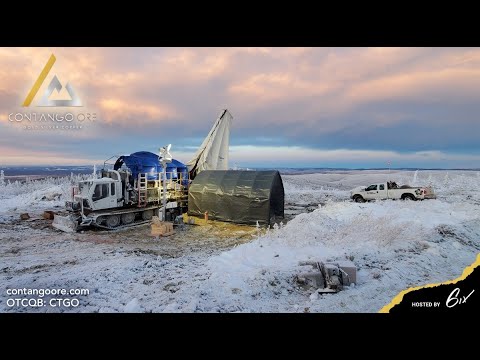
2:43 So this is a great solution for ourselves, but all and our shareholders, but also for for Kinross and Fort Knox and for the Tetland Tribe. So here's an image, an overview of the project area. You can see it's located in what's called the Tetland Hills where The 2 deposits, the main zone and the North Peak zone, just slightly in front of it, make up the 1.3Moz. So as I mentioned, we formed a 70-30 joint venture with Kinross. We achieved this by working with our former business partner, Royal Gold, to have them sell their 40% interest to Kinross, and we sold a 30% interest to Kinross. We received about $30 million and about 1 million of our shares back in that three-way transaction.
3:34 Royal Gold continues with involvement with the project with their 3% royalty. Kinross paid around $93M for their 70% interest. You can see that they're vested here. This is not an earn-in. They've acquired their interest and they spent good money to acquire it. The reason we did this arrangement from our perspective was, again, to utilize the mill at Fort Knox. That foregoes a huge amount of capital investment to develop the project ourselves. Kinross estimates that the capital cost to develop the project using the Fort Knox mill and facilities will be $110M. Just to compare, if we built a mine and a processing facility ourselves, we'd probably be in the $400M range.
4:27 That's a huge capital savings for the project. Ken Ross believes that they can produce ore, produce or process ore and produce gold at the Fort Knox site for about $750 per ounce for all in sustaining cost for gold equivalent ounce and produce about 220,000 ounces per year. Our share of that would be 65,000 ounces. So those are the metrics that Kinross has put out as guidance to their shareholders. And we are in the process right now. We just approved an $18 million program for the Peak Gold joint venture. That money will be spent to complete work towards the feasibility study and to get the project ready for permitting, which we expect to initiate later this year in the second half.
5:20 Ken Ross's guidance on timeline is to complete the feasibility study at the end of 22, wrap up the permitting end of 22, early 2023, and site construction in 2023 with production in 2024. So it's a pretty aggressive timeline, but keep in mind we're not building a mill, we're not building a tailings facility, nor are we permitting either of those things. So very low execution risk. We're basically developing mine on top of the hill, which I'll talk more about. And of course, as an exploration geologist, I always wanna look at what the upside is here. And Between the Peak Gold joint venture lands and the lands that we own 100% of, we have about 850,000 acres in the heart of the Tantina Gold Belt.
6:08 So we think we have lots and lots of exploration upside to talk about going forward. As I mentioned, I think this is a win-win deal for everyone. It makes use of an underutilized mill at Fort Knox, which is great for Kinross. This gets the project developed in a quick timeline. The Tetland tribe will receive a significant royalty. It starts at 3%, goes up to 4% after 3 years, and ends up at 5% after 6. So that'll be a huge benefit for them, along with jobs and training. And then of course for our shareholders, as I mentioned, it's a huge, huge gain, huge win for our shareholders as well with low capital and a low execution risk plan. Just a quick introduction to our board and executives.
7:01 We're a small team. I've worked a lot in Alaska. I've been involved with a lot of projects up here over the years. We discovered the Donlan project, I partnered that with Barrick Gold. That's a 50-50 joint venture and a roughly $3-4 billion market cap company. That project is just finalizing state permitting. Trilogy, most recently, I worked on that for a number of years. We completed a feasibility study, completed permitting of an access road into the project, and partnered that project with South32 on a 50-50 basis. And South32 put $145 million into the joint venture.
7:47 Similar story with Sandfire. We found a nice deposit down in Montana, a 20Mt, 3.5% Copper project. We partnered that with Sandfire Australia and now they've basically taken over the project and are actually just finishing permitting, just finished permitting, and are now constructing the mine. Alexco was a project that was spun out of Nova Gold, and we developed a project in Yukon there, it's a high-grade silver mine in Yukon, just going through a restart of operations and a high-grade silver deposit. That project is doing very well in this company as well. So our business model is to, We're explorers and developers and we like to partner with big companies who bring their expertise, their mining expertise, bring their capital to get these projects to develop. We like working on real things that are going to become mines and create real wealth for people.
8:49 Our shareholder base, we only have 6.15 million shares outstanding, 6.25 on a fully diluted basis, no warrants, no debt. We are in a strong cash position as a result of the sale of our 30% interest. So we have over $30 million in the bank. We've approved a budget of $10 million for the company. A little over 5 of that is directed towards our contribution towards the Peak Gold Joint Venture. And the balance is for corporate purposes and exploration on our 100% owned lands that I'll talk about towards the end of the talk here. Our shareholder base, 40% institutional, 40% retail roughly, but that's kind of more of a high net wealth individual, not a broadly distributed retail. And then management directors are solidly aligned with shareholders with a 20% ownership of the company.
9:54 One of the things we're pursuing is a New York Stock Exchange listing, New York Stock Exchange American. We're currently listed over the counter on the QB market, which we don't find to be ideal for our size company. So we're in the process of uplisting to the American Stock Exchange, and I expect that to happen towards the end of the quarter here. At least that's what we're working towards.
10:24 So if you look at our project and our company, and we look at the guidance that Ken Ross has given us, and this, of course, will be updated with a feasibility study that'll come later. But it is Ken Ross's guidance. 110 million dollars to capitalize the project on a 100% basis producing 220,000 ounces of gold equivalent and that's gold plus silver. Our share 30% would be about a little over 65,000 ounces of gold a year. We're processing a head grade of roughly 6 grams per ton. So this, again, for an open pit mine, that's very, very high. Results in very reasonable, all-in sustaining cash costs of $750 per gold per ounce. If you look at a long-term gold price of $1,750, which I think in today's world is a pretty realistic view, that's a $1,000 margin per ounce. We have 6.2 million shares outstanding.
11:25 So on a pro rata basis, that's $10 of free cash flow per share. That's an astounding statistic for a company our size. And as I mentioned, we certainly think that we'll be successful at exploration on our not only on the peak gold lands, the joint venture lands, but also on 100% of them lands. So we can see certainly growth in terms of total ounces in the future as we continue to explore the Peak Gold lands and our other lands in Alaska here.
12:01 Just a minute on Alaska as a jurisdiction to do business. I grew up here. I know the place well. I've done a lot of business up here over the years. It's a great place to do business. Has a rich mining history. It's the second largest gold producing state in the United States. 5 or 6, 5 metal mines, another big coal mine, lots of small plaster miners in the state. Stable jurisdiction from a tax perspective and from a regulatory perspective. It's a pillar of the economy up here so it's a major part of the Alaska economy. Second only to oil and gas. So we like doing business here. It's a stable jurisdiction and of course everything's in US dollars so you don't have to worry about what your exchange rate is.
12:54 So why this project works with the synergies with Fort Knox is here. We're located right off the road here. This is the Alaska Highway. You're looking down south towards the Yukon. If I turn around, I'm looking up towards Fairbanks and Fort Knox Mill. And just behind the bushes there, you can see the low hills in the background. That's where the Tetlin, or the Peacole project is located. So this is the access road that goes down actually to the village of Tetlin with a little side road that goes over to our exploration project. That's 250 miles from the project site up to the Fort Knox Mill, so not a big distance.
13:39 The joint venture with Ken Ross is outlined here. It covers the Tetland lease, which is 675,000 acres. Most of the work that we've done on the Tetland lease is in this little circle here with the mine symbol on it. We've not really spent a lot of time and effort on the rest of the property, which is probably 95% of the total acreage. So that is what is included in the joint venture, along with a small group of claims outlined in blue there. Those are optioned back to the joint venture. The rest of the lands highlighted in the pink color are state mining claims that are owned 100% by Contango Ore. And I'll speak to those and our exploration efforts on those claim blocks towards the end of the talk.
14:37 So the peak gold deposit, the resource is outlined here. That's of course where it all starts. It's well drilled off. It's a measured and indicated resource for the most part. 9.2 million tons of 4.1 grams per ton for 1.2 million contained ounces and then plus the inferred ounces there. Good grade, especially for an open pit. So again, the reason this works, the Fort Knox mill is underutilized. It's been in operation for 25 years. So when this project goes into production, we don't have the typical sort of startup issues that you have with most mills. This mill's been operating, and so there, again, from an execution plan standpoint, this will be very, very smooth.
15:30 Fort Knox mill is roughly an 18 million ton a year mill. They process on a regular basis over the last 5 years, averages about 10 million tons per year. There's plenty of excess capacity in there. Fort Knox ore grade, of course, is about 0.6 grams per tonne. Our ore grade is about 6g and we will be delivering about 1Mt per year. So you can see the 2 sides of the mill, if you will, will produce roughly the same amount of gold, 1 from 6 grams and 1 from 0.6. So this is a pretty significant increase in the mill output for Fort Knox and for Kinross. And if you take a look at their Corporate presentations, and
16:23 I think you'll see that this is a pretty significant impact on Fort Knox operation. What's outlined here in this slide is the resource again. It all starts with the resource. Red colors are plus 10 grams per tons. You can see there's some very, very high grades here. It starts right at surface, essentially. We have 2 deposits, the main peak on the left-hand side of the slide and the North Peak on the right. They do dip towards each other and as a consequence of their geometry, you can see how the drilling was done on the main peak deposit, drilling off to the west and on the North Peak deposit, the holes angled off to the east. What that meant is the middle didn't get drilled to any significant degree. So there's a lot of open ground here to continue to explore right between the 2 deposits.
17:16 And as I'll point out a little bit later, you can see a long strike there. The ore zones are open as well. As I mentioned, we just approved an $18 million budget. That is a sort of follow-up program to the one we completed in the last quarter of 2020, which was a $3 million program, mainly directed at metallurgy. We did a little bit of geotech work as well. The $18 million program for 2021 will just be a follow-on for that with infill drilling, condemnation drilling so we don't put facilities on potential war bodies, hydrology, geotech and we'll finish off the metallurgical work along with engineering of course and environmental studies, all of which will go towards the feasibility study and initiating permitting, which we plan to start formally in the second half of the year here.
18:15 So this project is moving along at a quick pace. Again, Kinross paid $93 million for their 70% interest, so this is not an earn-in situation where they can take their time. They've got an answer to their bosses that the $93 million was well spent. So I think you'll see this project advance very quickly. The budget for 2021 just outlined a bit more detail here. The infill drilling program, of course, We want to get a detailed mind plan in the feasibility study, so we'll be dealing with all measured resources. The condemnation, of course, drawing is to make sure you don't put facilities on potential or bodies.
19:02 Metallurgy I mentioned is underway. Hydrology of course. Pit slope stability studies for the geotech and then also geotech for the placement of your facilities. So you combine that with all the engineering studies and you can see we'll have a pretty busy year here. I want to talk about exploration potential now, but I want to point out here the scale of what we're talking about. So the land package of the Tetlin lands is 675,000 acres. The Fort Knox land package is 717 acres. So 1 1000th of what we're talking about here. And that's the size of the of the mill or sorry the size of the pit.
19:49 So and the total of Fort Knox package is about 58,000 acres. So you can see we've got a lot of acreage to explore here. I'm gonna focus our attention on what we know the most about, which is right around the peak deposit itself.
20:06 An overview, you can see again the 2 main deposit in the North Peak deposit and then a whole series of named prospects here. So we're going to talk about some of the exploration right in and around the 2 main deposits themselves. Again, the North Peak deposit here, about 800m long, kind of a long skinny ore body, very high grade, right at surface, and the main peak deposit, a little shorter and stubbier, but again, these deposits are small. They don't take up a lot of room. They're high grade. They're scarned tile, massive sulfide replacement deposits. So they tend to, they're very heavy. They're a lot of sulfide material, so they're very dense. What's underneath the colored map here is golden soils.
20:55 And you can see that the geochemical anomaly is very strong on top of the hill, as you'd expect, because you're right near the outcrop. As you go down towards the river, this is the Tope River down here, the surface materials cover up the eroding rocks and dilute the gold in the soils and so you get a more muted expression of the gold anomaly. But you can see very clearly that it continues for another 4 or 5 kilometers along this Northwest structural grain here. So that's where the future exploration will be. Of that $18 million budget, about $3 million is directed specifically towards exploring for new ounces. Not so separate from the infill drill program and all the other things that we're doing for engineering studies and environmental studies. About $3M will be drilled in this area here to expand the known resource.
21:49 So lots of other targets to drill along trend, but also along the southern trend here, we call it discovery trend, and then over here at North Saddle as well. Lots of exploration, And again, this is just the very northern part of the Tetlin Lease, right in this little circle here. The rest of the 675,000 acres, which just to put that in perspective is the size of Rhode Island. For you on the East Coast, You'll appreciate the scale here. And again, right next to the Alaska Highway. I want to spend a little bit of time here just talking about our 100% owned lands over here at Eagle, Hona and ZZZ. So our ZZZ target again, these are 100% owned by Contango.
22:41 They were not included in the joint venture. I like the exploration potential too much to just include them. And the ZZZ, we've outlined a nice copper gold porphyry system, again, right next to the highway. Copper gold geochem anomalies at the surface, strong geochem anomalies at the surface, a mag low and resistivity high and a significant IP chargeability anomaly. All the classic indications of a porphyry system. We've drilled a few holes on the very edge of the system that had significant intervals of low-grade Copper and Gold in them. We weren't able to drill the main deposit because we're waiting for the land transfer between the federal government and the state government, which we expect to happen this year.
23:32 That's one of the areas that we'll be planning to spend our $3M exploration budget on. This is Contango's 100% own budget, is to drill the ore body here at ZZZ and check out this high-quality copper gold porphyry. Over at Hona, a lot of good work done here by the Royal Gold partners, and when they were our joint venture partner here, Lots of surface Geochem data obtained and a lot of geophysical data that identified 3 nice targets here at Hona. They're not quite drill ready yet. We're going to do a bit more work on them this year.
24:18 But we see they're in the same stratigraphy as the peak Gold deposit. We see a lot of similarities with the geology there. So we're going to do a little bit more geologic work before they're ready to drill. My personal favorite is up here at Eagle, again right on strike with the peak deposit. This is stream sediment and pan concentrate sample, so it's that very early stage of reconnaissance exploration that you do to get yourself focused in on an area. And you can see this is the size of the anomaly that we identified at peak when we were doing that early stage work here. And you can see the size and scale of the anomaly here at Eagle at that same early stage level.
25:04 Very, very large scale anomaly here. Covers about 7-8km of strike length. So we're going to spend a fair bit of time with boots on the ground here this summer and see if we can identify a peak gold type of deposit. But again, I'm very encouraged by what we've seen so far. Meanwhile, of course, Kinross will, as manager and operator of the peak gold joint venture project, will execute the $18 million program. And that'll be towards drilling, completion of the feasibility study in 2022. We'll initiate permitting and wrap up feasibility and permitting late 22, 23, or initiate complete construction in a year. Again, we're not building very much at site, at the Peak Build site.
25:58 We're basically going to have a truck shop. We're going to upgrade the road. We'll have a crusher on site. We'll bring in some ATCO trailers for admin. We won't have, again, we're not building a tailings facility. We're not building a mill. So from an execution plan, again, a construction plan site, not really a lot to build. Hence the low capital, $110 million of capital, and relatively short construction period.
26:30 So just to summarize, Contango Ore is really well positioned to be Alaska's next gold mine in partnership with Ken Ross and the Tetland Tribe. We've got 850,000 acres of prime real estate in the Tintina Gold Belt, probably one of the most active exploration areas in the world right now. Lots of exploration going on and we'll certainly be part of that. So I'm very excited about the projects we have. We've got the cash in the bank to execute our program and participate with Ken Ross to get this project all the way to a production decision. So I will wrap up there and be ready to answer questions.
27:24 All right. Thank you so much, Rick, for going through your presentation. We're going to start the Q&A now. I see there's a few questions submitted, but remember you can submit your questions under the Q&A tab on the right-hand side of the screen. So we'll start with some questions that were emailed in. The first question that we have for you, Rick, is What are your plans for exploration on the JV lands? On the joint venture lands, I think I mentioned a $3 million program that the joint venture will dedicate to exploration. That's separate from the $15 million that roughly will be spent on infill drilling and things that are more directed towards feasibility and permitting. They'll be right in and around adjacent to the known mineralization at the main deposit in the North Peak deposit.
28:19 We've done a lot of structural work since I joined the company. They had collected a lot of data, but they hadn't really worked a lot with it. So we hired a good structural consultant to work with us, and he's identified a number of high quality targets right in and around and between where peak and north peak are and just off the ends of them. So we've got a lot of exploration right in and around the deposits and of course eventually we'll get to you know the 4, there's 3 or 4 kilometers of strike length up to the north there and drill the discovery trend and go over to the saddle area and check that out. But right now we'll stick pretty close to home. There's
29:04 a high-quality 4.5-year mine life, delivering There's a high quality 4.5 year mine life with delivering 6 gram grades to the Fort Knox mill. Every year of additional resource we can find and process means about $6 to our share price. So certainly a priority for us, and I'm sure it'll be a priority for Kim Ross as well. And so with the changes in the US administration, do you see this affecting the permitting timeline for the Peak Gold Project? Yeah, good question. I really don't. Again, we're not building a lot on site, so we don't really have a lot of permits to get. And certainly the only permit we expect to get from the federal government is to upgrade the existing road. Will of course be impacting wetlands.
29:51 The road already impacts wetlands. When it was built, wetlands weren't even considered. They just pretty much put the road down. So I think we can probably enhance the wetlands in the adjacent to the existing road down in the lowlands where the road crosses. Up in the highlands, when you're up in the uplands, you don't need permits for that. So again, from a federal standpoint, pretty simple permitting project. The rest of the permits are all issued by the state of Alaska. So I don't really foresee a big problem here. Again, we're on private land owned by the Tetlin tribe. The Tetlin Tribal Councils and the people of Tetlin strongly support the project. Frankly, they're going to make a lot of money with their royalty.
30:39 So I think for all those reasons, I don't really see any issue here, regardless of who's sitting in the White House. Great. And do you have sufficient funds on hand to get to commercial production? Yeah, we've got a little over $30 million in the bank. Our budget this year is $10 million. And that's our contango corporate budget. 5.4 of that is directed towards the joint venture, our contribution towards the $18 million joint venture funding. We of course haven't set a budget for next year, but I think it's going to be in roughly the same level. Call it $20 million, so our share will be just around $6 million.
31:31 At that point, then now we're now to a point where we're starting to make a construction decision. At that point, we'll either we'll have, you know, roughly 10 million dollars left in the bank. We can certainly look at a debt financing facility for our share of capital, which will be in the $20, $25 million range at that point. Keep in mind that the $110 million is, first of all, it's a 100% basis. And the $20 million that we'll have spent by the end of this year comes off of the 110. So at the end of this year, there's $90 million left to spend. And at the end of next year, there'll be $70. And then the balance will be our share to contribute towards construction.
32:18 So I don't see any big complication to raise the capital to put this into production. Has Kinross done sufficient work to know that the peak Gold ores can be processed at Fort Knox? Yeah, good question. And it's, the short answer is absolutely. They wouldn't have spent $93 million if they didn't know that the ores were going to work through their mill. But yeah, so they know it to that level. The metallurgical work we're doing now is to really develop a month-to-month mine plan. That's why you need the measured resources. You need to know tons, the grade and the metallurgical characteristic. Is it oxide? Is it transition? Is it sulfide?
33:11 The sulfide ore, we get plus 90% recovery out of. So again, there's no, it's not a complicated order from that standpoint, but you just wanna know what you're delivering to the mill. You have to know what all your additives are on a month by month basis. So, yeah, that's the level of detail that... You know, this is, we're getting down to the execution part, not just this is almost beyond feasibility work. Dion has a question. Is the processing mill accessible only by road and how far away from the mines?
33:49 And truck transport, what is the truck transport and transit time? Yeah, it's a good question. So it's 250 miles from the mine site to our mine site to the Fort Knox mill site. It's all paved highway. It'll take roughly a day to get up there. By the time you load and unload and all those things. So it's a day trip for a truck. Guidance, we're assuming sort of standard 40 ton trucks and that sort of thing. So nothing out of the ordinary in terms of transportation.
34:34 The highway certainly can handle the traffic. So obviously we'll wanna make sure we're operating in a safe way, but everything is fairly standard operating procedure here. I think that's the answer. I think, was there another part of the question I didn't answer there? The truck transit time, and yeah, how far away from the mines? Yeah. And is it only possible by road? Yeah, I mean, the Fort Knox is just outside of Fairbanks here, so yeah, the highway goes right up to the mine site. Perfect. So Stephen's question is, since the FS is now going to be completed at the end of 2022 versus 2021, that was disclosed previously, Are you anticipating that the current 3 million exploration budget drilling will be included in the FS? Also, do you expect further drilling that could be included in the feasibility study?
35:32 Yeah, good question. And I think, yes, the short answer is yeah. This will be a study that you're constantly updating at this point. Keep in mind, you want to do a feasibility study for obvious reasons. So you have, like I said, a month-to-month plan, mine plan. And Fort Knox knows what the Fort Knox, Kinross knows what the Fort Knox mill costs to operate. That's not going to be a, there's not a lot of work and effort they have to do to come up with that number. Transportation costs are very well known in Alaska. So that's not a big, complicated number to come up with either. We're mining at site, about $3 a ton.
36:17 We're crushing at site, about $1 a ton. It's not hard to see the numbers that you'll be producing metal at, and especially for Kinross, they know all these numbers, which of course, we were enthusiastic to put this deal together. So, yes, I mean, I think additional exploration, if we can find another year's worth of resources that are good enough grade to transition to reserves. I think that's the most, outside of getting the mine in production, that's the next most important priority is finding more ounces, as with any mining operation.
37:05 And of course, the best place to find gold is next to the head frame. So we'll be doing a lot of exploration around the mine site. This year, $3 million on the joint venture lands, and we'll spend a separate $3 million on our lands, on the 100% owned lands. So it'll be a lot of exploration going on in between the 2 projects. Okay. So can you operate year round at your site in Alaska? Oh, yeah. We're actually, we were drilling in December. Again, because we're right next to infrastructure, and we're not working on the big, big tall mountains with big craggly glaciers are hanging off them. This is, you know, the Tetlin Hills. It's kind of low level hills.
37:52 It's cold out there, it's dark. So there are safety issues about working in the wintertime that you just have to be aware of and plan for. But we just shut down drilling just before Christmas and we'll start back up here in February. So, and then from an exploration side of it, from a mining side, there's absolutely no issue at all with working year round. Fort Knox, Red Dog, Fogo, they're all year round operations. Again, there's certain safety things you have to do, there's certain things you have to do to take care of your equipment differently than if you're working in Nevada, But yeah, year-round operations for sure. That's great. 5 years seems like a short mine life.
38:38 What do you think about the exploration upside? Yeah, so as I mentioned, 5 years is a shorter mine life. We're mining it aggressively in the current plan. That's, of course, how you make the most money. So that makes sense. I showed some slides on the exploration upside. I'm an exploration geologist at heart. That's what drives me. So the reason I took on the job here at Contango is I just really like the exploration potential on the joint venture lands, but also on our 100% owned land. So I'm confident that we'll find more ounces of Gold and Silver at and around the peak deposit, along that 4km, 5km trend there that I showed you.
39:27 I'm also confident we'll be successful at finding more ounces of gold on Hona and Eagle and our ZZZ targets. I don't know what the grade's going to be yet, but I'm confident we're going to find some pretty significant deposits there as well. So, again, Tintina Gold Belt is one of the hottest exploration places in the world right now. Right. Can you speak a little bit about whether the Tetlin tribe is happy with this arrangement? Yeah. We've worked closely with the Tetlin tribe for 10 years as Contango. And I have to say, Kinross has really embraced the same working relationship and dynamic that we've had for 10 years.
40:13 We'll maintain our own separate relationship from the joint venture because we have other interests in the area. But I think when Ken Ross came on, they wanted to make sure that the Tetlin tribe was going to be good with this plan. I mean, it's a different plan than what we'd originally contemplated. But I think the fact that there'll be as many jobs with this plan as with a different plan, with mining on site, they're different, but they're different jobs. There are a lot more truck drivers, a lot more mechanics, less mill rights because the mill is going to be up in Fairbanks and no tailings facilities. So that's something that people don't have to worry about because that will be a big facility here at Fort Knox. So always pluses and minuses.
41:08 Their royalties is going to pay out, like I said, a very handsome royalty to roughly 300 tribal members. So I think they'll do very, very well. Can you comment on the exploration potential of your 100% owned state mining claims? Yeah. I mean, We've collected a lot of information over the years on these claims and the focus of the joint venture, the previous joint venture, again, these were previously in the joint venture with Royal Gold. And as part of our 3-way deal between Royal Gold, Kinross and ourselves, I pulled these lands out specifically because I like the exploration upside down.
41:56 So a lot of good data collected. As I said, on ZZZ, we're all ready to drill the property. We're just waiting for the land transfer between the federal government and the state. And that's an ongoing process here in Alaska. When Alaska became a state, it made selections. And then over time, the federal government transfers the land over. So it's a bit of a tedious process, but you just have to be patient and work with the agencies. And certainly, the state recognizes the fact that we've got a great target here right next to the road. So they certainly prioritise it. And as I said, I think my personal favourite is the Eagle area because it's a huge geochemical anomaly that we've not really spent a lot of time with boots on the ground. So that's what we're going to do this summer, is get out there and really find out why are we generating 1g Gold deposits or Gold in stream sediment samples. I mean, that's a pretty outrageously high amount of Gold in a stream sample.
43:05 I think we'll get boots on the ground there and figure out what's generating that huge area of anomalism. We have a question here for you. How are you splitting your time between Contango and other ventures like Solidus Gold? It's a good question. I mean, I'm a chairman of Solidus, so I just sit at the board level. I don't, I'm not management. So my day job and my 100% job is basically here at Kintango. So that's easy. That's an easy question. I did want to add that we have a new website and for any of the questions about exploration upside on our lands or on the Peak Scroll Joint Venture lands, there's a fair bit of information on the website that outlines the current level of work and the anomalies that are there.
44:03 And there's a bit of a discussion on our plans to explore them this summer as well. So I'd also direct people to check out our website. Great. There is a question here about whether they can download the, or you can download the PDF file of this presentation, and it is available to you under the handouts tab. So be sure to download that PDF version of this presentation under the handouts tab before we end the webinar, if you're interested. Michael has a question, would Contango be willing to provide more detailed information regarding the trucking aspect of the project via a follow-up email conversation? I will just say that we will be emailing out a survey at the end of this webinar where everyone can provide their contact details and the Contego team can reach out to you directly, but if you wanna speak on that question a bit, Rick.
44:56 Yeah, as I mentioned, the trucking right now, the plan is to use your standard 40-ton truck. So you can do some math and take a look at how many tons of material are going to be processed and things like that. That's really what the feasibility study is for, is to really narrow down all those details. Obviously, sulfide ore weighs less than oxide gaussian. The initial ores that we're going to be mining are going to be oxide gossam. So they're very light, funky rocks, whereas the sulfide weighs more than twice as much. So there's details that we've got to work out in the feasibility study, and that's exactly what that's for.
45:44 Tons and grade are the main components, but there's density and there's the other metallurgical characteristics. So it'll have to be factored in so that you can develop a mine plan that's basically month to month. And so we won't have that specific information until the feasibility study is completed. There's not really a big hurry to complete the feasibility study. In my opinion, there's no sense in completing a feasibility study until you know what it is exactly you're permitting. That's the normal course of gathering information. There's no sense in getting the cart before the horse here. Again, I think investors should kind of focus on the, what are the main elements here? We're not building very much at site, a truck shop.
46:34 We're upgrading the road and the crusher and buildings to house people and the crusher. So that's not complicated. Fort Knox knows what the mill has to run. They've been running for 25 years, so no big secrets there. Trucking costs are gonna be what a contractor's gonna haul in a 40-ton truck. So again, very, very simple execution plan here. So I wouldn't get too bogged down in what feasibility is going to be about. Kinross wouldn't have put guidance out to their shareholders unless they believed in it. Right. Well, in closing, what is your vision for Contango?
47:24 Well, that's a great question, and we're in a great position here. We've got a company that's on an easily executable path to produce 65,000 ounces of gold for our shareholders. With $1,000 margin, $10 free cash flow per share. We could dividend half of that to the shareholders and still have $5 a share to work on exploration projects and find more ounces of gold. My whole career has been about exploration and development. That's what I continue to plan to do. I know of a lot of projects here in Alaska that would be a good fit for Contango. So we're going to be pursuing those as well as, as I said, exploring our own 100% own land. So I think we're in a great position to build a real company here.
48:15 We've only got 6.2M shares outstanding. And I think when we get listed on the New York Stock Exchange, the American Exchange, I think we'll see the trading liquidity improve significantly. And so I'm pretty excited about the future for the company here. It doesn't mean we're only working in Alaska. We just know Alaska very well. But I've worked a lot in Nevada and the rest of the lower 48 around the world. So We'll stick to North America for the time being. All right. Well, thank you so much, Rick, for taking us through your presentation and the Q&A session. I also want to thank everyone who submitted questions. If you didn't get a chance to ask a question or you think of 1 after the summit, then like I said, I just want to remind you that there'll be a survey that we're emailing out afterwards.
49:06 So just fill out your contact information and the Contango Or team will be happy to follow up with you directly. You can also find more information on their website at www.contangoor.com. So now I'll hand it back to you, Rick, for the final word. Well, you took the words right out of my mouth. I was going to direct people to our website, but please do visit it if you have questions. If you just hit the info at contangoore.com, those questions will come to me and we'll get them answered. If they're more of a financial nature, I'll probably let my CFO handle them so I don't bundle that, but it's about exploration and geology and mining. I'd be happy to answer those questions as well. So thanks everybody for joining us and have a great day and stay safe out there.
49:53 ♪♪