Transcript
Automated transcript · Written by software from the replay's audio. It can mishear names and figures; the replay is the record.
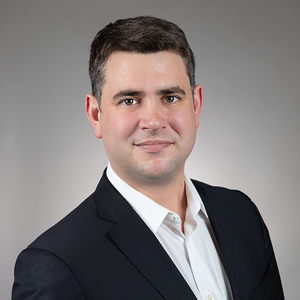
0:09 Well, hello, everyone, and welcome to American Eagle Gold's live summit today hosted by 6. I'm very pleased to introduce our speakers today. We have Anthony Moreau, CEO and Director, and Mark Bradley, VP Exploration. Anthony and Mark are gonna take us through a company presentation, and then we will open the floor for a live Q&A. So as a reminder, you can submit your questions at any time on the right-hand side of the screen, and we'll try to get to them after the presentation.
0:36 And as always, the summit is being recorded and will be available to watch afterwards on CYX.com. But without any further ado, I'll hand it over to you, Anthony, to kick things off. Thank you very much, Dasha, and thank you for everyone for watching this summit slash webinar. I've done a few of these before, and something you might see is if you've watched the previous webinars, you might see some similar content. But given we're new to 6, I thought I'd kind of start from the beginning, explain our story, and then develop the story later on with our future summits. So let me get right to it. So first of all, Mark, thank you very much for joining. Mark Bradley is my partner. He's the VP of exploration at American Eagle Gold. What we have here I believe is a diamond in the rough. You can have a Lamborghini, but quite frankly, if you can't see, it's not really worth anything. And that's the same thing with a great property and a great location such as American Eagle Gold. You can have everything, but if you don't have that VP of exploration, that skilled guy that knows how to find that deposit, you really do have nothing. And I'm really proud to say that we have Mark, and Mark helped find the giant gold rush discovery that's right next door. He knows how to find that discovery, and he's going to tell you all about it a little bit later. But let me tell you more about the ore group, American Eagle Gold, and what we plan to do. So first of all, we're American Eagle Gold, we're focused on finding a giant gold deposit in the Cortez trend within Nevada.
1:58 These are some forward-looking statements. So what are we, Our flagship asset is a Golden Gate asset. It is located right next to Barrick-Newmont's Nevada Gold Mines, JV, in the Carlin trend within the Cortez trend. So we're attached to Newmont and Barrick, 2 biggest miners in the world. I believe that is their future growth coming right out of the Cortez. They discovered Pipeline, they discovered Cortez Hills, then Gold Rush, 315 million plus ounce deposits all right next to each other, all south. 20 years ago when this area was staked, it was 25 kilometers away from pipeline. Now we're just 5 kilometers away from Gold Rush, which again has 15 million ounces of gold. Drilling is underway. We're fully funded through our drilling, and we're very excited to tell our story. The 3 key things to having a successful junior company I believe is location.
2:52 We are in the best location in the world to be looking for gold. I'll get into that very soon. The people. We have Mark Bradley here. He knows how to find that deposit. The other key is you need to drill. The only way you're going to find something is by drilling. We want to put as much investor dollars in the ground as possible. A lot of people tell me there's a lot of different Nevada gold mining companies out there, exploration companies. It's like trying to find a needle in the haystack. I agree with that. But what we do with having the best location, drilling and the best people, we want to make that haystack as small as possible and make that investment decision for investors such as you a little bit easier. So let me tell the story.
3:34 So where are we? We're in Nevada. Nevada is the richest location in the world to be looking for gold. If you want to invest in any property, I don't give stock tips, what I'll tell you is this. You want to be either in Canada, you want to be in Australia, or you want to be in Nevada. And why you want to be there, it is extremely tough to find a gold deposit. You ask any gold miner that. I worked at a big one for a long time. When you find it, you don't want it taken away. And Nevada, of all of them, is probably the best jurisdiction. They're very friendly in terms of permitting. They encourage miners to come there. Not only that, there are many, many, many multimillion-ounce deposits. Now, forget Nevada. Let's focus right into the Carlin area, where we are. It's about the size of Delaware. Right here, they produced 90 million ounces of gold since 1963, 90 million ounces. It's the richest area in the world. This specific little stamp right in Nevada is even richer than what Waterstrand in South Africa, which before the 1980s produced about 90% of the world's gold.
4:35 So Nevada, it's the home of the 3 kings. You might not have heard of American Eagle Gold until now, but you've heard of Newmont, you've heard of Barrick, you've heard of Franco-Nevada Gold. The 3 of those companies together over $110 billion in market cap, and they all started right where America Eagle Gold is starting right now.
4:53 Something else I'm sure everyone's heard of, they've heard of the 49ers, the 49 gold rush. What you may not know is this is the biggest emigration of people in North American history. Over 250,000 people walked across North America looking for riches. They went to Sacramento. The peak of the Sacramento Gold Rush was in 1852. It actually started in 1848, not 49. And the most gold they produced there is 2.5 million ounces, again, in 1852. Why I'm bringing this up is to let you know most of those people, they walked right over Nevada and they walked right over the Carlin area where Golden Gate is. Now why that is important, it goes to show you that not only can all these people miss this gold deposit, but it can kind of show you that a lot of big miners can also miss giant gold deposits which are right next door and also shows you how rich this area of land is. Most people have heard of the 49 Gold Rush, but a lot of people haven't even heard of Carlin, Nevada. That is where American Eagle Gold is.
5:52 Now in terms of this area of the world in Carlin, it was all started in 1961. There's a geologist who worked for Newmont. His name was John Livermore. He wrote, He read some government papers. A 1939 paper he read was the government was looking for invisible gold. They believed invisible gold was somewhere. It wasn't until the 1960s he went with a friend of his, Alan Koop, working for Newmont. He went with a hammer and a 5-pound rock bag, and he took some samples. And what he found there was a giant deposit that became the Carlin Mine. And why all those people before missed this gold, it's very easy. When people are looking for gold, they pan it. This gold is very different and it's very unique. There's only one area of the world where there are Carlin type deposits. It's this specific area of Nevada. And why they missed it is this gold is actually encapsulated by pyrite. And it doesn't sink, so you can't pan for it. It's actually invisible. So it wasn't for another 100 years they actually had the technology to be able to have the geochemical analysis to actually make sure that gold was there.
6:48 And Alan Kube and John Livermore was the right time, right place, and they made that discovery and that's where Newmont really started. And that's where Barrick eventually started too. So that discovery started in 1961, that's really started the Newmont Company, really made it the size it is today. But in 1986, Peter Monk, he decided to buy the Goldstrike mine for $68 million. People laughed at him. It averaged about 40,000 ounces of gold a year. Gold wasn't that high. It had about 600,000 ounces in there. But from a previous acquisition that Barrick made, they accessed a lot of great people. There's a guy named Brian Meeko, and what he saw, he thought there was a big deposit underneath the oxides at Gold Strike. And what they did is they actually drilled a 390-foot hole, and they hit high grade. They drilled another 600 foot hole, hit another high grade, and they actually made that huge discovery that was Gold Strike. It started with 600,000 ounces, now it has 21 million ounces that they've produced or have in reserves.
7:44 And that goes to show you how a big company like Newmont can miss something like Goldstrike. It shows you how important the people are that work for your company. Again that's why I have Mark Bradley with me today. He's going to talk a bit more about the geology. So I talked about Newmont, I talked about Barrick, but now I'm going to talk about Cortez. So what I was talking about earlier, that was on the Carlin trade. Right next to it is the Cortez trend. Cortez trend was staked in the 1960s, and it was usually they were looking for silver. It wasn't until 1991 that Placer Dome and a company called Kennecott drilled a whole area called Pipeline. They made this giant discovery. And that was the start of the Cortez trend boom. They owned this huge area of land. And around that time when they made that discovery in the early to mid-'90s, there was an individual named David Shatterick. David is a member of the board.
8:34 He actually knew John Livermore and was friends with him. That's the person that made the Carlin discovery. What he did is he staked the land just attached to the edge of the Cortez boundaries. And it wasn't valuable back then because it was 25 kilometres away from the pipeline mine. But Dave Shraddock, what he understood is this deposit might not be at service, but he believed it was underground. So it's all about him waiting.
9:00 This just gives you an idea. 1848 is when the Sutter Mill discovery happened, when the 49 gold rush came to be. After another 110 years was the Carlin Mine discovered. And 25 years after that, Pipeline was discovered. We're hoping right now we'll be able to find another huge deposit on American Eagle Gold's property that is the Golden Gate. As you can see here the Cortez area where we are mining it's been producing a lot of gold. It's averaged over 1 million ounces of gold since Pipeline came into production in 1996. So this shows you a good map. This shows you exactly where we are in the area and all the mines that are right next door. So let me just show you something. Right here we have pipeline. In 1991 that's when the Bain Pipeline discovery was made.
9:50 So David Shatter, who's on our board, he staked all this land, and he just waited. He waited 25 years to now. So it was 25 kilometers away back then. But then in 2001, they discovered Cortez Hills, another 50 million ounces. Then another 5 kilometers away from that, they discovered Gold Rush, another 50 million ounces. So whereas they're 25 kilometers away from a 50 million ounce deposit 25 years ago, right now we're just 5 kilometers away, 45-minute walk from the biggest gold mine to come into production in the last 10 years, which is Gold Rush, which, by the way, Mark Bradley didn't just work for the team to discover it, he led the team. So to give you an idea of what the geology is, pipeline is an open pit discovery. There is an erosion window, They found oxides.
10:37 And what happened in this area is that it's like pearls on a string. These deposits get a little bit deeper, but they're still there. So Cortez Hills was discovered another 10 years afterwards, 15-plus million ounces, still 10 million ounces in reserve. It's an open pit underground mine. Gold Rush was the big thing that happened. Gold Rush, they made a virgin underground discovery, completely undercover. So that was the very first discovery in this area that someone found a deposit that was an extension of the oxides. That was 10 years after the Cortez Hills discovery was made. Now Golden Gate is right next door and as you can see it's undercover, it's underground and that's what we're looking for. So we have the proper team in place and we know how to find it. This gives you a further close-up of our area. We combined the Golden Trend and the Garden Gate Mine, we call it the Golden Gate. It's a little tip of the hat to a lot of people in the area who are from the Bay Area. We also call it the Golden Gate because it completely borders the Cortez complex that is Barrick. So all this area that is, all this area here, that's all Barrick land. So we completely border them to the south. But a lot of other properties in Nevada, there's only one that borders the southern part of the Cortez complex that Barrick owns. The Cortez complex is a huge source of growth for Barrick and Newmont moving forward. So I don't think there's many places you want to be on a property that's been next to no drilling below 100 meters. So I'm very excited about that. I know Mark is too.
12:08 So I think picture tells 1000 words. So this is the animation, it's the drawing of our property, but It's hard to really understand how close you are to the other mines. This is an aerial. We've got a plane to fly over. And it really kind of gives you a really good impression of how close we are to Gold Rush, Cortez Hills. And you can see all the different mines right next door. Again, Gold Rush, that's just a 45-minute walk if you want to walk there. We're right next to Behemoths. So we're doing some hypothetical hypothetical long sections here as you can see pipeline which is just to the north of Cortez each mine gets a little bit deeper. So right here with Golden Gate we did some geophysical work and we have some targets in place. And what we're looking for are deposits underneath the overburden and underneath the upper plate rocks.
12:56 So, this is the area that we're looking to drill on the Cortez fault zone. And right now, this is what we're looking to drill on the Red Hill Anticline, which is just south of Gold Rush. So we really get 2 kicks in the can. So if we go back to this slide, why it's so important, the fault zones where Cortez Hills and Pipeline is, the Red Hill Anticline is where Gold Rush is. So we believe we're going to be drilling around here and later next year we'll be drilling right here. Hopefully find a mine that's innocuous to both of those that are to the north operated by Barrick. So Mark will speak further to this but this whole area of our property has never really been drilled. A lot of people put in shallow holes into the ground. There are no deep drill holes. And there's a reason for that. We're so far from the barrack facility. But now that barrack is so close with Gold Rush, there's a reason to be drilling. I believe we can be the future source of their growth.
13:50 Now I'm a big fisherman and to kind of give you a better idea of what's been happening on our property, imagine taking a boat going on the Atlantic Ocean. Now if you're looking for marlin, you won't use a fly fishing rod, it won't hit anything. What you need is a bent butt rod. You hit that bent butt rod, you go 500 meters into the ocean, you can catch that marlin. What we're looking for at Golden Gate specifically is to find that marlin, to find that next gold rush. And we can't go there with a fly fishing rod. We need to go there with a bent butt rod. And our bent butt rod is an L230 drill that will get us 1000 meters underground to intercept that large ore body that we believe is there. So enough about me. Mark's the star of the show. Mark's a geologist. He's the one that's helping us find this discovery. I'm the guy that's trying to help us get the money to make the discovery, to fund the drilling, but Mark is the brains behind it. So just as a quick introduction of Mark.
14:44 Mark is from Elko. He knows the property. He knows the land. He worked for Placer Dome. He worked for Barrick. He didn't just work for the team as I mentioned earlier, he led the team that made the Gold Rush discovery right next door. He has the PDAC 2014 Thayer Lindsley Award for International Mining Discovery. He's extremely skilled and extremely knowledgeable, not just in geology and mining, but specifically carlin-type deposits. He's one of the experts in the world, and very happy to have him here. So, Mark, I'll let you take it away. And maybe just to start, you can talk about this history and why all the mines in the area are trending towards underground deposits and give give the people a bit of a history lesson of this specific area of Nevada. All right, thanks Tony. As Tony mentioned, the trends we see, as illustrated on this slide, are increasing towards underground. You'll notice that at the beginning, starting with the discovery of the Carlin deposit and moving on through the rest of the big deposits, Carlin trend, Gold Quarry,
15:49 the immigrants, South of Turo, These are all big open pit discoveries. And really the 80s was the golden age of open pit carlin deposits. They found lots of them. That was really real emphasis was, obviously because open pit economics are quite simple. They're very profitable. So that was really the focus. Then as we got to the end of the 80s, the golden age of open pit started coming to an end, because all the obvious open pit targets had been hit. Pipeline in 1991 really was the last big pure open pit discovery made, starting with the discovery of Meikle in 1989 and then Turquoise Ridge in 1992. Increasingly the drilling got deeper, we had to start looking for the deep underground deposits because we found all the obvious open pit targets.
16:36 Cortez Hills is an interesting case, it's kind of a composite because the original discovery was made on open pitable mineralization, but there was the upper expression of a large tabular ore body at depth, which is underground, underground mineable. And so from then on, it's pretty much every, all the activity has really been focused on the deep underground deposits. Gold rush in 2011, 4 mile, 4 years after that. And then for us at Golden Gate, the obvious target is going to be in that ground deposit. So obviously, looking for deep targets is challenging. You don't have a nice mineralized outcrop sticking out of the ground that you can sample and say, hey, we've got a drill here. To be able to understand and interpret information at depth, we need to utilize geophysical data.
17:22 In this case, we used 2 major techniques, 2D seismic and CSAMT. 2D seismic is a technique that's of course been used in the oil and gas industry for many years. It's recently been modified for use by mineral exploration because we're looking for what oil and gas people would consider shallow targets, i.e. 1000 meters or less. What seismic does of course is just bounce waves, basically you're looking at bouncing waves, seismic waves, through the ground, and you're looking at reflectance profiles, and those reflectances give you an idea of the types of structures you're looking at, particularly thrusts and folds, which are important for Karlin-type mineralization. CSAMT is an electromagnetic technique, and what that does is look at the relative conductivity of the rocks in the ground, and that in turn gives you a generalized idea of the type of rock you're dealing with, whether it's a conductive rock or resistive rock.
18:20 For us, we're looking for more resistive rocks, which tend to be lower plate carbonate rocks. Those are our main target rocks in the area. And so we look at that contrast in conductivity and resistivity to give us an idea of what the relative depth to the target may be. We also have utilized whatever surface geology we had. It's not a whole lot because we don't have a lot of outcrop exposure, but we were able to do a little bit of mapping and we also utilized historic geochemistry, soil geochemistry. So this is kind of an example profile of CSAMT, this is a section, the southernmost section that we ran this year, to give you an idea of what these resistivity and conductivity profiles look like.
19:06 The hot colors, the magenta, purple, red, yellow, those are conductive rocks, and those tend to be more reflective of the upper plate siliciclastic section or the younger volcanics and gravels. So you can see basically we have a lot of the hotter colors reflecting the cover and then at depth we have a strong resistivity signature which is this cool color. That's raw strong resistivity high especially the fact that it's rooted it looks pretty continuous that suggests that that may represent a lower plate carbonate section. You can see some other resistive rocks here, the more disembodied, they're probably just units within the upper plate, maybe chert beds, things that give you a more resistive signature.
19:53 But when you see those large rooted resistivity highs of depth, that gives you an idea that hey, that could really reflect the lower plate.
20:03 So our exploration program, as I mentioned, utilized all this geophysical data. We pulled up historic soil geochemistry, did a little bit of additional surface mapping. And as a result, we came up with 2 major areas of interest for this year's drill program, the Northern and Southern Cortez targets. These all have various factors. You have CSMT resistivity signatures that suggest that we might have blower plate rocks at 400,500 meters depth. Also the soil geochemistry indicated that we might have leakage anomalies along northeast structures that are cross-cutting this, the target areas. And also our seismic shows a strong belt of folding and thrusting that extends north-northwest throughout through the property and that's the kind of thing, the kind of deformation we really want to see for a Karlin type system. So all those factors combined led us to these 2 target areas to start with.
21:01 The drilling, our main goals for this year, we're going to try and find lower plate carbonate rocks adjacent to the Cortez fault zone. We want to see the kind of structures that are indicative of carlin type mineralization, the low angle folding and thrusting. And of course, we want to see alteration and mineralization characteristic of a Carlin-type system to indicate that, hey, we're in the neighborhood of a large system. While this is going on, we're also going to be continuing our targeting on the eastern portion of the property, which is the extension of the Red Hill Anticline and the Gold Rush area, so that when we finish up this first round of drilling at the west side of Golden Gate, we can just move the rig over and start drilling a hole or 2 on the east side as well, so we can get the drill testing going in that area as well.
21:46 So thank you very much, Mark. I Hope that was helpful for the audience. You know, if you invest in a junior mining company, again, you said location is important, very important, people are important, but also following your plan is very important. I believe America Eagle Gold has done that. We've done it on budget. So, we've hit every target that we wanted to do throughout the year. And you know an investor just asked me on the chat when are you drilling? We are drilling now. We started drilling this week. Mark just got back from site this morning so he could be part of this interview. But we are drilling right now. So that's very exciting news for us. So the big highlights, we got approved for permitting, we started drilling, our major drilling is our drilling contractor. They are very knowledgeable in the area, in fact they're drilling the majority of barracks holes to the north on the Cortez Complex.
22:36 So we're very excited. So finally, the big selling feature of us, again, property. You know, we're attached and on trend of Barrick's future growth pipeline. Cortez Hills, Gold Rush. Everyone knows Barrick and Newmont, 2 biggest miners in the world. What a lot of people don't realize is where a lot of their future growth is coming from, specifically from Nevada. It's right next door to American Eagle Gold. There's no property that's closer to the South, which is on trend, to where they're looking for gold than American Eagle Gold's Golden Gate property. And again, it's the people. It's Mark Bradley. It's having the right person to know how to find those deposits. It has a history of success. So we believe we have location and the people. They're upcalling catalysts are drilling, which is underway right now. And the other thing is marketing.
23:25 A friend always tells me, he goes, listen, you have a great property, great company. I love it. He goes, If you announce an ounce of gold and you're trying to sell it for a dollar at the top of Mount Everest, guess how many ounces you'll be able to sell? 0. So my job right now is to get out there in the public and let everyone know about the opportunity,
23:41 about the fact that we're drilling, about letting them know about American Eagle Gold. We're very excited about the prospects, very excited about the future. We're doing all the right work with the right people. So thank you very much for watching this presentation. I encourage you to go on our website. Please send me an email. We have a link to our calendar that I believe Dash or our Romeo have shared. I'm happy to speak with any potential investor or current investor and always happy to talk about our story. So thank you very much for listening. Great. Thank you so much, Anthony and Mark. We're going to open the floor to attendee questions. So If you do have a question, feel free to submit them now. I have a question for you, Mark. It's actually the same question that Jeremy has here. You work for a number of large companies, such as Barrick and Placer Dome. What convinced you to join a smaller company like American Eagle Gold?
24:32 There are a couple aspects. 1, of course, American Eagle was working in what I consider my neighborhood. I'd spent 15, 20 years at Cortez, know the geology very well. They're stepping out right next door to where I'd spent a large part of my career working. So I was very comfortable with the environment and the kind of targeting needed. The other thing about working for a junior, sometimes you kind of miss having the big resources that you're beck and call. You have the land legal department, you have the permitting department, environmental, all these guys that, the resources in-house that you don't, you have to source out when you're with a junior, you have to find other places. On the other hand, you have an incredible freedom of action with a junior.
25:16 Working for, Anybody who works for a major corporation knows that you put something together, you put your targets together, then it has to go through the corporate review, you have to decide whether it fits their priorities, whether it's going to meet, gets within the global pipeline, how's the rank in there? If it doesn't rank high enough, it gets booted out without a second thought. So that can get very frustrating at times. I have a little anecdote. When I started out in business, I knew a lot of guys from Bear Creek Mining, which used to be the exploration of Kennecott. And these guys looked at a lot of good stuff. Being in the early 60s, you're in the Carlin trend. They were looking at a lot of good properties. They submitted to Kennecott management and the attitude was always, well, do we want to spend money on this or put another bench in at Bingham Canyon? And the decision was always putting in another bench at Bingham Canyon. So that's what you deal with with a major.
26:06 And so juniors, it's kind of nice to be able to go out and just generate stuff. Absolutely, thank you. And what similarities do you see in Golden Gate that you saw in Gold Rush next door before you made the discovery? Well, it's the cover is obviously pretty similar. We have the upper plate and the gravel cover that is characteristic of most of Gold Rush. And we also, the lower plate section is exposed only 3 kilometers north of our property, the windows right there, and the section there is identical and there's no reason to assume that's going to be any different at depth or on our property. It should exhibit the same characteristics.
26:49 And particularly the seismic show, a very similar pattern of holding and thrusting that we've seen at Gold Rush. So that's very encouraging. Great. Thank you. We have a few questions here from Kyle. He's asking, how much do you have in Treasury? What is your corporate burn rate and what is your drilling program for 2022? So right now in Treasury we have a little bit under $2 million. Corporate burn rate is really a reflection of our drilling. Drilling is the biggest cost. So right now our budget for drilling is between 1 and 1.3 million. So even after a drilling campaign, we're going to leave ourselves with around $600,000 buffer, plus our treasury, which has OreFinder shares. We have about 5 million OreFinder shares. So we have quite a bit of runway post drilling and after we're drilling we hope to have some good results and we'll have a lot of runway ahead of us.
27:41 Absolutely. Thank you. And so Mark you're currently drilling targets on the Cortex fault zone, if there's a deposit there, will it be more similar to the Cortez hills or Gold Rush? And when do you plan on drilling the Red Hill Anticline?
27:57 Okay, I think in this case, what we're not probably not going to see is a big near vertical breccia pipe like we saw at Cortez Hills. That was a very unique feature of that deposit. What we're probably going to find is going to be much more similar to the deep south zone at Cortez Hills or Gold Rush, which is a large tabular, what we call a stratiform type deposit where it's basically mimicking the bedding formations there. That's the likeliest type of tar right we're going to see. As I mentioned in our presentation, we're going to be advancing our targeting on the east part of the property while we're drilling the west. And our hope is that by the time we finish up the holes in the west, we'll have our targets in the line and be able to just move the rig right over and get a couple of holes in on that east side of property.
28:46 Dan is asking, is the land south of your property staked and is there any additional staking planned? Yes, the property to the south is all staked up. It's of course, given the area, it's not surprising that everybody's gotten in there and grabbed as much as they could. So there really isn't a lot of open ground left to be able to cover. Everything to the north and east of us is already taken by Nevada gold mines. The area to the south of us is staked up and the area to the west, There's some open ground, but you're on the down drop side of the Cortez Falls. So you're looking at really deep pediment there. And the targets would be extremely deep and hard to find. We have, you know, we have over 7,000 acres of land. We just went bird off with 3 new drill holes.
29:31 Each drill hole is about 3 inches in diameter. So we have a lot of areas where we have to drill on our property. And one of the questions I always get is, if your property is so great, why doesn't Barrick buy it if you're directly to the South? Well, it's probably the same answer I would give to whoever just asked that question. What Barrick told us is if they bought every property just south of them, they'd probably end up in Mexico. And quite frankly, what I also heard is the area that's so rich where we are right now, It's kind of a blessing and a curse for us, because everywhere that Barrick drills, as you can see, from Pipeline to Cortez Hills to Gold Rush, which started with the Red Hill and then went to Meadow, then to Crow's and they fell 4 miles, everything turns up with gold. So you work for a big miner, your issue really isn't your money, it's your people.
30:17 And the best cost of their people is really to be drilling step-out holes, brownfield exploration to increase the size of their resource. But that creates an opportunity for investors in American Eagle Gold and other similar companies. We are essentially the arm of Barrick's Greenfield. So if we make a discovery, we are really torqued and we have a possibility for eventual liquidity event further down the road. But we are essentially doing the exploration for the majors which are right next door. Great, thank you. And so I guess why did it take 50 years for companies to begin aggressively drilling deep underground in the Cortez trend? Okay, yeah, well you have to remember that from the early 60s to 1991, Cortez was a backwater mining district. Nobody cared much about it. There was a few little open pit operations.
31:10 The plaster dome had come in, taken over the Cortez joint venture. They were losing money hand or fist at Cortez. They were trying to mine refractory ore in little pit in Gold Acres, it was eating them alive, and there just wasn't a lot of interest. Then basically, fortuitously, they hit the pipeline discovery, that was really the first indication, hey, we got the potential for giant deposits here. And so the focus, as I mentioned, throughout the 80s and early 90s, the focus was big open pit discoveries. And really that's, Placer in particular, liked open pit. That's what they wanted to find. And the other factor that went into that is Placer Dome was not comfortable with dealing with refractory ores. They liked oxide, and Pipeline is a big, high-grade oxide deposit, which was great for them. But as a result, their focus really was, we want to find more oxide.
31:58 As I put it, they wanted brown rock, they didn't want black rock, because they couldn't handle the processing for it. So, and most of your underground discoveries are Blackrock. So, they just weren't focused on it. It wasn't until Barrick took over in 2005 that really the company came in that wasn't afraid of refractory ore. They were used to daily oil all the time. So that's when the folks really changed to Cortez. Yeah, and that kind of circles back to the story I was telling earlier. If you really look at why Barrick started, you know, they took over gold strike and they did mine deep but really the key to that was they were willing to mine and process refractory ore. So when they did the acquisition of CanFlow in the 80s, they acquired a mine called Merkur which was in Utah and they actually had refractory ore there So they brought up a lot of the technology and the people to actually figure out how the heck they're going to process the ore that was at Gold Strike. So that opened up a huge can of worms, a huge opportunity, allowed them to increase their resource from 600,000 ounces to over 21 million ounces.
33:01 Yeah, actually a follow-up question to your point, Anthony. Sean is asking, will Barrick be interested even if you find a discovery? You've suggested that they have existing drill targets already and could expand production. What will make this attractive? Is Barrick the only real potential acquirer? I think we want to take it 1 step at a time here. You know, for us we want to get our permits. We got them. Another one was just trying to get a driller. Again, talking about why Barrick hasn't drilled a lot of greenfield where we are. The same thing is why it was so tough to get a driller. It's so rich in the area. So we got our driller, we got major drilling, has a lot of experience. Our focus right now, and I think we want to keep Mark's focus, is be at site, make sure we increase our probability of success for these drill holes.
33:48 Once we make that discovery I think it's a good problem to have is who's going to buy us out if someone is but right now we want to make that initial discovery, build that resource and take it 1 step at a time. Dan's asking when do you anticipate having an OTC listing? So to get an OTC listing, we went public in the end of May, 2021. You have to be trading for at least 4 months and after that it takes another 4 months. So we wanted to wait till we got drilling underway, till we begin our OTC listing process. So we'll be starting that process in probably January or February. So I'm anticipating probably a mid-year 2022 OTC QB listing. Awesome. Thank you. Jerry's asking, when do you plan on drilling the Red Hill Anticlimb? Okay, as I mentioned before, we will be advancing our targeting through the winter while we're drilling the west side.
34:40 And so the plan is hopefully in first quarter, probably later first quarter next year, when we wrap up the drilling on the west side, we'll have sufficient targeting done to be able to move the drill rig over and get a couple holes in on that east side. We want to be careful about targeting the east side, hasn't been had a lot of advanced work done. There's several drill holes, historic drill holes there, but I think there's some additional geophysics and modeling work that we could do that really enhance our targeting there instead of just wildcatting holes. So I wanna be, make sure we have a good target lined up before we move the rig over. Great, thank you. We have a question that just came in from Stéphane.
35:26 Is it possible that Eric Sprott invests in American Eagle? I can't speak to that. I don't know Eric. I know he has invested in some of our sister companies through the ore group like Ore Finders, like Mistango, but I haven't had a conversation with Eric yet. Love to have him as an investor. I was still an early stage explorer. Someone just asked me online what our options are in terms of future funding. As I mentioned earlier, we have enough funds to last us through this drill program and last us through 2022 without any further drilling. But we're always on the lookout. We're starting to talk to potential strategic investors. That's either institutional funds or other mining companies that want to have a piece of American Eagle Gold. But I believe we have a lot of time to make that decision. And again, our focus right now is for our investors and to hit that ore deposit that we believe is underneath the Golden Gate property.
36:25 Thank you. Dale is saying that New Legacies south of your project had poor drill results and he's asking why are your projects in the north any better? Well I guess for 1 we're obviously a lot closer to the big ore deposits. I mean New Legacy's properties are an additional 10 to 12 kilometers south all the way across West Pine Valley which has been extended quite a bit. So obviously, we've got proximity in our favor. Another factor, I think, and this is just my personal geologic bias, but they are sitting right on the northern Nevada Rift, which is a more, say, 16, 17 million year old feature. Lots of extension on it, been lots of pull apart, attenuation, and I have a feeling a lot of things got disrupted that it's hard to put together, as New Legacy has found out, it's hard to put together continuous mineralization because I think things just got chopped up so bad by the late extension.
37:23 Where we're at, we didn't get that kind of impact. We're actually on the other side of the river, well away from that event. Another problem with New Legacies is that it was difficult. They had a lot of mixed signal because they had, presumably had a Carlin type event, but then they had some low sulfidation of a thermal, which was that 16 to 17 year old event going on. And that there, it's hard to kind of distinguish between the 2 systems, can be very complex. So I think once again, I think they're just dealing with a more complicated situation over there. It's difficult to put the target together. Just to add a quick anecdote, My uncle's a geologist and what he always says, he always used to say to me, big systems hanging out with big systems. So the closer you are to those pearls on a string, which are the Cortez Barracks deposits, the better chance you have of finding something else.
38:13 And also, quite frankly, the closer you are to the infrastructure, the better. So no one can be quite closer than we are. Excellent. Okay, well, in closing, besides drilling, what other catalysts do you have ahead? So yeah, drilling right now, that's a big catalyst. Again, I mentioned marketing, it's just about getting the word out there, getting some buy orders to go through the sell orders and get that stock up. Another one is waiting for assay results. So the assay results, Mark, I believe it's about 8 weeks following once they go out. I believe the assays are coming out quite delayed, so that's another big catalyst. Mark? Yeah, I'd say that seems to be industry-wide right now, is that it's 6 to 8 weeks to get assays. And you can try rushing, but it doesn't do any good because everybody else is trying to rush as well so you still end up with a big delay.
39:04 So that's that lag time seems to be pretty consistent. So with Assey, it comes results and hopefully that is a big catalyst down the road. Other potential ones, strategic partnership with other companies or funds or making an acquisition. I gotta be honest and Mark can say this, we've looked at over 100 different projects and for us in a Mark Cap size, it's making the best purchase we can. We need something with meat on the bone, but we wanna be creative and we wanna have a creative acquisition for our investors. So we are very careful when we look at different properties. We've looked at a lot of things, but we want to make the right decision when we do it. Absolutely. Well, thank you so much, Anthony and Mark, for taking us through the presentation and the live Q&A. I also want to thank everyone who joined us today and submitted questions.
39:51 If you do think of another question after the summit or want to continue the conversation with American Eagle Gold, feel free to book a meeting. You can see the calendar link under the blue sticky note in the chat. There also obviously is their contact information on the slide here. So feel free to reach out to them directly if you have any questions. And they'll be happy to follow up with you. You can also find more information on their website, AmericanEagleGold.ca. And like I said, this has been recorded so you can re-watch it afterwards. But before we close out, I'll just pass it back to you, Anthony, with any final remarks. So I wanna thank you, 6, for hosting this. Thank you for all the investors for watching it. Your time is valuable, so I appreciate you lending your 40 minutes. And, Mark, thanks for jumping on and being that expert to talk about the geology. So just to follow up, people, location. Our stock ticker is AE. We traded on the TSX Venture. And I'm always available to speak to any potential investor that wants to discuss more about her story. I have no questions to hide from.
40:51 I'm an open book. We're very excited about her prospects, and we are drilling now on the Cortez trend, symbol AE, American Eagle Gold. Thank you very much for watching. Great, thank you everyone. Have a great rest of your day. Thank you.