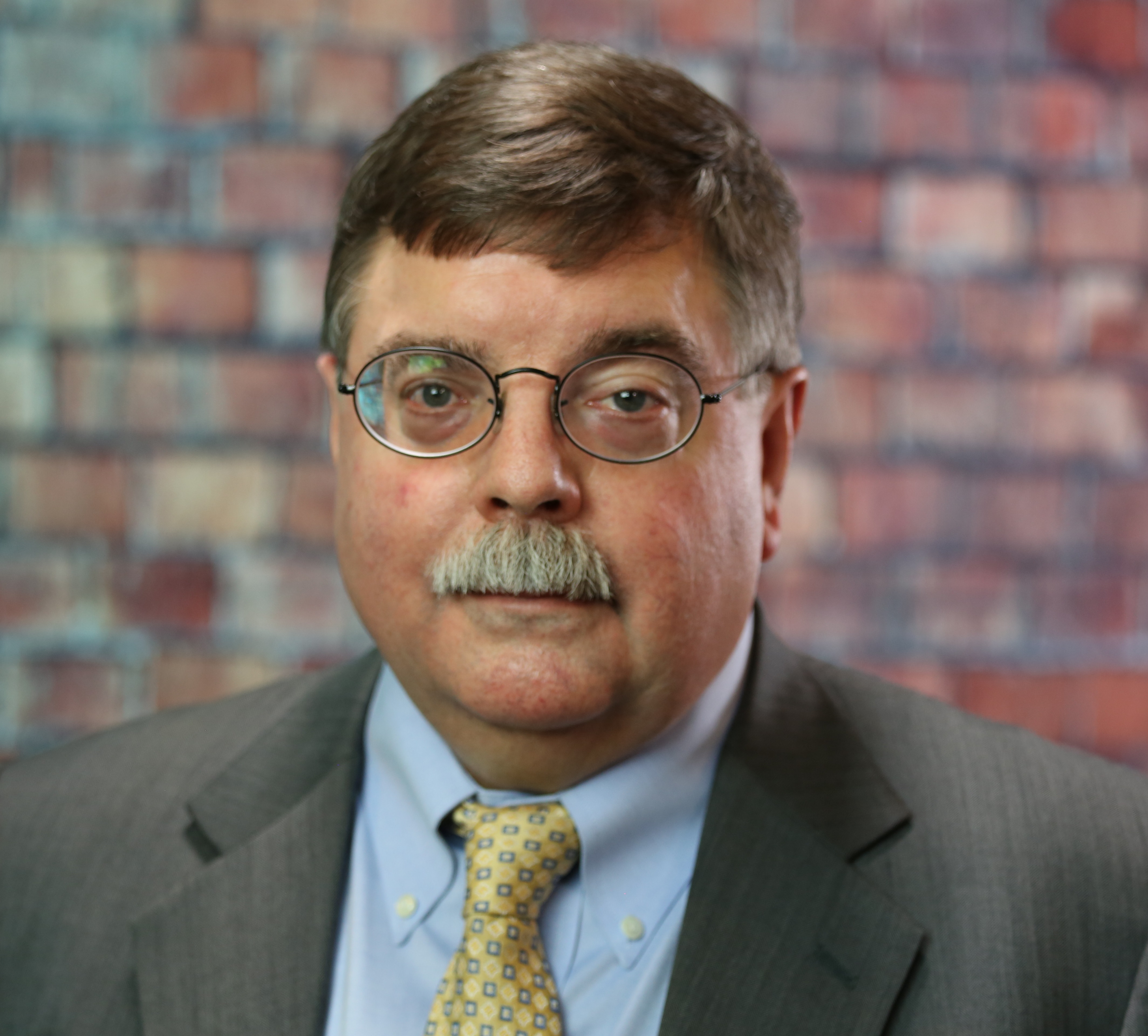
Stephen Rentschler
CEO & Director at Nevada Lithium
Replay available
Join us for a great event!
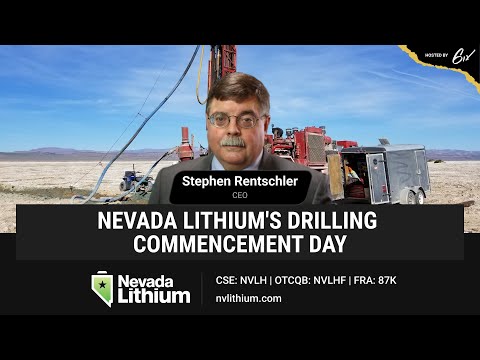
On 6ix: 6ix.com/event/nevada-lithiums-drilling-commencement-day
Automated transcript · Written by software from the replay's audio. It can mishear names and figures; the replay is the record.
0:08 Hello everyone and welcome to the Nevada Lithium Live Summit hosted by 6. I am pleased to introduce the speaker for today, Stephen Rechler, the CEO. Steve will walk us through a brief company presentation and talk about the drill program that has recently begun at their 100% owned Bonnie Clare project in Nevada. After that, we'll be accepting questions. As a reminder, you can submit your questions in the chat at any point during the presentation.
0:32 As always, the summit is being recorded and will be available to watch on six.com afterwards. Without further ado, I'd like to hand things over to you, Steve, so that we can get started. Max, thanks a lot. Welcome to everybody today. I appreciate you taking the time to listen to our story and listen to the update about what we're doing out in the field at Bonnie Clare. What I'd like to do first is just go through the presentation very quickly. Max is gonna help me go through the pages. Just to give those of you who are new to the story a bit of a background on the company. In many ways we're a very new company because of a transformative acquisition, which is essentially the remaining half of Bonnie Claire that we previously didn't have. And with a couple of financings that we just did, we're in really a very good position. We have a lot of news flow coming up.
1:24 We have a tremendous asset in arguably the greatest location in the world if you're gonna develop a mine. So there's a lot of things, a lot of moving pieces. We're going to start to be talking about them more and more. So you're going to see me doing different types of events like this, news releases, everything, just to try to get as many eyeballs onto the story as we can, as we really start to accelerate the work program. So if you could take it to pass the disclaimers, Max, that would be great. You know, what are we about at Nevada Lithium? Let me give you really the highlights. First of all, we're an advanced exploration play, essentially a development play, looking for lithium in Nevada.
2:10 We are not a hard rock story, so we're not pegmatite, We're not brine, we're sedimentary, also known as a clay type of a material. This is what I call sort of the third generation of the lithium deposits that are going to be developed. These are very expansive deposits, And I think you're going to see that Nevada is going to turn out to be essentially the centerpiece of the U.S. Lithium industry going forward. This is all federal land that we're on out here. Over 75% of Nevada is owned by the U.S. Government. So there's a very well understood permitting process. We're going through all of this, but the way that I think investors should think about these types of deposits is by and large, large footprints tend to be a little bit lower in terms of grades compared to the pegmentites.
3:04 But these, I believe, are gonna have the full backing of the United States government going forward. Now we finished a preliminary economic assessment in late fall of 2021 at a very low lithium price of $13,400 a ton. Obviously lithium prices have been all over the place subsequent to that as high as $80,000, $90,000 a ton, somewhere back at $30,000, $40,000 a ton. The NPV at 13,000 was already 1.5 billion US dollars. This is an 8% discount rate after tax. When you start getting to $30,000, $40,000 a ton, this is a $3 or $4 billion type of project. This is a real needle mover for all of the big mining houses out there.
3:51 So you know we're going to be looking at 32,000 tons of lithium carbonate for essentially 40 years and there's plenty of room to upscale this So we'll talk about that. You know we have an 18.1 million ton resource right now. It's all inferred. We've been called the third largest sedimentary slash clay deposit globally by mining.com. We've always known that we were either the 1st or the 2nd in North America. However, there's a tremendous amount of upside up here. We've done further scientific work. You know, the reality is 1 is enough enough. We're right now pursuing our preliminary feasibility study as we complete all the holes that are necessary.
4:36 I say there's a good chance that, you know, this resource could get even bigger, but of course, the main thing that we're doing as we do the PFS work is we're upgrading the confidence from inferred to measured and indicated. But Bonnyclare is 1.5 times the size of Manhattan Island, sorry 1.25 times. It's just it's massive on the order of 10 kilometers by 10 kilometers that kind of thing. It literally takes you 30 minutes to get from one end to the other when you're on the drill road. There's plenty more to be found here, but I would submit that we really have all that we would need. However, there's a lot of optionality to this, and I will tell you more about that as we progress. We have advanced metallurgy. This is something that I think a lot of investors who are sort of new to mining don't appreciate.
5:23 It's particularly important with the battery metals suite. And that's because you have such low tolerances of what you can put into these that, you know, all of the deleterious elements that can crop up. It's never really a sure thing until you actually do it that you can produce a battery grade material. And back in February, we did produce that. So we hit 2 of the spec sheets of the 2 of the largest actually producers in the world. So we're very confident that our lithium carbonate could go into batteries. And right now we're in the process of proving that we can do lithium hydroxide. One of the interesting things that's happened is, as we've progressed with the flow sheet for hydroxide, is that your precursor is actually lithium carbonate.
6:10 And what we've done is we've started to upscale the way in which we produce the lithium carbonate. And this is something that can often cause a lot of problems in projects when you start to upscale these complicated chemical processes. And everything's held together very well with us. So we're very happy. Hazen Research does our metallurgical work. They're independent of us out in Colorado, very well known. So we're going to have more news flow to talk about that. One of the neat things about Bonnie Clare is that we have an ESG profile that we think is really second to none right now. And it's got a couple of different facets that I'll talk about. The first of them is the borehole mining technique that has been put forward in the preliminary economic assumptions.
6:58 This is basically a large diameter water jet type of a drilling. This is used by Cameco in a variation at Cigar Lake. It's used for basically hydraulic recovery of certain things in Chile, all these kinds of things. And the reason that it works is because we have a very soft material. This is not, again, hard rock. It's not very competent. And essentially, if you think about taking a garden hose and striking it into your soil, and the sides of a hole will slough off, well that slurry is what we want to pump all the way back up into a plant. And as we prove that this works, it would be a very elegant solution because it would really minimize the surface impact. And that is something that I could tell you all the end users, right? And when I say end users, I'm really talking about the electric vehicle car makers.
7:53 Those are the ones who they want to take all these ESG aspects and they put it through basically to their customers. That's a big one that we have right now. Another big one that we have is the recovery that we use, our recovery method which does not involve sulfuric acid. You know, typically when you hear about sulfuric acid, the first thing that people– comes to people's minds is acetalenes. What we use is basically a heat and a reagent process. So we, we, it's called calcination. We heat up our material and we add basically sodium sulfate. This is salt. We put that together and at relatively low temperatures, we, we wash out the lithium with warm water. That's important because it leaves a lot of those deleterious elements behind that I told you about. From that point on, then it becomes very standard stuff. We put it through some ion exchange types of things and keep taking out the stuff that we don't want, and then we're left with a very pure material. So no sulfuric acid is another thing that sets us apart from others.
8:54 And the third thing I would mention is our location. Now, again, we're in Nevada, we're about 2 hours to the Northwest of Las Vegas, down in the southwest corner of Nevada. We have our own valley. We're in our own drainage basin. And you know, if you're in this area of the world, you'll see there's nothing but solar reflectors. There's windmills. Hoover Dam is about 4 hours away on the other side of Vegas and that supplies a tremendous amount of hydropower to the area. So we have a great profile from from the alternative energy aspect as well. All of those things add up to something that makes us very appealing to those car users. And the last thing I think I'll talk about on this page is the jurisdiction. Nevada is parentally one of the top 3.
9:43 The Fraser Institute, which basically is a survey that tells the mining industry, hey, what do you think about your jurisdiction? Well, they just came back for last year, 2022, and Nevada was number 1. It was number 1 3 years prior to that. And then I think in between it was number 2 or 3. But the reality is it's in one of the best places on earth that you could ever want to develop a mine. You know we don't have to worry about nationalization. We don't have to worry about you know a lot of crazy stuff that that happens other areas of the world. And you see this in many different areas, and particularly when it comes to the value add. And I mean, and this has been going on a long time. You see a lot of countries don't necessarily want to take, you know, their raw materials and send a concentrate out someplace else to have the value of that material upgraded.
10:31 You know, they want to keep it in house. Well, again, the US isn't like that. You see all the battery factories that are starting to emerge in the US where we could send our material to. And also we want to produce a finished material either a carbonate or hopefully soon a hydroxide as well, either or, that we could send to those battery plants. And obviously, the context of this has really changed in our favor since the introduction of the Inflation Reduction Act here in the US, which gives an electric vehicle tax credit, you know, of I think it's 37 500 dollars, 3750 dollars, sorry, for every car that uses, you know, domestically produced lithium, as long as basically you're a friendly country to the US.
11:18 And that stuff is gonna get passed essentially right through the car companies. They jack up the prices and that gives them more money to basically address issues like they face with the lithium industry in general, which I think is a good point for me to sort of advance here and just give you a macro look at the lithium industry. So Max, if you could take us 1 step forward here, I think I'll just do a quick thing. Capital structure, I'm sorry. Here's the second lithium revolution right now. Here's what I think is the most important thing to think about. I, first of all, I've been involved with natural resources investing for 30 years, and I've never seen a mismatch in demanded supply over the course of the entire thing.
12:05 Sometimes I think that critical materials from a couple of years ago, particularly when South Africa was gonna come to the fore and produce all the magnet metals and things like that. You know, the demand never really seemed to be quite as solidified as what we've clearly seen right here with electric vehicles. And why is that important? Well, supply and demand dictates that if you have one more unit of demand than you have a supply, there's an upward pressure on price. Here we have a massive mismatch in terms of the demand that's coming down the pike. You know, All the analysts that I see are starting to raise the basically the gap between demand and supply going forward as you start to get out to later into the end of this decade.
13:03 Integration or market, I guess I would say the market, not the dominance, but the way that the car companies are starting to sell EVs as a whole is starting to really take hold. And it's basically cast in stone, particularly in the US. It's a consequence of again, all these EV tax credits and the car companies are pulling out their tooling for internal combustion engines. So basically there's no way to go back. At the same time, none of this affects the supply constraints that will affect all of natural resources, and frankly, have been going forward and increasing for all commodities. So as you're making demand getting larger and you're really not doing anything to hasten supply, you have this gap continue to emerge. And the only way that you can really address it is to rationale demand, and that's through price.
14:00 So why is that important? Well, a rising lithium price is what's going to help, I would argue, almost all projects, everything else being equal going forward. And it's going to help projects like Bon and Claire get across the finish line. And it's going to help them get across the finish line, I would argue, at an even higher value than what we're seeing now, or frankly, what a lot of people think the lithium price is going to be in the future. You know, somehow the industry has to come up with an incentive cost that makes sense to get all of these projects done, because that's the only way that the lithium demand is going to be supplied. So all in all, what I would tell investors, particularly new investors in the natural resource spaces, I find it hard to believe that we're ever going to find a background, basically at the commodity level, that's as beneficial to individual companies like ours as it is now.
14:56 Max, you want to take us forward here for another couple of... Okay, this is just everything that I was saying previously about how the EV companies are committed to going to EV, ripping out their ICEs, next page. This is something that I do touch on. So what's happening is that car companies are starting to realize that they need to talk with producers about getting lithium. Now, I've talked about this, I've made a number of videos in the past, I've alluded to it, and there are things that I would like to say, but I can't, because as you probably can imagine, we've signed NDAs with end users of lithium, and therefore can't even mention who they are.
15:41 One of the things that I can tell you though, is that you have people whose jobs normally are not to have to be natural resource developers. A car global purchasing agent for aluminum, as an example, has never had a situation where he actually had a worry, or she had a worry, about the supply of aluminum. This is an entirely different thing. And what I tell these people is, essentially they have to start thinking like, they're portfolio managers. You know, this is not, however, a zero-sum game where, you know, I win and they lose. They need to come to earlier stage projects like ours to help us get the funding so that we can continue to develop these projects on schedule because the most important thing to these end users is actually not the price of the lithium. It's whether or not they can get it at all. And secondarily, it would be, when can they get that lithium? Because that's how they're setting up basically their mode of thinking. They're starting at the near-term projects. So right now, they'd be looking at 24, 25.
16:50 And we're looking at basically doing first production somewhere around 20 30 maybe 20 29 if everything goes well. So the way they address it is well we'll start near term and then come out Now I've been talking for over a year and a half to many of these people telling them that a lot of these near term projects are not going to basically pan out as elegantly as they think and that there will be a compression between when these earlier stage projects, particularly the DLEs that they're looking at, and projects like ours will come on. And as that time starts to compress, they're starting to realize more and more that they have to think about essentially all of these projects simultaneously. And hence, that's why I say they've got to be, they've got to start thinking about being a portfolio manager, and not just invest in projects like ours, but projects, you know, that will help them fill the supply gap. Because what in fact is the opportunity cost if you can't put a car into the showroom.
17:50 So I'm talking with these people who, in my opinion, will give us the biggest bang for the buck for offtake. It's a very slow process. It's like turning battleships around, but I will tell you it's an incremental type of a thing where I just I continue to educate people and I think that we're making headway. And as you see some other projects come on and I'm thinking particular of you know some of the DLE projects in California you may have read about recently, you know, the commercial, the time for commercial production is starting to come closer to us and that is making end users start to notice us more. The traditional time that we would have serious discussions with end users is around completion of PFS. However, I've been trying very hard to get them to come and talk to us at the PEA level, and I'm starting to have success. So, even though I can't give you all the details about that, I can assure you that we are making progress. We continue actually to talk to more and more people as we go through time and they see evidence of these projects not coming on in the time frame that they first thought.
18:56 Max, could we go to the next thing here? Okay, here just is a quick shot again of what I was telling you about, about the size of Bonnie Clare. And also, if you look at that oval in there, the area of interest, this is where we're basically doing our PFS upgrade drilling. And then you look at that within the context of the entire footprint. Again 1.25 times the size of Manhattan Island. And you'll see that stripe along the top right on the diagonal, that's Route 95. That's an interstate in the US. If you've never been here, that's anywhere from 2 to 4 lanes and McAdam roads going at 70 miles an hour, which is I don't know, 115 kilometers an hour with power lines that literally go right over the property. So from an infrastructure perspective, it really can't get any better than this.
19:46 One of the other things I've mentioned at this point in time is as we progress along with PFS drilling, and again, that's our main goal, I bring out the optionality of what we're doing here with regards to a Brian exploration program. And I want to be very clear about what this is because- it's an additive type of the thing it is not supplanting our PFS program. We just recently had brought on a new set of shareholders from with our last financing. Who's very interested in what we had told them about some of the previous work we had done looking for for brine. Our previous JV partners had done a Magneto-Telerk survey. They'd also done some I would say basic testing for brines but essentially didn't have the money to put to this in a way that we would like to have done it.
20:36 And this new shareholder group had said, hey, you know what, we'd like to dedicate some money to this and look at very methodically. And we agreed, says, you know, because we wanna know as well, because again, with the footprint, the size of what we have, we think that there's potentially a lot of different types of things we could do. We will start to talk more about that in the course of the next coming months. And hopefully by the end of the year, we'll know really what we're gonna be doing there as we go forward with at least 1 dedicated drill hole to look for brine. But what we're doing right now is we're taking the first of our 2 holes that we're going down for PFS, and we're going to a deeper depth than we had originally planned, and the reason that we're doing this is to get additional scientific information for the BRIND program.
21:26 We'll be talking about that more as we go forward, But I think that's probably enough. You can see here, we have a very big tiger by the tail here with Bonnie Clare, and there's a lot of things that we can do here. Max, next one. The PEA highlights, I mentioned them very quickly at the beginning, but it helps when you see it. So you see that I think that's $30,000. Yes, $30,000 LCE. This project has got almost a $6 billion market cap. We have a very, I think, a very low cost upfront CapEx. We're seeing an order of $550 million US. But there was a very large contingency, 30% put into that.
22:15 What I'll tell you is when you think about projects like ours, most of it is the chemical plant at the back end. There's no doubt in my mind that this could be financed very easily when the time comes. We've seen already the Department of Energy in the US is willing to get involved with loans for Thacker when the time comes, et cetera. And I honestly believe this will be no different. So this is not a $2 billion project in Serbia or anything like this. This is a very manageable project that any even mid-scale, I think, mining house could take on. So we have a lot of optionality, a lot of leverage to lithium prices, which I would argue as an investor, you always wanna see. Again, this is quite big enough to move the needle for any mining house, any investment fund, etc.
23:03 Okay, could I have the next slide? Thanks. This just shows you sort of how everything's starting to come out in Nevada, and this doesn't have anywhere near all the smaller projects that are starting to come. But you'll see that we're off, even though on the map it looks like we're right next to him. You know when you start to get up- farther to the northwest at silver peak that's where all the moral is there a number of brine. Projects that are starting to be developed up in that area. You know what we're good hour plus away and we're again in our own drainage basin. We actually have we think water surplus in our basin and we're starting now to work on the mass balances and all those types of things so we can address water rights etc. But we were not going to be competing with all of these projects in other places for water which is going to be a very good thing for us.
23:54 I just think you're going to continue to see more and more and I think you're going to see an infrastructure developed around sort of like the the way they do it in the Pilbara or the BC coal fields, things like that, because this is just such a massive area that is going to have such massive projects. Can we go forward, please, Max? Borehole mining, I'll just elaborate a little bit more, because hopefully you can see it here. But just imagine again a vertical well going down, starting to rotate when it gets to depth, and it's high pressure water that comes out of the side. And as it spins, it erodes the sides of the hole. And that material being very soft, just slumps down to the bottom of the hole. And we pump it literally, it's like pumping the mud, all the way back up through pipes and into the chemical plant. Go through some other processes in terms of sorting out the size material because at Bonny Clair all of the lithium is in the fines or the smaller particles so we can get rid of the larger particles, send them back down the hole.
24:58 We're actually going to know a lot more about what we can do with borehole mining over the course of the next couple of months. One of the neat things that the engineers are telling me is because of the way this material crumbles, we may be able to actually induce block caving, which if you're familiar with some of the largest mining projects in the world like Grasberg at the underground, et cetera, just tremendous efficiencies if you could do that. And essentially you would, instead of using a vertical hole, you would go in on a horizontal hole, you would start the erosion process and the material above would start to cave in, come down again into the perforated pipe where we can pump it out and take it back out. That would require even fewer holes and fewer or less surface disturbance. So I'm giving you the very latest of the thinking. That doesn't mean it's gonna be borne out in the end, But those are the types of things that the engineers are looking at now. And obviously, we'll report more about that as we go forward.
25:55 Max, we have the next slide. The management team has changed a bit since we did an amalgamation, which was last couple of months that got us the last 50% of Bonnie Clare. And I would say the way to think about this here now is Richard Kern, who is CEO of Iconic Minerals, our previous JV partner, has now come on as our COO. You know, Richard has over 10 years of experience with the property, so his knowledge base is obviously invaluable. Jeff Wilson, who was our director before, has come on as VPX, and he's, you know, doctor in geology, structural geology, worked with the different exchanges, you know, knows what all the different nuances are. This is a very, very powerful team along with Darren Smith, who many of you know from Patriot Battery Metals and has been with the company essentially since we came public.
26:52 Could we go next to the board? Board of Directors has been reconstituted. A number of The names are the same. I would mention Jerry Wang, who's come on with Power 1 Group. This has been a group of investors, been very supportive of us, essentially, since the beginning. Scott Eldridge has been a director of Nevada Lithium since the beginning. Kator has been with Iconic Minerals since the beginning. So, you know, what we hope to announce soon is the addition of 0.167 member as soon as we get all the paperwork together who will be from the new shareholder group that we brought in. Next one. I'll finish quickly. The way I look about the path to shareholder value creation is, well, I think there's multi-paths.
27:43 And we'll take whichever 1 gives us the most value at the proper time. Now, obviously, I showed you the net present value from the PEA. And obviously, that's going to change as we start to refine it through PFS and then feasibility study. But the one thing that I'll tell you is that when you have the leverage to the lithium price the way that we do, that is going to basically erase a lot of other increases that we know are going to happen. It's an inflationary world out there, everything in terms of costs and services is going up. However, we also think that we could take down the cost basically by coming up with byproduct revenues. And one of those, I think, is going to be sulfate or potash fertilizer, which we're going to address after the lithium hydroxide.
28:32 Between that and looking at optimization of the reagent costs, which are already a quarter of our operating costs, we know that we can knock the operating cost numbers down. So I'm really not concerned about this. In my opinion, this is going to continue to be a multi-billion dollar net present value that arguably we could build and then we should have the market cap of Nevada lithium reach net present value to reflect that. Alternatively, somewhere down the road here in 2 to 3 years, somewhere between, you know, I would argue preliminary feasibility and feasibility, we could take a number of different paths in terms of getting a mining house involved at a higher valuation, selling offtake, selling different parts of offtake to different people. Not enough that would knock the optionality or basically the leverage to lithium prices down, but enough to basically get us the money on as non-dilutive terms as we possibly can to get us through, you know, feasibility study, things like that. We could always get carried interest. There are all sorts of different things that would allow us to basically either sell to somebody else at a significant percentage of a net present value. And I would argue there, then the real key is, well, okay, what's the net present value? And that depends upon what you think the long-term lithium price is. And we have a lot of comfort with regards to what that price I think should be in a lot of value. So we could take some of it that way.
30:02 We could stay involved, again, with some sort
30:04 of a carried interest that's been done many, many times in the past, and let somebody else build it. So I would argue we're not just sitting here saying, oh, you know, we want to take this thing all the way out to construction. Hey, if we need to, we'll build the team, we'll continue to flesh that out and do it and get that net present value. But arguably, if you look at a slice of a very big net present value in a couple of years or a net present value that's already very big in a few years farther out, I would argue it's a home run for shareholders. So at that point in time, I think that's the background for Bonnie and Claire and for Nevada Lithium. You can go back and look at the cap tables, you know, those kinds of things, I think at your leisure. The one thing I'd just like to do, I think now before we open up for questions, is just give you very quick, you know, what's going on out in the field.
30:58 And that's because I just returned. We just put out a news release telling everybody that the core whole rig is starting to drill. We'd been delayed. We had 2 tropical storms come up along California and Nevada. Basically, you know, things that had never been seen or heard of before, certainly in modern times. And I dumped a boatload of rain out of Bonnie Clare. Now I mentioned previously that we're in our own catchment basin. This basically means that, you know, we are getting drainage from a lot of other areas. And this ground is very friable, very soft, with a water table that's very close to the surface. So what does it all mean?
31:37 Well, if you get a boatload of water that comes in quickly, there's no way for it really to drain out quickly. And what would happen is we created a huge lake, or mother nature created a huge lake at Bonnie Claire. And it took all of our existing roads made them very soft, just as we were about to bring in, you know, a heavy drill rig bring in a bunch of trucks with drill pipe, all of the necessarily, pardon me, the necessary supplies that need to come in. And so all of those roads had to be built up, but they couldn't be built up again until things started to dry out a little bit. Well, once the rain stopped, everybody got back in the field, started bringing in all the gravel to get those roads, you know, basically up a couple inches, get them firm again. Getting the gravel wasn't the easiest thing in the world because a lot of the state of Nevada had washouts that needed to be addressed. So all of a sudden, gravel became a hot thing to get, but our guys have got very good relationships that go back a long way. So we got it, we got everything in, got the core rig situated.
32:38 We also have a second rig right there now, but it's for finishing up a water well, which we had basically drilled last year and it's being completed now, which will prevent us from having to bring water in from essentially the gate at Bonny Clare. One of the things you need to remember again is that massive footprint I told you about is the amount of time it takes to get out to the to the drill rigs. Previously we were allowed a limited surface disturbance because we were working under something that let us use 5 acres at a time. Then we had 2 of them notice of of intent. Then it went to 10 acres. When you're talking about something the size of Bonnie Clare, your roads start to use up all your acreage. Last year we got a plan of operations that gave us on the order of 100 acres that we could disturb. At that point in time we started driving a drill road in a much more direct route to Bonnie Clare.
33:34 And they started doing this again as the rains hit. Well I think we're about halfway done but it's going to give us tremendous efficiencies and cost savings going forward. All of that's been going on as quickly as the rain stopped at Bon and Claire using whatever time we could to get ahead of what we knew was coming which was of course the drilling. So I can report to you now that the drill rig has been making good progress with coring. It's down below 500 feet. The cores are starting to be split. So as they get logged they get split. This takes some time as well because not only is there going to be over 2,000 feet of it, it's soft material so not hard rock or it's very relatively easy to split these. You're trying not to get everything to crumble and it's being packaged up. It's going to be sent out to the labs for metallurgical assays, you know, and that sequence is just going to continue.
34:27 It'll probably take 6 or 8 weeks to finish a hole at this step. The first hole is going to be even deeper so it may go a little longer. You know and the way to think about it is you know I think that those droll results are going to start to come back you know again in 6 to 8 weeks and then they're going to continue to lag as we come in you know and as we continue the sequence. What we're also going to do is start looking at setting up some seismic so that we can look for the brine. We can start to identify with some real detail where we want to look and place a dedicated well for brine. It remains to be seen if we can get that in by the end of the year or what's going to happen. But that, I think, is something that you're going to hear about relatively soon, as well as you're going to start hearing about the metallurgical results relatively soon. So we have a lot of different things that are gonna be coming out of nematolithium as a whole. Obviously, we're all anxious to see what's gonna be happening with the drill assays though.
35:27 What I would caution people, particularly people who are new to the story, is that, yeah, we expect to see good results at depth. We're not stepping out with these holes. This is essentially infill drilling. It's not terribly sexy at times, but it's very, very important because it's going to get us to preliminary feasibility study. And that right now is really, that's the key. That's where I know we're going to have a natural leverage point. So even though I, you know, I'm going to continue to try to get people to talk to us and perhaps finance us on very good non-dilutive terms, You know, when we get to PFS, as far as I'm concerned, it's a done deal. We know that they're going to talk to us then. It's just a question of trying to get them to do it to us as early as possible. So a lot of different things going on. At that point in time, I think it's probably best, Why don't we let Max, can you sort of collate the questions here and we'll have at it.
36:22 Yeah, so thanks a lot for taking us through that. And we have quite a number of questions here. So a number of them I think you've answered in some way, but I'm just going to go down the list just to make sure that we don't miss anyone. So Anthony asks, by how much can we expect the OPEX to be lowered when the sellable byproduct fertilizer and brackets gets factored in? It's a good question and I don't know the percentage yet And the reason is is because they have to do essentially the mass balances. Let's just talk about sulfate of potash But I'm gonna because it's got it's got to be at least a minimum a couple hundred dollars a ton, if not more. Because I know we have elevated levels of the potassium in the ground just naturally.
37:11 But at this point in time, I'd hate to lead you astray with that. I know some of the other things. I think it's Rhyolite Ridge has got a huge boric acid co-product. It essentially takes out all their costs. I would be surprised if it were something anywhere near as high as that. But one of the interesting things about our recovery process is using that sodium sulfate. And I'm pretty sure I mentioned it, that's 25% of our operating costs and that has not been optimized. And essentially the mental alert just to tell us, hey, expect somewhere from 50 to 75%. So I mean, that would take you, if I'm doing the math correctly, quickly here, maybe take us down 10, 12% right there. So that's hundreds of dollars a time. I think we're going to see similar types of numbers.
38:01 That's fantastic. Another question here from Anthony is, when will the public see the effects of the sellable byproduct on the OPEX? A PFS or a DFS stage? I would incorporate that into the PFS. That's how I have it on the timeline. And one more here from Anthony. What is the cost differentials associated with using borehole technique versus an open pit technique? Is there a cost savings with using open pits or is it mainly an ESG benefit? Yeah, you know, that's a it's a real tough one because all these open pits are different. So comparing them to third parties, I'd hesitate to try to do that for you. I will tell you this, though, you know, when we looked at borehole mining, we also looked at open pits and they were very similar in terms of the economics.
38:55 More mining had a little bit of advantage but nothing that would nothing that would tell you hey we can't use an open pit particularly when it's taken in light of higher lithium prices than were used in the PEA. However, the ESG profile we knew was definitely preferential. And that's that was really the main reason that we wanted to take it. Followed primarily by the ability to get down to depth early on in a mine plan if we were to find significantly higher grades at depth. Because remember when the PEA was done we did not know about these resource grades that are 345 times higher than our overall grade, which I think about as 1000 PPM type of stuff, but I think it's an 800 PPM cutoff.
39:41 You start seeing 3,000, 4,000 PPM types of things, all else being equal, grades is king, but that's what I always tell people, it's all else being equal. So we want the opportunity, if we can get that early in a mind plan, as opposed to if you think about something that's the bottom of the pit, you can't get to something until you're at the bottom of the pit. So that puts a way out in the future where the value of the cash flow is much less. So I would think about it primarily as ESG driven right now. And we will know more as we go through PFS about how the costs stack up against open pits. Okay, thanks. And we've got a question here from Anthony, sorry, from Andre. Will Nevada Lithium continue Essex's extraction technology or did this end with the transition from BC to Nevada lithium?
40:34 I just want to phrase this correctly. The SX extraction technology was not something that was in the PEA or something that I ever thought was going to basically work its way into the future. I mean, when you have a technical report, it outlines what the processes are and the processes are based on the metallurgy and the recovery flow sheet that's very well established from Hazen Labs out in Colorado. So I would not be looking to the Essex process to basically have an impact going in the future here at Bonnie Clare. And another question here is this might be looking a bit too far ahead, but I believe there is also a constraint on the refining side in North America. Have you already thought about which refineries will accommodate the Lithium produced from Lionclare?
41:25 Well again, we're talking about making a refined product. So the analog here is not like a hard rock, like a pegmatite or spodumene, where you're taking a concentrate and you're shipping it off someplace else. This is part of what makes, again, our carbon footprint so small, the ESG profile so elegant, is that our intent is to produce a battery grade lithium carbonate, hopefully lithium hydroxide at the plant at Bonnie Clare. So it's not going to go to a refinery. It will go to a battery maker. And you see that they're springing up all over the Midwest, let alone Tesla, that's up in the northwest corner of Nevada and down in Texas. So, you know, remember, that's the distinction here.
42:10 We're not making an intermediate or raw grade of anything here. We're making basically the battery grade lithium, then 1 form or another is gonna go right into a battery. James here asks, what would the drilling cost per hole be, feet per day for the drilling, assay time, it's kind of a ballpark. And well, sorry, go ahead. Yeah, sorry, how are the assays done? The assays are done, this is always interesting. And I'm not a metallurgist. The standards that are used for lithium sedimentary deposits, in fact, have not been developed. They were ones that are used for lithium hard rock and actually our geological guys have had discussions with the labs about developing a new standard, as it were, for these types of materials.
43:13 I believe we're doing 4 acid. I don't want to get this wrong for you. We've done 2 acid and 4 acid assays. And essentially, they're coming back the same. And the metalurgists are very confident with the results that are coming back. I can't go into any more precision. I'd be happy to discuss it more with you. Just give us an email so I can make sure that, you know, I'm not giving you wrong information here by misspeaking. You know, with regard to drilling costs, et cetera, I haven't given out that type of granularity. What I will tell you is these are very deep holes, right? These are 2,000 foot at the base holes, and that's before we're going into some of this extra work that's going to be done on the initial 2, doing additional testing for brine. So, you know, I think in the order of the standard 2,000 foot hole, give us, say, 6 weeks to do it. These first holes, each of them probably maybe 8 weeks, that kind of a thing.
44:10 Assays turn around from when the first batch goes out, give it 5, 6 weeks, and then every couple of weeks, another batch will go out. You don't want to be sending out, obviously, you know, 10 feet at a time. They're sending out significant intervals. And that's the way it's worked in the past. So I think that's a good way to look at it. And so the news flow from those assays, you know, here we are, what, in the middle of September, I would say sometime end of October type of thing. And then coming in, you know, maybe every 3 weeks, something like that, going in into Christmas time and into the new year or something like that. Perfect. And I think the other part of that question was how many feet per day would you be drilling and what would the drilling cost per hole be outside of the road, I guess the road building?
44:58 Yeah. And that's what I'm saying. The granularity, I hesitate to give that away. I made that public about what the drilling costs are per foot. I will tell you this, as you get deeper, they increase. And out of common sense, it sort of tells you that, and it slows down. One of the things that you have to think about with this is when you have this soft material, it's actually interesting. You can't rush through it because then you increase the odds of basically getting stuck in the hole. And also, if I give you what the rate of work was or the rate of drilling right now when say they're at 500 feet could be entirely different as you start to get deeper. It definitely slows down. I've been told to expect that it happened to us last year, etc. So you know, I think for everybody's purposes, you know, if I'm here telling you, hey, plan on 6 weeks, 8 weeks for a hole. That keeps everybody in the ballpark as to how to expect the news flow to be coming in.
45:56 And actually just a quick follow up question on that that we just got from Jamie here. How many holes are planned and how many feet of drilling in this phase? So for PFS, the engineers are telling us we're going to be talking about 10 holes, minimum 10 holes of infill drilling, 2000 feet each, so 20,000 feet. So we're just starting the whole process right now. And as I said, right now, when we got off to a start a month later than we had hoped for, we'll have to see what the weather brings as we go into the winter time. Remember, this is sort of that goes back to the whole drainage thing. You know, when you start to get the colder days and everything, you're not gonna get this water evaporating the way it would during the middle of the summer. So as we get, you know, the rains, the normal rains, snowfall coming off the mountains that melts and comes down, you know, typically that's when you're forced to stop.
46:49 So, you know, we don't know how far we're going to get, you know, during this year. Mother Nature is really going to be a determining factor on that. And the next question here is the most upvoted question. So a lot of interest here. So from Anthony. So do you insiders plan to acquire any shares of Nevada Lithium on the open market as a means of demonstrating their conviction in the success of this project? If not, why? Well I think first of all I don't I won't talk to anybody's personal preferences in terms of what they'll inquire and what they won't. I will tell you that over the course of the last 2 years, I would argue that insiders have proven that they had a lot of conviction because this company of course went through some very tough times with financing. The overall market, having a transaction that took a lot longer than we thought it would to basically get through with Iconic.
47:45 So, you know, I know that's always one of the types of things that people want to have proven to them, oh, you know, management, this, that, everybody's got acquired shares. I've been participating in private placements, many at much higher prices, etc. But in the end, investing is an individual decision, you know, for insiders and for the market at large. I would also say that when you look at essentially the composition of those last private placements, you'll see that there's quite a bit of a conviction that's come from insiders. Yeah, great answer. And how do you envision the results of the current drug program compared to last year's findings? What measures or techniques have been employed to ensure consistency in these high-grade values? Well, Again, I think the biggest thing is making sure that the standards for the assays, everybody is comfortable with them and the metallurgical guys are.
48:40 The only other thing that I could say is that what's proven out here, and we knew this before, was that you need to core drill here. Because what happens is if you use basically rotary rig, you lose lithium at the bottom of the hole, gets in the fines. So we need that entire core because when we twinned prior rotary holes, we saw a significant uptick. It was like 12%, 15% in the assays. So by making sure that we're using core everywhere, which again is more expensive, we're making sure that we're getting those high values. Other than that, it's just standard quality assurance, quality control type of the stuff. We can only go as quickly as drilling crews can go. I think they're maximizing their efforts.
49:31 We just took some people out on a tour at the drill site. They saw the core shed, and then where everything goes, gets locked up off-site for long-term storage. They're very impressed with what's going on. So I'm pretty happy with, again, the technical capabilities of not only the drilling rigs, but also the people who are involved. I'm going to say at the back end of the process, but essentially that's what it is. The only other thing that I can think to mention is that during essentially the very last waiting period, that last month, let's call it, during the rains. Richard managed to, Richard Kern, our COO, managed to get a larger capacity rig swapped out for the one that we originally had, which we know can get into the basement no matter what the basement is. So I guess that would be another level of security that we have in terms of making sure that we don't get stuck as we go down past that 2000 foot level.
50:25 There is a follow up question here from same person here. It was mentioned that a hole from the 2022 program is being re-completed to provide water for future drilling, shifting from hauled-in water to on-site. How will this change impact the operational efficiency and cost of the drilling program? I couldn't tell you what the cost impact is going to be at this point in time. Be interesting, though. I think we'll definitely look at it. But I'll tell you this, as a way you can sort of visualize it. Currently, what happens is a tanker truck will have to come in and it will load, essentially think of them as, they look like what goes on the back of a semi truck. You have a 40 foot container full of water.
51:13 And we have a couple of those, that's our storage for right now. And I'm saying it's 100 yards, maybe 100 meters from route 95. From there, we have pumps that go in and take us. I think it's a 5000 gallon tank truck that we have, which every time the drillers need it, that tank truck will then have to go on the existing haul road that takes every bit of 30 minutes to get down, probably more than that, because it took me 30 minutes in a pickup when I was pressing it at 15 to 20 miles an hour at times. You don't do that in a tank truck laden with water. So it's taken, let's call it at least half an hour to get out there, get back, etc., to wear and tear in the road. We get that new drill road put in and we have the water well developed.
51:58 Everything moves basically right into the guts of where the drill rigs are going to be moving as they do the infill drilling. So essentially there'll be 0 time that you're going to be waiting for, having to plan to get the water in. Obviously you're not going to have to pay for it coming in from third party, etc. You won't need the storage tank out by the highway, that kind of stuff. To my way of thinking at first blush, in the overall cost of a 2,000 foot well, I don't think it's going to be tremendously different in terms of the cost. I mean, if you think about it, what it took to just bring gravel in, you know, get more gravel in here for well sites and stuff to get us up and going, you know, that's going to probably have, I would say, more of an impact. I could be wrong, but I think I'm probably right with that. You know, these are large, expensive wells.
52:48 It's all about efficiency. We want to get through them as quickly as possible because we have 10 holes, you know, basically to go. So any kind of thing that we do like this will pay for itself over the long term. I'm not sure we'll be able to demonstrate a massive economic advantage in the near term. Let me put it that way. OK, and this next question is relating to the slide, actually. So is the endgame selling to a major miner or will you take this all the way to production? Most junior miners don't have the financing to do this. I'm sorry, I couldn't quite hear the very last thing you said, Max. Oh, yeah. Most junior miners don't have the financing to do this. Well, this way I think about it. First of all, you hate to use the old cliche, but this time it's different. And this goes right back to the whole lithium supply-demand type of a thing.
53:43 I think arguably companies like ours have a tremendous advantage that a normal junior wouldn't necessarily have. I mean, let's face it, all natural resource companies when you start out, it's trying to minimize dilution however you can until you get to the point where you're producing something and generating revenue. The way it turned out with us, you know, I'm not terribly happy about the dilution that occurred for us to get 100%, but it's water under the bridge. And we're going to have more dilution going forward. So rather than looking, the way I think about it is rather than looking at what could have been should have been etc. We are where we are now. How do we continue to minimize dilution going forward. Well we have something that's very valuable to to I would argue companies that have a production profile that they need the lithium or they see it as just a, maybe they don't have a need for lithium, but they just see a tremendous potential profit that they can make going forward, whatever it is. All of that will enable us to basically negotiate with them to get financing on the best terms that we possibly can get for us. I mean I've made it very clear to the market, I'm out talking to car companies about offtake agreements because I think that that's the absolute best non-dilutive financing that we can possibly do. I would rather have that occur prior to getting a big mining house involved. I really don't want to give away a significant part of the project or get terms for financing for a 30% hit to our increase to our share price.
55:14 There is so much value in this project in my perspective that what we want to do is finance to the extent that we need to to get everything done that we need to and not do more than we have to until the value starts to be reflected in our share price. Right now, we're starting to market. We haven't been able to do that for 2 years, essentially. You'll be seeing more and more videos like these, going to conferences, getting out to talk with end users, bringing end users in, talking to the banks, all these types of things that, you know, we all know that in the cyclicality of the natural resources space, sometimes you have an opportunity to do this, sometimes you don't. Well, right now, I would argue we do, and I'm going to take advantage of it, going to get us the money that we need to get to get us to the next steps.
56:01 And in the end, as I said, if we need to take this all the way through, I have every conviction that you could get a construction loan for this, but we're nowhere near that right now. We have to get through feasibility study or get at least mostly through the way feasibility study before we talk about that. The offtakes I think are the most logical and I think from what you're seeing with different players in the industry that's the type of thing that you would you would expect. We're going to get financing. It's just going to be the terms that we're going to get that financing. And you know it's my job to get those terms the best that they can be for our shareholders. And a question here from Andre is, I understand that no details of the NDA can be released. But can you say how many of them NDA Nevada Lithium has signed?
56:48 0 to 3, 3 to 7, or over 10? More than a handful. And I think we leave it like that. And I think if you just look at who the logical players are in Lithium and Spatial, a pretty good idea who a number of them are. Okay. What are the benefits you see for Bonnyclair against the rest of the clay stone mines around the area? Well, first of all, they're unique. And I'll tell you right off the bat, the way you look at it is you look at the recovery process. I've only ever seen one of the recovery process using calcination and that was bacchanora. And since the Chinese bought, I think they bought half of them, I can't recall if they bought all of that, a number of years ago. I haven't heard nothing more about it. Everything else is basically sulfuric acid, having to generate sulfuric acid, hydrochloric acid, I've seen some, which is terribly expensive.
57:41 The geology is different, I would say, for all of these different projects. But all of that manifests itself in an economic report, in our case, PEA. Right. So I mean, that was that's the idea of it. You know, we're not talking about pounds in situ and all of this kind of stuff. I mean, I understand that people often get, you know, caught up with who's bigger, this, that and the other thing. You know, I would argue we could show more pounds as well. And perhaps we will. But the reality is, is that we already have economics, at least in a first brush, right? First brush strokes with that preliminary economic assumption that says our claystone is tremendously economic. So rather than saying, you know, let's 0 sum game, we're better, they're worse, etc. Let's just put it this way. I think that this entire industry is, it's more than adequate for all of us.
58:31 And so in sort of a live and let live type of a characterization, I would say ours is great from an economic perspective. And, you know, do we have some facets that I think put us ahead of others? Hey, we don't have any endangered species, whether flora or fauna. Are we using sulfuric acid? No. Borehole mining has tremendous potential. All of these sorts of things, sure, I'll put our best foot forward. Does that necessarily make us better than the others? I'm not sure it does, but I think there's room for all of us. And as long as there is, there's tremendous value in the model Lithium. Great answer. We've got 3 more questions here. So if we have a group of long term investors interested in the Bonnie Clare project to invest, what are our options to get a private placement? Is there a minimum dollar value to be considered?
59:29 I couldn't give you the details on that, quite honestly. I mean, the last time we did it, frankly, it was such a convoluted and long process to get all that kind of stuff worked out. I'm one of, let me put it to you this way, I'm one of a number of people who gets involved with that kind of stuff. All I can tell you is I would be somebody who is very amenable to having long-term investors, as frankly, those are exactly who I want to partake in any future financings. And if you just simply let us know, send the emails, I'm at SR at Novato Lithium, or IR, whatever, anything like that. Let me know you know the type of appetite you have, you know what your interest would be and I will simply make sure that you're you know made aware of it the next time that we put together financing and that's essentially the best that I can do, the best that I can promise.
1:00:21 And anyone who's listening, I just dropped this email in the chat here so you can reach out if you have questions about future investments. A question here from Jamie, can you review the cap slide, skipped over it? Thanks. Sure. Can you take me back there, Max? Absolutely. Okay. There you go. So, you know, the way I quickly think about it is when we did the amalgamation or essentially the acquisition of the other 50% of Bonnie Clare, we essentially doubled the cap structure of Nevada Lithium as it existed at that time. And the way it all washed out when we took care of some prior debts, et cetera, and things like that. You know, we have a little over 200 million shares outstanding and the rest are warrants, the overwhelming majority of the warrants that came in on the back of those 2 financings.
1:01:17 The greater number of warrants were the ones that I think was the 15 cent financing, the second of the 2, the 12.5 and then a 15 cent. You know, as you said, the strategic institutions are a combination of the insiders who were with Nevada Lithium previous, the new shareholders who came in, some of whom are interested in brine, and also, you know, the high net worth individuals we also have, I'm pretty sure that Iconic, who I believe retained 10% of the shares that were allocated to them, is still in Iconic Minerals, is also embedded in there. And then obviously the rest of it is just the pie chart.
1:02:03 So I know sometimes for some reason, our market cap is not still reflected in like CEO.ca or Yahoo Finance correctly trying to get that addressed. Because from my point of view, I understand how hard it is for institutions to look at something if they're not doing the math in their head and they're saying, well, hold it, you only have the 30 million market cap. Obviously you can only talk to very small institutions when your market cap is that small. So first step is to make sure everybody understands, hey, we're actually closer to a 70 million market cap and we're just getting going with the marketing. Because that's what enables them then to start to get involved. And ultimately I want the stickiest hands involved the shareholders here as possible. I'm really not terribly interested in people who are looking for drill results and this kind of thing because this is not high-grade goal play. Do I think we're going to get high-grade results? Sure, I do. In the grand scheme of things, do I think it's going to make a tremendous difference in what we're doing? No, I don't.
1:03:02 I want people here who understand the value as reflected in that PEA, because anywhere close to what is reflected in this net present values is an absolute home run for shareholders existing and for new shareholders coming to the table. I think that's probably all I can really say about the cap table right now. I would hate to give people strikes on the warrants, things like that, and get it wrong. Just email us and we can get that to you. Yeah, I guess a sort of semi-relevant question to that is what's the current cash position if not already stated? Well, we don't have it put there. We brought in the financing was 11 point, I think it was 11.2 million Canadian that had come in. We immediately, we're starting to burn cash right now. I don't have the exact cash number, but I think it's somewhere around 8 million Canadian right now. However, in the grand scheme of things, I don't think that really is tremendously important. We're just starting to get our drilling going. So I expect it's going to start to go, but we have financing options. We have some old warrants there. That's actually the, I think the 8 million number at the bottom from financing that were done about 2 years ago, something like that, very high strikes.
1:04:14 We're talking about, you know, maybe rejiggering them to bring the strike down, things like that. And of course, essentially most of those warrants that are outstanding other than those 8 million are from, you know, people who just came on who I would consider to be very strong shareholders and the stock price is already above there. So we have a number of options. But you know, I expect cash is going to start to go. And follow up question there from Knox is what's the monthly burn while drilling? I would have to get back to you about that because that is definitely a dynamic number with the drilling and to see it better. So email me and I'll tell you what I can. Yes, and we'll follow up with you. Question here from Alfonso. Any comments on the upcoming black lithium American split into 2 lithium companies 1 asset in Argentina and 1 asset in Nevada.
1:05:07 Yeah you know at first blush what I think it's going to do it's going to increase the value of both projects. You know I was sort of always taught as an investor when the value is not discreetly shown or essentially also if you had different types of projects in the company say a coal company that also had copper you know that you wouldn't get the value from investors for both of them. And the reason is because, theoretically, the investor can make a better decision for portfolio allocation than the company can. So I think LOK is going to see an uptick in value for both of its projects. I think it's only going to help us because then basically for the North American based projects, you're going to have an indicator that's getting uptick in value, and I think it should help all of us. So that would be at first blush what I'm thinking.
1:06:01 Perfect. And that looks like all the questions and the time that we have for today. So thank you Steve for taking us through the updates and Q&A session. I also want to thank everyone who submitted questions, we had a lot of them so hopefully we answered all of them for you here. And today's recording will be available to watch on demand in the coming days, so feel free to look out for that. You can find more information on the Nevada Lithium website, nevadalithium.com. Before we wrap up, I'm just going to pass things back over to you for any closing remarks you'd like to make. All right. I appreciate it, Max. Thanks obviously to everybody for taking time out of your day to listen. I'm going to try to keep everybody abreast on what's going on with our news releases and we're going to continue to do these types of events, because clearly I can say a lot more than I can get in into a news release, which I know is going to tax everybody's time and essentially their level of detail, how much attention they want to pay to those types of things.
1:07:01 We have a lot of things that are going on at Nevada Lithium. So stay tuned. The news flow is going to come from many different areas. I think it's all going to show you the value that we have locked in the project. And I expect that we're going to very soon start to show people how we're going to unlock it. So appreciate your time and we will talk again soon.
Follow Nevada Lithium Resources, Inc. into a list and get an email when it puts out news.
CEO & Director at Nevada Lithium