Automated transcript · Written by software from the replay's audio. It can mishear names and figures; the replay is the record.
0:38 Absolutely, Kyle. Happy New Year to everybody. Thanks for taking the time here in the middle of the week to listen to sort of the latest as to what's going on in Nevada lithium. I think Kyle hit the nail on the head when he said I wanted to keep this conversational because we've had a lot of moving pieces in particular at the end of the year and I wanted to sort of just make this a backward looking retrospective in sort of simple terms. We're not gonna go through every decimal point of what we've done, but I think it is necessary and beneficial to talk about the path that we're taking and then sort of link that into to how we're thinking about the future. We also have a lot of new people who have been showing up to these videos, and I want to make sure that at the very least I can sort of in broad brush strokes tell people about what we have before sort of launching into the monologue, because it's important, folks. We have one hell of a value proposition and I think that its value has been seen even in the midst of some terribly dreadful lithium pricing environments.
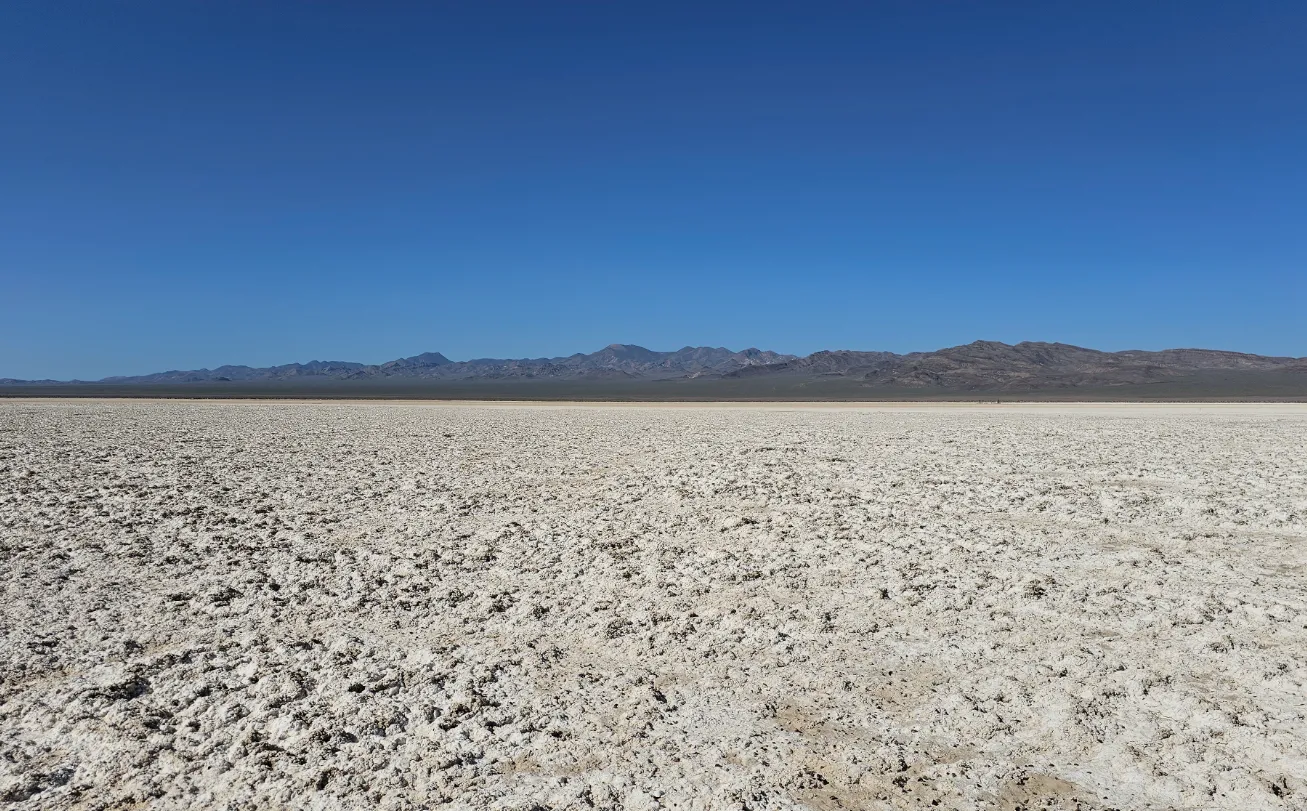
1:42 And frankly I think that that may be coming to an end as well. So anyway let me sort of circle back and start with our overall value proposition, which is that, you know, what do we have at Nevada Lithium? We have our Bonnie Clare Lithium Project, 2 and a half hours from Las Vegas, in the middle of nowhere, basically, Area 51, over to our right, Death Valley over to our left, with a massive lithium resource, as well as associated boron that puts us in the top tier of all global assets. We have no endangered species that we need to worry about right now. We have no immediate neighbors that we need to worry about. We're right on an internationally recognized 95, you know, what's state 95, paved highway with easy access, power lines going right across us in a state that is dedicated to building up its infrastructure to take advantage of the lithium, basically, renaissance, let's put it that way, in all its forms. I cannot ask for a better place to be with a, I'll call it a mega project.
2:45 Over the course of the last year, we had a number of things happen. In a summary fashion, what they are is we discovered basically high-grade blanket of lithium mineralization that was far higher than what we had seen previously. And we continued to explore and to drill to make sure that we could take advantage of that, reflect that in our upcoming resources as we progress along the way towards production, which is you know in 2030, 2031, I'd say 2031 would still be something that we can we could aspire to. But in the sequence of essentially Canadian reporting requirements, you go from resource to PEA, to PFS, to feasibility, and then of course that's when you get your bank loans. We already had a PEA which showed some very good economics.
3:32 That has been supplanted by an updated resource report, which we released a few months ago. Why did we do that? Because, ostensibly, it sort of looks like we're almost going backwards. Well, our feeling was that the grades, right, that we had found, the parts per million of the lithium, as well as the boron that was starting to show, were of such an increased magnitude over what we had that the value would show through not only ultimately in a PEA, but certainly in a resource report. And that is in fact what we saw. So through the course of drilling over, let's say, the last 2 drilling campaigns, we continued to drill deeper, and all of this culminated in a resource that was, you know, essentially 2 times, 3 times higher than what we had at a much higher cut off value, which means we're sort of not looking at lower grade material, and at twice the grade of what we had before, what we've been talking about putting through the mine plan.
4:26 Arguably one of the largest in the world, certainly, again, a world class asset, that when we get to putting a mine plan in place we think is going to give us a lot of flexibility in terms of how we look at this overall asset and I'll talk about that more in a minute. While that was going on We also realized that the mineralization was slightly changing, so we brought on metallurgists who were familiar with that type of metallurgy, and that would be Flora Enterprises. Flora is internationally recognized, right? One of the largest firms out there. Their expertise in this kind of stuff is just absolutely unquestioned. They in fact had worked on a project that looks very similar to ours. That's Einir's Rhyolite Ridge, which also has a boron component.
5:13 And we brought Floor on, and frankly I was quite honored that they wanted to do it because we are such a small company, but they recognized the potential of what we were seeing and wanted to get involved at that time. Florida is now working on the advanced metallurgy, which is going to take into account the fact that we have boron, to take into account that we have different mineralizations, very high grade lithium stream, which we had not seen before, and they're developing a new metallurgical process that will ultimately be reflected in an updated PEA. That is to come soon. I'm expecting that sort of at the end of Q1, somewhere in there. I'll talk about that a little bit more. Now while that was going on and all of these things was we were trying to get the resource report out as quickly as we could, we'd also done quite a bit of marketing.
6:01 Over the course of, say, the past 9 months, I was in Vegas, I've been in Los Angeles, I've been in Amsterdam, I think I may have even been in Washington. Essentially to maintain contact with the strategics who come to all these conferences and to also essentially get the company more in front of, let's just say a European investor component who we have been developing with, because frankly, one of our largest and most important strategic shareholder sets is coming out of Europe. And you've seen press releases that we put out there identifying Marcel Buckhorn, his strategic shareholder associates. And one of the things that we learned while I was out at the Fast Markets Conference in Amsterdam, and I think this is back in, I don't know if it was September, something like that, was that there seemed to be an issue or there just seemed to be impediments for European shareholders to easily access our shares in the markets, which frankly we hadn't known.
7:03 When we became basically public as part of the Canadian Stock Exchange, it was done for cost reasons, certainly we can understand that. But when we found that, that there were problems obviously with T-sets of shareholders not being able to access us readily, we wanted to try to address that. Coincidentally, the Toronto Stock Exchange had approached us and basically had said, hey, we want you to come across, right? So we basically had a conditional letter of acceptance to get this done. And so from September through until I think you saw the news release effectively we started trading on the Toronto Exchange the last day of 2024. We were working to basically get that uplisting done. And I can't tell you how much work went into that in terms of our CFO and our legal advice and Jeff Wilson, all these people. I mean, everybody really, really was rowing in the same direction to get this done as quickly as possible.
7:59 And Frankly, I think that the effects of that uplisting are already starting to be seen. Believe me, I understand the vagaries in making statements like this, but in reality, we had one of the best performances of all lithium companies over 2024. Essentially flat, maybe up or down just a couple percent in contrast to everybody else who essentially ended down. And that is not to cast stones at anybody. That is the way these cyclical commodity types of companies can work. But it does point to the fact that we have a very, very strong shareholder base, which is one of the prime characteristics of our value proposition going forward. As we all know, natural resource commodity investing is not for the faint of heart, and we're not doing this for treasury returns, et cetera.
8:46 These are big projects, the spoils are big as you advance them, and we have a tiger by the tail. And our shareholders understand that and have been tremendously supportive and I can't thank them enough and we are looking forward to continuing with them as we go forward. Now, the next step for Nevada Lithium is going to be the production of an updated PEA. As I said, the way the sequence of these reports work, we really can't talk about the numbers that were involved in the previous one. You could certainly go to CedarPlus and find it there. But let's just say it was, in fact, a very profitable net present value IRR, all types of those things at low lithium prices. Some of the levers that will be changed as we go forward. Will be an increased lithium price that will be used.
9:35 We have higher grades of material to go through. We have increased resources. And I can assure you that we will be talking with the engineering firms to figure out what is the flexibility that we have to look at different options? The company strategy, right? So when we look at this holistically with the company, with the strategic advisors, you know, I know that many of you will have seen that Lithium Americas came out with a massive resource report, which was higher than ours today. This to me was no surprise. They had talked about this about 4 or 5 months ago when we were in Nevada at the Governor's inaugural event, etc. I mean, these are expansive projects. Of course, our resources open in 3 directions, and if you don't know what open means it just essentially means we've not found the boundaries of something. Geologically remember that what we have at Bonny Clare is very very continuous. Again think of a sandwich with a piece of bread on top, a big piece of bread on the bottom.
10:35 That big piece of bread on the bottom has got our lithium and boron, and that big piece of bread keeps getting thicker as we go to the east, to the south, and we think to the north. So, could we make our resource bigger? Absolutely, I feel confident saying that. I'm not a geologist, but I'm very confident saying that we could do that. Do we want to do it? Maybe we do. Maybe we don't have to. But the point is, an 85-year mine life in the case of lithium Americas is not something that really gives much additional value over a 40-year mine life. And I just want everybody to be aware that I've seen many times where people think, well, okay, if it's not bigger, it's not better. That is not the case. And often you're not rewarded. If you say something and people are expectations get to the point where, oh, you know, it didn't come into the biggest. Well, I can tell you that I'm very, very confident again, that we could grow this even more if we wanted to. I just think that we want to be very realistic in today's market about potentially how how how financiers would think about our ability to essentially construct this thing. Where would we get the funding? All of these sorts of things. And many of these answers, frankly, are down the road. But I just want people to think or to think about this in a way that we are, which is there's a lot of different paths that we can take with regards to the Bonnie Clare. And I think you should all think about it as its predicator on the very high-grade material that we have. And this is the 3,000, 4,000, 5,
12:05 000 PPM stuff. So I just wanted to put that in there because I know, Lithium Americas, that was recent news. But I really don't want to get necessarily into an arms race with them about who's biggest. We are huge. We are already a mega project and believe me people who have already noticed. So that's a lot about Bonnie Clare and again I expect that you know that PEA will come out somewhere around the end of Q1. I will tell you that at this point in time, most of the work that needs to be done is metallurgical. We're in constant contact with Floor, get updates every week, sit in the meetings. It's fascinating stuff. They know what they're doing. We are moving ahead very quickly. But the reality is is that many people forget there was massive flooding in the US a couple of months ago and down in the Carolinas, which is basically home base for floor, at least for the guys that we're dealing with. And so we did get set back a little bit. That's just the reality of it. But They're working very, very quickly to try to make it up. So we'll get that PEA out as soon as we possibly can.
13:07 While all of this has been going on, obviously let's just sort of go up a level here now into what's going on with the lithium industry. And I think I'll take this sort of in confluence with what's been going on in the U.S. Because I think, obviously, the U.S. Election results, that was sort of what was at the top of everybody's mind, certainly, I would say, from June going forward. I wasn't terribly surprised that Donald Trump became the president. And I tell you, I really won't be terribly surprised if the EV mandate is taken away, as he says he will do by executive order. But by the same token, I really won't be surprised if that's already priced into the markets, because that's when they have to do it. The markets are typically forward-looking. And I don't think that anybody should look at this as sort of the death knell for EVs, not by any stretch of the imagination.
13:58 And that thought is sort of predicated on the fact from what I can see, is that these EVs continue to get better and better. Certainly as demonstrated by the Chinese. And no, I don't think that a lot of the US car makers have necessarily learned their lessons because there's a lot of gas and diesel cars that are still on the lots at prices that are way too expensive for average Americans, they have bought those Chinese EVs, they've brought them back to the US, and they've been dismantling them and learning how to build them, etc. And they're now essentially a year or more into this, and I have no doubt that they're simply going to reverse engineer all those cars and learn cheaper ways to build them so that the price points can come down. And in the meantime, the battery technology continues to get better. We see advances in energy density, which translates into a greater range, frankly, all the time. And we also see cars with batteries that have got hundreds of thousands of miles of warranties and all of this because I'm not certainly not a car, an EV car expert. But if you just sort of take all this into account, you see an evolution of a product that is getting better and does have a customer base.
15:08 It's just that, at least in the US, it was never taken very well that that should be shoved down people's throats and say, you must do this. When you couple those EVs and then couple the fact that I think the Chinese sold 40% of all cars at the end of last year, it's tremendous. I think that you're going to see the influence come over into the US. You will see at least the US car companies start to adapt. And on top of the demand that's coming from those car batteries is all of the battery demand that's going to be coming from these AI centers, these data centers that you see cropping up. You'll see President Trump hosted an Emirati businessman yesterday who's going to make $20 billion investment in the US for these AI centers, that kind of thing.
15:55 I could tell you Nevada is gearing itself up for that. That kind of demand is only just starting to be felt. And all of this together is going to, I think, have a market improvement on whatever happens with EV demand in the short term. You know, I think that, frankly, they're offsetting. But then what's really stepped in in this in sort of this whole equation is, I think, President Trump's emphasis on security of supply lines. Because you're starting to see now a real tit for tat, I think, that has come out of, let's call it the semiconductor wars, going back a couple of years, where the US wanted to restrict certain Chinese semiconductors. And that has resulted in, you know, outright export bans to the US of materials like gallium and r-cium, germanium.
16:47 Graphite is now restricted. Will that be absolutely cut for all exports? I don't know. But what I think symbolically what's going on, what you want to think about is that's dual use. That's not just for on missiles, right? That's the stuff that goes into car batteries. And what I've been mentioning to people for the last couple of months is, you know, what would a Black Swan event look like, I think, for lithium? And in fact, I think it would be a lithium export restriction by China. And lo and behold, the last couple of days, I would argue we started to see the first emanations coming forward about the potential for that to happen, which is the Chinese are now openly talking about restricting the technology for upgrading lithium. So would that affect Bonnie Clare? Absolutely not.
17:35 Would I actually probably like it if they did that? Absolutely, because I think that would absolutely light the fire under lithium prices and get this whole thing going again. You know, the reality is again, should lithium prices ever been up to $80,000, $90,000 a ton, I argue no. Should they be down at $10,000, $15,000? No. I think that's clearly unsustainable. Again, if you look at certain market indicators over the course of the past few months or maybe even year, you see the mergers and the acquisitions, you see the production cutbacks that have taken place. And remember something, we've been basically struggling along, let's just call it for with lithium prices somewhere around 10, $15,000 LCE prices for better part of a year, maybe even it is a year now.
18:23 When you see an announcement that, you know, let's just say Rio takes over Arcadium, you know, and they made that, they made that announcement, say last week, It didn't obviously took place long ago. But whenever you see that, right, that negotiation didn't take place, you know, the day before yesterday. That kind of stuff takes months if not years, which means that, you know, the attractiveness of the deal was actually recognized when lithium prices were far higher. Which brings me back to the whole, well what do you think lithium prices need to be going forward? I think they need to be at least $25,000-$30,000 lithium prices. And once again I anticipate that in that kind of environment, Bonnie Clare's value is just gonna go parabolic. So here we are sitting with the tiger by the tail. And I think at this point in time, I'll wrap it up just sort of with the value proposition again as I like to remind people, because we're just starting to tell the story.
19:18 And even though I think, you know, we ended the year in great shape and very happy for the momentum, if we've got a 70 or an $80 million market cap, it's nowhere near where I think it should be, considering all of the beneficial things that we have going for us and it's just clearly a matter of market recognition at this point in time. There are companies with you know multi-hundred million dollars of market cap who are subject to the Chinese upgrading that may not happen, who have only a resource that is going to depend on somebody else to build a plant to do something else. Remember, we're sitting about talking here in the top tier, right? Always, perennially, top tier mining jurisdiction of Nevada, USA, and we're talking about producing from beginning to start the finished battery grade lithium product this point in time probably to start lithium carbonate might go to hydroxide probably a boric acid component as well but something that we can immediately take and put right into a battery plant anywhere in the US, right, whether it's Tesla, whether it's the Midwest, whether it's the Southeast, easily without relying on anybody else.
20:28 You know, I have been in this business, as I've said, previously, for longer than I care to remember, and I have seen decades of ups and downs in cycles, and I've evaluated thousands and thousands of projects. And when you get the confluence of something at the macro level, meaning lithium prices, with something that is undervalued at the micro level, meaning Bonnie Clare, you have the potential for these mass investment windfalls that you can't find in any other sector of the market. So at this point in time, I think I'm going to turn it over to Kyle to answer any questions that there may be. But I would like people to understand the way I'm thinking about the markets is that we're at the cusp of an upswing. Will there always be a wall of worry to climb? Of course. If this were all done, then there would be no value to accrete to us.
21:18 However, I will tell you that your shareholders, your major shareholders, your management team, your advisors, all working very, very diligently to extract as much value as quickly as possible, regardless of those lithium prices. And I think we're all going to be very, very happy when we get to where we're going. So Kyle, you want to take it from there? Thank you so much, Steven. You just mentioned that you're just starting to tell the story, but you're telling it very well. We have over 48 people on the call here and no one has actually submitted a question. So with that being said, we can probably wrap it up here. Very thorough conversation. I've let you riff for quite some time here. If someone were to have any questions, what is the best way to reach Nevada Lithium?
22:03 Yeah, you can always send to info at Nevada Lithium. You think the phone number is on there, obviously the email is the best. I'm at SR at Nevada Lithium. Feel free to use that if you like. We can reach out to Kyle at 6. They're always very good, obviously, about passing this through. You know, we, as I said, the way that I would say you should think about this going forward is the next major piece of information we're going to have is that updated PEA. And that is going to be essentially the trigger for us to then talk about how we're going to, well, I guess, how next steps are going to occur. Because the value of that PEA is really going to shine a path forward, I think, for us that's going to be very valuable. So this is going to be step 1, you know, right at the somewhere at the beginning of the spring. We're going to get that done and then we're going to take it from there. But I think there's going to be a lot of excitement with Bonnie Clare and I appreciate all the shareholder support and I hope to speak with you soon.
23:02 Oh, before we sign off here, I do have a couple of questions trickling in, so we might as well address them. When might you start building a processing plant asks Earns, but when might you start building a processing plant? I think I think a pilot processing plant would be somewhere after feasibility, going through a feasibility study. That's pretty much where I see it. You want to remember one thing with Bonnie Clare, right? Our material, the fundamental difference between Bonnie Clare, I would say, and all the other cementry hosted deposits in Nevada, it's the depth of our material. So going to get a bunch of material that we could run through a processing plant, a pilot processing plant, you know, that would be putting through say a ton a day or something like that, we're limited in our ability to do that. We can't just go out and dig an open pit, get a permit to do that, and go down and start getting some represented material.
23:58 In particular, the stuff that we wanna go after at first, the stuff that would accrete to the net present value of the project the quickest, is the very highest grade material, which is down, you know, let's just call it 3,000 feet, 900 meters, something like that. From a technical perspective, we're quite sure that we could do that. Do we know every nuance of what's going to happen? Absolutely not. And you know, make no mistake that, you know, the borehole mining is, in my opinion, that's the technical worry on this project. But by the same token, there's a tremendous amount of flexibility that you can have if it works and it is used in other areas of the world. We talked about this Cameco, Denison's going to be doing it. I don't think the depth is going to be an issue. They use airlift to get material back up from the surface of the sea at much greater depths.
24:45 But the reality is is once we prove that the flexibility of getting to that high-grade material versus an open pit Where you've got no choice, but to start at the top and work your way down through the layers Whatever the grade of those layers is right you start from the top you go to the bottom That won't be the case with us. So long-winded way of saying it will be a while before there's a pilot plant. That does not of course mean that we won't be doing metallurgical testing because that's exactly what FLOR is doing right now. We send them cores you know and they've got hundreds of kilos of material to go through. But that's not the same as a pilot plan. Thank you. And questions are trickling in now, so I'll stay on a little longer here. The next question is, are you still planning on getting the PFS done in 2025? Yes, that is the plan. And The plan is going to always be subject to financing.
25:35 It's going to also be subject to being able to get a borehole mining test done. That's as we know it right now. And that is a dynamic situation. So Yes, that has always been the timeline that we want to go. I will be updating everybody when we get the PEA done as to what to expect. Could that change? Yeah, it could change. But as of now, right now, it has not. And Jacques wondering about Boron. This has been a new thing for Nevada Lithium's Bonnie Clare in 2024. What price do you expect for the Boron?