Transcript
Automated transcript · Written by software from the replay's audio. It can mishear names and figures; the replay is the record.
0:08 Hello everyone and thank you for joining us live today. We are joined by Jean-Paul Sotlo, interim CEO of Chesapeake Gold. This week the company provided drill results for their Phase 2 drill program at their Lucy Gold project in Mexico. Jean-Paul will provide some brief commentary on the results alongside a presentation, but we do want this to be an engaging event, so please feel free to submit your questions in the chat box in the bottom right corner of your screen. Now this event is being recorded and our team will be sure to post on YouTube shortly after the event. With those housekeeping items
0:39 out of the way, Jean-Paul, thank you for taking the time out of your day. The floor is yours. Thank you very much, Kyle. And thank you for everyone for joining me today. I'm very excited to update you all on LUCI. I know that a lot of you have been waiting to hear the next set of results and hear about all the work that we've been doing out in Mexico. I have a pretty lengthy presentation here, plus some photos from a site visit I did back in March. I'm looking forward to sharing all of this news and new information with you guys. So we have some cautionary notes here, obviously, you know, take your time after the call to have a look at this. It's just cautionary as I'm making forward looking statements. So first of all, just to highlight you know the work that we've done so looking back, you know, we had a program done last year.
1:34 We drilled 8 holes into Lucy, had high-grade results right from surface. We followed that up with the results of 900m of drilling in this phase with over 12 holes of drilling. They're all highlighted here in those yellow call-out boxes. The drilling went from the western side all the way to the far eastern side, and then we did soil geochemistry beyond that to the Northeast, which I'll get into in a few minutes. The key highlights from this drilling program, we were looking to expand the footprint of the known mineralization, and we successfully did that. We had about 500 meters previously, we've now expanded that to 700 meters, adding another 200 meters of mineralized corridor.
2:23 So a couple of holes I'd like to just highlight. On the far western side where we expanded into, LU2416 had 24m of 1.43g per tonne right near surface. Within that we had another 6m of 1.36g per tonne Gold, and then another interval of 9m of 2.29g per tonne Gold. Right down the centre and hole 2426, again 20.5m of 1.75gpt Gold and an impressive 12m of 2.82gpt Gold. And then on the far eastern side, a hole 24-23, another 6m right from surface of 5.21g per tonne Gold. So this is very exciting.
3:13 It shows that we have a very robust system here. And the key part of it, and you'll see in the long section here, is all of the holes that we drilled continue to hit mineralization and really prove the continuity of this corridor. And the infill drilling helped to highlight the fact that it's a pretty solid corridor. Looking to the east, you see that there's additional gold anomalies in grid samples from soil and rock sampling, which allows us to say that there's still mineralization to the east that we have not drilled that is likely to be there in the ground and the subsurface. And again, just highlighting those holes from before, There's LU2416 on the far western side, right down the middle, like I said, here's 26 and then 23 over here.
4:10 1 just to note, LU2420 was the only hole where we didn't hit significant mineralization. That hole was drilled to the south. We believe that even though it was collared near a surface mineralization outcrop in trans-sampling, we believe that we were just drilling alongside the mineralization. It gives us a good indication of where the mineralization may be going underground. In the next section here, which is section B to B, you can see that that might actually be the case. There's still work to be done. And the next phase of the program, we're gonna continue to define the dipping direction and where the mineralization is going below the surface. But you can see here, we have, you know, half dozen holes here that highlight the fact that it's likely that the mineralization is heading to the south, but more exploration and drilling is required to continue to prove that theory out. But it's looking really good. There's a continuum of mineralization in this section here, which highlights the potential of Lucy.
5:27 Looking at the rocks. So just here's a couple of samples. This is all in our appendix. So when you go to our press release, there is a link to the appendix, both that previous section that I just showed, and then the bunch of the slides upcoming are in that appendix for you to view. These are just photos of the core, highlighting the grades of mineralization that we see, and also the types of mineralization and what they look like in the rocks. You can see here in LU2423 at about 2.2m below surface, We have 7.17g per tonne Gold. The mineralisation is really hard to see in this picture, but you can see that it's in those cracks in the rock. I have a sample from our previous program. This is LU 2306 and you can see that the rusted veining within the rock. And that's the same thing that we're seeing in all of these core photos, is that same oxidized mineralization in the rock. LU-2423 in the top right corner at 6 meters really highlights that because of the contrast between the 2 colors. You can see that lighter green host rock, And then you can see that real rusted orange colour in those veins.
6:50 And that specific 3m sample gave us 3.25g per tonne Gold. So very exciting. Visually, you can see where the Gold is. When you're looking at the rocks, there's more work to be done to continue to understand the mineralization, but it's very good first steps here. The next part I want to talk about is the soil Geochem samples. You can see off to the northeast, we took 101 soil geochem samples over this area. That's 225 meters by 450 meters. And there was 2 purposes to this. 1, we wanted to prove that this method of exploration works at Lucey, and it's very obvious that it does work, which is very exciting because now we know that soil geochemistry is a powerful tool at Lucey.
7:46 You'll notice in the press release that we are expanding the soil geochem program to over 200 samples across the property to continue to extend this corridor as well as look at other quarters too that that might be on the property. The other part of this is we wanted to see where the mineralization was going. If we can show that it works, then we can get an idea what direction. Based on the results here, it looks like we have a continuation of that to the Northeast. What we're planning to do is go back, dig into the ground, expose the outcrops and actually do the same sort of trench work that we had done previously in the earlier program that we're currently drilling.
8:34 So we're going to go look at the rocks, take samples directly from the rocks to ensure that we have mineralization there. There's also a couple other anomalies to the northeast further. What's interesting about those, that could be areas where the Scarn corridor is poking out and so we're still getting signs of it further to the east. But you'll see that there is that blue area of limestone that overcovers most of the area to the south. This could be places where the scarn has popped out, where we can get signature. But then the scarn could be continuous below. We're going to continue with follow-up work there, both with detailed mapping and additional outcrop exposures to see what is actually happening at these sample locations.
9:25 But it's very exciting to know that this technology or this technique of soil geochemistry is an effective tool at LUCIE. So here's a couple of samples that were taken in the field. Again, this is in the appendix. What excites me about this is you see them, they've dug holes in the ground. My first job as a geologist, I was down in Montana working in the field doing soil geochemistry, just like this. But I was focused on Platinum and Palladium at the time with a junior company. The very interesting thing is, the results that we were getting in the Platinum Palladium were sub a gram in the soil geochem. Usually soil geochem, you get really low anomalies, but then the background usually there's no grade and then you have an idea of where to go.
10:17 But what's interesting here at Lucy is we are getting nearly 2 or above 2 in some of the holes. I think there's at least 3 or 4 holes where we have dug down, took soil samples and it's been over 1 gram. So This is very exciting that not only the soil geochemistry is allowing us to have this tool to find where the mineralization is going, but we're getting really high-grade results from it.
10:46 The other thing that I've learned over the years, it's always exciting to go in the field. This was back in March when I walked the Lucy property, saw the drilling, met our team in the field, the drillers and the helpers. I was taking for a fulsome tour over our entire property. And there was 2 locations where historic base metal old workings were. Now we didn't go into those locations, but I had the opportunity to talk to people that have been there previously, and there was some artisanal workings. And what excites me about this is usually when there's work happening, historical work usually signifies that there's a lot of potential on the property. I realize it's base metals, but as I mentioned in the press release, we did a 63-line kilometre mag survey over the entire property.
11:46 Then We also did an IP survey back in 2017-2018, and we've overlapped those 2 surveys. Right now we're still integrating and looking at the details, and there's still a bit more work involved in that before I can highlight the results. There are early indications where there's some IP, which is induced polar, which usually comes from very disseminated mineralization. And MAG gives you a good idea of this magnetic signature. And this is an important tool that they use in the copper space to find porphyries. And those tools together are very helpful. Now, the one thing about porphyry systems is if there is 1 nearby, then there's a lot of heat. And if there's a lot of heat, there's a lot of fluids. If there's a lot of fluids, that means that there's the potential for mineralization to be going through the ground.
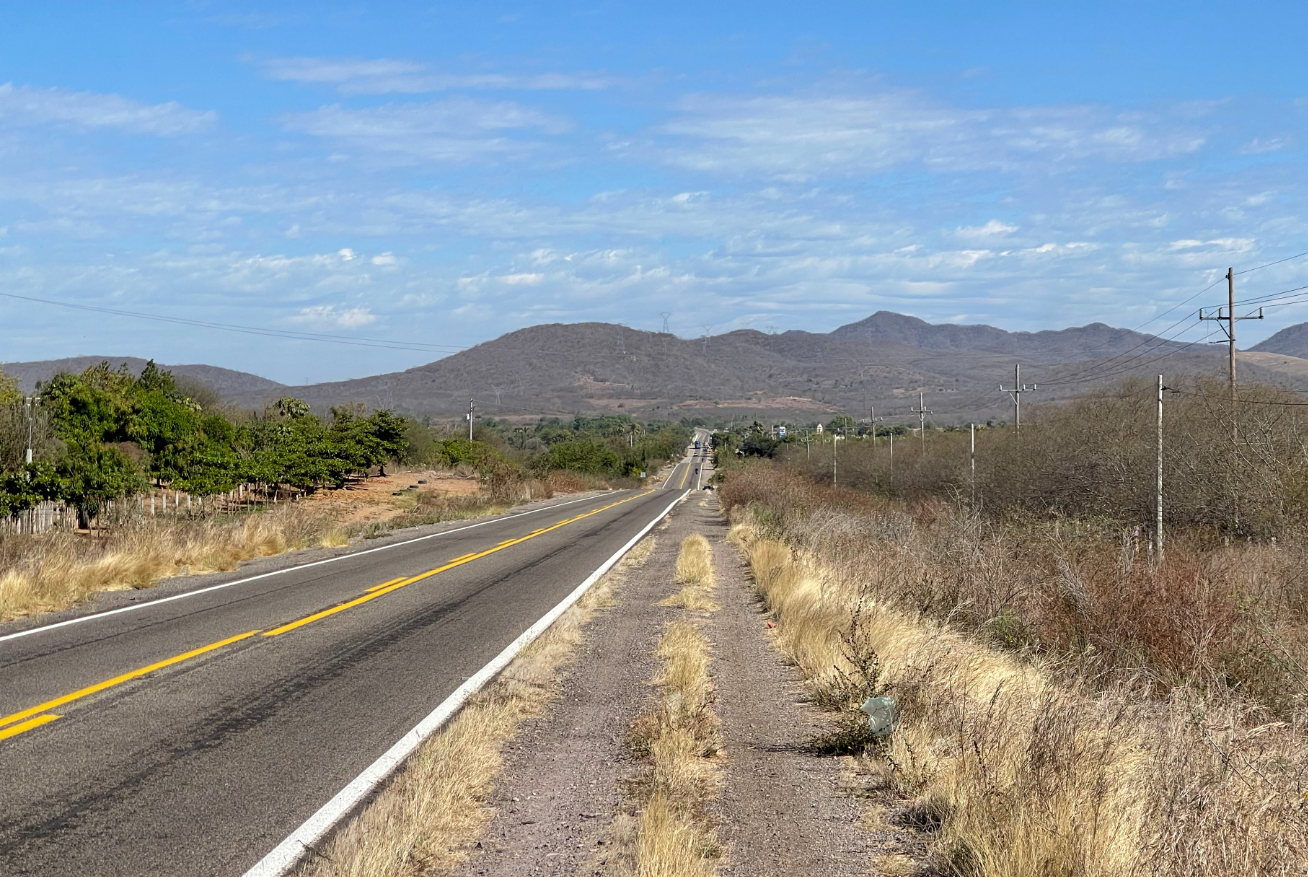
12:46 And the way scarns evolve and they become mineralized deposits is at one point they were a limestone, and then hot fluids have flown into the limestones and transform them into scarns. So having signatures of possible geophysical signatures on the property would signify that we got a pretty robust system here. The next one is just, there's one of the portable rigs. We're focusing on reducing the environmental impact on the property. It allows us to move the rig around. There are dirt roads right to site and right to each of the drilling platforms. The highway is within 5 kilometers of the property and the dirt roads.
13:32 And also on the way into the property, near site there's high voltage national grid power lines. So, there's infrastructure in this region, which is very exciting when it comes to, when we start to evaluate both the resource and work our way through development studies, that some infrastructure is already in place and potentially available to future development.
13:58 The last part here, I didn't have the chance a few weeks ago to highlight the IP purchase. And so many of you may not have been on the AGM call, and I thought maybe this would be a good opportunity to read a portion of my presentation to our shareholders. And so I wanna take a moment to address the recent acquisition of intellectual property rights and the termination of our license with its royalties and other obligations. Our senior management team and board have a vision for Chesapeake's future. And as stated in the press release, this is a key milestone in our technology journey. To place this into context, in March, 2021, McKinsey and Company released a commentary piece on refractory gold ores, challenges and opportunities for key source of growth.
14:55 And they state in the report that there is an estimated 2.5 billion ounces of gold reserves and resources in situ globally. And they further estimate that just over 25%
15:06 or 650 million ounces are categorized as refractory and unavailable to simple, inexpensive conventional processing. If we assume a gold price of $2,000
15:22 per ounce, this would represent a $1.3 trillion market. In addition to this, McKinsey further outlines that the capital intensity and operational costs to build and operate a POCS autoclave circuit are adversely expensive relative to processing in a heap leach environment, where capital intensity per metric ton is 3.6 times higher and operational costs per metric ton are 51% higher. In a world where most of these easy deposits have been found and mined, mostly what remains are these challenging ores. And we believe that Chesapeake Gold is developing the processing technology to 1 day unlock this lucrative market and be the catalyst to invoke a transformational shift in the gold industry.
16:08 And so, purchasing the underlying license and bringing everything into our house is very important to us. As you know, our staff are the experts in the technology. Our board has expertise in the technology, and it only made sense that we brought it in-house and allowed us to continue to do the work to develop the technology and advance it as another important asset within Chesapeake's portfolio. All right, to conclude, just a couple of things on Lucy. Just gonna go back.
16:49 There. So The next step in the exploration is, like I mentioned, another 200 samples for geochemistry. We're going to continue to advance metallurgical work on this property. If you remember back in February, we had 4 composites and it came back with up to 97% Gold recoveries in the first 24 hours of bottled oil tests. We're going to continue to advance the metallurgical work on this property. We're going to do a study on both the mineralogy and petrology of the property to better understand the mineralization and how the mineralization is concentrated within the system and what it looks like. Finally, there'll be a structural geologist joining us to do a structural evaluation of the property as well to help guide our exploration and development. You know, when I worked in my first job as a geologist, when I was soil sampling in the field, that was really the first step to exploration.
17:49 Doing soil geochemistry, doing the geophysics, the mag and the IP survey, doing detailed mapping, which we're going to be doing on this property now again and further. But then after that, it's set up the drills to drill and delineate and define the resource that we are that we have here at Lucy. And so that's the plan that I've been pushing forward at Lucy and that's what you can continue to expect from Chesapeake and the work that we're doing here. Thank you so much. Thank you, Jean-Paul. Now there has been a few questions in the audience, so we'll get right to them. I wanna stay on track with Lucy first. I'm gonna rephrase Jam 72 Callie's question here regarding
18:37 the results. So How much more drilling needs to be done on Lucy for you to work toward a mineral resource estimate? That's a very good question. The best way I can answer it is, we'll continue to drill, so there'll be another phase of drilling. Just for everyone in the audience here, We've really only defined the first 25m to 75m below surface. We're going to want to continue to expand that resource at depth. We'd be targeting a point when we'd have a meaningful number of ounces in there to update the market. The good thing here, we have higher grades in the core, so the amount of metres to get to that would be likely less than, say, a lower-grade deposit that you're exploring developing.
19:34 The next phase of exploration would continue to expand and we'd be looking towards aiming to have a resource update probably next year at some point. Thank you. Why don't you go ahead and elaborate on the phase 3 drilling, how many meters is it too early to say? And will that all go through to infill? Would there be some testing that new anomaly there? Go ahead and elaborate on that, please. Yeah, so I'll, there's 2, those are great questions. And there's 2 ways. 1, we'd want to do some more infill drilling, but the key focus of the next program would be to continue to expand.
20:20 The obvious place to expand would be to the northeast
20:24 and then at depth. The other thing that we're waiting for is these additional 200 soil geochemical samples. From that, we may get an indication of the mineralization where it is elsewhere in the corridor. Those areas would be great places for us to continue to explore and expand the resource that we have here in the footprint. Does that cover everything?
20:51 You obviously have this large northeast anomaly. Is there any other anomalies on the property that you might do some exploration on, some drilling specifically? Yes, there are other scarns on the property. There is potential. We will look at that potential. Most of that would come from reconnaissance exploration, whether that be detailed mapping or taking rock samples directly from the outcrop or the rock in the ground.
21:24 So we would continue to search elsewhere on the property. Like I mentioned, there are some interesting signatures that we have picked up through the geophysics. It's about doing the right grassroots exploration and not just running around drilling everywhere. You do the soil geochem, you do the geophysics and the mapping, and that will drive the exploration and the drilling. Thank you. Now I'm going to transition to Metates. A lot of individuals are interested in that project and we have quite a few questions regarding that. Let's start with Jimmy's question here. Is there any update on the Tate's litigation? Yeah, so the one thing I'd say there is things continue to advance with San Vicente III and the litigation.
22:13 You know, we have an update from the judicial system that things are advancing, right? I don't have a decision from them yet, but we continue to hear the arguments from both sides of the case. But yeah, so things are advancing. And the minute that I do have a decision from the court, I will fully share that with everyone in our audience, including our shareholders, because I think it will be a significant update no matter what the result is.
22:52 Any update on the lab work? Can you touch on the metallurgical work being done at Metatix? On the metallurgical side, We were aiming to complete the next phase of metallurgical work. Right now, we are on the back of that, so looking at the results, integrating the results, confirming the results. We continue to work through that. This is a key part of the process. We wanna ensure that the work that we're doing has QAQC. And when the results are ready to be shared with the public, I will be putting out a press release on that. Thank you. Bill has 3 questions in the chat here. I'm gonna break them up because each warrant their own time. Can you provide an update on the permitting environment in Mexico?
23:46 Yeah, so permitting in Mexico is still ongoing. You know, for us, specifically, back in May, I went to the field. I actually went with our team there of environmental group that does the sampling, the flora, the fauna, the water, the dust, the noise. And what we're doing is we're building an environmental baseline and that work is still ongoing. It's that environmental baseline work that we're doing that would then feed into the permitting process once we're ready. But the great thing about Metates is we have multiple years of baseline work and we continue to invest in that to prepare Metates for permitting.
24:40 The last mine that was permitted was actually pretty close to Lucy and it's actually operational now. It's an operation called COSLA on America's Gold and Silver. That was done in 2019, so that's not that far in the past. There are still ways to advance things in Mexico and we're doing the right things to get us there. Is there any plans to advance Tela Pusa this year? Tela Pusa is one of our subsidiaries for everyone in the audience here. It's in Nevada. Randy, our executive chairman, he's the CEO of that.
25:28 He continues to want to push Telopooza forward and we're very supportive of that. I will let him provide an update on what they're planning to do at Talapuza, but they continue to want to move things forward there. Thank you. Bill's final question. Are there plans for licensing the recent acquired technology to other miners? With the technology, the great thing about purchasing and bringing everything in-house is it gives us a lot of optionality. There is a potential to license the technology. That is definitely an opportunity that's out there. There's other opportunities with the technology, whether that be a great project like Metates that would be great in-house, that could be another option.
26:24 But licensing is definitely something that you see in our industry that's done regularly, where it's a very low risk in the sense that you're providing the technology, you're receiving a royalty, but then you do not have the risk of building or operating the sites. And so that is an option available to us that we're definitely considering. Thank you. Jimmy is asking about Nevada again. Could you speak on the water situation in Nevada? Yeah, so my focus unfortunately hasn't been in Nevada. And so I can't really, you know, all that I know is that they've had several years of drought there, and I'm sure it's very challenging, but, you know, our focus is in Mexico.
27:17 And so I can't really comment on the water situation in Nevada, unfortunately. Certainly. Arjun is wondering if you could touch on the capital structure in terms of insider ownership, percentage of shares outstanding, etc? Yeah, so there's about 68 million shares outstanding currently. After the purchase of the technology, There is $16 million in cash. That's just taking the last time we update the market and including the IP purchase. When it comes to shareholders, our top shareholder is Eric Sprott.
28:03 Eric actually has been buying the market over the past few months. He's added another 300,000 shares to his portfolio. Our second largest shareholder is Alan Panghorn, who you all know. He was our previous CEO and is a director on our board. Our our third largest shareholder is Peter Palmetto from Sun Valley Investments. He's been a longtime shareholder with us. And then our fourth largest is Randy Rifle, who is our chairman, our executive chairman. And so when you add those all together, that represent about 40% of our shareholdings. And all 4 of those parties are very supportive of the advancement of Lucy, Metates, as well as our technology.
28:50 Thank you, Jean-Paul. The final question in the chat is actually a nice way to end this. So I'll leave it to you for final commentary and closing remarks. But the last question is, will there be consistent news flow for the rest of the year? Yeah, so once we get results from the update on the Geochem program here, I would expect another update to the market. And then with plans for the next phase of exploration here. With regards to the technology, there'll be likely some more updates coming shortly. And then on Metates, Obviously there's San Vicente 3, but there's also the advancement towards a PFS and those will come in due time.
29:37 And so we continue to, as we explore and as we develop, we will be sharing updates with the market. The one good thing is, Chesapeake has 3 exciting assets in it. We have one of the largest Silver and Gold endowments at Metates in the world. We have Lucy, which is a very exciting discovery with high-grade mineralization rate at surface. Then we have the technology that could have the potential to unlock and transform the Gold industry as a whole. We're taking a very balanced approach to the growth and development of all 3 of our assets, but we're very fortunate to have them.
30:24 John Paul, we appreciate the update. Thank you for providing it and thank you everyone that asked questions. If you did come in a little late, this was recorded and will be available on YouTube within the next couple of hours. But thank you