Transcript
Automated transcript · Written by software from the replay's audio. It can mishear names and figures; the replay is the record.
0:03 Say good morning, good afternoon, or good evening, depending on where in the world you're logging in from. I'm joined today by Contango Silver and Gold CFO, Mike Clark, and VPX Dave Larimer to discuss this morning's release. Gentlemen, how are you today? Great. Thanks for having us, Romeo. More and more and doing well. Awesome. Now the company's CEO, Director of Communications, and President are on a whirlwind marketing tour, seemingly I think a different city every day from what I've gathered, from Miami to Atlanta to Belgrade, I think Budapest today. But that means we're lucky enough to get to talk to Dave and Mike unplugged and unsupervised. So I'm excited. I know there's quite a few of you in the room, so I'm looking forward to today's event. And here's how today's gonna work. It is an interactive event, so I've got some questions for both executives based on this morning's news release. But this is interactive, so there's a chat button at the bottom of the screen. Please feel free to enter questions at any point during today's event. That being said, I'm going to try to keep it pretty tight and on topic today, but if you have questions, still feel free to put them in. I'll make sure they get to the Contango Silver and Gold team. Just don't be too disappointed if I don't get them just because we're trying to keep it pretty on topic for today's event. The other thing I'll say is today's event is being recorded and will be available for replay probably around 4 p.m. Eastern, so not long after today's event ends. It'll come right into the same link, so you can feel free to share it. It'll also be
1:16 on Six's YouTube page. But okay, let me get straight into the geology. So Mike, if you don't mind, I'm gonna start with Dave straight off the bat, because I know this batch from this morning loaded with high grade hits. I saw 74 grams per ton over half a meter on the CK, 55 grams per ton on the L1C, 31 grams per ton on another L1C interval. And these come on top of the 60 grams per ton over 5.92 meters you announced back in March. So obviously you're doing a lot of work. And as you stitch these new stations together along the West Drift of Lucky Shot, What's the read on how the system is actually behaving underground? Well, definitely, let's start with geology because this is the fun stuff. So yeah, thanks for starting with me first. I think overall for this, we're not dealing with random high-grade numbers. These are starting to be repeatable hits across multiple structures.
2:01 That really does show the structural controlled system. You know, and now we're starting to develop the continuity, the complexity, and it also shows us the room to grow just in the lucky shot, you know, as itself. You know, we're seeing these repeated high grade mineralization across our multiple structures from our previous press release, you know, into this one. And it shows that this is a structurally controlled, what I call a high-grade vein array. So we're not dealing with just a single kind of vein. We're dealing with an array, kind of a swarm of veins, how they structurally kind of pull through the system there. And This is very good. I mean, this is very good for us. You know, this is a merging picture. We'll start to develop the continuity as we start to understand the structural complexity. We'll probably talk a lot about structure today, but what this gives us is multiple opportunities to concentrate that high grade goal. You know, and having that West Drift and being able to drill this first program through the West Drift has been a huge value add for us. It helps turn these strong assays into a more coherent geological model that we're going to start to force feed into our resource assessment when we're completely done.
3:00 Hey, awesome. I appreciate that. It's certainly an exciting update and I will get back to you in a second, but I do want to just
3:06 touch on the finance part, the math stuff for Mike. So if you don't mind, I'm going to talk about the acquisition for a bit. Because I know the $16 million total mix of upfront cash, around $4 million due at closing by July 1st and $10 million promissory note carrying 5% interest. How did you come to that structure with Alaska Hard Rock, Mike? Yeah, no, so it's kind of 2 buckets is how I think about it. So you kind of got the real property, the equipment, the buildings. That value is approximately $6 million And that's what we're paying cash for this year. The other value is on the 2% NSR. And so we structured that with the promissory note and we ascribe a value of about $10 million to that. And so that promissory note is kind of set up in a way that we think we can get that mine, that Lucky Shot into production by 2028 and we can use profits from the mine to basically fund those principal repayments.
3:55 Very exciting. And I know a big part of this, obviously extinguishing that 2% NSR, I think should be one of the big headlines for a lot of the investors listening. With Gold trading around 45, 60 to 4,600oz right now, can you give us a sense of what removing that Royalty actually does for Lucky Shots Economics, both on a kind of per ounce basis, but also the life of the whole project? Yeah, I guess I'll caution listeners that we still are working on a Feasibility Study, so what we use were basically internal estimates.
4:25 And so when we approached this, we looked at a number of sensitivities, Gold price, discount rates, what you think annual production will be, the life of mine. But if you just take a simple approach and assume US$4,000 Gold and our production target of 40,000oz to 50,000oz a year, we think this NSR should have a value of US$3M to US$4M a year coming back to us as value. So on a 5-year mine life, that should have a value, undiscounted value of US$15M to US$20M. If you double the mine life to 10-years, that number doubles. And so then just looking at it on a per ounce basis, it's about US$80 per ounce. So, you know, if we get this to where we expect, which, you know, we think all in sustaining costs should be, you know, US$2,000 or less, you know, it's a meaningful reduction in our all in sustaining costs. So that's kind of how we approach it and what we think the impacts will be. Awesome. I appreciate it. Always helpful to go through the math, even if it is from internal estimates at this point. But Dave, I do want to get back into, as you correctly guessed, We are going to talk about the structures today. So good call. You've added 2 structures to the model that weren't there before, the L1E vane and the newly designated CK vane.
5:39 Just for investors in the room who aren't geologists, who I know is a number of us, including myself, how big a deal is it to identify these things mid-program? And how are they factoring into the resource update that you're targeting right now?
5:50 It's definitely hugely important that we identify this mid program. The L1E and the CK banes, they matter because they make the model more complete. Where the data supports them, we can kind of feed into the resource update and then we know where we have holes and those become our priority targets. You know, as we're going through this mid program, our initial model for the L2 showed there's a little holes and it was undulating through here. So this program was specifically designed to step through these drill stations to fill this out to round out our models and That was exactly what we did kind of mid program while we're getting these intercepts, you know We're doing the detailed log and they're also doing the detailed structural logging as well So we can start to see the orientations of these veins. And these new veins, you know, they expand this structural framework. And while I talk complexity, that complexity is good. You know, it really shows us that, hey, we're dealing with a system that really was able to pump a lot of fluids through the system and a lot of gold through the system.
6:47 So by identifying this and piecing it together, we're starting to develop that, not only do we have a primary structure of that L2, but we also get these relay systems, these ramps, these splays that are coming off that are identified. And what we identified now is the L1E and the CK, and those tie in to the L1D, the L1D, and even the KM vein that we previously talked about. So for the resource update, this will be important because this is going to incorporate all this data into this continuity and this better understanding of the geology and ultimately the confidence that we have in our models, which is why we're doing this program. We're doing this to de-risk this program so we can optimize what is there in our resource estimate. We're still taking a very, very disciplined approach, and the very disciplined message is that, hey, we're improving these models, and we don't force unsupported structures or anything like that. These are all very, very deliberate, you know, geology based decisions when we link these things together through the system.
7:42 I appreciate that. And I know the intersection fault is a brand new feature, I think, for the market. So if you could just laser on that and walk us through what it is, why it matters for how investors should think about the deposit. And then as
7:55 a second question, what's still on the figure to figure out list there? Absolutely. The intersection fault was an interesting one for us. You know, it's another piece of that structural architecture and it does help us explain where these high-grade veins and these splays are at and kind of where they displace on the mine scale. When you look at the geology, especially at the large picture scale, we've shown in many of our sections that the Lucky Shot system is displaced. You have the Coleman steps down to the Lucky Shot steps down again and those are the large major kind of district level faults that are controlling our mineralization. Now we're getting down and we're finding this down to another level of resolution where we're taking these blocks, the lucky shot fault system in that block, and now we can see that the offset and the intersection fault in that's another offset.
8:42 And one of the best ways to look at this, when I look back, We look at our original model of L2, you know, we're connecting up intercepts in three-dimensional space, we see how it's fitting to the continuity and the vein rolls and she'll undulate through there and there's a couple areas that do have some complexities where she really rolls over and it's like okay does the vein really roll or is there something more coming through there? So while we're able to get this drilling through the system, we're able to model up this fault, the intersection fault. We can see that, yep, this is a post-mineralization fault. It's doing a similar thing between the Coleman and the lucky shot, but just on a smaller scale. As these stress kind of relieves themselves through 70 million years of the rock sitting there, she'll displace and she'll settle down. So what this gives us is a better understanding of, oh, Bell 2 and the vein system is not undulating, but she's really coming over, hitting the fault, offsetting down and then rolling across.
9:35 You know, for the investors, the key point is, hey, this deposit is structurally dynamic. You know, it's not a simple flat vein system and that's good. Helping us get this understanding now is just feeding forward into our geologic models and eventually into our mining cycle. Knowing how this vein behaves will let us put those development, or excuse me, put those stopes in there accurately so we can stay on the ore, you know, and mine gold and not waste rock. And this is very, very common in many deposits as we gain this resolution of what our deposit's doing.
10:07 I like to equate this back to when I was working at Pogo, you know, after 10 years of there, we were still finding fault systems and fault blocks. They're just offset and just slightly through programs. So it's definitely key that we're finding this now and doing this understanding now, so we have the best, most accurate models going forward. I think some of the fun part when I look at this without getting too forward looking is as we understand how these things offset, we can also truncate in the rest of the drilling and those rest of those discoveries and displays of what they're doing a little bit further out and further down. So it's also opening up future exploration targets for us underground to optimize our models going forward. Great, appreciate it. There's one question from the chat actually that I'll throw in that speaks to that kind of vein exploration you're doing now. Moose World asks, I said it's a narrow vein, high grade, but that sometimes also means high dev cost. He wants to know how much you anticipate Contango can produce from LuckyShot on an annual basis? Right now estimates, obviously we're not at the formal stage yet.
11:04 Well, the guidance to me has remained the same. We're still looking to kind of prove up a resource 400,000,500,000 ounces through this program, you know, with the intent of and the guidance of, hey, we want to produce this at 40,000 to 50,000oz a year and to be able to kind of pull this out. But you know, I'd like to caveat, this is just the start. You know, if we look at the Lucky Shot system with Coleman, this is just the known extents of the deposit that we know now. As we gain that geologic experience, we want to expand this, down-depth,
11:35 down-depth and pulling it across laterally. This is the initial kind of district play of really understanding the district, you know, that turns it up. You can definitely feed forward from there and, you know, sponge out from there. But this is, to me, this is just the start of the district that really needs this geological understanding that we can pull together to be able to mine this. Exciting. And I must be, my next question is gonna ask you to look into the future a little bit. Cause I know you're about to kick off roughly 800 meters of underground development with GMS starting mid-May, as I understand it. So what does that, just for folks in the room, we're putting together a timeline, what does that unlock for the next round of drilling? And how does this work bridge into that feasibility study coming in H1 of next year? Yep, so to me, this underground exploration development, this is more than just access, you know, I'm gonna get a little excited here probably talk with my arms, but this is really a data generating platform here, you know, this allows us, you know, more drilling, further drilling, and ultimately what it does is gives us stronger feasibility inputs when we do our feasibility study.
12:35 When we look at 800 meters of development, this is key because it's gonna help us unlock the geometry, the continuity, the structural complexity that I talked about. But what it does is it reinforces what we showed is that this underground drilling and underground drilling stations are the preferred method for this. You know, it gives us shorter drill holes, we have better control, better orientation of where these holes go and what they're specifically targeting, that ultimately lets us model things in like these higher vein densities of the L1E or the CK vein or the KM vein, but also gives us that understanding of that post-mineralization faulting. So all this is tying together into our drilling story here that's going to improve our confidence in our vein continuity, in the grade distribution, and in the structural interpretation of eventually.
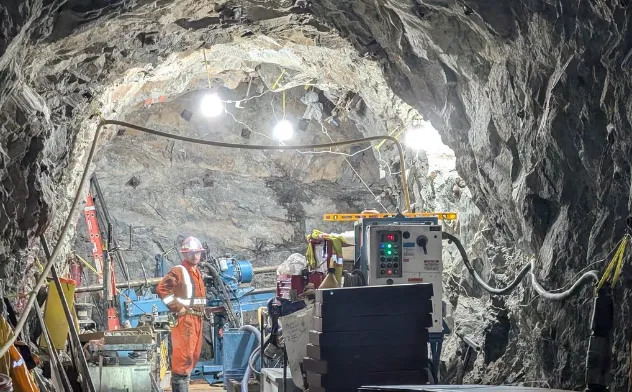
13:21 Additionally, what we're really excited about of this is this underground exploration development is not only for drill platforms, but it was seen in the past, this generates more areas that we can do critical mapping underground. It just gives us another platform to gain our geologic data we need, the structures,
13:38 additional sampling, understanding technical data that's all going to feed forward into this plan. And I caveat this by saying, we look at what we did in the West Drift, just 1 West Drift. From there, we kind of discovered the KM vane. It didn't make sense until we drilled it. But yeah, we understood that there was another structure that was gold bearing in here. Additionally, as we came back, we knew the CK vane was there, kind of in 2 dimensions. But it wasn't until we drilled it and we pulled that continuity out from that, but it all started with this access, you know, that I really truly call our geologic data-driven platforms underground. Oh, cool. And Musral, there's a follow-up question from the chat before I get back to the money, Mike, if you don't mind. One more geo question. What are the resource grade upgrade and recovery via OR sorting so far at LuckyShot?
14:25 All that's to be studied right now. Right now, the step is getting there, drill it. Like I said, I want to focus on the continuity, excuse me, the structural complexity to give us that best picture when we go into the study. We don't want to front load the study with any preconceived notions yet. Right now, this is a data driven thing. We want to do the resource because at the end of the day, that is our biggest risk mitigation of the program, is being able to do this, understanding what the best, most highly accurate models we got going forward. So without totally sidestepping the question, our focus right now is on the geology. No, I don't think that's a side note. I think that's a fair note. Mike, I will get back to the cash for a couple of seconds here as we close out view. I know closing this acquisition carries about that $4M cash we talked about earlier. But then the $10M note has the principal payment starting on the second anniversary. How is Contango currently planning to fund this? Yeah, we have plenty of cash on hand right now to fund that $6 million. You know, the $1.7 million today and the $300 million we already paid, along with the $4 million in July. So we have plenty of cash to pay that.
15:29 And to my earlier point, the promise right now has been structured in a way that we think we can get lucky shot into production and be funding those repayments with production. Great. I know Rick called it in
15:46 the press release, called it a rare and exciting milestone to consolidate both surface and subsurface Royalties at once. But while I'm here face to face with you, from your seat as CFO, why was this the right window for investors watching to get this deal done? And how unusual is this kind of consolidation in the junior Gold space? Yes. I felt it was the right window for a few reasons, but we're extremely encouraged with the drilling success. We've had a lucky shot and we remain confident that this will be our next operating mine to go in production. You got that. We are bullish on the Gold price. We have a healthy balance sheet that can afford to this upfront cash payments. And we were fortunate to have an underlying landowner who was willing to sell on reasonable terms on a structure that kind of worked with what we're trying to achieve here. So from my perspective, this made economic sense and it allows us to to kind of unlock the upside of or lock in the upside of the NSR.
16:39 You know, and it is, you know, it's more unusual to have the opportunity to buy these things back. So when the opportunity came there and we jumped on it. Great. I have one question for you, Mike, that sounds, I promise, like a set up question, but I really promise a real investor actually asked this on email. That's where can people buy shares of Contango Silver and Gold?
16:57 Well you can buy them on the NYSE American or you can buy them on the TSX, both trade under the symbol CTGO. Great. Thank you. I'll get into some of the more esoteric questions from the chat and feel free. We can move any of these. I can shoot them to the team afterwards. But Wesley wanted to know, he came out about 15 minutes ago, so near the beginning of the event. Dave, might be a comment for you. Mike, if you have some economic points on it, too, let us know. I'd love if you could compare Lucky Shot to Moncho, just so investors can understand what's next. I'll start off, Again, it's coming from a geology perspective. So similarities are gold systems in Alaska, Tentina Gold Belt. So for at least the background geologic knowledge, we're dealing with similar timeframes, similar large scale geologic processes through there as we understand in interior Alaska.
17:48 After that, you kind of diverge out into your deposit types. Moncho has a different structural system, has a different fluid pumping system. Lucky Shot, very, very structurally controlled. Very, very time-wise and it's a higher grade, thinning your skin, you know, fight. So our fights a little different in the expiration and where it's gonna be very drilling intensive and underground focus because it is deeper. After that, everything else is going to be tied to the other in the geology, your metallurgy and how things pull together geochemically, totally different systems. But for a geologic standpoint, it's something that's definitely in our wheelhouse and we're extremely familiar with. From Mamancho to Lucky Shot, we study these systems very well and we know the critical things that make them tick and those are the critical things that we're looking for for resource expansion.
18:39 Great, no, I appreciate the details there. Mike, I don't know if you have any additional things. High level, we average 60,000 ounces of
18:45 production out of Mont Shoa a year. We only own 30% of that, but we get that 60,000. With Lucky Shop, we own 100%, but we target we're gonna get 40,000 to 50,000 ounces a year. So, and we anticipate it'll have a longer buying life as well. Great. Now there's 2 questions that sort of go together, so I'll ask them one after another. That's what order did Contango's current project portfolio go into production? So what's basically the order of operations for which projects are up as BAT next? Would you like me to start? I'll start from a geologic point of view. Lucky Shot is more advanced. So obviously Moncho is in production right now. Lucky Shot is at a more advanced stage with respects to Johnson Track and our Kitsaults projects. So just from a geology aspect, you can kind of see the flow through there.
19:34 The Lucky Shot is the more advanced project right now. It has the shorter timeline to that production decision. Johnson Track, you know, not far behind it, got a great resource. You know, the IA was published out. But right now our short-term
19:46 thing is construction. Getting to the portal to get underground in the next 2 years. We can do that next level drilling. So we can do the very similar stuff that we're doing to Lucky Shot that we're doing. Awesome. Sir, the other question that dovetails in, And Mike, I can throw this to you first. You can jump in there. Does Lucky Shot production dovetail with Moncho depletion? Yes, it does. No, I think, right now we kind of target Moncho kind of going out to 2029, 2030. Lucky Shot, we're working towards an objective of getting that in production in 2028.
20:23 And to Dave's point, Johnson Track is about 2 years behind Lucky Shot. Lucky Shot is fully permitted, ready to go into production. Johnson Track is anticipating that next permit in 2028, but you have Moncho winding down near the end of 2029 or 2030, and then you have Lucky Shot coming on and then Johnson Track 2 years behind it. So they should all kind of replace that. And then Kitsault Valley, we still have a bit of work to do, but ideally, you know, we're working towards all 3 of those, you know, moving forward. Hey, great. Dave, there's one question from right up here, Epstein. Thanks for joining us. I wants to know what would have to happen to reach 1 million ounces at Lucky Shot? And if 1 million is possible, how many years do you reckon it would take to get there?
21:10 Oh, that's definitely a fair question. Without being too forward leaning and a forward looking statement, do I think as a geologist, the potential is there in the district? Absolutely. What it's gonna take to get us there is what we're doing now. And it's that disciplined approach. You know, we wanna start with what we know and you're basically growing that seed. You know, we're gonna start off, you know, grow the lucky shot, you know, Coleman systems, understand that. And we do have the rest of a strong position in the rest of the district. So our geologists, our senior geologists, you know, in their copious free time,
21:40 mostly on Sundays when they can't sleep, we sit down and we try to figure out what's the rest of that district, What have we learned this week and how can we apply that forward? You know, and it's just all about adding those ounces up in the resource as we step out to that discipline approach across the district through there. It'll take a little time. Is it doable? Yes. But we want to stay disciplined in what we're doing. We just don't want to go out there and, you know, we love the fun helicopter stuff way out in the woods. But again, it comes down to maintaining our approach and driving value to the company. You know, just 1 program at a time. Great. There's a complex geo question that I'm going to leave to the end. So I'll leave that for a second and get into the other. Charles from the chat asks, when will the definitive feasibility study likely be completed for Lucky Shot? Right now, with our schedule, with our underground development, that next phase of surface and underground drilling, We're looking at about H1 in 2027 to have that feasibility. That's our target to get that all completed in.
22:37 Great. And Peter, as a follow-up on your last question, you just said it's good you don't need a lucky break to get beyond 400 and 500 ounces. It's a reasonable expectation subject for time investment drilling, et cetera.
22:47 One question, and I feel crazy asking a DSO question without Rick here, because I don't think I've ever asked a DSO question on a consango event without Rick in the room. But somebody wants to know if you can touch on the pros and cons of using DSO for LuckyShot. So first, is LuckyShot planning to be a DSO operation like Moncho and then why? Yeah, I can start on this one. Yeah, we definitely plan for LuckyShot to be DSO. And to meet the criteria for DSO, you gotta be near infrastructure and that infrastructure can be road, rail or water. With Moncho, you're on the highway. With Lucky Shot, you're right next to the highway, but you're also next to the rail. So we intend to use the rail, whether it goes north or south. We'll decide that over the next year here, but we will use the rail, and it is a cheaper form of transportation than the road and then obviously water is the cheapest form of DSO
23:34 transportation which is what you'll see for Johnson Track and Kitsil Valley. I'll also throw in there Lucky Shot geologically you know it's very very supportive of that DSO model it is what we consider you know a very clean ore. It's quartz vein with gold. There's not a lot of sulfides. There are some sulfides there, but there are not a lot of sulfides. You don't have a lot of bad other elements or bad players in there. So to a certain degree, it's a very clean ore that would blend very well in many operations that fits that DSO model. Great. That's great. Standing in for Rick. I feel like Rick's in the room with us talking about DSO. One person wants to know, is there any potential extension of Moncho gold ounces? So is there any exploration work being done to expand Moncho's current current ounces?
24:20 Yeah, we're linked in with, you know, through the peak gold side and that, and the exploration continues on. There's always potential to find more stuff, especially as you start getting down to the bottom of the pits. You know, to me, the big thing is, hey, what can you optimize short range and then look in kind of that middle range on the long term and those programs are ongoing now. Great. Okay, Dave, I got some geo nerd questions for you here so we'll get into the good stuff. Somebody's interested in the mining aspect and the types of machines you're implementing to get there physically. He wants to know, 1, are there proactive systems set in place for breakdowns?
24:53 For breakdowns with respect to mine equipment or drills? I believe that's it, yeah, for physical mining equipment. All that will be kind of tightened together. You know, when we do look, and this is coming from a geology aspect and a mine geology aspect, you know, the veins do set up well to mine. You know, the geotech is very, very well. It's very fascinating, kind of the side story of this. You go and you look at some of the open structures right now, they've been open for 60, 70 years and they haven't collapsed on themselves. So geotechnically, it's a very, very strong mine. Mining through it, we'll have to get our final models, what are the vein orientations are at on that, with the resource, and then we can kind of turn that over to a little better engineering design. It is narrow vein mining, so obviously, you wanna minimize dilution, smaller headings, smaller stopes are the better.
25:45 Whether or not you're doing more conventional jack leg or more conventional small scale, conventional mining are always options out there. We talk in our time of, hey, what else can we do? Are there slusher stoves that we can do? And how do you make those
25:58 engineering and mine decisions fit to your geology? That's going to be the key. And how do you optimize your ore coming out while minimizing dilution. All to be seen, and then it's gonna be rolled into the feasibility study in the next year. Awesome, and the last part of his question was, What consumables are most important to the actual drilling and removal? For, for the drilling, I mean, consumables, I mean, it's always going to come down to your energy costs first, you know, whether or not you're, you're firing your drills electrical, which seems to be the most efficient with the diesel tram to get in through there. Your diesel will be your next biggest ones. Then obviously you got your other consumables in there, your ground support, you know, your split sets or your bolts in there to keep the rock safe and competent in there. And then it's going to come down to your explosives. Generally, you know, what do you need to kind of do your disclosures in there? So it's all going to be tied back in those economics that will be tied into a modern feasibility study with the current costs.
26:53 And great. And one last one for you from the chat there, Dave, or at least while I'm asking it, it's people's last chance to ask a question. I says, while there's a geo on the call, any chance of other metals besides gold at Lucky Shot? Silver rare earths, tungsten, antimony, molybdenum, et cetera. We have looked at that in the system and, you know,
27:14 strikingly, there are what we call associated elements with them. There are a little tellurium, little other little elements, but it's such a small scale right now that nothing really stands out. We do keep our finger on this all of our assays. Not only do we photon assay for gold, But we do a whole complete package on every single assay. So we're studying all these elements and we're seeing if they increase and decrease. It is interesting when you start to get into these, you know, accessory or even, you know, other critical metals that are in there. How do they concentrate and how do they play geochemically? And we could go on and on a long dissertation about the sulfidation states and how these things pull together through there. But the key is we're looking at these. And right now, gold seems to be the most economic, a little silver.
28:00 Those will fall out a lot of the geomet work that we have planned up in the next year. But this truly is one of those high grade, pretty much gold systems. No, straight gold, love it. And Dave, I always like to end with a bit of a big picture question for what you're doing for the rest of the year. What are you most excited about at Lucky Shot specifically, just for 2026?
28:20 Like what keeps you getting up in the morning all jazzed? Oh, what gets me jazzed the most is, you know, when I go down there and I see the Geos that we have down there, our Geo team, you know, when they're excited every morning, They're just jumping up and down, biting at the bit. Where are the drillers? Where's the core? They get that new core out and they flop it on the table and we all just kind of get over to the core. And we all kind of go through it. To me, that's the most exciting part. It's almost a race sometimes to say, hey, who can find a visible goal the first? And then you get out there and you find the goal, you know, that's exciting. And then you kind of, you get to let, you kind of back off and you let those core loggers do their work, you know, they're marking up the core going through here, come back and checking on them and they're excited, you know, like, hey, hey, check out this structure, you know, and how does it sit? So you start marking off and you look at all these little angles on the structure and then taking those and putting them into the model. And then you start to see how these things are lining up, you know, 3 dimensional space and we're all kind of talking to it as a group. That gets me the most excited. You know, the next one that really gets me excited is, hey, what's that next fresh rock going to
29:20 look like? You know, you take those next rounds and our exploration underground development, you know, we're going to be right behind them, you know, getting on there looking at structures, looking at that fresh rock, you know, that is may have never been exposed before, and just seeing that fresh rock and holding that in your hand is exciting. And of course, the final thing is tying this together, big picture wise over our next couple of phases of operation in the next year. You kind of have a mental picture of, hey, this is what the models are doing now. These are kind of our best estimates of what's going on there. And then tying that picture together, coming back with the drilling and seeing how the models change. Like, oh man, we were totally wrong there. But yeah, that totally makes sense. And having that understanding of how these systems come together is that that's the passion. That's why you become an economic geologist at the end of the day.
30:08 Well, you go next couple of months and then just 1 project. That's just summer. So I think that's probably a pretty good note to leave it on. So Mike, Dave, thanks so much for letting me grill you in the audience about both today's news, but also looking out a bit broader. I really appreciate both your time. And I know there are a lot of you in the room. I do think of the perfect question to ask right after the event. Please feel free to message in. I'll make sure the team gets it. There's also a request meeting button at the bottom of the screen. This is your last chance to press it before we close for the day. I'll make sure you get connected to the Katango Silver and Gold team. But Mike, Dave, thank you so much. This was fun. I appreciate you going through the news with me. Thanks, Romeo. Thank you. Thanks, everyone. Cheers.