Transcript
Automated transcript · Written by software from the replay's audio. It can mishear names and figures; the replay is the record.
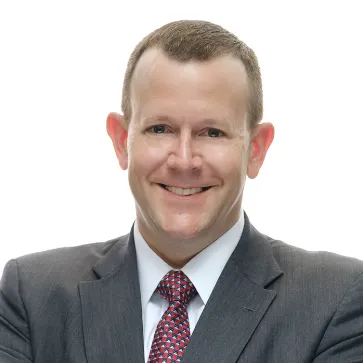
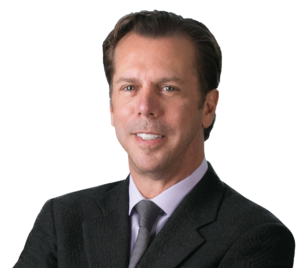
0:09 Welcome to the 1st Mining Gold webinar. First Mining Gold is a Canadian gold mining company, a developer with not 1 but 2 5 million ounce projects in Canada. They have a handful of other projects as well. We will touch on all of that but I want to introduce you to Dan Wilton. He's the CEO of 1st Mining Gold and we're joined by Keith Neumeier. Keith is the founder of 1st Mining Gold. He's the chairman of the board,
0:40 a major stockholder, and he also serves as the CEO of 1st Majestic. Welcome to everyone on the webinar and Keith and Dan. Well, thanks, Ron. It's great to see you again. Great to be here with a broader audience. That's right. Yeah, we have a number of my subscribers I know who were very anxiously awaiting the opportunity to hear from both you, Dan and Keith. Keith and Dan, if you wouldn't mind, or maybe Dan to start out with, can you give us a brief overview of the company so that the viewers get a handle on 1st Mining Gold. Sure. We'll do a brief overview. Welcome to everyone and thanks for joining us.
1:25 First Mining Gold was founded in 2015 by Keith Neumeyer.
1:33 At that time, it was founded as a unique opportunity in the market where development projects and good resources were trading for far cheaper than you could find them. A lot like today, in fact. So Keith probably better wanted to tell the story about how it was founded, but they decided to go out and acquire a portfolio of projects and ended up buying 8 projects in 12 months, many of which were acquisitions of public companies.
2:03 And that gave us a portfolio of projects that we still have today. Now, out of that portfolio, there really are 2 that we're spending most of our time and energy and focus advancing, and that's the Springfold Gold Project, which is a big 1g Gold and 5g Silver open pit project in Northwestern Ontario that's well advanced through the environmental assessment process and about 90% done a feasibility study. And last year we acquired the balance that we didn't already own of the Duparquet Gold Project in the heart of the Abitibi in Quebec, which again, we put out a resource last year, 3.5Moz of indicated resource, another 1.5Moz inferred, 4Moz in an open pit, another 1Moz underground.
2:51 So really one of the biggest undeveloped Gold resources in Quebec.
2:56 And what we're really excited about, we'll talk about this a bit, Ron, is just the exploration potential around both of these projects. We've talked about this before, but starting each of these projects in real mineral districts with 5Moz as your starting point is a great place to look to be able to continue to grow those. So very exciting. Outstanding. 1 extra point I'd like to make, Dan, is those 8 companies that you referred to that we purchased from really early 2015 into mid-2016, not only was the market cap $650 million, but SpringPoll had a PEA on it and it clearly showed 5 million ounces of what we consider economic ounces in one of the best jurisdictions in Canada in Northern Ontario.
3:49 But with that portfolio, we also owned 10% of DuParcay. And kudos to management for buying the balance. It took 7 years for 1st mining to buy the balance of DuParcay, giving us 2 5 million ounce deposits, 1 being Quebec, I think probably the 1st or 2nd best jurisdiction in Canada and Ontario close by or right there. So you've got 2 5 million ounce assets in 2 of the best jurisdictions in the world.
4:22 Would you say, Keith, when you look at the drilling alone that's been done, I think at the DuParcay project, it's north of 270,000 meters of drilling, that alone, what would that cost in today's dollars to replicate that? I mean, a rough estimate. Any ideas what kind of cost figures people would be looking at? Well, I would guess $50M. Yeah, probably in that range would be my guess, Keith, by the time you factor in the drilling and all the other associated costs. And That's just the drilling. That doesn't go to a full-blown environmental baseline report done in 2016. It doesn't go to 3-years of metallurgical optimisation that was done in 2012 to 2014. So I think if you look at the overall real spend that happened at DuParcay and the value of trying to replicate that today, I think it's $100M. Wow. Wow.
5:26 It was also an old mine, Ron. This is an old mine, historic mine that was operating for a few decades producing Gold. It will be a mine again. We'll get it in production through joint ventures or through ourselves, however we do it. It will be a producing Gold mine once again.
5:47 Springpole will as well, of course, but that has never been a producing mine. That's completely grassroots discovery that happened back in 2010. Okay. Okay. When we zoom out a little bit and everything we look at with the company is happening within the context of the overall precious metals market and the sector in general. Can you share some thoughts of what you see happening right now with the gold price, the silver price, it feels like the world is moving away from the dollar and back to gold. And we know there's a compelling story for silver as well. Keith, Would you mind giving us your thoughts on the current metals prices and where we might be heading?
6:35 Sure.
6:38 I'm in charge of sales of our metals at 1st Majestic as the CEO. And it's great seeing sales of gold going out the door north of $2,000 an ounce. And you know, not that I like the silver price, silver at $25, $26 is much better than where it was, you know, over the last couple of years. But nevertheless, it's still a reasonable price. The equities have not moved, actually. The equities have diverged from the metal price, which is pretty surprising. As an executive of a couple of mining companies, 1st Mining Gold and 1st Magestic Silver, I would have never would have guessed that we would be seeing our prices of both companies trading where they are at these metal prices.
7:24 You know, as I said earlier on, 1st mining had a market cap of $650 million in the mid 2016. And I think that gold was probably, you know, sub 1000 dollars at the time or thereabouts. And, you know, and silver, I forget, silver was probably well, actually, 2016 metals actually rallied. Going back to 2015, They were much, much lower with silver in the 12 dollar range and gold sub 1000. But 2016
7:57 metal prices did improve substantially, which of course drove the equities, which made sense. But this time around, we see metal prices much higher than they were actually in 2016. And the market caps of these mining companies, including the 2 that we're talking about today, are much, much lower than they were back then. Do you think that creates an opportunity right now for investors in 1st mining gold, other development companies as well? This disconnect, I was thinking about it as like the tale of 2 cities, right? Yeah, the metals prices are great, but we're still like we have a lot of I want to look at it from an optimistic perspective, with 1st mining with the whole sector, that, that, hey, there's a there's a big runway, there's a lot of room for growth and improvement ahead of us that, that the value proposition right now is probably about as good as we've ever seen?
8:53 Well, the entire sector is very under-invested in right now, and that's really what the issue is. We still have this buy-to-get mentality in the U.S. Markets. We have Apple trading at near highs, all-time highs, which is pretty shocking with a $3 trillion market cap. Tesla has doubled in price or virtually doubled in price over the last few months. There's people thinking that the S&P and the NASDAQ are going to reach new highs in the next couple of quarters. And I can't believe that rhetoric. I can't imagine it actually happening. Personally, I'd be on the other side of the market, or at least those big markets. But you really need and I've said it for a few years now that you really need rotation in the marketplace. Now, this sector is underinvested and it's just simply being ignored. And the cash flows, the metal prices, it's all there for us. It's just the investors are just simply ignoring this market. There will be a catalyst that will bring investors back into the space.
9:53 And this space being so small, as we all know it is, you know, it doesn't take a lot of investors coming into the gold and silver space to really move these markets. And we've seen it a number of times. You know, I put 1st Majestic together 20 years ago. We put the 1st mining together. You know, it's been 8 years ago. We've been in many, many cycles. I've seen many cycles and it's going to happen. It's just You just don't know what the catalyst is that drives it. It's just a series of events happens all at the same time. And you wake up 1 morning and all of a sudden, you know, 1st mining is trading at
10:26 50 cents. You go, oh, my God, I should have bought more. That event will happen. You just don't know when. Right. Yeah. And I think one of the things that's interesting, and you talk about how some things are moving. If you look at your intermediate Gold producers, So kind of the mid-cap Gold producers specifically, or smaller cap Gold producers. A lot of those are already up 100% from where they were 6-months ago. A lot of that is sort of general where there has been a little bit of funds flow increase, I think has been through the GDXJ. And those are really kind of those GDXJ constituents that have seen the increase. But we haven't seen that trickle down beyond a handful of
11:15 names. And as Keith says, we've all lived through a number of these cycles. It always happens. We saw it in 2020, where on the back of the COVID lockdowns, you had the Gold price run. The Gold price ran and then the producers ran next. And then there was a period of about 6 weeks where all of a sudden there was tailwind and interest in developers. And in that time, as Keith said, we saw our share price go from 18 cents to 55, like in over the course of about 6 weeks. So I think it absolutely can happen. And when you talk about the setup that's there right now, it's the best macro setup for developers I think that we've ever seen, because most producers just have not spent the money in building out their pipelines.
12:09 It's the same thing that Keith saw in 2015 when he put the company together. You're buying
12:15 resources because no 1 wanted them and no one was growing their own. So you knew somewhere down the track, you know, 5 to 10 years, you just can't replicate this work and those resources in the ground that were there. I think we're at that kind of situation now. And so what we're going to see, I think, is that that value difference is going to get closed by the M&A market to a degree. And you're starting to see it. You're starting to see producers becoming more active in buying developers. Interesting. Is it safe to say that the big companies, the barracks of the world, the new months, that they've under invested in their in-house development projects and that they will most likely, let's say in the coming 2 to 5 years, be forced to look at, well, let's just for instance, say, 2 5 million ounce projects located in Canada.
13:11 Is that a safe statement? Well, I think this dates back to 2011-2012. You've got management teams today that are quite shy. You've got the majors, at least the ones I've seen do valuations, still valuing Gold assets at $1,200 or $1,400 an ounce, which is pretty ridiculous. So when you have these mining teams, these executive teams or these major mining companies, not valuing assets that spot, what does that tell the marketplace about what their view of the future gold prices are? So they have those types of views on the gold price going forward, which quite honestly, they're engineers mostly and quite frankly, shouldn't be asked about future gold prices but but nevertheless they they do have their views and and they price their assets according to those views and I think that's a lot of times what you know, the institutions see and You know executive teams have actually realized what they were producing and what they're selling.
14:20 Like, you know, for example, you know, I saw a question come up, you know, what's my view on silver and are we going to see the ratio collapse? You know, I'm a $3,000 gold guy And I'm a triple digit silver guy. You know, and that sounds kind of ridiculous when, you know, we're just breaking through $2,000 gold and $25 silver. But you know, I expect ratio collapse and with gold at $3,000, you know, that puts silver at some ridiculous number that's not even worth mentioning. But I think I'll be right. And then at that point, you're going to see the
14:56 institutions start coming into this space. And whether gold breaks through 2300 and that's going to happen or who knows what that catalyst is as I touched on earlier, but it will happen. And it is, as again, this is almost a gift for retail shareholders. And as Dan mentioned earlier, when I was putting this portfolio together, I had a group of geologists go through all the public companies in the mining space, including Australian listed public companies. And we set up a criteria, I set up a criteria for them, and they gave me a list. And we eventually broke that list down to the top 10 companies. And they just happened to be all Canadian based gold assets because they were the cheapest in the world, trading at ridiculous prices, sub $10 an ounce in the ground, after tens and tens and tens of millions of dollars have been spent. And these mining
15:58 companies were trading at pennies on the dollar to what was actually invested in the ground. I was able to convince 8 management teams to join FirstMiningGold because they really, quite frankly, had very little choice because there was no money available. And As a combined company, we became much stronger. And today we're a very strong, financially sound business, developing 2 of the biggest gold assets in Canada. And Dan's done a fantastic job. And looking at the share price, you can never tell it because you look at the share price, you think, oh, there must be something wrong. But in fact, no, there's nothing wrong with the business. It's actually going quite well. But, you know, de-risking, it takes time. And, you know, eventually the big institutions or the big, you know, the new monsters, the barracks of the world will notice. Well, they're already noticing. They they they're watching. But, you know, they it takes them time. And eventually something will be that catalyst, as I mentioned earlier.
16:58 You know, Keith, I appreciate you saying that because I I agree with you. I think Dan is doing a great job myself as well. I think, and I'd like to get your thoughts on this, that the company over the last 3 years in particular has made sound, long-term strategic decisions
17:19 with the shareholders in mind and as opposed to maybe some quick short-term things that they could do to temporarily, you know, pump up the stock price, however you want to say it, but that long-term strategic decisions are being made. And if we see a confluence of better metals prices and the big developers coming to the table, that we could see some superior price appreciation potential in the 1st mining shares. I guess my question for you is, is it sometimes painful on a short-term basis to make the good, sound, long-term strategic decisions?
18:06 Well, depending on if you're an investor, it's always tough. You know, the mining space is a very difficult space to invest in. And I advise, you know, investors to always look at management, you know, Always look at what management owns, what the board of directors owns, what skin do they have in the game and how much are they aligned with shareholders? And have they had successes in the past? Have they made millionaires out there? What kind of wealth have they created? And if you go after those successful mining teams, you make it much more likely that you're going to make a profit on your investment.
18:52 You know, just be careful. And, you know, in the case of executive teams, that's a different story. It's challenging all the time. You know, mining, you know, is a difficult space and it requires patience. One thing that I've learned, and I know Dan is very familiar with, is that
19:12 we have to be patient. You know, you're dealing with Mother Nature and the discovery of Springpole was in 2010, as I mentioned, and it's now 2023 and it's still not producing. It'll be producing soon. And then we're finally getting to a point where we can actually see, you know, production in the future, which is great. But that's taken 13 years to get there. So most of the de-risking is gone. DuParcay was an old mine, so it's a much easier situation to get back into production. But if you're an exploration company, grassroots, you know, investors just simply have to be patient. And I think that some retail investors don't quite understand that. Right.
19:58 You talked about skin in the game, And I think it's important for people watching this live or on the replay to realize, Keith, you've been a major buyer of shares in purse mining gold. Is that a safe, I think I saw a public filing back in April, just a month ago, you bought 250,000 shares? Another 200?
20:21 Yeah, usually about every quarter, Ron. I try to put money into the stock. The catalyst for management to make a profit is usually some major M&A activity and or some kind of major transaction. And so I know I never expect to sell my stock. You know, it's you'll never see me on the offer selling my shares. You know, it'll because I own so much I couldn't sell it even if I wanted to. But it will eventually, hopefully, I'm expecting that there will be a major transaction in the next 3 to 5 years and it'll be worth, if people want to sell it to me at 18 cents, knock your socks off.
21:06 I don't understand why they want to sell it there, but I'll keep buying it. Just for the record, I bought some more at 18 cents myself, Not quite as many as you. And I know Dan, you also have a, what to you, is a material amount of money invested in the company. I think that's important for investors to realize and to recognize when they're evaluating a company, how much, you know, how much skin does the CEO have in the game?
21:39 Well, to that point, Ron, when I hired Dan, basically his commitment to me was he was going to put $500,000 into the stock immediately through a private placement, which he did. So within days of him becoming CEO, he wrote a check and a big one. Yeah, yeah. And then the next year wrote another one of the same size. And every year as I take down, I have to pay taxes on my RSUs. Those kind of continue to add up. I put another $100,000 into the company in the financing we did in August of last year. I'm not quite as many shares as Keith yet, but certainly that position is growing. And it's not just me. I think if you look across our entire executive team, it's very heavily equity compensated.
22:33 And there's a reason why we're able to attract the people that we can. And the caliber of talent that we've been able to bring into the company, in part, because they see that upside. Right. And they're willing to trade off cash compensation that they'd get at a big company for equity exposure that they think is worth, you know, 5 to 10 X what they're getting it for today. So yeah, you really do in this company have real alignment of interest with the shareholders.
23:05 Great. You know, the market is forward-looking. What will the market see in the next year or 2, Dan, from 1st mining that you're most excited about? I think it's important that we focus and recognize the fact that you are, there are some very exciting developments at the company with these big, you know, 2 flagship, 2 5 million ounce projects. There's 4 other projects as well, but can you share with us maybe what you're most optimistic about in the next year or 2? Yes. Let's look at the next 12 months. Our goal is to have continuing exploration happening at both projects over the next 12 months. We actually have a drill turning at DuParcay now.
23:56 Really the first drilling that we've done there. And I think we're very excited about the prospect of how that deposit can grow. James Maxwell and his team have done a lot of really good work in a short period of time to go back and really fundamentally understand what was done at DuParcay, but more importantly, Ron, what wasn't done. And the reality of that situation is that
24:25 there was a company that was moving it forward, CliftonStar, that kind of ran out of money and ran out of time. So they weren't able to keep drilling things that they had already identified. There's just in strike extension and going to depth, we think, you know, it's not unrealistic to think you could double the size of that project. That puts it in a pretty elite league. So exploration results coming from there, you know, we'll see some exploration results coming from Springpole. And you will see, you know, or hopefully we'd wanna see some agreements starting to be signed with the Indigenous communities, particularly around Springpole as we move forward. There's some really good process that we're working on with the communities around Springpole.
25:15 And importantly, you know, the environmental assessment process is ongoing. And what a lot of people don't appreciate is that SpringPool is really one of the next big projects, big Gold projects in Canada to get its environmental assessment. There's not that many big projects in the queue ahead of us. Certainly in Ontario, I don't think there's any.
25:38 This is a really advanced project. Submitting that finally A next year, I think when people see that, we might need to explain it a bit more. But that is a major, major de-risking catalyst because, again, what a lot of people don't understand, Ron, is we've actually received and responded to all of the comments of the regulators from when we submitted the draft EA a year ago. So still some things we need to work through. But I don't know how many people here on the webinar play Texas Hold'em poker, but We've seen the flop. So they're only going to put down 5 cards. We've seen 3 of them, maybe 4.
26:23 And I think it's tough for investors to understand that. But for those of us who are on the inside moving these processes forward, It's what gives us this real conviction about how the process moves forward. On top of that, we've got an economic study underway at DuParcay, which I think will frame 1 potential avenue for development. Lots of good things going on at DuParcay as well. But really, I think if you bring it down to its most fundamental level, what I'm most excited about is really demonstrating that on now almost 13Moz that we have in this company is still just the starting point, right? And that we have district scale exploration beside these already established resources.
27:16 So my blood pressure goes up when I think about
27:21 how mispriced the market has the stock right now, but it's a great opportunity, right? I mean, all the assets, Keith touched on it, you touched on it, you know, the, you know, the amount of work that went into being very selective to put this group together when the company was first formed. And we get to this point now where 2 major development projects in Canada, I can't say that enough, both of which have 5 million ounces. All the work that went into that, that's been accumulated over the decades. And I think what's exciting, and you touched on this, is because of exploration initiatives, the amount of gold can grow. I mean, it's almost like it's, and correct me if I'm wrong, but as a retail investor may look at this, sure, it's a development company, they already have a defined amount of gold, but there's this little extra bonus that could occur, right, which would be the potential for some great exploration success because, you know, of all everything you've done over the last few years, expanding the land package around Springpole, putting the deal together with DuParcay, is there, is there, does it, Is it exciting to you at all? Maybe I'll ask Keith that
28:52 this resource level could grow significantly. Well, we think so. When we did the initial due diligence on Springpole, we were buying a 5 million ounce asset that's compliant. This is 43-101 compliant ounces. That's a Canadian standard. Every mining company out there has compliant ounces and they have ounces outside of compliance. And they're outside of compliance for many, many reasons. It's not drilled effectively. There might be 1 hole, you know, 3 or 400 meters away or whatever the case may be, a kilometer away, 2 kilometers away, showing gold. But you can't just join the dots and say, hey, we're going to double our resource because we think there's gold a kilometer away. That's not the way it works. You have to spend the time and drill hundreds and hundreds of holes and you have to have proper spacing between these holes, 25 metres, 50 metre spacings in proper grids to develop a resource that becomes a publicly reportable 43-101 compliant resource.
30:08 And that's a very difficult process and very expensive process to accomplish. So when a mining company says they've got a 43-101 compliant resource, you know that's real. And yet on top of that, there's a whole bunch of ounces that are out there that haven't met quite that standard yet. And in the case of both DuParcay and Springpole, there's gold all over the place. But it takes time. And that's why we're drilling a new parquet right now. And then we have been drilling a spring pole this past winter to find out where the extensions of these ore bodies are so that we could put plants together in place to drill out and infill all this drilling to be able to add those ounces to the current compliant ounces.
30:54 And as I said, it takes time and money to do it. And we know these compliant ounces of 5M at Springpole and 5Moz at DuParc are underestimated. We know that. But we can't just throw a number out to the public and say, we think it's this, because that's against the rules and we're not allowed to say that. And the other thing that I'd say, Ron, that I think gets lost on some people is just the leverage to the Gold price that having those existing resources gives you. And we've talked about this before, but an example of it is, if you look at our pre-feasibility study at Springpole, which was run, the economics were run at a $1,600 Gold price.
31:39 It looks pretty conservative these days, right? I think if you look at those economics at every $100 an ounce higher Gold price, you increase the net present value, the fundamental value of that asset increases by, on a pre-tax basis, $250M. On an after-tax basis, $150M. It's more than our market cap of an increase for every $100 on the Gold price. And this resource was done $400 ago. I think those of us that have a view that, Keith said, the $3,000 Gold, a lot of other very smart market commentators, people like Ronnie Stifler at Incrementum, who is betting the farm on $2,500 this year at a minimum, there's real leverage just to the fundamental value that we have here. So the exploration is certainly additive to that, But it gives you then kind of a double multiplier, right? Because the resources can grow and the value of those resources grow as well.
32:54 Yes. I like to think of it as a, and you and I have talked about this before, Dan, like a confluence of factors coming together that could really could potentially, right, we're not offering financial advice, but could potentially result in just some great appreciation for the share price. And, you know, it's hard to predict until after it happens, is the way I like to phrase it. What about Canada? I don't feel like enough attention is being paid to the fact that all of your projects are in Canada. And to me, correct me if I'm wrong, but I get the impression that Canada is becoming a much more attractive mining jurisdiction than maybe some of the South American countries.
33:49 We've heard some challenges with Mexico. Do you see that, the fact that all your projects are in Canada, do you see that as a strategic advantage? I mean, I'll start on that. I think 100% it's a strategic advantage. Keith, as the CEO of 1st Majestic, has the luxury of looking in a bunch of different jurisdictions for growth. First Mining was set up, as he said before, really with a focus on good jurisdictions that migrated pretty quickly to Canada. I think when you're talking about avenues for companies to make multi-hundreds of millions of dollars of investment these days. And Keith said, again, leadership of producing mining companies have tended to be pretty nervous since 2011.
34:44 It's hard to find too many jurisdictions that one would say have been improving. It's getting a lot harder kind of all over the place. The one thing you never need to worry about in Canada, that jurisdictional element of it, a qualified, very capable and supportive government infrastructure that understands mining, has permitted mines. The province of Ontario has permitted 4 or 5 big open pit mines in the last 5 or 6 years. The province of Quebec, this is the bread and butter of industrial strategy in the province of Quebec. And really, our reception in both of those jurisdictions from a regulatory perspective has been fantastic. We've got great support.
35:40 I think jurisdiction is more important than ever, but I'd turn it over to Keith for some more first-hand commentary on that. Well, it comes down to land tenure. I think that's one of the issues in South America and growing in other parts of the world. We've seen issues in Europe and recently, of course, in Peru and Argentina, Bolivia, you know, you name it. There's all kinds of issues around the world. And one thing that you don't risk in Canada is land tenure. You're not going to wake up 1 morning and losing your asset. And when you're trying to raise, you know, $500 million to build a mine, you know, that's kind of important. So, you know, you're making a big investment and you're building infrastructure and you need to have a 20, 30, 40, 50 year lookout.
36:35 And it gives the investors that kind of comfort where they can make those long-term bets and not have that political risk. And also holding costs are some of the lowest in the world. You know, holding these, these are large land packages that we have in Quebec and Ontario, and the holding costs are quite reasonable. And, you know, compared to some of the other countries around the world, they're, I'd call them quite cheap, actually. I shouldn't say that, because maybe the government's listening. Yeah, hold on a second there. Reasonable, let's stick with reasonable. Efficient. Dan, what about the people in the company? It seems to me that you've been able to assemble an A-team. You've got Steve Lines, who's kind of heading up the permitting and community relations, James Maxwell.
37:31 How were you able to attract such top tier people? Let me go a little bit further on that. I know that Steve Lines was involved with permitting the Greenstone mine that's under construction now by Equinox and several other large mines prior to that. James Maxwell was instrumental with Sabina Gold. How were you able to attract these topmen? There must be something there that enabled you to be able to get that caliber of person into the company. Yeah, and well, you know, we talk more often about those 2. We've got a bunch of other great people at the senior leadership and really all the way down through the team.
38:20 And I think it comes down to a similar theme. You know, we've been able to attract people, I think, on the back of a bit of a vision that, you know, really started with Keith and and with our board on how we are going to advance these projects. I think the projects themselves are really interesting that the people who You see that we've been able to bring in, have a usually an understanding or a background to be able to look at what the outside world is seeing as risks in the company and really see those as opportunities. And that was The first conversation I ever had with Steve around building dikes and dewatering Springpole, he's like, I've done this twice in the North.
39:10 Once as a regulator and once as a proponent. This is done all the time. So, you know, same thing with James Maxwell, was providing, you know, kind of the playing field, the opportunity for exploration for him to get back to a part of the world that he, you know, in large part grew up in and loves, particularly around the Bertucci and then having a bunch of real opportunity for them to be able to build out their teams and have those teams do really meaningful work inside an organization that We try really hard to keep not bureaucratic. And it's a small team, it's pretty consensus driven. I think we make good decisions, but we can make decisions reasonably quickly.
40:00 And yeah, I think that's a big part of it. I like to think it's part of the culture of the place that, you know, it's a lot of people that really like getting things done. So the result of that is when you have really good people and, you know, the sort of age and stage of people we've been able to attract are very, very difficult people to find in the mining industry right now. People with 20 years experience, 20 to 25 years experience coming into their 1st VP or real leadership role. Those people are like gold dust. And I think it says something about, you know, something about the company and kind of about the culture of the place that we've been able to bring great people in and keep people here. Thank you. Thanks, Dan. And yes, I want to make sure I recognize there are a lot of quality people at 1st Mining Gold. I always tend to focus on Steve and James Maxwell, but I know the whole team there is doing a great job. So hats off to all of them.
41:06 Keith, when you founded the company in 2015, you had a vision for where you thought it would go. How close are we now to that original vision? And the second part of my question would be, obviously you're continuing to buy shares, anyone who makes an investment is, I guess, trying to look out into the future. What's your vision for the future of the company, maybe another 8 years from now, which are maybe another 5 years from now, if you don't mind touching on that. Well, first off, I don't like single asset companies. Mining is risky enough as it is. If you have all your eggs in 1 basket, I'm not saying it is always an issue, but it can be an issue.
41:56 For me, I like to be on the right side of the bet. Rather than playing roulette, and Dan brings up poker, but I'm a big roulette fan. But I like to, at least with 1st mining, all these companies that we bought, these 8 companies that I was able to buy over that period of time, they're all single asset companies and they all became unfinanceable because they're single asset companies in my view. So, you know, putting a portfolio together as we did at 1st Mining, it's pretty intriguing. And, you know, today, you know, through Dan's efforts over the last 3 years, 1st mining is the strongest financially it's been, really throughout its history.
42:45 And that's because of the smart deals that have been done on the portfolio. So we've got equity positions and partners and I've been able to sell some assets for cash while preventing dilution. We've done a pretty good job of monetizing the portfolio and we still have some great assets even including or in addition to Springpole and DuParquet but it wasn't for that initial acquisition campaign that I launched we wouldn't have been able to finance Springpole or even purchase DuParquet. So you know through those efforts over the last you know a few years we've been able to really de-risk and continually improve these 2 assets. And we're going to continue to do that. Outstanding.
43:31 Yeah, to me, it feels like there's a diverse, and we haven't even touched on the other 4 projects. Just for the listeners who are here, 1st Mining also has a Hope Brook project in Newfoundland, which they've partnered with Big Ridge Gold on, and there's a development activity going on there. There's Pickle Crow in Ontario that they've partnered with Otico, that's an Australian company. They've had some great drilling success. And Dan, correct me if I'm wrong, but they've even come out with a resource estimate. Oh, just put out a new resource estimate last week that's now up to 2.8 million ounces at 7.2 grams, which makes it, I think, one of the biggest high-grade underground deposits in North America.
44:24 And they have every confidence that in another year with more drilling, that goes over 3g. They're doing great work. And that's really just on the near mine stuff. I just, I happen to have come from a good catch up session this morning with Darren Cook, who's the CEO of Ateco. So I'm very current on it. He happens to be here at this conference. You're up to speed. You own 15% of Treasury Metals, another Ontario development project, and of course, 100% of Cameron, correct? You still own 100% of the Cameron project. Yeah, absolutely. Significant. Significant. Can we go through some questions? Sure, fire away.
45:10 All right, Dan. I've answered a couple here, but. Oh, thank you, Keith. Dan, how great would drill results have to be in the current environment to get real market attention? Do you care to tackle that one? Well, I think that's a really interesting question. I think it's what those drill results demonstrate that is going to be really important. So the drill results themselves, if it's, you know, another 100 meters of a gram or, you know, 100 meters of 2 grams or 300 meters of 2 grams, And you demonstrate that there's more potential at Spring Pool. There's always been a widely held thesis that, maybe not that widely held, but you know, what we have at Spring Pool is kind of the top half of the deposit. When we find the rest, you know, or find the real part, people get excited.
46:12 I think specifically on those projects, when we can demonstrate that what we have in the Bertucci Greenstone Belt is an exploration district that people will be exploring for a generation. When we can demonstrate that there is near mine potential at Springpool, which again, that could be 1 or 2 holes. And we've got some really interesting, much better structural understanding than we've had in years. And actually wanted to test 1 of those this winter, but the making of ice didn't cooperate with us in terms of being able to drill from the ice. And at DuParcay, I think if we can demonstrate with 3 or 4 drill holes that what's left behind or the extension, the sort of extension potential of these deposits, like down plunge, a long strike and a depth shows that the 5Moz there is really just the starting point. I think any one of those things could be enough.
47:18 Maybe the market doesn't get super excited about it right away, but those are the things that that mining company that's looking for their next project, those check really, really important boxes for those companies. But yes, I think anything that we do to demonstrate the potential for ongoing growth at both of these big projects, should every ounce that we can see that we're gonna add makes them more and more unique and more and more valuable. Outstanding, thank you. Another question came in about SpringPool. Do you think that the company alone will try to develop it all the way to a mine or will you eventually be looking for a partner? Well, I'll give my thoughts and then I'll let the chairman have a word on it too, because this was something that when you go back even to the founding of the company, there was some real thought on partnerships and using partnerships strategically as you move forward.
48:21 What I've always said, Ron, when we've talked about it, and I will continue to say this, I think that is a decision that is best made at the time when you're really at the point of maximum understanding of the deposit and you have the ability to make that decision. So, we have a team that can get this project through the EA process and get it permitted. And I think at that time, when you remove all of these perceptions of risk around it. And you demonstrate to people that they didn't believe for a long time. They kind of have to believe now. That is, I think, the best time to look at what all of the alternatives are and whether that's us being in a $3,000 Gold market and our share price is $5 and we can raise the money to build the project ourselves.
49:13 I think that might steer you in one direction. I think we'd have every capability to build a team to be able to do that. But we would have to build a team that has construction experience to do that and build out our team. Is it something that when you get to that point, someone else says, this is the project that I want to build. And they come to you either with a partnership proposal where, we've seen examples of this done last week. It was an interesting deal that Osisko did with their windfall project, where they basically brought in a partner for 50% to develop it, bought a big interest in it, and more or less leaving a Cisco in a free carried position, own 50% of it going forward. I think those types of opportunities are pretty valuable for a company and often kind of, you know, shunted off to the side. So it depends on who your partners might be.
50:11 But at the same time, you know, if we get to that point and another company sees this is really what we would think is really compelling value, then I think you have to look at that as the opportunity as well. And what's interesting is, you know, we then still have in the company all of these other assets that, you know, you could then be incredibly well-funded to continue to advance. So there's real strategic optionality as we move forward there, but I think it can go down a lot of those paths. And I don't think we should prejudge which path it should go down until we're really at the point where we're comfortable it's the right time to make that decision. Wow. But Keith, what do you think? Well, I was thinking as you were speaking, but I look at DuParcay and Springpole as tier-1 assets.
51:03 A tier-1 asset is very rare. We've got 2 of them. The big majors, the Newmonts and so on, Barristan, they need tier-1 assets. Their Gold is dropping on a daily basis. Every day they produce an ounce of Gold, their reserves are dropping. They've been very inactive. Yes, we've seen a couple of small, well, not small, but we've seen a couple of deals. It shocks me that these majors aren't gobbling up these developers right now at $2,000 gold. But you know, and you never know what the catalyst is. I'm sure in these boardrooms they're talking, you know, at Pyrst and Jessic, You know, we're a relatively large company and we're always looking for acquisitions. You know, we tend to be a little bit more aggressive than some of the other mining companies out there. But nevertheless, you know, I put together 2 billion dollar companies.
52:00 And my goal in putting 1st mining together was to put my third billion dollar coming together. But, you know, quite frankly, I'm not sure if we're going to get there because I think it'll get taken out before we get there. The whole strategy of Matt Curran management, Dan, is to de-risk these assets and continually de-risk these assets until we make a production decision. And we won't stop unless something happens, a big catalyst comes in whereby a major comes in and takes the company out. And you can never predict that. And I'm not suggesting it's going to happen tomorrow. But I think that, you know, as these assets get de-risked, I don't think that, you know, this is 2 of the best mining jurisdictions on the planet. These are 2 of the best gold assets in the world, or in Canada at least, they will be bought as far as I'm concerned.
52:53 How that looks, when that's going to happen, you know, it's not even worth speculating because we just simply don't know. But I hope it doesn't happen because I would my goal is to build my third largest or my third billion dollar company Thank You Keith and I and I think maybe what I heard you say too is that you hope that when if and when the assets are monetized, that it's done at a time when it's more of a seller's market, you know, when sentiment is, has improved. Yes, that's right. Dan's got a lot of work ahead of him. He's done a lot of good work, but there's still a lot of work to do. Very true, never ends. I meant overall market sentiment, not specific to 1st Mining Gold. Well, I wanna thank you, Keith and Dan, for doing this today. On behalf of everybody that's joined us and will be watching the replay, I think you were able to shed some additional light on the opportunity at 1st Mining.
54:00 I personally think that it's a good, a great value proposition, a great investment right now. I do think that there's potential for, above average price appreciation in the stock and just thank you for your time. And if people wanna check out the company, Dan, firstmininggold.com. Www.firstmininggold.com or feel free to get in touch with Paul Morris at paul.firstmininggold.com. I almost forgot to tell everybody, Yes, get in touch with Paul. He will get back in touch with you with any questions you have. And thanks again, Keith. Thank you for your time, Dan. And I'll see You