Transcript
Automated transcript · Written by software from the replay's audio. It can mishear names and figures; the replay is the record.
0:00 Good morning, good afternoon, or good evening, depending on where in the world you're signing in from today. Welcome to today's event. I've got with me David Weins, CEO, and Shane Pero, President and CEO of International Tower Hill Mines, to discuss the company's recently released third quarter results and the progress being made at the Live and Good Gold Project in Alaska. David, Shane, how are you both doing today? We're good. Awesome. Here's how it's going to work for the folks in the room. After today's presentation, We've got some questions for the speakers, but feel free to use the chat button at the bottom to ask questions yourselves. We'll try to get your questions during today's event, but if we run out of time, we will pass them along to the team. There's also a meeting request button at the bottom. Please feel free to use that to request a meeting following today's event.
0:47 Finally, this event is being recorded and will be available for replay. You can view it at the same link or on SIX's YouTube
0:53 channel. With that, David, I'll pass it over to you to walk us through the latest at International Tower Hill and the work underway at Live and Good. Excellent, Thank you, Bianca. And we're both very excited to present International Tower Hill to you today. For those not familiar, we are a $370 million U.S. Dollar market cap New York and Toronto listed company focused on the development of the prolific Live and Good project in Interior Alaska, USA. We've got 9 million ounces of reserves, 14 million ounces of resources with room to grow, and a project that could be one of the largest producing gold mines in the United States. With that I will jump into the presentation. Forward-looking statements will take ease as read.
1:42 All right, we are the new executive leadership team and we could not be more excited to be on board. A little bit about myself, I've been in mining for about 20 years, started off on the banking side, spent 7 years, ended at Deutsche Bank's metals and mining team and the investment banking team in London. I then moved to a company called SSR Mining where I spent approximately 7 years in a number of roles. We met production and cost guidance 7 years in a row along the way. And for the last 7 years or so, I have been a CFO, including most recently 3 years at Asante Gold, where I helped execute approximately
2:16 $1 billion of financing transactions to rebalance, restructure their balance sheet and to fund their growth initiatives. So enough about me, Shane, why don't you introduce yourself? Thank you, David. Yeah, my name is Shane Perrow and I am the president and COO of the company.
2:32 I'm technical by trade. I'm a mining engineer. I worked my way up through technical and operations and then into more senior management on mine sites and into this current role. One of my big takeaways is I've worked for some of the bigger gold mining companies in the world, Barrick, Newmont, and Kinross. Most recently, had a stint with Kinross in Alaska as VP and GM where I oversaw the Fort Knox and Moncho operations. The other thing that's a little bit unique about myself, and I never really had an intention to do this, but with coming over to Live and Good, this will be my fifth mine build of my career. And I've been doing this for about 30 years now.
3:17 Thank you, David. Awesome, thanks, Shane. So look, what are we doing here? We're marrying up mining finance, capital markets, and strategic leadership with mining operations, engineering, and project development for the purpose of rapidly developing this project towards production. So that's us. Let's talk for a second about our shareholder register. We are blessed with a powerhouse shareholder register anchored by Paulson, Electrum, and strong primarily U.S. Blue chip institutions. This is smart, big money that recognizes the tremendous opportunity and valuation disconnect that we have in the market. These are also the same shareholders that backstopped our $118 million raise in January of this year. Speaking of which, as reported yesterday, we are cashed up with over $106 million of cash and short-term investments left from that raise as of September 30, which funds us to complete our feasibility study and advance permitting over the coming years.
4:15 This is an excellent position to be in.
4:20 This is a recap of the annual production profile for Live and Good in the most recent study in 2023, the Prefeasibility Study. As can be seen, the Prefeasibility Study envisaged average annual production of 317,000 ounces per year over 21 years and nearly 400,000 ounces per year for the first 5 years. It's important to note that this is based on a throughput rate of 65,000 tons a day and as per our news released yesterday we're evaluating larger scale options as well as phased expansions.
4:52 So let's put this into context. Based on the numbers we saw on the last slide and comparing against forecast average production against the largest US 15 producing gold mines today, this would make Live and Good the largest producing gold mine in the United States outside of the Barrick-Newmont-Nevada joint venture. So from a global investor's perspective, this is also a rare opportunity for standalone leverage to a gold mine of this scale. Pretty exciting.
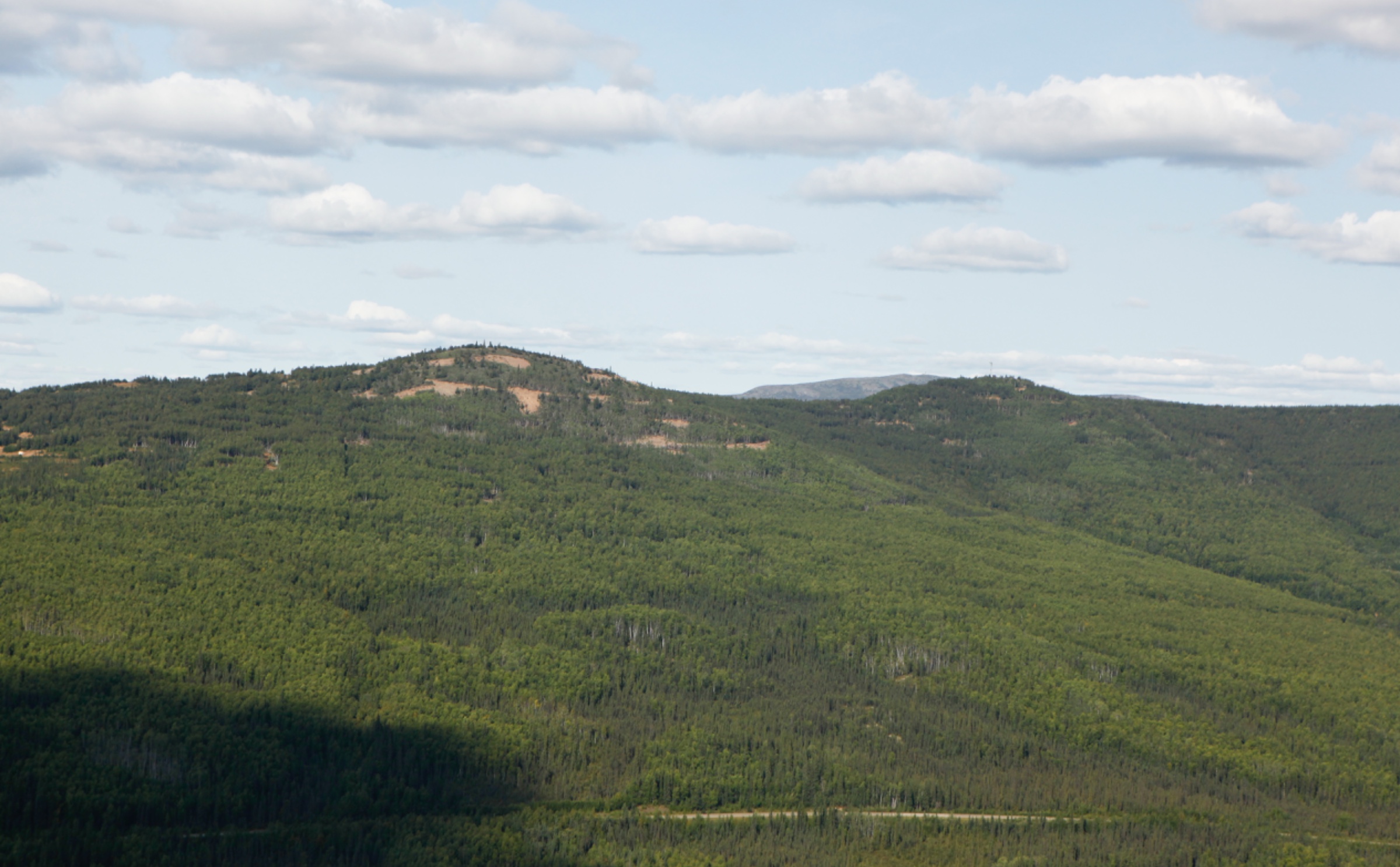
5:23 So with that, Shane, you're on the ground in Alaska right now. So I'm going to turn it over to you to talk about some of the unique advantages we have in the state, being near Fairbanks, and also about some of the work that we've been doing. So take it away. Thank you. Yeah. So one of the first things I'd like to mention is, again, as David mentioned, we're in Alaska. And for those of you who don't know, it's a Tier 1 jurisdiction. Alaska is a mining-friendly state. There are several large mines in Alaska, 1 being Fort Knox, which is nearby, and then Red Dog up in the northwestern part of the state. One of the unique things about Live and Good is it is easily accessible by road. And that's the paved highway, the Elliott Highway that runs north out of Fairbanks. The project's approximately 70 miles north of Fairbanks.
6:14 David mentioned I'm currently sitting in Alaska. I'm in Fairbanks, again, a city that supports mining, both from a vendor support and the community support of mining in particular.
6:28 Livengood also sits in a mining jurisdiction that's designated by the state of Alaska for mineral development. And that's unique in the aspect that there's other areas in the state that are developed for, or designated for timber harvest, or national parks, or state parks. What's unique about Livengood? The state said, hey, look, this is an area that we want to set aside for mining. And so that's unique. In addition to that, one of the other good points that we have about Live and Good is the project is near power source. We're about 50 miles away from the main grid of Alaska. And in addition to that, being along the haul road up to Prudhoe Bay on the Elliott Highway, what we call the Hall Road in Alaska.
7:22 We will have access to LNG or gas products that we can potentially use for the project as well. Awesome. Thanks, Shane. Why don't you walk the audience through some of the work we've been doing here? Yeah. So, this year in 2026, we took on a core drilling program with alloy drilling. One of the key facets here was to do PQ core and capture about 3,000 meters of core for a couple of purposes. 1, really to take a look at stibnite or antimony that we do have on the project and see what that looks like. But secondarily, we really wanted to capture some core, and we're excited about this, David, in the aspect of taking some fresh core and doing some metallurgical work on that core.
8:14 In This slide here, really what we're demonstrating to the folks out there today is we're not starting from scratch. Live and Good has done an exceptional job in the past of continuing, or they developed and then continuing on with baseline environmental data work for permitting purposes. And as you can see here from the laundry list on the left-hand side, many of these baseline data studies or sets have been completed year on year, keeping the information up to date. And what we have today is we have the full suite of baseline data that's required for permitting to go forward. However, we have an interest in updating a few of those that we can tackle in 2027. And really it's only to do an update, make sure nothing major has changed on those particular pieces, which we do not anticipate having any changes. It's just to make sure that we check the box, that the data is up to date as we move into permitting strategy.
9:17 Thanks, Shane. I like this slide because it puts the project and the company into perspective. There has been a massive amount of work done on Live and Good during a look during the lower gold price environment that lasted up until a couple of years ago. So that means about $300M specifically spent on drilling, studies and baseline work over that time. This is not a greenfield exploration
9:46 project. This is an advanced development stage project that is ready to move forward. 3 robust studies were done in the last 13 years, all of which confirmed the 9 to 10 million ounce reserve. You can see the table there showing the prices. The prices, as you can see, that underpinned those reserves and resources were much lower than what we have today. And that presents an opportunity for us. And as per our news release yesterday, that's exactly what we're looking at now to update our resources so that we have an opportunity to demonstrate the tremendous optionality that this project has at higher gold prices. So, you know, I like to think with gold in the $1,000 to $1,500 per ounce range of a decade or so ago, this was previously a long-dated call option on Gold. Well, that call option is now well in the money by virtue of where the Gold price is.
10:40 And that's exactly what underpins our strategy of moving forward with the Feasibility Study and going into permitting.
10:49 All right. Big catalysts on the horizon. Feasibility study. We're progressing on that to lock in the final blueprint for the mine. We're excited to look at larger scale and phased approaches to the build, which potentially provides upside to the 2023 PFS, considering the higher Gold price environment. As we noted in our news release, we're focusing on optimizing capital and designing a lower complexity flow sheet, which has positive implications for permitting, financeability at a lower cost of capital, and schedule. We also mentioned in our news release we're progressing an update of our mineral resource, as I mentioned on the previous slide, which was last updated in 2021 at a gold price of $16.50 per ounce. We're excited to update investors on what that looks like at a higher gold price. Also as noted a couple of slides ago, we're in a strong position to advance into permitting with the extensive historical work done on baseline studies and the work plan for 2027.
11:49 All right. This slide, I think, captures the opportunity for investors. We trade at less than 1% as of today In terms of enterprise value of about $250M relative to the $40B of Gold in situ value that we have in our reserves. This is a tremendous opportunity. You can see how this compares to a selection of other companies. The key here is that these other companies have all progressed through milestones that we will also go through. So, for instance, NovaGold is permitted, Perpetua is financed, Artemis has completed construction, and Agneagle, as everybody knows, is a well-established producer. And you can see the tremendous upside re-rating that happens as you go along that journey. And that's exactly what our strategy is to do, is to go from the left to the right.
12:39 And as we do that, investors can expect a re-rating.
12:45 All right. So let's wrap it up with why should you invest in ITH? Well, we've got a rare combination of scale, jurisdiction and valuation asymmetry. 9Moz reserve, 14Moz resource, upside potential with update underway, Low strip ratio of 1.2 to 1, which is the lowest amongst comparable projects. We're in a tier 1 jurisdiction, number 2 Gold producing state in the United States. We're valued at less than 1% of the Gold that we have at the ground. And most importantly, we've got a clear foundation and a path to development. There's been $300M invested in this asset on drilling studies and baseline work over the last 20 years. Our last PFS demonstrated massive upside leverage to Gold. We're cashed up. We've got $106M of cash and short-term investments in the bank, which is going to last us for years to get through a feasibility study and advance permitting activities. And the strategy is very simple.
13:40 To realize that re-rating we talked about a
13:42 couple of slides ago, complete a feasibility study to lock in the final blueprint for the mine and advance into permitting. So that's the story. Awesome. Thank you so much, David. Jumping into a few questions here, I have a few questions for the team. David, you came in as CEO after a career in capital markets, mine financing, and roughly $1 billion of financing transactions in your last role. So what drew you in to Live and Good? Well, that's a pretty easy question to answer. Look, it's an opportunity to build a company around a tier 1 cornerstone asset. That's the live and good project. So that that that would be my my my short answer. I mean, I think the other considerations I took into account is knowing, frankly, that Shane would be coming on board at the same time as me, which gave me the confidence that we have the right team to actually build this thing.
14:34 And I think lastly, the way I'd round out that question is the financial backers that we have. Paulson, Electrum, Copernic, others. We've got the right shareholder register that are committed to moving this asset forward and it presents a very exciting opportunity for me. Awesome. And Shane, you most recently ran Kinrass Alaska, including Fort Knox and the development of Manchow. So what did you see at Live and Good that made this a serious Alaska development opportunity? Yeah, thank you. Really what caught my attention at first was the size of the project. Really an undeveloped asset in Alaska, the size of it is impressive. And as David mentioned, the company's willingness to onboard a couple new executives in order to move the project forward in a timely manner.
15:25 And it's been great working alongside David. I think we offset each other in strengths in that aspect. And so therefore, we have the right team to start this and kick this off and get this going. The project itself also has the potential to be a large scale. It's open pit operation. What's even more impressive, and David mentioned this during the presentation, is the defined resource that's there. This really derives the mining plan. A lot of startups will have 5, 7, or 10 years of mine life. What was attractive to me was this project has at the scale that we're talking about a 20 year plus mine life and that's not common. And so I really found a lot of interest in having an opportunity to come on board and help develop this project to construction and into production at that scale for a mine life of that length.
16:22 Absolutely. And David, we have another question here. The company reported $56M cash plus $50M in short-term investments on September 30th. How does a strong balance sheet change the pace and quality of decisions you can make at Live and Good?
16:40 I mean, it's a game changer. It means we can focus on moving the project forward and pace without worrying about running out of cash or raising money like so many other companies out there. We're well-funded over the coming years to complete our FS, advanced permitting, and that means investors can look forward to re-rating milestones without the need for dilution. Extremely important in this market. No, totally mission critical. And given the pressure on so many precious metal stocks out there, including your own, what is your view on the ITH share price?
17:13 Well, let me give you a couple of examples. So, look, firstly, like I mentioned, when it comes to needing to raise money, we have 0 concerns. We have no plans to dilute shareholders and are focused on pressing ahead with the project with the 106 million we have of cash and short term investments we have in the bank. So we're sleeping easy at night. Look, in terms of the share price, I'm not going to give you specific price targets, but what I will tell you is this. I personally bought $200,000 of ITH stock at $2.39
17:43 only a few weeks ago, which is about double what we're trading now. And I bought a little more recently as well. So I think, you know, in terms of money where your mouth is, I think, you know, my view on where the share price is. I did that because I think this company is extremely undervalued based on what we have and what I see. As we saw in the presentation, we trade at less than 1% of the in-situ gold reserve, which I personally think is cheap on any measure for an asset of this scale, jurisdiction and stage of development. I deeply appreciate that, David. Switching gears a little bit, Phase 1 covers metallurgical core, technical data review, scale analysis, and an execution plan for the feasibility study. What are the early takeaways from the updates so far? Shane, why don't you take this one? Okay.
18:31 Yeah. So phase 1 was really a gap analysis, taking a look at the PFS and what do we need to do to be prepared for the FS? And our gap analysis really showed only minor items that were needed to move the PFS into the feasibility study. Second to that, we established bookends on the size of the prize, the size of the project, how big can this thing be? And that was really important because the PFS at the time with the gold price had it limited in size, whereas now we have opportunities to take a look and float the size of the project to see what we should actually build. And so with that, what that does is it sets our boundaries for the FS and allows us to move into the FS with confidence on the size that we should develop the study at. In addition, I think, you know, we don't need a tremendous amount of additional background work or technical work to move forward to support the FS. That work's been done.
19:25 And we've determined that through past work that's been completed as well as the most recent PFS. PFS. Absolutely. And similarly, the company says metallurgical test work on the new core will begin in Q1 2027 to support flow sheet confirmation and optimal grind size. What are you most focused on learning from that work? Fundamentally, re-confirmation of the process flow sheet that's been developed in the past studies is ultimately our key aspect. We want to ensure and re-ensure that that process flow sheet is accurate to the best of our ability. We want to redo some of the MET testing also on fresh core, the core that we drilled in 2026, so we mentioned during the presentation with alloy, that core is currently in the lab and assays are near complete. We're going to be doing some compositing around that. And we're going to basically rerun the metallurgical work that has been done in the past. And it's just, it's a good check the box exercise as you progress into FS to ensure that the process flow sheet you're going to pick is accurate and correct.
20:31 We want to check that goal recovery is accurate on the Gravity CIL, and we're doing that on all the various rock types we have in mind. So we're not just doing 1 kind of summary study, we're actually doing full suite, making sure that it's accurate. I think our focal point number 2 will be on any other opportunities that work within Gravity CIL to potentially improve recoveries in the lab during the MET testing. What that looks like today, we've got some avenues that we're investigating. Nothing's for sure, nothing's hashed out, but again, that's part of the work in the FS.
21:10 And jumping back to the May release, you guys talked about pressure oxidation as a possible route to higher recoveries, while the November update says phase 2 is expected to focus on recovery without pressure oxidation or other capital-intensive technologies. So what changed along the way? Yeah, let me provide some cover commentary on that and then I'll pass it over to Shane to add. So, look, first of all, the opportunity certainly has not gone away. We know we have critical minerals in our deposit. We know that pressure oxidation and other technologies provides the potential for gold recoveries well in excess of a simpler flow sheet design.
21:51 So it's a huge opportunity that has not gone away and will not go away. I also want to stress that we are continuing to evaluate these options as we move into phase 2 of the study. That being said, as we've been progressing our thinking, what we've been prioritizing is minimization of upfront capital, minimizing complexity and risk, and speed of execution. So given our objective of rapidly completing a robust feasibility study that balances those items. A flow sheet a flow sheet sort of like what we looked in the last 3 studies is emerging at this time as a more sensible option. Anything to add to that Shane? Yeah David thanks. I think our core focus remains on gravity CIL, as David was alluding to there. And that's really for the processing facility while keeping an open mind to other opportunities that may help us out in the increase in goal recovery, as David mentioned just now.
22:45 We're not closing the book on anything. The good thing about Dave and I is we keep an open mind to all options and all opportunities, but we are laser focused on
22:54 getting this FS started and driving the FS to completion. And really right now, as we understand it, it is grab BCIO. But what this does is it allows us to stay on point and drive BFS to completion while being aligned with the past work that's been completed and also in the most recent PFS. That's really well said. I agree with that, Shane. Thank you guys. And David, the November update says phase 1 scale analysis points to potential for a larger throughput than the 2023 PFS at the current gold price. How do you decide when bigger is actually better? Yeah so look the answer to that is going to come down to financial metrics and risk assessment. So bigger is often better, but that needs to be weighed against upfront capital, the cost of that capital, NPV, IRR and a number of other metrics.
23:46 So we're evaluating all of that as part of the feasibility study that Shane is leading. The interesting thing about a phased approach, which we also mentioned in our news release, is that this has the potential to be the right answer that threads the needle between all of those factors. I mean, does it make sense to start small and then become bigger? You see Artemis as an example that's done that very successfully or do it in 2 stages. These are all things that we are evaluating very diligently as we move into phase 2 of the study. Shane, why don't you chime in with your thoughts in particular on the scale, but also the phased approach that we might be able to do for a lot of good. Sure, David.
24:25 From an operational perspective, David stated this, scales of economy should certainly come into play. Therefore, we're interested in a larger operation. I kind of mentioned that in my introduction, but without overstepping those boundaries and planning on a project that's too large to manage from a capital aspect or from a build aspect. Therefore, a phased approach does make sense here. It may allow us to keep a balance on the upfront with the potential of expansion on a large scale down the road. The other thing is, is by keeping the project scale size within reason at the start, something that's manageable, that's something that's obtainable without trying to eat the whole elephant at once, that's going to help us with construction or ramp up the project to be less complicated versus per se a large scale start.
25:20 No, I thank you so much, Shane. I deeply appreciate that. And just taking a look here, I have a few other little questions. I know that there's a lot of questions out there about the share price. I wanted to touch base to see if you're aware of what happened to the share price recently, if there's anything you could, any light you could shed on that. Yeah, look, I mean, I'll, I mean, I think I speak for both Shane and myself that, you know, we don't know the exact causes of movements in the market in our share price. I mean, there certainly wasn't any undisclosed news. And you know, obviously, there was a bit of market volatility,
26:02 you know, across the spectrum last week. But, you know, all that we can do is focus on our execution plan and that's exactly what we're doing. And, you know, personally, I think this this this represents a pretty good buying opportunity. Absolutely. Well, thank you so much, both of you, Shane and David. I know we're closing things off here shortly, but I wanted to give you guys an opportunity to provide a final word for investors in the room and everyone who sent in questions, I'll make sure that they make it their way to the team here. But over to you, Shane and David, for that final word. Yeah, and I think I'm just I think we might have time for one more question. I see a questions come in on time frames for various milestones.
26:49 And so I think we can speak to that at high level, certainly. I mean, the feasibility study we're pushing and part of the reason we have gone along the flow sheet preference that we talked to in the presentation is we want to move this thing as fast as possible. So we are aiming to
27:06 have this completed by the end of 2027, plus minus. That is our internal goal. And in order to not lose time, we're also looking at, and the next rung in that ladder is of course permitting. So we are looking at how fast we can move into permitting while completing the FS. What does that mean? Well, can we leverage the 18 years of baseline data to populate
27:31 permitting applications with the state and non-federal. Can we, as the technical data becomes more crystallized through the year, can we populate some of that into the permit applications? Can we pre-socialize what we're planning to do with the regulators. Well, we can do all of those things with the federal regulators, with the state, and so that's our plan. So I will caution that permitting is not in our control in terms of the timelines. So we will do everything we can do, including aiming to be in the FAST 41 program, which has a prescribed timeline, all else equal, of 2 years. And so that is something that we will be actively seeking to be a part of. And then of course, we'll be looking to dovetail our financing strategy towards the tail end of permitting so that we can move straight into into construction.
28:24 So it's a bit difficult to give more precise timelines on permitting than that. But I can tell you that our eye very much is on, the two-year prescribed time frame in the Fast 41 and getting into that as soon as possible as we get through the FS. Fantastic. Any final thoughts you want to leave investors with? Say they're tuning in halfway through and this is their one takeaway, what do you want investors to know? Well, we're cheap. We're cheap. I mean, look at the share price and I'm biased. I'm paid to say that, but I also put my money where my mouth was. I bought 200,000 of shares a few weeks ago. I think this is a tremendous opportunity for investors during a time of market volatility. And that's where that's where smart investors make the most money is during those periods of time.
29:21 I think you know hopefully audience members have gathered that Shane and I as a team are very excited to be on board going forward we plan on having plenty of communication both in forums like this but also on an individual basis with investors and we're always around to pick up the phone and we're excited to move this forward. So that's it for me. Shane, why don't you expand on that to the degree you'd like to. Yeah, thanks, David. I think you covered it pretty well. Fabulous. Folks, thank you so much. Fabulous. Can't wait to see all the great work coming out of Live and Good and all the great work from this new team. I want to thank you both, Shane, David, for your time today. I want to thank everyone in the room. As I mentioned before, if you tuned in late, this will be available for replay. You can check it all out very soon.
30:11 Thanks again, everyone, and hope to see you at the next event. Have a great rest of the day. Thanks, Bianca. Thank you.