Automated transcript · Written by software from the replay's audio. It can mishear names and figures; the replay is the record.
18:45 so district scale potential. And that means for us to put a few holes into those other areas you know just to test how extensive it could be would be also a very good use of our money. But I do want to make it clear that we're not stalling the path to production by doing this drilling. This is a dual path. We have the capability. We can walk and shoot gun at the same time. And any company that has a project the size and scale of high crop with lots of upside potential is always drilling at the same time that you're mining because you always need to be replacing what it is you're taking out of the ground. So that is something that is very typical in our business and both of those activities can happen and do happen in tandem.
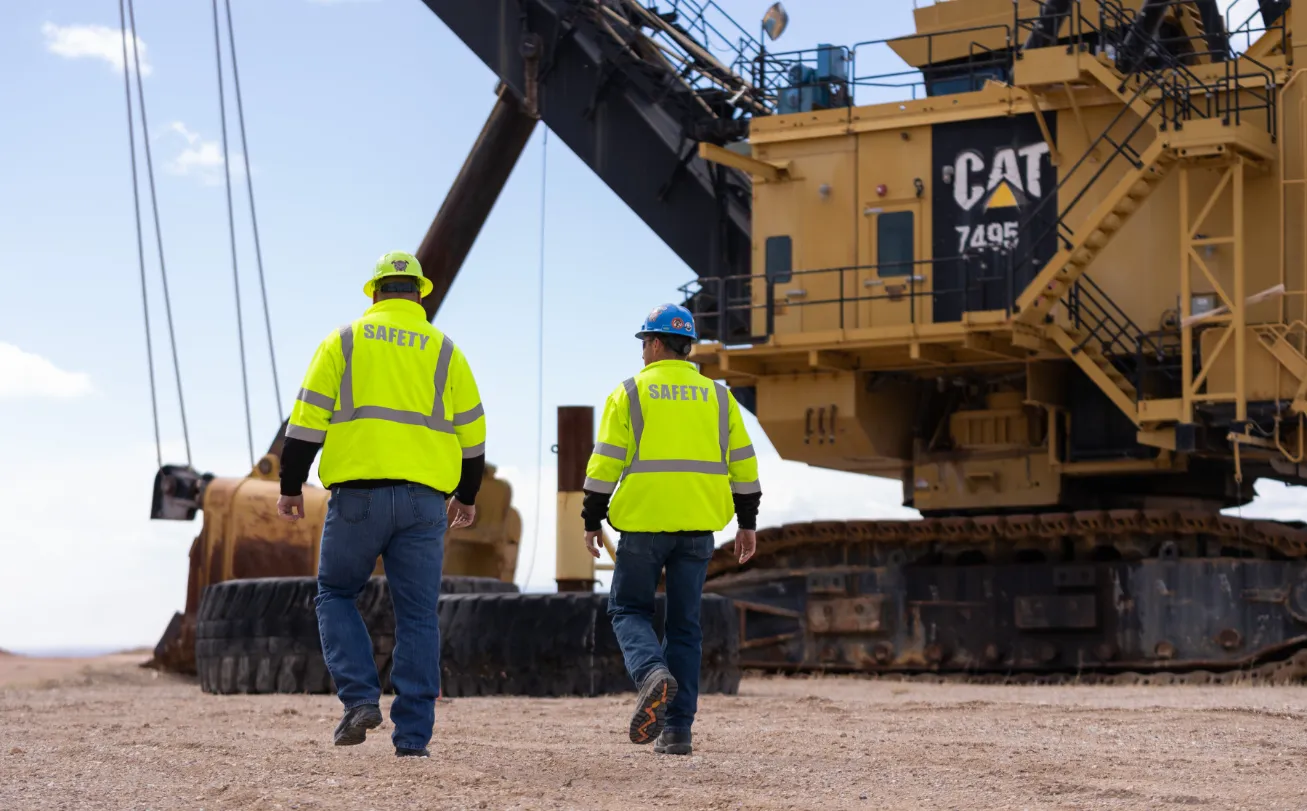
19:33 Awesome, no, appreciate that. I did want to talk about your safety record for a second, because I know it's very impressive and we've mentioned it already today. I'm curious, just to get into the weeds a bit, can you share some just specific initiatives or cultural elements that contribute to achievement of 2 years that reportable injuries? Absolutely. This all starts with a good safety culture. One of the first things you need to do when we came in the safety record, When we came in as management in 2020, the safety record was horrible. I think it was 3 times the national average. The first thing you need to do is support people to report incidents, equipment that is malfunctioned, that needs to be taken out of service. By reporting, you identify the issues and then you can fix them. So that was one of the first things, is to encourage people to speak up. People are afraid sometimes to speak up about issues or, you know, so and so over here is operating in an unsafe manner. We have a saying at site that if I'm not safe, you're not safe. So we all, I've had people call me and come into the office when my tires weren't quite all the way in the ditch to keep it, you know, at the emergency brake on.
20:50 And I appreciate that. Anybody on our site can shut the entire operation down at any given point in time. Everybody has that authority at site because, again, if I'm not safe, you're not safe. So anytime they see a potential unsafe practice, and it's also making people appreciate the guys have posters around as to, you know, why I want to work safely with my team. And it's photographs of friends, family, children, pets, you know, and because that's what's important at the end of the day. So safety culture is very, very important. We have a 0 tolerance, and you need to sign on to that strong safety culture. That's, you know, and it really is about education, spending time. If there's an incident, we do an immediate stop.
21:45 We do a line out, everybody together, we address it, we talk about it. So we encourage people to come forward with that. There's no penalties, you're not going to lose your job. And so those are the things that we do to help build that strong safety culture. And it's like the culture of any organization because our team culture is very strong. We work very collaboratively together. We're, I guess, kind of like a family, Alex, maybe. Yeah, very much so. We're Very tight knit. We have each other's backs. We reach out. We collaborate. We don't, you know, there's no competition amongst our team. No silos. We work very closely as a team because we all know that we are here to do a job for something that is much greater than any one of us individually. And it takes all of us working together with all of our individual skill sets to make this company successful.
22:44 Appreciate that. It's just such a big project, so that makes sense. And one question, as you're accelerating exploration and moving into more development activities, I'm curious, and Diane, I'll throw it to you first, but I'd like to know your perspective to how are you integrating environmental and community responsibilities at this stage as activities are accelerating? So We have great relations with the communities. We believe, and not just the communities, but the regulators as well. So we have regular dialogue with them. One of the things that we've always found in our history with other companies is that we're very, very transparent. We're coming into somebody else's backyard because we have the skill set and the financial ability to develop these projects. But it belongs to the community, and the community should benefit from that, as well as the regulators and as well as the shareholders.
23:34 So we've got a great track record of doing things the right way, but we engage in the community, we support charity events, boys and girls initiatives, We do job fairs, we do educational things, but we also keep them apprised of each stage of the project and the development. Because they're as anxious as all of us on this call about getting into production, generating cash, creating more jobs. There are only several hundred people out here working at Microsoft. We have probably 400, I guess. I mean, we'll have all that come out in the final report. So it will be a good economic boost for the local community. But it's really just about transparency and getting to them, town hall meetings, and keeping them apprised of everything that we're doing and especially the regulators too so that they know that if we need to come and modify permits which are always doing it at any point in any operation that they they already know any concerns they have studies they want to see that we're getting those up front so we can be proactive in addressing them and not have that be a delay to the project.
24:45 Alex, anything you want to add? I think just to add to that too is our proactive work in doing reclamation work that had been not taken care of in the past has resonated well with the regulators, particularly the state. They are commending the work that's being done. And it's a lot of effort on our part to make sure that it gets done, but it's the right thing to do. And it's appreciated not only by the regulators, but also by the community as well. Great. Alex, while I got you, actually, I'm curious, based on, and I know we've kind of already gone over this, but I did want to kind of put a fine point on it. Based on recent drilling success this year, what is your current thinking about the ultimate scale potential of the high-crop system?
25:41 Well, what we're seeing is We definitely are seeing growth to the east. And so that's one of our target areas that we want to focus on probably in the second half of the year, budget and time and whatnot, of course. But what we're seeing from the geophysics, the initial geochemistry from soil samples, is our target area has grown almost a kilometer to the east and is also basically the entire length of the high crock pit itself. So about 2 kilometers north to south, that whole block has virtually no drilling in it. There's very little exploration work has been done out there beyond what I've done.
26:35 So I think that that has really opened up significant specific target areas for us to engage and it'll take more rock chip sampling, more mapping, more everything that we've done so far. We'll have to do a little bit more of in order to get there. And hopefully we'll get to really drilling some of these farther out targets. Great. Thank you. Diana, I'm going to throw back to you, and this I think will cover some of the questions in chat as well as well as some of the ones on email. I do want to talk about share price. So I say folks are folks are here to make money. I'm curious. Do you think the discoveries from this year are getting the market attention they're due? Because it looks to me like to some degree that the stock is range bound.
27:24 Yeah, very good assessment. The stock is range bound. So we'll have a nice day in the market. And then a few days later, we seem to give that back up. So we're trading in a range now. I can honestly tell you with the attention that we're getting on these high-grade silver discoveries and everything else and the work we're doing at High Crop, There is a lot of interest by institutions getting exposure to iCrop. We do a lot of marketing, we're being asked to come participate in meetings, and there's a lot of eyes on what we're doing right now. But the one question that comes up, and it sucks the air out of the room and every conversation we have is the debt. So just to be clear, a development company at this stage does not take on debt.
28:11 It's an absolute no-no in our industry. Our industry behaves different from almost any other industry on the planet. And until you know that you are within a very short time period of starting up and generating cash flow from that operation, you do not take on debt. So When we look at our peers who have large assets like Highcroft and they trade at a billion dollar plus market cap, the only difference between them and us in terms of size and scale and development of their asset and in good jurisdictions and those parameters is the fact that we have debt and they do not. And we have a market cap of 52, 55 million. We have a cash position of similar amounts.
29:01 So we're basically not even getting value for the asset at all. And we have 110 million dollars of debt that's growing at over a million dollars a month. So from an equity investor, some of the institutions say, you know, we need to see that debt cleared up so we can come out because their biggest concern is even though the debts not do for 3 years is that, you know, it's continuing to get bigger. It's keeping a cap on the stock and, you know, they don't want to be behind the debt because they don't want the debt ultimately owned by the debtors. They don't want the asset ultimately owned by the debtors, right? So, and then they lose their equity. So, the big focus that we've been doing is, you know, how to address that debt. The good news is it's held in 4 hands.
29:49 So it's not like it's held in tens of thousands of hands and we don't know who they are. We have regular dialogue with them. We're working on some creative solutions to be able to address the debt. We've been at this nonstop. It's my number 1 priority, and I've been working on it for a bit over a year now, but I think with the markets and different things, there's some coalescing of some good forward momentum here and good conversation. So we're hoping to get that resolved very quickly. We have actually paid down almost 70 million debt on the Sprott facility, which is the senior security facility.
30:35 So we've done a good job of cleaning up the debt that we inherited when we came into this company. But the subordinated debt is the big one now at this point that has to be addressed. And if we had the money, we'd pay it off and be done with it, but we've got to figure out other ways to address that debt, invert it or whatever mechanism we come up with. And we're working on a couple of creative solutions with some significant investors as well. Great. Now there's a couple of questions both in the chat over email that I'm gonna try to package into one. But if you feel like you weren't heard, let me know in the chat. We'll make sure I can get back to you. But a couple of questions about current spending rates. So really, what is the current cash burn rates? And just curious if you can speak to it a bit so that folks can have a better understanding of where current money is going.
31:31 Sure. So our current burn is about 2 million a month. That is a big burn. Of course, you know, we're doing a lot of work on the project site and we're doing the engineering work, we're doing some exploration, which can make those numbers go up a bit higher as well. But one of the things to keep in mind about Highcroft is we, because of the prior operation, when we completed recovering the golden silver off the old leach pads, we have to put solutions to those pads and rinse those pads. And you have to rinse it until such time as you've made sure that the cyanide solution has diluted enough and dissipated enough that it passes environmental standards. So we're still circulating 24-7 solutions to the pad. Those pads are massive tonnage pads, so that does cost money, but that's part of our permit obligations, as part of the environmental responsibilities that we have with this project.
32:32 Because we're what we call a brownfields project that we've previously been in operations, we have an obligation to do water sampling, water monitoring, water reporting to all of the regulatory agencies. So that work goes on as well. And then we have the other activities that are that are happening. We've got, you know, the geology team. There's nobody in the industry that knows what we're understanding about this system than this team right here. They're the ones who identified it, figured it out, and it's an important team to keep all in place. So yes, and we're doing the engineering studies and all of that as well. So yes, the burn is a bit high right now. There are ways. We do manage to sharpen our pencils and are very careful with where that money goes.
33:26 But because we're a brownfield prior permitted operation, then we have certain obligations. Once those costs will come down, once we finish rinsing the pads, it's hard to say if it's gonna happen in the next 3 months or the next 12 months, but we'll know when we know. And It's all about the chemistry at the end of the day. And we've revegetated some of the old leach pads. So that was part of the expense that we've had. And a few other things like that. So it's those types that we have to maintain the public road, half of it, The county maintains the first half. So there's a lot of things like that that keep our burn high right now, but we'll be working on getting that lower as time goes on. Great, no, appreciate it. There's one question in the chat that stuck out to me because I've not heard this before, so I'm curious your perspective.
34:17 Somebody notes that there are rumors, you never know on the internet with rumors, so there are rumors, spending down cash on testing because the intent is to file for Chapter 11, so the debt holders move to first position and then you restructure with debt and start production. Somebody's looking for you to alleviate or allay those fears. I didn't see that in chat. Can you just, I just want to make sure I've got the whole question. Can you just recap that? Sure, it's, there are rumors that you're spending down cash on testing while you have it, because the intent is to really file chapter 11. So the debt holders moved to first position. Then you either restructure with that to start production or issue new shares. He's looking to see if there's anything you can say to alleviate those fears. Well, I can tell you that on our watch, we're not doing bankruptcy. Chapter 11. Okay.
35:04 No, Listen, nobody wants that in our business. We pride ourselves on creating value, not going through a bankruptcy restructuring. We thought we were going to have to face that before. Once we came in as new management, we had a lot of cleanup we had to do. If you've gone back and looked at some of our prior disclosure, we had a lot of work to turn this project around. And we've done it, and it has been fun, but the reward of that is proving out with all the hard work. But yeah that is a last-case scenario. It would be very, in my view, very irresponsible of us and our fiduciary duty to drain down the cash and put ourselves in that situation.
35:52 The monies that we're spending are adding value to the project that make it attractive to investors, potential M&A opportunities, that is what we're spending the money on. And then there's no excess spending beyond that. Even Alex's drill budget's gonna get cut back a little bit this year because we wanna conserve that cash. So we're not just spending money like drunken sailors. We're doing what we know needs to be done. And my apologies to any sailors out there. I'm not going to murder myself. But what we're doing is spending the money that we know we need to do to create value. So what are those things? Demonstrating that these systems are getting bigger on the high grade and we can develop a resource on it, finishing the engineering studies so we can put out a net present value and IRR on the project so people can understand how valuable this asset is in dollar terms and revenue and production and cash flow, and keeping our safety intact, and making sure that we are in compliance with all of our permits and environmental obligations. So those are the criteria. Anything else is a nice to have, it's not a need to have. And so that is our focus.
37:01 But yes, bankruptcy, I know when you've got debt that is twice the cash in the bank and twice your market cap, that's an obvious place to go to. But we're going to do everything we can possible to avoid anything like that. I can tell you I'm not a fan. Appreciate that very much. Alex, I want to get you in for a question that I see reflected in the chat, but also that came in over email. Basically somebody is wanting to know, talked about silver a lot this year and obviously in this presentation. Curious if there's updates or any new thinking about the gold deposit at Highcroft. And one person more specifically asked if you're planning on coring below or have you cored below the silver trends to see if there's similar gold trends below. Yeah. So starting with the gold on the Vortex side, there is a higher grade gold part of the system that we are keeping a focus on.
37:57 One thing to keep in mind about the Vortex side, It's a little bit deeper. So I'm not dedicating as many holes to that side. It's a lot more challenging. As Diane just said, we've got a smaller budget. So the biggest bang for our buck is on is dedicated to the Brimstone side, which is higher grade silver. I think to put it into perspective, the silver to gold ratio on Vortex is about 150 silver to 1 gold, gold, silver to gold ounces on the vert on the Brimstone side. It's greater than 3000 Silver to Gold ounces. It's significantly different. They're completely different systems.
38:46 To the drilling part of it, yes, that is the focus is to look down dip and try to understand how that trend is moving. In order to do that, we have to have a great understanding of structure in order it's a dilation zone. It's not the same thing as Portex at all. So we're trying to understand how the ground has pulled apart, moved in order to pinpoint down that. Again, it's staying within the bounds of your budget. You don't just willingly drill holes around. You have to understand and know implicitly how to target. So it's a slow process for exploration.
39:34 We need to understand all of the moving parts to get that. And then once you understand that, you systematically start drilling down the dip of it. And that is gonna grow at depth. I think one other thing to mention, I said earlier, Highcroft is historically, and I'm going to throw out some geologic terms here. Highcroft has historically been known as an amagmatic or geothermal type of a system. In other words, it doesn't have a magma source driving the heat that brings in that mineralization. What we've seen from the geochemistry, the drilling, the geophysics, all of that, brimstone is a magmatic source. And that is one of the things that's really driving us to better understand the structure and how to target that a little bit better at depth. It's a big driver for us.
40:33 It's also part of the driver for us to look to the east as well. So that's kind of the key for us to understand the structure, then really focus on drilling in depth. On drilling in depth. Oh, I appreciate that extra context. Now, I know I said we might not take the hour today, but there are so many questions. It is likely that we are going to take the hour today, just for everybody involved. One thing, especially, I'm about to open the can of worms called crypto. There's a couple of questions in chat and one that came over on email. Curious in your perspective, Diane, about linking Highcroft to a gold and silver backed crypto coin, anything in that vein. What's your what's your current thinking on that part of the industry? So The first thing I have to say is I know very little about the crypto world, unfortunately, because I wish I'd been in it years ago.
41:23 I probably wouldn't be sitting here today. I'd be on a beach somewhere in the Caribbean. But Look, it has, there has been this sense that crypto is a competing asset class to gold, that you either invest in gold or you invest in crypto. But I don't see it that way. I have recently been doing quite a bit of looking into the crypto space and there are some real-world asset-backed tokens that are looking to do things exactly as you're talking about, which is backing a token with physical gold and silver. And I do think there's a convergence coming between the precious metals industry and crypto.
42:13 How big is it going to be? When is it going to be? I don't know. But there's no reason that those 2 can't play in the same space together. Ronald Sturffel, I think we mentioned on a prior webinar, who's with Incrementum Fund out of Switzerland, And he said, you know, it's like you've got an SUV in your garage and why can't you also have a motorcycle? Yeah, the SUV may be a little more safer and it's a little more traditional, But there's nothing wrong with having another mode of transportation like, you know, the like a motorcycle. So that's that's I thought it was a really great analogy because it's like, yeah, you can actually have both. And I do believe that, you know, we're going to see a lot of momentum in crypto, especially with Trump and his president. He's always been hard even flagging that. Look, almost every asset manager on the planet has a crypto fund. Okay, this is here to stay.
43:12 And there's no reason that there can't be something like that for the gold or the precious metals industry. And I think our team has always been known as being very entrepreneurial and you know, I mean look at when there was no money, no investors to be found. And we needed an investment in a very difficult time in our history. We brought in AMC investment. I mean, we are known for thinking out of the box, if you will. So I think that is a really smart move. And there's some considerations around it, from audit and regulatory and how those 2 can come together because we haven't seen a lot of those kind of real-world asset-backed tokens to my knowledge but yes it's something that needs to be explored. And we have been looking into that.
44:08 Appreciate it. There's 1 in the chat. Seth, there's a lot of talk that we're entering a new bullish cycle for precious metals. So somebody in the chat is curious if you can give your perspective on that and what your expectations are for 2025 and the years following. Is that for me? I mean, Alex, if you got a perspective, too, but really it's, You know, what's your view on macro for the next couple of years for precious metals? Look, I think first of all, what we're seeing right now is a lot of buying from the central banks, right? And we're, you know, around the world and they're, they've not been investing in the U.S. Dollar of late and they're, they're really putting their money into the physical metal. So you've got the physical metals at all-time highs or near all-time highs, but then you have the equities which are really lagging. We've seen this, we saw it in the late 90s, we've seen it periodically throughout the cycles of the precious metals industry. And what happens when you get into these cycles where you have the equities, which are trading at a drastic, you know, divergence from the physical metal, it's because there's something else that is attracting those investment dollars.
45:19 It used to be the dotcom industry. Then it was the cannabis industry. Now what we're seeing is a competing investment is AI and crypto to gold. So that's why I think it's going to be very positive to overlap those 2 if we can, because I think that's also going to drive momentum. But we are in a very good commodity cycle right now. A lot of fund managers are not only investing in equities, but also in the physical metal. And so I do think that we'll start to see the equities follow suit. I mean, back in after the financial crisis in 2008, you know, it took probably 6 months, 9 months before gold start moving. And then it was almost another 9 months to a year before you start to see the equities move behind it. So that's not unusual. There is a bit of a, a lag there, but I think all the signs are very positive for the, for the commodities.
46:16 And keep in mind, it doesn't matter if you're going to go with a combustion engine or an electric vehicle. Any of the green energies are going to require all of the precious metals that we're producing today and copper and a lot of others as well. So there's a demand for these metals for the new economy for the green energy as well as just, you know, the way it's always been done and combustion engines and fossil fuels because your cell phone can't have one. If you don't have gold and have automatic windows on your car, if you don't have silver, These things are not replaceable with other commodities. So I think everything is really setting up nicely. We also have a saying in our industry, when you start seeing a lot of commercials that are promoting gold and silver coins, that's when you know we're about to enter a really strong bull market. And it's true, we've seen it almost every time before. And I don't know about you guys, but I see it.
47:11 The number of those is increasing quite a bit. So I think all these things are very positive for the sector. No, definitely. And I'm seeing them not quite as much as 2008, 2009 yet, but it's getting there. We're almost at that same level of TV commercials. One question, Alex, this is for you. Somebody in the chat asked, where can I go to learn more about how you choose where to drill exploratory holes and which methods are currently used in your exploration? That is a very broad question actually. You know, where to drill is, from our perspective, where we're drilling is based on a number of factors. We're looking at other drill holes around us, we're looking at geochemistry, we're rebuilding structural models based on that drilling, just to help us target. It may take several days looking at a hole we just drilled in order to really understand where we want to drill the next hole over that may only be a couple of hundred feet away.
48:17 So where to go? There's loads of things on YouTube. You can Google, look on YouTube for epithermal systems and they talk all about epithermal systems, which is what Highcroft does. There's all kinds of exploration books out there. And I will tell you that they get very deep into the technical world very quickly, for those who are not technically minded. But there's also some really good, I think some of the videos that are out there on YouTube are really wonderful, really well done. There's some great things that are out there right now for people to look at.
49:03 Awesome. And actually in the same vein, Diane, somebody asked on email, if there's any books you recommend for people just getting into mining to get a better understanding of the industry. So curious if you've got a, just a thought off the top of your head. Yes. So there's a book that's put out, I believe, by the Northern Miner and it's called Mining Explained. There's also another book that is fabulous and I will, I'll get the name of it, Where can I post that? I'll figure out where I can post it. Well, can we ask it to the email? We can, yeah, to everybody who's in the room, sure. Okay, great. Yeah, there's 2 books that I highly recommend that are, if you're new to mining And you need to understand everything that goes into it. They're very user friendly, if you will, and they're perfect. Yes.
49:52 Awesome. I have one too. I usually don't do this, but I recommend Robert Friedland's The Big Score. It's a book I read when I first got into mining. It's really interesting. That's a very good book as well, yes. Just Lemieux from the chat asks, do you see debt being paid off sometime in 2025 or action on the debt during that year? It is my objective. I am Very hopeful. I mean, I think you can appreciate, Justin and everybody on this line, that when you've got that much debt it's, you know, and you're not generating any cash, how do you start tackling it? But we are working on a number of possible solutions for it. And like I said, this has been my number 1 focus for the last year plus and I'm not stopping until we get it done. So it's it's it has to be done.
50:46 The rewriting that will come on our stock. Once we clear that, I think it's going to be very significant and it's not just me saying that institutions and other people that we talk to agree because we're trading for, I don't know, less than $5 an ounce in the ground and our peers are trading at $25 to $35 to $40 an ounce in the ground. So there's a big re-rating to come. It is the debt is the single biggest issue that is capping our stock right now. I appreciate it. And looking into this, I kind of want to wrap up talking about this. I know we've looked back into 2024 at the beginning of this hour. I'm curious if you could outline just the key technical and permitting milestones that investors should watch for over the next 12 to 18 month period.
51:31 So I know while you're working on the debt, what are the next permitting and technical milestones people can look for? Continue drill results. So we'll be drilling through the end of this year and actually we're gonna be drilling into the first quarter. I believe Alex is one of the things we're contemplating right now. We're putting together 2025 budgets as we speak. So, more drill results coming out. We will have the technical report concluded. Yay! It's been a long time coming, but it takes an enormous amount of work. You guys have no idea how much work is involved in these things. But, and we appreciate your patience, but that will be out in the second half of 2025.
52:20 And so those are the big ones, drill results and engineering work. And then of course, if we're successful and can find a solution to being able to eradicate this debt without converting it into shares and changing the share ownership structure, then that would be another one that we're working on. And that goes back to somebody's comment about why we're not buying shares in the company. I mean, look, I invested in this company after I came in and it was trading at much higher values. Put a lot of money into it. We lost 80% of it. I know a lot of you are underwater. There's nobody more motivated to get your money back and make money than me and this team, because a lot of us have put a lot of our savings into it. So we do have a lot of skin in the game.
53:13 But Yeah, I think that's pretty much a good summary of where we are right now. Our goal to be able to, you know, when we're doing all of these studies and all of this work and we're engaged in discussions on how we deal with the debt, all of that prevents us from buying and selling any shares. So we're in blackout a lot of the year, certainly when you have an active drill program going on in this engineering world. So we're already looking at mine plans and cash flow models, and because we're aware of that, we are restricted buying and selling shares, not many of us ourselves. I appreciate that. I know you've gotten in the chat and answered a bunch of questions yourself, which I always appreciate. I always appreciate it. It's doing my job for me. I was like that.
54:01 So I think we've gotten through most of it. There's a couple of questions that just came in at the end. Joe, I know there are a couple from you. I might just ask one of his real quick. And his question was, why not just start mining, generate cash flow and then pay down debt? I think that's important because a lot of people ask that on social media, I see it. So just curious your perspective on that. If the timing of those 2 would work out, then that would absolutely be something we would do. But, you know, so what you're looking at right now is the debt is increasing by a million dollars a month. It's 10% deck. We don't pay the principal or the interest until we get to December of 2027. So that's about 3 years out.
54:47 But if we have challenges raising money because of the debt, our Treasury's only, you know, we can stretch it out to last, but then we're really on fuse, and then we have to raise the money, of course, to build the project, And that'll be mostly through project financing. That'll be a different type of a debt facility. But it complicates it when you already have a lot of debt. So we don't see a path where we're going to be generating enough cash, or generating cash, to be able to pay off that debt before we get squeezed with that debt. So I'm not trying to leave a great conversation on a negative tone. We'll have to come up with another question so we can leave you all in a better mood. But If that were a solution that we could follow, of course that's what we do. And that is exactly why you don't take on debt until you are close to production.
55:40 Unfortunately, we inherited this debt and we are doing everything we can to clean that up and deal with it. And but yeah, the stars are not going to line up. Keep in mind that when we go to an operations build, it'll take about a year plus to order the equipment. This is big equipment. It is manufactured specific to your ore body. And then it's another year and a half to build it, to actually do the construction on site. So just between a year and a half of those 2 things, you're at 3 years, which is when the debts do. And so you haven't quite started your cash flow. Our industry is very capital intensive and it's very time intensive.
56:30 But as we get this technical study out, and that's the other thing that our peers have, is they have their technical studies out, so it helps show the value of the asset. I think that is going to be a very, very big mile marker for us to show how much this is going to produce, how long the mine life is, how much cash is going to generate year by year over the mine life. That's going to be a very, very critical document coming out in the second half of next year. And once we have that out, that's also should really help propel our shares and allow us an opportunity to deal with some of these other things like the debt. Appreciate that. I know I think every webinar I've ever had, I say it's not going to take the hour this time and it always does. So appreciate you both taking the time to answer questions. I know people in the chat and over email appreciate it. I know there were a couple that we couldn't get to just because there were quite a few today.
57:27 I'll make sure everybody gets access to the entire chat transcript at Highcroft so that anything we miss, we'll get back to you as soon as possible. I know we're just a bit out of time today. So Diane, don't worry, I'll get you connected with those last couple of questions so you can get those answered. But otherwise, thank you so much for running through all those questions. Really, really appreciate it. And for the recap of 2024 and what's up next. So Diane and Alex, I'll leave it to you for a last word before we jump today. Sure. So, and I do want to just address some of those questions that are coming out that I think people got a little disappointed on that last tone. Look, we're not disappointed. We got a tiger by the tail. We've got a phenomenal resource. We've got this high grade discovery. We've got a technical report coming out. You have a management team who has done a tremendous job with other companies. Alex worked for the biggest mining companies out there and it was a real coup to get him on our team. I'd like to say it's because I'm a great person to work with, but I think it's because the asset is really speaks for itself. It's a phenomenal opportunity to work on that.
58:30 So there is a lot of great things happening with High Cross. There's only one big negative, and that is our debt. So, when you're talking about producing cash flow, I would like the cash flow from the operation to go in your pocket, to go in the shareholders' pocket, not going to pay off debt. There are other ways we can deal with it. Maybe we can negotiate some of the debt. You can convert it into equity. There's multiple ways that we can restructure different things. As far as we're concerned, bankruptcy is off the table. We don't want to go down that route, never want to go down that route, and we're not even close to that right now. So it gives us time and an opportunity to work creatively with the parties involved to be able to find a solution.
59:18 So leave it to us. Let us do what we do and always reach out with any questions you have. But we're real excited about the future of Highcroft. The debt, yeah, it's a nuisance. It's an annoyance, but we're going to take care of that too. Listen, we've taken care of a lot of things since we took over this asset. So I trust our team and our ability to get that cleared too. Come on. Alex, I'll just throw it to you for what you're excited about. I have, assays are still coming in. We'll have assays trickling in through January. So we will have more press releases on and some exciting news is coming up. And I'm really looking forward to being able to share that with everyone.
1:00:04 It's an exciting time here. Awesome. Everybody who joined us today, thank you so much. I know there are a lot of you. Always appreciate your time. If you think of the perfect question to ask right after the event, please do reach out. I'll make sure the Hycraft team gets it. But otherwise, thank you