Transcript
Automated transcript · Written by software from the replay's audio. It can mishear names and figures; the replay is the record.
0:05 Hi, everyone, and welcome to GFA Resources Live Investment Summit today, hosted by 6. We're joined today by Brian Skanderbeg, President and CEO. Brian is going to walk you through a corporate presentation, and then we're going to be accepting questions. As a reminder, you can submit your questions in the Q&A panel on the right-hand side of your screen. We also have a few handouts today in the handout tab on the right hand side of your screen, you'll be able to download today's presentation,
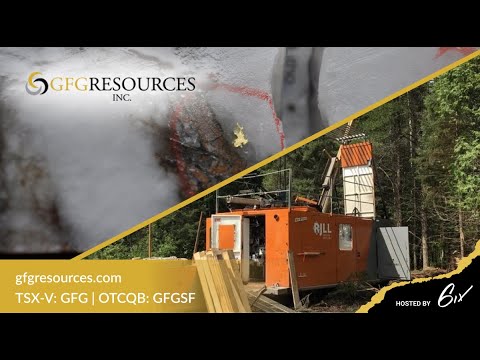
0:36 a fact sheet, and some of the most recent press releases from GFG resources. Now without further ado, I'm going to hand it over to Brian for the presentation. Thanks very much Jane, and thanks for listening in today for GFG's webinar on our activities in Timmins. We get a lot of questions, first and foremost, about what GFG stands for. And GFG was founded by a couple of Jonathan's. And ironically, GFG stands for Gift from God or Go for Gold. So today we're going to introduce GFG and we're going to talk a little more about our assets in Timmins and down in Wyoming and what we're going to be excited with with GFG. So as an intro here, you see a picture on the intro slide. This is where the drill is currently sitting. It's in Timmins and it's actually on the Nib Prospect. So we're gonna talk to you about a few targets and where we're going with this asset.
1:28 Before I go into the technical details, I will flag that I'm a geologist, an explorationist, and an optimist. And with that, I will make forward-looking statements. So looking at GFT at a high level, we are a compelling team and management and board, And we set this company up to really focus on district scale assets. And coming out of the sale of Claude Resources, which is what this team did historically, we really felt there was a compelling opportunity in the district scale landscape. So we set about putting major land positions together in big belts, looking for tier 1 style systems. And the really strategy around this is to be aggressive, you know, to have the capital in the bank to go and make the next relevant discovery. So today we're gonna talk to you in detail about both our core assets, Timmins and down in Wyoming.
2:19 Before I go into the details on that side though I'll focus a bit on the share count. And this is our trading characteristics and share structure. We would have 132 million shares out and about 7 million dollars in the bank. So this is a very well-financed company with a strong balance sheet and that allows us to be aggressive. Now, looking at our shareholder base, I think what you can see is a compelling list of very seasoned resource-focused investors. SSI and Gold 2000 and the 1875 Group are all in Switzerland. I'll also flag Alamos. This is a seasoned mid-tier that has recently invested in GFG and is our largest shareholder. Insiders hold a very relevant position of this and have purchased that all in the market.
3:06 So I think you have a very compelling and supportive shareholder base. Now looking at the chart, you know a couple very salient points. This was Discovery and Timmons and and that really changed the path and trajectory of this company. This was bringing Alamos on and actually doing the financing that you see down here. So that has set us up very well. We executed summer field programs and recently we turned the rig back on. And in this time frame over here, you see us trading in the sort of 25, 26, 27 cent range. So quite a compelling company, I think, with a very strong balance sheet and good liquidity and strong shareholder base. This is a transaction oriented group and looking at the list of people involved here you'll see the executive team, myself, Rick Johnson, Mark LaFaize, we're all ex-cload.
4:04 We've ran companies, we've made discoveries, we've sold them and transacted and returned very good value to our shareholders. The board of directors also very seasoned. Patrick Downey, Steve DeYoung, Brian Booth have all ran gold companies and largely transacted in terms of moving them into mid-tiers and majors. So you get the picture here. This is a technical team working hard to drive transaction and build shareholder value. Now when we look at this space, and this is the macro view in my mind as an explorationist, this graph is published this year by MinEx Consulting, and really it shows the discovery trends. Now, what you see here is exploration expenditures and the cycle of the gold space.
4:54 So peaks in exploration expenditures you can see in the red lines, and the discoveries in the background. So what is this telling us? Ultimately this is telling us that the discovery return is becoming more challenged, fewer discoveries, more dollars being spent and less discoveries being made. So how does this relate to GFG? Ultimately, this is why we set up GFG. We set ourselves up to be district-scale explorers. We set ourselves up to fill this gap. And I think that is key to being an investor in GFG. Relevant discoveries will be acquired. They're very rare and they ultimately drive our strategy. So what is GFG doing to solve this problem?
5:41 We work the cycle, we understand the cycle, and with that we have consolidated major belts in both Timmins and Wyoming. We're using modern techniques and a district scale philosophy to drive discovery. And ultimately, this starts with people. You better be investing with people that have a good track record and are responsible to shareholders. And I think this team does it. So why gold exploration? Why GFG? We're doing the right things. We're doing things differently. We have the belts consolidated and we have a balance sheet to go out here and be aggressive. And when you look at where we work, this is our sandbox in Timmins. And I like to think of this map as about 100 million ounces. Historic production, current reserves, current resources.
6:27 Now that's checkbox 1 in Dumont. Now we also look for who's our neighbors. Is there a natural chance of acquisition down the line? Is there infrastructure present? So when you look at this belt here, you have a number of majors present. Newmont, Pan American, Alamos, IM Gold, all present with infrastructure in this belt. And GFG is the second largest landholder here outside of Newmont, about 700 square kilometers west of Timmins. And if you look at the history of discovery in this belt, west of Timmins is where the most relevant discoveries have been made historically. Lakeshore Gold, founded by Brian Booth, found the Timmins West assets. Probe and David Palmer found Borden, and ultimately Trelawney found Cote down to the south here. And the theme is very relevant discoveries west of Timitz.
7:23 That broke the historic mindset, the metagamy fault, cut off the camp, that's not real. And GFG holds the next 60 kilometers of extension, abutting Newmont on one side and Pan American on the other side. So we really feel this is the right place to make discovery. Making discovery is likely to drive acquisition, and there are a number of candidates to do that. And our largest shareholder is reflected in holding infrastructure on both sides of us. So this is why we are where we are. Now looking at the land position a little more, this is about 60 kilometers of belt and I'm going to talk to you about a number of targets here. GFG put together the built scale land position through consolidation. We've been exploring it for 2 years. We've drilled about 12,000 meters and we've announced relevant discovery at Slate Rock, at Nib and along the Deerfoot corridor.
8:17 These are all relevant discoveries announced by GFG, and it's where we're currently focusing our drill dollars, noting infrastructure highway to the north of us and railway across the property. This is a great and productive area to find a mine. And we truly feel there are a couple of mines in this belt. Now, talking exploration philosophy, I'm not gonna go into a bunch of details, but we felt the cover here was the opportunity for GFG to take advantage of. Till cover 10, 15, 20 meters thick hindered historic exploration. So we built a data set of about 1,000 till samples across here, and what has it shown us? It showed us and outlined relevant high-threshold gold and till anomalies in targets that had not been historically recognized.
9:08 That's how discoveries are made. Going into a belt, consolidating it and doing something different. Now looking at the data, we do a lot of work with gold intel. We look at the grains, not just are they pristine or are they rounded, but what the host rock was from, what their internal composition was. And this all helps us vector to where the gold came from. And All this tells us is there are relevant gold deposits in this belt. And when we look at the drilling, the proof is in the drill bit. And this is very relevant. Okay, so GFTs drilled 12,000 meters. What have we found? 71 grams over 8.5 meters at NIM. Very high threshold gram meter product. Shallow new discovery announced in April. The HGM and Crawford systems are quite productive, yielding economic grades and widths from also shallow depths. And I'm going to talk to you about a couple of earlier stage targets, because I truly believe taking a balanced approach and texting some early-stage regional targets is appropriate weighting within your exploration strategy.
10:10 Now going into a little more detail here I'm going to zoom into the Nib area. Nib is at the end of this porcupine basin and it exists on a northeast trending structural orientation. It was a historic showing outlined from the 50s, 60s, 70s and GFG stepped off 100 meters into a swamp and drilled 71 grams over 8.5 meters. We feel there is good potential to grow it. It's wide open at depth and we see great potential in a proximal environment, both to the north and south. When we look at the strategy at Nib, This was our discovery hole, 71 grams or 8.5 meters from a shallow depth. Foot wall vein systems developed up against this ultramafic contact that are also hosting visible gold. So you have a primary, a secondary, and a tertiary vein system developed over about 200 meters of prospective diorites up against an ultramafic contact.
11:06 We like this setting. We drilled it first in 2018 and we've announced our relevant discovery in 2020 this year. Up to 500 grams. If you just took the visible gold bearing interval, 190 grams over 3.2 meters. If you looked at the envelope it was 71 over 8.5. That's the sulfurized and veined envelope to the whole system. So what are we doing? As I said when we started this presentation, the rig is actually sitting on this collar as we speak today. We're going to drill 25, 50 and 100m step-outs around this at depth and along strike. We plan to test the initial showing of the shallower holes and push the deeper holes all the way down to the ultramafic contact.
11:52 Much of the gold here is hosted in the wall rock, so we're very excited about this system and the historic intercept that we returned was near Truwin. So an exciting new discovery at shallow depths outlined in April of this year and the rig is currently turning on it as we speak today. Now this isn't our only target and when we look at the belt we've always felt there was relevant opportunity to make multiple discoveries here. So here we sit in the western end of the land, eastern end of the land position. And if you wanted to map Porcupine Duster fault zone, it is essentially the break between the Kidman Row and the Tisdale Assemblage Geography. And there's a couple strands to it that exist here. And this is our structural interpretation based off the detailed mag. Now we like this corridor. It's about 5 kilometers long. It hosts the HGM occurrence, which is about 20 holes into it. The Crawford Discovery of GFG, which yielded 21 grams or just less than 2 metres.
12:51 And the Sewall system, which has about 40 holes into it, acquired by GFG from Alamos about 3.5 years ago. So we have a 5km corridor. We will be drilling at Crawford and here's a cross section through Crawford. Only tested very shallowly historically at about 100 metres depth, but we like the setting. Lots of porphyries in this environment, lots of cyanites in the footwall environment and good folding structures along the Porcupine District corridor. That's why we like what we do. So we're going to be drilling back underneath it. At HGM, we feel the Western extension is quite compelling and I'm going to show you a long section view in the next slide. Now there's a new target that we're going to talk about and probably going to hear GFT speak a little more about. We actually like this environment north of Sewell and only a couple holes into it so far, we've turned 2 or 3 grams, but we've completed a number of holes up into this environment and we're seeing mineralization that looks like Sewell on sub-parallel structures, and that's quite an exciting target as well that we're active on. So the Deerfoot Corridor is certainly an area that we're gonna focus on in this current drill program, and HGM, Crawford, and Sewell North will all be part of that.
14:03 This is a long section view through the HGM system looking to the south. Now why do we like this? You see 234 zones of mineralization spread out through a maple organic package. Highly strained, porphyry thickening with depth and the vein systems developed along those porphyries and within those porphyries.
14:24 So GFG has modeled a westerly plunge and we plan to complete a number of holes on that westerly plunge in the current program. Now we have a couple targets here that I'm gonna speak towards that are a little earlier stage. And as I said, the philosophy of GFG is to take meterage allocated into known high-grade hits, but also take a number of targets and give them the first pass test. And Broadway is certainly one of those. This target was drilled in the 50s. We drilled 1 hole in it last year and we had 7.5 grams in a step out hole, 250 meters, good veining, good structure, good alteration. We did a lot of work this summer. We extended the system a kilometer to the south and we really felt there was a compelling thesis to step out to the south.
15:11 Viewing this in a little different format, You've got the geology on the left, IP, resistivity, and chargeability in the center, and the mag on the right. So drone LIDAR covered it, rebuilt the structural model, and GFG plans to step out 250 and 500 meters further to the south. We think this corridor is capable of yielding the next relevant gold discovery for GFG, and you're going to see us drill test this target in the next month or so. A second target that is earlier stage but equally as compelling is boundary. And boundary, for reference here, is in the eastern, north-central, northeastern part of the land position. Why did we come here? Gold and till, really clearly that.
15:56 The line I'm drawing here demarcates the limit of pristine gold grain contents until an up-ice direction. So you've passed the source.
16:06 We prospected this area heavily last fall and we found 6 new gold showings, all greater than 2 grams per ton, outlining a three-kilometre corridor without a single drill hole in. That's how discoveries are made using till, using your structural model, going in there doing the work on the ground, finding new showings and GFG is drill testing this target as well. 4 holes will go into this target in the current program. This one in particular, 12 grams, and these 2 over here are very much our focus. Very exciting setting where the next discovery from GFG could be made. And the final target I'm going to talk to you about is at Slate Rock. And I don't spend as much time on this because it's a target we'll test next winter. Suffice to say, we came here because of Golden Till. It's a large intrusion hosted gold system, very intense alteration over 100 plus meters, lots of 50, 80,100,200 ppb stuff.
17:04 But where's the focus? Well, we outlined visible gold in 1 hole off the lake last year, and it only returned 2 grams. But any geologist in exploration knows that when you've got a dozen grains of gold in it, definitely worth following up on that. And you're gonna see GFG drills, mice holes on this target in Q1 of next year.
17:27 The other property we control in Timmins is the Dore block. It's in the southern Swayze. We spent less time on it. It's more immature from an exploration maturity perspective, but we really feel this could unlock the next discovery as well. Right now we're focused on the Penn Block and we're working Dore likely next year. So we remain focused on the North of the 2 blocks. So overall, when you look at GFG, we're going to spend about $3.8M this year and drill 12,000m. We announced relevant discovery in April and we doubled our budget. We raised $6 million and we came back out in the second half of this year and we're going to drill 9, 8500m.
18:09 That program started in late August. And if it's a target that's in red on this map, it's likely to see drilling in this program or in Q1 of next year. Initial drill results to market late October, so I think the timing's great, and continuity of drilling through the remainder of this year and into next year as well. This company is well-financed, we'll finish the year with around 3.5 to $3.8 million in the bank, leaving us well financed for 2021 as well. Now, Timmins is half of our portfolio, and we set this company up to be a district scale Explorer with more than 1 legs to the stool. And Rattlesnake Hills is that other leg. It's in Wyoming. It has about $40 million US spent on it and 100,000 meters of drilling. TFG controls it 100%.
19:00 It's directly analogous to Cripple Creek and Wharf Mines in terms of Eocene-aged alkaline gold district place. We think there's good scope to grow a heap-leach-style, million-plus-ounce system in this belt. Up until April, we were in partnership with Newcrest. And Newcrest was a great partner, did great science, good work for us and with us. And what they're really focused on is looking deep and looking at 700 meters, 800 meters, a
19:30 kilometer depth. And we focused down there with Newcrest, and we drilled some holes up to almost 2 kilometers long. We weren't focused on the shallow oxide environment, because that didn't meet Newcrest's size threshold, and ultimately, they were writing the checks. So we drilled some deep holes. We hit porphyry. We hit the diatremes. It just wasn't high enough grade to continue keeping Newcrest interested in looking for a tier 1 style system. They need 5, 10, 20 million ounces to be relevant from their point of view. So they returned it to us in April. GFG controls it 100%. There are a lot of holes, 1 to 200 meters, 1 to 2 gram oxide style intercepts here. There are 2 deposits, Norrstok and Antelope basin.
20:16 And there's a district under control here in a great belt. So we think the fertility of the system has been demonstrated. We think there's good scope to grow it. And when we look in more detail at it, Here's what we have to follow up on. Antelope Basin to Norrstok is about a kilometer. This is where Newcrest was focused. We're not looking at that. But our deal oxides go down to around 150 to 200 meters depth. So the plan of GFG is to undertake a strategic review. We announced that post Newcrest departing this asset. And I think we can find the right partner, or the right structure to advance this in. Now, GFG's challenge is, our dollars are going into Timmins, and this project needs 4 or 5 million US a year. So the strategic review is ongoing and I'm optimistic we can guide the market
21:09 in the coming months to 0.25 about the appropriate structure to advance this asset. As a reminder of the opportunity here, GFG's last hole was drilled in 2017 before Newcrest came in. It returned 100m of 0.8g from 40m depth through another 60m of 0.6g and another 50m of 0.6g. So this is a large scale gold system. There's good potential to grow it. It's permitted, it's drill ready, and we think there's good value to be unlocked here for GFG shareholders. We see good opportunity to grow the deposits in a brownfield environment. And we see good opportunity to make regional discoveries in things like STP and West Baldy, where we've permitted these targets and taken them to a drill ready stage.
22:00 So in summary, I've talked to you about TFG today, and I think we control 2 very compelling district scale assets. We've got a technical team that has found deposits before, we've operated mines, We've transacted to build value for shareholders, and we've got a proven ability to finance with a strong balance sheet, and that is key. It's key because it allows us to be aggressive. And if you look at how we operate this company, the dollars go in the ground. Our DNA is about 1 million dollars a year. Everything else goes in the ground. I think one of the interesting points, and I guess the value in log here, is that GFT's already announced relevant discoveries. We've already announced high-grade hits at Nib, and even in my mind at Crawford.
22:47 And I think with the program we've outlined and we're currently executing, we have a good chance to grow those discoveries, start demonstrating continuity and make the next discovery in Timmins. And this is a fully funded vehicle and a catalyst-rich 2020 and in that matter 2021 as well. So with that, I'm going to wrap it up and we're going to get ready to take some questions. Great, thank you very much Brian, first of all for taking us through the presentation. As a reminder to everyone in the audience, you can submit questions in a Q&A panel on the right-hand side of your screen. Without further ado, Let's take a look at some of our questions today.
23:32 Brian, the first question is from Danielle. She's asking several questions, so let's just take it one at a time. She says, when you say you control the project 100%, what does this mean exactly? Yeah, both our projects are owned 100%. So if you looked at the Timmons assets you know ultimately GFT is the registered claim holder of those. The underlying interest if they exist would be minority royalty structures and any belt that's consolidated has these and and Timmins is no different having 1 to 2% underlying royalties.
24:11 So in the case of Rattlesnake Hills and in the case of Timmins, GFT is the 100% owner of both these assets. Great, and the next part of your question is a little bit more about costs. She's asking, what are your carrying costs per year in the US and what are the costs per meter of drilling in the US? Yeah, the US assets are in Wyoming, and these are on BLM and state lands. So this means you, unlike Canada, you don't have assessment work to file. You essentially pay the carrying costs to hold the land. The land position's about 135 square kilometers, and the check the GFG writes is about 270,000 US per year. Modest other carrying costs in terms of infrastructure, leases, and things like that.
24:58 But the way I view it is it's probably $300,000, $400,000 US to hold those assets in the US on that time frame. Sorry, what was the second part of that question, Jane? The cost per meter of drilling in the US. Yeah, cost per meter in drilling. If you're running RC drilling in the US, on Wyoming, our average is kind of 75 to 100 US. And if you're looking at core drilling, you're kind of in that 150 to 200 US range. So it is more expensive to drill in the US, in Wyoming, It is oxidized to a reasonable depth where most of our holes are going through. So that's driving a higher unit drilling costs, but 150 to 200 on core and 75 to 100 on RC is a reasonable estimate. Great.
25:45 Speaking of Wyoming, Kevin would like to know what you feel will be your next steps for the project in Wyoming. The next steps, Jane? Yeah, in reality, this asset has compelling brownfield growth potential next to Norrstok and Elope Basin, And it has compelling greenfield potential. We've outlined a budget that would be sort of 3, 4 million US a year. And I think that that's a reasonable path forward that would test and grow that brownfield environment to 1 million plus ounce resource. There is no compliant 43-101 resource at present, but I think it's in that scale and you have that sort of magnitude of potential. Now the next steps for GFG is obviously completing a strategic review of this asset. And what does that mean? That means we're looking at alternative structures to advance this in. Our capital is going to stay focused in Timmins.
26:37 We will maintain leverage to the Rattlesnake assets. So what does it look like? It's either a sale, it's either a partnership or a joint venture or some alternative structure like this where we bring in partner funding to advance this project. And that's really the strategy of GFGs. Maintain some exposure to success at the asset, find an appropriate partner that's technically competent, raise capital and put money into the ground, and pair that with our news flow that we're putting out in Timbers. So that's really the logical next step is to guide strategy for that asset and that's ongoing at present. Thanks, Brian. I guess this answers Robert's next question a little bit. He asked about upcoming catalysts that investors can look forward to, but specifically he also wants to know, is there a PEA forthcoming?
27:24 Yeah, I mean in the catalyst side of things, I think the most relevant piece of the puzzle for GFG is drill results from Timmins. So when you've got a ring turn in testing follow-up high-grade hits, that's really what the market is waiting for. So I think when you look at the October, November, December timeframe, the market can anticipate 2 to 3 press releases with exploration results driven from Timmins, and it can expect some strategic guidance in terms of where we're going with that asset at Rattlesnake Hills. Now in terms of running an economic analysis in any resource, this is not something that GFG is planning to publish on Rattlesnake Hills. The first step of any economic analysis is publishing a resource and I just don't think that that's the next step. We'll undertake the strategic review, we'll find a partner, so I would say don't expect a PEA, expect GFT to publish some guidance on what strategy we want to advance the asset under in Wyoming.
28:23 And in relation to Timmins, it's just too premature to think about resource. This is a discovery stage asset really focused on drilling. Got it. Thank you for the clarification. Now let's switch gears a little bit. You know when you talked about GFG, Ryan, you always mentioned that you've got district scale opportunities. Can you talk a little bit about what are some advantages and perhaps what some challenges are that come with a district scale opportunity? Yeah, look, it's what we set out to do with GFG. And when you wanna put large belts together, we felt that at the time of the cycle, 2015, 2016 was a time to move forward with that strategy. And that's what GFG did. Now, when you put 700 square kilometers together, you better have the team and the strategy to go explore it. It's an opportunity and it's a challenge.
29:19 So when you look at our philosophy, it's put the whole belt together, have the team to do it, take an appropriate regional filtering package together, which includes geochemistry and geophysics, and then build your target pyramid. Now at this stage, GFG might have 6, 8, 10 targets. And we get a lot of questions about how do we focus on those targets? And how do you allocate meterage in this scenario? So my philosophy has always been kind of 70, 30, 75, 25, in terms of putting meterage towards advanced targets where you demonstrate the system's working. You've got good hits, economic hits, and something that can turn into a resource. Take the bulk of your meterage, put it in those targets. Things like Nib, things like HGM, things like Crawford and Sewell, where you know the system's working well. And take the other 20, 25% of your budget and put it in targets like Boundary, Broadway and Slate Rock. And those are the next discoveries that are being made.
30:16 So the challenge and the opportunity of district scale land package is truly focus and doing good science to focus on and to drive your targeting philosophy. And I think if you look at our approach in Timmins, it's strategic, it's very well defined, and I think it's yielded discovery to date, and I think it's the appropriate one. I think we're the right team to take district scale assets forward, and it's ultimately what we set up this company to do. Great. With all this infrastructure around you, what do you think you really need to see in terms of grade to make it viable? Yeah, in Timmins, like Timmins as a historic camp is kind of a 4 or 5 gram underground mining camp.
31:05 And that's a relevant threshold to reach economics. Open pitable, you can look at things like Kote and some of our neighbours or even the main pit in Timmins. And those are kind of like gram, gram and 0.5 style systems. So I think if you're looking at an open pittable environment north of a gram, million and a half plus ounces becomes a critical mass. If you're looking underground, you know, 1 million plus ounces, 4 or 5 grams, definitely gets you on the radar. You can look at somebody like Bell Creek. Bell Creek is one of Pan American's mines and they would run kind of 5, 5.5 grams. Timmins West ore body in Thunder Creek of Pan America would run 2.5 to 3.5 grams per ton in a bulk underground scenario. So those are the thresholds really to achieve relevance. And when we publish something like 71 grams or 8.5 meters or you know, we're publishing very high grade, mineable widths in what we're finding. And that's the most encouraging thing about what we've seen so far in Timmins is economic hits on new stage targets at shallow depths.
32:11 Now, how do you plan on raising capital in the short term? Yeah, I mean, GFG, since being published 3.5 years ago, in reality, we've been a bit hand-to-mouth. And I think shareholders have always struggled with a balance sheet that isn't robust enough to have runway to create momentum in the market without putting a financing in front of people. Now this April, we were able to turn the corner on that and ZFT set about to raise capital in April and we were trading at 7 cents before we announced the discovery in Timmins. We immediately bolted to about 17 or 18 cents. We had lots of money offered to us.
32:57 We took $6 million, But we took it at a premium to market with no warrants. And we sent about another $6 million to the market. So that supported good share price performance. But it also really drove strong balance sheet. And if you look at today, GFG would sit right around $6.5 million in the bank. We're funding a robust exploration program. We will finish the year still with 3.5 to 4 million dollars in the bank. More than adequate to fund this next year's program as well. So that's what I think the capital strategy is. There's no need to raise in the short term. In the medium to long term, exploration companies all need to raise capital. And so I think 2021 Q1, Q2 might be a time frame where we could look to do something, but the runway is definitely a ways out and I would like to see us also formalize what our strategy is with respect to Rattlesnake so no capital raises in the near term.
33:59 Speaking of timeline, Lewis is asking is there a relevant timeline that GFG would have the 43-101 for the Timmins Gold District? Well, like any project that's material to a company, they have a 43-101. So there is a 43-101 tech report that exists on the Timmons land positions, which we would have published when we transacted to enter into this belt. Now in terms of, I think probably what Lewis is alluding to is the presence of a resource driven within a technical report. I think at this stage this is still a discovery story. So we've announced good hits, economic hits at a number of targets. I think what GFG needs to do is start stringing those together and showing continuity to them.
34:48 It's premature at this stage for me to comment on resource development. I think what you need to get TFT focused on, what we need to focus on is executing the program this year, likely another program next year, and then look at standing back and saying, okay, where are we with respect to our resource or technical report? You know, I think there's the focus is really on demonstrating continuity and growth to these deposits and showing scale at this stage as opposed to publishing a resource. Now Brian, what do you think motivated Alamos to become a strategic investor? You know Alamos is a very competent and technical mid-tier and they have a good track record of growing assets and identifying belts they want to work in. So GFG's always cultivated corporate relationships and we have strong relationships with all of our neighbors.
35:45 And so when we published a good result here in April, we simply went back to our corporate relationships and said, here's what we found, here's a good technical update of where we are. And a team like Alamos who recognizes the opportunity and ultimately holds infrastructure on both sides of our property, looked at it and said, we like these guys, we like their methodology, we like their results, we'd happily become a shareholder at a 9.9% level. So the conversation was really simple. Their team did a fairly extensive technical review and ultimately liked what they saw in terms of the land position and what the approach of GFG is. So they came in, they were the lead order at a premium to market deal and we filled the rest of that financing with our existing institutional shareholders. So very, very limited warrant overhang on this company and those few warrants that do exist are all held by our largest shareholders and don't come due for any time soon. So I think Alamos is a savvy team.
36:50 I think they're a strong mid-tier with a balance sheet and growing free cash flow yield. And they're very much focusing on hub and spoke philosophy and their belts. And you look at it in Mexico or you can look at it in the Abitibi. These are belts they want to work in and they continue to be active in and they look for groups that are doing good solid work and belts they want to be in. So they're a very, very supportive shareholder in the relationship street. Great, it's good to hear your good relationship with Alamos as an investor and the background of how they became a strategic investor. I don't see any more questions coming in right now, so I think we'll wrap things up here. I want to first of all Thank you, Brian, for taking us through all of the presentation and answering all of our questions in detail. And of course, thank you to our attendees who submitted questions today.
37:40 If you did not get a chance to get your questions answered or if you think of another question after the summit, please feel free to go to GFG Resources website at www.gfgresources.com for more information. Again, the presentation today is in the handout section for you to download, as well as with some additional fact sheet and news release information you can also download. You can also reach out to the GFG resources team at info at gfgresources.com or call them directly at 306-931-0930. And they'll be happy to answer any of your questions. I did see some questions in the public chat about how people can invest in GFG resources.
38:29 Remember they're listed on the TSXV under the ticker GFG. Now I'll hand it back over to Brian for the final word. Thanks very much, Jane. And thank you everybody for listening in to GFG story. I think what you see is a very credible team, strong science with a lot of really good catalysts to look forward to in 2020 and 2021. So we thank you for your interest and as Jane mentioned, please reach out to us if you have any further questions. Thanks very much. All right, thank you