Transcript
Automated transcript · Written by software from the replay's audio. It can mishear names and figures; the replay is the record.
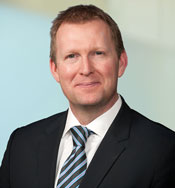
0:03 Good morning, good afternoon, or good evening, depending on where in the world you're signing in from today. I see everyone from Australia to Kuwait to Alaska, so this is one of the more international audiences I've had in a while. Thank you all for joining us at the odd times of the day in which you're logging in. I've got with me today, Brian Skanderbeg, President and CEO at GFG Resources. Brian, how are you? Excellent, Romeo. And yourself? Good, good. Feeling in the Christmas spirit, which is always fun at the beginning of December. But I know you guys had some big news recently. So that's what I'm eager to talk to you about today. I got some stuff I'm going to bore you with first. So just how today is going to work for folks in the room. I got some questions I'm going to throw up, Brian, but keep in mind this is an interactive event. There's that chat button on the bottom right of the screen. At any point during today's event, please do feel free to ask questions. I'll try to get to all of them. If for whatever reason I don't, I'll still make sure that the GFG team gets it.
0:50 So I'll send them the whole transcript. So please do ask away. We'll try to get to as many as we can today during the time that we got. I'll also say that today's event is being recorded and will be available for replay probably before 05:00 Eastern time. And that will pop up right in your inbox if you're here in the room, but otherwise it'll be on Six's YouTube channel and right up on this exact same link on our platform. There is all the boring stuff out of the way. So Brian, I'm gonna get right into congratulating you on the latest results from Aljo. What excites you most about what this program has revealed about the system? And what does it tell you about the potential we're working with here? Yeah, look, we put the release out yesterday, a couple days back, Romeo, and it was one of the broader intercepts we've seen at Aljo. And that to me is the key piece to it. We've been drilling away at Aljo for 3 years, 3 main zones, main hanging wall, foot wall zones, some super high grade 1 to 5 meter intercepts. But, And we have seen some that are, you know, 678, 10 meters as well. But this is the first one where we've seen a broad enough width through multiple zones to put together a composite that's greater than 50 meters.
1:56 So that to me was one of the key take homes here is, you know, there's enough stacked veins that are close enough together that start painting a bulk mineable picture. And that was one of the key take homes of the release. That was the headline to it all 71 meters, just over a gram per ton. The other piece was that we drilled the deepest hole into the footwall and we're down there 3,400 meters. And this is deeper
2:24 than our footwall zone had been penetrated and tested before. And we found new mineralization down there. Not super high grade 10, 20, 30, 50 grams, but you know, still 1246 gram per ton material in the first hole that we've pushed or in another hole that we've pushed deeper into the foot wall. So the take home is When we drill deeper, we find more yet and we find better aspects to the system. To me, those are the 2 key take-homes. One was good bulk monomial widths within Main and Hanging Wall. The other is there's more to be found here. And yes, we've pushed footwall further, but we've also got pending results from a long strike as well. So those to me were the 2 key take homes or at the release that really excite us. Awesome. Now I know what you mentioned, we'll get into the deeper, the details here, that whole ALJ 2530 returned the broadest zone of mineralization to date in ALJO, 71 meters, starting from just 11.5 meters depth.
3:24 I'm curious for your perspective on, if you could walk me through, what that near surface discovery means for the project's development potential and economics. It's pretty significant from my perspective. Yeah, look, I mean, whenever you're trying to put, you know, one thing is tying these things together, improving continuity, improving mineability. So, yes, we wanna grow the analysis. Yes, we wanna improve the mineability. We wanna improve scale. But this aspect of economics comes into play at any point. You want to start driving towards growing the system towards something that becomes an economic mine. So if you can put a bulk mineable system in a very near surface environment,
4:04 even if it's a smaller pit, even if it's like something that opens up how you might access something underground in the future. That aspect is really key.
4:16 When you ever start putting economics to some of these resource models, they're immediately focused on the lowest cost mining piece, which is always open pit. Starting at 11m, 7m bulk, and really key to demonstrating continuity, finding enough fiends that are stacked together, and showcasing a different aspect to the system where you might have something that becomes attractive to a mill in the area where you think about it and all of a sudden something's a near surface modest size pit and you're like, look that has attractive economics to some of our peers and some of the producers in the area. So lots of reasons
5:00 to like this bulk mineable thing, both from a system perspective, but equally from an economic perspective, given where we sit in camp and the number of mills around us. Okay. I know we talked about the discovery of the new footwall zone, that FW4, in addition to extending FW3. So obviously we're kind of evolving our understanding of multiple mineralized zones. Does it change your geological model and what does it suggest about the scale of the system that we're defining at this point?
5:32 Well, you know, sadly, I guess we've we've found and in a positive way, we found new mineralization, 2 or 3 different episodes into this is we've explored football further. And even with our first hole, what's some of our first holes in Eljo, I think it was hole 4, we drilled 13 meters at 13 grams over 3 and a half meters and that was foot wall 1, right, and that was our first deepest hole. And then we found foot wall 2 and we found foot wall 4 and you know the audience might be thinking well why don't you just drill a deep hole through it all? But in the end, we're trying always to make the most of the meters and we might push a hole past 50m and see some rock that wasn't as interesting and terminate the hole. As it comes to our understanding of our geological model, a lot of the mineralization is both within veins and within porphyry contacts.
6:24 We had this nice swarm of porphyry dikes and then we've drilled deeper into the footwall. This particular intercept down there also shows more porphyry diking, shows some good veining. And so it's just, it's more of the same in terms of some of the host controls. That being said, it helps us refine the character of the basaltic host rocks. So getting technically certain iron rich rocks have better
6:49 potential to host gold than certain magnesium rich rocks. And down there we saw the right type of basalts as well in confluence with the porphyry, diking and gold mineralization. So there was a few different aspects that we quite liked in that deep hole and it will certainly lead us to drill other deep holes. I would also point out that as part of the same program we took the step of deepening a couple other holes. So we do leave our collars in and with the design and with the understanding that there's still a rock at the bottom of these holes that may be perspective. So we did enter in a couple of old holes, extended them and those results are pending amongst the other 9 holes, or I guess 10 holes that we've drilled as well. So, the geological model evolves, we create a new zone, we anchor in our other zones, we create a bulk mineable resource domain near surface.
7:47 So, even though it was only a few holes, definitely some big forward steps in terms of the understanding and the detail of the geological model. No, great. Appreciate that context. Good to slowly build together your understanding. I know you're launching a pretty aggressive 90-hole Sonic drill program across Goldarm, targeting basic till sampling along 15 kilometers of pipe stone. Can you explain the strategic thinking behind this regional approach and What you're hoping to discover in these unexplored areas? What does success look like for you there?
8:21 I'd have to walk you back to when we first came to Timmins. And so we came to Timmins in 2018 and we started out on Penn and we built this massive land position. We still have it and we're still exploring it. And then we added this extremely large land position out east of Timmins that had Aljo as a more advanced target. But we put it together with the understanding that here's a really thick covered area, extremely immature in terms of exploration history, but has the right signs there and is right near infrastructure. That's why we put Gold Arm together.
8:54 We started with Aljo and we drilled at Aljo and we drilled at Montclair and this is on Gold Arm. Our true vision for why we put these land positions together in Timmins is to go find that elusive elephant underneath 10, 20, 30, 40 meters of cover. There are broad areas in both Penn and gold arm that are under extensive cover. The 90-hole sonic program is designed to take about 15 kilometers of strike length and give us that base geochemical layer to explore in. We might like the geology, we might like a couple of the showings there, we might like the setting in terms of infrastructure, but there's not a really a good way to target to get to the stage of
9:44 saying, here's a concept to here's something that is actually a bona fide drill target step up, let's go test it. The Sonic program is designed to say, let's filter this whole 15km of strike length, let's cover it on say half a kilometre to kilometre segments and let's look for anomalism in the till. Anomalism in the till reflects anomalism in the bedrock, up ice of where that till was sourced. And so if we can go out there and execute 90 drill holes on Sonic over the next 2 queues, which is what the program is designed as,
10:20 I think it gives us a good chance to find the next Aljo, the next Montclair, the next Cote in terms of a relevant sized Gold system undercover. Our neighbors, like super strong exploration team Monarchs right next door using good methodology to find a new discovery in the right rocks right next to us. All that did for us was proof of concept of why we really need to go and push this regional program. We like what we're seeing in Alto. We're going to keep exploring it. And we see the prize as the next big discovery outside of Alto in what it's in. So what we're hoping to find is the next Gold system. And we might not find the next deposit but the next deposit will be in a gold system somewhere.
11:07 That's the trick, finding a new gold system undercover, vectoring into that and this program
11:14 costs us about 1 million bucks, maybe 1000001 half bucks by the time we throw some first pass diamond drilling into it, has a good chance of driving the next phase of discovery completely on GFG's ground, right next to all these mills directly along strike from Eljo. And so, yeah, super excited to take this Sonic program and do targeting on it. I mean, interestingly, we kicked this program off yesterday. It's actually a two-rig program. We have 2 Sonic rigs out there drilling at the same time because we want to get this done in a timely manner
11:46 and continue to push the targeting aggressively as we can. By the time we get ourselves out there to the end of the year and the end of January, we should be done our 90-hole program. We should give us the good idea to get where is that next gold system and super exciting. You know, this is why we set GFT up is to go do programs like that. That's awesome. I know the drilling resuming in Aljo in Q1 while simultaneously advancing regional exploration. How's, you're looking for your strategic thinking here. How are you balancing resource allocation between expanding the known system versus looking for the new big discoveries across the broader gold area? 2 things drive that. We have an option agreement with our vending partners and we need to spend about 1000001 half dollars of the $2 million that we've already spent some, but by next April. So part of this is ensuring that we put the dollars in the ground to vest the ownership under this option agreement.
12:47 So that needs to come and that's certainly a priority. We have a good balance sheet. But equally, your question is,
12:55 how do you split your dollars? And how do you split, to me, it's how do you split risk?
13:00 And what we want to be doing is taking the majority of our dollars, and if that number is 70% plus or minus 15, we want to be putting that into a resource scale, advanced scale drilling, because those results are most likely to build resource scale, valuable per ounce. And a discovery piece offers us the big upside, comes with us with the risk that's associated with it. So if we can take 30% plus or minus 15% and put it into these regional first pass generative programs, I think that's the right weighting. You know, think about as an individual investor, everybody's different.
13:47 I like to have, you know, 70% of my investments in banks and financials and things that are real good anchor businesses. And I like to put 30% of things that can make me a 10-bagger. And so we think about our exploration portfolio in a very similar manner where we're cognizant to news flow, we're cognizant to risk, we're cognizant to return to capital and because of that, the majority of our budget will go into advanced targets like Aljove, splitting it, but we're explorationist. Our shareholders invest in us to
14:17 make a big discovery. And if you're not going out there and testing 3, 4, 5, 6 new concepts a year that offer you discovery potential, you're probably not aligned with what your shareholders are necessarily invested in, my perception of what people invest in us for. That's about the balance we wait. In the case of 2025,
14:38 we would have spent plus or minus $3M, $3.5M in that sort of Aljo and regional Aljo area and a couple of million bucks out on Penn. Now when we talk about 2026, we're going to spend around $5M as well in the ground. Alto is a big component. Obviously, the Gold Arm Walker Roky car is going to be about a $1.5M project. So that's the weighting. You'll see us Penn probably weighs into our budget as well too, in terms of where we're looking to spend. So it's a balanced approach, but I love the concept of going and testing 4 or 5 new targets while we advance something to a resource stage. I appreciate that. That's a thoughtful answer. I know you emphasized that the high-grade mineralization shows that strong affinity to the mythic volcanic break is near the Pipestone Fault. What does this geological
15:30 relationship tell you about where to focus future exploration efforts, both at ALGA but also regionally? We always look at the bigger puzzle, and the bigger puzzle of the Pipestone is that most historic exploration focused right on the Pipestone, right on the fault zone that defines something like Fenn Gibb off to the east of us or Clavos to the west of us, each of those being 1Moz in case of Fenn Gibb probably pushing 4Moz.
16:01 Those deposits are right on it. But some of the more recent thinking flags are a perspective panel of rocks up to a kilometre away from it in the north side of that. What we look for is certain textures and certain chemistries of rocks. Many of the systems, the new systems we're finding, have a lot of primary controls to them. By that I mean the primary host rocks and the textures of those are really playing a strong key in the gulbinolization.
16:32 If we're looking for primary porosity in these volcanic rocks, sometimes they're breches, sometimes they're tufts. Generally, we're looking for an iron-rich rock and we're looking for the intersection of those with structural corridors and these porphyry dikes. As we evolve our thinking and thinking towards even something like Argus at our neighbor, Elnonex, you can understand their system. You can see what it means for targeting. We can look at our land package and say, here's another 10km of ground. Where is that perspective belt of stratigraphy?
17:06 Where are the right structural corridors? Where do we need to place these sonic holes? Where are the showings already? Because we already have 3 or 4 showings that are quite advanced within the Gold Arm block that have seen some drill testing, but maybe not since the 80s. How do those relate to our geological model? We live and learn. We started with Montclair on Gold Arm. We advanced over to Eljo. We've had some neighbours make relevant discoveries. We take all that and build that ecological model. But the take home away is that some of these primary rock volcanic textures and the relationship of those to the golden realization, very key. So you can flag a preferential horizon, preferential pieces to take with you and then design your programs around that.
17:53 Okay, I want to zoom in on a couple of targets of yours, like McChristie, Fournier, Carr and Nahanni specifically. I know some have historical results up to 80 meters of anomalous gold mineralization. I've got 2 questions. Why do you think they've never been adequately followed up on? And what gives you personally the confidence that GFG can be the one to unlock the potential here? Sure. So just for context with the audience, we're going out and completing a 90 hole drill program, Sonic drill hole program.
18:24 In parallel with that, we're going out to do a diamond drill program. The diamond drill program is actually going to start with it next week. And so here we are, we're going out to generate new targets, but there's actually 3 or 4 areas that have seen some historic drilling that are of drill-ready caliber. We can step up there and go on to work. I'll use Nahanni as an example. Nahanni has, you know, 3 holes in an area that's over a kilometre in strike length. It's in precisely the right geological setting we'd like to see directly north of the Pipestone Break. It has the right characteristic for host rocks when we look at those logs from the 1980s.
19:02 It has broad anomalism up to 80m. What do we mean when we say that? It has anywhere from 50ppp up to 3g over most of that 80m. We're just looking for the system. You hear me talk about finding the system. That drill hole shows there's a system working there in very broadly space drilling, kind of half-kilometer space drilling from the 80s. Why has nobody gone back to look at that? That's just the pieces of data that get lost in history. Then, and even the Pipestone break was maybe not as well thought of going back 5 years or 10 years or 15 years. So people forget about it and don't put the emphasis on it. Then all of a sudden somebody can make some discovery along the structural corridor and you go back and you think about it. And when we acquired this block of ground, we knew there was some showings on here that were advanced, but we knew most of it was a pretty plain canvas.
19:56 So Nahanni shows us a good grade, right systems, right porphyry, right rocks, right area. And We can step up there and drill it. It collared right in 0.3 to 0.5 gram material right underneath the till. Whenever you collar into bedrock mineralization like that, you know you haven't seen the whole picture because there's mineralization back behind you if you're drilling an inclined hole. That's what we liked about Nahanni in particular. Fournier and some of these other showings off to the east, They have up to 5g in vein systems, they are a little different systems in terms of the characteristics to them. But in the end, each of those areas have 1g, 2g, 5g material in a sequence of holes typically less than 3 or 4 or 5 holes and they show you a systems working and You know many of those holes core can't be located data support quality We can't go back and log them So we'll go and put a couple holes through those and build their own data set, understand the controls, see if we see the right system. Maybe they weren't sampled properly, which most of them weren't, so we'll sample them very broadly to look for any anomalous halo.
21:13 There are 4 showings on the greater Gold Arm property that you're going to see GFG go and test here before Christmas with about a 1500 to 2000 meter program. Okay. Now I know you did mention operating an infrastructure rich Timmons, You've got a strong balance sheet following recent financing, all awesome stuff, obviously. And as you head into 2026 with multiple dual programs planned, what milestones should folks be watching for? For the investors in the room, how do you see the next 12 to 18 months shaping up for GFG? What should people be waiting on Tenerife for? Yeah, I mean, if we think of just strategy and where we want this company to go you know, top of the list is news results and draw results out of Aljo.
21:58 So We drilled 12 holes here back in Q2 and into Q3 and some shareholders came in, oh, you're really slow getting your news release back out and aren't you pending assays? It just takes time. We still don't have the assays back from the latter half of that program. We're just getting some of the assays back in terms of subsequent release. So we released 2 holes 12, we have 10 holes pending assay. The holes that are still pending are underneath Aljo, on depth continuity underneath Angolzo main zone where we have interesting looking core assays pending. We also stepped out 250 meters to the east and part of that logic was here's a panel of rocks that's quite perspective, it's 3 or 400 meters wide. If you step back past one of these main dikes, very sparse drilling. So we drilled 2 holes out there, some interesting mineralization in the core. We'll see what it grades.
22:53 So in terms of catalysts, the first piece that Mark is probably going to see from us is another news release from Aljo. There's 10 holes pending. Optimistically that's a couple of releases here in December into Q1. As we think of the other side to the equation, which is the Gold Arm process, note we're drilling, as I talked about, a 1500m program before Christmas. We'll wrap that up probably around the 20th or something like this. So these are regional holes now testing 3 or 4 new targets, try to get those to market in Q1. But what I'd like to see is obviously a discovery of a new system, understanding of those systems, are we seeing the right signs in them as we step out to a regional target? In the end, we're exploring a panel of rocks between productive mines.
23:42 We know the system is generally working there. We're just trying to find aspects to it or new components to it. That's the other piece I would look for is an update on the regional diamond drill targets. Then there's the Sonic. The Sonic samples the till. We might get a basal till sample of 3, 5, 8m. We also get a bedrock sample with that, 1m. And if you think about it, the chance of hitting a system with 1m of core at the bottom of a sonic hole is pretty small. But when you do show something in there, it becomes quite relevant. So, you know, pay attention to the sonic, pay attention to the grain data. The market doesn't really get excited about grain data because it's just an exploration layer, it's not a diamond hole.
24:29 But anomalous grain data, concentrations or bedrock samples in the Sonic would be really interesting. And then the other aspect of the portfolio is Penn. And here we sit and we have 600 square kilometers out west of Timmins, Penn and Dore. We last tested the Muskego target area in Chabot, which are 2 targets on Penn and Q1 last year. We found up to 10g on Chabot in the first drill holes we drilled there. We found up to a relatively low-grade on Muskego, but we still liked what we saw. Thinking about how we advance Penn property in Dorian in 2026, look for an update there. In the last press release, we put some commentary around what we liked at Penn, which was we've seen more broad anomalism in the till and the mirror generally we just collected in Q2 and we're getting that results back. It ties to drilling that we completed in Q1 of the year as well in terms of some of the targeting philosophy.
25:26 And those 2 combined give us, you know, sort of enthusiasm for where we can go with Pan. It is a big property. There's lots we can do with it. We have had strategic dialogues of whether we would partner portions of it. And we'll see. I think as management, we still really like what we're seeing on Pan, But maybe there's a different way to skin the cat and look for partnering portions of it while we still explore portions of it. So maybe look for a catalyst in terms of the next steps at Penn. And I'm optimistic we can come to the market with that in the next quarter. Okay, so lots coming up soon. We'll do that. Absolutely. Now there is a question that came in over email that's going to ask you to crystal ball gaze just a little bit. So you know, to answer the best of your abilities. Somebody asked, when is Ontario going to consolidate its gold?
26:15 When is that wave of consolidation going to come? Yeah, you know, look, you're seeing it already and you're seeing just incremental steps to it. So what you're seeing is the big guys rationalize portions of the portfolio. So you're seeing both Newmont and Barrick sell Ontario producing assets, some of those through to other mid-tier, some of those to the new companies. And then you're seeing some of the mid-tiers acquire junior producers or merge with their peers. I would take New Gold as a good example. New Gold merged with Coor. That's a mid-tier to mid-tier, gold to silver tier, Gold to Silver company. You could take Westone as an example. Westone bought the regional land position around their property in Wawa, which was called Angus, and that was a district-scale consolidation play. So you are seeing steps of it.
27:04 You know, one of the things I'd like, and I think is really of merit is, I think the market's right. There's too many explorers out there and, you know, consolidating some of the junior explorers into a more coherent, more well-funded, more catalyst rich vehicle is merited. You're seeing some of those, but I think there's still a ways to go on that front. I'm optimistic. It's always about the people. And not everybody likes to leave their job or be paid to leave their job. But in the end, I think, you know, finding a way to consolidate some of the juniors is something you'll see. And the whole goal of this is to create a more robust, healthier junior space that's more well funded. So the juniors don't do it. I believe the seniors and the mid-tiers will do it because of the very strong gap in valuations between the 2 and because of the exceptionally strong free cash flow yield of the producers that their balance sheets are extremely robust if you took a property like Penn There's there's no properties like that out there So, you know what TFT sits on is something that's quite valuable because we did it 8-years ago, put together PEN, which is 400 square kilometers in a given block. So things like that become quite valuable in markets like this, as the free cash flow is there.
28:31 I guess to shortly answer your question about the consolidation, it's happening and I expect it to continue to happen. And particularly if Gold price remains elevated to which we believe it should and is showing it to be, that consolidation will continue. And I think it's to the benefit of all. Most often what happens is a group is quite aggressive or maybe in a strategically advantageous position and there they acquire. And you end up with a larger block, larger entity, something that's more investable, something that's more liquid. And I think that's where this goes in time. Great. I appreciate making people look into a crystal ball. I have to do it every day. I appreciate what you're willing to play ball.
29:17 Barry from the chat asked, what's gonna be the biggest factor in moving the stock in 2026? What's, what do you think is the upcoming catalyst that moves the needle here? It's drill results, you know, and 2 things, that, you know, I think sometimes you think of the drill results in Aljo and we had some feedback on our last release, all their mediocre results. I'm like, yeah, you know what, they weren't barn burners. They didn't publish a 150gm product, but we published something that was solid. So I think the market really wants to see something that is different and new. So if you're looking for something that really vault this stock and catch some traction, it may well be results from something like Nahain. And There's a broad where we could step out and show something new.
30:06 I know there's 2 holes 500m apart and they each had grade in them and there's no drilling anywhere near there. Something like that, which we're drilling in the next 2-weeks could re-rate this company and drive the next discovery. To me, Aljo results, if we can come up with something that is head and shoulders above 100gm product in that range, you'd certainly move it. Step-out holes around Aljo would move it. Something relevant underneath it certainly would be a big one. And then look for those regional ones where I think the market is just always looking for the next discovery. What I want to do is go out there and give 3 or 4 things the chance to be the next discovery and then run the sonic program in parallel with it to generate the next phase of targets behind those ones that we're going to test. The company is doing its best to get 3 or 4 pushes in irons in the fire. And if we can drill alga, we can drill step outs at alga, we can test 3 or 4 targets and we can do the general work all at the same time. I think, you know, this company has a lot of irons in the fire that can move the needle.
31:16 Awesome. One last one from the chat. It's kind of 2 part questions, so I guess I'll throw it to you as 2 questions. One is, when is GFG cashed up until? And then the second is, is inflation hitting you yet? So are you noticing an increase in expiration costs? Yeah, balance sheet at year end on our investor deck will show about $9M. Now that you'll see the little footnote on it, it's like includes working cap, includes payments. If we execute our programs this year and we continue drilling at Eljo, which we are and pushing the real route of programs. We get our $1M from the Axe, the sale of Rattlesnake Hills, which we're planning to in mid-December. We will finish the year with around $7.5M in cash. Of that, you would have around $3 million of hard dollars so that's, you know, doesn't have to go on the ground and around 4 and a half million dollars of flow through expenditures which have to go on the ground. So the short answer to your question is we're financed for about the next 12 months.
32:16 Awesome. Other question, sorry, what was it again? Is inflation hitting you? Are you noticing increased exploration costs? Yes and no. People, inflation is definitely there. So when you think about geos, building the team, executing in the lab, those pieces you're seeing software, things like this, 5, 8, 10 easily a year. That being said, we had a little surprise where we took our drill program to tender this year. We tendered 10,000m of drilling over the next 12-months and we got a quote back that was 20% less than we were paying last year. The pockets are out there. Go do your work. Go hold your contractors to account.
33:06 And in this case, we were able to find 20% more meters for the same dollars. So inflation is hitting us all. We wouldn't be in this gold environment if we weren't in an inflationary regime. So, you know, to me, you know, we are where we are because of inflation, so we can't complain too much about it, but we can do our best to manage it. And I still think if we just looked at the big picture, which is how many meters does this company get in the ground per year for X amount of dollars that we spend? It's a small rounding error. So it's not really hurting us as long as we can maintain people. The inflationary piece is manageable and modest. Okay. Well, Brian, thank you so much for letting me grill you here. I appreciate it very much. If there are any additional questions of people as soon as the webinar ends, think of the perfect question, as I often do. Please just hit it through anyway, I'll make sure that Brian and the team at Chiuchi gets them. We'll get back to you as soon as possible. I know there are a bunch of you in the room today.
34:06 Thank you so much for joining. And Brian, thanks so much for letting us run through a couple of questions. Thanks very much, Romeo. And as always, anybody who's listening, reach out to Mark or myself. We're always interested. Talk to shareholders and potential shareholders. And thanks again to 6 for the wonderful session.