
Jamie Levy
President, CEO & Director at Generation Mining
25 years in the financing and management of Canadian mining companies. Was CEO of Pine Point Mining which was acquired by Osisko Metals. Formerly Vice President of Pinetree Capital.
Replay available
Join us for a great event!

Automated transcript · Written by software from the replay's audio. It can mishear names and figures; the replay is the record.
0:08 Hello and welcome to Generation Mining's Live Investor Summit. Generation Mining is a mineral development company focusing on the Marathon Palladium project in Northern Ontario. Marathon is the largest underdeveloped palladium deposit in North America. Generation Mining completed a preliminary economic assessment in early 2020 and plans to follow up with a feasibility study getting into Q2 2020.
0:34 Today's presenters from Generation Mining are Jamie Levy, CEO, Drew Anwell, COO and Kerry Null, Executive Chairman. To kick things off, the Generation Mining team will be telling the company's story and then we'll be accepting questions. You can submit your questions in the Q&A panel on the right-hand side of your screen. Without further ado, take it away, Kerry. Thanks, Bianca. And welcome to everyone. We appreciate you taking the time to log in and hear the story. We're gonna, for those of you that are, have already heard our story, we are gonna be going over our regular PowerPoint, but we're also gonna get into the plans for this year with our new Chief Operating Officer, Drew Anwell, who's going to be talking about that.
1:24 Just to start off, we'll go to slide 3. By the way, this presentation is available on our website if you want to follow up and read it in a little more detail. So the summary of the company is that we have a 51% interest in the largest undeveloped palladium project in North America and really one of only a very, very small handful in the world that have had actual financial economics applied to them. And so we have a pretty good idea of the production going forward and the cost, et cetera. That's based on the PEA that we did earlier this year. We have a resource, a palladium equivalent ounces just in that measured and indicated category of 8.6 million ounces. And we also have another 915,000 inferred.
2:18 But what's really important about the measured and indicated is that there's about 60% of that is in the measured category. So a really, really high quality resource. The property is also located with about as good as you can get around infrastructure. Highway, town, rail, power, airport, et cetera. It's all right there, it's just outside of town. As Bianca mentioned, we completed the PEA early this year and we're following that up with a feasibility study. And due to a recent financing and the exercise of some warrants we're in a good cash position right now with around 15 million dollars as of mid-April.
3:03 That's a breakdown of the palladium equivalent ounces. As you can see, the project is heavy on palladium, 3.8 million ounces. It's also got a pretty good platinum credit and a little gold credit. There is a silver credit as well. And we've also got 1 billion pounds of copper, which isn't as exciting at $2.30 copper, but if copper gets to where people think it's gonna get in the next year or 2, once this COVID is reigned in, then that copper is going to be a really big part of our future plan. This is just a bit of a summary of the people and We've introduced the people that are on the screen.
3:49 We've also got Brian Jennings joined us in January as our new chief financial officer, very deep background. Rod Thomas, He used to run the PDAC, is our VP Exploration. Patricia Maynard has been around the mining business for 30-years, running offices and finances for small mining companies. Tabitha LeBlanc is a biologist who's our manager of sustainability. She's been with this project for 15 years through 4 different owners, including ourselves. And John McBride has also been with the project on and off for 13 years. And he's our senior exploration geologist on site. He lives in Marathon.
4:36 We've also beefed up our board of directors more recently in the fall. Phil Walford joined us as and Phil was the president of Marathon Gold until the end of last year, but he was also president of Marathon PGM when they owned this project from 2002 to 2010. So he's got a long history with the project. Paul Murphy, who's the chairman of Alamos Gold, joined us in the fall and more recently Cashel Meagher, who's the senior vice president and COO of Hudbay, joined us as a director as well. So we've got a very strong group of people here as well as the original 4 founding directors.
5:20 As I think you guys know, the project is in Northern Ontario. Ontario is a really good place to be. Right now, we've got a, the Ford government is very pro-mining, they're very pro-jobs, and they have stated that they are going to be working to not to lighten the environmental requirements but to speed them up because Ontario has historically been a bit of a slow place to get permits but they have said that they want to speed that process up and we are going to be working on our permitting starting very shortly. And this is a infrastructure I was talking about before so again we're just outside of the town of Marathon. Marathon is what supplies most of the workforce for the Hemlo Gold Mine, which is about 30 kilometers down the highway. As you can see, the highway goes right through our property.
6:11 The railroad goes through our property. There's a new power line, a 230 kilovolt power line connecting Wawa with Thunder Bay. That'll give us all the power that we need. And that wasn't there before. So that's really important for us. And that's under construction right now. And that goes right over our property as well. The CPR main line goes right beside our property and there's an airport right literally on our property as well. So we've got the infrastructure that we need. We've also got a very large property that's about 220 square kilometers.
6:45 Most of it is actually unexplored. It's pretty rugged country. And so as a result, we do have a lot of exploration that we can do if we choose. We've got a lot of targets.
6:59 We've got a lot of just drill holes already spotted and ready to go if we so choose. And we haven't really decided on our exploration program for this year. We're kind of waiting to see what happens with the virus and how our permitting process unfolds.
7:20 So the property, The history of the property actually goes back to the, I think it was discovered in the 60s by Anaconda, but from 1985 to 2010, A number of junior mining companies own this project. Over that time, they did over 200,000m of drilling. Stillwater bought Marathon in 2010 for $118M. That's what they paid for this project. That was when Palladium was just over $500 an ounce. Stillwater shelved it in 2014 when they realized that at that lower Palladium prices it was not going to be economic and the CapEx that they originally thought was going to be, It was a little bit light. So eventually Sabani Gold acquired Stillwater in 2017, became Sabani Stillwater and did very little work on the project.
8:12 So very little has been done since 2014. And we bought it last July
8:19 for $6 million and that gave us a 51% interest. And then by spending another $10 million, we can bring that up to 80%. And We've already spent over 4 and we plan to spend the other 6 within the next year. Sabani also has a back-in right, but it's an expensive one. They have to pay, if they want to buy back 31%, they have to put into the joint venture 31% of the capex. Capex in our PEA is about $430 million. So they're looking at about $120 million
8:58 bill to buy back in. I think that I can't speak for them. I don't know what their plans are, but we don't think that that's likely. I think if anything happens, they'll probably just take us over.
9:12 So the preliminary economic assessment was done within 6 months of us acquiring this project. I think that's probably a record. We did it on just the one deposit. There are 2 other deposits on the property that we didn't include. The PEA showed a 14-year mine life averaging 194,000 palladium equivalent ounces per year. CapEx about $431 million. Very good numbers. And these were done at 1275 palladium. Palladium, as you know, is around $1,800, $1,900 an ounce right now. So having an IRR of 30% at much lower palladium prices, and at current palladium prices that IRR was much higher, about 45.8%, and that was based on the price at the end of 2019, and it's very close to the price today.
10:04 So that number in the second last bullet point there is what it would look like today. And that has a net present value of 1 billion and a half dollars, which is more than 3 times the capex, which is a really good number in the mining business. You don't see that very often. Often the net present value is very close to the capex. In this case, it's 3 times. And our cash operating cost is also quite reasonable given the market that's net of byproducts is the palladium is $504 an ounce. The all in sustaining cost in that same study was about $586 an ounce. So still a very, very reasonable number. I'm gonna turn this over now to Drew.
10:50 So we've got this PEA, it's done, it's been filed. If you got a couple of days, it's about 5 or 600 pages. You can read it on CDAR. But right now we're focusing on a Feasibility Study and permitting. And Drew Anwell joined us in March and has hit the ground running. And he's going to talk about what he's been doing since he joined us and what the next, the rest of the year looks like. Drew? Thanks Kerry. Yeah, so a bit of background on myself. So I'm a mining engineer. I've worked with companies from juniors to majors. Most recently I was with detour gold. I started there in the early days of construction and finished up at the end of 2018, just before the proxy battle finished.
11:39 And so 2019, I took most of the year off. And My goal was to work again. I enjoyed my retirement, but certainly my goal was to work again and on the right project. So when I came across Kerry and Jamie, it was pretty clear that this was a pretty exceptional project. So I did quite a bit of diligence on it and cautious of something being too good to be true. And the more I dug and the more I've learned on it, the better this project gets each time. So I, like Kerry said, I joined in March and I did hit the ground. And in the time of COVID, I think I started on that the mid March and that was when the nasty stuff hit the fan across the world and certainly in Canada and we had a lockdown, but really it didn't impact any of the work that we were doing. So the first phase of the feasibility is to bring the team together. So we've got a great metallurgist, we've got 2 great metallurgists that are helping us out.
12:45 We've got a permitting person, Tabitha is top-notch in environment and permitting. And we've also got some additional support in those key areas. So with that general group, we hit the ground. So the first phase is let's look at the fundamentals of the resource. We did a review, a small audit on that, in addition to the work that's been done in the past, and that passed very well. So we're starting on the mining design. We'll start with the optimizations. We're in the process of selecting who's going to help us with the plant work. And while things are going in parallel, we also had the advantage of a lot of good solid history of the past feasibility and PEA works.
13:32 So that really gives us a good starting point for some to refresh the feasibility study, to do some trade-off studies to figure out, do we want, you know, one of the past projects had an HPGR, Do we want to go with HPGR? In the PEA, we didn't have an HPGR. So it's some of those quick trade-off studies that we want to do. We have the opportunity to learn from the work that folks have done in the past and improve on it. So really the key thing is getting a mine design that can optimise the palladium in the short term, that can maximise the Copper recoveries in the long term, to get a plant that's operable, has a digestible capital cost and a good operating cost. So again, these aren't unique things that you do in a feasibility study. It's really a balance of optimization. But, you know, looking at the past on this project, what became clear to me was, you know, every project has its time and place, and this is really the time and place for this project. So, where we are right now is we'll start, we'll get all the key groups on board to help us progress this.
14:51 And
14:52 with the goal of tidying up, finishing the feasibility, optimistically, it would be the end of this year. Realistically, it's probably the start of next year.
15:03 And Drew, I just want to follow up on something that wasn't mentioned. This project has gone through 2 feasibility studies previously. Right. We talked about that earlier. So In 2010, Marathon PGM put out a feasibility study, and in 2013, Stillwater had put out a draft feasibility study as well. So a lot of the work, it's true, it's been talking about has already been done, and that's why
15:30 the time to get this finished is very short because we've got lots of old data to use. Right, right. And to follow on that, to follow on from Jamie, again, the critical path is certainly getting the feasibility to find out what this property needs to be, what it will be in construction. The next phase after the feasibility that to be honest, will be run in parallel is also the permitting as Kerry mentioned. So it's a good time for the permitting as well. There's good motivation in Ontario and Canada to progress projects like this. Thanks Drew. So the next number of slides go through some of the PEA numbers and I won't, I won't go through them in detail. As I say, they're all available on our website, but there's a just a couple of key numbers and that I like to point out. And if you go ahead to this slide, these are the sensitivities.
16:29 And, and, You know, even if you look at the, for example, the Palladium price,
16:36 Palladium price all the way down to $900 an ounce, which is half of what it is today. We still have an IRR of close to 20%, which is a really good number in mining. For example, the 1 Palladium mine going into production, Platinum Palladium mine with Plat Reef in South Africa has an IRR of 13% and they're spending US$1.5Bn doing that. That just gives you an idea of how robust this project is compared to others.
17:11 That's just a picture of the deposit in red there with the jagged line on the side being an open pit. And this is what the bird's eye view of the site is going to look like. With the green is the open pits. There's 3 of them, one small 1 and 2 larger ones. Tailings off to the left. And the gray is the waste rock facility. The project has a very low strip ratio, about 3 to 1. And that's that 3 tons of, for every ton of ore is the waste rock that's gonna get stacked right beside the pit. We don't have to haul it very far.
17:49 We touched on the metallurgy in Drew's conversation. So there's been a number of metallurgical studies and we have reviewed those and we're looking at tweaking the process now to make it so that we don't have to grind it quite so fine. We're not positive that's going to happen, but we're going to be doing some test work on that at some point. And we're doing this to do 1 of 2 things, either to improve recoveries
18:14 or to make the mill simpler and therefore cheaper to build and cheaper to operate. So that's kind of the focus on our metallurgy right now. But these numbers are good. We would be happy to go ahead with these numbers as they are, but you know, you can make them better, you can make them better. And Kerry, just to interrupt, sorry. Just to go back, the 2 feasibility studies that were completed before, the payment price was, I think the first one was around $500, a little bit less than $500, and the second one was around $500. And the focus on that, the major revenue source was Copper. And nowadays, Copper is a credit of the PGMs. So, Drew, doing some of his testing, maybe you can talk about that. A lot of our work now is to find out to capitalise on the PGM recoveries, because back in the day, the PGMs weren't nearly as valuable as they are nowadays.
19:08 Yeah, exactly right, Jamie. So again, the focus, again, we'll talk about it as the presentation goes on, you know, what Palladium is used for. So that's what our goal is. Palladium, you know, we all have been in the metal business for a while, so prices go up and down. So while the price is up and it will stay up for the future of this operation, will it stay to the end? That's for smarter people than me to answer. But that being said, part of our motivation is to get as much Palladium as we can out of the ground and figure out how to maximize the return on that Palladium. So we have had the opportunity of an awful lot of metallurgical work, like I've said previously, and with that network, we can look at the results they've had and we can tailor a new circuit that we will go ahead in the feasibility with, with 1 that maximizes
20:03 Palladium recovery in the plant design itself. Thanks, Drew. And just one last point to make on the metallurgy. One of the problems in metallurgy in general, whether it's palladium or any other element, is how saleable is your concentrate? And how much, what do you have in there that's gonna cost you money in what are called penalties in your concentrate? Well, the consultants we had look at this concentrate, first of all said that there's no deleterious elements, or if there are, they're very, very low. And the second thing is they're not expected to draw any penalties. So we're going to get the maximum amount of money when we go to sell the concentrate
20:49 from this project. There's also a few opportunities that we will be touching on in the feasibility study and going forward. One of them is that the plan, the mining plan that we have only uses about half of the resource in the main zone. So the main zone is 179 million tons. We're looking at using about half of that. Also does not look at using the Geordie deposit or the Sally deposit, which together have about 1.5Moz of indicated resource as well as a significant inferred. So those 1 or both of those may go into the final Feasibility Study. The problem is that they will probably be mined at the end of the mine life, so they won't have a big impact on the upfront economics, but nevertheless, the longer the mine life, the better.
21:42 We're also looking at, we're discussing with some trading companies about the possibility of locking in higher Palladium prices for the first year or 2. This has a very short payback at 2.5-years at 1275 Palladium. At current Palladium prices, the payback is about a year and a half. If we could lock in an $1,800 or $1,900 Palladium price for that period of time, we would ensure getting our payback in a year and a half, which is a really, really short time in the mining business.
22:12 We mentioned that we're doing additional test work. Also, the main zone on our project has no Royalty on it. So we've been approached already by a number of streaming companies, Royalty companies that might help us, might be a way to finance part of the production. For example, we could do a Royalty on part of the Gold or a part of the Platinum, still keep the Palladium and the Copper for ourselves. We do have a little bit of Rhodium in the system.
22:37 The smelters so far have kind of laughed at us when we say we want to get paid for it, but our concentrate has about a gram of Rhodium and Rhodium is trading anywhere. It's fluctuating between $4,000 and $10,000 an ounce. At $10,000 an ounce, that gram is worth about $300 per ton of concentrate, which is more than it costs to process and transport that concentrate. So it's something worth fighting for and we will be fighting for it with no guarantees that we'll get anywhere with that. Talking about the palladium price then, as you know, it's been one of the stars in the metal business, the reason being because it's used in cars, and Europe and China have decided that they want to have cars as clean as North America and therefore they've upped the loading of palladium by about 60% per automobile over the last 3 to 4 years And that's continuing to rise. China's
23:36 requirements don't finish until about, I think, 2021. And I think Europe's is 2022. So the palladium loadings in the automobiles in those 2 sectors continue to increase. And as you can see, even with the COVID and the car sales around the world virtually stopping, the price of Palladium has really hung in there. One of the issues with Palladium is that the current output worldwide is pretty fixed. There are very few mines under construction. Lot Reef, I mentioned, is the only one that we're aware of. Perhaps a couple of the other ones could increase production, although nobody's announced anything
24:24 other than, I believe there's a small increase coming from Savannie Snow Water from their Montana project. Basically, mined Palladium worldwide has been flat for 20 years, around 6Moz to 7Moz. Recycling has been making up the difference. They've been digging out every catalytic converter from every junkyard in the world the last year, trying to get it recycled and take advantage of this high price. That is going to flatten very quickly and it's not expected to rise much after. It will continue to rise this year, but after this year it probably will flatten out. That's the expectation.
25:04 And the world deficit is the range, predicted by different people, almost 2Moz by angle. Johnson Nafty thought it was 1Moz to 1.5Moz. Whatever the world back to normal, Palladium will be in deficit once again. And there's really no solution. If you're going to sell a car anywhere in the world, you need to have Palladium in it.
25:32 So, hang on, I just went 1 slide too far. This is what the Palladium, the blue bar charts, the Palladium chart looks like. So the blue is the surplus on the left up until about 2010, went flat and then it went into a deficit position for the last 8-9 years. That deficit has been made up by stockpiles. Russian government, Norilsk had big stockpiles, there was a bunch in the ETFs.
25:58 That's pretty much gone. So the deficit is going to continue and we're going to be able to take advantage of that by the time we get into production. You can't really see any change in that. Just a few other points.
26:18 One of the questions we often get is, is platinum going to be substituted for palladium? Platinum does work as a converter. One of the problems is you need more platinum than palladium. And platinum is also in deficit currently, in a small deficit position. But if you switch any number of automobiles from palladium to platinum, you're going to see platinum prices soar and palladium prices probably come down a little bit, but it'll be a net
26:47 for the car makers. It's not going to make really any difference at the end of the day whether they use platinum or palladium. So people often say well you know How do you compare to other Palladium companies? And the problem is, is there's not very many Palladium companies, and we'll show you something on that in a moment. But this slide was developed by one of our financial advisors and it compares us with gold companies. And these are gold companies with good access to infrastructure like ourselves and in reasonable locations politically. And they average about, and this is a bit out of date, but they average around $72 per ounce of gold in the ground. We are trading about $5 per ounce of palladium equivalent in the ground. So we have a long, long way to go just to get anywhere close, even to the lowest of the gold companies out there.
27:45 This is how we compared to some of the palladium companies. And the blue being our measured and indicated.
27:53 Again, there's nobody even close to us, yet on a per ounce basis, the average is $12 and we're 5. So again, we're underpriced and we have our job to do. We had before the COVID, we had planned to market in 22 cities around the world this year. That of course is on hold, but we will be doing a lot of virtual marketing like we're doing today.
28:18 And this is a comparison of a couple of other projects. One is the Platinum Group Metals and the other is Impala's North American Palladium acquisition at Lac des Iles at the end of last year. So that was, we'll start with that one, that was a project sold for 1 billion dollars. It's bigger than ours in terms of production, but it is an underground mine. And So it just gives you an idea sort of and that was when when palladium was around 15 $1,600 an ounce it gives you an idea what somebody was willing to pay for 6 years of reserves
28:57 We've got a lot more years and once our mine is built We're gonna probably be worth significantly more than this with our long life ahead of us. North America or Platinum Group Metals, similar. That's a good project. They've got a great resource. It's got a few issues. One is that it's a long time for payback, 8.5 years compared to 2.5 years for us. Also, that was done at a higher Palladium price than we're using, although at a lower discount rate. But our time to production is probably 4-years. Theirs is to full production will be about 7-years. So again, we're kind of ahead of them in that. And those 2, plus a company called New Age Metals are the only 3 companies that we're aware of in the world that actually have economics attached to their project. Platinum Group Metals is ahead of us. They've already done a feasibility study.
29:53 We're still doing our feasibility study.
29:57 But nevertheless, there's not a lot of comparables out there. And Kerry, I just want to interrupt. When we were in the location page earlier on in the presentation, LactaZeal is the impala that took over North American Platinum. It's about 300 kilometers or so to the west of us.
30:16 So just to let people know that it's very close to where our location is. And the platinum metals is down in South Africa. So make sure people know. So these are, on this next slide, is our key steps since acquiring the project. And that was our goal last year. We've worked really hard for the first 6 months of the year to get the project. Then we did the resource, we did the PEA, We started to build our technical team. We did a bunch of exploration We didn't get too lucky in that but we've we've got lots more to do and we also had planned to Get a new listing We're on the Canadian Securities Exchange. We wanted to get on to a more recognized worldwide exchange. We did get some comments from people in Europe saying that we,
31:11 you know, they've had trouble finding bankers who will trade on that exchange. So we have applied for a different exchange, which we can't name, but unfortunately that has been delayed now because of the COVID. But I think that process might pick up again and we hopefully within the next few months we'll be trading somewhere else. And then as mentioned earlier, the feasibility study and permitting are our key goals this year. Jamie, you want to talk about our capital structure?
31:46 Sure, thank you. So our key shareholders are Savanee Stillwater. When we acquired the asset from them, as Kerry mentioned earlier, we gave them $6 million. That was $3 million in cash and $3 million in shares. They requested to keep some ownership in the company. We had Zebra Holdings put money into a bunch of our financing here that's run by Lucas Lundin. Kerry didn't really mention before, but the previous company was called Pine Point Mining and that was sold to Cisco Metals. And Lucas was one of our big shareholders. After we sold that in 2018, we got a spin co, which we call Generation Mining, and Lucas put money into it, and then when we acquired this asset, or option, this asset from Savani, Lucas put in some more money.
32:34 And then we recently just did a financing or 2 financing ago, our first bought deal in April or May of 2019, as Cisco came in with a lead order of $2.5 million. And our last financing, Eric Sprott just put in that $5 million. I carry myself, a bunch of our board members make up that management directors. And we have a few other shareholders who are large, but they're not key shareholders, but they're friends and family, which make up a big part of it. So right now, our share structure is 130M shares outstanding. We have around 26M warrants out. That's a 45.75 cents are the 2 strike prices. So the average is 57. We have those options fully diluted. We have 164M shares outstanding.
33:20 You know, we'd show you the stock price, but we did that financing with Erica as a lead back in January, February before the COVID hit. And it was at 52 cents with A0A warrant at 75 cents.
33:33 So we're recently trading down now to, I believe, 35 cents. So we're trading down almost, call it 50% from the, or 40% since that last financing done 2 months ago. Go ahead, Greg. So that winds up the bulk of the presentation. One thing I do want to leave you with before the question period is just this rock. This is a rock that was found near the Sally deposit in 2016. And it doesn't appear as though this rock has come from the Sally deposit itself. It seems to have been transported probably by magma from somewhere down below. And we don't know where that is, one of the feeder zones or whatever, but it was a very high grade, 188 grams per ton.
34:27 And sorry, somebody's taking that off, but 100, anyway, it was very rich. And one of our exploration plans is to look for the source of that. But as far as exploration goes this year, we have not published our plans yet. We have not even made our plans yet. One of the reasons for that is we're trying to figure out through the start of the Feasibility Study and the trade-off studies, if we're going to have to do a bunch of metallurgical test work in order to do what we were talking about earlier. And if that's the case, we might need to drill some samples. And We want to determine that before we decide on what exploration we're going to do, but we do have a lot of targets We do have the money to do exploration. We're gonna probably do some we just haven't chosen the targets We haven't turned our minds to that. We've been focusing on the feasibility study. So with that, why don't we get into the questions. Sorry, Kerry, just before you go.
35:22 So I just wanted to show people the slide here. That high grade sample came from the Sally deposit, which is to the top left of the property map. And that's about 20, 30 kilometers away from the Marathon deposit. That area between the Marathon deposit and the Sally deposit has been way under-explored. I'm sure lots of you that are investing in exploration companies or plating companies, there's a lot of upside to this. And we know we have a very robust exploration package, but we're focused with Drew right now on developing this, but we have tons of exploration upside. As Kerry mentioned, that almost 200 gram sample And that whole area to the Northwest has been under explored. So, when COVID goes away and an expiration is the flavor, we're gonna go back out there and do a bunch more exploration. Because we know that, as Kerry mentioned, 200,000 meters
36:15 of drilling was completed on this project. The majority of that is within that marathon deposit, which is about 3km. This whole project package is over 220 square kilometres, so there are certain areas that, as Kerry mentioned, John McBride hasn't even seen before. So at some point we want to go out and do a bunch of prospecting and see what's out across that surface. So there's a lot of exploration upside to this project other than just putting it in production. Sorry, Kerry. Go ahead, Bianca. No, That's good. That's good. I think we can move on to the questions then. How did we want to do it, Bianca? Absolutely. Great. Thank you so much, guys. I'm just going to get the contact slide here so people know how to reach you. And we have a bunch of questions. So happy to jump right into it. Our first question comes from Paul Gan and he's asking would you be able to reprocess the waste rock later to improve the recoveries?
37:15 The waste rock is is exactly what we call waste so it's it's it's rock that generally is either very low grade or has no grade in it. But that said, we will be putting some rock aside that is lower grade and that can be processed at the end of the mine life or during any period of time of perhaps higher Palladium prices. It's called a low-grade stockpile and most mines have them. And so We will probably have one of those as part of what we're doing, but the waste rock itself, no, it's waste. Although Stillwater back in the day did do a study or started a study, which they didn't finish, on selling that waste rock or part of that waste rock as gravel into the Great Lakes region to cities like Chicago and Detroit, which both have big gravel shortages.
38:09 There's a quarry right next to our property that a large cement company is mining gravel right next to us and shipping it out through the Great Lakes to the United States. So there is a precedent for that happening in our area already. And there is the fact that we're right on Lake Superior gives you a way to get to market. But that's an extra that we will probably look at at some point, but that's not going to make or break this mine. Drew, did you have something else? Drew, did you want to add something? Yes, I think Kerry answered that pretty well. And those are the optimisations we'll look at. Again, from a philosophy point of view, I don't know the answer yet, but from a philosophy point of view, I want to get as much palladium in the first half of the mine schedule that we can.
39:03 And that's through stockpiling strategies and mind sequencing. So as part of the optimization, that's exactly what we're working on right now. In terms of the waste, yeah, I think Kerry's answered that one. It's not gonna be the source. Jacks in the more. Waste you can get offsite. Think Drew's doing his best robot impression there. Yeah, I think he's freezing up a bit. We lost him. Well, hold on. All right, let's let's go on to the next.
39:50 Yeah, let's definitely jump on in here. Our next question comes from Pete Lazier, and he's asking, can you pre strip while building the processing plant? Can you get that one? Yeah, I'm not sure if I'm still a robot or not. Can you pre-strip? And you certainly can. And really the answer is, can you start mining during construction? And the answer is absolutely. There's a timing associated with the permitting, but we'll get to that in a second. So interesting, if you remember the slide that has the ore body on the footwall. So that's where the starter pits would obviously start. So you'd need waste rock for some construction, but also whatever you can do to stockpile ore material up front just makes things easier.
40:46 And the other thing that makes this project very simple is there's very little overburden on the property. Other places that I've worked before, overburdened waste, musk egg, whatever you want to call it. We have the opportunity and the advantage here that mining or the pre-stripping should be fairly straightforward. So we'll certainly mine for the early stage construction project and the tailings dam construction, but we also have the opportunity that the ore is right on surface and we can stockpile that leading up to the plant commissioning. Very good.
41:31 We have a few questions around the back-end rights for Sibania. So Guido Clotens wants to know, can you clarify, they pay 31% of the CapEx to go back up to 51%. And then we had another question from Alex Santa Maria, who is saying, do they pay 31% of the estimated CapEx and the prorated share of CapEx to 51% or is it 31% upfront and the remaining 20% ongoing? And do they need to back pay costs to date? So if you could clarify that arrangement, that would be helpful. Okay, so the deal we have is first of all, we have to get up to 80% and that's going to cost us just under $6 million more. And that's going to take us through feasibility and permitting. We expect we'll have those done.
42:21 And that'll be the 6 million dollars, at which point we would make a production decision, which would be subject to financing, because we're not going to be raising financing until we know what they're planning. So what, after we hit the $10 million mark, they have to put up 20% and we have to put up 80% to maintain our position for them to maintain their position. If they decide to get diluted down and not pay their 20%, then what happens is that if they want to get back up to 20%, they have to pay a multiple of, I believe, 3 times of what we've spent. So let's say we spend 1 million dollars and they don't participate for their $200,000, they would have to give us $600,000 to get back 80%. As long as they're 80%, they have 90 days on a production decision to decide whether to back in.
43:12 And by that 31%, So what they would do is the first 130, I believe, $130 million or whatever the exact number is, would go into the joint venture. And then after that, they have to put up 51 percent of the remaining funds and we would have to pay about 33% in order to maintain our 49% interest. I hope that explains it. It definitely does.
43:58 And in so far as getting to that 80%, Victor Zhao wants to know what is the timeline for that in terms of when do you anticipate you're going to be at that 80% we hope to be there by the end of this year so we'll be there before we make a production decision so We're hopeful by the end of 2020 or the 1st quarter of 2021. And we have we have until 2023 to spend it. So we're going to be well, well, well before the deadline. So we have a question here from Anthony J. Cohn, who's actually one of your neighbors. He's with Plato Gold Corp. And he wants to know what percentage of the approximate 400 million capex will the smelter comprise of? We also had a similar question around the smelter from I believe Christopher, if I'm not mistaken.
44:53 So what is that total cost? Okay, just to be clear, we will be milling the ore and producing a concentrate on site. We will not be smelting it. We'll be shipping our concentrate to a smelter and paying them to process it further. The mill on site is of the $431 million is, And correct me if I'm wrong, Jamie, is about $270 million in the PEA. We are working to get that number down actually by simplifying the mill circuit, but no guarantees that's going to happen. Yeah, It's about A20 to 0.75 of the CapEx was the processing plan. And again, that's what the process of the feasibility study is to do is to clarify what those costs are a little further.
45:47 Great. And in so far as previous iterations of the feasibility studies, Adam Brown wants to know, have you developed any alternative waste disposal ideas because previous iterations have struggled with the tailings disposal design? We've looked at the tailings disposal design and the critical factor in that is really staying out of the water bodies. Interestingly enough, there's a few water courses on site that we have to work around. So the designs themselves have been established to a feasibility level previously. So those will be part of our trade-off studies is to determine what we can do, not to make the dam more simple, because I think it's pretty simple already. It's to optimize the location and some of the water balance that we have to proceed with. So it's understanding what the current water balance with the future plant design would be and how big the tailings pond has to be and how we manage that. Jamie said there's been at least 2 good solid feasibilities done and a PEA.
46:57 So what my task is, is to optimize on those, make them at least better than what we've seen before. Thanks, Drew. And I might add that whoever asked that question probably has been following this project for a while, because the initial feasibility study done in 2010 had them putting the tailings into a lake. And anyone who follows mining would know that the rules in Canada have changed and you cannot put tailings in a lake anymore, even though some people would argue that's the best thing to do. But nevertheless, that is off the table. We're not even gonna consider it or think about it anymore, but that was a controversy back in 2010 and 11 and 12 when they were first trying to get this permitted.
47:46 Very cool. We have a question here from Jeb. He wants to know, is there any update on permitting in Ontario, beginning community engagement and also starting relationships with First Nations? In fact, we also have another question as well from, let's see, our good friend here, Tony Forgrassi, who's also asking about the First Nations relations. Jamie, do you want to talk about that? Sure. The previous operators, Marathon, PGM, and after them, Stillwater, had maintained very good relationships. Tabitha LeBlanc, Kerry mentioned her earlier, she's been on the project since 2007, and she's with us now, has had constant contact with the First Nations.
48:35 Kerry didn't mention it earlier, but we like to talk about it. We took over the project. We closed it in July of, I think it was July, Kerry, of 2019. July 10th. July 10th. A week later, we were up at site and we met every First Nations. I believe there's 5 of them that have an area of interest around here. We met them all. They approved our exploration program. You know, 3 weeks later, we had a team mowed up there to do some of our exploration work. We haven't talked too much about the permitting, but this had gone pretty far away within the panel of the federal government on an economic, on an EA level. And so a lot of the tailings and a lot of the environmental stuff, TAPFTA again has worked on. And so we think we're very far along there. And the relationships with the government and the First Nations, we believe has been kept intact. So a permanent decision, hopefully would be sooner than it would, or it would be sooner if we're starting from scratch. Because they have about 7 years worth of data that we kept going on.
49:34 We don't have to redo the studies, the wildlife studies, the water studies, et cetera. We just have to keep maintaining them year after year by updating them. We don't have to start from scratch. Question from Claude around the best case scenario here. Best case scenario, how long to complete the BFS, how long to complete the EIS and permitting and how long until construction? Somebody will tackle them one at a time. Okay, so the first one is the feasibility study. I think you can probably expect it to be tidied up Q1, 2021, 1st thing. The second question, how long will the permitting take?
50:19 That's a tough one sometimes. As Jamie has mentioned, we've already progressed down the path quite a ways with the approvals process of the EA. Once you get the approval of the EA to the permitting to start construction, I'm anticipating 18 months would be optimistic, 24 months is probably realistic. Like I said, our project has gone along quite a ways with the pre-permitting with the EA phase. So the government and the panel understands what we're dealing with. So the asterisk comes in, if I have a great idea that changes the footprint that we established in the old EA with the current feasibility, then that would delay the project. So if there's economic benefits to that, then we would consider that. But at this point in time, we have our sandbox and we want to work within that sandbox.
51:19 And then the final question is how long for construction? The plant is pretty straightforward. It's a float plant. We're early stages yet. We're looking at, can we build, once we decide what the plant will be, can we build it somewhere remotely and have it shipped in? We're right on the shores of Lake Superior. We're right on a power, on a rail line. So there's a lot of opportunities we can look at to expedite the construction. But that being said, what's a plant this big? How long will that take? Again, early stages yet, but I would thumbsuck 12 months to 18 months for construction. So if you add all those up, there's a bit of overlapping sequence.
52:06 So, I'm not sure where all that math ends up, but it's about to a production date. What do we state, Kerry? Well, it's 3 to 4 years, to be realistic. We could try to say it's gonna be shorter than that, but let's be realistic here, 3 to 4 years. And we're gonna be pushing to try to make that at the lower end. A point of clarification needed for Leping Chen. He's asking, is it true that the all in costs will be below 600? If so, why is it so low? That's the number in the PEA is 586. And the reason it's low is because it's partly, well, it's always a combination of different things. In this one, we have a lot of byproducts.
52:58 We have Copper, we have Gold, we have Silver, we have Platinum. Those go into, because the all in is net, that number is net of byproducts. So that's just for the Palladium. We're going to produce the Palladium is by far the largest economic factor. It's about 70% of our revenue. But that's one of the reasons. The other reason is that our operating costs are fairly low because of our location. Because we're in infrastructure, we don't have to have people staying in camps. We don't have to have winter roads bringing our gear and our fuel, generating our own fuel, all of those things that add up to some of the more remote mines. We don't have those costs. So that's another reason. And just to go back from Kerry, the town of Marathon is, what is it, about 12, 15 kilometers away. So we'd save a lot of money on CapEx and Obex by having people stay in the town of Marathon.
53:52 And one of the previous questions is our relationship with the First Nations. Very important is the relationship with the town. And The mayor of this deposit, I think Bianca showed a video before, he's on there talking about how supportive he is of this project. Most of the members of the community that we have talked to are very supportive of this. We jumped over it before, but Marathon used to have a pulp and paper mill, and it used to be the biggest. These, Hemlo used to employ a bunch of people that used to live in Marathon. Hemlo's winding down, going to contract minors. So the town is in dire need of some more employment, and this would bring in a lot of employment to the community, a lot of benefit to the town itself. Great. Another question here from Jeb. Is Marathon the most advanced palladium asset in North America?
54:43 And also could you comment on the PGM shutdowns in South Africa, do you think the palladium deficit will still be severe with the coronavirus slowdown? So the first part of that question is the answer is yes, we believe we are the most advanced. There's another one that's similarly advanced, although I don't believe they're doing a feasibility study yet. So we're ahead of them on that. As far as the South Africans, most of, as you guys probably are aware, most of the mines have been on temporary shutdowns. Some of them are talking about reopening. So that happened at the same time, though, as car manufacturing in North America and in Europe pretty much stopped.
55:29 So that's kind of been a tradeoff. The consumption has gone down, but the production has gone down at the same time. And they're probably going to start up around the same time. So we think it's going to be flat in terms of supply and demand. I would have thought that the demand, or the price would have come down a little bit more during COVID just because of the car price. But then when they all started up again in China and they're all going full steam in China, that took care of that issue. Great. We still have a number of questions, but to make sure we have time for a final word from the team, this is going to be the last question, and it's from Adam Brown. Is the preferred path to production and have generation mining lead the charge or to bring the process far enough along and then attract an existing operator to take over?
56:24 We are moving ahead as if we're building it. We're not trying to do a feasibility study that says for sale on it, in which case you try to keep capex as low as you can and cut corners wherever you can. We're trying to do a realistic one as if we're going to build it. That said, are we going to build it? I can't answer that. I've started 6 mining companies. 4 of them have gotten into production and 2 of them were sold before production started. So I can't tell you which way this one's going to go. But we are acting and we are building a team as if we're going to build this mine ourselves and operate this mine. And maybe Drew, you can talk to that as well. We wouldn't have brought Drew over to dress this up to sell it. Drew is here to build it. He's bringing in the team that's going to put this thing in production. So, Drew, you want to comment?
57:16 Yeah, I'm totally with these guys. And I'm a mind builder. I've done that in a number of locations and that's what I'm looking to do. A lot of the feasibility studies I've done in the past have been internal and they've always been for what's the best outcome of the property itself and that's what we're looking at now. Bianca, are we able to continue the question period after the end of the hour or does it magically shut down? No, we can keep going. If you like, we can keep going. I'm open. Do you want to go overtime? I think we should just keep going. All right, then let's keep rolling. Next question here is from our good friend, Keith Marsh. He's asking, do you expect there to be a lot of extra environmental costs being associated with the project?
58:09 And in particular, he's asking because he wants to know more about the settling ponds idea that you mentioned previously. I'm not sure what he means about settling ponds. Maybe the tailings? The tailings? I mean, yes. Well, the numbers in the PEA for the first list of the tailings, We decided not to build the entire thing up front. We decided to stage it where we raise the tailings stand each year and take a sustaining capex each year as the mine advances. And that's why the number of feasibility or the PEA was around $14 million. I wouldn't be surprised if it came in a little higher than that, but that's the main environmental cost that we have. But the life of mine with the sustaining for the tailings, it was closer, I think it was just over $80 million for the TMF for the tailings within the PEA.
59:08 Perfect. Next question. Another question here from Christopher around, are you taking advantage of any government tax rebates or discounts or any other special assistance from the government? Not currently. We would love it if they had some, but we haven't really seen anything that's going to help us other than, you know, we were very clear in our meetings with the provincial government that we're not asking for infrastructure help. We're not asking for tax breaks. We just want them to help us get our permit as quickly as we can. Kerry, you said that note a little while ago on the shovel-ready projects. I mean, I don't know if we'd fit into that, but you want to talk about that?
59:56 Sorry, bring me, why don't you talk about it? The government is looking for shovel-ready projects to move along to help with employment. Right, but we're not shovel-ready yet. So, but we'll get there. But I think that they will be obviously very, very much encouraging, especially when the very future of the town of Marathon is dependent on our project. Another question here from Jeb, how would you value this compared to gold developers at the feasibility stage? Well gold developers tend to have a premium for reasons that I've, to be honest, never understood. The gold business as an entire worldwide industry doesn't really make all that much money. So why they get a higher valuation at this level, I don't know.
1:00:50 We are a precious metal. We Palladium has long been used in jewelry as a substitute for for platinum and white gold. So it is a precious metal. It does get used. It does get poured into bars and stored in warehouses, but it's not been the prized metal. There's no, American Express doesn't have a Palladium card, they have a platinum card, even though platinum's worth half the amount of money. But I don't know how else to answer that question. No, fair enough. And Anthony Cohen also wanted to ask, he didn't catch whether the Rhodium is economic and can be processed. I remember you mentioning the value of that. Maybe just rehash that for our friend Anthony here.
1:01:37 OK. The tradition in the mining business and mining business has a lot of traditions, is that the smelters don't pay for Rhodium. And they do in South Africa, but they don't up here. And they haven't. And the Rhodium credit has been traditionally small. So it's been, it might've been worth 40 or $50 per ton of concentrate. We know that the smelting companies recover their rhodium, but they don't pay us for it. So that will be a negotiating point. But I can't say with any certainty whether we're going to be successful on that. If we are, great. It's going to enhance the project even more. But that would actually bring down our sustaining or our all-in sustaining costs per ounce if we did get a roadie credit. But no promises there.
1:02:32 A question here from Paul Gann, would you consider adding a second circuit to reprocess the filing ground material? Yeah, so what we what we have right now is we do have there's a bimodal distribution of Copper and the Palladium is very fine. So what we have is the first part of the circuit will float the Copper, that's on a coarser grind, and then we take it to a second circuit, call it in the PEA and historical studies, where a mill float one, mill float 2. The mill float 2 is the finer grind, which gets the second portion of the bimodal, the fine Copper and the bulk of the PGM.
1:03:20 So the simple answer is yes, we'll get the regrind to get a lot of the value from the Palladium. But that being said, we also see a good correlation between the early floats, so the mill float one, we get good, good palladium recovery on that as well. Overall, we see in the PEA, the recovery of palladium was at 82.9, if I'm not mistaken, which is pretty respectable. A question here from Adam Brown. He's saying, a theoretical question, is there an alternative to the traditional crush grind leach in a mill facility process to make PGM concentrate? Similar to Gold, can this deposit be heap leached?
1:04:08 No, we're not looking at that in the trade-off studies. There'll be equipment trade-offs, different float circuits, different plant circuits, different equipment, and some of the fundamental trade-offs. But at this point in time, we're not looking at a heap leach for the Coppercon. Question here from Jeb. Could you talk about non-core assets and what that could bring into the company? Sure. We have a number of other exploration properties and one other development property. We have a large molybdenum deposit in British Columbia. Molybdenum tends to move with the Gold price or with the Oil price.
1:04:54 So we're not holding our breath for molybdenum to go up anytime soon. We've got a very large gravity anomaly up on the Arctic coast that we've had other people express some interest in and at some point we may bring in a partner on that. But we're focusing on this deposit and building this deposit. Awesome. Walter Hammer wants you to break down the remaining earn-in costs for the project and any exploration drilling planned. So our remaining earn-in to get us to 80% of 6 million, just under 6 million Canadian dollars. We're expecting, we haven't got a final budget on our feasibility study yet, but let's call it 2 to $3 million.
1:05:42 And we haven't got a final budget on permitting, but let's call that 2 to $3 million. And then we will be doing some exploration as well to make up that difference. So we don't have the final numbers yet, but it'll be some combination of permitting, feasibility study and exploration. And as I mentioned earlier, we're well financed for all of that. Hubert Willems is asking about dry stacking of the tailings and whether or not that's an area you've explored. True. So that'll be part of the trade-off studies, you know, with tailings pond, there's certainly been a lot of advances and a lot of increased focused of interest.
1:06:29 So there's something called best available practice and best available technologies. So in the tailings dam design, we have a primary focus, a starting point, and we'll look at those alternatives to figure out which one's better from an environment, from a water balance, from an operating point of view. So the simple answer is, will we look at that? And the answer is yes, we'll look at whatever opportunities we have that will improve the overall project. Great. I'm looking at the final question here and it's a big one. So get ready. What is your forecast for Palladium in 2024? Well, it's Palladium is not the easiest thing to predict.
1:07:15 We predicted a year ago. That Palladium would 1 day go to $2,000, but it went to $2,900 an ounce. So 2024 is 4 years away. Let's just say that It's going to continue to stay in deficit. As a result of that, I think the price is going to continue to stay strong. What are we going to do our feasibility study at? Probably a lower number, just to be sure. There was an analyst study done on us by Haywood Securities earlier this year, and they used a price of $1,500 long term. And that's probably a good long term price to use, even though we think it's going to be higher.
1:08:00 But you know, you want to be cautious. You don't want to ever build a mine based on hoping that the price goes up or stays up. It's a really bad idea. You want to be conservative in your numbers. But where do we think it's going to be? I think it's going to be around $2,000. That's not a company estimate. That's my own estimate based on, and I do a lot of reading on Palladium. And just to go back on, Kerry, the demand we're uncertain about because we don't know about COVID, but the supply, other than the mines that are shut down that are going to restart, we see no other mines come into production of major before 2025. So 2024, I think we're still under. I mean, Norilsk was supposed to do a big expansion. That was supposed to be by 2025.
1:08:46 And there's really no other project other than platinum metals. But as Kerry mentioned, it's underground, they got to sink a shaft and it's going to take a lot longer to get into construction than would be an open pit that we have. So other than that, you know, there's a bunch of companies out there that we've all seen that are exploration companies. It takes a long time. Kerry could probably talk about it, but most of you know about it. The time between exploration and actually production has got to be well over 10 years. So we just don't see any project coming online anytime soon. I see someone on the screen there is saying that BMO is forecasting $1,000, which is what they've been forecasting now for a long time. But they they they somehow have the belief that palladium is going to be substituted for platinum, or by platinum in automobiles.
1:09:37 And the technology is not there. The technology that has been shown is using a very small amount of platinum to replace a small amount of palladium. So anyways, I can disagree with that thousand dollar estimate, but lots of other companies have much higher estimates. Great. We're going to cap it here for the questions. If you have any other questions for the Generation Mining team, please send all questions here to jlevy at genmining.com. I'll throw it back to you guys for the final word. Well, first of all, I just wanna thank everyone for coming on, Really good turnout today. And please don't hesitate to contact us if you've got additional questions.
1:10:22 And I think you're going to see a lot of good news coming out of the company over the next year as we get through the feasibility study and talk about actually starting construction. Great, thank you
Follow Generation Mining Limited into a list and get an email when it puts out news.
President, CEO & Director at Generation Mining
25 years in the financing and management of Canadian mining companies. Was CEO of Pine Point Mining which was acquired by Osisko Metals. Formerly Vice President of Pinetree Capital.
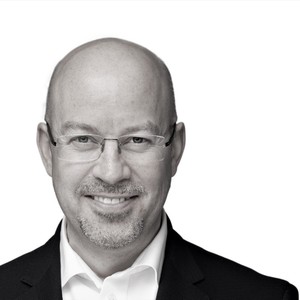
COO at Generation Mining
A Mining Engineer who was a key player in the construction and operation of Detour Lake, which sold for $5 billion last year. Previous to that he held senior positions at Barrick Gold and Placer Dome.
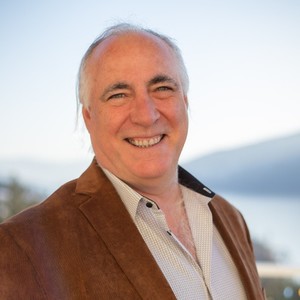
Chairman at Generation Mining
Co-founded several successful mining companies over 35 years including Wheaton River, Thompson Creek and Glencairn Gold. Former editor of The Northern Miner Magazine.