
Jamie Levy
President, CEO & Director at Generation Mining
25 years in the financing and management of Canadian mining companies. Was CEO of Pine Point Mining which was acquired by Osisko Metals. Formerly Vice President of Pinetree Capital.
Replay available
Join us for a great event!

On 6ix: 6ix.com/event/generation-mining-summer-update-and-fall-preview
Automated transcript · Written by software from the replay's audio. It can mishear names and figures; the replay is the record.
0:04 Welcome everybody. We've got a good crowd today. And the purpose of today's meeting is to let you know what we've been doing over the summer. It's been a really, really busy summer for us and has been a very good summer for us. And then we'll finish up with some of the things we're gonna be doing in the fall. And then we're gonna talk about our exploration program and where we think we're gonna be next year once our feasibility study is done.
0:35 So, first I'm gonna introduce the company because I know we have some fairly new people on here. Our email list on our website has grown dramatically over the last 3 months. And so I know some of you are new to the company. So those of you who follow us before, please bear with me through the first part, and then we're gonna get into some new and new stuff that you've probably not seen before. So as some of you know, we acquired a 51% interest in the Marathon Palladium Project, the largest undeveloped palladium project in North America. And we have an option to increase that interest to 80%. And we can do that by spending $10 million over 4 years. But we're going to have that, We acquired this last July, so we've had it for 13 months. We expect in the next 4 or 5 months that we will have earned our 80% interest.
1:26 This project has a resource calculation just in the measured and indicated category of 8.6 million palladium equivalent ounces and another 900,000 ounces in the inferred category. That 8.6 million encompasses 3 deposits. Our feasibility study is only focusing on 1 because we get a pretty good mine life out of that. And we don't need to go through the permitting, et cetera, the other 2 deposits at this point, the chances are they'll be mined later on in the mine life, but that's not for now. The property is located in Ontario. And I'll tell you something about mining. A property that has infrastructure is worth a lot more than 1 that doesn't. Take for example, the Ring of Fire to the north of us, there's no road access, there's no rail access and it's not being developed.
2:15 Other ones that are being developed in other parts of Ontario do not have great infrastructure and the infrastructure is upping their TAPEX by 30, 40, 50%. We have phenomenal infrastructure. We're near a highway, the Trans-Canada Highway. We're near the CPR main line. We have a major power line coming right through the property. We're right outside the mining town of Marathon. The people can literally in the summer can take their bicycles to work.
2:44 And Marathon is a mining town. So that's really important. The people in Marathon know mining. Most of them, the town survives off the nearby Hemlo Goldmine. And that's where a lot of them work. We completed a preliminary economic analysis in January, and we did that within 6-months of getting this project. And then we started a feasibility study. We're gonna compare ourselves to some other companies in the PEA a little later on in the presentation. And you'll see, we had some pretty good numbers come up. We're still sitting on $13 million in cash and that's after a really busy summer doing a lot of work. And also one thing of note is that we got listed in July on the Toronto Stock Exchange. That's the breakdown of the ounces that we have. 3.8M palladium. As you can see, this is a Palladium project, more than anything else, but it also has a really great copper kicker and the platinum and the gold are not too shabby either. So we've got a lot of different metals, but Palladium is the one that's driving this. As you know, Palladium is well over $2,000 an ounce right now.
3:48 By the way, our PEA was done at 1275 palladium per ounce and the numbers were very good even at those numbers. So this is a map of the area we're in. We're on the North shore just outside of, North Shore of Lake Superior, just outside of the town of Marathon. As you can see, all around the Great Lakes, there's a lot of mining going on. Hart Gold opened up to the east of us last year.
4:12 Alamos is just a little further east of us. Hard Rock Gold mine is getting ready to get built just north of us. The Lundin Eagle Nickel mine is just on the South Shore in the same sort of geology as we've got. The big key one on Copper Belt and the White Pine Copper mine, They produce 15 billion pounds of copper between them, or just south of us. So we're in a very, very strong, strong mining region. I talked a little bit about the infrastructure. I won't get into too much more of it, but you can see there's the airport, there's the power line, there's the highway and there's the railroad. So, and there's the town of Marathon right here. So I'm going to turn the presentation now over to Drew Anwalt, our chief operating officer.
4:57 Drew has been quarterbacking the feasibility study and He's been working really hard this summer, let me tell you. Drew, take it away. It's worked out pretty well working from home on account of, for this Feasibility Study, we've got a lot of A players on the team. For the mine design, we've got G Mining Services, which are out of Montreal. And for the plant design, we've got Asenco Engineering. Historically, Knight Piesel had done plenty of really good work on this, so we brought them back in. We've got a great team. We've got P&E, which did the PEA recently, and also historically did most of the resources.
5:45 We've kept the people that know, and it worked out really well that we've got a lot of great teams, great people working on this project. We've really got a sweet spot for the Feasibility Study. Also tied in with the feasibility study is the environmental assessment. We can probably talk about that a little later, but we've got groups. StanTech is leading it with Ecometrix doing a lot of work and Northern Bioscience doing the fauna of the area, flora and fauna. So it's, and again, all these groups are well familiar with the project, so it's great to have these guys back on the project. So where we are with the feasibility, as Kerry said, We finished up a PEA, a technical report, at the beginning of this year, and that was the starting point.
6:39 Interestingly enough, the PEA was a compilation and a collection of a lot of the information that had been done previously on the project, a bit of a summary of the feasibility studies that have been done on this. From that study, we've made improvements on it. In the resource modelling, we've improved our interpretation of the geology and the structure, and we've got a model that's a fit for purpose for the feasibility. The overall designs we have are largely frozen now, which is pretty important both for the Feasibility Study and the environmental assessment process. What else has happened on the Feasibility? If you go into the data of the PEA, it was a pretty solid PEA. The capital on the PEA was US$431M and it had an NPV for the total asset of $871M.
7:40 And as Kerry indicated, that was at a lower Palladium price. Again, that was done at $1275M and the PEA is largely a bit, the current price of Palladium is certainly over $2,000. With the Feasibility Study, what we did was we looked at what the operation really wanted to be mined at and what the plant should be run at. What we've seen right now is we wanted to bring the Palladium to the first half of the life of mine in the Feasibility Study. We're looking at a higher production rate than what we had in the PEA. The mine designs, the optimisations are done. There are 3 pits in the general that we're mining of the main deposit and the W horizon.
8:28 And most importantly, what we've done recently is schedule the pits to be able to bring the production as far forward as we can. It de-risks the production profile and brings a value from the Palladium
8:43 to what we can in the short time frame. The other thing we did was look at the historical metallurgical work for the entire history. The metallurgical work historically had started back in 2010 and no new stuff had been done in 2013. So what we did was we reanalyzed and reassessed all of that information and we mapped out a metallurgical test program for this feasibility study. You called it phase 1. So that's been completed. And in the subsequent slide, I'll show you some of the outcomes of that. And we are doing a mini pilot plan as well. So that'll work in parallel with the feasibility study.
9:32 It's not, We'll gain some intel out of that, but it's not really a requirement for the feasibility study. What it does is it sets us up very well for the detailed design that will follow the feasibility study. The plant itself has been mapped out as a conventional circuit on the front end, on the comminution side, the side that breaks up all the rocks. We're looking at a sag mill and a ball mill and a pebble recrushing circuit. So, pretty straightforward. The innovation comes in really in the wet side of the plant. We've done testing in the phase 1 with some wood grove cells and we've seen that those will work for our operation. We're in the final evaluations and we'll be going to the design and determining where those DFR cells can work.
10:19 And again, where we are on the feasibility infrastructure, Kerry mentioned from a regional sense is hugely important. And what we're doing is we're mapping out how we tie into that infrastructure and the locations for everything. And The tailings dam, again, pretty steady. Nothing exotic there. We're looking at a pretty straightforward tailings dam. The opportunity we have here for our process solids is we're doing the construction with very good real estate. We're doing it on bedrock and we're bringing in the best available practice and standards. All being told, the feasibility study, it's been a busy season for the summer, but we've found it's been really efficient.
11:04 As a general layout, again, I'm not sure how many folks are keen on engineering designs, but this is a general overview of where we are. We're looking at 3 pits, the top pit and the south pit will mine concurrently and the central pit comes in. You can see the general locations, the waste dumps, the rock dumps are to the east and the tailings pond is where the process solids management area is to the west. So again, it's a nice compact footprint. It's in close proximity to the town of Marathon. And again, it's pretty important that it's close, but not too close. So that's a good location for us. Somebody put this deposit in the right spot. So it's a nice treat for us.
11:59 So I mentioned some of the Feasibility studies that were done, this is a pretty important slide. As I said, we updated the resource, which is the fundamental building block of any deposit or any operation, so that's a big check on that one. We've got a mine design, that sequence that we can bring the production forward, of Palladium largely.
12:22 Then the processing plant, we've redone the testing and we've mapped out new reagents, new grind size, and a different circuit than what's been envisioned before. It's great that we have the historical work that's been done in the past because that's a good starting point. Whatever we do, the goal of that was to have improvements on past work. What we've seen with the MET testing is there was genuine improvement. So, on the Palladium, which is the key mineral we're interested in, we've got a lab study that indicates the recovery curves for Palladium, and we're looking at just short of 87%, where previously we had roughly 83%.
13:09 And again, with this new grind size, with the new reagents and the circuit that we've mapped out, we've seen improvements in all the important areas, be it palladium and copper, which is where the big levers are. So with the designs also, we've included the DFRs, the direct flotation reactors. And what's important about this, this is an innovative change to the flotation technology. The real benefit here is that we believe the recovery is that we got the results with the DFRs in our testing, so that's great. We've also seen a lesser mass pull, which means we don't have to process as many tons to get the same recovery. So that's a huge benefit for the operation.
14:03 We also recognise that with the DFRs, we have a largely smaller footprint. The footprint is about 25% of what conventional cells are, so that saves a bunch of money in the capital cost. We've got to do all the energy to map out all the costs and the Feasibility. Again, with the starting point of the past Feasibility studies and the PEA that was done recently, what we're working on is improvements from that. Our expectation is that the capital will go up in the feasibility study that reflects a larger tonnage operation, but on a comparison basis, we believe the economics are going to be better than the PEA is our expectations.
14:50 You've got to hold that space for a while. We've got to finish the study, which is scheduled to be tidied up the end of this year and likely into Q1 next year. So you can watch this space for a little bit.
15:04 I've thrown in a couple of slides here. These are just for your information. Some of these are from our plan and some of them are conceptual, very similar to our plan, but these are the sort of designs that we'll be progressing through. Sanko is doing a wonderful job as is G. Mining and the rest of the folks we have working on the project.
15:25 I think those are pretty cartoonish at this point in time, so no point to belabor on these ones, but it's going to be a decent-sized plant. The PEA had a set, peaked at 8Mt, and as I said before, we're leaning towards a higher production than what we had in the PEA, and we've got to finish the feasibility study to fully establish all those numbers.
15:50 I think I can hand over to Jamie now.
15:57 Thanks Drew. Great update for our investors. Thank you very much. A quick background to the story Kerry got into a little bit, but when we acquired the asset at the beginning of 2019, we were looking for an asset to get involved with after we sold PinePoint to Cisco Metals, which was a Zinc project. Kerry wanted to retire and I said, no, you're not retiring. So we're trying to find the right asset to get involved in. And Kerry and I would walk around the conferences and we'd just see gold and silver and cobalt and lithium. And we were looking at Palladium and we looked at, Kerry likes to talk about the economics of it, we didn't really talk about it too much previously because hopefully most of the listeners here know the supply and demand for Palladium and what it's used for. But The good thing about Palladium is there's not many companies involved in the space. The bad news is it's very hard to find a comparable for us. So here's 1 comparable we put out there, which is Platinum Group Metals.
16:55 They trade on the New York Stock and the Toronto Stock Exchange. They had put out a feasibility study, I believe a couple of years ago, maybe last year. And I guess they got re-rated on their feasibility study. And that's kind of what we want to let our investors know, is Drew is putting out a feasibility study, or we're putting out a feasibility study led by Drew and his team, which should be up by the first quarter of 2021. And we would hopefully get re-rated like Platinum Group Metals had got re-rated. If you can look at their enterprise value, they're around $272 million. And I think we're probably trading, I don't know what our stock's trading in now, but probably around a $40 to $50 million market cap. So we're trading at a pretty big discount to Platinum Group Metals. I'm not here to say our project is better than their project, but if you look at some of the comps, we look better on some of them. And I think what's most important is that we're in Canada, as Kerry mentioned before, and they're down in South Africa.
17:51 They're underground, we're open pit. We talked earlier about the economics, we just jumped over it, but our economics are pretty good here. It's an $871 million MPV at a 5% discount rate with a 30% IRR and that's a $1,275 dollar Palladium. If we put in the price at the end of the year when we put out our PEA at the beginning of 2020 end of 2019 we had an MPV of 1.5 billion dollars. So I don't know what price we're going to end up using for our feasibility study. But most of you realize Palladium, I believe, is trading around $2,200, $2,300. So it's up almost 50%, 40% since our PEA numbers came out earlier this year.
18:36 So we could look at the numbers, but, just want to make sure that people realize that we're putting out a feasibility study and we will get re rated. Hopefully at the beginning of next year. As mentioned earlier, hopefully we can all see this, but again, as mentioned before, there's not too many comparables to Palladium or PGM companies, so we're comparing us to gold developers within Canada, kind of a similar stage to where we're at right now. And what's interesting to note is that palladium is worth more than gold, but somehow gold gets a lot more attention. And there's a lot more gold around than palladium. Palladium is a lot more scarce than is gold and is silver. But if you can look at some of these comps here, it's very hard to see, but we're trading at a point, just under 0.1 NAV, and the average is 0.4, I believe, to NAV.
19:27 I believe that's what it says, it's pretty hard to see, but we're trading a serious discount to the gold companies. And hopefully after we get the feasibility study out or once we have more investor awareness, we'll get re-rated to something similar to what gold developers are trading at. Here's another slide which compares us to gold again. Our enterprise value is 40 or $50 million and we have 10 million ounces in the ground. So we have an enterprise value of US$4 an oz. The average for Gold right now is
19:57 US$133 an oz. So we are at a serious discount using this metric here. And you know, we're all kind of banging our heads out here, but we just have to keep our heads down and realize that, you know, we're not a gold company. And sooner or later, people will realize that Palladium is worth more than gold, and hopefully we'll get re-rated. An interesting stat is we have 500,000 ounces of gold. So if you were fairly valued, if you take the gold, we are trading at $123 an ounce in the ground, but you get 4 million ounces of palladium, 1 million ounces of platinum and 1 billion pounds of copper for free. So at some point, people will realize that we are undervalued. I know all CEOs or all promoters or management say that we're undervalued. But here's a good chart of how undervalued we really are.
20:43 Going forward, the timeline, Drew, you want to go through the timeline or Kerry? I can go through it.
20:58 Yes, I can map it out. Historically, we spoke about the milestones that have been achieved, acquiring the asset, updating the resource on the PDA, that was done in 2019. We came on board and started the Feasibility study.
21:17 That will be completed Q1 next year. The other milestones that were recently achieved is our listing on the TSX. We also have the opportunity, when there was a previous operation, they already started the permitting process. The permitting process for new mines in Ontario typically takes about 5-years. It's a general rule by thumb. We've already got more than 50% of the way through our permitting process. So we have the vision that the permitting and the environmental assessment will take us into 2022, with the goal being we get our updated addendum for the environmental impact assessment And then we go through the process
22:06 of EA approvals and into permitting. So in following that, the construction period, we're looking at about an 18 month construction period with pouring our first concentrate towards the end of 2023. That's a high-level summary of where we stand with the path ahead of us. Drew, just one thing we left off the chart here, which we're going to pass off to Rod. We are doing an exploration program right now, just a small 5,000 meter drill program. And that's where we're gonna lead off to Rod right now. Go ahead, Rod.
22:42 Yeah, thanks, Jamie. And I'd like to retire also, but I have to find more of this stuff. And so that's what we're up to. As Drew's pointed out, we've got a substantial open pit, open pit or resource that we're completing feasibility studies on. And most of the drilling today really has been focused on near-surface mineralization, but there's some very good reasons to explore at depth, and this is one of them. And, you know, extremely high-grade material, massive sulfides, and it suggests or implies that there's a special circumstance within the magmatic plumbing system that feeds the deposits, that massive sulfides are accumulating. So lots of reasons to keep exploring.
23:30 There's been a lot of technical papers written on the Marathon deposit. And this is one thing that sort of caught my attention initially when we were looking for a property to get involved with, is that this is an example of extreme PGE enrichment. So Very few properties in the world or deposits in the world have this characteristic.
23:52 This type of PGE enrichment is particularly exhibited in the W horizon. Unlike the massive sulphide sample that we showed previously, we actually have very high BGE values associated with very few sulfides. So 2 types of mineralization to look for at depth to develop potential underground resources. So this type of deposit, the marathon deposit, is an example of conduit-style environment, meaning that magma flowed from depth through a series of tubes or channel-like formations. And the fact that you get grades at Marathon that are similar to those at Nilsk and Bushveld suggests that mineralization is likely the result of an early sulfide segregation in a deep reservoir.
24:43 So if we look at the Colwell complex itself, which is where the Marathon deposit is a part of. So we see the evolution of the magmatic plumbing system in those 4 little cartoons on the left. So if you start off at 1, we have the magma moving up through the Earth's crust. It picks up copper and sulfur from the sedimentary rocks, the Archean sedimentary rocks that are underneath the Coldwall complex. And those sulfide drops themselves scavenge PGEs from the magma. They're carried to the near surface. And through a series of magma pulses, they form the disseminated mineralization that constitutes the bulk of the deposit that we're evaluating. However, within that, and we see evidence of massive sulfide accumulation, such as that boulder that I showed previously. But we also see short intervals of massive sulfides in the core. So we know that we do have massive sulfides accumulating somewhere in the system.
25:43 And that's what keeps us going in terms of exploring. There's very few geophysical methods that we can use to explore beneath 500 meters. One of those is MT, which stands for magnetotelluric, magnetotelluric. It's a passive geophysical system which uses natural time variations of the Earth's magnetic field to measure the electrical resistivity of the crust. MT is shown promise, particularly at the transition metal Sunday Lake project, and has resolved mineralization down to depths of around 1,500 meters. So Sunday Lake is on the left part of the diagram. On the right, we have the marathon deposit itself. And we can see that most of the drilling that we've done is associated with the deposit.
26:32 However, last year we did drill test down dip from the deposit and intersected mineralization at a depth of approximately 600 or 700 meters.
26:47 So this compelled us to use MT to try and evaluate below that depth. And so, we completed recently an MT program over a portion of the marathon deposit itself, as well as to the west where we expected that we would be able to see one of these feeder zones.
27:10 We resolved 1 empty target, which is shown here in this sort of red ellipse. And if I go to the yellow squares, by the way, at the MT stations themselves. If I go to the next slide, we have a section through this. And here we see the pit outline in the yellow dashed line, the mineralization in the sort of blue hashed area. And that conductive zone, which sets immediately to the west and down dip, that's the one that actually, as I speak, we're drilling on.
27:48 We have 1 hole, and as Jamie mentioned, we have a 5,000-meter program. This is the first hole of that program. The other 9 or 10 holes will be focusing on the of a high-grade trend within
28:04 the west zone of the marathon deposit itself. If I go to the next slide, this is the sally deposit, the velocity target. We did a passive sulfide, sorry, a passive seismic survey on the property last year and resolve this deep, very large seismic anomaly, which represents dense rocks, which should be fertile for massive sulfides and PGM mineralization. It sits below the existing Sallie deposit.
28:37 And if you can look on the right-hand side here, you can see the plan view. So the Sallie deposit itself, where all the little black dots are, and that red area is that seismic anomaly. So again, MT, we completed MT over the entire Sallie area. We're interpreting those results now and hopefully we'll be able to resolve some targets. One of the other things that we've done during the summer is do some test MMI work, which is mobile metal ions. It's a sensitive soil geochemical technique. And hopefully, we'll be able to use that to prioritize, if you will, some drill targets, these deep drill targets in particular going forward. Jamie, over to you.
29:24 Thanks, Rod.
29:30 Just going back to our capital structure, or talking about our capital structure, we have 130 million shares outstanding, trading on the Toronto Stock Exchange. We're trading at probably just under 50 cents. So I think we're somewhere around the 55 to 60 million dollar market cap. Our largest shareholders are Sabani. I think we've talked briefly about it in previous presentations but when we acquired the asset from Sabani, we gave them $6 million, $3 million in cash and $3 million in shares. $3 million in shares was what they requested. And this is their ownership stake from that. Lucas Lundin participated in the financings, which is the Zebra Holdings.
30:13 Cisco Mining, they participated in our 2 financings. And Eric Sprott came in our last financing at 52 cents. As mentioned earlier, it's probably one of the few positions that Eric is underwater on these days. And I guess we're trading around 48 cents. That financing was a 52 cents. Management directors, you guys can take a look on set a, but before this drill program, Kerry, Drew, myself, Rod, I think a bunch of management had been buying the shares
30:41 in the open market here. So we definitely see some value within our share price here. I think that's it for me. Kerry, you had a few more slides to talk about or? I'll talk about them at the end, Jamie. Why don't we go through the questions
30:56 and then we'll just finish up after that. All right, let's open up the floor for questions, as Kerry said. As a reminder, everyone, you can submit your questions in the Q&A panel on the right-hand side. The first question I have is for you, Carrie. You mentioned in the beginning, in the introduction, that the growth of the generation mining mailing list has really soared in the last few months. So for those of us in the room that are new to generation mining, what is the one thing that you feel like investors don't fully understand?
31:42 Kerry, are you still with us? I'm here. I just got rid of my video because my internet is weak. No worries. I did not hear the question. No worries. Yep. The question was, since, for those of us that are new in the room, what's the one thing you feel like investors don't fully understand about generation mining?
32:12 I think that they don't understand, I mean a lot of them do understand, but a lot of the people that we present to don't really get how we compare to a gold project. We are a precious metal project, and we are much bigger than most of the precious metal projects that are in development. And our economics are very good, but they don't seem to connect the 2 of them. And I think that at some point that connection will be made. I think they've made that, gotten over that hurdle with platinum group metals. And I think that the feasibility study will result in a re-rating of us
32:49 because they will actually see that this is real. Now my next question is for Jamie. Jamie, in the presentation you spoke about Palladium performance and how it fares against gold despite being more scarce. Can you talk a little bit more about Palladium's application and interest from other large investors? For example,
33:15 James asks, is Tesla and brands like Tesla investing in palladium?
33:21 You know what, I'm going to pass that off to Kerry because he's a bit of our palladium guru but I can answer the Tesla part. Tesla supposedly is having a prototype car calling the palladium. I have no idea I don't think anyone knows what that is about but Tesla cars are electric They do not have a catalytic converter. So they do not need platinum palladium right now They do need a bunch of copper and we do as mentioned earlier have 1 billion pounds of copper on that side So, I don't know what Tesla's demand is for platinum palladium now, but they certainly have a lot of demand for copper Carrie you want to take the second half? Sure a typical electric car today has 0 palladium or platinum in it, but there are a couple of companies in the world that are developing a platinum-based electric battery that is platinum and lithium.
34:15 And that will require a considerable amount of platinum and or palladium in each automobile. So if that and these things have a much, much longer range than the current batteries, but they've got a few hurdles that they've got to get over. Another thing that's happening is companies like Toyota have been introducing the fuel cells. And fuel cells also can require somewhere between 1 to 2 ounces of platinum per automobile and we've got a pretty good platinum credit in our project. And of course, the pure electric car, If it really does take off in the next several years, copper is going to go through the roof because there's not enough copper in the world to do both the electrical hookups that people are going to want to do in their garages and also the automobiles themselves are going to use way more copper than is available currently.
35:02 And therefore, our copper credit is going to look a lot better. So we've kind of got all the different bases covered. But as far as Tesla investment is concerned, I have not heard of anything like that. And Kerry, I just want to finish off. You kind of are muffling out there. But to answer the question again, electric cars are Tesla, but there's a bunch of hybrid car manufacturers that are out there. And they're saying that 50% of the electric cars' demand is going to come from hybrids. Within the hybrid cars, you actually need more PGMs, platinum, palladium than you would in a regular car just because the engine is going on and off a lot more. So if that is the case, there would actually be a stronger demand for PGMs going forward. Thank you very much, Jamie and Kerry.
35:49 Following up on the Palladium discussion, Harry asks, can you talk a little bit about how you see the Palladium market and Norilsk and the associated Palladium fund dominant position vis-a-vis for pricing? Perhaps Kerry can take this one. I can take that off if you can hear me all right. The Norelsk plans are very difficult to follow. Norelsk puts out the occasional release and a lot of them contradict one another. So it's hard to say exactly what they're planning. But Norel's being the largest palladium manufacturer in the world or producer in the world has a lot of say in how the markets are doing. They have traditionally put aside a little bit of palladium so that if there is a problem at their mind or some sort of a big jump in demand that they can still meet their customers' needs. So they have that extra fund on the side.
36:50 I think that answers, I hope that answers the question. So for our next question, let's shift gears a little bit and talk about timeline. I've got 2 questions here that are kind of related and they're both talking about permitting. Herbert asks, what is driving the timeline on permitting and what are the different phases to go through? In a related question, Paul asks, what circumstances lead you to believe you can permit in under 2 years? Drew or Jamie? Drew, you go ahead. Why don't I start? So what makes us think we can permit in under 2 years? It's a great question because if you're starting from scratch, if you're a new operation and you're just starting it, then yes, that would be an aggressive timeline, certainly for the world that we're playing in.
37:46 The reason why we have the timeline we do is because with the previous operator, which was Stillwater, they got more than 50% of the way through the environmental assessment process already. At the time, back in 2014, they put the EA process on freeze, on hold. So because of that, when we took over the project, we told the government and the conversations we had with the government was the processes, the EA process is frozen. We'd like to buy it. We'd like to start again. So that's really where we are. So we have on the government clock, I think it was about 180 days on the government clock. Now that's not a calendar, that's how much time the government has allotted for themselves to review the EA process. So we anticipate that we can get through the permitting in that timeframe.
38:48 So now the other part of the question was, what are the elements of the permitting process? So the initial phase is looking at the environmental assessment, and that comes out in a document. And again, it's measured in meters of binders or kilograms of binders as opposed to pages. So it's a large document, but what that does is that explains what the impact the operation will have on the environment, on the socioeconomics of the area, be it the Town of Marathon, be it the Victagon First Nations or the other First Nations that are in our general catchment area. So the EA process maps out what's the impact, what are our suggested mitigations?
39:38 The government is in the role to review those and say, yes, those are suitable control measures. And then once the EA is approved, and then we have to apply for specific permits, be it a permit to cut trees, be it a permit to take water, be it a permit to build the plant. So there's a number of permits that take place. So In terms of the timeline we have for permitting, because of the great historical work that's already been done and the fact that we've got on our management team, we've got a lady by the name of Tabitha LeBlanc, who was on the project from the very start and understands the project exceptionally well. We've also brought back with STANTEC, Ecometrics, Northern Bioscience and Knight-Peasel, we've brought back the groups that have already progressed and understand this project very well.
40:32 So again, just to summarize, we believe we can get through the permitting in the timeframe because work's already been done and we're going to get a quality impact assessment statement document that'll be submitted to the government that'll explain what the project is, what the controls are, and then what the impacts are. And then we go through the permitting. So it's a bit of a horse race of what's on the critical path to that construction, starting construction, be it detailed engineering or the permitting. So at this point in time, they're running pretty close. And Drew, just to follow up, the provincial government in Ontario, for those of you that aren't in Ontario, is very pro-mining the Ford government.
41:20 And with this COVID sort of environment we're all in, we've had lots of conversations and discussions with the government. This mine is going to create, I forget the number, Drew, 1,000 construction jobs and another 300 full-time jobs. So politicians are very eager to have this mine getting built because obviously the tax revenue, but also for the employment opportunities for the community surrounding Marathon. So every communication we've had with the government officials, at least the politicians, or the chiefs of staff, they're very interested in this project moving forward. So that's why with that timeline we think it's possible. Go ahead, Gary. I don't have anything further to say. All right, then thank you very much, Drew and Jamie.
42:10 The next question is from Anthony. He asks, can you please go over the timeline for the development at the Sally deposit? And in what direction North, South, East, West, do you believe that this deposit extends? We don't currently have any plans for developing Sally. It's not part of our feasibility study. Sally is, for those of you who don't know, is located about 20 kilometers northwest of our main zone. And it's a good deposit. It's not nearly as big as the main zone. We think it's, what likely will happen is at the end of the main zones mine life, Sally and possibly the Geordie, a couple of satellite deposits will be possibly put into production as a shipping scenario, but we're not examining that as far as our, part of our feasibility study.
43:00 And one of the reasons for that is because we've got a very long mine life on our own without it. And the second reason is to include them in the, and it goes back to an earlier permitting question to include them in our feasibility study would delay the permitting substantially because those have not had all the background studies done and set for that you would need in order to do an environmental impact assessment. So we need to do that. And that will be done in future years and possibly towards the end of the main zone line. Got it, thank you, Kerry. Speaking of, oh, sorry. Sorry, the other question about the extension. Some drilling we did last summer indicated that the Sally zone does extend to the West, it's body, we need to do more drilling there. It's not a priority for us right now. And we're talking about a few hundred meters to the West of the main zone, not a great distance. We haven't gone too much further than that.
44:06 Thank you very much, Kerry. Speaking of studies, Alan asks, where do your environmental studies currently stand? Who would like to take that? I can take that. As Drew said earlier, the first step we had to do was to take the old studies that were completed in 2014 and update them. So, you know, things change over time. 6 years, different animals, for instance, could be put on an endangered list, for example, those types of things can change. So the companies that we've hired are reviewing the old reports and updating them or adding addendums to those reports. And then we will submit those to the government.
44:53 These reports were approved by the government in the past. We will be resubmitting them to the government. Once we get through that step, we will initiate the panel. There's the joint federal provincial panel. We're expecting them to go through their hearings next year. And once they make their decision, then we'll be able to look forward to the ministers, both federal and provincial, signing our permits. Thank you, Kerry. The next question is another question from Alan. He asks, what is your relationship with the town of Marathon? And following up on that, are there any First Nations involved with the project right now?
45:40 I will take that. The mayor, Rick Dumas of Marathon, is supportive of this mine. He's pro-business. Actually, when we rung the bell at the TSX a couple weeks ago, he was one of our invited guests out there. The mayor is, again, supportive of this mind. He's supportive of jobs. The community had a big pulp and paper mill which shut down a few years back, so the employment marathon needs to come, and this would certainly help in that situation. Regarding the First Nations, we're in discussions with the First Nations. There's 3 First Nation groups and a couple of Métis groups that, again, Drew mentioned earlier about Tabitha LeBlanc. She's been with the project since 2007 through a couple of different owners. So she has relationships and we're in constant conversations with all of them.
46:31 The one band is called the BN or Bidagon, which Drew mentioned, Big River. They have a relationship with Hemlo, which is I believe Berwick nowadays. So they know all about mining and they all know about the advantages of having a mining operation in your community. Thank you very much, Jamie. The next question is regarding Sibani. There are 2 questions that are related. Brian asks, does Sibani hold any vacuum rights and what is the structure and timing of such? In a related question, Stuart asks, what's the current read about Savannah's intent to reacquire 31% to become majority owner of the project? What's the likelihood and what's the timeline?
47:20 I can take that question. It's Kerry here. The first question is, is yes, Sabani has a, once we earn our 80% interest, they'll have 20%. And then at the time that we make a production decision, they have a 90 day opportunity to elect to purchase, to repurchase 31% of the mine. And that goes on to the second question. That purchase price will be 31% of the capex to build the mine. So in the PEA numbers, that purchase price will be about $130M for them to purchase 31%, which would put an enterprise value on this project of about 500, almost, well, 400, whatever the capex is. And we think the capex is going to be higher than that, even because we're going to be starting at a higher rate than the PEA initially anticipated.
48:16 So it would be very expensive, especially given our market cap, 100%. So our 80% interest in the mine, the market is currently valuing at about $55 or $60 million. So for them to buy 31% for 130 million, it doesn't make much sense to me. I can't speak. They have not given us any indication of what their plan is. They're following everything that we do very carefully. We think it would be more likely that they would either take us over or negotiate some other sort of deal, because it wouldn't make any sense for them to pay $130M. They would have 51% interest in the mine. This is a mine that's going to produce a little over 200,000oz per year. They're already producing 4Moz of precious metals a year.
49:07 Their part being 100,000 ounces wouldn't move the needle for them. So it wouldn't make much sense, but I can't speak for them, and they have not given us any strong indication one way or the other. And sorry, Kerry, just to follow up on the question. So they would have to pay for the first 31% of CapEx, and then they have to pay the remaining 51% of CapEx. So in essence, they're paying two thirds of CapEx to only get half the benefit. So I just wanna make sure that they realize that they're actually paying more than just the first 31%. All right, thank you, Jamie and Kerry. So let's talk a little bit about production. Rainer asks, can you please describe the project in terms of gold ounces in volume and in gray? Who would like to take that?
49:57 I don't quite understand the question, but The PEA that we did looked at about a gram and 0.25 palladium equivalent ounces, sorry, 1.25 grams per ton of ore. And it was going to produce about 194,000 ounces of palladium equivalent a year. And that was made up of 107 ounces of actual palladium, as well as about 30 million pounds of copper and the rest was gold and platinum. Perhaps a follow-up question. John asks, some gold mines are not successful at a 1 gram per ton, and the 2 successful ones, Malartic and Detour mines, mill about 60,000 MTPD each. So how can you mill about 20,000 MTPD and recover 3 different metals, which is more challenging than just gold alone?
50:59 I think Drew, this is for you since you worked at Detour. So if I can understand what the question is, is how is the Marathon PGM project going to be successful in comparison to these large mines? It really comes down to the Feasibility Study and the PDA. We get values for the metal we produce and we have to pay to run the equipment and everything else on site. That's what the Feasibility Study is largely progressing. When I look at this, and I do have some pretty good experience and knowledge of the detour operation because I was there from 2011 until the end of 2018, so I know that asset, I would suggest exceptionally well.
51:49 So I have taken some of the experience and both in the operation and the designs from that site. And I'll be using some of those things in my experience and the experience team we have that's putting together the feasibility study, but it really comes down to economics. The interesting thing about this project is there have been at least 3 feasibility studies done historically on it. 2 of them were published and they're available online. The third one was only ever issued in draft. But what we see on a project, and when I look at this project, the time has really come for this project to be developed into an operation. There's genuine value that's going to be generated for the shareholders and largely for the communities that we're playing in.
52:44 The operations time has really come and We have the advantage that the Feasibility Study is progressing very well. We know the permitting timeframe has already been done historically, so we have the opportunity to bring this into production faster than most Greenfield assets. And we've got a great team working on the study itself. So again, we'll have the feasibility study out. The good comparator is what was done in the PEA historically. And our expectation is we can make improvements of those past studies to add value to the property itself. So sort of around the way about answering the question, Jane, but I hope I answered it. Maybe Jamie can fill in the blanks. I'll just add to that a little bit.
53:34 Usually there are, first of all, a lot of 1g Gold mines in the world that are profitable. The ones that are not profitable tend to have some issue, whether it's a recovery issue, whether it's a strip ratio issue or a grade issue that the grade didn't come, was supposed to be a gram, but it's not. Detour Lake is actually less than a gram. And we're well over a gram. We're around a gram and 0.25. So, I mean, you have to do the numbers. You have to look at what the costs are. Our costs are going to be, we don't have, Detour Lake, for example, had a camp. They had to bring people in and feed them and house them. We don't have to do that. We have a town nearby. That's one example. We don't have the transportation issues that other people are going to have. So you have to look at all the costs and you have to look at all the revenue. And if you can make money, you can make money.
54:26 At today's gold price, by the way, I would challenge you to show me a gold mine that's not making money at 1 gram if they've got these in recovery. All right, thank you very much, Drew and Kerry. I think we have time for one last question. Here's a question from James. What is the estimated book value of this project today? Jamie, would you- Sorry, which? What is the estimated book value of this project today? Jamie, would you? Which? What is the estimated book value of this project today? Book value. Well, Carrie, I mean, the net present value from our PEA was $871 million. That was using the spot price to $12.75. I would pull this slide up here, but I don't want to. I know we're running out of time here, But, Kerry, where's the slide on what we'd be trading?
55:20 Anyway, at $1,920 palladium, we were trading at a net present value of $1.5Bn. So, that's how I would equate book value to it. But if there's another analysis, that's how I'd evaluate the project on a net present value. That's how most analysts value the project. So you can divide that by how many shares we have outstanding $1.30 a share, and you can figure out what would be worth per share. That's my guess. Kerry, you have another answer? No, no, you got it. All right. I think that's all the time that we have for questions today. I know that we weren't able to get to every single question, Or if you think of a question after the summit, please feel free to reach out to Generation Mining. You can reach them at info at genmining.com or you can reach Jamie directly at jlevy at genmining.com as shown on the slide on the screen here and they'll be happy to answer you.
56:22 There's also an opportunity after the summit you'll be redirected to a quick survey where you can leave your information for management to reach back out to you. Now I'm gonna hand it back over to Kerry for the final word. Thanks, Jane. And I just wanna reiterate what Jane said. Please don't hesitate to reach out to us if you've got questions. We're here to answer them. We wanna have a very open relationship with our investors. And so please reach out to us and make sure that you're all signed up on our website to get all of the, to get the releases as they come out. All right, thank you
Follow Generation Mining Limited into a list and get an email when it puts out news.
President, CEO & Director at Generation Mining
25 years in the financing and management of Canadian mining companies. Was CEO of Pine Point Mining which was acquired by Osisko Metals. Formerly Vice President of Pinetree Capital.
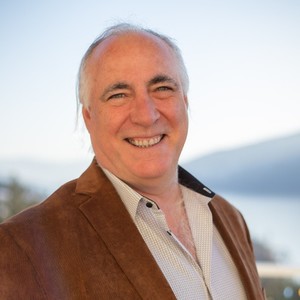
Chairman at Generation Mining
Co-founded several successful mining companies over 35 years including Wheaton River, Thompson Creek and Glencairn Gold. Former editor of The Northern Miner Magazine.
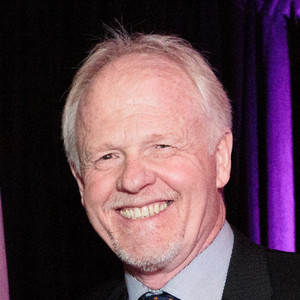
Vice-President, Exploration at Unknown
Exploration Geologist with 40 years experience in Canada and abroad. Former Exploration Manager BHP Minerals Eastern Canada and General Manager of VM Canada. President of PDAC 2014-2016.
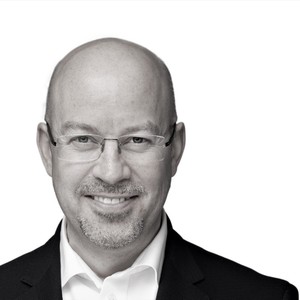
COO at Generation Mining
A Mining Engineer who was a key player in the construction and operation of Detour Lake, which sold for $5 billion last year. Previous to that he held senior positions at Barrick Gold and Placer Dome.