
Jamie Levy
President, CEO & Director at Generation Mining
25 years in the financing and management of Canadian mining companies. Was CEO of Pine Point Mining which was acquired by Osisko Metals. Formerly Vice President of Pinetree Capital.
Replay available
Join us for a great event!

On 6ix: 6ix.com/event/generation-mining-meet-our-mine-builders
Automated transcript · Written by software from the replay's audio. It can mishear names and figures; the replay is the record.
0:08 Well, hello everyone and welcome to Generation Mining's live summit today hosted by 6. I'm pleased to introduce Executive Chairman, Kerry Knoll, President, CEO and Director, Jamie Levy and chief operating officer, Drew Anwalt. In this summit, we're gonna be meeting the full generation mining team, and then we will be accepting questions live. So as a reminder, you can submit your questions at any time on the Q&A panel on the right-hand side of the screen and we will get to them after the presentation. As always, the summit is recorded and will
0:38 be available to watch afterwards on SIX.com. But without any further ado, I'll hand it over to you, Kerry, to kick things off. Thanks, Dasha, and welcome, everybody, today. The goal of today's summit is to present the mine building team that we have assembled, that mainly Drew and Will have assembled here at Generation Mining. I want to emphasize that we have 3 sort of separate teams at Generation that all work very closely together. One is our financial people, and that includes Endeavor Financial, as well as our own staff. And then we also have our exploration team, which we introduced some of them at the last summit. So they won't be on today. Today we're focusing on the technical mine building squad.
1:25 And I just want to say that
1:30 Some of these people have been with us for almost 2 years, including Drew and Steve Haggerty has been working with us almost 2 years as well, and other ones have just joined us. You know, it's relatively unusual in the mining space for a junior company to cross that chasm and get into production. It only happens to maybe a dozen companies every year out of probably 2000 junior mining companies in Canada. So it's an unusual thing to happen. And we intend to be one of those companies that do that. And we wanna introduce our investors to the group of people who are gonna do that building for us. Those of you who have been following us know that we completed a feasibility study earlier this year, and that we're gonna, feasibility study estimates we're gonna make a whole lot of money bringing that marathon deposit into production. It's going to produce 245,000
2:23 ounces of palladium equivalent a year at over a 13-year mine life at a cost of just over 800 bucks an ounce. So what are we doing now? We have several initiatives that are keeping our people really busy. One is we're trying to, or getting close to obtaining, we think, our approval of our environmental assessment through the joint panel that is going on and has been going on since much earlier this year. We're also working diligently with the First Nations to get agreements with them, and that is going well and advancing. We're also working on financing, and I know people are getting a little impatient on the financing, but I'll just tell you that it is coming along and it is gonna happen. It's just, it's taking more time than we thought. We also initiated the detailed engineering recently, and that is when we brought on wood and the detailed engineering, of course, is something that needs to be done before we can begin construction. And we're doing it now because we want to begin construction as soon as those permits are in place. And the
3:31 last thing we're doing is, or one of the last things is starting to look at equipment procurement and the long lead times for some of that equipment and getting some down payments on it or getting it ordered so that we can make sure that it's gonna come in time. And we're expecting several announcements on these fronts during the next few months. And so just stand by. So this is an opportunity to meet some of our mind-building team and ask some questions you might have.
3:59 Just note your questions down if you have them and we'll be addressing them at the end of the presentation. And there's a spot on the right there under Q&A where you can put your questions in and please ask who you want to address it to if there is an individual or just address it to the team in general. All right I'm going to turn it over now to Jamie who is going to introduce Drew who has been introduced before.
4:22 I think that's a good start because it was Drew that was the real foundation of our team building here. Thank you, Kerry. Thank you for organizing this event. Thank you for everyone attending. Just to go back, I don't know what happened to our presentation, but there is some forward looking statements on there. So just to make sure that we're not wasting a whole lot of money.
4:45 It isn't where it should be, but thank you, Kerry. Drew, thanks for joining us, I guess, just pre-COVID, I guess it was about February or March of 2020. You are the glue that keeps this team together. So thank you again for joining us. Drew, his background is a mining engineer and he is our chief operating officer. So Drew here's a couple questions and we won't be roasting it here. You worked your way up through the Placer Dome organization and then Barrick and after Placer Dome was acquired, what was your role in those organizations?
5:17 So with Placer Dome, Placer Dome was a pretty exceptional mining company and and I started my career with Placer after I came out of university as a geotechnical engineer believe it or not. So I finished up my master's and the mine was a seismically active mine. So I started on that project, did some shaft sinking, worked in the Vancouver head office and then I started my career moving around Gloucester dome. So went to the dome mine in Timmins. The dome was going through a shutdown and also some big projects so I kept on track of them. Went to South Africa to finish up the shaft sinking project there. Then I moved overseas again to Australia and worked in Papua New Guinea. So in my background with Placer and Barrick, I've worked both in projects and operations in both some fair size underground operations and some pretty big pit operations.
6:22 So for my role, I've got a bit of a broad background through all aspects of the operational cycle, I guess you'd say. Yeah, thanks, Drew. And you know, my experience is most people that worked at Clastrono for a while are very smart people and you're one of them so again thank you for putting this team together. After you left Barrick you went to a junior called Detour Gold. I think most people know that company that eventually sold for I think it was around $5 billion Canadian. Can you describe what you did for them and some of the similarities between Detour and Generation? You're spot on. It's a lot of very similar histories of the 2 companies and let's hope we get to that 5 billion mark.
7:10 So at Detour I started during the construction phase. So I was largely there. I was the my title was I think it was VP operations or director of operations, but effectively it was the mine general manager and largely running parallel to the project of doing operational
7:30 readiness. So again, I could have contributions to the project, but wasn't directly in that organization structure. So through the years I was at Detour, and again Detour was a pretty exceptional
7:44 mine site, and it is the biggest gold mine in Canada, so it comes with a lot of headaches. So with those headaches are also opportunities to learn. And the folks that know Detour know that it was a pretty tough startup and that's simply because of the size of the plant itself and the operation itself. So the advantage we have here is there's a lot of similarities at generation as it was to detour. And hopefully some of the learnings that I've had through those trials and tribulations at Detour will make this operation and this project even more successful than that one. That's great. And then I guess going back a year, I guess right around COVID when you're starting, when we offered you the job, become the chief operating officer. I know we had a few interviews myself and Carrie and the board had interviewed you. It took you a little while before you wanted to jump on board.
8:38 Can you kind of discuss your reasoning why it took you so long? Yeah, again, at Detour, I was also in charge of corporate development at Detour. One of the things I took away from that was, when something looks too good to be true, it's worth digging. With that exercise, I hadn't known the property we're on. I didn't know it so it flew under the radar and that's a bit of a story about our share price right now also I'd imagine. But that being said I wanted to investigate whether this was as good as the PEA presented it to be. And I spent probably about 5 weeks tackling some of the areas of concern that I had. And with each of those things, it proved to be, this is a great project.
9:30 So after I made that final decision, I jumped on board and largely hit the ground running. And with that, you know, no 1 man
9:39 can do everything. And that's when we started pulling the team together, of which you'll meet a lot of these folks on this call right now. Well, it's been a great 18 months. Thanks for joining, Drew. Kerry, take it away. Thanks for joining us. And now I'm going to talk with Catherine Moffitt. Catherine, if you can turn your camera on. By way of introduction, Catherine is studied originally as an environmental scientist, and her jobs in the mining industry eventually evolved into community relations, and she has joined us as our community relations manager, and we're really happy to have her come on. Catherine, you originally got into the resource industry with Golder Associates, which is a world-class organization in Calgary with the oil sands, and then you moved back to Ontario to work with the Osisko Group, and of course, Osisko's one of our shareholders.
10:30 Can you describe what you did for them? Yes, thank you. So I worked for OSISCO for about 5 years between 2011-2016, and my main role there was the environmental assessment and environmental permitting for their proposed Hammond Reef project. It was a proposed open pit gold mine north of Attacogan in northwestern Ontario.
10:57 So I did a lot of community consultation as well with them, And I also got the chance to do their annual ESG or sustainable development reporting for OSISCO as a corporation. Later on too, they expanded a bit and had an exploration site in Kirkland Lake. And so I did some work there mostly around community relations and starting the negotiation of agreements with the Indigenous communities.
11:29 Okay, thanks. And then after that you joined Detour Gold, which I believe is where you met Drew and your career evolved a little bit there. Can you talk about what you did for Detour? Yeah, so again, I worked for Detour for several years. That is where I met Drew. I did a similar job where it was around environmental assessment and environmental permitting. Detour was an operating goldmine though when I joined, so that was a little bit different where I got to have a stronger role around corporate governance and sustainable development planning. But one of my main roles there was seeing the approval for their proposed expansion project, the West Detour project.
12:22 And then again, it involved a lot of community relations. As you know, environment and community are very closely intertwined. Absolutely. And yeah, the ESG has become a much larger part of the mining industry in the last 3 or 4 years and that's why we've brought you on to help lead this team. And so when you team on to Generation, what do you hope to accomplish for us at the Marathon Project? Yeah, I liked the project and because I know some of the people on the team, I like working in Northern Ontario and I'm familiar with that. It was also interesting because most of my experience was with gold.
13:07 And so I was happy to have a chance to work with a little bit more of a practical metal, or as we call it also a green medal, something that's more in my mind, very essential to the future innovation and the future economy. But one of my main goals with working with generation is definitely to continue build on the foundation of the strong relationships with the indigenous communities that exist. So making sure that they're informed, making sure that they remain engaged and involved in the project, as well as, of course, bringing along the environmental permitting, because that's a lot of my background. So we have a
13:53 very strong lead on environment, but we work really closely together because it's, you can't have 1 without the other. Right, yeah, absolutely. All right, well, thank you very much. And I'm gonna turn it back over to Jamie, who's gonna talk with another member of the CESG team. Thanks, Kerry. Jeremy, you're on? Good afternoon. There you are, Jeremy. Jeremy is our, speaking of E, he is the big E or the manager of our environment. Jeremy has spent about 20 years in mining. So thank you again for joining. Jeremy just came over, I believe it was the beginning of October. Is that about right, Jeremy? JEREMY GRANTHAM Yeah, I've been about 2 months on the project now. MICHAEL GREENSPUN Thanks, Jeremy. So just a couple of questions for you. I'll try to keep them brief. You live in the town of Marathon, working at, you worked at the big Hemlo Gold complex for several different owners.
14:47 Just a question about the town of Marathon. Do you think they're supportive of mining and do you think they'll be supportive of generation mining through development and production? Yeah, you know, Marathon was built on pulp and paper, and then with the Hemlow camp coming online in the mid 80s, you know, the transition was around a mining supportive town as well. So, and that's continued on. Most recently, the town of Marathon has launched a campaign for supporting the PGM project and you know have been very vocal about the importance of this project to not only Marathon but the surrounding communities as well so I do believe we have a lot of support within the communities and in the indigenous groups around the mine site.
15:34 Thanks Jeremy. When we were up in town last time, when I met you, it was nice to see all those signs on the roads there that Marathon supports mining. It was good to see that. After Over 20 years, plus years at Hemlo, you have progressed, progressive increases in responsibility over there. Can you please describe your various positions? Yeah, sure. When I first signed on with Hemlo, I was really working right at the bottom environmental technician. So really got me a good understanding of how the mine interacts with the environment. Through there, I progressed through various increasing roles of responsibility, including Kaling's construction. I led a project there for one of the dams that we were constructing. Took on some roles around closure planning as well. We ended up closing the David Bell mine in 2014, so led the closure and reclamation on that as well. Did a lot of permitting to extend the life of mine from Hemlo from about 2015 to 2030.
16:34 And along with that, as Catherine has mentioned, it's very important to establish those relationships and partnerships with the communities and First Nations and also had a big part of that as well.
16:46 And I guess the question that a lot of people will ask, and myself included here, but what made you want to leave Barrick and come work over for Generation Mining?
16:55 You know, I've been watching the project for a while because, you know, Marathon is my home base and to see another mine that has the potential to go into operation here. It was very exciting to get on board with learning, diversifying myself with the green metals as well. It was a big piece of that decision. And, you know, looking at the team that Drew and yourself were building, I was really excited to come on board with that. Well, thank you, Jeremy. No, you're welcome. Gary, are you there? Yeah, if Kevin Sherlock, if you can join in, introduce Kevin. Kevin is a Indigenous Relations Strategic Advisor for us. He's working with Catherine and the rest of the ESG team. And as you can start to see here with the number of people we've got working on the ESG side of things that we take it very, very seriously.
17:42 Kevin, you joined our team to work on indigenous relations, but you actually started your career as a teacher and later on as a principal. Can you talk about how that happened to get you into the indigenous side of things and how that all worked? Absolutely, yeah. Early on in my career I had the opportunity to work as an educator in fly-in remote communities in Northwest Ontario. It was really exciting, a time I'll never forget and I gained a strong respect for the people, for their culture and for the relationship they have with the land. And again being an educator in that environment is excellent because the First Nations see education as a tool to prepare themselves for participation in the economy and that's key, That's a driving force for a lot of First Nations, most First Nations.
18:38 Yeah, that's a pretty exciting opportunity. It must have been interesting. You then, like so many people who work in Northern Ontario transitioned into mining like and your first job was community relations at the Lac des Iles mine. Can you talk about your time there? Sure, Lac des Iles was a palladium mine run by North American Palladium at the time. Now it's within parlor. But I started there when they were coming out of care and maintenance and they'd just gone straight into a development project, moving from the open pit to underground. And that triggered the need to alter their operations and to consult with a number of indigenous communities. So my role was to go to the communities, explain the changes in the operation,
19:28 and to ask the communities to work with the company to develop culturally appropriate and environmentally sound planning for that transition. Subsequent to that, we built on those relationships to bring the communities even closer with the mine operation. It was a very, that was really useful to me, seeing the views from industry as well as from the indigenous communities. And so since that time, you've worked a lot with a lot of First Nations and some mining companies to try to get them to work together and can you describe some of the projects you've worked on and what you've learned from that? Yes, in about 2013 the Ontario Mining Act was revised and First Nations were invited to become more involved in the mineral development sector.
20:24 And I worked with the Tribal Council and a number of individual communities in the development of their protocols and procedures to create an engagement roadmap for the mining industry. First Nations understand that for a lot of companies, these are uncharted waters when you start engaging with communities. And so contrary to what some people possibly see, communities are very keen to be able to progress their own developmental goals through association with this sector as long as and always remembering that environmental protections come first.
21:06 But once the trust is built there, the door is open for development. I think that indigenous communities and particularly those associated with the Marathon Plating Copper Project that we're talking about now, have spent a lot of time preparing themselves to be active participants and partners in the endeavor.
21:31 Excellent, Well, glad to have you on the team and look forward to progressing this project with your help. Glad to be here. Thank you. I'm going to turn it back over to Jamie now. Thanks, Kerry. Thanks, Kevin. Is Mr. Paul Murphy around?
21:46 There he is. Hi, Jamie. How are you, Paul? Paul came over, I believe, around the same time as Jeremy sometime in October a couple months ago or last month. He's our vice president of projects. Thank you for joining Paul. I know we've dealt with you for a little while and you're the second funniest guy in the room next to Drew. But thank you for coming over. So Paul, you graduated as a civil engineer but switched into mining early in your career when you joined Canviar. Can you please describe your role with that company? Yeah, so at the time it was in 2002 that was for the project in Suriname, Rosabelle NV, and I was the construction director there.
22:35 The goal was to implement a greenfield project with very limited resources. At the time, Canberra was
22:46 a do or die situation for them. That was a do-or-die situation for them and so we built the mine under budget and the schedule was done within 13 months which would be tough to realize now but it was we were having a very good team and we have a very good team here as well so I strongly believe that it's it's coming along pretty good So at the time that my role was pretty much that. And then one thing led to another. I became in the commissioning mine in Omai, rebuilding starting a project in French Guiana
23:31 and finish up with the last project for Cambior at the time, which was the mine, the bug site mine in Guyana. So I guess you got a few air miles in your pocket there. But like I said about Drew, Plasterdome and Cambior, a lot of smart people came out of Cambior and I guess you're one of them as well, so thank you for joining. When IAMGOLD bought Cambior, you came along with IAMGOLD. Can you please discuss your contributions with IAMGOLD over the years? With IAMGOLD over the years? So yeah, so that was in 2006, which was very, the mining industry was booming. IAMGOLD was not really known at the time, and people went to a Cisco or to other location, and I end up to, I had to build up a team to build several projects around the world with the IAMGOLD.
24:24 So I became the general manager of engineering construction based in Montreal.
24:31 Basically, we needed to work around the world. So we did several projects at NIOBEC, which was here in Quebec. And along the way we built Essakan, which is in Birkenau-Faso. We prepared projects for Saint-Leola. We prepared projects for Westwood, which was at the time we built, and that was part of my group, who built the, at the time, the largest headframe for gold production. So, both on the ground, open pit, building up a team up to 200 people in Montreal, engineering and construction, having people working for that group, up to 6,000 people working for us around the world. So it was booming and very challenging working with very interesting people. And that was
25:30 a great, great time. Great experience. And after you, I guess you left IMGOLD, you went over to Santerra as Vice President of Projects. Can you discuss what you did for them as well? So, we prepared 2 main projects, greenfield projects, which was one of them Gadsart in Mongolia and Aksut in Turkey. And the challenge was interesting because Center of Gold at the time was not really known to be a project company. It was more like operating company having a very nice mind with Kumtor in Kyrgyzstan.
26:08 So there was a lot of challenges there and this is what we tried to accomplish along the way which was an absolute now is in operation. I'm glad to say that. I heard recently that the Gatzer is being bought out by another company and they closed out Boro, which was also another asset of Santerra Gold. But the goal again was to build up a strong team and I believe this is, I put the basis
26:42 to Santerra Gold to achieve that. Okay and then you were most recently at G mining and you'd managed very some several I guess very successful mining projects and the one that top of our list is the Lundy mining the fruit to the Norte yeah you came in there and he cut some costs how'd you manage to do that and how did you manage to get it built? I know there's some issues when that was a Kinross that had it before so. Yes so it was that project was very interesting especially from a feasibility point of view and the project was done the feasibility was started with another company. And that company basically, the design, they were having some fatal flaws.
27:30 And I believe the owner, Mr. Lundin, thought that there could be done some improvement on the layout, on the design itself, most of the aspects, and on construction being self-performed. At the end of the day, he joined or he contacted Mr. Louis Gignac, which is known as a Canadian Hall of Fame for mining. And we've been sent 2 times, me and another mining engineer, to review the documents of that engineering company that was there in Santiago, Chile.
28:18 And we reviewed, we said there's opportunities. So the 1st CAPEX that I had to review was close to 1.4 billion. And So I can tell now that that project had been done, self-performed in a country that is fairly new in the mining industry, and for about 700 million. And these are facts and this is what I would like to certainly achieve with generation mining for sure. And I believe we did something good with the feasibility study because I was part of the feasibility study of generation for G-mining.
29:04 Well I guess that leads into the next question I had to ask you. I mean you managed the feasibility study over G-mining, so what attracted you to join our company? First thing, it's the economics. Sorry, numbers are telling us. What a character it was? Kerry called it a whole lot of money. Yeah, yeah. So I was part of the team that bring up the CapEx where it is and looked at the OPEX and the GNAs and build up the financial model. So you know, that project in the first place was great. But then of course I worked with Drew for about a year, a year and a half or so, and met you guys.
29:55 And I believe one thing led to another. He was adding some more people that were exactly in line with what I was thinking. And I believe this is the strength of that project. Of course, The economics is great. The team is great. It's a polymetallic project, which means that in terms of risks, it's risking most of the questions that people can ask for. And at the end of the day, it's a, I believe it's a great project in a great location. If you have, if you went to marathon, you will see how active that community is.
30:44 It's a great place. Well, Thank you for joining, Paul. Thank you for joining. Thank you for having me, giving me the opportunity, for sure. We want to get you out of the southern hemisphere for a little while. Go ahead, Gary. And I'm going to introduce now a couple of people from LQ Consulting who are working with us now, Gordon Lung and Pierre Legare. Maybe Pierre, you can also come on the screen. But I'll start off with Gord. Gord, you're a mechanical engineer and you joined SNC soon after you graduated. And after that, you joined LQ Consulting, and you went to Africa to work on some mines owned by Kinross, which is no small task for a new graduate.
31:30 Can you tell me what you accomplished for Kinross over in Africa? Sure. So before I was assigned to Kinross, a large part of my early works with SNC Loveland mainly presided over major projects. So as a matter of fact, just before I left SNC, I was actually their lead technical coordinator for the Clean AER project. So for those who don't know, it's a $1 billion initiative to retrofit and modernize Valleys Nickel smelter in Sudbury. So now with most young engineers, I've always wanted site experience and more so to broaden my exposure outside of Canada. So when Elka came knocking and approached me to work in Africa, I quickly jumped onto the opportunity. So at Kinross, I was actually working in their Tassius Gold mine in Mauritania.
32:19 My first role was really to lead the development and implementation of their operating cost reports. So, working with each of the departments, we were able to develop a set of cost reports, which quickly showed analysis on actuals, budgets, forecasts, as well as key performance indicators, which were specifically tailored for each department. And really what the report does is that it enabled implementation of what we call the cost driver trees. It's a fancy term, but it's really a reporting system that allowed the department manager to drill down their unit costs into its final elements and to start to ask questions on why and where can we improve, right? So by the time we were finished, we were able to streamline that process and hand over to the locals, which in Mauritania, this is one of their 1st gold mines in the area. So it was definitely a challenge and very rewarding.
33:18 Thanks. And then you came back over to North America and did some work for some other Kinross mines based on that positive experience. Can you talk about which other mines you worked with? Sure. Shortly after the operating cost tool was handed over, I took on the role as Kinross's African region capital manager under LQ. So during my three-year assignment there, both the Tassius gold mine in Mauritania and the Toronto gold mine in Ghana was under my responsibility. And we were able to pioneer and streamline a capital reporting and management process for the region. So it includes a variety of tasks such as, you know, chairing the capital committee meetings, preparing business case justifications, detailed analysis on strategic project initiatives, and really on controlling the cost. So, including both preparation of capital cost estimates and after that controlling them against our baseline. So personally and professionally this was great exposure just because I became familiar with both the capital and the operating cost side and it really enabled me to have appreciation for both sides of the business.
34:32 Wow that's quite an accomplishment for someone just a few years out of university. Then you came back and with LQ again, Rainy River was having some problems, the New Gold project in Ontario and you you went over there to help out. Can you talk about that? Sure. Rainy River was definitely a challenging project. Under the direction of New Gold Board at the time, we were engaged in December 2016 to perform a project assessment when the project was in a distressed state. And we were later then brought on to join the owner's project management team in January 2017. When we joined the team, the project was roughly, I want to say, 70% complete overall. And our main objective at the time was to quickly rebaseline both the cost and schedule and to bring the project back on track. So when I was assigned to Rainy River, I was the project coordination lead working at the top level management and I reported directly to Pierre Liguere, who I believe is coming on next, who was the project director at the time. So through a series of long nights we were able to re-baseline the entire project in 1 month's time And I think, you know, in the previous question, along with this question, a common theme is transparency, right? So the project team needs correct information in a timely manner to properly manage and execute the project. So without describing everything that
36:02 we did at Rainier River, one of the key things that we implemented was a project war room. So, where we, you know, displayed on the site for everyone to see where we are on the project in terms of costs, where we are in terms of schedule, where we are in terms of schedule, where we are in terms of risk, how we're performing against our KPIs. And I think this was where a lot of my skillset developed in Kinross came in handy and obviously under the direction of Pierre Leguerre. So with working closely with the owners management team at the time and reestablishing working relationships with the site's engaged contractors at the time, the local government agencies. We were proud to say that we were able to achieve the commercial production on budget in 2 weeks ahead of schedule.
36:50 Wow, that's great. I'm going to talk to Pierre now. Pierre, if you could have a nickname in the mining industry, it would be Mr. Fix-It. You seem to go into a lot of projects that have been distressed and more recently along with Gord to go in and fix them. And over the 35 years you've been in this business, you worked with SNC Lavalin and you managed projects all the way from $100 million to over $5 billion in CapEx, which is there aren't that many projects in the world that are that big. Can you describe your career with SNC and what happened since that time? Yeah, so I start for Lavalin in the 80s at that time, so we were Lavalin and SNC until 1991 when 2 boat companies joined their effort to become SNC Lavalin.
37:44 So Most of the time, the 21st year of my career at SNC-Lavalin, I was VP project in the infrastructure division, so where we were doing turnkey projects. So this is the beginning of my career with SNC-Lavalin. After that, the beginning of the 2000s, I left SNC-Lavalin to start my own company in Russia, a project management company. And in 2008, as you know, there was a big crash that happened. And someone at SNC-Lavalin, Pierre Duhem, the president responsible for the mining division in SNC-Lavalin called me to ask me if I would be interested to take over the M-Better-V project in Madagascar.
38:33 That was quite suffering also, the crisis at that time. So they were looking for new financing. So finally they got it in February 2009. And then so all the partners in the project that were Simitomo, Carreze, Chedith, and Saint-Sylvain-Larin. So they have accepted my candidature there. So when I took over the project, it was in great distress because it's been a year that they were suffering of the lack of money. So I had to reorganize, first of all, to re-inject the team spirit to the people over there because It was quite disorganized. Contractors, they were not paid.
39:19 The team, they were discouraged. No one was working together. So the first task, it was to put all these people again together. Then we redid the forecasts of the project as well as the schedule. And it took me a year to put this project in place until that another partner took over the project direction. Do you want to talk? I can continue. No, no, that's great. And then you went from what was one of the world's largest nickel developments into one of the world's largest copper developments. You went over to Cobre Panama where your role was vice president of projects. And can you talk about building Cobre? That's a big, that was a big one.
40:07 Yeah, but Cobre, the way that this happened, SNC-Lavalin brought me in Toronto because I was living in Moscow at that time. So they brought me in Toronto to prepare the offer for the project in Panama. And I was supposed to be in Toronto for about 6 to 8 months, the time to prepare the proposal. And then so we prepared a proposal so we did a good job and we won the proposal so we met award the contract to SNC-Lavalin and at that time they asked me if I would be interested to take the role of project director So I started the project as project director for all the basic design and when the basic design been done, so I've been promoted as vice president project at mining metallurgy in SNC LAVALLE.
41:02 So, and then after that, the basic design has been done. So we nominate another project director to take over the detailed design and then the PCM. But in between, you know what happened at SNC-Lavalin, then Inmet has been sold, a new owner has decided to go on their own, so C'est la Vallée does this, but in the meantime, I've started my own company that is LQ Consulting and Management, and I started the company with 2 young men, 1 is Arshia Qureshi that is one of my business partner, and the other business partner is Gordon that just speak before me. All right, well we're super happy to have LQ working with us on this project and you guys have certainly done this before, both fixing projects and also initiating new construction. So that's really great and thank you. And we'll move on to Steve Hagerty and Jamie.
42:01 I can talk to you about the other fixing. Yes. No, we just don't have that much time. OK. Thank you. Thanks, Pierre. Thanks, Gordon. Steve Hagerty, next. But as you can see, there's a little theme that we have here that we hire some really smart people with loads of experience and then Steve is another one that is certainly every time we mentioned that we have Steve Haggerty working with us we're like really you have Steve Haggerty? He's a guru at Metallurgical. So Steve is our consulting metallurgist, one of the nicest guys I've met and certainly glad he's part of our team here. So thank you for helping us out through our feasibility study and through our development here, Steve. Well thank you, Jamie, I'll pay you later for that, that's very kind.
42:50 So let's get to some questions here, I think we're running a little late here. You've worked at a number of mines over the years, including Stint over in Marathon at Hemlo. I believe it's a joint venture between tech and Corona. Can you tell us how this shaped your career? Correct, Jamie. Well, 1985, when I was involved with David Bell, seems like a lifetime ago, but that was the second mine and the second startup that I had the opportunity to be involved with after entering the industry. Like Drew Annal, I've spent my entire career associated with operations and site development. And David Bell also had a great team and provided me with an understanding really of the locale and climate that we can expect for the Gen PGM project also near Marathon.
43:36 So it besides that it was an enabler for me to expand my experience from just copper and molybdenum flotation into gold and silver extraction which all have been a focus of my entire career. So I look back fondly on David Bell. It was a great property, great opportunity and ironically also very close to the highway just as the marathon PGM site is. So your career and mindset operations also includes tech, international corona, homestake, through a series of mergers and acquisitions. Can you describe your role at Homestake and VARIN with respect to project design and of course operational support? Yeah, for sure. After 40 years in the industry, you know, I still wake up every morning and enjoy what I do.
44:23 I'm a metallurgical engineering graduate from McGill, and I've got 28 years of experience in site operations at varying levels from operator to general manager. And I must say, I really enjoyed being an operator early in my career, it was fantastic. I've had the good fortune of being involved with a total of 7 startups, not just with definition and design, but startup commissioning and ongoing operations as part of the site operations team. My experience and I guess the realization that in our lives, the best we can do is offer our ideas and perspectives and that's vision and leadership is I think what has guided my career path towards project development and global operational support. So of course what we do and what I did with those companies, Jamie, environmental compliance and social acceptance is always top of the list with respect to operational priority.
45:18 And there's a continual effort along there to also work over the life of mine to monitor and optimize productivity, decrease costs and maximize metal recovery because the business is all about making money. So my focus really with Homestake Barrick and Tech Corporation before that is really expand all of those where it's making sure that we walk the line with respect to environmental compliance, but also maximize our performance and recovery. And it takes a lot of people to do that and an amazing group of people. And I think that Gen Mining has got the start of that team as well. I think Stephen, I'm glad it's not just about recoveries, it's also about ESG. So that's a great to hear.
46:04 You started working with us at Generation Mining about 2 years ago when Drew came over. One of your key accomplishments was tearing apart the old flow sheet and improving it in several ways, And potentially, as I'll talk about, maybe reducing the footprint as well from the previous plans. Can you describe how you're going to do that and how we already did that on the flow sheet? For sure. So for any developing site, it's obviously important to look at the mineralization. In fact, it starts with and ends with the mineralization. So palladium, platinum, gold, silver, copper may be the metals of interest, but how they're contained in the mineral forms is really what's important. So what I noticed at the time with Drew, when I looked at the project, was past test work dating back to the 1960s, really focused on Copper recovery.
46:54 And the minerals, I won't go into details, but they were influenced by the presence of Pyrite and Pyritite. So, all of the prior circuits and concepts focused on improving copper concentrate grade and didn't necessarily optimize PGM recovery. So for this project 65 to 70% of the cash flow is from PGMs, Platinum, Platinum, Gold, Silver. That says they need special attention. So what we did, Jamie, is we looked at the requirements of the flow sheet and we fine-tuned them to produce optimal Palladium-Platinum recovery. I guess at the expense of copper concentrate grade, we're going after what's called mass pull.
47:39 And we're willing to take a slightly lower copper concentrate grade for the sake of mass pull to maximize Palladium Platinum recovery. We also looked at flotation cell technology and there are some, the Woodgrove DFR cells that are ideal if you're not so concerned about concentrate grade but you want constant mass pull with as little gangue material as possible. It fits perfectly. That allowed us to really reduce our footprint. We think it's going to reduce our capex and it has allowed us to improve recovery considerably for Palladium, Platinum, Gold, Silver and Copper. SGS Lakefield supported us in our efforts on bench scale test work and pile plant work and it all turned out well. I think we have managed to turn the dial on process efficiency in a positive way and It looks like it pulls together well and it handles any material we can throw at it. So we're kind of pleased with the development work we've done over the last couple of years.
48:38 Yes, Steve, we're all very pleased on what you've done. So thank you. So what do you look forward to in the next couple of years through construction and I guess production at the Marathon Project? Well, we have a great team on this project and I look forward to supporting and seeing all the pieces come into place from a perspective of design engineering, planning and construction. But I think the most enjoyable part of a project, and I've been through 7 startups as I mentioned, is seeing the project come alive. It involves the human element with great opportunities for local residents. So for some, this project may be their entry into the mining industry. For others, it's another career opportunity. So training, guidance, communication, alignment are what will propel this project forward based on people. It's no 1 person.
49:29 No 1 built the mine. It's a bunch of people building the mine, but it's this combination of skills, people having fun, having a sense of humor, dedication, I think that'll make generation mining successful. But this site without question creates a number of job opportunities for people, spanning disciplines like community relations, environmental, finance, human resources, multiple trades, you know, in terms of operations, welding, electricians, goes on and on, and multiple engineering paths. On and multiple engineering paths. I'm a metallurgist, but this project involves environmental engineers, mining engineers, geologists, metallurgists, and amazingly, we all get along. So it's fun to be involved with a project like this when you see it come alive, but it's driven by people. And that's, I think, the most enjoyable part, Jamie.
50:21 Well, thank you for joining and looking forward to cutting that ribbon with you very soon. Me too. Kerry, you're up. Thank you. Thanks, Steve and Jamie. I'm going to talk now to JP Deco, who joined us just a couple of months ago. Welcome to the team. He is the Manager of business development for us and concentrate marketing. And his background was at the company Glencore. So, JP, you were an accountant at KPMG in South Africa and suddenly you pivoted into the mining world. How did that happen? And can you describe your time at the Copper Belt in the Congo. Yes, sure. Thanks, Jamie. I always loved the mining environment. I qualified as a Chartered Accountant with KPMG and had the opportunity to move out of the country and into Central Africa and work on very interesting projects for Glencore in the DRC.
51:18 I spent about 6 years with them in different commercial and financial roles, culminating in the chief financial officer role that Mutanda Mining, where I spent 2 of the last years I had in the Congo. Mutanda Mining was a greenfields project which Glencore built from scratch in the DRC, and down the road I worked at a sister mine called Katanga Mining, which was a brownfields project that Glencore also built from essentially scratch as well. So 2 extremely interesting projects. I loved living in the Congo. I loved the adventure of being in Central Africa and building something in a really difficult environment. And it was quite rewarding for me. Okay, great. And then from there you moved to Switzerland for a short stint and then you still with Glencore and then you came over to Canada to Toronto and joined Glencore here. Can you talk about what you did for them?
52:14 Yeah, sure. So I pivoted from a financial role on the mining environment to a more marketing trading role on the Glencore copper side. And I spent some time in Switzerland with the trading team out there with a view to moving to Toronto to take over Glencore's North American Copper Concentrates book, as well as business development in copper across North America. And I also looked after commercially Glencore's copper operations in Canada, which are based mostly in Quebec. You may be familiar with the Horn smelter and CCR refinery out here. So I spent a number of years looking after commercially the custom metallurgical smelter feed profiles into the custom metallurgical smelter and the various relationships around both purchasing and selling all the materials that we needed to fill up those facilities?
53:06 Well, when we were negotiating with Glencore initially, as our audience probably knows, we're marketing a copper concentrate with a lot of BGMs in it. And we were dealing with JP while he was at Glencore. And then when he left Glencore, he decided to join us. And of course, for a junior mining company, negotiating concentrate sales is not for sissies. It's a difficult business. And I just want to, we're really happy to have you on the team, but what attracted you to the Marathon Project? Yeah, sure. Thanks, Kerry. Yeah, look, I mean, I'd been following the project for a number of years and we'd had a number of conversations whilst I was at Glencore. Really I was impressed with the project, both from an economic and technical perspective. I mean, really the economics around it were incredibly robust.
54:00 You know, there's great infrastructure in and around the assets with access to nuclear power, which was really important for me because it translates into product at a very low carbon footprint and makes this extremely unique. On top of that, I was very bullish, both palladium and copper as metals going forward. And, you know, Ontario really is a tier 1 world class mining jurisdiction. So, you know, I've had a background in quite some tough mining places around the world and I know what an advantage it is to be in a jurisdiction like Ontario. Okay, great. Well, thanks. And I think that wraps up our presentation today. Jamie, do you want to close up a little bit? Or how do you want to finish up? And then we're going to get into a few. We've got time for just a few questions.
54:46 Well, before we go back to the Q&A here, I think we should all listen to Kerry. I mean, he said this isn't your first rodeo, Kerry. You've had quite the experience as well in mining. So maybe you could just kind of let some of the listeners or viewers here, some of your past experience in developing and operating some mines across the world? Yeah sure, okay, yeah well I've been 35 years in mining and started a number of mining companies And all of them went from junior to production status. The first one was Wheaton River, which famously spun out Wheaton Precious Metals. And eventually merged with Glencore after my time. And then started a company called Glencairn Gold and we operated 3 mines in Central America. It was eventually purchased by B. Gold and now is in the company called Calibre and then started a company in 2004 that eventually became Thompson Creek and was one of the world's largest molybdenum producers.
55:51 Yeah, so I have done this before and it's something I'm very proud of, but listening to some of the folks on our team here, they've worked with a lot bigger projects in a lot more difficult places. So I stand humbled by this group. Yeah, no, thanks, Gary. Actually, I'm just looking around the office here and I see this old picture here. And there's a couple of these old pictures of some of your companies. Here's 1, I think this was Thompson Creek making it to the New York Stock Exchange. So you've had a few companies go from CPCs. I think this was a CPC all the way up to the New York Stock Exchange. So this would be nice if we could get there one of these days. One of the questions that I get, and I guess you've obviously had the experience, how does a single asset junior develop a mine? So I know you've had the track record of doing it. Maybe you can kind of tell people how a single asset company could develop a mine. Sorry.
56:45 And there's lots of them have done it, but in terms of the number of junior mining companies out there, it's a very, very small percentage, but probably less than 3 or 4%. And there's a bunch of ingredients you need to build a mining company, but there's 2 key ones. You have to have a good project in the right time when the metal prices for that project are high. And the other one is you need the team of people. And that's a hard thing to attract for a junior mining company. Because a lot of good people in the business, they would rather take the jobs at the big mining companies because they're secure jobs, they know the projects are gonna go ahead, they get experience at different projects. Whereas a junior mining company, it's a question, well, can these people even raise some money? But once you've done it a couple of times, it's a lot easier to attract people.
57:33 And then once you have a really good project, it's also easier to attract people. And I tell you, the smart money in the mining business invests in people. And that's why I really wanted to show off this team here that we have today and show that we do have the people that have done it before. They've done it on far bigger mines than this one in far more difficult circumstances. So, you know, this is what's going to show that we can go ahead and do this. So, we're going to transfer over to the question period. We have time for just a few. Dasha, and then if you have other questions, just please email Jamie and we'll pass them along to the people afterwards. Great, well, thank you so much, Carrie and Jamie, for introducing us to your team.
58:19 So yeah, if you do have a question, feel free to submit them now. We have a few minutes. We have a question here from Benoit. And Benoit says, great team. Are all these people working full-time for the company or are they consultants or on the payroll? I think Drew you can answer that. So, good question Benoit. So a bunch of these folks at the phase we are in the project are consultants, but I think you'll see that their heart and our desire is to get these guys and girls on full-time. We have a pack of people that are full-time, but with the scope of the project, people will bring them on as the project needs them. So it really shows the commitment that these guys have, these people have to our project. So it's a great team to be involved with. Great, thanks so much. We have another question here. It's either for you or Paul.
59:16 Is Generation Mining considering engaging a general contractor to support wood with early contractor engagement? So I can start and maybe I'll hand over to Pierre Laguerre just after my initial comments. So at this point in time, our plan is to do an integrated team for the EPCM. As you can see, this team has an awful lot of experience at building mines, at starting up mines. So the challenge in the industry as Kerry and Jamie and a lot of other folks have mentioned is really on people. So the goal is that we have the team and we're going to build up the team to do it as an integrated team of which Wood will play a key role.
1:00:06 LQ consulting will play a key role. So maybe Pierre you can add a couple comments to that or not. Okay there we go. We'll take that. Okay perfect. Thank you. All right well so our next question is why do you think that the team that you've assembled is the right one or the best one for a project like this? What was the selection criteria and hiring? What were you looking for in assembling this team? Oh, we have Pierre. Oh, we got Pierre back now. Okay, so the first question is, what was the selection criteria? Experience getting the right people on the job at the right time. Again, as you would see, a lot of us have gray hair or some of us are fortunate to have gray hair and other of us are fortunate to not have that.
1:01:00 We have some connections in the industry with the Steve Haggerty's and the Paul Murphy's and the Pierre Legare's and the Gordon Lund's and on the Jeremy Dart side. So you can see We've got a lot of experience and good people attract more good people. So for the short term, where the team building is to get the experience, going ahead for the operation, our desire is to hire a number of people out of the catchment of the marathon area. So it's a great opportunity for the North Shore. There's a lot of solid workforce up in that area, And that's really what we're going to do. So the criteria is, you know, we've got a great ore body.
1:01:50 We're going to build a great plant. We're going to have the mining equipment we need. It's the decisions of humans that will really add benefit to the project and generate the value. So that's what we're gonna do. Get the right people at the right time, doing the right things. Great, thank you. All right, well, so considering some of these people just started in the last few months, what was some of the biggest challenges in hiring a team in 2021, considering the pandemic and labour shortage potentially? Again, it was it. Well, that's a great question. It's a bit interesting. And the world has really evolved through what we are. So when we did the feasibility study, we had people that were working in Montreal, we had people that were working in the Toronto office, we had people in Thunder Bay, in Winnipeg, and on the way out to Vancouver.
1:02:51 So with the new communication that we have, and again, you get a sense that the team, that the people we have on this team are pretty open. We have a good sense of humor. We like our work and mining's pretty hard. So if you don't enjoy your career, it's a pretty tough slug. So if you go in with a positive attitude, it makes a big difference. And for the feasibility study, we managed to do an awful lot of work in a short timeframe. And the new forms of communication and similar to this were hugely useful to us. So going ahead, again, we used wood for the engineering. So we still do a lot of those interactions virtual. So going ahead, we're going to have to recruit the bigger team, but at this point in time, it's a pretty flexible group that we can progress on.
1:03:46 Great, thanks. Jamie, maybe you had some comments on that one as well, mate. I think we need to close it up now, as Kerry is speaking. I think that we've gone over our time. Jamie, do you want to say anything to close it off? Go ahead. You start it, you finish. All right. Well, first of all, thank you all for coming out and watching and getting introduced to our team. Thank you to the team itself for participating in this presentation. To me, it's even more impressive than it was before we started this presentation. So congratulations to all of you for your spectacular careers and also thank you for joining us. Please let us know, Jamie or I, if you've got additional questions and thank you, Dasha, for hosting and we'll sign off now.
Follow Generation Mining Limited into a list and get an email when it puts out news.
President, CEO & Director at Generation Mining
25 years in the financing and management of Canadian mining companies. Was CEO of Pine Point Mining which was acquired by Osisko Metals. Formerly Vice President of Pinetree Capital.
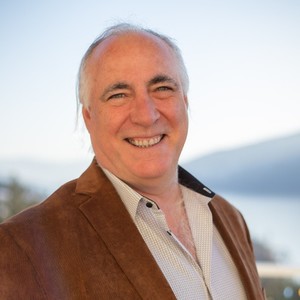
Chairman at Generation Mining
Co-founded several successful mining companies over 35 years including Wheaton River, Thompson Creek and Glencairn Gold. Former editor of The Northern Miner Magazine.
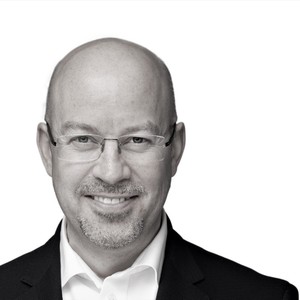
COO at Generation Mining
A Mining Engineer who was a key player in the construction and operation of Detour Lake, which sold for $5 billion last year. Previous to that he held senior positions at Barrick Gold and Placer Dome.

President/Managing Director at Haggarty Technical Services

at Unknown