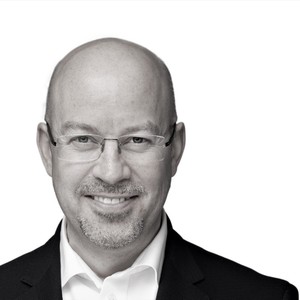
Drew Anwyll
COO at Generation Mining
A Mining Engineer who was a key player in the construction and operation of Detour Lake, which sold for $5 billion last year. Previous to that he held senior positions at Barrick Gold and Placer Dome.
Replay available
Join us for a great event!
Automated transcript · Written by software from the replay's audio. It can mishear names and figures; the replay is the record.
0:08 Hello, everyone, and welcome to Generation Mining's live summit today, hosted by 6. I'm pleased to introduce our speakers, President and CEO of Generation Mining, Jamie Levy, their CEO, Drew Anwill, and their chairman, Cary Noel. The team is going to be conducting a live Q&A session today with you after going through a presentation, so feel free to ask questions in the Q&A chat found on the right hand side of your screen at any time today. And if you'd like to get in touch with the team, feel free to fill out the survey that's linked at the top of the chat. As always, the summit is being recorded and it's going to be available on six.com in the coming days so look out for that.
0:39 Without further ado, Kerry, I'm gonna pass things over to you so that you can get us started. Thanks a lot, Cam, and welcome everybody. I see we've got a big turnout today so that's great. I just want to start off by saying that we're finally here. We've got the detailed feasibility study complete and we're getting ready to build this mine. And a lot of people want to understand, you know, what is different between this feasibility study and the past one? And I think that one of the main differences is is that this feasibility study was based a lot on actual quotations of equipment rather than estimates. And I think both equipment and work to be done. So I think that this one is a lot more accurate. Of course, it takes into account the inflation that we've all suffered over the last couple of years, and it's been a little higher in mining than it has been in some of the other areas.
1:41 But the good news is that we've still got a new mine here, and it's been able to withstand that inflation and still have really robust numbers. And since that first feasibility study, we've done over 40% of the detailed engineering on this mine, mainly on the process plant, which is the key. We've also done a lot more metallurgical testing and redesigned the flow sheet to actually improve recoveries a little bit and also allow us to remove the scavenger circuit, which in that respect saved a little bit of money. We also did a lot of drilling, almost 20,000 meters of drilling,
2:18 and that geotechnical work gave us more confident in the mine plant. And then we also bought some ball mills, which we got at quite a saving, and they were a little bit bigger than the original feasibility study. So we're gonna be able to go a little bit higher production through the mine life than we were originally. And also during all of that work going on, we did the community benefits agreement with the Big Dagonish Nabig First Nation. And then we also initiated the process of starting our permits after we received the federal and provincial environmental assessments. So it's been a busy time. I know we haven't had a lot of news out lately, but we're going ahead full bore right now. And I'm going to turn this now over to Drew Anwell, who was the quarterback of the Feasibility Study.
3:08 And then we're going to talk a little bit about mine financing after that. So, Drew, why don't you take it over? Thanks, Gary. Again, everybody's seen a forward-looking statement, so I won't go over this in detail, but take a view of that for sure. Our Feasibility Study was led by G-Mining out of Montreal. We also got Wood. G-Mining did largely the mine design and integrated the document. Wood did the processing plant. We had JDS infrastructure doing a lot of the earthworks, a lot of the onsite and offsite infrastructure. And of course, KP, Knight Pizl, which did the tailings ponds, the rock mechanics, and finally, P&E helped us update the resource. So again, we had a lot of continuity on this document itself, And we got similar results that we had from other, from the previous feasibility study. From an NPD point of view, you see it's $1.2 billion, an after-tax internal rate of return of just over 25% at 26%, And the initial capital is up. And again, we have a couple of slides later on to explain that. I'm sure there's a couple of questions on it. But what you can see is this is with the same 2.3-year payback.
4:27 It's quite an exceptionally robust project. And Some of the production numbers, Life of Mine payable on Palladium equivalent is 3.6Moz, so quite an exceptional production rate. And also the cash flow that we generate in the first 3-years that aids on that payback. Again, pretty great at $850 million. Again, the folks on this call are probably familiar with the real estate where we are in the area. We've got very good infrastructure. We've got the TransCanada, we've got rail lines, we've got a small municipal airport, we've got the town of Marathon and the community of Bictagon, Anishinaabe, and in the proximal area.
5:16 And also we've got exceptionally good power infrastructure with the recently completed 230 kilovolt line that goes from Wildwater to Thunder Bay that we will tie in later on in the mine life. And again, it's exceptional because we've got largely carbon-free power in Ontario that we are developing and using for the project. So I've got a lot of slides here that go over a comparison. Now I'll just hit a couple of the high level metrics and all this information is available both in the presentation and the feasibility study. And we presented it fairly transparently with the differences between the current Feasibility Study and the past one.
6:04 The key ones we want to look at here are the NPV of $1.164B versus the previous one at $1.07B. The internal rate of return again very similar to what we had before. And through this base case study, we've also included the full consideration of the Wheaton Precious Metal stream that we have on the project. And again, you see the payback, which a lot of the bankers really like at a 2.3 year payback. Again, the comparison of the capital cost, if you remember from the previous feasibility study, it was $665 million. And we have seen inflation during this time. A lot of it was on the earthworks, certainly through the mechanical equipment, through the process and whatnot.
6:57 We've got roughly a 25% increase And the feasibility study from 2021,665 was sort of the sticker price, which took out some of the pre-production revenue and the leasing. And if you want to do a direct comparison, the 2021 feasibility of 888, We're now comparing it to
7:18 $1.1 billion. So again, a 25% increase overall. So pretty respectable in my humble opinion, based on the markets that we're living with right now. Again, a bit of a detail on the operating costs. We'll look at the bottom line first. Again, the life of mine all in sustaining costs. Again, the metric that is very comparable from the last 1,809 to 813. There have been some variations all the way through the mining costs. You see a bit of an increase there. And some of that is partly how we accounted for it. We previously had equipment repairs and the standard that G-Mining presented in has those costs included in the mining costs. But at $325M, again, we see that as a realistic, achievable number. As we see with the processing costs, It's been slightly reduced from the previous modelling and that's really a function that with the new metallurgical testing that Kerry outlined, it eliminates the need for the PGM scavenger circuit. So we've seen that we've seen some savings there.
8:38 Again looking at the production numbers, the life of mine remains very similar. We have seen an increase plant throughput. The previous design had it at 2,500t per day and now we're 10% higher than that at 2,700t. That's really a function that we had the opportunity with the previously procured mills we have that were previously purchased by another mining company that have never been installed. We got the advantage to bring those in. With that, the mining fleet is just about the same. We have seen an increase with the new reserves we had with the just short of 20,000m of drilling. We did have the opportunity to increase our reserves with the same general pit shell and the big advantage is really a decrease in the strip ratio.
9:33 And when you look at the payables in terms of the full life of mine, you can compare it and they're very similar and slightly on the upside compared to the previous life of mine. So what are some of the changes that we made? Again, as I said, we have an increase in the ore tonnage for the reserves at a decreased strip ratio and for a fair size open pit that's a big driver of value. So You're largely moving the same total tons and you're moving those same tons with slightly increased ore. Huge advantage to us. We mentioned the grinding circuit and that's with the larger sag mill and bowl mill.
10:16 We've managed to decrease a number of high-intensity grinding mills. We did some specific energy testing and we've established that we've gone to a bigger Hig mill as opposed to 2. Slight changes through the flotation circuit, where previously we had the Woodgrove DFRs. We've chosen to go to an open tank cell, so a conventional for the roughers and the more established SFRs for the cleaning circuit. As I said, bigger mills allowed us to decrease the need for the pebble crusher and with that new mat testing, we've got rid of the PGM scab circuit. Overall, we've seen some benefits.
11:01 When you look at the overall project, where have the changes been? In that pie chart we have, there has been some scope changes that, like I said, the ins and outs associated with some changes in the design itself. We have got a bigger plant footprint, largely with these larger mills, but the bulk of the change is associated with,
11:27 for lack of a better word, cost escalation, changes from the previous Feasibility Study pricing. Some of the key assumptions we used. We used a 3-year trailing average. So the lesser of the 3-year trailing average for metal prices and the spot price on December 31st.
11:49 So had we gone with pure straight prices, the plating price would have been notably higher than this, but you take a look at that list. A major driver in cost is also on diesel, diesel's up and for the longterm, we've assumed that at $1.17 for the operation going ahead and electricity roughly the same at $0.07 kilowatt hour.
12:16 A very similar next couple of slides, you'll see very similar to the last cash flow. The mine design is optimized, but largely we see the same thing by bringing the Palladium forward. This gives us a quick payback and pretty solid cash flow in the upfront years.
12:38 As with the previous design, the intent was to bring the Palladium out in the first half of the mine life. And you see we've managed to do that. With the Copper, we optimized largely on the NSR of the overall project. And when the time comes down the road, we'll obviously, as any mining company does, we'll have a different optimal plan
13:00 on an annual basis when we look at the life of mines going ahead. So again, pretty solid production profiles and similar to what you folks have seen before with roughly about 60% of the value coming from Palladium and about 30% coming from Copper. And the balance being the Platinum, Gold and Silver. Sensitivities again, these are in here for you to acknowledge. The project is not that sensitive to capital costs and to a lesser extent operating cost. It is very sensitive to metal prices and you'll see that you can play with those. We've also thrown in some sensitivities that largely would impact on the discount rate, fuel pricing, power pricing accordingly.
13:54 So we've seen this design before, this general arrangement. It's a similar footprint to what we had before. It really reflects the current designs we have. We remain with 3 pits, a satellite crusher, a tailing storage facility to the west. Again, it's a very tight footprint that we wanted to maintain.
14:15 We're tying in the initial years of the mine life to that Manitowoc Terrace Bay power line that goes diagonally across the slide here. Maybe the topic that most folks are going to be interested in. I'll hand over to Jamie Levy, the CEO, to walk us through the mine financing phase. Thanks, Drew. And thank you again for helping out with the Feasibility Study. I know it was a little painful near the end there, but you and your team did a fabulous job. And thank you again for getting it done and getting it filed by
14:52 the end of March. So everybody can actually read the technical report. So it's on CDAR. If people want to look at it, it's probably on our website as well by now. So Going back to the mine financing, which everyone seems to be asking all of us when we're going to get the project financing and we'll get the mine up and going. The first step was to, as a few board members and a few investors, what's your new capital number? Part
15:20 of the reason for us doing the feasibility study was so that we could tell the investors and everyone else what the new capital number was. So as we could see the new capital CapEx is 1.12 billion, or sorry, 1.11 billion. Net of equipment financing, it's just under 900 million. So if you actually include the Wieden stream from that or subtract the Wieden stream, we're closer obviously just under $700 million. So the difference between that
15:50 is the amount that we need to project finance for. And we have indicative interest, which we're gonna talk about later on from the banking syndicate of $400 million US, as we're gonna talk about soon enough. But The next step will be for us to get the term sheets, which is negotiating the debt packages, which is term sheets and mandate letters from the banking syndicate. We're hopeful we're going to get that out in the next couple of months, if not sooner. And then we're in discussions
16:24 with several government agencies who have supported critical metals or are supporting critical metals programs. We're trying to get in there so we could reduce the need for the equity which is needed to build this project. So there's private equity money, there's non-dilutive ventures or possibilities that are out there that we're investigating all of them. And now that we have the final capital number, or at least the final capital number for now, that's the number that we need to raise in order to build this project. So next steps for us are, I believe it's the timeline here, is permitting.
17:01 So as Drew had mentioned and Kerry had mentioned, we're up to about 40% or just over 40% of detailed engineering. What's very important for this project is the permits we received the E A November 30th. Of last year. Now the key permits are there's 3 of them that we need in order to start early works construction. And those are the tree harvesting permit, a closure plan and a species at risk or an offset benefit plan. They're all with the Ontario government. We've all applied for those permits. We're awaiting those permits. And once we get those permits and we get the project financing, we can start the early works construction. Our hope is that we could, our aim is to start that, if not over the summer, by at least the fourth quarter of 2023, the early works, and then we could start the rest of the construction soon thereafter.
17:50 We'll start the early stuff in September-ish, and then we could
17:55 start the other construction in the first quarter, the second quarter of 2024. Mine financing, again, we talked about it earlier. We're waiting for term sheets, mandate letters from the senior lenders. Our hope is, our aim is to get those in the next month or 2, and then we're gonna hopefully secure that money by the end of this year, so we could draw down on that money the first quarter of 2024 when we draw down the weed money. Construction
18:22 is about 18 months. Again, we'd like to start it off in 2023, early works construction, the 3rd or 4th quarter, and it's about a 2024 month build and commissioning pre-production soon thereafter, 24 months. So it's an aggressive timeline, but we are getting very good support from the provincial and federal governments on our permits. It's amazing. Went to Ottawa a couple of weeks ago, how much support we're getting for this project. This is the only
18:50 PGM Copper project going through the permitting process in Canada. There's a Lithium project further north. We're getting very good support. We're aiming to get some critical metal money from the federal provincial governments or some support from them through the permits. There's been a new Ontario Mining Act, which hasn't gone past legislation yet, but they're trying to reduce the time lags for permitting. We think we're too late for that process, but we were getting very good support from the
19:17 province and the federal government in order to expedite our permit. They've all taken a huge priority. Drew and I can talk about it later on, but we're getting very, very important people in all these meetings going through the permits. So it's showing that this is a priority and they're very flexible on their permits to make sure that we can start on the timeline that we'd like to. Why invest?
19:43 This is, As you can see, our NPV is just over 1.1B. Our market cap today is probably just over $100M. It's somewhat embarrassing, but from a few of the analysts we've spoken to, we should be trading closer to 40-60% of our net present value and we're trading a less than 10% of our net present value. Now we have this feasibility study or this updated feasibility study out. We're quite confident this is going to be the final number for the build.
20:16 Our project is very undervalued and we hope that some investors, when we start to de-risk this project through some of the critical permits, through getting the banking syndicate arranged and a few other milestones that we'll be talking about through the coming months that the investors will give us a better valuation than we're getting right now. Carrie is going to talk about her management and board very soon.
20:41 This is a critical metal project. I'm sure we're all hearing it on the news. I heard it on CNBC again today with Joe Manchin. Everyone's talking about it all over the place. We know that this is the project that Canada and the federal provincial government wants to support in order for the Ring of Fire and other projects to be successful. This is the microphone that they could speak about how successful Ontario and Canadian mining is. We're using that to lever that to get some critical metal money. The support we're getting from our stream partner, Ween Precious Metals, the due diligence they did, the support we're getting from them, and the commercial banks that we have in the EDC, it's the support of how good this project is that we're getting tier 1 streaming companies, tier 1 banks involved in this project. They're not just doing due diligence by kicking the tires. They're dissecting the tires. They're doing a lot more work than would be what other people are doing. So it's great to get support from Weed & Precious and the commercial banks that we do have.
21:46 Kerry, you want to take it away from here? Yeah, thanks, Jamie. And I just want to introduce, for those of you who are new to the story, some of our people. We've got a really excellent management team. The team, it's not the whole team we need. We're going to need, as you know, we're going to have more than 800 people on this project when we go to build it. We're going to have to be adding to this team. This is a foundation here. We've got Jamie and Drew, of course, and Drew's got extensive experience over 25 or more years in the mining business. Brian Jennings, our CFO, is a very senior, one of the top restructuring guys in Canada before he pivoted to the resource industry about 10 years ago.
22:36 Adam Siegel, who was with Sherritt, Paul Murphy, who built mines for IM Gold and for
22:44 Sentara and also was with G-Mining when we did the initial feasibility study and he joined us based on that feasibility study and on Ruben Wallin who worked with Drew at Detour and Wilkinson who's you can call if you have questions about the company, she's our VP of investor relations. And then on the director's side, I think we've got one of the really, really good board of directors in the mining business. We kind of cover almost all the aspects of mining. We've got Cashel Meager, who's the Chief Operating Officer of Capstone Mining, and a different Paul Murphy than you saw on our management team. Paul is an accountant who is chairman of Alamos Gold and used to run the mining group for Pricewaterhouse.
23:34 Phil Walford down at the bottom there. Phil is a reserve geologist and won the Bill Dennis Award for the Valentine Discovery. Jen Wagner on the bottom left there was Senior Vice President at Kirkland Gold before they sold that company for $11 billion to Agnico. So yeah, we've got a really strong board and we call on those board members for expertise constantly. And it's really handy to have them around and being able to offer their advice. So that's the end of the main part of the presentation, but we have got lots of time now for questions and you can ask your questions in the Q&A feature on the website at the top right hand corner. And please, please go ahead and we'll we'll we'll get into it.
24:23 Absolutely. Thanks so much, guys, for the great presentation. And yeah, just as a reminder to everyone in the audience, if you do have any questions, it's on the right hand side of your screen in the Q&A chat. Feel free to submit any time. But guys, let's dive into it. We have a bunch of questions already. First question is from Sven. What's the debt equity split of the capital that you expect to have to raise in light of the updated FD? Do you want me to answer that, Jamie? You're muted, Jamie. Now you can go ahead, Jamie. I didn't see the question or I didn't hear the question. I apologize. No worries. It's what is the debt equity split of the capital that you expect to have to raise in light of the updated FD?
25:19 The debt to equity is, it's a good question. It depends on what the banks are gonna allow the Wheaton stream to be at and this project financing money we're looking at. So, you know, it's open for discussion, but if the Wheaton stream is considered equity, which we believe it is considered equity, and the debts, it's going to be, it's probably around a 60-40 split between debt and equity. Kerry, would you agree with that? Yeah, but I want to define equity here. Equity doesn't mean necessarily shares. We're looking at a lot of different near equity items, such as government support. So From the bank's point of view, equity is anything that is essentially second tier to them.
26:06 So if it's not secure, unsecured, so like for instance, equipment lease, that's not equity. But if we can get, say, a loan from one of the governments or a second tier loan from one of the private equity companies that will count as equity. And our job here as managers is to keep the share equity portion as little as we can. We won't know that until we conclude all of the other different ones that we're trying to and there's lots of them, believe me, that we're working on trying to get. And we expect those things to happen over the summer. Exactly. And also to finish off, when we receive the term sheets from the bank, we'll get better indication from them on the equity debt to equity split. Right. So that's another question just about how can the project benefit from the green initiatives, for example, like a tax credit in the 2023, in the year of 2023 of the federal government or from the federal government?
27:03 So we didn't, we didn't include any benefits from that in the feasibility study, because this is all new that just came out. We are gonna be of course talking to the government, but it's not policy yet. They've just announced that it's happening and we're gonna be talking to them and see if there's anywhere that we can we can take advantage of any of that. And that that'll be an ongoing discussion. And the good thing is for us, we've got the the open phone lines to a lot of the government officials already. We've met with them in person. Jamie and I had lunch with the Minister of Natural Resources a few months ago. So we're around and we're able to talk to them as they're developing the policy and hopefully even influence the policy a little bit.
27:48 And that would be a substantial savings to our capital cost or savings to our capital cost if there's some tax rebates on that. Question from Greg, if you could just explain why your initial capital is almost the same as your after tax NPV. Drew, do you want to tackle that one? Yeah, sure. Yes, sure. So the NPV at $1.1 billion, and yes, it is very similar to the initial, the NPV and the initial capital.
28:33 So again, just to be clear that the NPV is the net benefit after all of the capital has gone in. So it is an improvement. So we did see when you look at the adjustments we have in the early years, the just short of 900 million, 898, the number is. So we do see that we do have an advantage there as well. So maybe I'll hand over to Jamie if there's additional clarity on how we should be communicating on that. No, I think it's quite clear. I think we should be looking at the after-tax cash flows, which are, I guess, $2.3Bn or just under $2.3Bn from the Feasibility Study. And then when you discount that down using 6% discount rate, that's how you get to the NPV.
29:26 So it's just a coincidence that the numbers are close, the NPV and the capital. If we use the 5% that the Gold mining industry uses, it will be a couple of hundred million or 150 million higher. If we use the 8% that the base metal industry uses, it would be a little bit lower. So it's largely a factor of the discount rate we used. And Drew didn't get into it too much, Kerry. Sorry if I interrupted you, is the payback being 2.3 years. Very few projects have such a short payback. That's why I believe we're getting the commercial banks and such good support. It is an open pit. So we do make revenue as the pre-production revenue Drew had mentioned earlier, even before we start the commercial production and there's already revenue coming in. So it is very, very rare that you get a project of a payback under 3 years nowadays.
30:22 With the capital of being just over 1 billion dollars. Right. Here is a question. So you're netting out pre-production revenue out of initial CapEx, but do you not need to fund the gross amount of CapEx first? So what's the actual funding needed to build a mine, CapEx included or excluding pre-production revenue? So the initial capital is 1.1 billion. So netting out, or just over 1.1 billion. So netting over $1.1Bn without the pre-production revenue. I think I spoke about it earlier, we could subtract the mining equipment, we could subtract the weed and precious stream of 240 million, we could subtract the banking syndicate, and that difference is the amount that we need to project financing going ahead for equity or non dilutive equity.
31:20 So the 1.1 billion is an initial capital we need to raise. All right, sounds good. Harry wants to know what's your anticipated working capital need upon construction production? I don't have that, Drew, do you have that? I believe it was, it's part of the feasibility study. It's in there. It's 100% included, I just don't know what that number is off the top of my head, I apologize. We'll get back to you on that. I believe it's 60 million-ish, but I could be wrong. No worries. Harry has another question, just asking if you could please, with all caveats, take the group through how much equity funding you would require and how you would care for that partnering, institutional or retail.
32:09 Kerry, you want to go at it this time? Yeah, I think we've talked about that already, but I'll reiterate it because it's a question we get a lot. And that will remain to be seen exactly where that equity and near equity come from. We're working as hard as we can to see if some of these government critical minerals programs are gonna be available. And we're in detailed discussions with the governments, but obviously we haven't got to the point of being able to announce anything yet. And so if those don't come to fruition, we've also got some 2 different private equity funds that we're in discussions with as well. And we can, perhaps that's expensive money, but it's available and it's there and the interest is there as well. So, and then of course, at some point, we're gonna have to do an equity raise. And I don't know how big that is, but as management owns a lot of shares in this company, we're very interested in keeping that equity as low as we possibly can.
33:10 Right. Jack has a question about, will you be doing exploration work during construction? We don't currently plan to do any exploration work, mainly because it's a construction is a really busy time and very focused. However, with some of the programs that the governments are putting out towards to encourage critical mineral exploration. We may take advantage of some of that at some point, but we don't have any plans to do anything right now. We wanna spend our money on building the mine. Right. Adam wants to know why closure costs are all spent by year 5 when there's still lots of mine left, life left. That I can't answer. Drew, do you want to tackle that or Do you understand that question?
34:02 I didn't hear it, sorry. Cam, can you ask it again? Absolutely, 1 2nd, let me, there we go. Just wondering why are closure costs all spent by year 5 when there's still lots of mine life left? Yeah, that's a great question. So that was largely how we modelled it. It's a bit on the conservative side. We intend to do closure as the operation advances through its life. It's a, it's fairly good practice. So in terms of the final closure plan, which is just going through approval with the Ontario government, There may be some adjustments to that, unlikely in terms of the cost, but that cost of 72 million includes the physical cost for closure, plus the additional carrying costs for the bond itself.
35:03 So in terms of why is it timed in that given period, it's a little on the conservative side and that'll be more firmly established once we advance the approvals of the permitting itself. Absolutely. Okay. Steve wants to know if you could speak a little more about the Palladium price used in the updated Feasibility Study. In your discussions with banks, are they comfortable with this assumption? So I'll have the initial conversation. What we chose was the lesser of the 3-year trailing average for all the metals and the spot price on December 31st, the effective date of the project. So that was the methodology by which we calculated.
35:55 And I'll let Jamie answer. He seems to be having problems with his video. I'll have Jamie answer on the banking portion of that question. Sorry, Drew, I didn't hear the question. Can you repeat it? Yeah, absolutely. It is... Sorry, 1 moment. If you could just speak a little more about the palladium price used in the updated feasibility study and in your discussions with banks, are they comfortable with this assumption? We can hear you, can't see you. Okay. Sorry, Kim, I think I got the question. Are the banks happy with the numbers that we use?
36:44 The banks have their own technical report that they're using. Their numbers are based on different metrics and we're using from what I've seen so far, the banking is actually using a higher price of some of the commodities than we're using. And they're quite confident on the price, I'm sorry, they're happy with the prices they're using that this project is financeable. All right, great. We have a really specific question from Adam. Hopefully you guys are able to have this on hand or you can of course follow up later, but he's referring to page 22,428, the financial summary. There's a line called stream adjustments, net of deposits, and year 3 is 420 million. Could you just explain that and what it is?
37:36 Sorry, page 22 of what? Of the PowerPoint or of the feasibility study or what? Page 22-428, and he refers to the financial summary specifically. So yeah, that's like way into the feasibility study. So we're going to have to look that up to figure out where he's actually referring to. Yeah, no worries, Adam. We will potentially follow up with you on this question later. But another question coming from Jason, are you going to continue exploring and drilling during the construction process? And do you have any new targets that have caught your attention in recent months? Essentially, is there a good opportunity to expand further from what you've already explored? Yeah, as we said before, we're not planning any exploration immediately. We may change our mind on that, as different initiatives from the government to promote critical mineral exploration come along, but right now we're not planning anything. As far as targets go, we've got lots of targets.
38:37 There's especially over towards the Sally deposit, but also just north of the main zone as well. So we've got our targets, But we've also got a 13-year mine life with 2 other deposits already discovered that are not even part of the mine plan. So we're looking at, you know, if we were to include those at some point, 20 years plus already. So we're not wanting to spend what we have in the Treasury right now in exploration because we've got what we need. But we will be exploring during the mine life certainly and probably this mine will go for many, many years beyond the scheduled life. All right, great. We have a question coming in from Benoit. First of all, he's congratulating you on all the hard work and the team to deliver this great DFS 23.
39:29 But The quick question that he has is, could the management still buy shares on the open market during the financing negotiations in the coming months? Kerry, I'll answer that. Kerry, can you hear me? Yeah, I can hear you. I think I just started my pictures all messed up. There's going to be certain periods that we're blacked out and there's going to be certain periods that we're not blacked out. So we'll have an opportunity to purchase shares in the market during certain situations. So as of right now, we're blocked out due to the release of this technical report, but there'll be some windows where we're able to participate in the equity market. Yeah, the management's been blocked out now for many months. So there hasn't been any activity.
40:20 All right, great. Question from Harry, is Siobhan Stillwater still an active participant in these discussions or are they rather a passive investor? You really asking what's their role in bringing the mine to market? Sabanier is the question, is a shareholder? I can answer that. The Sabanier is a major shareholder. They own about 18% of us. They're not active in our management at all. We do update them regularly. They're very interested in these updates. But as far as helping us build the mine, no, we're on our own for this. Fair enough, okay.
41:07 Jasper wants to know what pre-construction activities such as early earthworks, ordering of long lead items before the project is fully funded? Surely you want to take that? Yeah, 100 percent. So the next phase of engineering, it is very much about the procurement. The projects team, we plan to do 2 phase POs. So the first phase of that PO is really to get the vendor drawing and the details of the vendor equipment that will go into the the detailed design. And then the second phase of the PO is when we actually purchase the production slots. And we'll do that second phase of the PO once we have full funding.
41:56 So we will have the opportunity to continue with the procurement discussions on the plant itself and the equipment. And then in terms of the early work, so once a project is sanctioned, so we know we have the appropriate financing and we have the permits in hand likely, the first phase of the work would likely be upgrading some of the roads, the access to site, laying out some of the pads in the early earthworks, and then we'd go into the full plant construction, which would be the critical path for the project itself, along with the construction of the tailings facilities that really start as soon as we get access roads out there and finish at the end of the construction phase. So it may be a bit of a complicated answer, but there's a bunch of things that are going on and we certainly want to manage our cash out the door prior to that full project sanctioning date.
42:58 And Drew, just to add on, I mean, talk about the permits that we need to start early works permits. And I think we talked about the 3 of them earlier, but maybe you could elaborate on that. Yeah, 10-4, thanks, Jamie. So there's 3 key permits we need to start the initial phase. And that's really the closure plan, which maps out what our closure is, what the closure costs will be and how we're going to bond it in different phasing. The overall benefit plan for species at risk. And that's largely around the caribou in this, in the range we're in, which is on the top of Lake Superior and then the final critical permit in the short term is really the permit to harvest the trees and we'll get that last permit when we get the other 2 permits on and then as the as the project advances we have certain discharge ECAs for air and water and a bunch of normal permits that a construction and an operation would need.
44:03 All right, great. Question from John. Despite your offtake agreement is for only 50 percent of your production, did you use the terms of the offtake agreement to calculate the revenue streams and how do the terms compare to your assumptions? Let me tackle that one, Jamie. Sure, go ahead. We anticipate we want to have 2 offtake agreements that really manages operational risk. We've got indicative terms for the remaining 50%. It's a confidential agreement we have. So the terms we have in the feasibility study are accurate representations of effectively the blended rate for what our what the payables will be and what the costs associated with that. So the simple question, John, is, yeah, it's an accurate representation of reality based on what we expect with 100 percent of the the offtake agreement that we'd have.
45:06 All right, great. Robert's got a pretty specific question. He's quoting the last sentence of the March 27th news release, where it says, the company expects to enter into final binding offtake agreements for 100% of the production in conjunction with the completion of its project financing anticipated later this year. And he's wondering in reference to that, if you can please elaborate on whether this includes the Palladium and whether any of the Palladium might be sold forward. So the offtake agreements and any forward selling would be separate issues. The offtake, we're looking, there's 1 concentrate that's produced. So all of the metals that we are producing go out into that one copper Concentrate and half of that will go to Glencore and half of that will go to someone else As far as forward sales, that is something that we could choose to do that separately from that And we have looked at it. It's a little bit difficult with Palladium to sell it forward.
46:08 You'll probably get a discount to the market. So it's not something that we've focused on. I'll add something. We received a few phone calls after we put out that press release and maybe it wasn't crystal clear, but we haven't forward sold the copper or any commodity in that copper concentrate yet. When we produce that Copper concentrate, that's when that price will be a fair value, which will be the market price of that commodity at that time. It will be the value to the shareholders. So it's not, we've sold it today at $4 or $3.50 or whatever it might be for copper or palladium, we have not sold any concentrate yet. It's just an offtake deal that we require for project financing for the lenders and obviously we need to find a home for our concentrate as well.
47:02 Okay, fair enough. Another question from the audience. Recently, auto companies have announced transactions with mining companies, for instance, Stellantis with McEwen of copper. Have you had any discussions with any auto companies And could you address the carbon footprint advantage that Generation has? Drew, you could talk about that. We're not in a...we can't discuss who we've been talking to, unfortunately. Drew, you want to talk about the carbon side? Yes, I certainly can. It's a unique operation in that we have Palladium, Copper, Platinum, Gold and Silver. We don't have a lot of pure operations. But what we did was we commissioned a group out of the UK called Scarn Associates, which really benchmarks the carbon footprint of a bunch of assets. So we looked at ourselves in terms of a copper equivalent.
48:04 So our our carbon footprint per copper equivalent is one of the best in the world. And it's in the again, Jamie, you can help me from memory. It was in the top 15 percent of of the world carbon footprint on that equivalence from memory. 4% close, but yeah. Okay, there you go. So the top 4%. Or bottom 4% quartile. The best, the best 4%. So the largest, the least impact. So It's quite an exceptional project in itself. Through the designs, we did look at additional opportunities for trolley assist, which is effectively the electrification of the mining fleet. So we did do a number of evaluations on that. And some of the original equipment manufacturers are in the development phase for larger battery and electric fleets, which we will consider in the future operation, but we've excluded the trolley assist from the short term design impacts, largely looking to make this as conventional and straightforward an operation as we could have.
49:23 So we will take advantage as the technology grows and develops in the future years for sure. All right, great. Mike wants to know what potential for mine life extensions exist beyond what's covered in the feasibility study? I could start, Drew, or you want to start? Go ahead, Jamie. The Marathon Palladium Copper project, our feasibility study is just based on about a 3km pit going down, Drew, correct me if I'm wrong, around 250m. The project, I think it was in 2021, we did find the feeder zone. It wasn't economic as a downhill deposit, but we know there's some mineralization at depth on the project and there's some extensions to the north.
50:11 And just beyond the pit itself, there's a few other deposits that aren't part of the project. There's a Saly majority which get out in 5 or 6 years, which we'd like to maybe move from the indicated and inferred category to M&I and at some point hopefully bring into the mine life. But there is other projects as well. If you go onto our website, we've got a great exploration potential website. There's some fabulous opportunities over at Fort Ames, at Boyer, and even the Chonolith or Biktowak zone that we have just north extension from the project, which is very wide intercepts of copper, which would be very nice to find some more base metals around this project as well.
50:58 Okay, great. I think that you guys may have covered or touched on this topic previously, but just to make sure that we cover all the bases. Jasper is just wondering about what the amount of capital is that you need to raise, or rather the amount of capital that you need to raise, is it the net of the pre-production revenue? Do you want me to answer that, Jamie? Sure. So we need to have available all of the money, the 1.1 billion. We need to have that available as we have pre-production revenue coming in. But before the mine is complete, we would be able to draw down a little bit less from the banks as that capital comes in. But the banks aren't relying on that, they want us to have the full load available in case there's delays in payment or or you know shipping the concentrate or whatever. Okay fair enough.
51:57 Rick is just wanting to know, he heard a few minutes ago when somebody mentioned equipment costing. He's just wondering if there's been any decision made as to what equipment is going to be purchased. So we've certainly had a number of discussions with the OEMs. We haven't finalized any agreements with that, and that will largely be based on when we know when the financing comes in. So again, we've certainly the discussions are ready to be advanced and the paper is ready to be signed but we have not finalized that yet. Right. Mike is also wondering if you've selected a firm to manage mine construction and commissioning. We've had a number of discussions as well as you would anticipate.
52:42 So we've got a few groups that we've, we've spoke, we've spoke to, and we will finalize that. Certainly in due course, it's a key element or a key contract that we need to get in place prior to executing the work 100%. Great question. But simply saying, no, not yet. We have not finalized that. All right, fair enough. Well, gentlemen, that looks like all the questions we received for today. So I wanna thank you for coming on, going through a great presentation and great Q&A session. Of course, I also wanna thank everyone who's joined us today, especially those who have asked questions. But before we wrap up, I wanna pass things back to the team at Generation Mining for any closing remarks. Just wanna emphasize that we're available as management to our shareholders and to interested parties. You can call Anne and the director today, anybody else you need to talk to directly but this is a good time to ask any questions but it must be going on in the future if you want to send an email to Ann her email address is here on the screen, and it's on our website.
53:48 So please reach out if you want to know. And please also sign up to get further information distribution through our website if you haven't already. And thanks for coming out today. Thank you.
Follow Generation Mining Limited into a list and get an email when it puts out news.
COO at Generation Mining
A Mining Engineer who was a key player in the construction and operation of Detour Lake, which sold for $5 billion last year. Previous to that he held senior positions at Barrick Gold and Placer Dome.
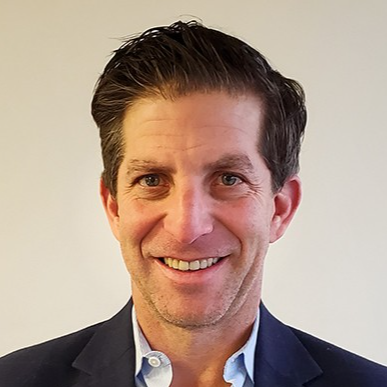
President, CEO & Director at Generation Mining
25 years in the financing and management of Canadian mining companies. Was CEO of Pine Point Mining which was acquired by Osisko Metals. Formerly Vice President of Pinetree Capital.
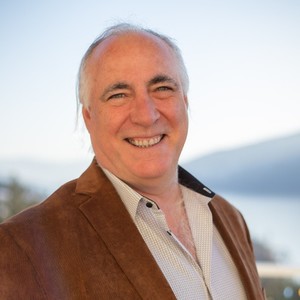
Chairman at Generation Mining
Co-founded several successful mining companies over 35 years including Wheaton River, Thompson Creek and Glencairn Gold. Former editor of The Northern Miner Magazine.