Transcript
Automated transcript · Written by software from the replay's audio. It can mishear names and figures; the replay is the record.
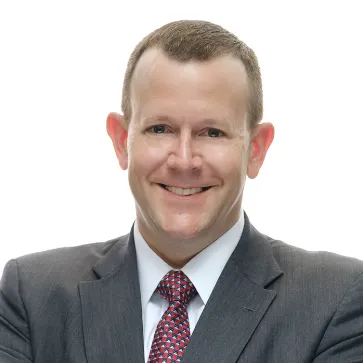
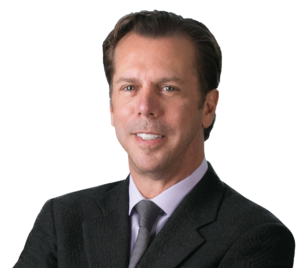
0:07 Good afternoon or good evening, depending on where in the world you're joining in from today. I'd like to welcome you to the 1st mining event, a fireside chat with Dan Wilton and Keith Neumayer. A bit of housekeeping before we get started. As always, today's event will be recorded and available on both YouTube and Six.com by tomorrow morning at the latest. And following the chat today, Dan and Keith are going to be taking questions from you guys, the live audience. While we won't get to them until the end, questions can be submitted at any time in the Q&A tab on the right hand side of your screen. But it's really my pleasure to introduce Dan Wilton, 1st Mining's CEO, and Keith Neumeyer, the company's chairman and founder, as well as CEO of 1st Majestic. So just to get us started, I know there's a number of people on the call today, based on the registration, who are new to the 1st Mining story. So Dan, if you wouldn't mind, I think it'd be great if you could give a synopsis of 1st Mining and its 2 core projects.
0:58 Sure. Thanks, Romeo. And Thanks everyone for joining us today. First Mining is a project developer focused on advancing 2 multi-million ounce deposits in Canada. Our Springpole Gold Project located in Northwestern Ontario, about 100 kilometers from Red Lake. One of the largest undeveloped Gold projects in Canada and advanced stages now of the environmental assessment process, targeting receiving its environmental assessment approvals in 2025. And our Duparcay Gold project located in the middle of the Abitibi Gold Belt in Quebec,
1:36 one of the most prolific and sought-after mineral districts in the world. And there we have a resource of about 3.5Moz of measured and indicated and about 2.5Moz of inferred. And put out a preliminary economic assessment on that project late last year that shows what would today be one of the largest, if we're producing today, one of the largest gold mines in Quebec producing in excess of 200,000oz a year. So major strategic projects. And on top of that, we've been blessed with a portfolio of projects that we have in 1st mining by virtue of the foresight of Keith and the other founders of the company, who will talk about the history a little bit.
2:22 First Mining started life really in 2015 as a mineral bank. Keith and the team at the time identified a number of, let's say 20 plus gold projects. It's something like 20 plus, wasn't it, Keith? And that on the first list? The first list had about 100 companies on it. And, but yet we found at the time that it was the Canadian assets that were trading at sub $10 an ounce at that time. Surprisingly, some of the South American assets were substantially higher in price at that time and we decided to focus on Canada
3:02 and focusing on Ontario and Quebec and Newfoundland and so on. It turned out to be the right move, of course. I think Canada, being a very safe jurisdiction as we're seeing what's happening in South America, Mexico, Panama, Peru, Argentina, they've become very, very difficult jurisdictions to deal in. And Quebec and Ontario remain the 2 safest and I think, best, you know, from a permitting and just all around best places to be for a mining company. Yeah, no, absolutely. So With the projects that Keith and the team had put together in 2015-2016, we've managed to bring partners in on a number of those. We can focus on what we think are really the 2 of the best development projects in Canada, in the world for that matter.
3:51 And those other partners that we brought in have spent now probably $60M plus on our partnership assets over the last few years. So just important to note, as we've brought in partners on those projects, created a number of Royalties, which we've been able to monetise, brought in shares and project interests of other companies. First Mining has been able to monetise some of those other assets to the tune of in excess of US$50M over the last 4-years. And that's directly gone into the projects that we have and really avoided shareholder dilution. So there's more of that to come. We've got a great suite of projects that we think are worth multiples of what we're holding them on our balance sheet. But that gives a bit of a sense overall of the 1st mining story.
4:42 I appreciate that, Dan. And I do want to cut kind of straight to the protein today's conversation, especially for investors? So I'll throw it to you 1st, Keith. What do you believe really is the case for investors considering purchasing shares of 1st Mining today?
4:58 Well, I think you have to first of all, look at the value of the company today. When I put the company together back in 2015, we went public in April 2015 after about a year's work putting the portfolio together. And just going to my prior point, we did pair that list down to 10 core companies that we targeted. And of those 10 companies, we ended up buying 8 of them. We used a couple of those companies to sell off portions of them to finance our core assets. And we were fortunate enough to get the balance of DuParcay, which in itself was quite the feat. One of the acquisitions that we made gave us a 10% holding in DuParcay, which is, this is a very large gold asset in Quebec, right off the main highway, infrastructure, galore, water, power lines, you know, near communities. It's the district really is a mining district. You know, they want this mine up and running.
6:01 And it was And we spent 7 years trying to negotiate with the shareholders of this private company that owned the other 90%. And we ended up, Dan was very diligent in working with the shareholders of that company and we're successful in buying 90% of DuParcay. Unfortunately, what had happened, and I know shareholders are frustrated with the share price, but we did issue about 80 million shares to buy the balance of DuParcay. But if you look at a cost per ounce of gold, it was an extremely cheap acquisition. And you're buying one of the most largest and most undeveloped or undeveloped largest gold projects from Quebec. We paid virtually nothing for it. And Dan can get into details on that. But what happened was all of a sudden, all these private shareholders received the 80 million shares in their brokerage accounts and then they'd never had liquidity for the last 50 years. And they just blew
7:01 their stock out and the stock was cut in 0.5 within the next few months, which was unfortunate. It was happening in a down market. If that happened in an up market, the market would have absorbed those shares, but it was just too much stock to come out. So that's that same stock is still circulating in the market. And I bought a bunch of that stock myself and others, you know, my friends and family and I know other insiders have been there, you know, trying to clean up the stock as well. So we'll continue to do that. But it is a lot of stock that's floating around in the marketplace. So I think shareholders should be aware of that. So that's 1 catalyst. When that stock finally does get cleaned up and get put in strong hands, and that's happening right now on a daily basis because we know the buyers that are coming in and helping clean up the stock. We just recently did a private placement. We announced a 5 million dollar private placement and we had almost 12 million dollars in demand.
7:58 We ended up closing just around 11 million dollars, which shocked me And we had some really good brand new shareholders that come in, came into this private placement that have been watching the stock for the last several years. And then as, because we're getting so close to advancing Springpole to final permitting, you know, people are now picking their heads up and taking positions in the company. So it does take time. This doesn't happen overnight.
8:24 The resource market or the gold market is not exactly in a bull market right now. So we are in a bear market. So it is difficult for any company to perform as we'd all want it to be. But we're on the right path. Permitting and spring pull is going very well. Development at DuParcay is going very well. And this stock will improve over time. I think we're at rock bottom and I'm gonna continue to buy and I'm gonna help the company out as best as I can as I always do.
8:57 Yeah, and I think the one thing I'd add to that, Keith, is when you talk about value, I started as a CEO 5 years ago. You know, the share price today is half of where it was 5 years ago when I started. And, you know, a couple of weeks after I started the share price, you know, not because of me, I don't think, but share price had run up pretty substantially. I told Keith it was because of me, but actually, you know, there were some other extraneous factors. You're sitting today, remember that in 2019, we own 10% of DuParcay. Today, we own 100% of it. This is one of the largest undeveloped Gold projects in Quebec. We're sitting today with SpringPool
9:46 where we'll be submitting this year our final environmental assessment. That was 5 years ago when we were here 5 years ago, you know, the amount of work and money that's been spent in study and understanding and moving forward on the environmental assessment process, on feasibility, the technical de-risking that's come out of this project, you know, metallurgical understanding, you know, engineering work that's gone into it, work with the communities around the project. We are so far further advanced than we were 5 years ago. And the gold price is $800 higher. And still here we are with the share price where it is. It is absolutely irrational.
10:31 And I've said to a number of shareholders and a number of folks who I can see have joined us on the call today that I've spoken to in the last couple of months like, I've been doing this for 30 years, Keith's been doing it a little bit longer than I have. But I've never seen an environment where the disconnect between in value between advanced stage developers and producers is this large. I don't think it's ever been this large before. So, you know, that says to me that something's going to change. And we're maybe jumping the gun a little bit in some of the conversation, but
11:08 what's going to bring capital back into the sector? I think the gold price is going to help. But I think that first wave of capital is coming from inside the sector itself. And Keith, you can speak to this a little bit later as CEO of a producing mining company. And I'm sure your business development pipeline is pretty full as you're looking at a number of different opportunities. Like this is a time when we're going to see the gold producers start to look longer term. Because from where we are right now, and I would estimate that if you just looked at the money that's been spent on Springpole and DuParquet over the last 10 years. Hard dollars in the ground and not a lot of that money was wasted. I can tell you I think we're trading at less than half of the value that is just the money that you'd have to spend to advance these projects this far. So, you know, phenomenal entry point for investors who are looking at maybe coming into the story for the first time or coming back into the story or looking to add on to their existing positions.
12:18 I appreciate that. And going back to 2016, we did have a $600 million market gap. No 1 pulled off what I pulled off. I put together 8 companies into one and I've never seen that happen previously. I've never seen it happen since I did that. And the market loved it, loved what we accomplished and loved the portfolio idea. But unfortunately, mid-2016, the market just crashed and we haven't seen it recover since. And today, we have a market cap of slightly over 100 million, but yet we've got 2 multimillion dollar assets. And 1 is way more advanced. You've spent, Dan, 5 years of working with the government and the local communities to get this thing permitted. We're getting very close.
13:07 And we never know exactly when that's going to happen and you can't really tell the world the exact dates and it's tough to be detailed. And I know shareholders always want to get details on that kind of thing. But I know that the energy is going into it and then we're making very solid inroads. And in my view, both Springpole and DuParcay will be producing mines. When that's going to happen? Well, I don't know. But at $100M market cap, I'm willing to make that bet. And you get permits on Springpole, all of a sudden you've got a $500M market cap. And then you get permits on DuParcay, you
13:42 add that up again, and you have 1 billion dollar company pretty darn quick. So, putting timelines on that, I don't know, but I'll buy this stock at $0.12 all day long. Fair enough. And we are going to get to upcoming catalysts of 1st mining just in a bit. But I want to pull back just for a second and kind of talk about the macro case for gold. Dan, I feel like we talked about this very recently, but I'm curious what you think investors should be on the lookout for this year when it comes to the environment for gold prices. Well, I think where we are with gold prices right now, those of us who followed the market for a long time, a lot of people were surprised that gold held in where it did when interest rates went from negative to 5% plus.
14:35 If you look historically, you would have expected that in that rising interest rate environment, you would have seen a pullback in gold. You didn't, and you still haven't. In fact, you've seen gold climb over $2,000 an ounce, and it's seeming very, very solid that it's sitting over $2,000 an ounce. I think building support for the next push up. And that push is going to come when they start dropping interest rates again. And we all know that's going to happen.
15:03 You know, Bank of Canada held rates today, but people are forecasting the interest rate drop to start, you know, whether it's March, April, May or June. You know, this is a near-term catalyst. A bunch of the professional forecasters that I've seen are looking at Gold by the end of the year. Some are saying $2,300, some are saying $2,500. I think that's not an irrational level, but I also think people need to remember, in the last cycle,
15:36 go back to 2000-2001 and what that cycle looked like for Gold. 2001-2011, the Gold price went from about $260 an ounce to $1,900 an ounce. So you're talking about something that, you know, we're not talking about a small percentage increase, you're talking multiples. And if you look again at 2015, which was really the bottom of the Gold market in the sell down after 1100, you know, it kind of bottomed at 1050 or 11 or from 1900 to about 1100, 1050, 1100. So in this cycle, you know, I think we're really still only in the first up like. And there's not to mention all the macro reasons why I think you will have tailwind with Gold from a geopolitical standpoint, not just from economics, but geopolitically.
16:30 And then, you know, what's going to happen with the monetary system. And ultimately, gold playing a far more important role in settlement of trade between particularly BRICS nations, which are expanding, will start to take up massive percentages of global trade. So I think there's a lot more reasons to see gold going up than there is going down at this point in time. And, you know, I think we very well could see gold at, you know, 23 to 2500 dollars by the end of the year. And I think when it moves, it can move very, very quickly. You know, talking about the gold price, you know, a $2,000 gold, you know, we've got pretty darn good gold prices today. And I do, I believe in what Dan just said. I do, I'm a $3,000 gold guy and I expect to see that, you know, happen in the next couple years. But I don't think we need that. What we need is sentiment to change. What drives markets are sentiment.
17:30 You know, right now we've got money flushing into the NASDAQ and the S&P because that's where the money is being made. And over the last 5 years, everyone's been making a fortune, you know, trading Tesla and trading Apple and Microsoft and so on and so forth.
17:47 And as long as people continually make money there, that's where the money is going to go. And if you look at our shareholders today and compare it to what it looked like 7, 08:10 years ago, I'm referring to 1st Majestic as well, there's very few institutions that are in this market. You know, and there's a couple specialty funds and then maybe some ETFs and so on, but they're very rare and far and few between. But that money will come back into the sector once they stop making money in the major markets. And what drove the last major bull market, which started in 2002 and went for 10 years, with a 10-year bull market from 2002 to 2012, And that was driven by the flow of capital that left the big markets that came into the mining sector because of the value. And there's the value is in the mining sector. There's no cheaper sector in the market today.
18:48 And the institutions know it and they are watching. I just came back from a road trip through London and then through Zurich just a few weeks back and I was quite amazed with the amount of people in the audience and there's lots of institutions, lots of money and quite frankly a lot of young people, a lot of family officers started to look at this industry and it's there, it's just waiting on the sidelines And they're waiting for the word go. And I personally believe that word go means when this S&P is down 20 percent. And all of a sudden they say that all this money says, OK, that game is over. Now we're going to the next next market. And the most undervalued industry in the marketplace is the mining sector. And all this money
19:35 starts flowing into the mining sector. And we start another 5 year bull market. You know, and there's something I mean, I've certainly noticed, I know investors have noticed too. It seems like in the last few years that really decent precious metal securities that put out great news are almost punished by the market for putting out good news. I'm curious to hear both your perspectives on how you think that's impacted 1st mining and if that environment is likely to change. I think kind of to Keith's point, when a number of the investors kind of left the industry in that period from 2012 to 2015, 2016,
20:17 that capital flight makes other people at times when you have some surges of liquidity, look for liquidity, because liquidity has kind of come out of the market. So I think good news does provide opportunities where people say, oh, you know, this should be interesting. I'm going to have more people coming into the story, which we should. More investors interested, more people buying, existing investors adding to positions. But the reality is, you know, we haven't necessarily seen that happening because positive news seems to be seen as an opportunity for some people to seek liquidity because so much of that liquidity has come out of the market. Now, for us, as Keith said at the outset, and this goes right back to the creation of 1st Mining, this company, even when Keith and the team made the initial acquisitions, they provided a lot of liquidity to a lot of stuck shareholders. And I think that's part of what the challenge was in that 2017-2018 time frame. So, you know, by virtue of the business model and, you know, Keith's backing of it, it brought an enormous number of investors into the company.
21:37 But I think there was a challenge that a lot of the people who had taken 1st mining stock to acquire shares of Gold Canyon or acquire shares of CliftonStar, you know, they've been stuck for a while. So similar things kind of happened a bit with DuParcay with us in the last year or so. And when there's not a lot of liquidity in the market, that gets to be a challenge. So, you know, I think that's all a symptom of the same things that we've been talking about here. Keith, I'll give you a chance to speak on that as well before we move on. No, I think, you know, Dan, you know, hit it on the nail. So, you know, I don't really have much to add.
22:22 Yeah, fair enough. Jumping back into just really specific to 1st mining, I know there's a number of catalysts that you're expecting at both projects this year. So I'll throw it to you, Dan. What are the ones that should be most exciting to investors and prospective investors? So I think as a statement of how far advanced this project is, we're at Springpole particularly. We're very excited about getting that final environmental assessment submitted. We're targeting that for kind of middle of the summer this year. And it's got to be really clear so that investors understand this. This is very different than what a number of other developers in Canada are talking about with their environmental assessments.
23:07 They're talking about filing final EAs, but no regulator has actually looked at the project yet. With us, it's been a very different process, really guided and led by our environment and community team, led by Steve Lines, who a number of the people in attendance here today, people will have met Steve in forums like this before. We'll have him on again to kind of give us an update on where we are. But Steve and the team did the same thing on the Hard Rock project, which they permitted over about a 6.5 year timeframe.
23:44 And at Hard Rock, they submitted a draft environmental assessment and it lets all the regulators ask all the really hard questions upfront. So that when they're presented with the final document, there's nothing new to them. All the really difficult questions have been answered. And what that means is there's fewer surprises and not surprisingly, the process should move more quickly as you kind of go through that final, that submitting your final EA process. So we submitted that draft EA in May of 2022 And it's been reviewed by everyone that needs to say yes to this project. And that's what we think is really important is we're now we're incorporating all that feedback from regulators, from indigenous communities, and still a little bit more of that work to do over the course of the next 6 months, but really targeting submitting that final EA. And I think that's a massive catalyst for this story, because then, you know, there's a pretty formal clock around which we're going to see the federal and provincial process, you know, take us to the finish, the finish line on that environmental assessment process.
24:52 So we're very excited about that. We continue working with the communities around Springpole and lots of discussions ongoing. We can't get into a ton of detail on those discussions for obvious reasons, but I think the communities have been doing an enormous amount of work that we genuinely appreciate all the work that the communities
25:15 are doing. And we think that is leading to, you know, an increased understanding of the project and ultimately, you know, leading us toward something that we're really aiming for, which is formalizing that relationship in agreements with the communities going forward. I don't know that we will get those signed this year, but it's certainly something that we want to make sure that we are targeting, getting consent from our communities in advance of that final environmental assessment approval. You know, Getting the final EA submitted is an important milestone for that as well. And then there's the other work that's going on at the projects and particularly at DuParcay, where we've been exploring. We've got probably another 9 drill holes to come out from the work that we did in the fall at DuParcay.
26:05 It was just down at the Roundup conference and our team's kind of showing off a lot of the geology work that they've been doing at Springpole and at DuParcay. And a couple of geologists from a large foreign mining company who go around the world looking for projects, totally unsolicited, said, you know, it's amazing what you guys have done with this project in like a one-year time frame that you've owned it in terms of the quality of the geologic model, the ability to target and demonstrate that you understand the deposit, and then how you're convincing people that you're going to make it grow. So We're very excited about what's going to continue to demonstrate real resource growth at DuParcay.
26:50 And then I think we've got probably another 10,000m that we're targeting for 2024 in terms of drilling and continuing to show resource growth at DuParcay, as we do a couple of other trade-off studies to understand what are the real development options. The PEA that we put out, I think, showed a very interesting project, strategically relevant. I said this before, if it were producing today, this would be one of the largest Gold mines in Quebec, the third largest Gold mine in Quebec. So big enough to be meaningful to really any major mid-tier company. And in the middle of the most sought after Gold District in the world. So we still have some things to figure out there, but we think DuParc is just going to continue to get bigger. And as we lay out what some of the development paths might be for DuParc, We'll keep the shareholders in tune with that, because I think that's another catalyst that sometime in the next 12 months could really surprise people to the upside.
27:59 And Keith, I'll throw it to you for what you're most looking forward to as far as catalysts of 1st mining next year? Well, I think attitude change is really the key thing, because quite honestly, the fundamentals of the business are improving every year. But yet the share price goes down and that has got nothing to do with fundamentals. It's only just flow of capital, as my earlier point was. When we see the attitude change and the flow of capital change, the share price will change. And that'll be the biggest driver to the move of the share price. Now of course, you know, there are other fundamental issues that are there, you know, filing the REA and other catalysts, you know, getting community agreements in place and so on. Those will all impact us. But still, if you are in a down market and you're in a bear market, a lot of these news releases that we put out of the fundamentals of the business as we improve the business just have no impact.
29:03 And I see that time and time again. I've got a portfolio of something like 30 mining companies and no one's happy with where our shares are trading today. But yet I look at my portfolio and it's everyone's exactly the same. So, you know, you can't point at 1st mining as being somehow different than any other mining company. The entire sector is underwater.
29:29 And it's It's and I see great news coming from stocks in my portfolio and the stock is down because all it does is create a liquidity event for people that are looking for a way to get out. All of a sudden, the volume spikes up because good news came out and the stock is down. So it's very frustrating And it's all to do with attitude. It's all to do with all just money flows. And when those money flows change, our share price will change. And that's the biggest event. And I think 2024 is likely the year it's going to happen.
30:03 No, thanks. And in the same vein, John Lewis in the chat, I just wanted to give kudos to Keith for all the shares you bought in the last month in the public market. So before we get into the rest of the questions, I might just want to I know we talked about briefly at the beginning, but just talk about your participation in the recent financing and also the shares you bought afterwards. Yeah, sure. I bought 10 million shares in the last private placement and I bought another million shares in the market. I will be buying more. It's not a stock I can trade. It's not a stock I'm interested in selling. So I buy the shares with money that I have kind of sitting on the sidelines. And I'd love to buy a lot more. My goal is to get up to 50 million shares, which I told my management. Management knows that's my objective. I'm at 28 million shares today.
30:54 I'm not sure if I'll ever get up to 50 million, but that's the number that I would love to get if the stock is at these kinds of prices. Hopefully, I'm there by the end of the year, but I'm absolutely quite honest, I'm hoping the stock's not at these prices at the end of the year. So, based on the fundamentals and based on what I think is going to happen in the marketplace and what's going to happen in the major markets and the flow of capital changing that will come into this marketplace. I'm expecting the share price will likely be much higher at the end of the year. But who knows? I could be wrong. You know, we can't predict share prices, but if the shares continually to lag and, you know, I'll be in there on a fairly regular basis. I appreciate that. And also Dan should also comment on that as well, because he participated substantially as well. Yeah, exactly.
31:41 So you can know Sludge, Dan. I bought $4M, I guess, maybe a bit more than that. It was about 500,000 dollars worth. And that's kind of the third check of that size that I've written into 1st mining and the financing that we've done. If you look all told of real money that I put into it, it's sort of well over $1.7M. And that's real money. It's real money for anyone. It's real money for me. On top of that, even as we don't talk about this a lot, but just go back to the circular and look, last year, I took all of my short-term incentive compensation.
32:26 I took no cash bonus. I took it all in equity exposure.
32:30 I think people can expect that I'll do the same thing this year. And a lot of our senior team is doing the same thing. It's a great opportunity for those of us who believe and we see how close we are to these major catalysts. You know, I can kind of take a little bit of cash or you could take something that I think is, you know, a slam dunk at 5 to 10x the value in what now I think is undeniably kind of a couple of year time frame here. So
33:02 that's an investment I'm going to make all day long. So, all told, I will struggle to get to 50M shares, I'll be honest with you, but through all of the exposure that I have, it's getting to be a significant number. And I think pretty much the rest of our senior management team were participating in that financing as well, with real after-tax dollars. So not just in the financing, and if I had more availability to help kind of clean things up in the market, as Keith says, like that's, we're just, we're at a point here where this is, again, I go back to that difference between your producers and your developers.
33:47 That's just at, in my view, a 30-year high in the size of that gap in valuation. And I think it's got to close. And when we talk about the money that's coming back into the sector, I am convinced that the thing that's really going to jumpstart that is going to be the mining companies themselves, who are generating pretty healthy cash flows at a US$2,000 Gold environment, and will generate healthier cash flows at a higher environment. You know, the those shareholders are always backward looking. Right. And most of the people who are who are looking to invest in, you know, come into the sector, maybe come back into the sector if they haven't been in in a while,
34:37 that institutional investor likely needs to see a couple of quarters of cash flows improving. And financial statements that come out usually come out, you know, 45 to 60, 70 days after the quarter's done. So, you know, see what happens in mid-February when we start really seeing what companies made last year. And I think we've never been able to talk about the Gold or precious metal sector as a value sector before, but it's there. And so a lot of those people aren't going to start investing until they start chasing performance. And the reality is gold was pretty much the best performing asset class in 2023. But gold equities weren't.
35:25 And that's where, you know, we got to remember, we had higher oil prices. We had labor inflation. We had steel cost inflation, inputs inflation. A lot of that, the inflation has kind of muted now. You're not going to have labor rates go down, but price of oil was trending toward $100. It's now back in the mid-70s and there's going to be some improvements in those margins. So I think that's in large part what's going to bring, could be some of what jumpstarts the flow of capital that Keith's talked about is just at some way they're going to need to chase performance. And if it's not year end performance, maybe it's Q1 performance where people just get to realize that this is a deep value sector.
36:15 Thank you both for this quick chat. Now we are going into the audience questions. There are quite a large number, so if we're not able to get to you today, I'll absolutely make sure that the 1st Mining team gets those questions and gets back to you as soon as possible. But I'll just get right into them, no real particular order. Question from M. Stewart. He asks, and this is for Keith, since the 1st mining share price has fallen, would this not be an opportune time for 1st Majestic to acquire IFF?
36:44 Well, if 1st Majestic wanted to become a gold company, Yeah, it would be a great opportunity. I would actually love to do it. I don't know if my board of directors at 1st Majestic would think of that, but being the CEO and founder of both companies and chairman of 1st Mining, but nevertheless, I'd have to admit that it has crossed my mind, but you know, we're 1st Majestic's very focused on silver and I think 1st Majestic shareholders would appreciate us to remain focused on silver. When we bought Jerry Canyon, there were some questions about getting a gold asset in Nevada and so on and so forth. I don't want to turn this into a 1st Majestic call. I saw some questions come up regarding 1st Majestic And I would please ask people if you want to talk about 1st Majestic, please send an email to info at firstmajestic.com or send me a message on my Twitter account, Keith underscore Neumeier, or just call the 1 8 header number and ask for Mark Crothers and we'll answer any questions on 1st Mint Jessica as we can.
37:52 I appreciate that. Next question is from Steven. I know we basically already tackled this when we talked about upcoming catalysts, but I think it's a good opportunity to reiterate. So I'll throw this one to Dan. But Steve asks, are shareholders going to be behind the 8 ball for the next 2 years before the possibility of upcoming milestones? Now, Steve, thanks for thanks for joining us today. And it's good to good to hear from you again. Listen, I think there's a number of catalysts that are coming over the course of that two-year period. As we talked about today, I don't know that any of those individually is going to cause a massive jump in the share price. What hitting those catalysts is going to do is certainly advance the fundamental value of these assets. And that's, you know, in large part what we're focused on here as a management team.
38:44 And that, I think, gets recognised maybe in the industry before it does in the market. And when I say that, I mean, there are a number of other companies that we've been talking with over the years about potential partnership or becoming investors in 1st mining or looking at potentially investing in our projects with us. And I think the pace of that conversation is something that, you know, the people who control those purse strings, They know what it means to submit the final EA. And like, if you've done your homework and you've actually seen all of the questions that have been answered by regulators, you know what the outcome's gonna be. And we've seen all those.
39:29 It's why we have such a high degree of confidence in the environmental assessment process and where we're going to get to. I would like to think that this is not completely binary. That EA process has a number of milestones in it where you're calling for community comment and it's a public process. And so, investors will see a bunch of those questions that come back. But I think when those come back, you'll know from the tone that, like we do, a very high degree of confidence that this is a project that's going to get environmental assessment approval. And the other part is, you know, we continue to believe that there's a lot more, you know, really interesting exploration to happen at Spring Pool, boots on the ground near mine in the Bertucci where we have a 70,000 hectare land package, really bonafide district scale, major scale land package where we've already drilled, tested and demonstrated at least 3 other satellite deposits and lots of other new targets to test there.
40:40 And then at DuParcay, where I would like to think that we drill 50m of 2.5 or 3g and people will pay attention to it. There's a lot of those that exist in DuParcay. Some of the historic results would benchmark well against some of the best minds in the world. So we think there's more of those to find. It's going to continue to grow. So no, I don't think this is a, you know, just sit and hope for 2 years because I don't think it's as binary as that. I think every step we take toward the finish line starts giving more people confidence and more investors confidence that this is a project that they need to judge on its merits, not on what they think they know about it. And when you judge this project on its merits and benchmark SpringPool, DuParcay for that matter, benchmark these projects against any other goal development project in the world. And I will tell you, they benchmark really well.
41:45 So you know, sometimes you just got to prove it to people. And so the proof's in the pudding and, you know, pudding is on its way. Great. A question from Timothy in the chat. He notes the Ontario government passed some new mining friendly legislation within the last year. And he wonders if this will be helpful in permitting of Springpole. Thanks for the question, Timothy. We've got a very, very supportive, very strong relationship with the ministry in Ontario. In fact, the new deputy minister of mines stopped by our booth at VRIC on Monday. So had a nice chat there. The reality is this, Springpole is the next large gold project in Ontario to get permitted.
42:38 There's not another one that's anywhere close to where we are in the environmental assessment process. So we have a lot of focus. And this is a government that wants to see infrastructure develop up into less infrastructure served areas in rural parts of Ontario, particularly in the northwest of Ontario. So they know Springpole can be a catalyst, not just for growth and jobs there, but you bring a power line up there and it opens up renewable power generation opportunities. You bring a road up there, it opens up the opportunity to continue to build a road up to the community of Cat Lake and potentially to communities north of Cat Lake that brings, you know, not just jobs, employment, economic growth, economic opportunities, but can really drive social change in an area of the province that really needs it too. So you know, we absolutely are committed to working, helping frame out what that bigger economic story is. And from that, we get, I think, really good support through the province of Ontario and really, you know, all of the ministries that we're working with and we're working with them all and we're working with them all very closely. So we've had great support. We believe we're gonna continue to get great support.
44:01 And where I think the Build More Mines Act, which is the name of the act that Minister Peary enacted last year, where that can really help us is I think around the corners of some of the other projects that we have that we never talk about. Projects like Cameron. We've got a wonderful small mine development opportunity at Cameron. People forget there's already a ramp down 300m into this ore body. There's 35,000t of ore sitting at surface. We've done a little bit of scoping work, but we think it's a wonderful opportunity. But even just moving that forward, some of the permitting for existing disturbance was more difficult, and they've tried to really streamline that.
44:51 And yeah, I think from that perspective, places like that, places like Pickle Crow, which we still own 30% of, I think, you know, to allow someone to think about maybe a smaller mine development opportunity that you could get moving more quickly using existing infrastructure. I think that's where that's why, you know, Build More Mines Act really helps. In some senses, we're kind of at the far end of that process. It'd be more helpful if we were at the start of the process, but you know, we're 6 years into a 7 year process right now. So, but I appreciate all the support and help that we get from the ministry there. Oh, great. There's also a mill at Pickle Crow as well. There is a 200 ton per day little mill. There's tailings that have a bunch of Gold in them that could be reprocessed.
45:38 There's some really interesting, potentially high-grade open pits. And the deposit there is one of the largest high-grade underground deposits in Canada. It's almost 3Moz of resource, inferred resource. I think it's a wonderful opportunity. We also have the option to monetize those assets as well. We still have good holdings in 3 companies that we own with percentages of those assets. And for it to finance Springpole or to finance DuParc further, we could always have the options to liquidate those assets. Yeah, no, absolutely. And that's, you know, I think the value that we show in our investor presentation is kind of a, you know, look through value to the values of the underlying companies. But each of those companies like Big Ridge, companies like Treasury Metals, You know, they're suffering from exactly the same thing that Keith was talking about in the rest of his portfolio.
46:35 You know, they're all horrendously beat up. And the opportunity is, you know, when you have a market change, those things can very quickly be worth 3 to 5 X where they are right now. You know, So we have leverage to some of that growth opportunity too, even just in some of the projects that we might be looking to seek liquidity on ourselves. Got a couple of questions directly for Keith, actually from the chat. 1 from Joe's, I think a quick one, but he wants to know if you can reaffirm your stance on reverse splits concerning 1st mining gold. Well, I was going to bring that up myself, but I'm glad somebody else brought it up and I just had the power go out here. Strange. Anyways, my view on, I wouldn't have bought 10 million shares on the last financing if I thought there's going to be a rollback. You know, many of you probably know I founded 1st Quantum Minerals back in 1992.
47:33 I left that company in 2000. Well, one of the issues with 1st Quantum was it didn't have enough stock outstanding and the institutions weren't able to buy it because it only had, I forget what exactly it had, It had something like 120 million shares or something like that. I was standing at the time in the early 2000s and they split the stock 5 for 1. Today, they have 800 million shares outstanding and the stock is liquid and institutions could now buy it because if they want to go buy 1 million shares at first bond, they can easily, you know, without affecting the share price any great degree. You know, look at B2 Gold, you know, B2 has got something like 1.2 billion shares outstanding And there's a whole list of companies out there, whether it's in the resource sector, high tech sector, there's many, many, many companies out there that have over 1 billion shares outstanding.
48:26 You know, shares outstanding is completely irrelevant to me. It's the fundamentals of the business. People always look for reasons not to buy something. And people look at the stock, oh, it's 12 cents. Why is it 12 cents? They think, oh, it's got 800 million shares outstanding. That's got to be the reason why. It's not related. It's got nothing to do with the shares outstanding. So we'll never roll it back, period. It's not on the table. And you know, well, when I say never, there's never a never. You know, if there were some very, very material thing that occurred, if a major comes in or something like that, it's, I guess it's possible, but it's not in the cards as far as I'm concerned. I'd have to be convinced completely differently. I can tell you when I have, because I've been investing in this sector for 35 years, as Dan kind of alluded to, And the second I see one of my portfolio stocks announce a rollback, I sell the stock immediately.
49:24 I don't give a shit if I take a loss or not. I'll just blow it out. Because every single time I see a rollback, it's negative for shareholders. And there's very, very few exceptions to it being positive ever. There's a couple out there I know, and people point at it and say, hey, this one worked and okay, fine. Maybe 1 out of 20, 1 out of 50 works. But most of the time it's negative to shareholders. And as far as I'm concerned, it'll never happen. I appreciate that. I got one question for either of you. You can both tackle it. It's from Mario. Notes that you're trading at about $6 per ounce in the ground. And he wants to know what it should be instead. Well, let me touch on that just for a sec, Dan. Generally speaking, you go back 20 years, Gold trades for something in the order of $25 to $50 for a development project. This is a 43-101 compliant Gold ounces in the ground. During a bull market, if you go back to 2011-2012, Gold ounces in the ground got up to about $100 to $150 an ounce.
50:30 And they dropped to 2015 levels when we put 1st mining together and we were buying Gold ounces at $8 to $10 an ounce. And then they moved up in the rally that happened after that. And I forget exactly, but it probably got back up to the 20s in that range. And today, as you said, we're trading in the 60s. So, Dan, you go ahead and add to that if you wish. Yeah, no, I think those are right in the ballpark of the numbers that, you know, as a guy who provided fairness of payments, did valuations on mining companies and a lot of comparable analysis. I can tell you, over cycles, advanced stage developers, junior developers, well pre-permitting would be at that $25 to $50 that Keith talks about. Advanced stage developers would tend to trade up $50 to $100.
51:19 And ultimately, those projects were usually, you know, at the time that they got acquired by larger companies that were going to build the projects or got their permits, you know, it would be in excess of $100 an ounce. And often, if you're looking at reserves, they'd be acquired at $200 to $300 an ounce reserves. Now, that was when the Gold price was $1,000 or $1,200. When you're talking about more margin, I think you could see those numbers go higher. So yeah, we have a couple of slides right in our presentation that kind of shows where the advanced stage developers do and should trade, which is somewhere between 0.4 and 0.6 times that net asset value. So what we think of as the NPV value of our projects, based on our Prefeasibility Studies, our preliminary economic assessments.
52:17 And with that, the company's got, I think, in excess of US$2Bn of asset value right now. And those are actually based at US$1,600 Gold and US$1,800 Gold for SpringPool and DuParquet, respectively. So, you know, one of the things that's critical to understand about 1st mining and one of the reasons why when you're making your investment decision, the thing you really want to key in on if you're looking for deep value is not just what's your entry point. So an entry point of $6 an ounce is phenomenal for advanced stage projects in tier 1 jurisdictions. But then what's the leverage to the increase of the gold price? Because we kick this off saying, you know, I was saying $23,000 to $2,500. Keith's saying $3,000. We can't, you know, we'll tell you the time frame.
53:03 But every $100 in the gold price is $250 million US of fundamental value accretion to our asset base. For the quick math, that's 3 times our current market cap in fundamental value for every $100 in the gold price. So, you know, it's not inconceivable when you start running these numbers at $2,500 or $3,000 gold. Now your costs will adjust. Yeah, sure. But it still gives you that order of magnitude leverage to the gold price that is multiples, multiples, multiples of your initial investment. And that's where, you know, coming back to the point of when the capital comes back into the sector, there's going to be a real rush to find advanced stage projects, which, by the way, because there's been no capital for 10 years, not many people other than us have been able to advance projects.
54:02 And we've done it because we've been able to be creative, because we had the portfolio that Keith and the team put together, because we got the backing of a number of the shareholders on this call, people who've been with us from 2015, 2016, and believe in the long-term fundamental value. And we're willing to take our last financing as an opportunity to average down. It really was, while there were a couple of new investors, it really was existing investors that carried the really carried the bulk of that financing. That, I think, just gives us real confidence that when this sector turns, you have everything in place here, ultimately, to cause what should be a feeding frenzy on this stock, right? Because it's so undervalued right now.
54:53 But you have to, I think, look at it as having a time frame that you're willing to wait for some of these catalysts to come. We're confident in delivering the catalysts that are ours to control or at least influence, again, control the government. But some of these important catalysts that are coming here for sure. But if you have, call it a 3 to 5 year time horizon and you believe what we believe of where the industry is going, and the capital is coming back in, and the company is going to advance, and we're going to make our projects bigger and better through exploration. It's it's just an I mean, you can tell we believe it because we're voting with our own dollars.
55:40 Right. So I think it's an unbelievable opportunity for really exceptional share price appreciation here If you can have a bit of capital and a bit of patience. Appreciate that. Next question. I'm going to use it as an example of many similar questions that I see in the chat. This one's from John Lewis. And please just answer the best of your ability. But he's curious how much outside interest you're seeing in 1st mining from bigger players, either to JV or to do an outright buyout. He's looking to know just any information you can give on that topic. Well, obviously we can't give much, John, as you know. Most of these discussions are governed by confidentiality agreements. But I would say this, you know, we have we recognize it's a really important part of our marketing and the work that we're doing is actually us marketing to the industry.
56:31 And that's very important to make sure that the industry is watching and understands because industry participants can kind of dig deeper, right? They can see confidential information. They can, you know, really dig in and understand our perspectives and have their own perspectives on where the assets are, how they're going to evolve, what we think the economics are going to be. So you can rest assured that we aim to have those discussions with most of the larger Gold companies in the world who are aware of what we're doing. And some follow with more interest than others. But we've had real work done by a number of larger companies and most of them at this point, you know, I think are looking for the same kind of catalyst that investors are looking for from from 1st mining at this point. So the one thing on that front And it's starting to change now, but, you know, and Keith can maybe talk about it a bit of the pressures from shareholders that he faces as well, but, you know, a lot of those companies have been under pressure to kind of return capital to shareholders.
57:45 And every mining company returns capital to shareholders at the expense of adding to their own reserves and resources. By definition. So I think that's starting to change. You're starting to see more mining companies making strategic investments. You're starting to see, I think you're going to see more producers looking to add later stage development assets to really build out their pipelines because they haven't had a lot to be able to do that lately. And I think that is going to be a major theme for 2024. A couple of consolidation transactions where bigger mining companies buy some bigger projects.
58:31 That could also recycle $500M, $1Bn back into the industry to look for the next opportunity. So I really think that's what kickstarts the flow of money coming in. That's going to be the first 2 or 3 X return on companies like us and on like Big Ridge and Treasury. It's going to be the industry participants, I think, that are, you know, either by buying other companies and freeing up capital to come back in. That's where I think we're going to see some of this some of this bump. And I think this is the year that it happens. Well, appreciate that. Out of respect for time, we only have room for a couple more questions on the last one. I'm going to ask just before we get into you guys summarizing today and why people should consider 1st mining as an investment.
59:19 A curious question for Dan is where should people reach out if they have more questions following this event? Delighted to have you reach out. Everyone on the call, Most people know Paul Morris already, but you can reach out to Paul. You can get to him through info at firstmininggold.com. I think it's paul at firstmininggold.com as well. And yeah, Paul's exceptional at getting back to people if you want to contact directly. And otherwise, our website is a great source of information, www.firstmininggold.com. Awesome. Thank you. And I'll throw it to Keith just to wrap up. Just your summary of why you think people should consider 1st mining as an investment today. Well, as I said, I think it's a sentiment trade and we've been in this long bear market and bear markets end. And when they end, we see multi-times movements in the mining sector and what that means and when that happens, we can't speculate. None of us have crystal balls, but I can tell you just from experience that if we're not at the bottom, we're in the ninth inning.
1:00:31 So picking the exact bottoms is a loser's game. You'll never do it. As in picking the tops of anything, you'll never do it as well. But, you know, for investors, you know, they need to go after decent management teams, good management teams that are working hard, bringing value to shareholders. And I think 1st mining brings everything to a shareholder that's necessary to create value for the future. Putting timing times on that and quantifying that is impossible. And even if we wanted to, from a regulatory perspective, we're really not allowed to say very much. So we can tell you how we feel and we can tell you what we do and tell you all the great things, but it's up to investors whether they want to buy the stock or not.
1:01:17 And I personally put my money behind where my mouth is, and I think it's great value. And I hope people that are listening to the call today agree with us. And If they have doubts, please call the company, please talk to Paul. And then if you have additional questions, he's a value of information. I would suggest people talk to him. Thanks so much, Keith and gentlemen. Thank you for all your time today and everybody in the chat and who is willing to join us today, thank you as well. Again, if we didn't get to your question, I know there were a number we couldn't, we'll make sure the 1st Mining Team gets back to you as soon as possible. And this event will be recorded, so please do share with any friends, colleagues, family, you know, everyone else, have a lovely afternoon and enjoy the rest of your day.