Transcript
Automated transcript · Written by software from the replay's audio. It can mishear names and figures; the replay is the record.
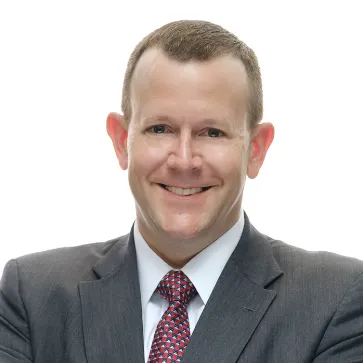
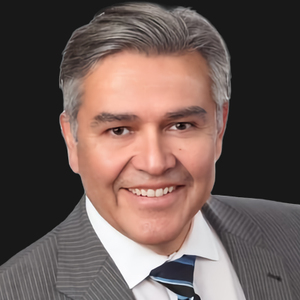
0:08 Well, hello, everyone, and welcome to the latest in our webinar series here at 1st Mining Gold. I'm Dan Milton, CEO of 1st Mining Gold. And we are delighted to have joining us today, Jamie Carrasco, who is a senior investment advisor and senior portfolio manager at Canaccord Genuity. Jamie, thanks so much for coming, for joining us today. Thank you for having me in these interesting times that we're living in. Very interesting time. We'll get into that in a minute here. But, you know, first of all, I think it might, you know, I just to set a bit of context,
0:45 We get a lot of questions from our shareholders, many of whom have been invested like you have been in the mining sector for a long, long time.
0:56 We occasionally get times where our patience gets tried, as I'm sure you can understand and appreciate. So I think that's going to be one of the themes we'll definitely want to touch on here, as I know you bring a very long-term view to investing and preparing, being ready for this market that we're coming into here. But maybe just by way of introduction, a little bit about your background for the people who are joining us here today. Well, you know, it's funny, my son's been working with me this summer
1:26 and I took a picture the other day and realized that in the background, there were 5 buildings that I worked on on Bay Street. So I've been around for quite a while. Started in the business in 1988, but I worked on both sides of the fence, on the institutional side as a bond trader, as an actual repo trader for Gordon Capital years ago, before I went to build my practice at Burns Fry in 1994. And I've been building this practice ever since. And along the way, I became a certified financial planner for the planning side. But the bulk of my work now is as a portfolio manager. And I manage 2 portfolios to manage through what I think is coming our way, and that's inflation, which I've been talking for a while in terms of something that we should be positioning in because of the changes that I see coming within the bond side of the equation, not really the equity markets. I concentrate more on what's going on on the fixed income side, because that's really what's driving inflation.
2:24 I think the one word for investors today is patience is the one thing that we all lack, because time, you know, the people just don't have any patience for investing. But more importantly, it's positioning to wait for the changes to occur. And hopefully, through this presentation, I will give you an idea of how I assist clients in positioning themselves
2:49 to benefit from the changes that are going on, but also what are those changes to have a bigger picture of how I see the world from both debt and equity and also a geopolitical side. I speak 4 languages. I studied political science and economics. I love history. And so to a big extent, the basis of the way that I see the world doesn't really come from reading balance sheets. It comes from watching the puzzle and how it's shaping. And that puzzle today is becoming more clear. And along the way, about 2 years ago, we really started to see it come into the fold as to how things are setting up.
3:26 Well, that's fascinating. So much that we're gonna unpack here over the course of the next hour, but where to start? Why don't we start on your view a little bit, I mean, topical today, in that the Bank of Canada has raised rates by another 75 basis points and signaling that they're not done. Just give us a sense of where you think we are in the inflation cycle and how that's starting to unfold. Well, I think the problem with the inflation cycle has to be seen a little bit different because we are being told that they can control the cycle. I can tell you that from my Latin American experience of looking at how things have played out that way. I'm from Chile, and Chile is a great example of a country that actually dealt with its debt bubble.
4:13 Thanks to a guy called Pinochet, he actually cleansed the debt, but that came at a very hard economic and social cost. One of the problems that I see is that we have these policies of fixing a debt problem with more debt. And as I kept saying all along, It never works. All it does is create a bigger problem and a bigger mess for later. And I think that's what we're seeing, because a lot of people don't understand that inflation is just the implosion of the debt showing up, because inflation
4:43 is not that things are going up in price. Inflation is the fact that the currencies are losing value. And when you start to see the world from that perspective, you look at the U.S. Dollar today and everybody is saying, oh, it's great that the U.S. Dollar is so strong. But to me, it isn't really strong. It's just the strongest fiat currency. And that's a term that we should stop. Fiat is a Latin term that comes from the Romans when the Romans started printing their money. And what it means is by the word of Caesar. So we have a monetary system today
5:16 that is backed by the word of politicians to pay us back. Now, I don't know about you guys, but coming from Latin America, we're very dubious of our politicians' promises to pay back the money they have borrowed from us. So because of that, you have to understand that what we face on a global basis today are debts of more than $250 trillion, which means that even if everybody wasn't on side, the tax revenue to pay back that debt is multi-generational, and it will not be paid back. And that's why along the way, we started looking at the word reset. That is what a monetary shift is about, is the reset of those debts and how we unwind them. And gold is always in the mix of that. And I think that's important to understand that if it's unless it's different this time, which I don't think it is, gold will be part of that essence. And The reason for it is because when fiats break down, the promises of politicians, we need something that we can all trust.
6:22 And I don't mean all you and I. I mean governments. I mean power players. And that is the common or the reserves of gold that they all control among each other so that you can reset the monetary base to start again. It's what happened in 1933, what happened in 75 as it transfers to the petrodollar,
6:44 the Paris Accord. It's always happening, but since it happens every 20, 40, 80 years, we don't really see it because of the patience factor that people require.
6:56 So that's an interesting starting point on maybe just talk a little bit about the broader geopolitical world that we're seeing right now, because I think you kind of transition from that into what does that mean for a monetary system and therefore what does it mean for gold? Correct. So let's go back to 2010 on a book that a guy called James Rickards put out called Currency Wars, where he pretty well laid out the premise that a currency reserve shift was coming. At that 0.2 doors had opened up. We didn't know what door was going to be chosen. One was a monetary reset controlled by the IMF through what was called the SDR, so special drawing rights, where it was a basket of currencies with the Western countries controlling that process. The second door that was presented at that time was that the new hegemonic power, now again, go back to 1933, the new hegemonic power was the US versus the dying hegemonic power, the British then.
7:57 So that door today was, is China, the new hegemonic power, going to go at it on its own and choose its own rules in the same way that the Americans did in 1933. Well, because of the mechanics of what is happening with Russia today and the sale of energy, which is so important because energy is the number 1 piece of trade that we all trade. And the real question is, what currency are we going to pay for energy in? Well, the Chinese have opened the second door, which is we're going to go at it on our own. And those signals are becoming very clear that the break nations, Brazil, Russia, India, China, and South Africa are going on their own and they're being joined by South Africa, by Saudi Arabia is on board because an oil, the biggest oil producer today or energy producer, we shouldn't just look at oil, which is like the natural gas is Russia.
8:47 You have Brazil leading Latin America. We know that Argentina has already asked to join the BRICS after the referendum in Chile.
8:55 Chile produces the biggest producer of copper. Well there there is China buying that copper. Why do they have to transact in US dollars? So I wouldn't be surprised if Chile comes on board, which by the way, it's an amazing signal because it also means that Latin America is not going to nationalize its resources. If Chile doesn't do it, and that's what the referendum said, Peru isn't going to do it. Argentina isn't doing that. Then you have Mexico as well that is looking, taking a serious look at the BRIC nations. And you have all kinds of African nations also coming on board.
9:26 So I think it would be silly to dismiss how this trading bloc is coming together and the forces that are shaping them because the number 1 question to me is What what will be the currency peg? Within the new China made Swift because as of March 1 2022 of this year we kicked the Russians out of the Western swift. They've started trading in rubles backed by gold. It's also important because that's a very important message to Iran, who's also asking to join BRICS and Saudi Arabia, which are talking all of a sudden in terms of how they're going to get paid. Right. And that's why we need a peg. Now that peg the Chinese have said will be a gold back commodity basket. And that is a massive improvement to the gold standard of the British and the gold-backed dollar of 1933.
10:20 Why? If you think about the gold standard, it benefits he who controls the gold. So the British and the Americans loved it because they controlled the purchasing power. But Chile, which produces copper, not gold, and or has gold is in trouble. Their currency doesn't appreciate. Same thing with Saudi Arabia. By including within the commodity basket copper, the most important commodity, oil, the most important energy commodity, well, both the currencies of Saudi Arabia and Chile will appreciate. And that's why it's silly to dismiss what is being proposed by China in terms of how they're bringing all these countries together. India, so you have the 2 biggest buyers of energy and things, India and China, dictating or saying how we're going to transact for these commodities with the rest of the world, starting with energy.
11:12 Energy rules, right? So go back to 1975, 73, Nixon unpegged from the dollar. We end the fiat system. We start to see the massive inflation. 75, Henry Kissinger, whose warnings have to be seriously taken because he's out there saying, hey, all we're doing here is pushing China and Russia together. But what he's really saying is, we're pushing them in the same way that we control the relationship between Saudi Arabia and the US to set the petrodollar on side, forcing the rest of the world to buy dollars to pay for energy. So the same mechanics are playing again, and people are fully dismissing that, that these shifts are occurring. It's fascinating because this really is the first time in a long time that there's been serious and credible discussion around having a gold-backed, you know, broader medium of exchange in a sense, right?
12:11 Well, the reason being, so look at what's happening right now. You have Saudi Arabia doing deals with India in rupees, doing deals with China in Yuan. You have Iran doing the same thing in their own currency. While you have all of these cross-currency transactions occurring, you need a peg. You need a peg to peg their balance of payment. Up to now, we've been doing it through gold back dollar. After 1975, it was the petrodollar itself. Well, now everything's up in arms. Nobody wants to use the dollar anymore because, you know, again, you have to listen to what Putin's been saying because the other big nations are listening to what he's saying and what he's saying. They're abusing their dollar dominance by just printing money. So they're funding everything through printing. And they realize that that's the Achilles heel of the system. Again I don't want to get attached to any one side. My job is to look at the chessboard as it's presented and how the game is showing up. And to me it's very clear that these countries are coming together. And yes there will be economic pain. You know the same way that in 1933 the U.S. Suffered economic pain. But at the end of the day, they come out ahead. Right. Because China today is the number 1 buyer. Now, they do have internal problems with their debt. But it's funny that back to gold that So go back to 2008.
13:32 2008, the Chinese bailed out the West. That's a fact, right? They're the ones that created the the the debt bubble that is now blowing up within their housing sector all of these cities that were built But in exchange for that they also transfer from us 20,000 tons of physical gold that enters through Shanghai. Now, it's funny, I discovered this because along the way, I ended up working for Macquarie. They had a re Macquarie is one of the biggest Australian outfits. They had a relationship with the Perth Mint, chatting with those guys, all of a sudden, I found out that they've been smelting all this gold coming out of Western vaults, which was in pounds, and resmelting it into metric system. They work on a kilo bar. So we know for a fact that the Chinese have taken 20,000 tons of physical gold from us, but that gold hasn't entered into the Chinese central bank. That gold is sitting among that very same middle class that bought those condos that they can't pay for that they're complaining about. Well, let's look at history here. If I was a Chinese that understands history, I would be saying, you know what? Why don't I buy that gold that you're sitting on at $5,000 an ounce, recapitalize you so you can go and finish your condo, then take the 20,000 tons on side and now reset up the new gold-backed currency basket using that 25,000 tons that are going to end up
14:56 at a certain price. Right. Basically using their own reset as the catalyst for launching the broader reset. Wow, isn't that what the Americans did?
15:08 And come on, you know, there's always again, the Chinese write the word danger using crisis and opportunity. There's always an opportunity from crisis. Right. And and when you look at what we're at, we're printing all of this money. You know, in 2019, the repo market again, I was a repo trader for Golden Capital before they unwound Glass-Steagall. Repos are the basis of all derivatives. So I understand the derivative bubble. I saw it blowing up in 08. And in 09, I said they've kicked the can down the road. But this is the last kick because who's going to bail out the governments next? Right. Nobody. Now we needed a reset. That's why we knew the reset was gonna happen the structure of that reset The what is the value of the composition of the basket? We don't know but they've already said what they want is a gold back commodity basket And what's interesting as well is that as of yesterday the Russians announced that they're gonna do a blockchain base Commodity they're gonna use blockchain for transacting which I think it's an amazing signal because I bought my 1st Bitcoin at 5 bucks. I lost them along the way, but that's another story.
16:16 And Then I IPO'd a miner. So I've been playing the blockchain all along. And what's interesting to me is that and this is important to understand that blockchain technology is going to do to the banking system what emailed it to the post office. Why? Because blockchain is a ledger and the essential function of a bank is not to lend money, it's to ledger your money. Everything else is a derivative of that factor of ledgering your money. So If we have an electronic system to ledger, why bother with a banking system? They got to pay them fees and then they abuse that power. So the decentralization
16:56 of the monetary control is amazing because I see a completely different future being built. But at the bottom of that, we need to rebalance currency and trade back to net 0. And that's where gold comes in, right? With a commodity basket. So the puzzle to me has become fully clear. What we don't know is the when. And that's where as a portfolio manager, what I'm doing is positioning clients in a way to benefit from both the unwinding of a debt bubble, which from Latin America, I can assure you that it's always inflation into either deflation for a while into hyperinflation.
17:34 And by the way, hyperinflation is not an economic effect. It's a social effect when people wake up and they start changing their spending patterns, which is happening, right? So a lot of things are in play. And the problem is, is that they accelerate. Another thing that I've always been saying for a while is that it's important to understand that inflation is an exponential effect. It's not linear. Right. So it doesn't grow in a straight line. It accelerates on the way up. And that's why we end up with hyperinflation. Right. But that's the cleansing process of all debts. The beauty of that, though, is that you if you understand that inflation is moving, how to position money to benefit from from from those factors.
18:22 And here we can start with some of the charts that I wanted to show you guys, because there's some inconsistencies out there that I think are very important. No, that's exactly what I was going to say is now let's take this and transition to kind of where you think we are in the gold cycle right now. I want you to get a drink of water before you. I can't see the slides yet. There we go. Okay. So I think the first the first slide that we should look at is this one. Can you guys see that one? Yep Okay. So what we're looking at here is the blue line is the CRB which to me is the most important place to look at for inflation because at the Commodity Research Bureau Index, okay, that is the basket of commodities. Because one of the problems we have is everybody that was telling us that inflation was going to be transitory.
19:15 They were looking at copper prices going up and down, which is the red line. And now they're saying it's peaking because copper has gone down. Same thing with oil, which is the orange line. Oil had been increasing and now it's down a bit. Natural gas has spiked, right? And now it's down. But commodities aren't coming down. Why?
19:34 Because the food basket of that basket is kicking in. Food inflation is kicking in, and that's the worst kind of inflation because that's the one we all feel. Now, let me point something out. This is the CRB versus oil, natural gas, and copper back to 2020. Why is inflation kicking in and copper going up and oil going up when the global economy is shutting down because of the pandemic? This is inflation. It's central banks printing money, devaluing the value of money. The disconnect with this slide is this, that through this period, gold and silver have not benefited. Isn't that funny? That silver, the silver line, tries to kind of warn us that inflation is kicking in, as it should have. Same thing with gold. But then they flatten out and they've gone sideways.
20:24 This is the manipulation. Now, I've been saying manipulation forever because, first of all, I understood what Scotiabank was doing. They got fined 600,000 in Canada and I think 195 million in the US for spoofing the market. JP Morgan just got nailed. A lot of companies have been nailed. But it's funny because it's important to understand that they've been paying fines for playing with the house money. What people have to understand that this is being done on behalf of a client. And that client is the Bank of International Settlements, the Bank of Banks. Why are they doing it? Well, I think it's being done for quite a while because would people be as ambivalent about central bank policy if gold was where it should be right now had it inflated?
21:12 If gold had kept up to copper today, it would be near $5,000. As a side note, I've sent over a link to a clip with Terry Duffy, the chairman of the COMEX, warning in 2017 that gold then should have been at $3,000 to $5,000 to keep up with inflation.
21:36 And if you stopped dismissing what was going on at the time around the world, gold should have been about $5,000 to $7,000 then. Now, all this to me doesn't matter. To me, this is all noise because sooner or later, gold's going to go because the Asians are buying it. Gold is in the mix. Central banks have been acquiring gold like crazy. So the fact that the price has been down also means that it's an opportunity to continue to get people that are coming
22:01 into my practice properly positioned until the price spikes. However, I can show you with my next slide that that is a little bit too late already in Europe. This is your price of gold in European, in euros, and it's already broken out to new highs. And this is continuing to happen because all European money understands the value of gold and they're acquiring gold like crazy because they see this inflationary storm happening, right? Central banks are gonna have to start printing. Now, that is even better reflected in Japan, where gold in Japanese yen has taken off even more. Now, this makes complete sense because the debt side of the equation in Japan is blowing up and the demographic problem that they have a much older generation.
22:51 That has 2 problems embedded in it, which is also very applicable to us a little bit later, and people better understand this. In Japan, the population's much older. So the draws from the pension system are way bigger. As interest rates and inflation have started to increase, that pool of money has been shrinking. So in order to fund that, central bank in Japan has accelerated its money printing even more than the Europeans. And that's why gold in Japanese yen is already taken off. Now, why is this important?
23:24 Because right now what we're waiting is for gold to take off in US dollars. And the way that I always explain this to my clients is this way. You have to understand that the rise in the US dollar is more like you're sitting at a beach and there's a tsunami coming your way. And that beach keeps getting bigger and bigger and bigger because the water is going back. What they're not seeing, which should be obvious, is that 8.5%
23:52 inflation that's already dragging that water out, but eventually it will reverse. And that's when gold and US dollars will really start to move. Now, when does that happen? Today could be a good signal. It looks as though today we had a great reversal. I think the setup today is way better than 2008. And in 2008, I played my gold positions in the same way that I did now. I allocated, I held on, and I rebalanced, right? Now, let's look at 2008. Oh, by the way, the importance of the beach analogy is this, is that everybody's still playing at the beach But the problem with a tsunami is that the force of the water coming back at you is gonna come much faster than you can Escape so that's why my approach is play a little bit at the beach but also make sure that you have some assets on higher ground to protect yourself.
24:51 Okay, let's look at 2008 versus now. Now, this requires a little bit longer time frame. This is the year 2008 to 2011. Now, 2008 was driven by the same forces as today. Central banks have lost control of the debt system. We got into trouble sometime around September with the derivatives. Something broke. AIG almost went bust. And then they had to print till the cows came home. At the time, central banks were sitting on only 1 trillion of
25:27 balance sheet. Now why is this important? Because in 2008, gold was at $900 and it corrected all the way down to $600. Every $10,000 invested in gold companies turned into about $4,500
25:42 by this time, 2008. But then the reversal occurs. And from that point forward, gold started a massive run, fueled by central bank printing. It took it all the way to $1,900 that $4,500 in the producers in the companies turned into almost $50,000 So nobody cared by the time we got to 2011. But what you needed was a way to position yourself to benefit from what was happening. This is today. Today, I'm even more bullish, because If you look at today, this is gold from, hold on, let me look at the, I can't see the bottom chart. It's 2020. It's 2020. Yeah. So I went with the same cycle as inflation.
26:28 So gold tries to rise to raise inflation and then it's just muted and it's been going sideways, but it hasn't crashed. Today, gold has not gone down that 30 percent that it did in 2008, but the companies have. And that's a disconnect that the companies have pulled back to a level that is trading as the gold has gone to $1,100 to $1,000. But it isn't. If anything, I would argue that gold is extremely strong right now because all we're waiting for is for gold to take off in U.S. Dollars. But I think that is coming. Right. So to me, what I find the most ironic of the situation today is the fact that Western investors as an asset today own less than half of 1% in precious metals as a sector allocation.
27:21 What that's saying to me is complete apathy towards the number 1 thing that historically has helped people through inflationary periods more than anything. So that level of investor apathy I love because I own, all of my clients have at least 30% of their assets
27:41 in precious metals related investments, But now we have to wait, right? And the waiting is the hard part. The patience to wait it out until the flood, until that tsunami turns around and starts coming our way. Well, I'm pretty comfortable that that is happening because we're pretty much, it's the only way forward, right? Look at what's happening with interest rates. Another big difference to 2008, that's important to point out, that yields have not come down. Money is not entering the bond market. That is a very important signal, that the 10-year bond now is back above 330, I believe, this afternoon.
28:21 Well, that means that the U.S. Mortgage is now at over 6% again. And the higher inflation, the higher interest rates on the 10-year bond goes, the lower the economy is going to activate negatively to the U.S. Economy. So the real question is, when does the Fed pivot and go the other way, especially with an election in November? How much crash of the economy are they going to allow? The problem, though, is that the bond market is saying, wait a minute, this is different. We got to price inflation. And for the Fed, we hear all this bravado that they're going to kill inflation. Well, what? They're going to raise 75 basis points, taking rates up to about 3, maybe 3.25. Yeah. So then it's only a 6% real negative interest rate at that point. So who needs to worry? Well, correct. Correct. But again, if you really want to kill inflation, you got to go to 9 to 10 percent and that's not going to happen. So the question is, how much pain are they going to suffer within the stock market, right, before the bond market really says no mass? And I think that's the problem that the bond market is saying it's done. Now, that also influences the dollar because this is an important thing to understand. There's way more paper debt than there is fiscal dollars in circulation. One of the reasons why they're really, really quick to switch over to this electronic money system, because the problem is, is that think about the leverage within the debt system.
29:51 Well, as that settles, there's not enough money to settle the debt. Now, that to me as well is music to my ears for one reason. By the way, let me back up a bit back to Gordon Capital when I started in the business. I was taught the bond business by the last generation of bond traders to have worked under a gold standard. So I have a generational gap from anybody younger than me who has no idea how the hell gold functions within a monetary system. Their peg of value started with gold. So I look at things very differently. And from that perspective, what's beautiful is the fact that if you have unlimited debts that are blowing up, including your fiat currency, the only asset that is nobody's liability is physical gold.
30:37 And that's why gold comes back always to the axis of any monetary system. That's why the Asians are buying. That's why central banks are buying. Don't get me wrong. Canadian central bank isn't, but the other central banks around the world are. And they're buying more, hence we unpacked. Yeah, yeah, no, it's a fascinating setup. And, you know, something that you talked about that really kind of strikes and I'm sure for a lot of our investors listening here, it's that the equities have already priced in the drop that hasn't happened and may not happen. So How do
31:15 you think about an allocation between physical and gold equities? Okay. So, there's 2 separate components. One is the short-term noise and everything. And for that, Tony McGuire here at Canaccord, he does a great job at giving us the short-term fluctuations of the market. But as a portfolio manager, you can't really get too caught up on the short term of everything. So that's where portfolio management and asset allocation comes in.
31:44 Back in 2015, I was at Scotiabank, and I was the liaison between Chile all of all places being Chilean and Canada and my job was talking to all the family offices down there and the one concern they had was inflation It's funny because anybody that bought gold back then they was trading at 110,000 pesos per ounce Today, it's over 600 because the peso has really gotten nailed because of what's going on with copper, what's going on with inflation and the fact that the economy is so tied to China. Right Now,
32:19 at that point, I set up 2 portfolios. One was a blue chip income portfolio, and that has 30 percent precious metals producers, royalty companies within it, because that's the inflation hedge. Okay. Then I set up another portfolio, which was that inflation hedge on its own, that I call my special opportunities portfolio, which was for the client in Chile, that you know, that was dealing with an American firm or a European firm, but then none of them are pitching gold. And they would say, OK, I get it. Here's 5% allocation. There's my gold position. So I have both portfolios. Now, the way that I've always structured it is I look at physical gold and silver because silver can be offset. Silver is going to do way better than gold from a percentage perspective.
33:08 And I look at physical as cash. To me, the physical is part of my cash position. Next come the producers, because that's where the cash flow is best. And that's really where the best entry points, along with the royalty companies. OK, then come the developers, because the developers are really reserves on the ground that already have been found. And today we're buying them at ridiculous prices. I love the developers. You know, last year I was picking up US-based developers at about 80 bucks an ounce. Now I'm picking them up at about 30 bucks an ounce, which is crazy. I think you guys are even cheaper than that, if I recall. I think I was $14. Indeed, yes. Sadly, like $13 or $14 an ounce. Well, go back to 2008. Anybody that had the fortitude to buy some of those reserves. And I believe in 2008, reserves on the ground got down to about 90 dollars an ounce, if I'm correct. Well, by 2011, when we got to 1900 gold, Fruta del Norte, which today is Lundin Gold, got bought out at $300 an ounce by Kinross.
34:11 And then, right? And so I love the valuations of reserves in the ground because those reserves are not going anywhere. And 1 day we're going to want them. We're going to want them because again if history is repeating people are going to need to acquire physical gold to protect themselves from inflation. I know that pension funds will. Right. Because that allocation has to increase. We're sitting at less than half of 1% as an allocation among institutions, smart money. Well, back last time we were in same similar levels of inflation that we're sitting at 8%. Do you know what that means for this sector where I think Apple is worth more than all of the gold companies put together, gold and silver companies? It's an unbelievable opportunity. And that's what I look at.
34:58 And because of that, the approach that I take, So go back to the equity income portfolio. That back in 2015, when I when I, I wrote the gold cycle all the way up to 1900, 2011, then I kind of said, oh, well, this correction is needed. But then in 2013, we broke below 1500. At that point, you knew, OK, got to get out for now. And I reduced allocation back down to 5% of the portfolio. In 2015, when we got to when we never broke 1000, I started adding. So I went from 5 to 10, then to 7. And by the way, all of my BNN interviews, you always call out where the allocation is. Now I have that portfolio at 30 percent. But that portfolio is also invested in a way to benefit from inflation. So we picked up Exxon when the yield was at 9.5 percent just on a yield pickup. The pipelines, the utilities, the REITs, all those companies benefit from inflation. There's a problem though, that if the market starts to pull off the same way it did in 08, pension funds are gonna be selling those. So I have 30% cash waiting for, to pick up higher yields a little bit later. But I've been adding inflation driven companies that will benefit.
36:08 Right. As for the precious metals, I just keep it at 30 percent. So if it becomes 25, all we've done is add more shares to the allocation. Now that process of asset allocation rebalancing is 80% of our portfolios returns long-term. I learned that years ago when I first started in the business and I've applied it because it's the key to not get emotional If something's outperforming you sell trim back when something is out of favor you add, right? And I think that's that's the what the the process Within the other portfolio, which is strictly precious metals, there's good quality producers, seniors and mid, royalty companies, 2 developers and blockchain, because that's special opportunities.
36:59 Blockchain to me is an unbelievable technology. We can talk about that a little bit later. No, fair enough. Well, I think, you know, you hit on a bunch of points that we consistently hear from a lot of our investors. You know, a lot of people have been invested in 1st mining gold since Keith Neumeyer set it up in 2015, 2016. So they've definitely exercised the patience. And part of it is, and we see this every day with a bunch of our shareholders continuing to do that rebalancing, adding to positions when we get down to levels like this, we kind of hit points of real support, where not just the shareholders, but management and board keep kind of adding when we're at levels like this too, because it's just irrationally cheap in our mind right now. You know, it's funny you say that because it reminds me of another developer that I started adding sometime around, I believe it was 04 or 05, called Detour Lake before anybody looked at it. And they were just getting ready to start up the mine to drain the lake.
38:03 And I look at the similarities between your project and their project. And I was looking at a picture from Agnico Eagle just last week, where it was just a detour lake and what it looks like now. And to see it after all these years and I still own it, right? Because we held it. It got taken out by Kirkland Lake. Then I held Kirkland Lake. Then Agnico, which has been one of my consistent top picks along the way, bought it out and there was a picture of what it is now. And I'm like, wow, you know, but but that's been years, right? Yeah. And I think patience, patience is the one thing that people miss in terms of understanding what we're building, the business that we're building. And I think that we are entering a massive commodity bull market. And the real question is not where the resources are gonna come from but in what currency Are they gonna be paid for that is that is the the 64,000 dollar question, but it's really it's really an opportunity for multi-generational wealth if you understand what is going on.
39:04 And let's go back to 1933 to understand what I mean by that. Okay, in 1933, so you're sitting here, January 1, 1933, with $7,000 in the Dow, which has already crashed, $7,000 in gold, and $7,000 is in Alaska Juno homestead mining. By the end of the depression, that $7,000 in the Dow would have ended up because we still haven't gone through the 33 crash, which happens after, would have ended up about $2,500. The $7,000 in gold turns into $35,000. But the $7,000 in Alaska Juneau homestead mining turned into $90,000 with a dividend of 10%. $9,000 a year in then dollars.
39:50 That was massive money. Why? Because gold rose to $35, a level from which it never came down again because the system needed to be reset. And the producers are producing at 5 when it's at 7, all of a sudden they're still producing at 5 when it's at 35. Right. And that to me is where history is repeating. And that process, by the way, has repeated for 4000 years. So is it different this time? Every time they say it's different, but usually it never is. Well, hold on, because what is different is what's happening to the debt cycle. And that is not different from a short term perspective. But if you go back to 1933 and the deflationary bust, that's exactly what's happening. So again, another signal to me that a monetary shift because of the fiat system is needed and it's gonna happen. Now, let's talk about what the Chinese are proposing because that's important because I think the world's gonna come on board in that having that basket is better for everybody.
40:54 In that Chile doesn't have gold, but they have copper. So their currency appreciates. Saudi Arabia has oil. They don't have gold, but their currency appreciates. And that's why I think it's very important to understand that what China and the BRICS are proposing, a lot of countries are really listening to it and coming on board rather quickly. Fascinating. Jamie, so much to get through and really appreciate all these insights. And again, I think it resonates with a lot of the folks who've joined us here today. And nothing says that more than all the questions that have been coming in here. So why don't we take this opportunity just to pivot to a few questions and and we'll go from there Now you mentioned a couple of times Blockchain here's a question That David's asking can you discuss your opinion on? Bitcoins pull from gold and its potential involvement in fiat money replacements?
41:51 Okay. First of all, you have to understand what blockchain is. All blockchain is is a ledger. The way that I explained it to my kids years ago was I said, you know, this is going to be like the Roman roads to what do I mean by that? Think of the internet of just data. The internet is just data, bad data, good data, corruptible data, data that can be controlled, right? The blockchain is a new network being embedded on top of it built on top, but it has it's a ledgering mechanism. So it's an electronic ledger. What does a bank do in its essence? They ledger your money. So they guarantee that when you pay your bills is your money and they came with somewhere. Well, if all of a sudden I have an electronic system, It decentralizes their control. Now, that road that's being built on top of the third road is being built with the coins. Be it Bitcoin, be it Ethereum, be it whatever, right? The coins are the bricks.
42:43 The Roman roads were built with cobblestones. They're still there. Well, that's what blockchain will do. Now, blockchain can't be stopped. Anybody that starts up with the whole thing, oh, this is BS, forget it, because the financial industry is already using it. Fidelity built a blockchain-based platform to track everything, completely reduces human error, because data input is the big issue, right? So that ledger becomes, clears that out and that's why they're saving so much money from having to audit everything, looking for human error. Right? So that ledger is already being built. The insurance companies are building it. Everybody's building it because of the money they save. So you can't stop the technology. The next phase is Bitcoin versus other coins.
43:30 Well my my my my take is I'd rather benefit by owning the miners that are building the road. So I look at the miners as construction companies. And as they build the road, when a Fidelity needs to build a platform, they have 2 choices. We can either go buy Ethereum at 1500 bucks a coin, or lease them from a miner, a tall road. And that's where the revenue generation is coming. Right. But the network's being built, and it's going to continue to be built. Now, I built my practice on the back of Microsoft Canada because I managed their pension starting around 1994. What I noticed with the internet, it was you couldn't benefit from the growth of the internet. You had to choose the company that was going to do well at building components for the internet. What's beautiful about the blockchain is that we have a direct participation on the building of the blockchain network through the miners, something that wasn't there before.
44:27 Now, think about the enterprise value of the internet today from and where it's come from from 30 years ago and its value considering that it's just data. In 30 years hence blockchain is going to be exponentially worth more than the blockchain sorry than the internet because it's data with a ledger. That feature will give it exponentially greater value going forward, and it's gonna be extremely disruptive in a good way in that it decentralizes the system. And that's beautiful because it allows the individual to control everything that needs ledgering. And that's why governments and banks hate it. But can they stop it? I don't think so, because the real issue now is going to be, hey, where's my pension?
45:16 Look at what's going on in the U.S. I think that the real issue to me in the U.S. Is how Americans are going to feel when they figure out that Washington wasted all the entitlement money that they've sent over all these years. It's gone. It's not there. That's the one thing Greenspan's warning about. So if the ship sinks, I already see the new ship and how it's being built. Right. And that's why I have blockchain as part of my component. Gold and silver are part of resetting the monetary system. That's a different animal, But they're intertwined because one is currency. The other one is money. Very interesting. That goes right to another question that John has asked, which was discuss how you see gold or silver being involved in the coming monetary reset. And can we estimate how much the total basket of commodities that precious metals might make up as a percentage?
46:07 Well, I think you have to answer that question a little bit different and figure out how gold functions within a monetary system. Because what gold does, so you have, Look at Asia and how they're coming together in terms of their trade dealings. What is the value of the energy trade within all those countries? Well we're really what gold does is peg. So I sell you $100 million worth of energy and you sell me $110 million worth of electronics. What gold does is just balance the the balance of payment of that trade the the 10 the 10 million in the middle is where we transfer and gold gets settled. That's where an electronic ledger before you would do is go to the Bank of England and transfer 100, you know, 10 million tons of physical from the vault owned by you to the vault owned by me. Now we can do it electronically through the blockchain, which is why it's so interesting that the Russians have proposed that to use a blockchain for international trade within the system. Right.
47:06 And I think that's the difference between the 2. Now how high would gold have to be to balance the energy trade alone within Asia. Well I think we're looking at a pretty big number, which I don't really want to go there because then they're going to think I'm crazy. But I think that when it's all said and done, I'm going to be even surprised as to the level of gold when it's finally over. Now, let's look at it from a different perspective. I'm here sitting in Toronto, and I don't know if you guys, if you look at Toronto over the last couple of years, all these buildings that have sprouted everywhere. Okay, well, there's 1 problem with all those buildings. We haven't paid for them. We borrow the money. And that has happened every city. I went to Mexico City last year. I've been in Santiago. Everywhere we have this massive liberal construction everywhere, but we haven't paid for it. So you have all of this pool of equity that hasn't been paid for. That money is devaluing.
48:00 Well, what's the value of that equity and how do we reset it to a new monetary system? That's why gold had to rise from 7 to 35 in 1933 to equate that back to 0 so that we can start again. The same mechanics apply again, the Chinese have said it, the Russians have in tune to it. So, you know, that price is pretty high. And I think that to be conservative, we're looking over, by the way, gold should be north of 5 to have inflated at the same level as copper and everything else did since 2020. Well on top of that, we're looking at about another 0, at least behind that, to be able to balance global trade. Right. So, you know, it's funny because everybody says there's not enough gold. Well, forget that. There never has been enough gold because The plebs never get it. It's the power people that keep it.
48:49 What really changes is the 0 at the end of the number. How high does it have to go so that we all have that equated value between us? That's interesting. Well, the next logical question then is, I know we've all been patient for a long time, but what do you think the timeframe is for a reset, given how a lot of this stuff seems to be accelerating in the last year or 2? Well, I think that has to be analyzed differently in that there's so many systemic risks that could blow any minute, right? You have a lot of energy companies that are needing bailout in Europe right now. Well, how many of those have derivatives that could blow up just like AIG? I can assure you a number of them, right?
49:36 How many issues on the food side on the f like right now we're sitt the deflationary hit o you know, the Burma Republic and all that, as it all unwinds. Well, that's exponentially greater today because of the level of debt that we have. We have 2.5 quadrillion worth of derivatives, which everybody says, oh, that's nothing. Well, forget it. That is very big and it's important. We have central banks, you know, global debt among governments is $350 trillion. That's crazy. You know, the problem is that we don't really understand what 1 trillion is. Right. You know, so these are huge numbers. The problem, you know, we have a demographic issue.
50:24 Populations are getting older. How do we resolve all this? Well, you know what? I think it's important for for investors to think out of the box and start thinking for themselves. And what I do is look at how this type of scenario has played out in the past and how to position myself. I could be wrong. I don't think I am because history tends to rhyme. And central banks are buying gold. Asians are buying gold. It's funny. A slum lord in Bangkok understands gold better than a millionaire in Canada. And I find that so ironic, that they think, again, I look at the equity markets and I've been saying this for a long time that we saw 100 trillion appreciation in the equity markets over the last couple of years, but that came at a 300 trillion increase in debt.
51:15 So net, you're still owing 200 trillion. So again, it's like looking at that rich guy next door with the $3 million home, but a $5 million mortgage. Doesn't mean anything. No, very true. And another interesting question that kind of comes out of all this and it's kind of linked into the discussion of the blockchain and the independence of it. But Ron's asking the question here that the gold and silver price will continue to be manipulated as long as There are no guidelines to the gold and silver ETFs. The people who are controlling the guidelines have vested interest in seeing them perpetuated. Take that to 1 step further in that the people who are going to implement settlements Hold on a second.
52:04 I know exactly what you're asking. And the way to answer that is different. Well, we have gold, physical gold hubs being set up in India, in Iran, in Saudi Arabia, in Russia, Singapore, Shanghai already have theirs, Middle East, Dubai already has it. So you know that something's happening on the physical side. What you do is you have to take away the centralized control of the paper price away from the West. And that's what's happening, right? We don't produce it anymore. All we do is, you know, I love socialists because they solve everything with more debt. You know, that's why Maggie Thatcher comes to the fore so well. Socialism works until you run out of other people's money. Other people's money.
52:49 I think we've run out and I think the rest of the world knows it. You know, it's funny because I always read, for example, the comments that Modi had said before the Ukrainian conflict started, when Boris Johnson had told him what they should be doing. And never mind what they just said to them regarding Putting a price gap on energy But what Modi pretty well said was look we are solving the problems that you guys left us with India being the case Where you know the creation of Pakistan the way they split the country was just beneficial to the UK. It wasn't beneficial to India. Same thing with the issue with Taiwan today and Hong Kong. Well, you know, Taiwan was part of China way longer than it has been an independent country. And the Chinese want to recreate China as it's been for 5,000 years.
53:38 And by the way, the Chinese invented the fiat system. They know exactly what happened and they haven't forgotten that. Right. So I think what's more important is to look at how the other side of the equation is being built. These countries understand the benefit of sound money and go back to the US. You know, as far as the US is concerned, whether they go into a sound money system by choice or they're forced to, the real question is do they have the 9,000 tons? I do think they do because those are, they're managed by the treasury and the Fed, but they're held by the US Army. That's why they're held at force. So I don't think the army would have let the gold to have left the country. Right. So they're sitting with 9000 tons. And I think that's beneficial to the US.
54:24 And you know what? The world has always done better in a sound money system. And I think that is what we need. Interesting. So just to kind of take this to the one step further, obviously, we still continue to have gold and silver, particularly equity, sitting out of favor. And you've been working alongside and often with contrarian views to 2 other larger portfolio managers for a long time. What what will it take for the sector to come back in favor? What what is that? What's the tipping point at which it? Populous again, you think no, I I think it's already happened because the Bank of International Settlement has covered all their swaps They've gone long. They've covered a lot of those shorts I think they know it's coming Basel 3 kicked in for European banks last December. It kicks in for American banks this coming December. The sad thing is that that short's still there, but it's controlled by hedge funds. So who's going to get stuck with the loss is going to be the pension funds. All of these hedge funds are pension money that's sitting there and they're going to get the loss. So it's a little guy that's going to get that's going to be in trouble again. Right. Again, I'm not surprised about that, but I'm not here to, you know, all I can do is help my clients and position.
55:50 So I do think that that's why the fact that gold like in 2008 never crashed, the fact that we held 1700, I think is very important. And I think that knock on wood, but things are looking good that what we had was a breakout and now a test of the breakout and now we should be off Hopefully to the races going forward and I really you know, the fed pumps 75 basis point increase But with the election in October and November and it looks as though the Republicans are going to sweep Not a good sign because then the government shuts down that's not bullish to the dollar Well, then that tsunami will really start to come in at some point a dollar turns whether it goes higher a little bit more now I think we're running out of time before that beach won't be there anymore. Yeah, interesting. And then and then to kind of apply the same logic on the gold equities.
56:41 When do you think we start seeing some more momentum in gold equities? Well, if you looked at the HUI today, it was up almost 4%. So the HUI will- It's good, today's the day. We can market, Jamie, today is- Who knows? 7th of September, this might be- But when you see an outperformance on behalf of the miners with such good volume, that's a good sign. And that's what we're waiting for. All I can do is sit and as Jesse Livermore said, buy right and sit tight. The only thing I can't teach people is patience. And I love, by the way, I love the companies I own. I remember a couple of weeks ago when Newmont came out with earnings and they were bad, right? Everything pulled back and then Agnico came out with earnings and they were stellar, right? And I've always said, stock selection is important when it comes to this and my 4 criteria, good quality management, reserves on the ground, low cost of production, and geopolitically safe places.
57:39 Well, those sound other than the cost of production because we're not quite in production yet, but I would say, you know. Reserves on the ground. Reserves on the ground, we've at least got that. Geopolitics, geopolitics, we got 2 of 4, we'll let everyone else here on 3 of 4, And 1 day hope to get to 404. So Jamie, with that, we're kind of rounding a corner. I just really want to say on behalf of everyone who joined us today, thank you so much for sharing your insights and wisdom with us. And it was so topical in the conversations you've been having with Paul Morris. And, you know, I just love to be able to have our shareholders here benefit from a lot of your experience and wisdom. And I think, you know, a little bit of external validation that, you know, there are other patient people in the world and sometimes, you know, we just have to be patient. Well, I got to tell you that the bulk of the world is very patient. They've been buying gold, the Asians, the rest of the world is and we just have to wait and it's functioning in other currencies already.
58:49 You know, the Chilean peso, anybody that bought it, 150,000 pesos to the ounce, now it's worth 650,000 pesos. It's done its job. And in those cases, gold's done its job. I say the same thing in the Canadian dollar. You look over 5 years, Canadian dollar gold's doubled. So that's pretty good. It's done its job. Fantastic. Jamie, thanks so much. I think we'll end it there. It was a pleasure. Thank you for having me. We'll look forward to keeping in touch here. And thanks everyone for joining us today.