Transcript
Automated transcript · Written by software from the replay's audio. It can mishear names and figures; the replay is the record.
0:08 Hello everyone, today I have the pleasure of being joined with Advanced Gold Exploration CEO Jim Atkinson. This will just be a chat for people to get a better understanding of who Jim is, how the industry has evolved since he started, and what he has learned over the years in the exploration industry. Jim, how are you doing today? I'm fine, doing fine. Great, amazing. So, you have an impressive career spanning over 50 years in the mining and exploration space. Can you share some key milestones or experiences
0:39 that have shaped your journey and contributed to your success in the industry? Well, I don't know so much about my success, but certainly some milestone. I'll tell you the story. Everybody always asks me, and I always ask everybody, how do you get into geology? Because it's not one of the things that's taught in high schools normally. I think some do teach it now. So I went to university to study physics. I was on a physics scholarship, and the very first year they put me in a whole bunch of math courses, and I was just going crazy. And some of my friends, who I was living with at the time,
1:14 they were actually taking geography, and they were taking an introductory geology course. So they said, come on over. So the professor that taught that, his name was Dr. Peter Peach, and he was a really amazingly dynamic teacher. And in fact, we say he perverted a lot of people, because a lot of people that took his introductory course ended up going into geology. And I just loved it. And so from there, I just kept going and studying it. And the funny thing is that my father was a prospector, and I had been out prospecting with him and carrying rocks and doing all that crazy stuff, and it never really even occurred to me that it could have been something that I could do for a living. So that's how I got into it.
2:01 And really, some of my first jobs were incredible milestones. I've worked with some really brilliant people, learned a lot about geology, also a lot about exploration from those people. So I think one of the milestones too, and I was been in the business long enough that I was in the business when Nixon took the lid off the price of gold and it started to go up and we went up to a hundred bucks. We thought that was, wow, that was fantastic. Now when you look at what the price is, but in those days, 1972, 73, it was, sorry, just let me turn that off. 1972, 73, it was, you know, that was a pretty big deal. So, you know, those kinds of things. I was, you know, I went through all the Hemlo craziness.
2:51 But I think the one thing I would look at my long career, there's been lots of cycles. You know, things go up and down, You know, things come in and out of fashion. You know, we saw that recently with lithium, which, you know, was a crazy rush and the price went up, price has gone back down again. So, you know, that's the thing that you learn when you stay in the business for a while. There's cycles. Things go up, things go down. And if you are patient and keep at it You'll you know you'll be successful because over the long term things generally go up You know it's a it's a ladder or sorry a step kind of improvement But generally things do go up, so you just gotta it's gotta stick to your guns.
3:36 I guess You know is what you what you need to do to get through the long periods. Yeah, the commodity prices are cyclical, they move up and down, but the industry as a whole has evolved and changed since you first began. Are there any specific advantages from learning geology before all these advancements in technology?
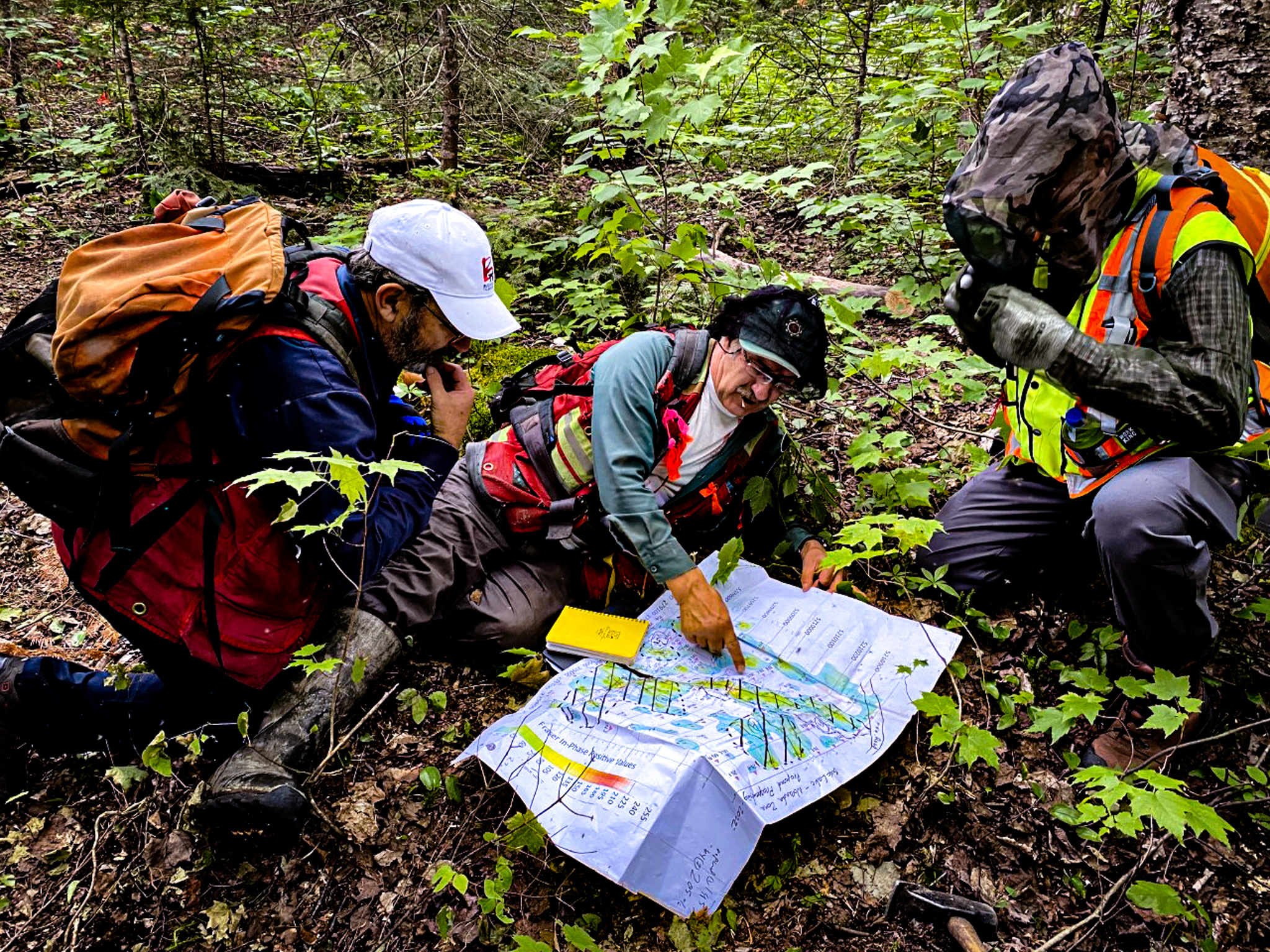
4:00 I think the one thing that the one thing that I think is really important that I learned over the years is that's boots on the ground You know It's fine to be able to sit in the office and do all kinds of fancy stuff with a computer and you know I do all the statistics whatever but for me you have to go and you know Look at the rocks beat on the rocks take samples, and actually be there collecting the information that's going to be used to verify what you find out on the computer. One of the things that's really advanced since I started this is the geophysics. And now we have incredibly sophisticated geophysical techniques and equally sophisticated techniques for interpreting. And I think that's a real big improvement. But by the same token, I still think you have to go in the field and take a look at things.
4:57 I think one of my big, and if I have a complaint, and I may have a few through this interview, but one of my big complaints is people don't do iterations. For instance, if you do a program, say you do a geophysical program, and you do some work, you do some follow-up work, nobody that I know of usually doesn't go back and reinterpret the results involving the information that was gathered during the program. And I think it's the same with drilling, when you do a drilling program, you should go back and reinterpret your models and you know, based on the information that you have. And I think that's one of the things that we have improved on. And one of the things that, you know, the digital computer power gives us is the ability to do that. Or, you know, I can remember when it took a half a day to color a map.
5:48 That was a big deal, right? But now you can do that instantly. And so if the geology changed, you instantly change all the map. And those kinds of things really help a lot, I think. But still boots on the ground, I think is the most important thing. Have you had the privilege of working with younger individuals in their 20s, just getting out of school?
6:12 Yeah, I have, actually. The group that we had when I worked at NORAD, there were 4 or 5 young geologists, just out of school, most of them just out of, just with master's degree, and they, you know, we had a great, great team there, and they, I think, learned a lot from us, we learned a lot from them, and it worked out very well. And I think that's where we need to be spending a lot of our time, just trying to get the younger people involved and interested and also get them out in the field. One of the things that we insisted on at NORAD was that they did all the interpretations by hand, they drew all the sections by hand, you know, before they ever got to put them into the computer. And I think that's important almost as a as an error correction methodology.
7:04 You know, if you've done it by hand, and the computer does something that looks stupid, then you'll be able to recognize it. So yeah, I have worked with a lot of young people. I haven't had any lately, but in the last, say, 3, 4 years, it's been more, more, like even my prospectors are old. But generally, yeah, I have worked with a lot of young people, and I think there's a tremendous resource there that we, You know, we have to make sure we're taking advantage of.
7:35 Now, going back to you, Jim, you were president and CEO of Telescope Gold Corp for some time. Do you want to touch on that? Yeah, that was an interesting undertaking. When I took over the company, myself and Dave McDonald basically took it over there was another Person who had been running it for a while. He didn't really have any technical Help so whatever so we took it over and when I took a look at what the company had, it had a small gold deposit, about, let's say, 220,000 ounces, something like that, but it only had about 500 hectares of land. So the first thing I set out to do was expand the land package, and We expanded it up to 10,000 hectares, right adjacent to Westone's Eagle Mine and their Michie Open Pit. And then we actually managed to get a company to come in and buy it off us for cash and shares.
8:32 The shares we redistributed to our shareholders, so they basically had a 0 tax, 0 cost base. We also then turned around and merged Talisker with another private junior and formed,
8:48 at that time called Advanced Holdings, and we had that for a few years. So in the junior exploration industry, very few can say they are generating cash flow. How do you manage asset acquisitions or financing events? How do you manage a company with such a business model where it's not producing cash flow month over month. Your share structure and financing is like the lifeblood of the company. Yeah, I would say that. I mean, that's all of junior mining exploration. You know, it's a challenge of raising money. One of the things we've done a couple of times is we've actually vended off some, well, not always 100%, but some part interest in our properties. And so that's a way of generating cash in a non-dilutive sense. And I kind of look at it almost like the oil and gas industry model. Like, oftentimes on a producing oil well, there'll be several owners. And, you know, I think it's better to have a part of something than 100% of nothing. So that's part of our model, is finding partners, whether they're partners to actually take over the expenditures of doing the work, they're partners to put in cash to acquire the property or help with going forward with the property.
10:22 And basically that's one of our models that we do. Right now we're looking for partners for our copper property because we've decided to focus on gold going forward. So our copper property, which is a great property, you know, is sort of available for us as let's call it a
10:46 non-critical or non-specific type property. It's available for us to find a partner, to, you know, to vend it off, whatever seems to work for that. I mean, I really would like to get a partner to come in and continue working on that property. You know, we've spent quite a bit of money on it. We found some really good results, but it's now expanded into a very large property. And so it's going to need a fairly large amount of work going forward just to understand, you know, the potential of it. So Jim, the whole point of this conversation is to get to know you because as many people know in this space, management is very important, but you got to sit in front of them and hear what they have to say, learn more about them. What do you believe are your critical skills and insights that have contributed to your success in the industry?
11:43 Well, I think one of my critical skills, if you want to call it that, is 50 years of experience. And I think that's one of the things that I can offer. I've seen a lot of stuff. And I've been on a lot of properties all over the world. So From that point of view, property acquisition, the last couple of jobs I had with other companies were actually evaluation of project acquisition. So from that point of view, I can take a look at a property and not always be right, but at least make a good opinion on the value of the property. I think that's the one thing. I think the other thing, the other critical skill, if you want to call it that, that I have is that I have done a lot of work with geology. So I'm actually a fairly good structural geologist.
12:32 You know, I'm a fairly good mapper, I know how to do good mapping. So, even if I'm too old to get out and do that stuff, I can at least evaluate other people's work in that. But, And I still enjoy going out in the field and looking at the rocks. But, you know, so those are the kinds of things I think, really, I like to focus on all the experience that I've had. And, you know, I think one of the things that I bring to the table is the fact that I have worked in producing mines as well. And I believe that every young exploration geologist should spend some time working in a mine, just so they understand what it's all about and how it works.
13:16 You know, working in a mine takes a special kind of mindset, but I think for a couple of years, you know, it's worth it for someone to do that, get the experience of what it's like to actually be in production, what it's like to actually make a decision every day about what rock's going to go into the mill and what rock's going to go to waste. And so that when you look at a project in the field, you can also make a decision about whether this seems to be something that could reasonably be mined. And I think that's an important asset to have, to be able to say, yeah, no, this is good, but I don't see it being mined for whatever reason. Maybe it's too small, too low grade, maybe it's too broken up, whatever the reason is. But you have that experience already from having worked in a mine. And I think that's an important thing that I can bring to the table. Having worked, the very first, one of the very first jobs I had in the business was actually working in a mine. And I was everything at that mine. I was
14:19 a mine engineer, geologist. I did the underground work. I did the diamond drilling. So I learned a lot about mining in that operation. And I learned a lot about what it is that you're really doing when you're out there trying to find something. Was that in Canada or? That was in New Brunswick, yeah. That was a former antimony mine in New Brunswick. And the mine manager that I had at that time, Bert Burgoyne, fantastic geologist and a great manager and just the greatest guy. He really was a smart man and a very, very smart man to work with. He was the kind of person that you learn something from every day. We had good underground people working. I learned a lot working there and I learned a lot about really what exploration is all about.
15:11 Now you touched on working all over the world, but with advanced gold mostly in Canada and the United States, correct? Is there any benefit from around the world experience? Is all the geology quite different than what you're dealing with right now? No, I think, well, most of the geology around the world is pretty similar in some ways. So for instance, where we're working in South Carolina, that's really a continuity of the Appalachian Belt that's being explored, say, in New Brunswick and in Newfoundland. So basically, you know, it's the same kind of geology. You know, I'm looking in South Carolina at some, you know, high sulfidation epithermal targets. Well, I worked on some of those down in Nevada and also in Mexico. So, you know, in Montana. I think, so I think there's that, that helps. And I think the other thing it helps as well is being flexible.
16:10 So, you know, having worked in the middle of the Gobi Desert, you know, maybe you can't do exactly what you want to do
16:17 because the equipment's not there or the people aren't there. So I think it teaches you quite a bit of flexibility. You know, let's figure out how to get the job done. You know, let's work around whatever it is that's an issue. You know, in South Carolina, for instance, a lot all of the land or most of the land is privately held, so now we have issues with, well not issues, but we have to deal with landowners. Having worked in other countries where it may not be exactly the same land acquisition system that we have in say in Canada or Ontario. You learn how to be flexible and you learn how to deal with whatever the situation is. Right, right.
17:03 Let's wrap it up with bringing it back to advanced gold here. Would you say you're a prospect generator type company? Why don't you talk about how you got started and how the company has evolved and what type of business model did the company have? The company got started really from the properties that Talisker Gold had that we didn't sell to Angus. So we kept the 2 properties, the Doyle and Buck Lake and then we also made a joint venture with Frontline Gold on some property that we had and they had again in the same area as West Dome. So, that's our Paine Lake Road joint venture And then I had a person that I know come to me and offer me the project at Malba, which
17:54 is in Kirkland Lake area. So, we took a serious look at that and we got that. And then in South Carolina, I was actually approached by one of the directors of the company and said, hey Jim take a look. So I went and took a look at it. So that basically that's it. It's sort of through connections, through you know people you know and also once you sort of get out there and put gold in your name, a lot of people call you up or email you and say, hey, I got this property, you wanna take a look at it? And sort of a little bit of that. I wouldn't say we're a prospect or project generator. I think basically we're going to be doing our own work on our own properties. However, that doesn't mean we're not open to having partners on them as well. So I guess you could call us a modified.
18:44 I think I sort of feel always project generators have lots of properties and do work on them. Our ultimate goal obviously in the end is to sell the property or joint venture it somehow and monetize the value that's there. But I think it's still early stage in all of our properties for us to talk about that. Now I won't turn somebody down if they say they want to come in and help us out but I would say that's not our primary goal. Our primary goal is to get good properties, you know, do work on them, advance them and then sell them. That's it. That's why our presentation is called This is Simple. That's very simple. Get a good property, get some good people, take it ahead and then sell it. It's a pretty simple model and notwithstanding what most junior mining companies say, that's really what they're all doing in one way or another.
19:41 So I think that's like we kind of fit the model of a typical junior exploration company, except that I don't think we ever want to put anything into production. I've again, I've worked in enough mines to know that that's a challenge, and that's not a challenge that I think exploration people are qualified to take on. So, when you get to a point where you think it's gonna be put in production, you bring in someone that knows what they're doing, who's already in production or is a junior, I'm sorry, an intermediate producer, and you work with them, right? Definitely. So for 2024, would you be acquiring any more properties and why don't you just give us a highlight overview of what people can expect for 2024?
20:27 Well, 2024, we'll be focusing our efforts on our Doyle property, which is our Hemlo lookalike up in the Batchewana area, and we'll be focusing our efforts at Landrum and Faulkner Mountain in South Carolina. And those are the sort of the immediate projects that we'd like to get working on. As far as acquiring more properties, I don't, well, you never know because you never know something great comes through the door, but I wouldn't say that acquiring properties right now is our primary focus. Our primary focus is to explore the ones we have. You know, Malba still needs a lot of work, you know, so that's another one which will come up later on in the year. We have a really interesting project being developed on our Paint Lake Road joint venture.
21:17 So yeah, I think that's really going to be our primary focus for at least for the first 6 months of 2024. After that, we'll have to see what happens. And obviously, everything we do depends on what we find. So, you know, you never really can say what you're going to do after a few months because, you know, maybe we'll make a spectacular discovery. Not maybe, we're going to make a spectacular discovery and that'll change all of our plans all over the place. But right now our plans are to focus on Doyle and on Landrum down in South Carolina. Excellent. Well, Jim, I told you we keep this short and sweet. Thank you for sharing a little bit about yourself to the audience out there. Is there any closing remarks? You want him to say to anyone listening? No, just I've been reading some things lately And this is gonna sound really weird, but look at it this way, so if you invest in this company there's a possibility you'll lose your money. But if you don't invest in the company and it goes up, there's a 100% probability you won't make any money.
22:27 Anyway. Excellent. No, you're right there. Jim, thank you so much for your time. Really appreciate it.